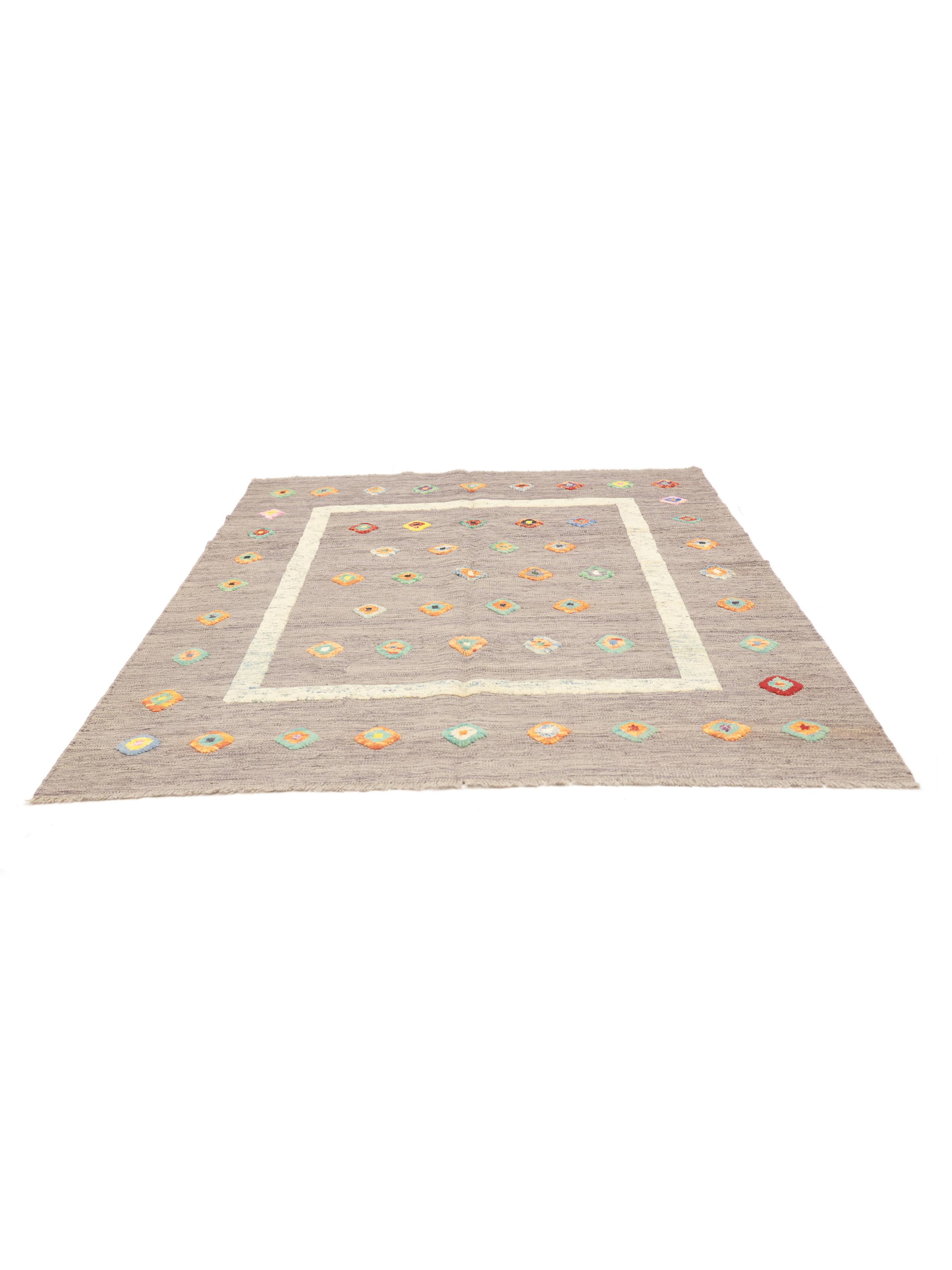
The Kelim tradition is deeply rooted in the nomadic and village cultures of the Middle East and Central Asia. These rugs were historically created as functional items for daily life, used as floor coverings, wall hangings, or storage bags, and were valued for their portability and immense durability in harsh environments.
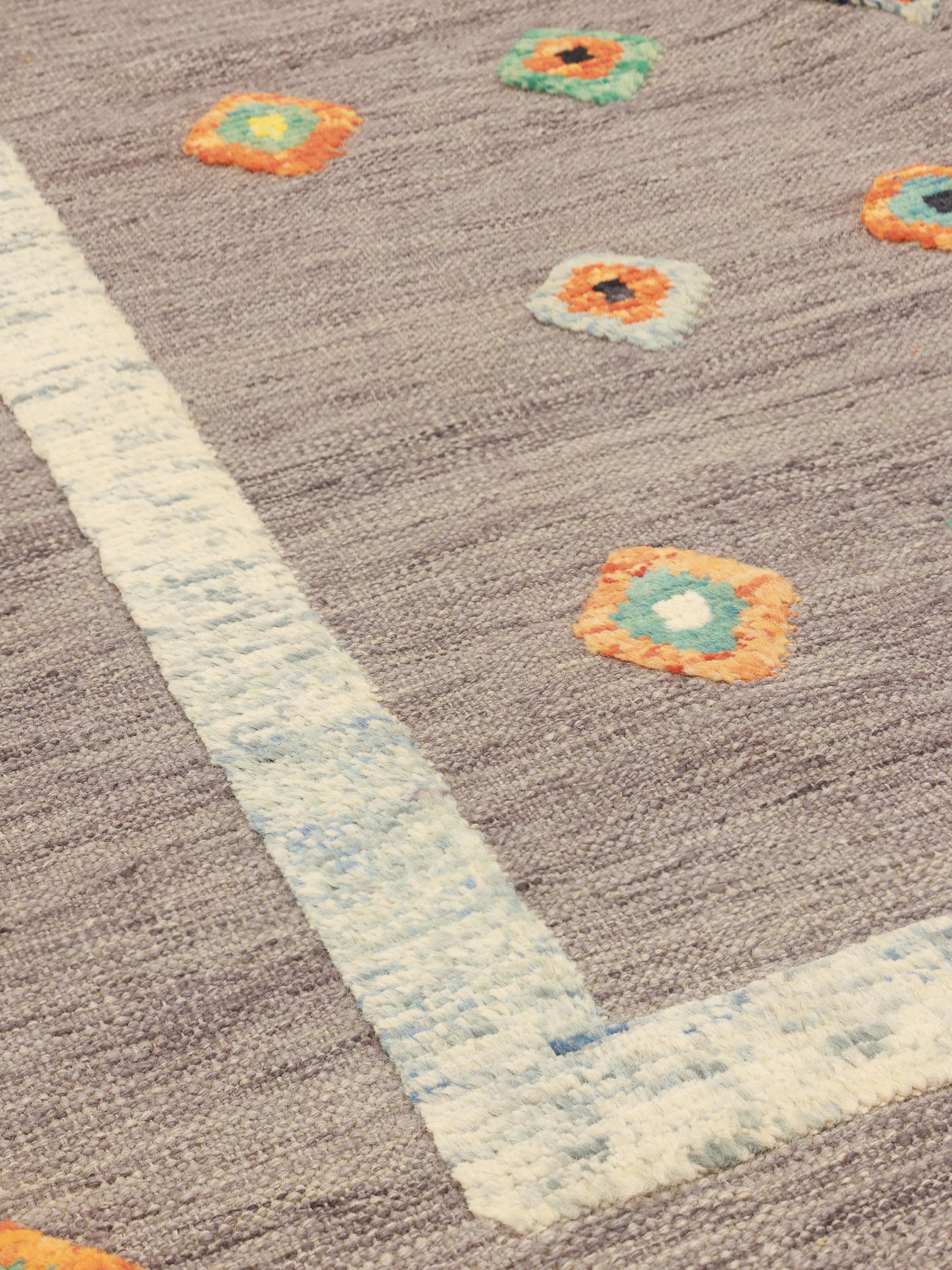
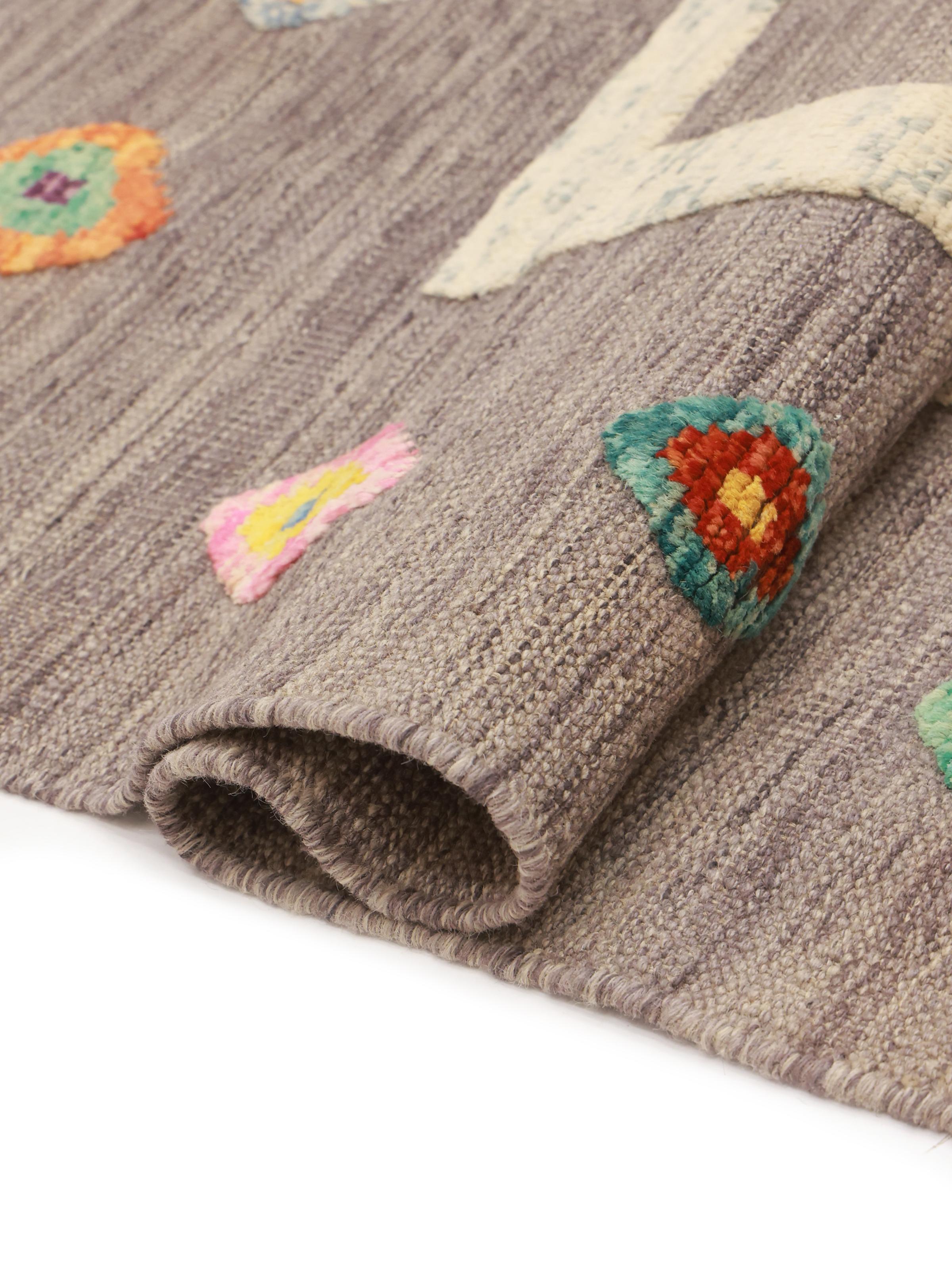
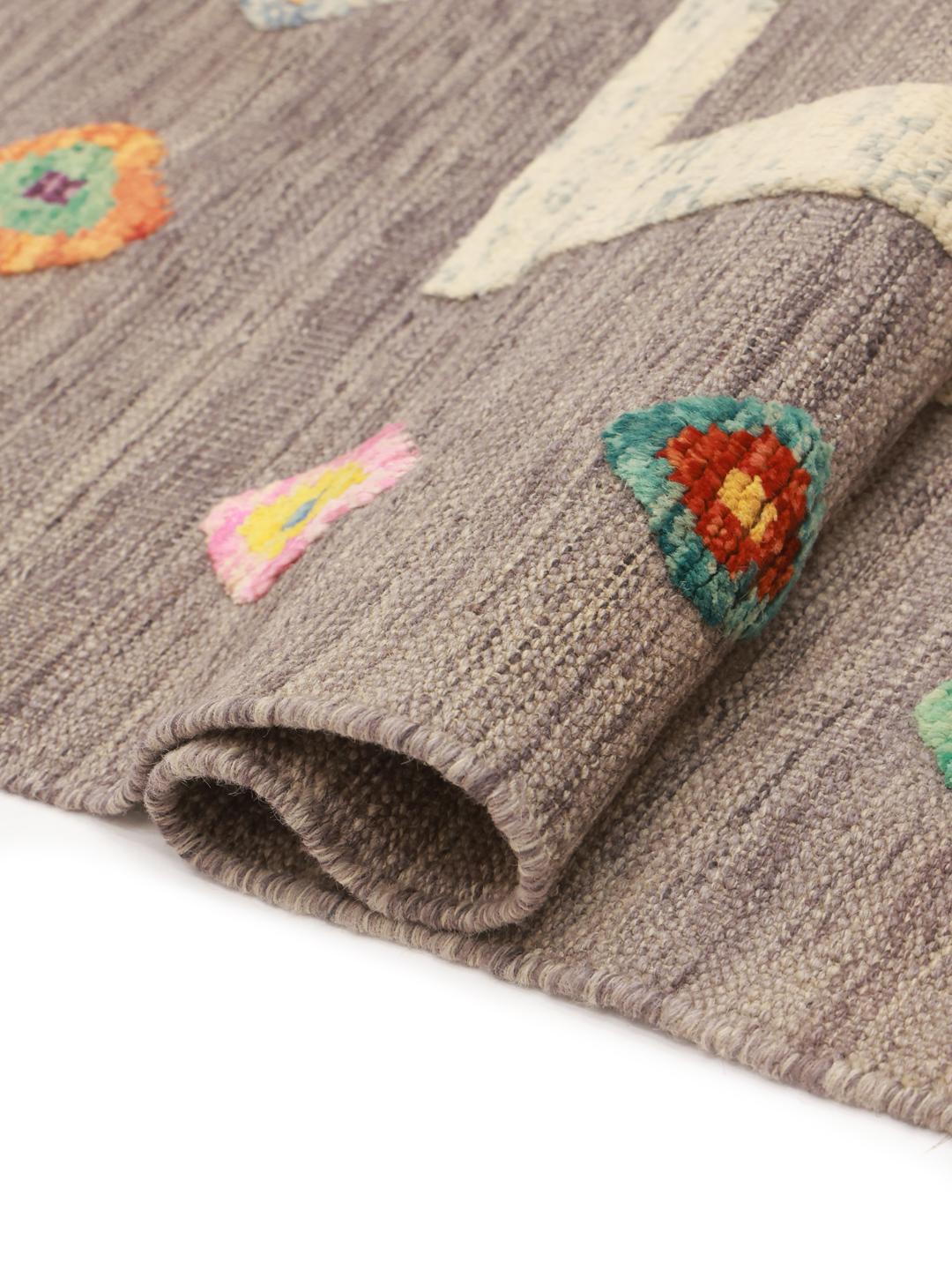
The term Nimbaft refers to a specific style of flat-weaving that ensures a tight, durable, and clean finish. Unlike knotted rugs, which use individual tufts of Wool tied to a foundation, these rugs are created by interlacing the warp and weft threads directly. This creates a reversible, flat textile that is prized for its versatility and strength.
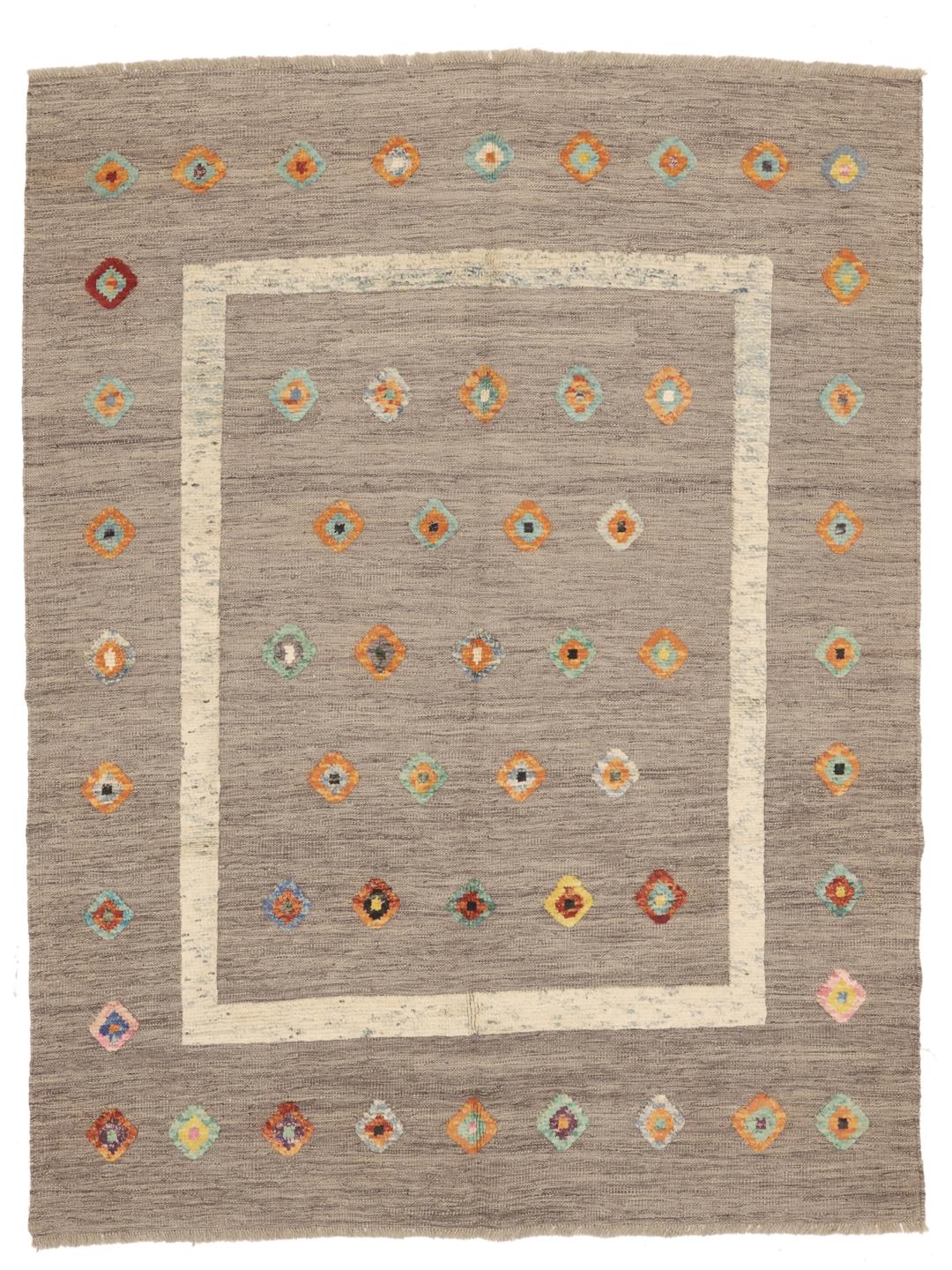
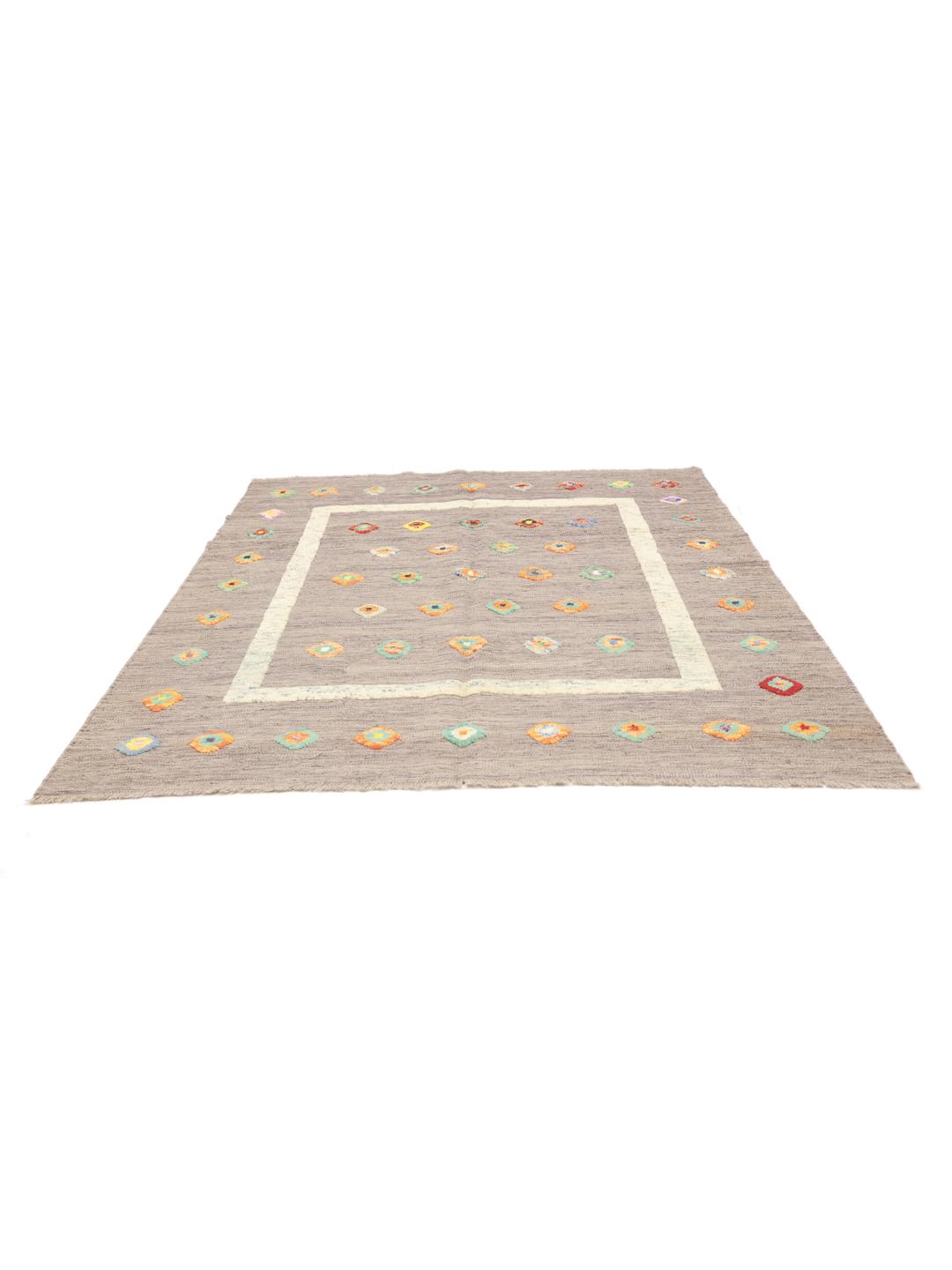
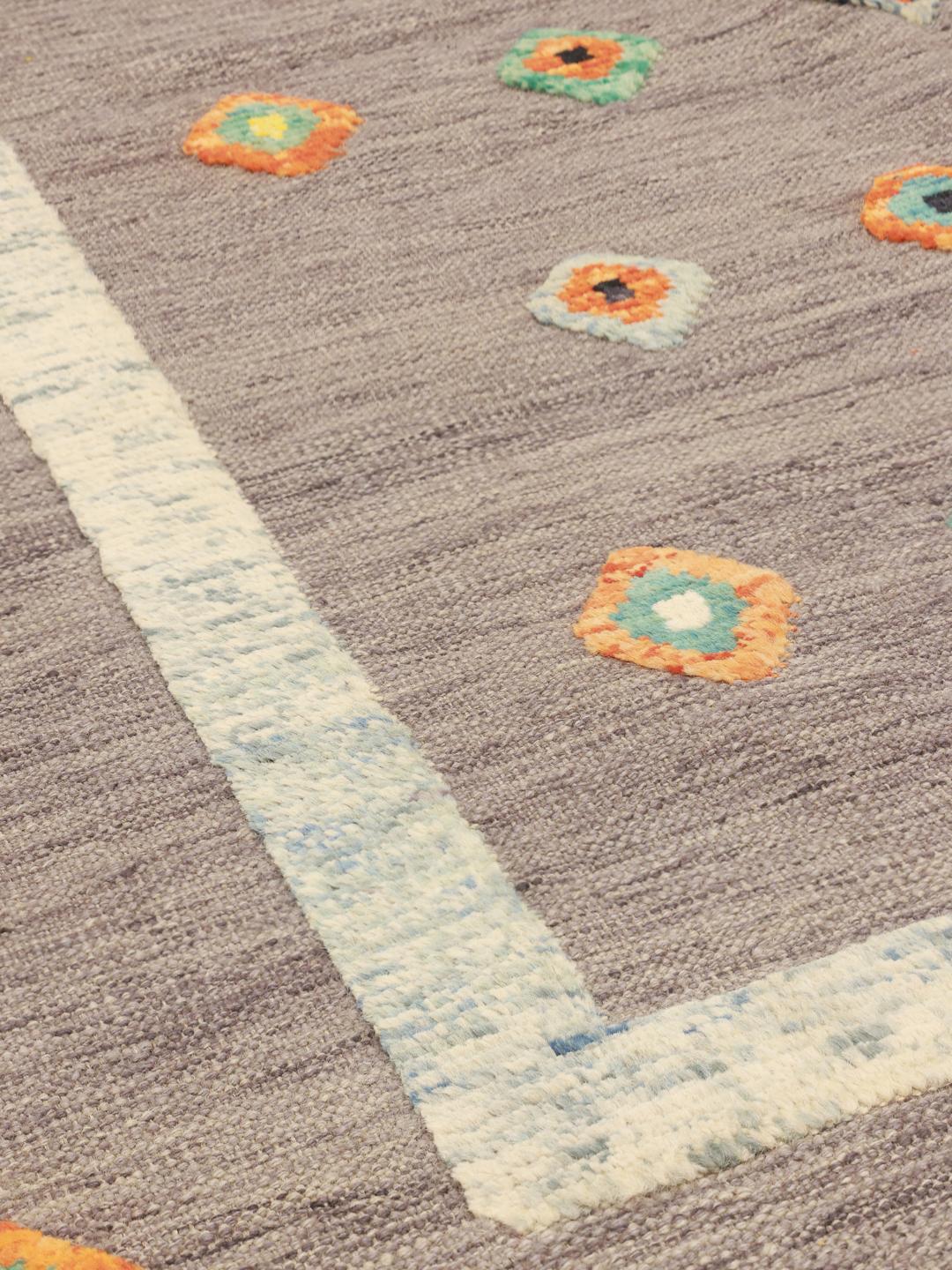
Visually, these rugs are defined by their geometric language. While traditional Kelims often feature bold, interlocking tribal patterns, this Nimbaft piece offers a more contemporary interpretation with its scattered diamond motifs. The use of natural, earthy tones as a backdrop allows the varied colours of the diamonds to stand out, showcasing a sophisticated evolution of classic tribal aesthetics.
Collecting a Kelim means acquiring a piece of cultural history. Each rug represents a blend of ancestral techniques and the personal expression of the weaver. Valued for their authenticity and the human effort required to produce them, these rugs remain a staple for those who appreciate heritage, skill, and the enduring beauty of handcrafted textiles.