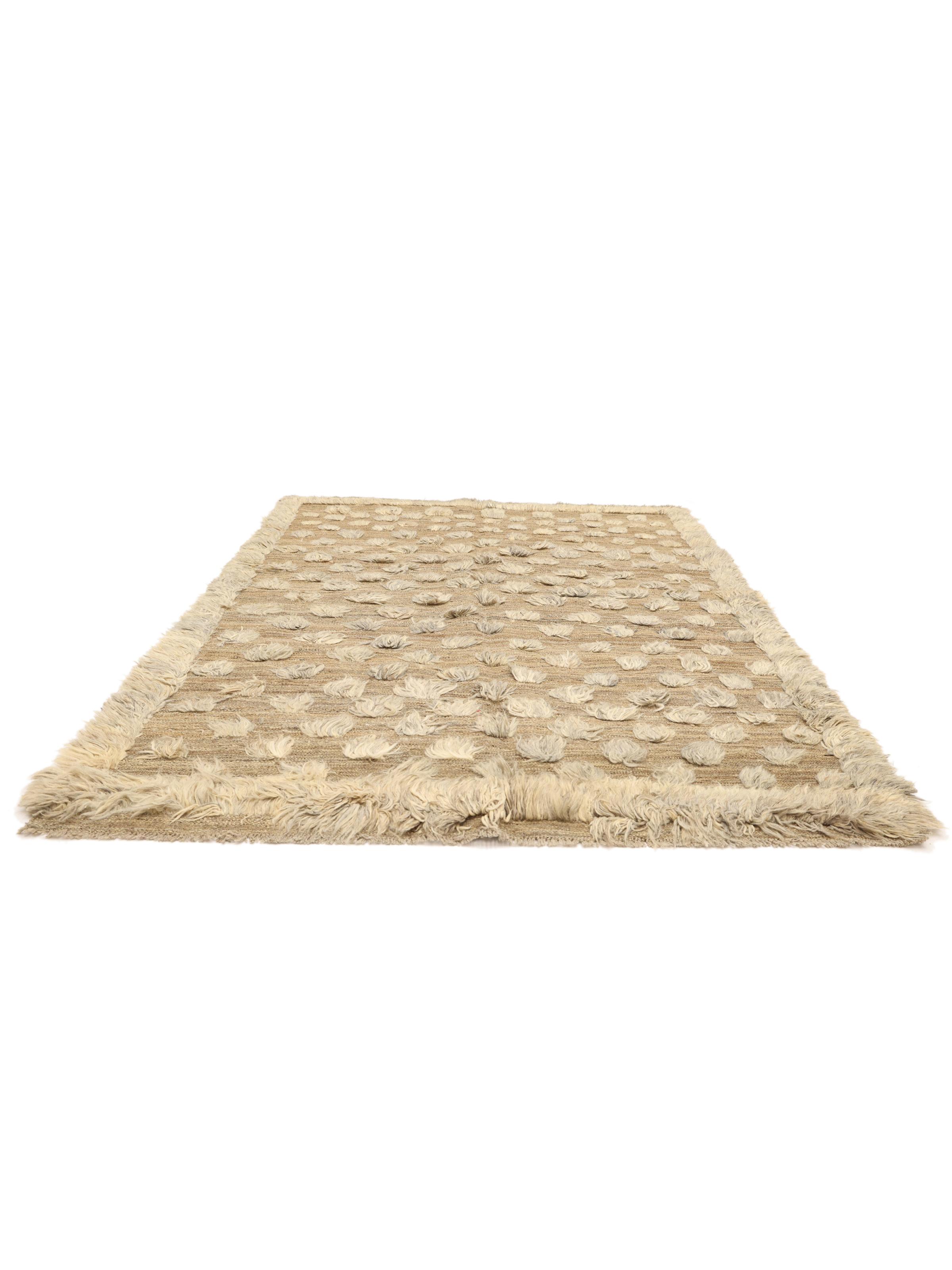
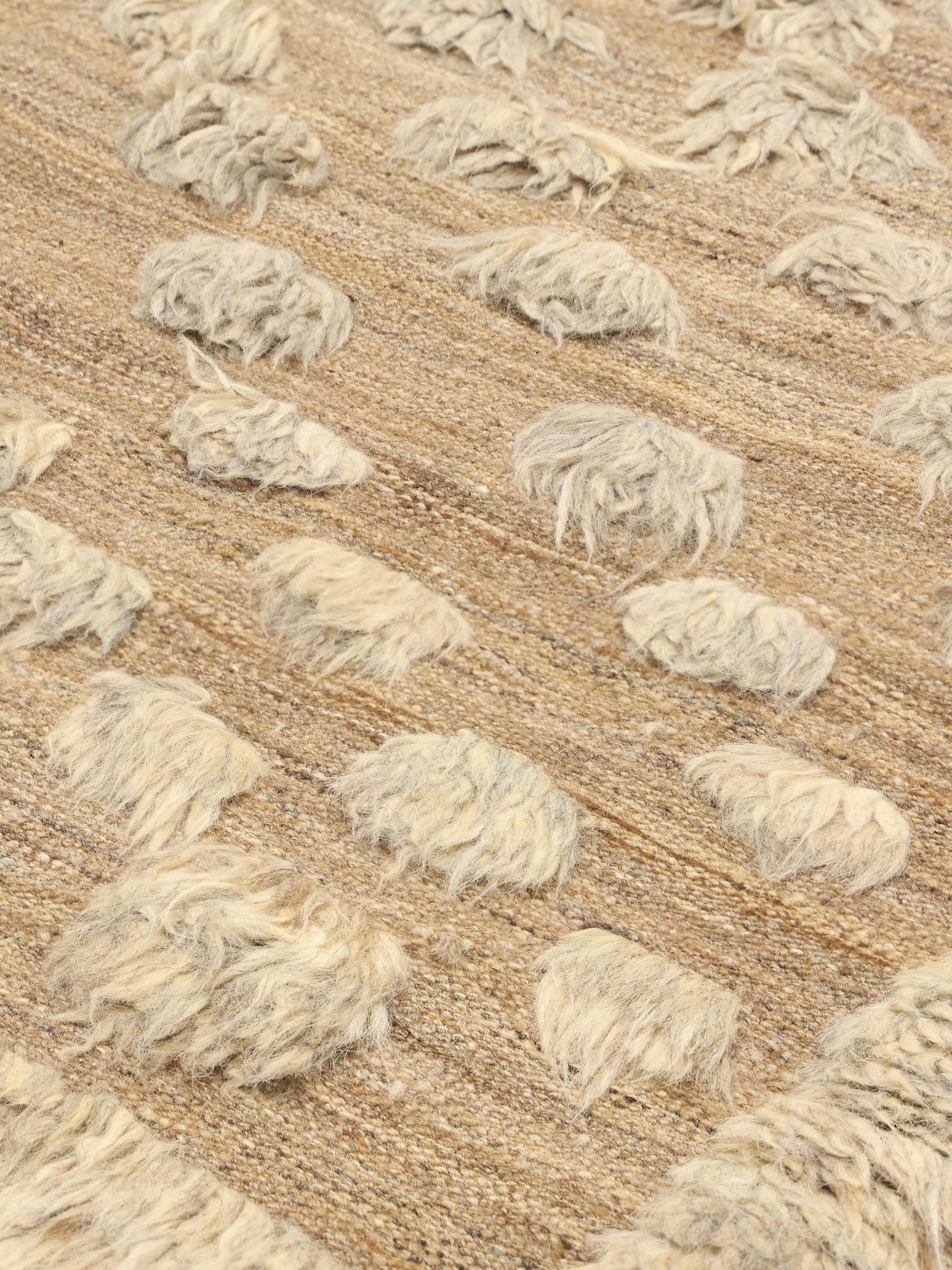
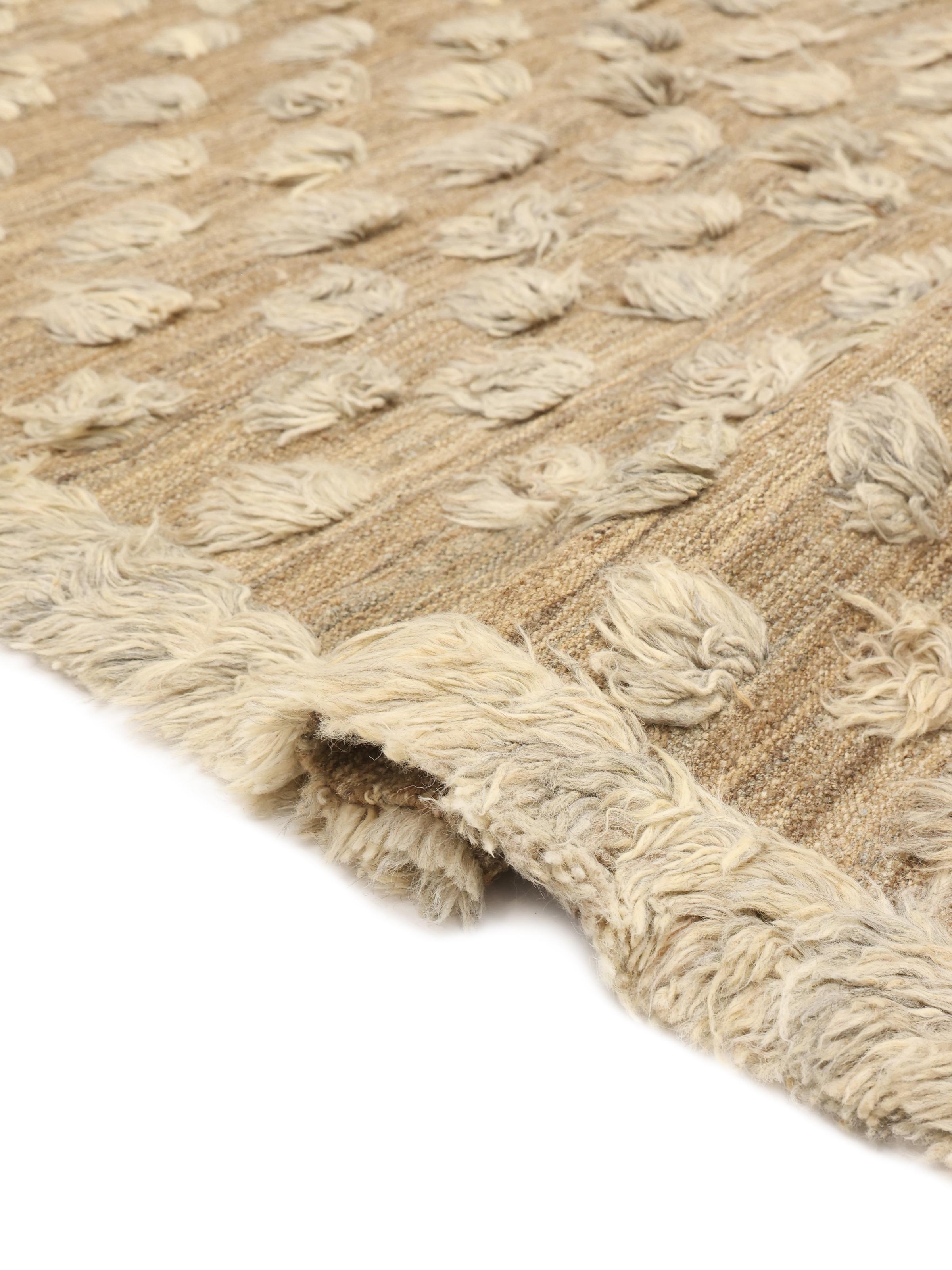
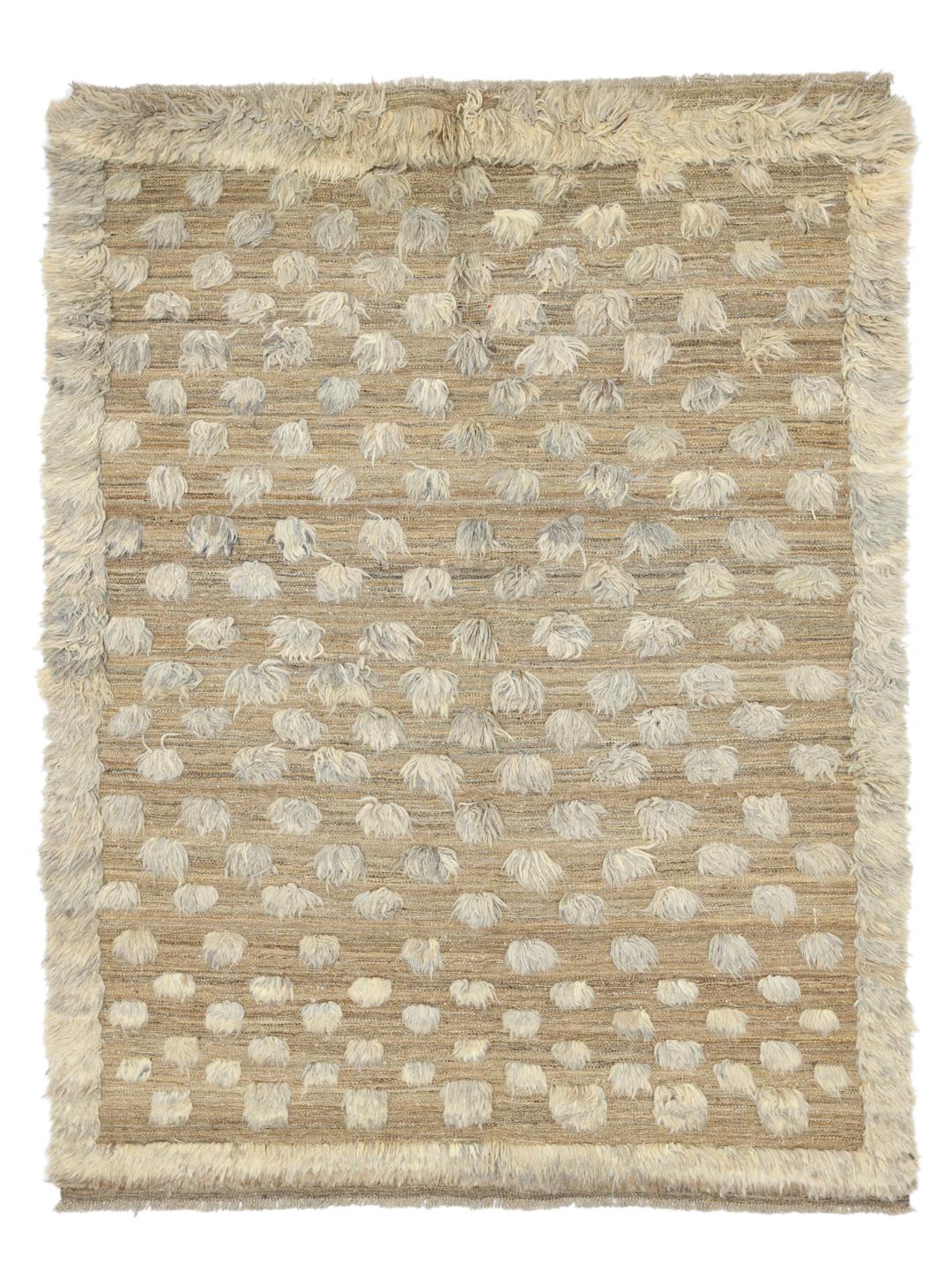
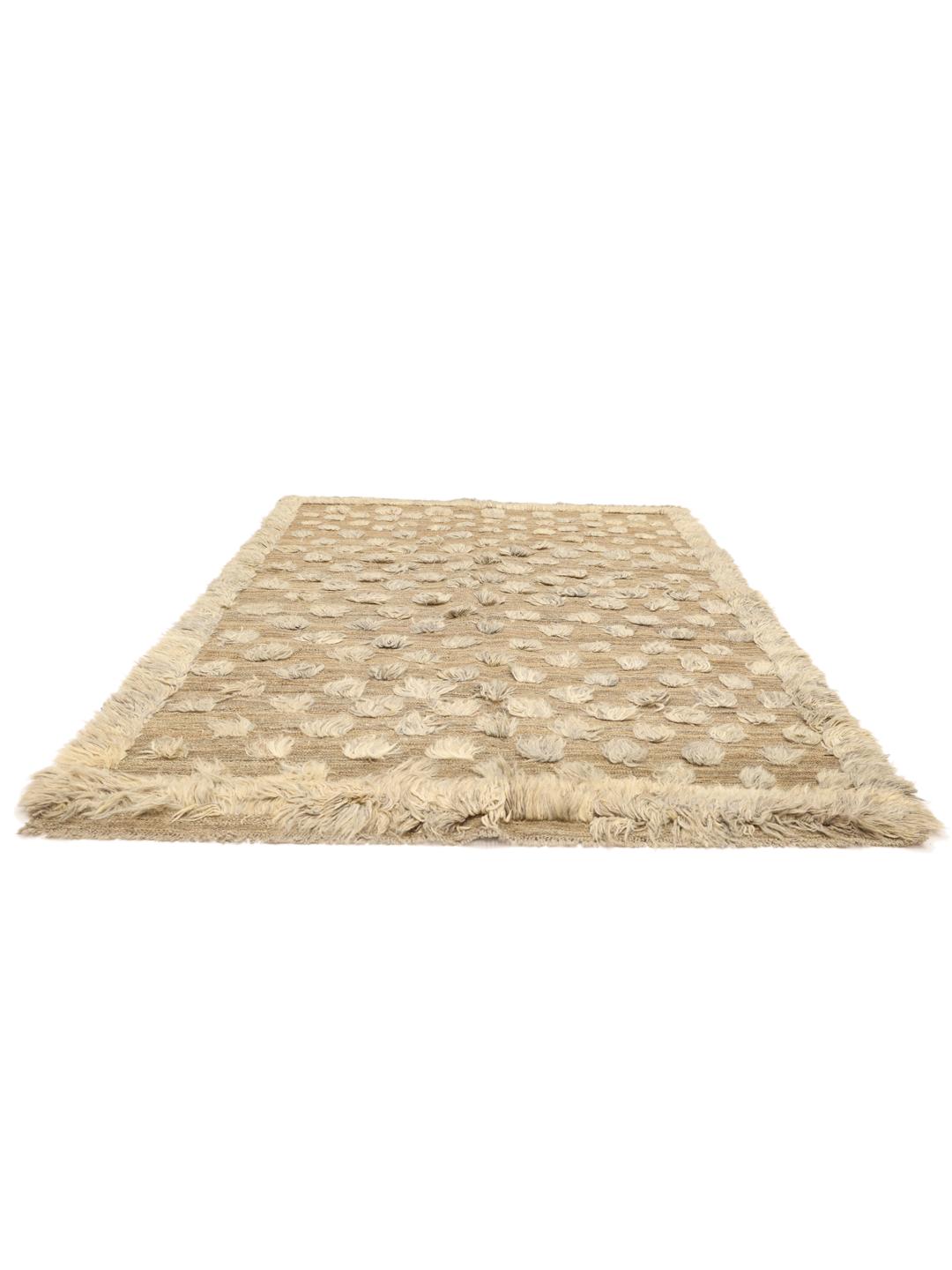
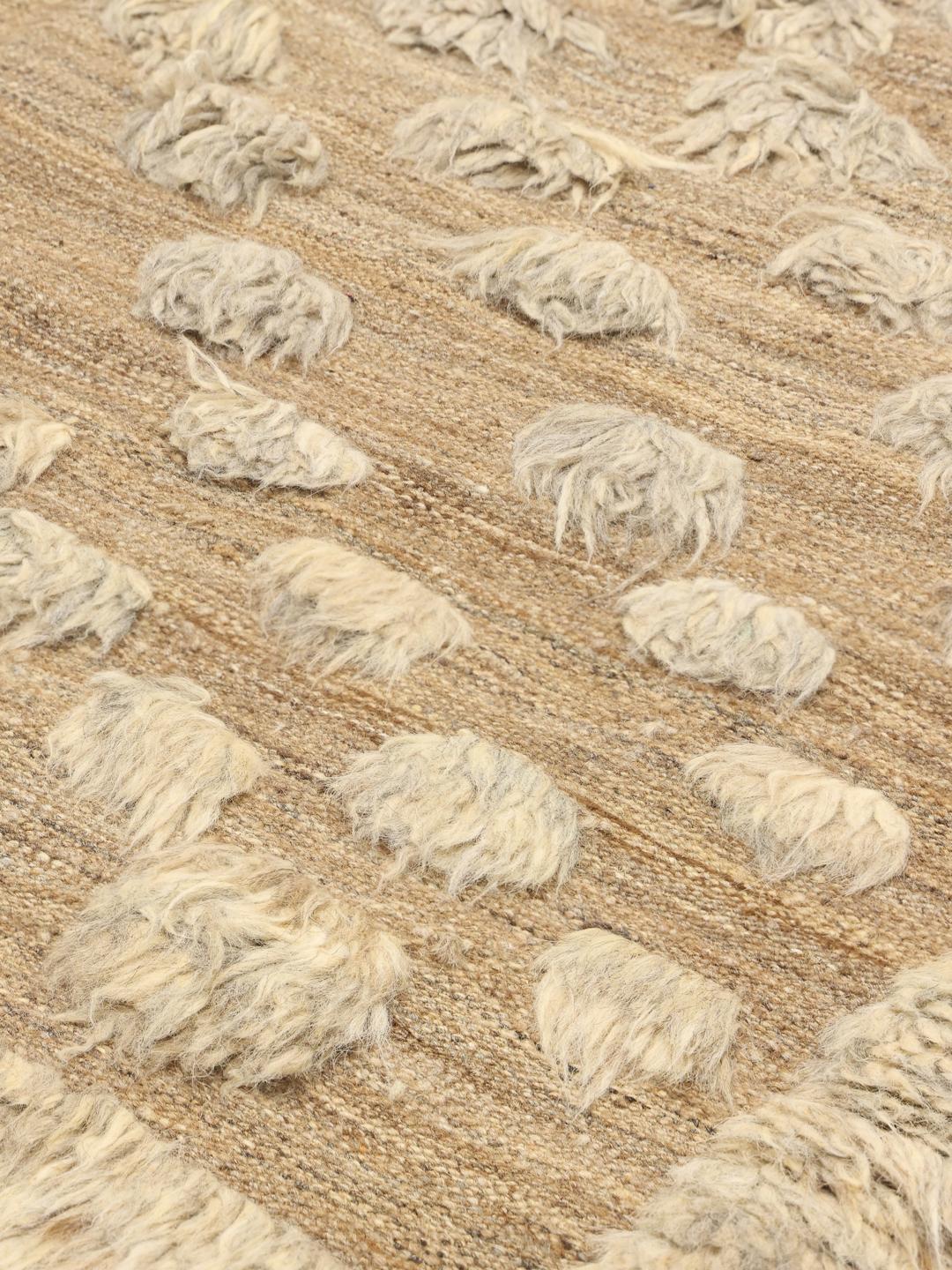
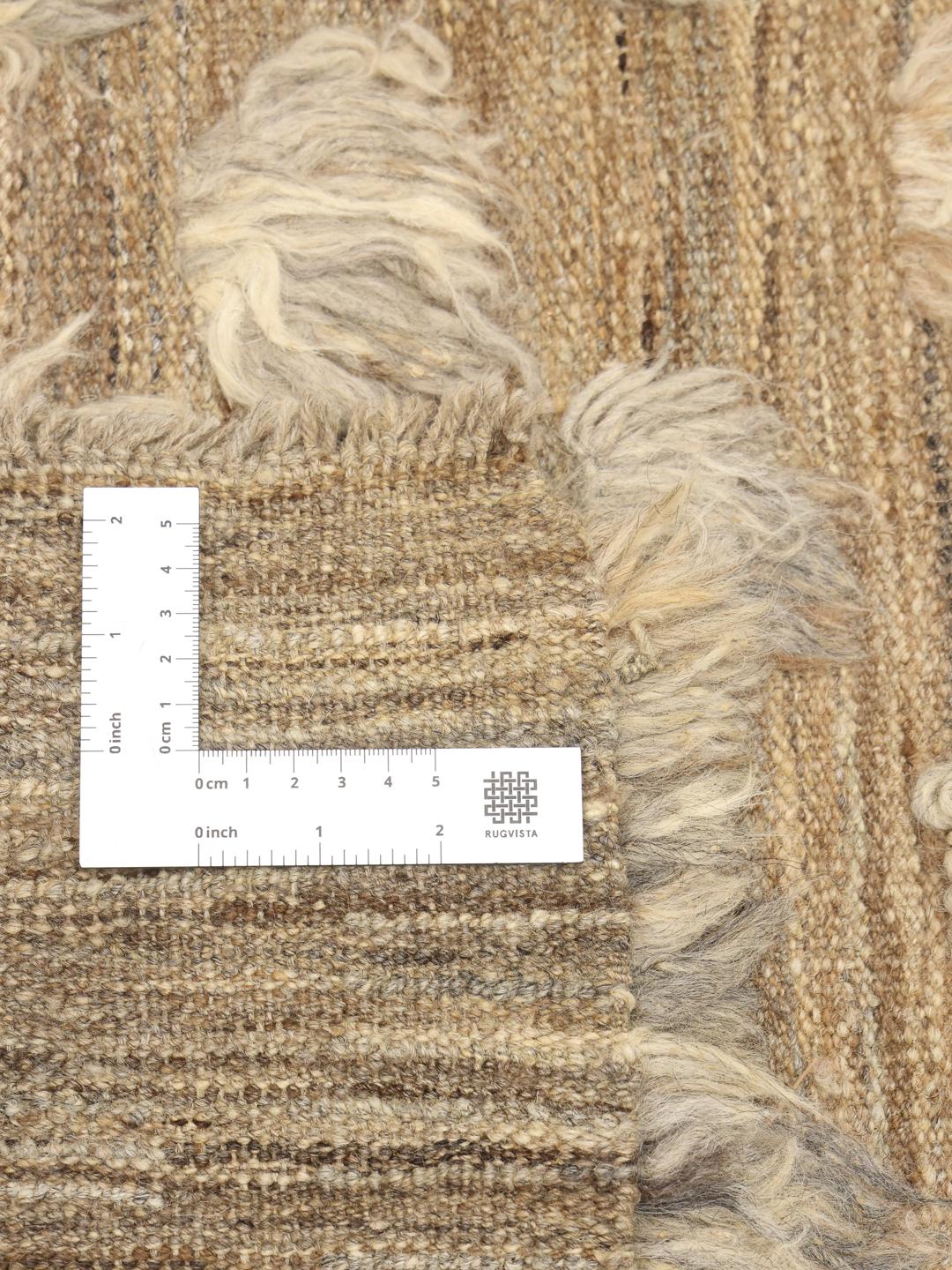
The Nimbaft rug tradition hails from the rich weaving landscapes of Afghanistan, a region where rug-making is deeply embedded in the cultural and social fabric. These rugs are born from a fusion of nomadic heritage and sedentary craft traditions, evolving over centuries to meet both the practical needs of mountain life and the aesthetic desires of the home. The term Nimbaft itself refers to a unique half-knotted or semi-tufted technique, where the artisan intentionally leaves sections of the wool pile raised above the flat foundation.
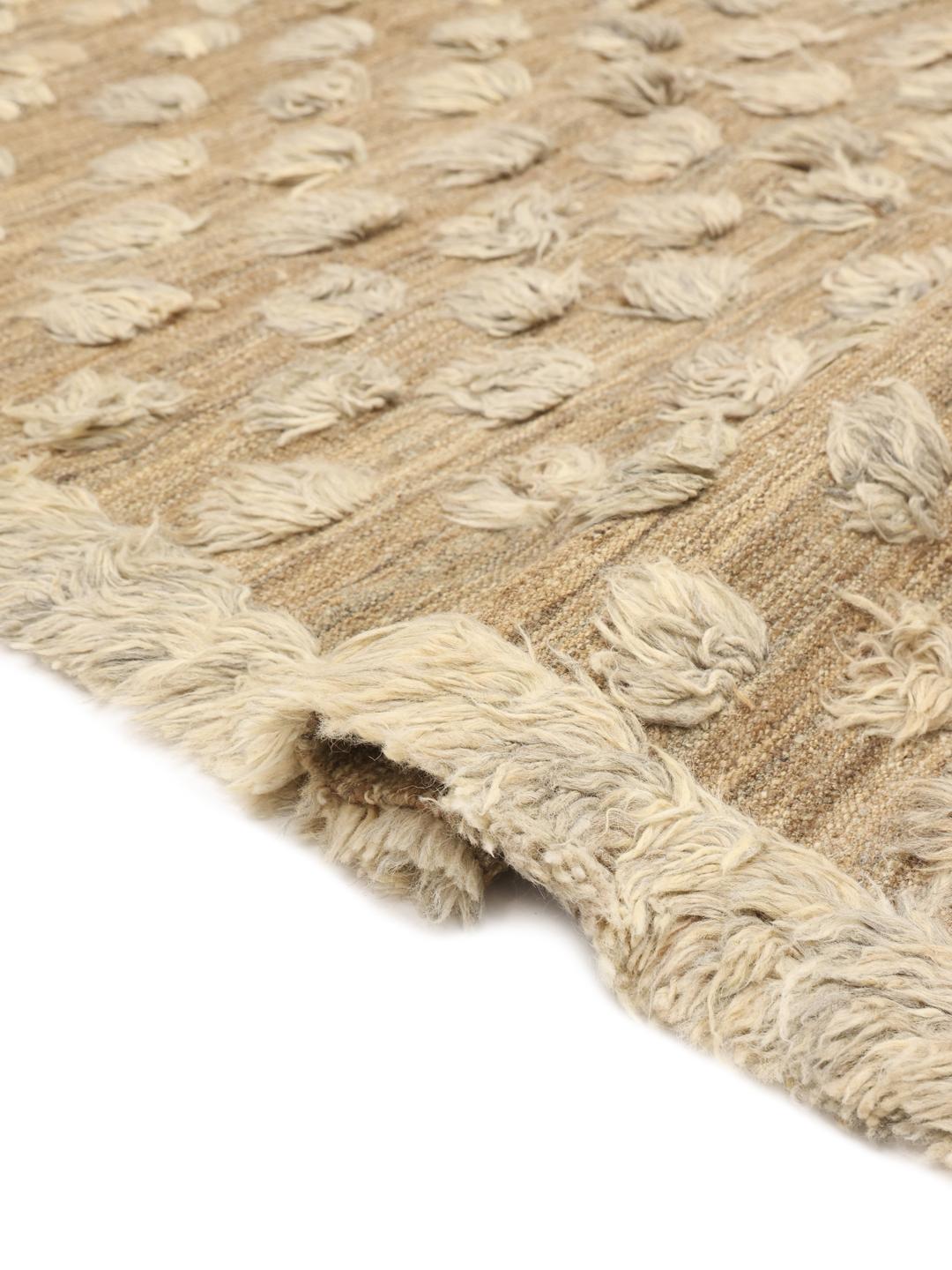
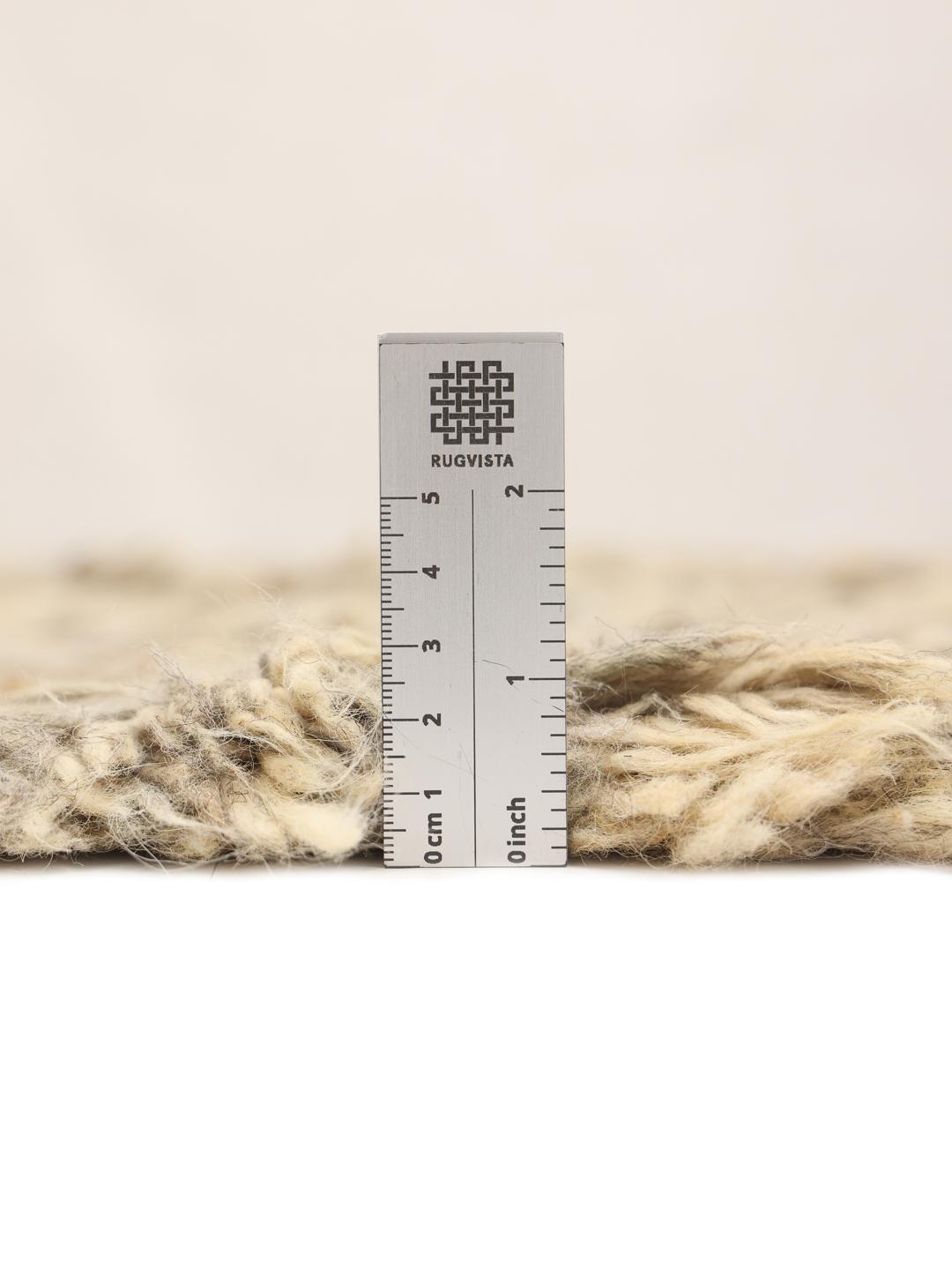
Technically, the Nimbaft style is a fascinating bridge between a flat-woven kilim and a traditional pile rug. By incorporating these tufted elements, weavers create a three-dimensional surface that is not only visually compelling but also physically more robust than a standard flatweave. This construction is highly valued because it offers the durability of a tight weave with the luxurious, soft feel of a deeper pile, providing a tactile contrast that is rarely seen in other traditions.
The signature design language of the Nimbaft often features repeating, organic motifs that seem to float across a neutral field. These patterns are usually inspired by the natural environment of the Afghan highlands, reflecting the geometry of the landscape and the simplicity of rural life. The deliberate choice of natural, earthy tones allows the texture of the wool to take centre stage, letting the interplay of light and shadow on the tufted surfaces define the rug's aesthetic.
For collectors and enthusiasts, these rugs are treasured for their authentic, unpretentious character. Owning a piece from this tradition signifies an appreciation for the skill required to maintain consistency in such a complex, mixed-technique weave. It represents a living history of Afghan craft, where the rug serves not just as a floor covering, but as a testament to the artisan's ability to innovate within ancient, established boundaries.