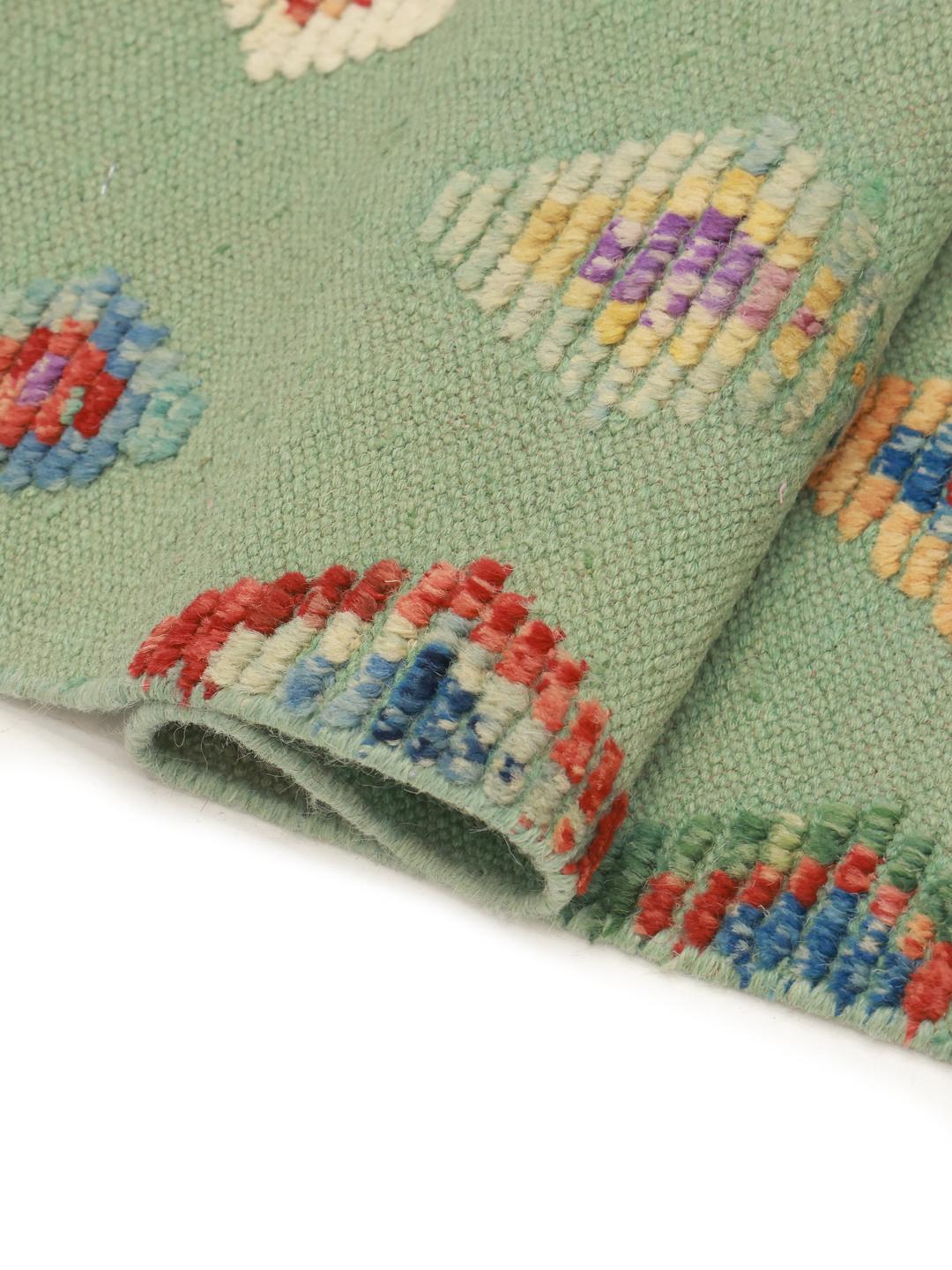
The tradition of weaving Kelims, or flat-weave rugs, is deeply embedded in the cultural history of Afghanistan and the wider Middle Eastern region. These rugs are distinct for their lack of a pile, created by interlacing the warp and weft threads to form a flat, durable surface. Historically, these pieces were essential for nomadic tribes who required lightweight, portable, and versatile textiles that could serve as floor coverings, blankets, or wall hangings during their travels.
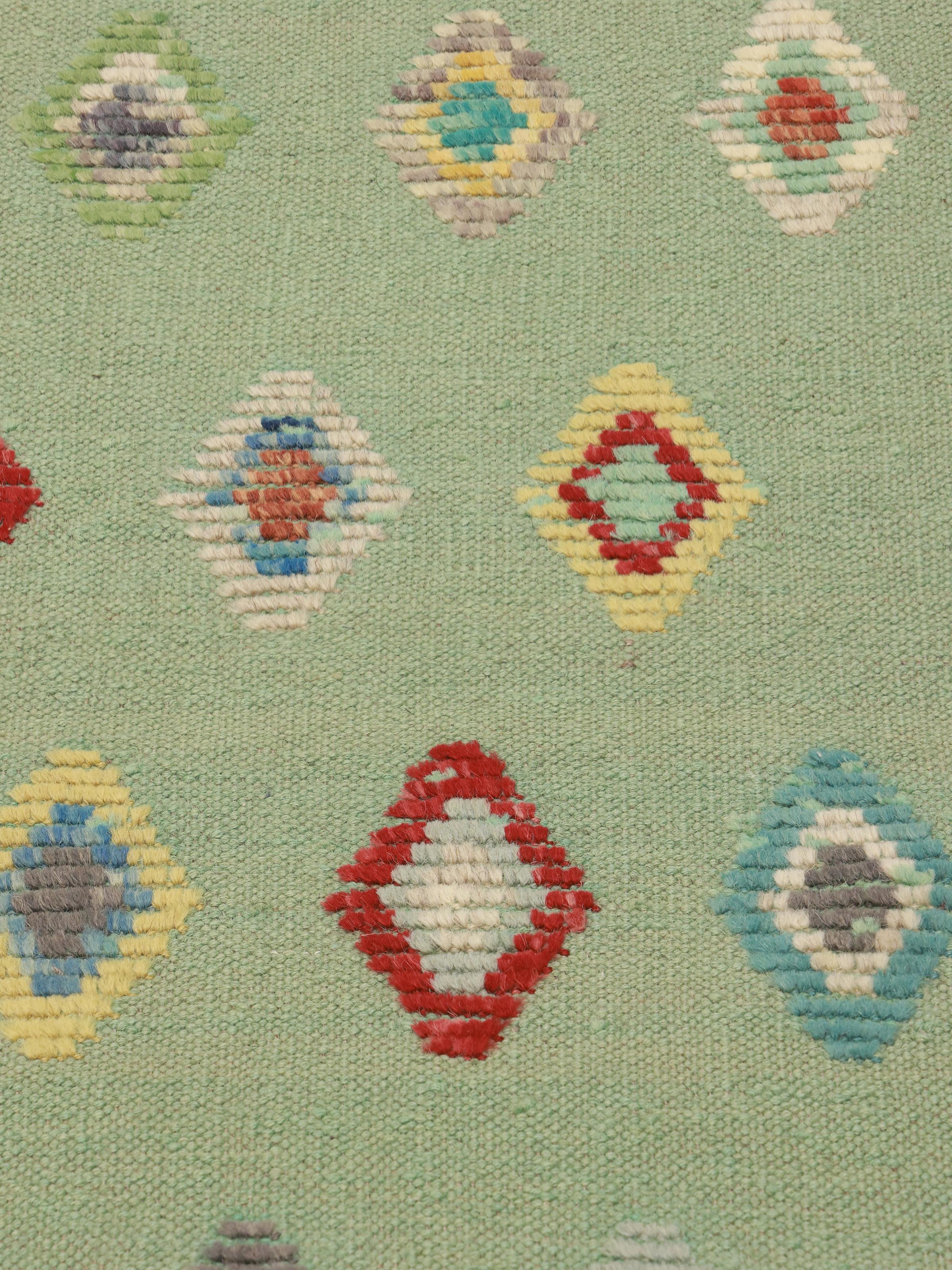
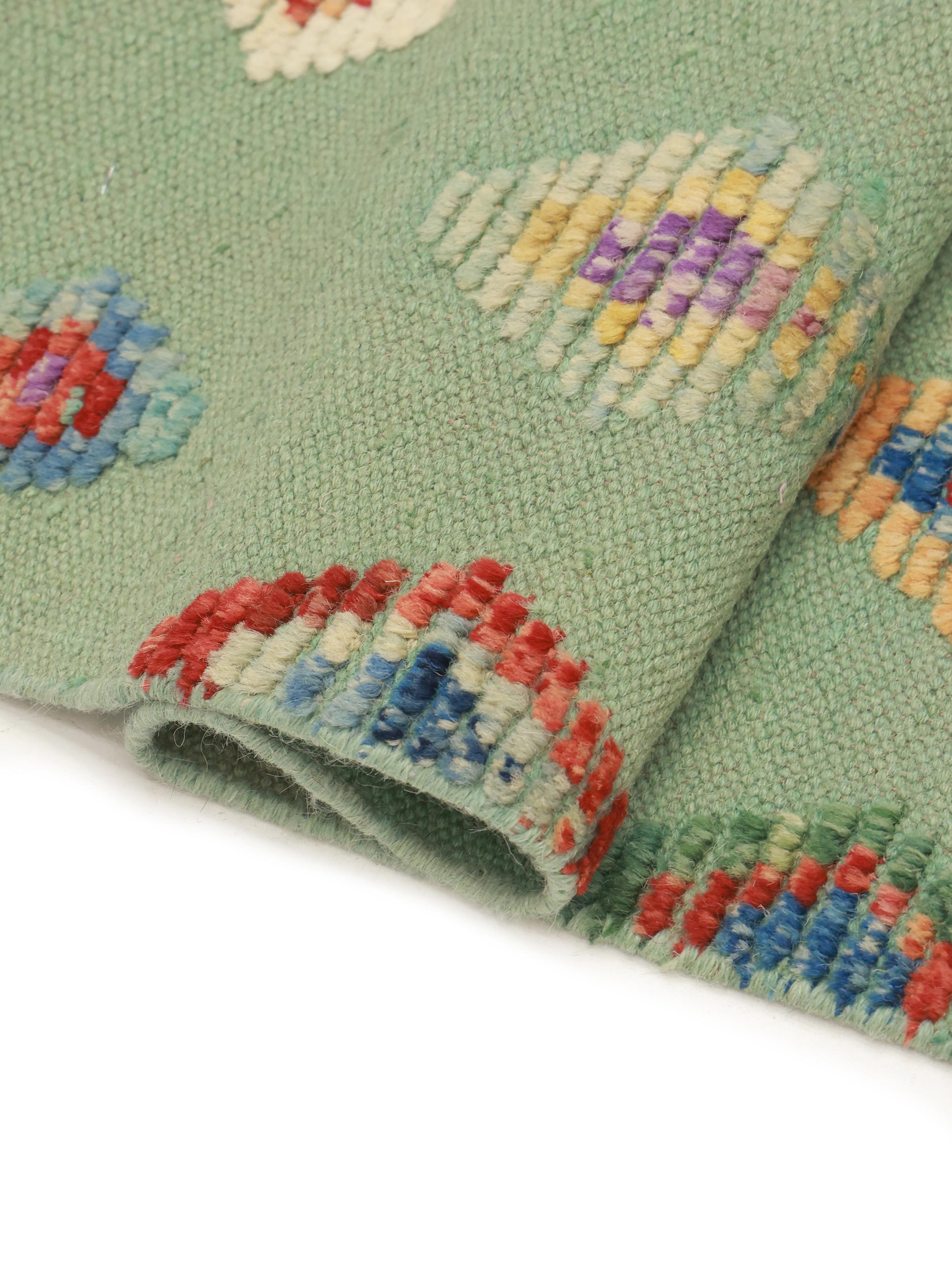
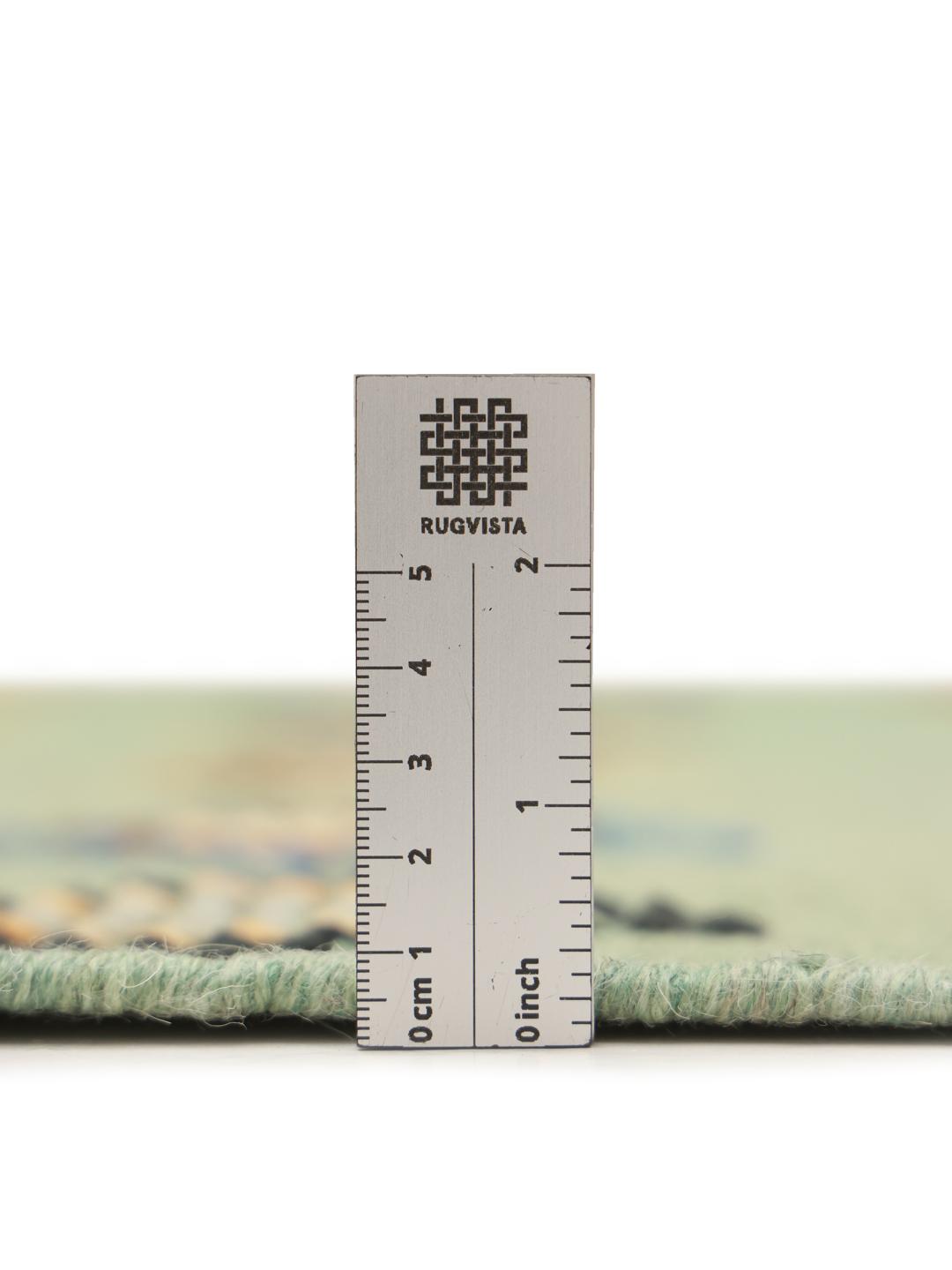
The term Nimbaft refers to a specific approach to the weaving process, often characterised by a refined balance between the warp and weft. This technique results in a tighter, more uniform weave that enhances the rug's structural integrity. For the user, this means a rug that is less prone to stretching or distortion over time, maintaining its original shape and pattern clarity even after years of daily use in a busy home.
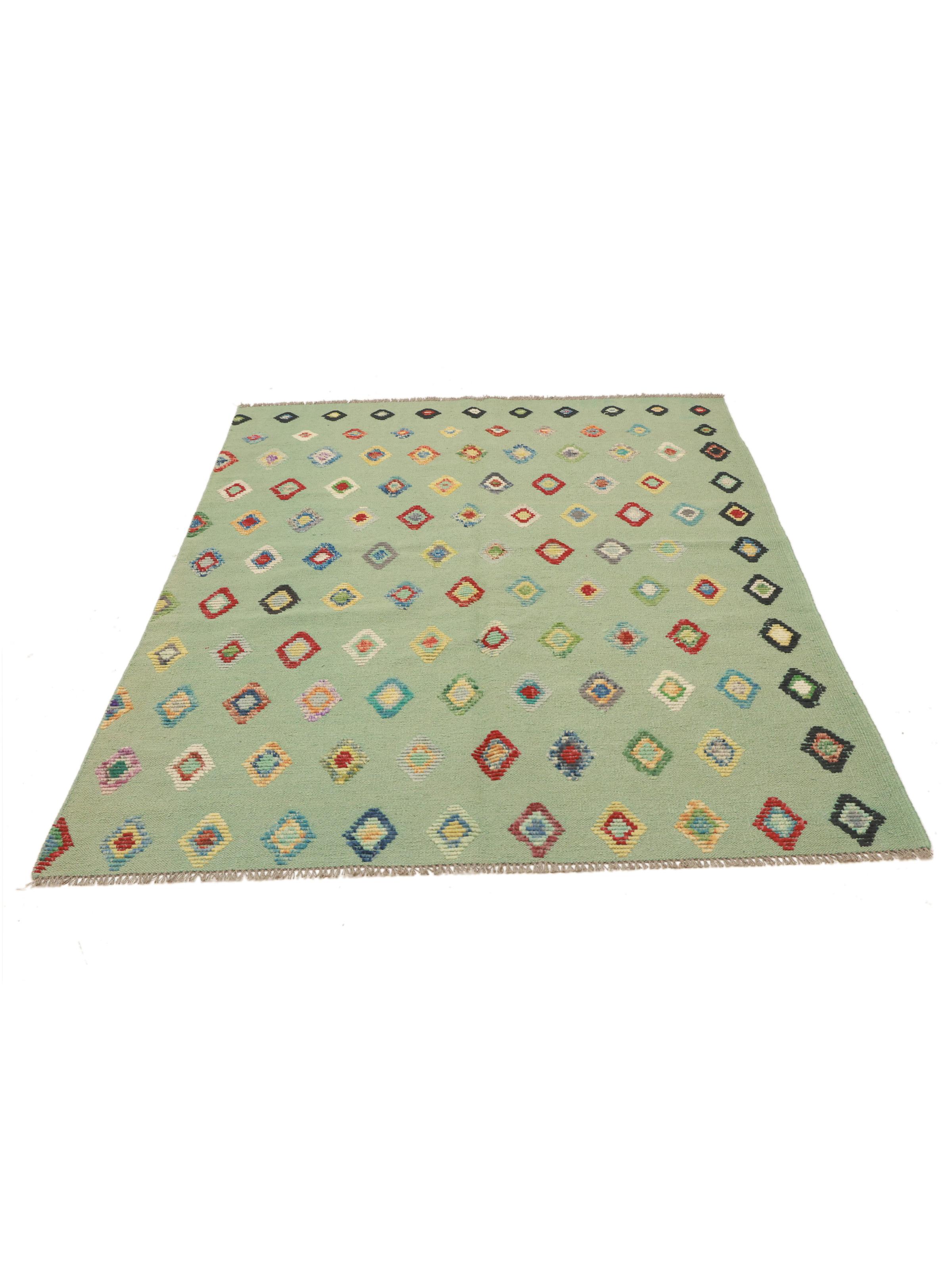
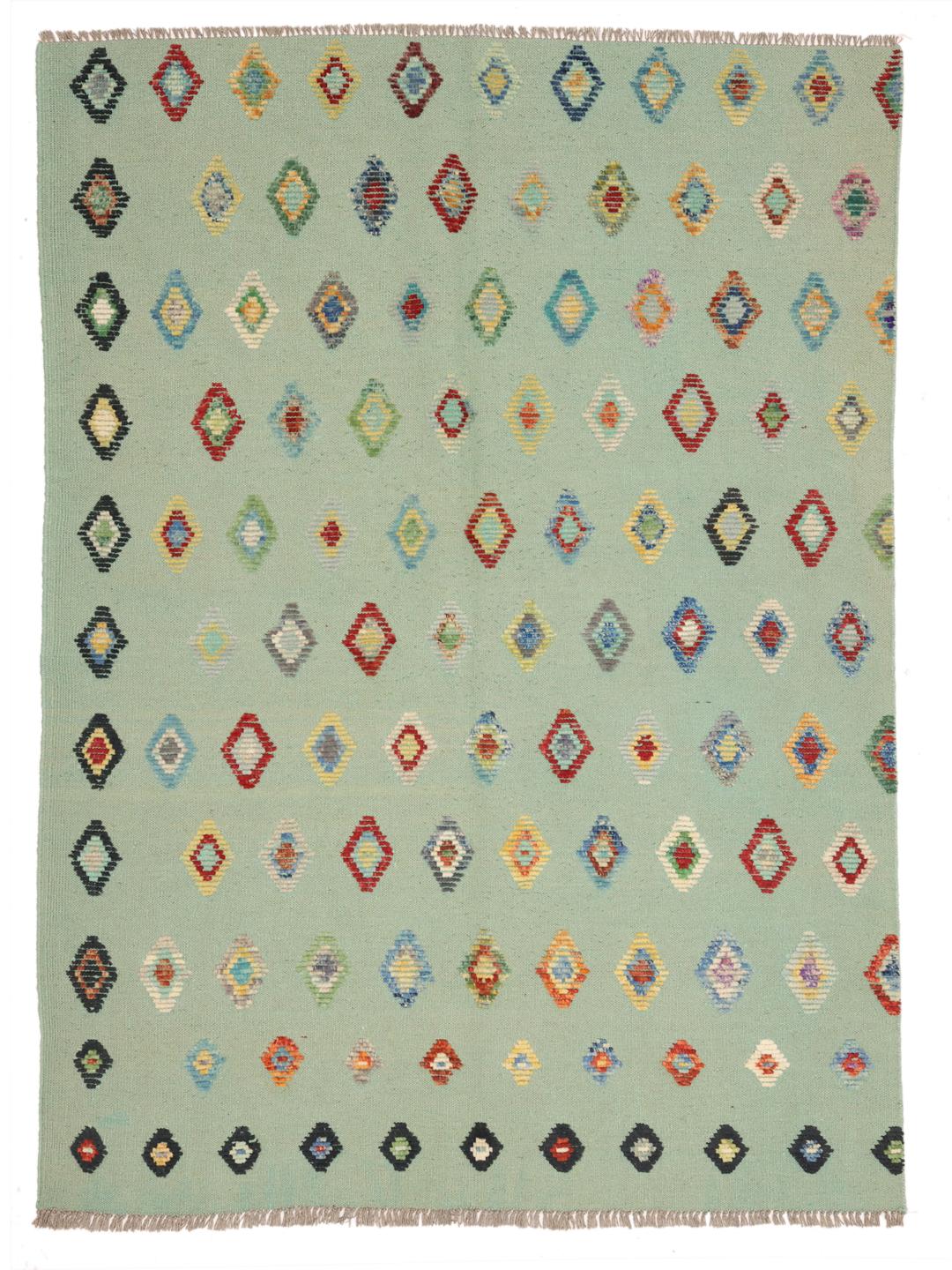
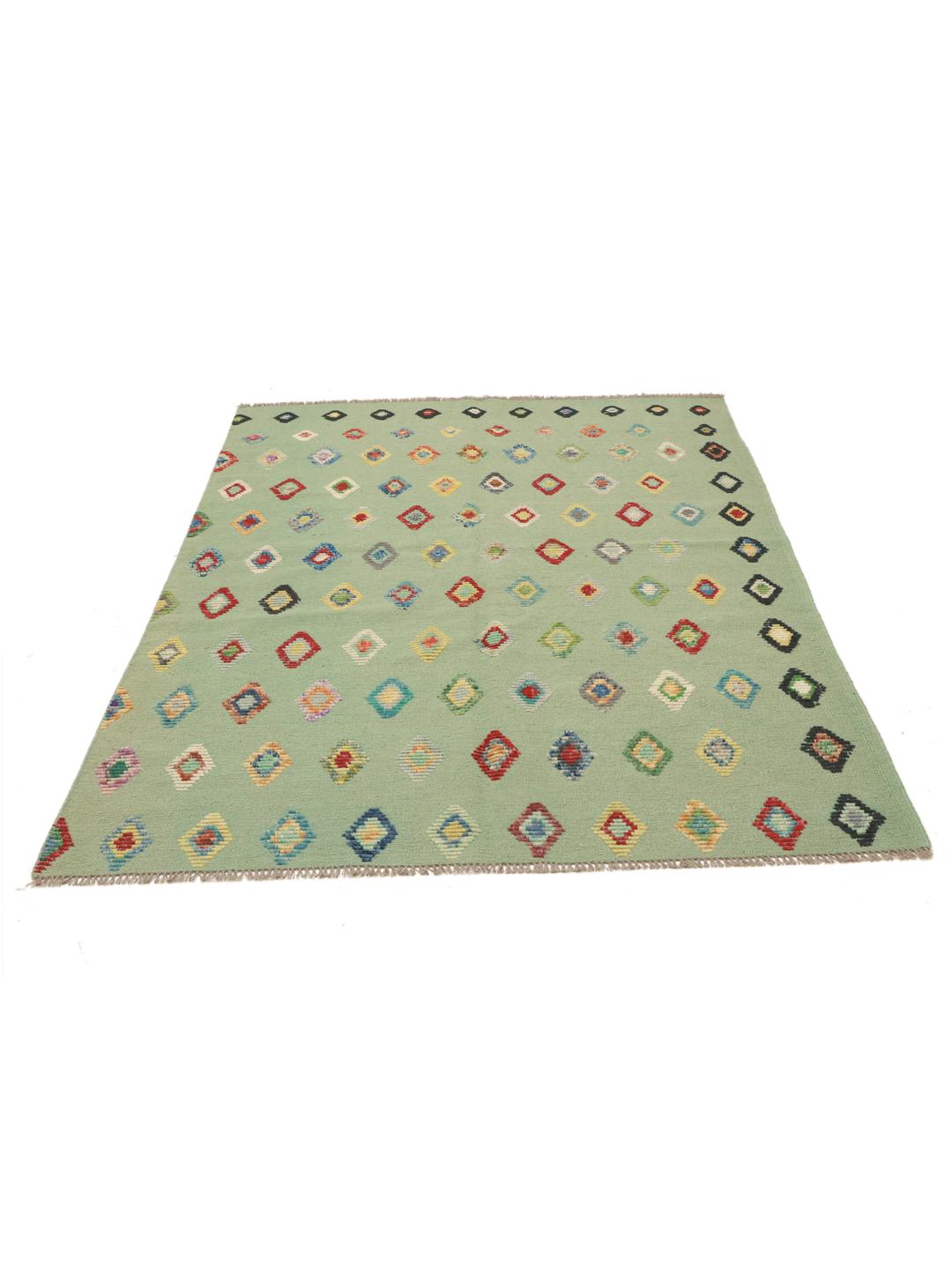
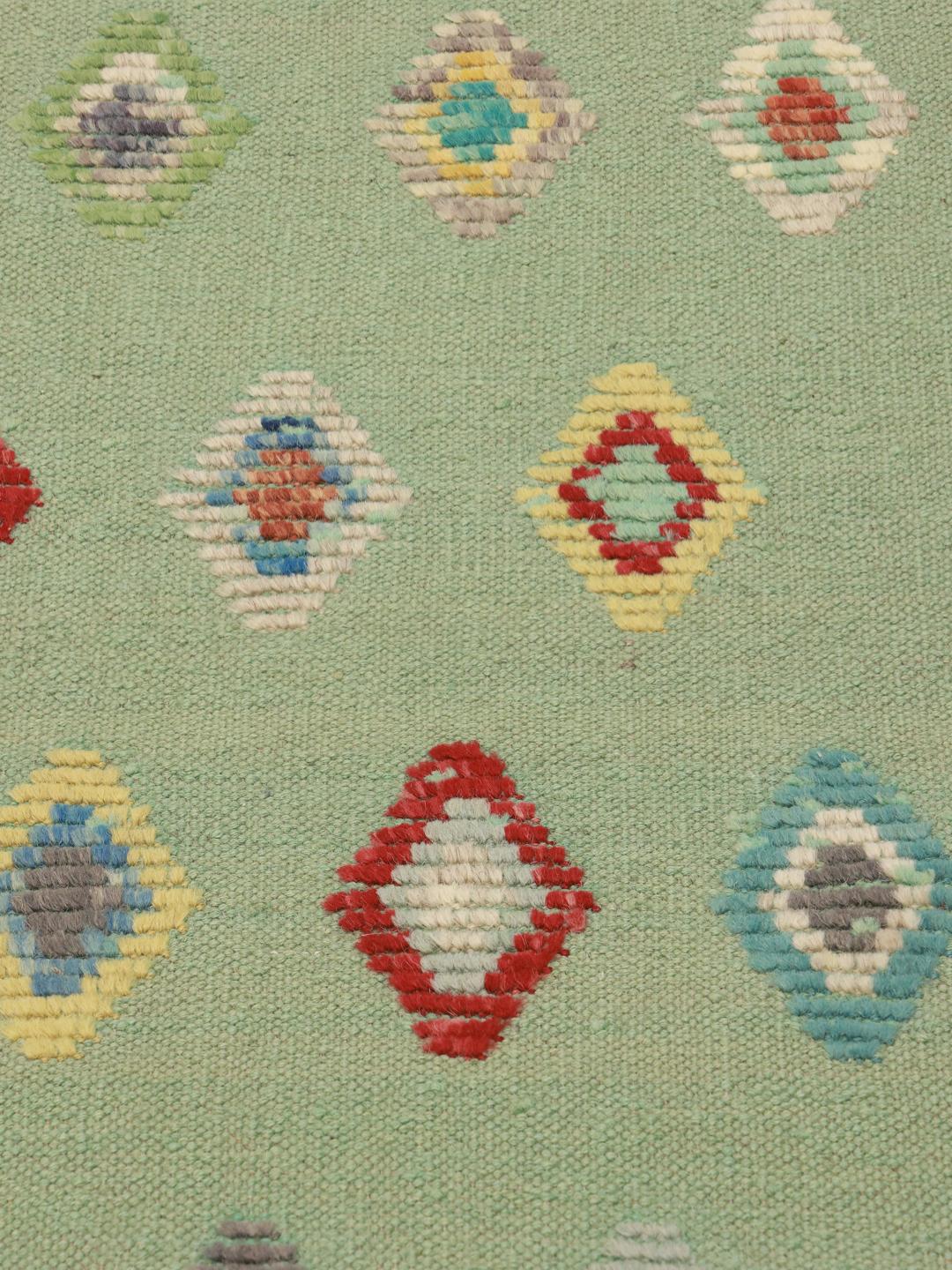
The signature diamond motifs found in this piece are a classic element of traditional weaving, often symbolising protection or prosperity within local folklore. The use of a light green field is a particularly refreshing choice, moving away from the more common deep reds often associated with the region. This deliberate colour selection highlights the creativity of the individual artisan, making it a standout example of how traditional motifs can be adapted into contemporary visual language.
Owning a hand-woven Kelim is an opportunity to connect with a centuries-old craft that prizes patience and human skill over mass production. These rugs are highly valued by collectors not only for their aesthetic beauty but for the cultural history woven into every thread. By acquiring this piece, you are preserving a legacy of craftsmanship that has been passed down through generations, ensuring that these traditional skills continue to thrive in the modern world.