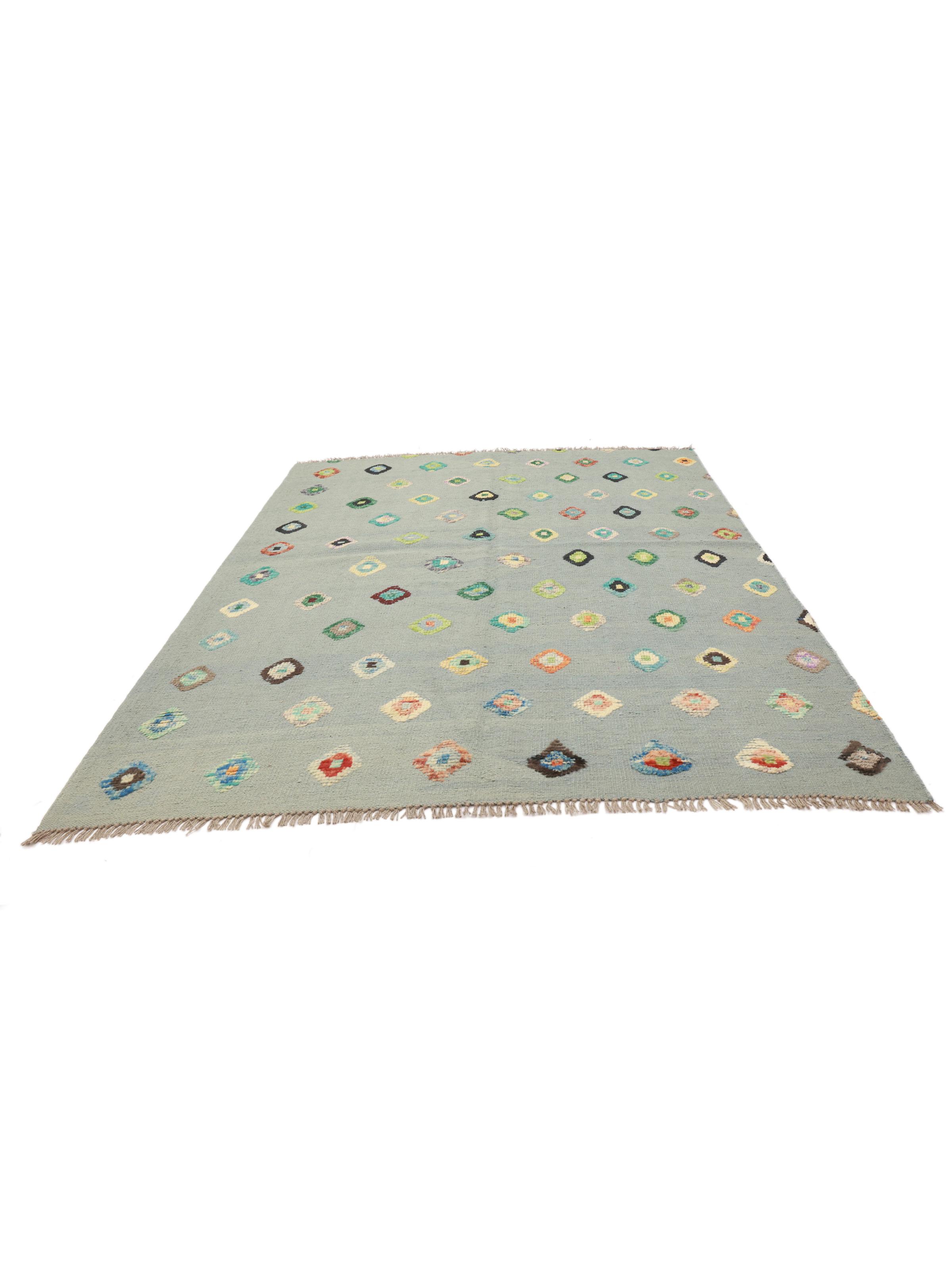
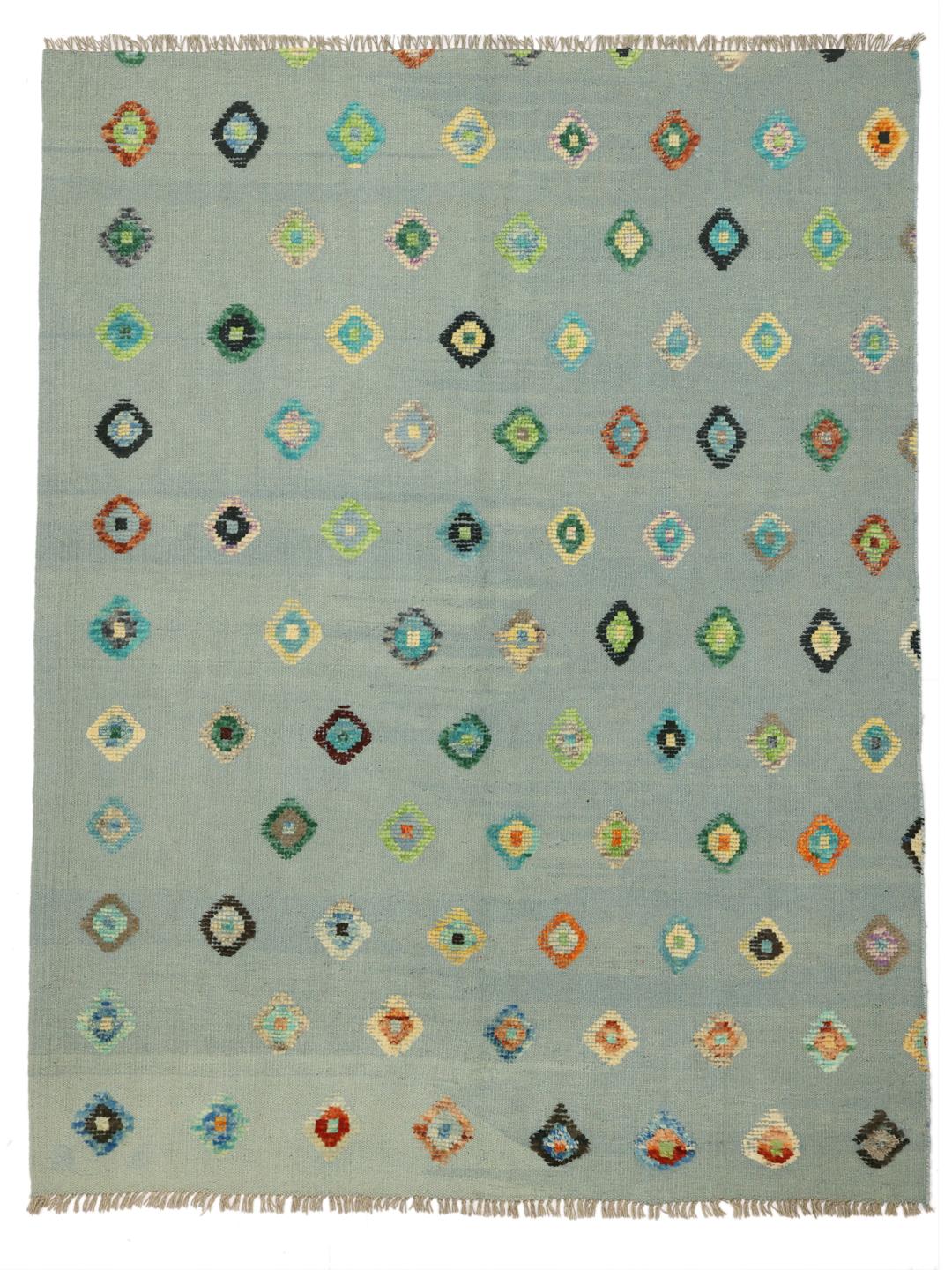
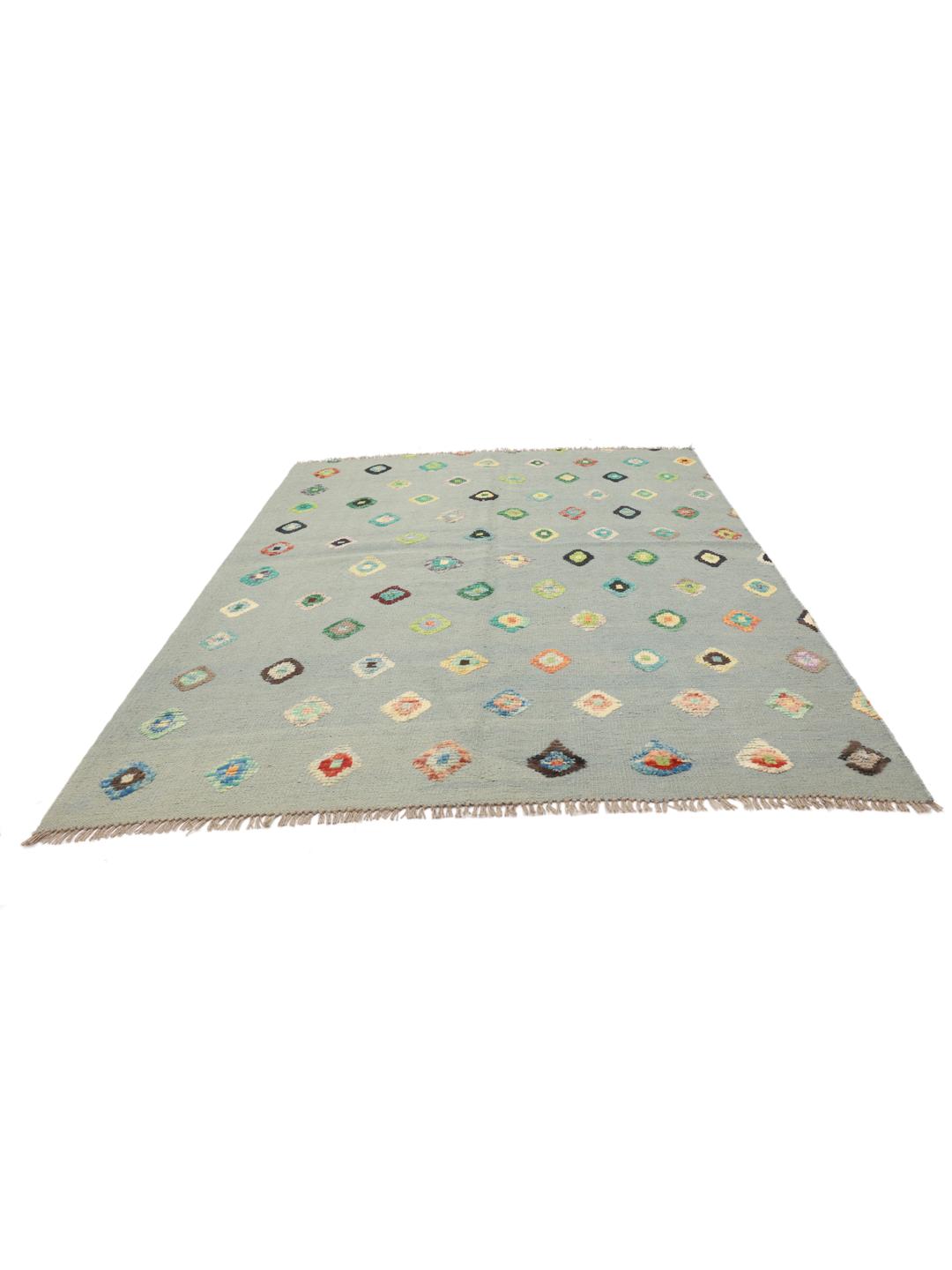
The Kelim Nimbaft originates from the rich weaving traditions of Afghanistan, a region with a deep-rooted history in textile arts. Kilims are flat-woven rugs, meaning they lack a pile, which makes them historically versatile and portable. They have been woven by nomadic and semi-nomadic tribes for centuries, serving as everything from floor coverings to storage bags and tent dividers.
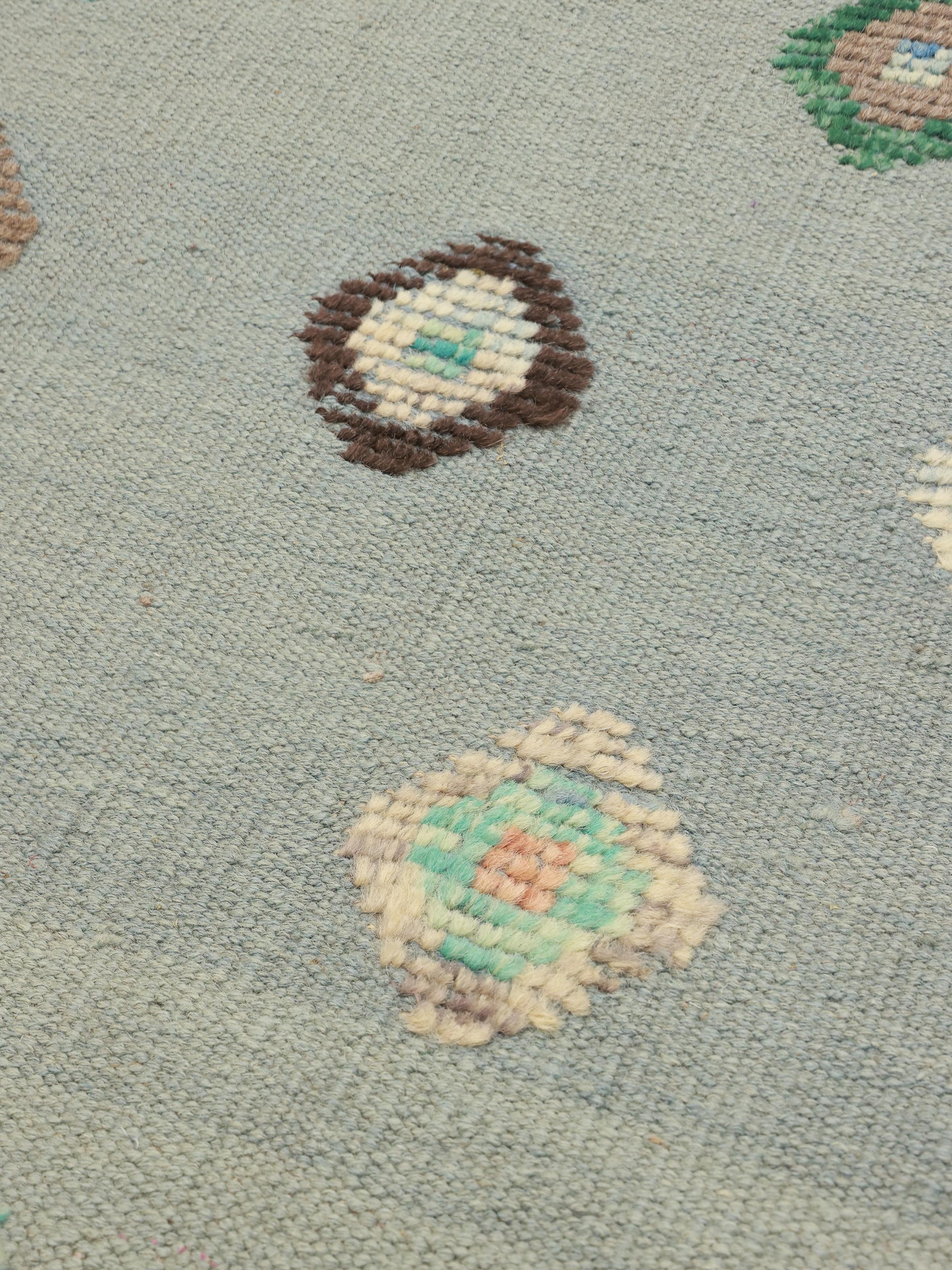
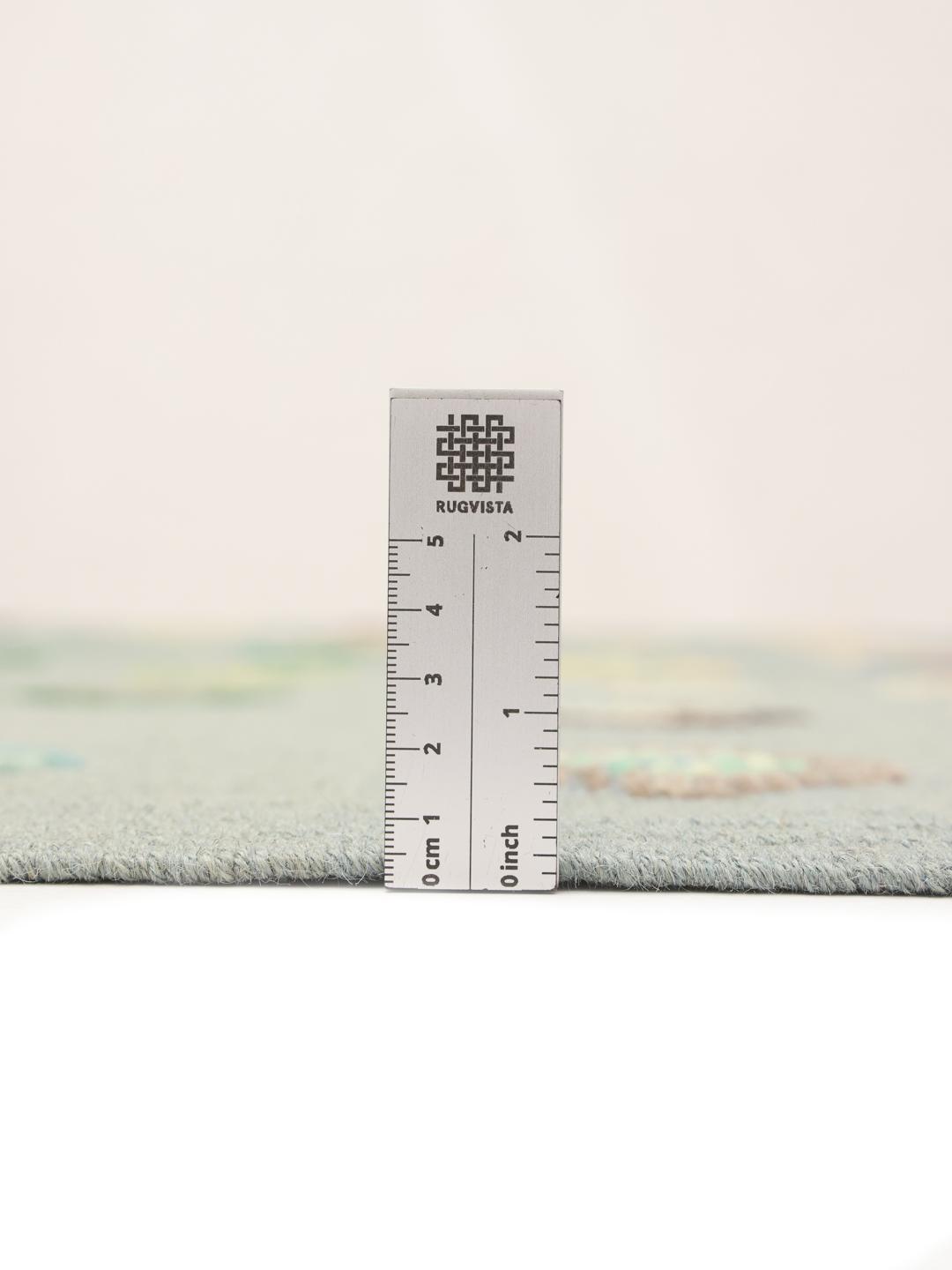
The term 'Nimbaft' refers to a specific style of weaving that emphasises a tight, clean structure. This technique is highly regarded because it produces a rug that is both thin and incredibly robust. For the weaver, this requires a steady hand and a deep understanding of tension, as every single thread must be placed with precision to ensure the geometric patterns remain perfectly aligned across the entire surface.
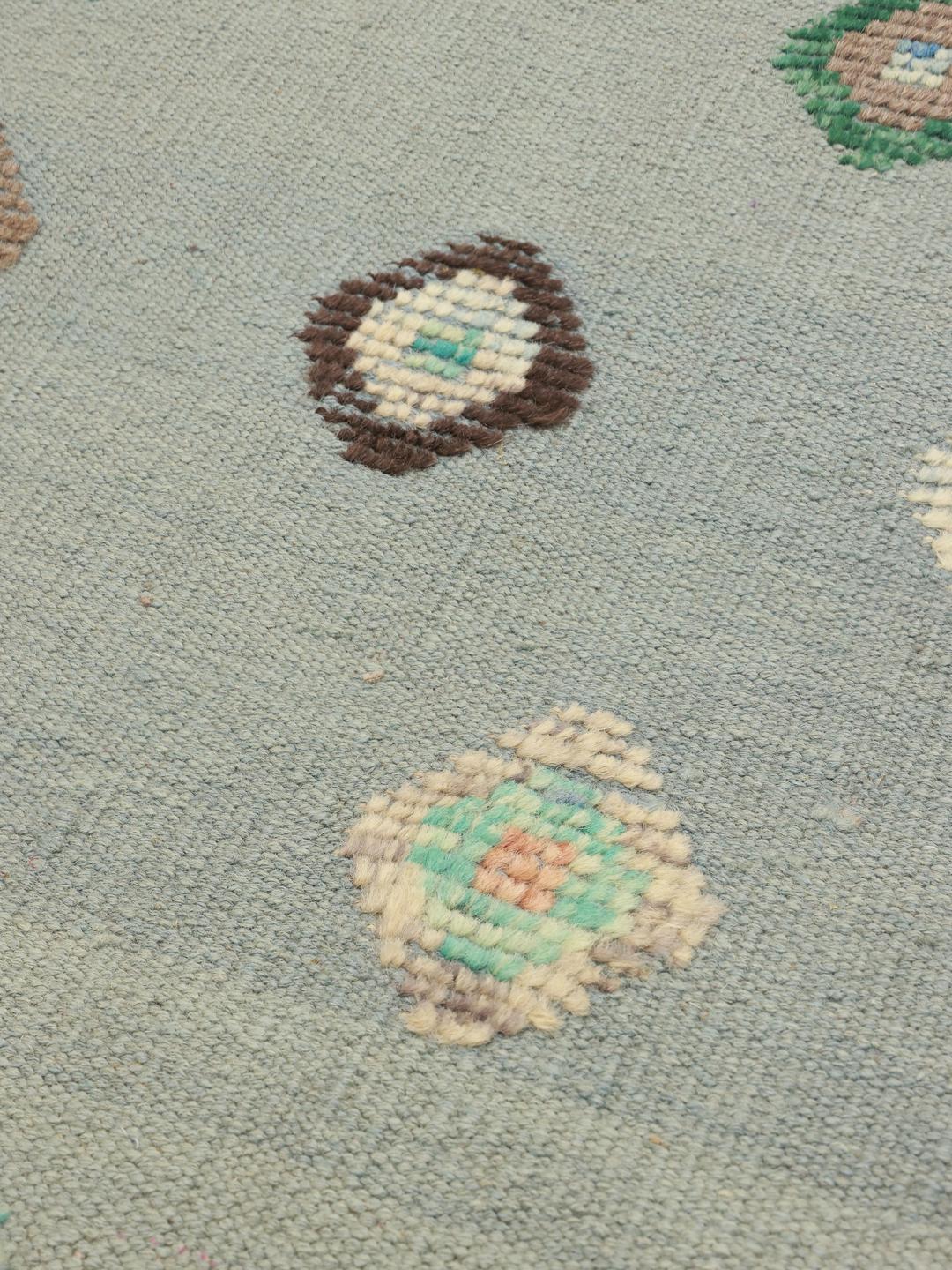
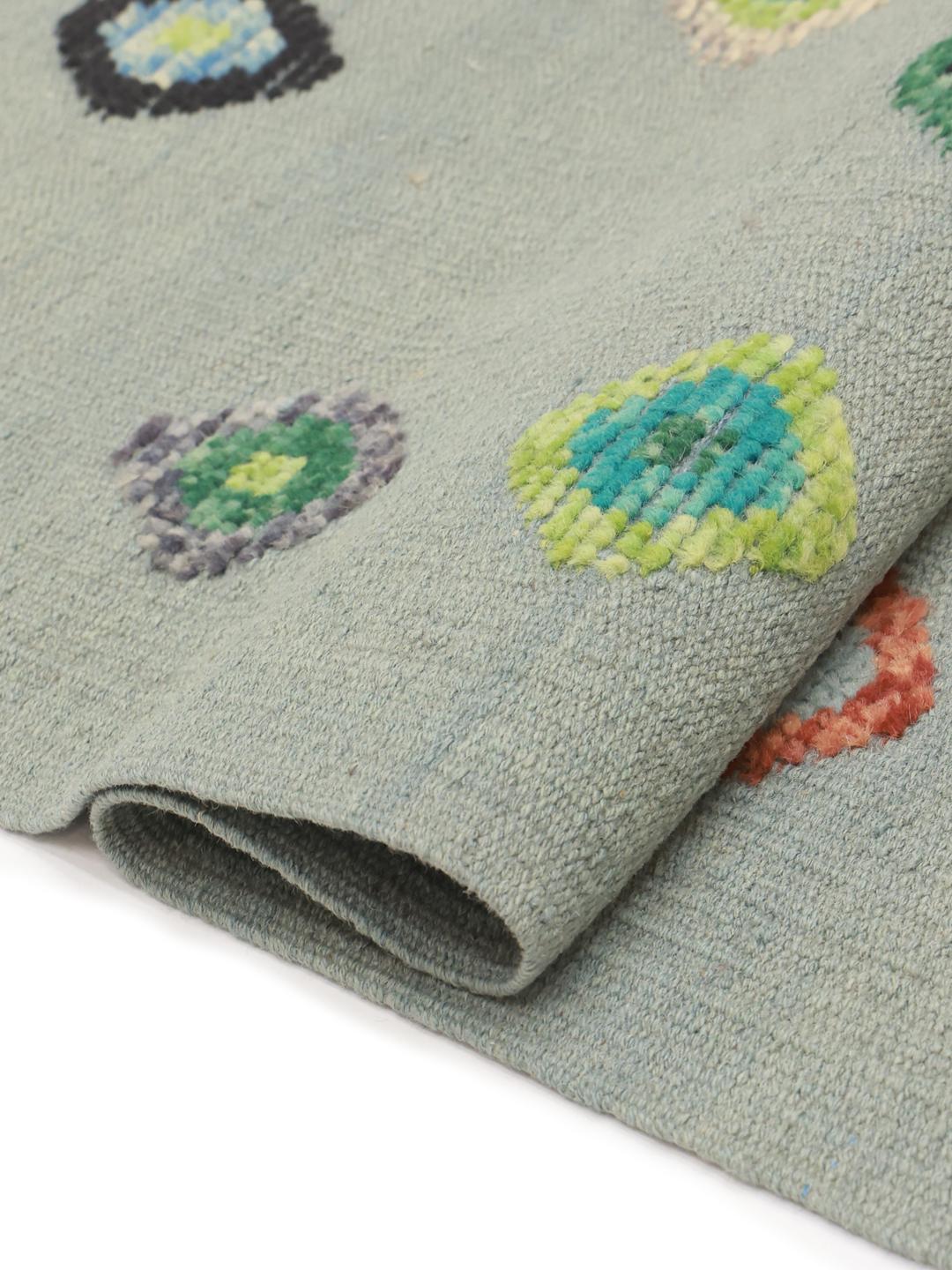
Visually, these rugs are defined by their use of geometric motifs, most notably the diamond shapes seen here. These patterns are often symbolic, reflecting the cultural identity and environmental surroundings of the artisan. The tradition of using a wide variety of colours within these small, repeating shapes is a hallmark of Afghan kilim makers, allowing them to showcase their creativity within a disciplined design framework.
Owning a piece from this tradition is an opportunity to connect with a craft that has survived through generations of social and political change. These rugs are highly valued by collectors not just for their aesthetic beauty, but for the resilience and skill they represent. By bringing a Nimbaft into your home, you are preserving a piece of cultural history and honouring the traditional methods that continue to define the identity of Afghan textiles.