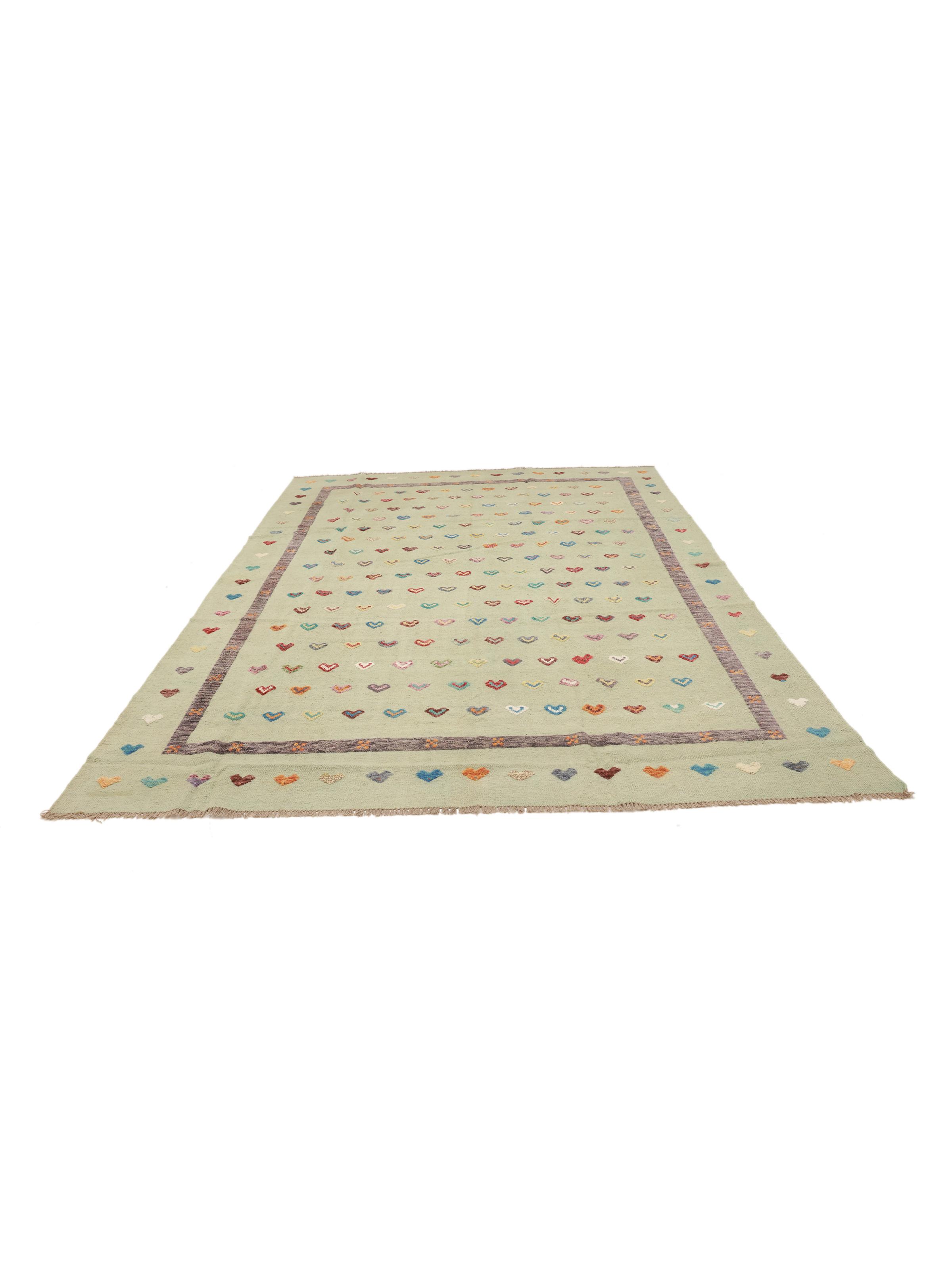
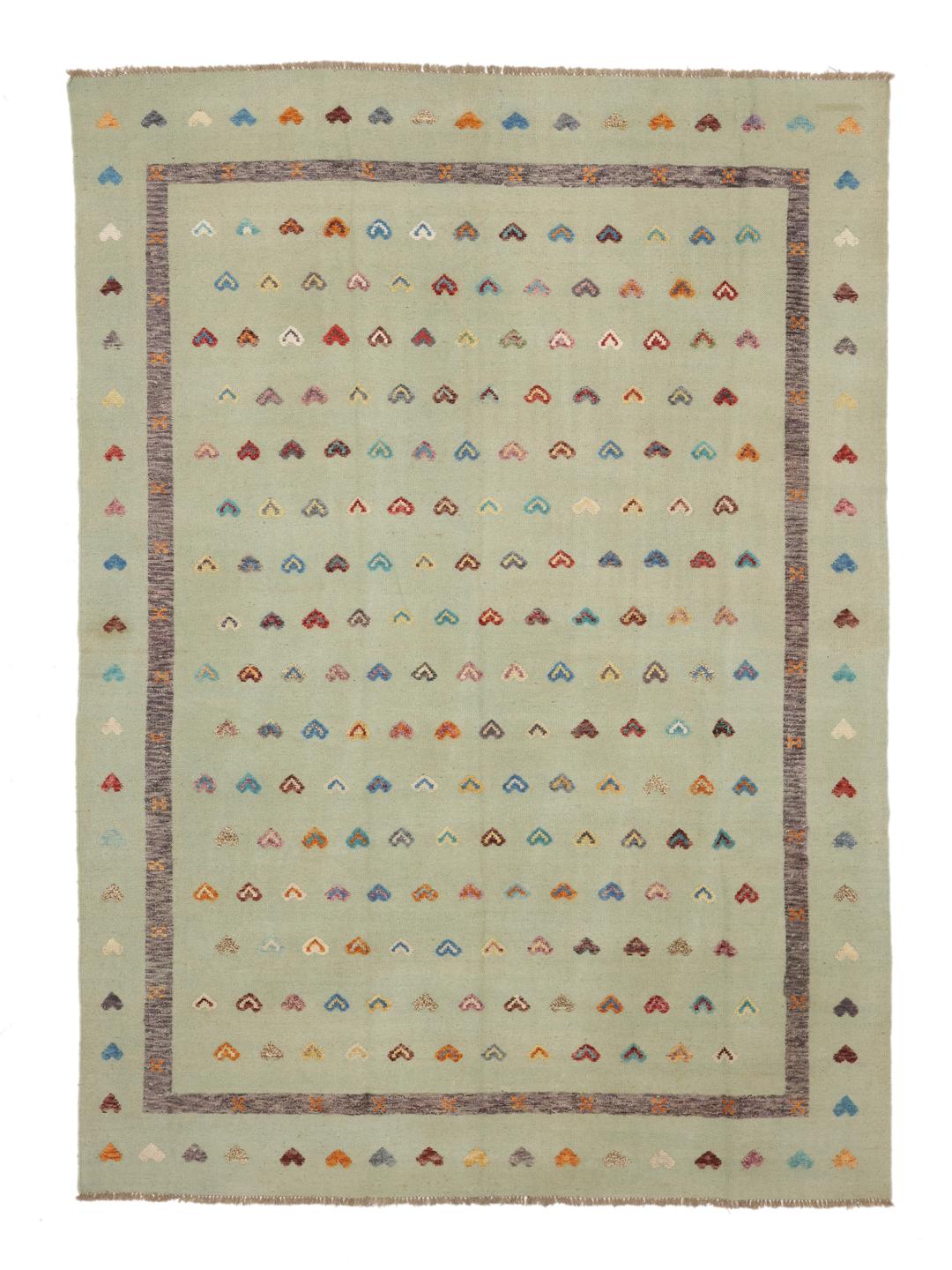
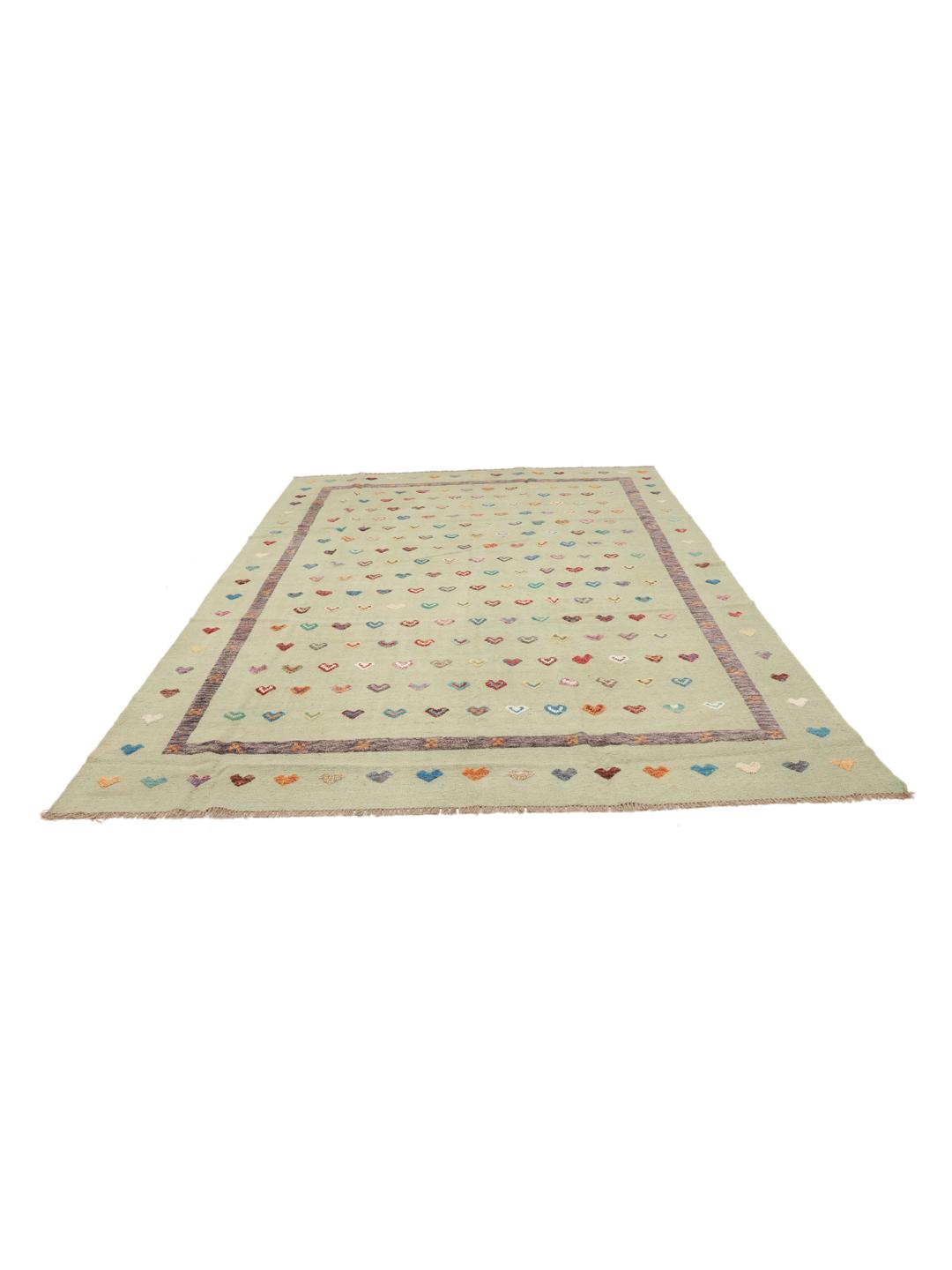
The Kelim tradition has deep roots across the Middle East and Central Asia, serving as both a functional and artistic staple for generations. These flat-woven rugs were historically created by nomadic and village communities, designed to be lightweight, portable, and durable enough to serve as floor coverings, wall hangings, or storage bags.
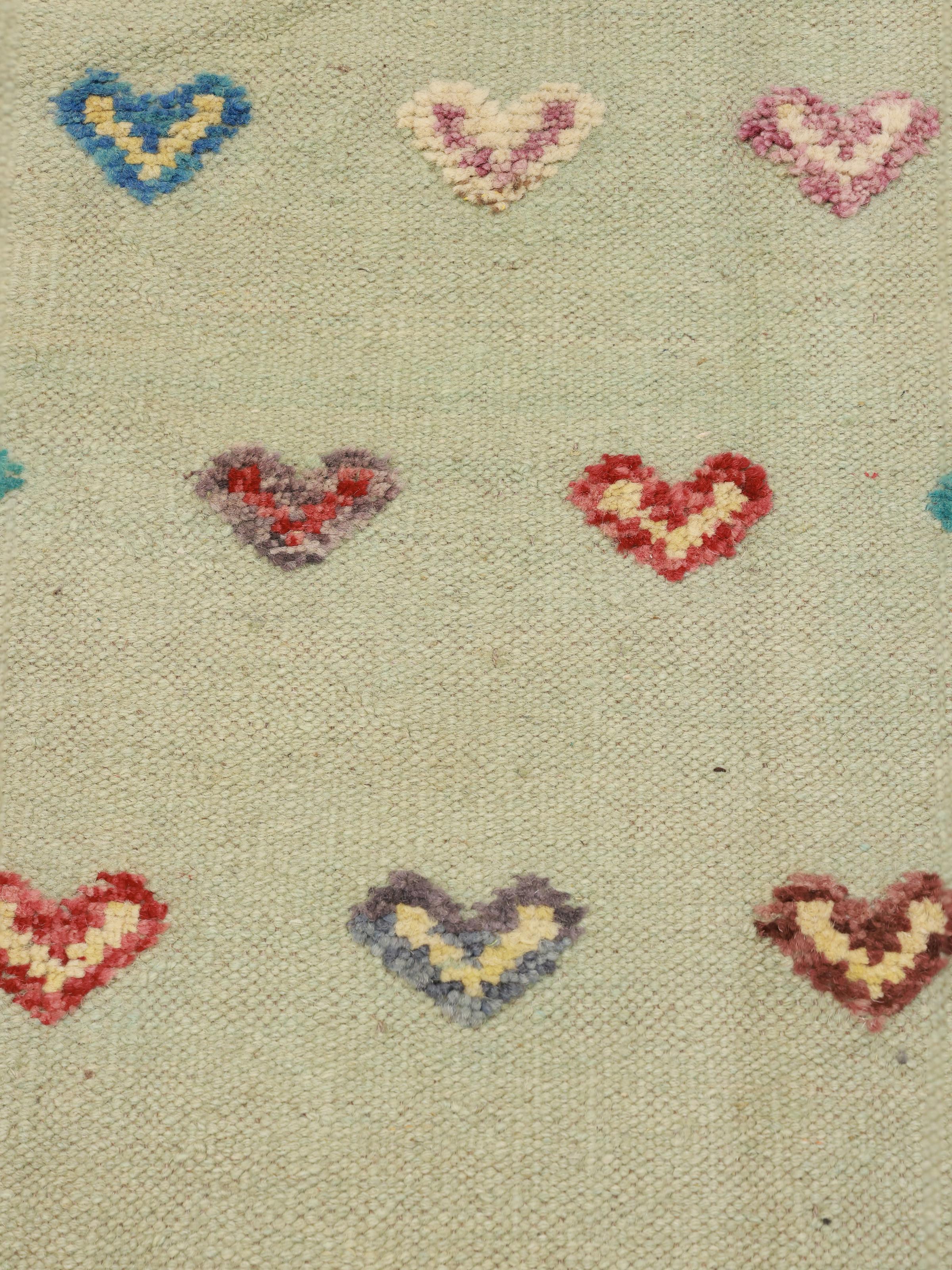
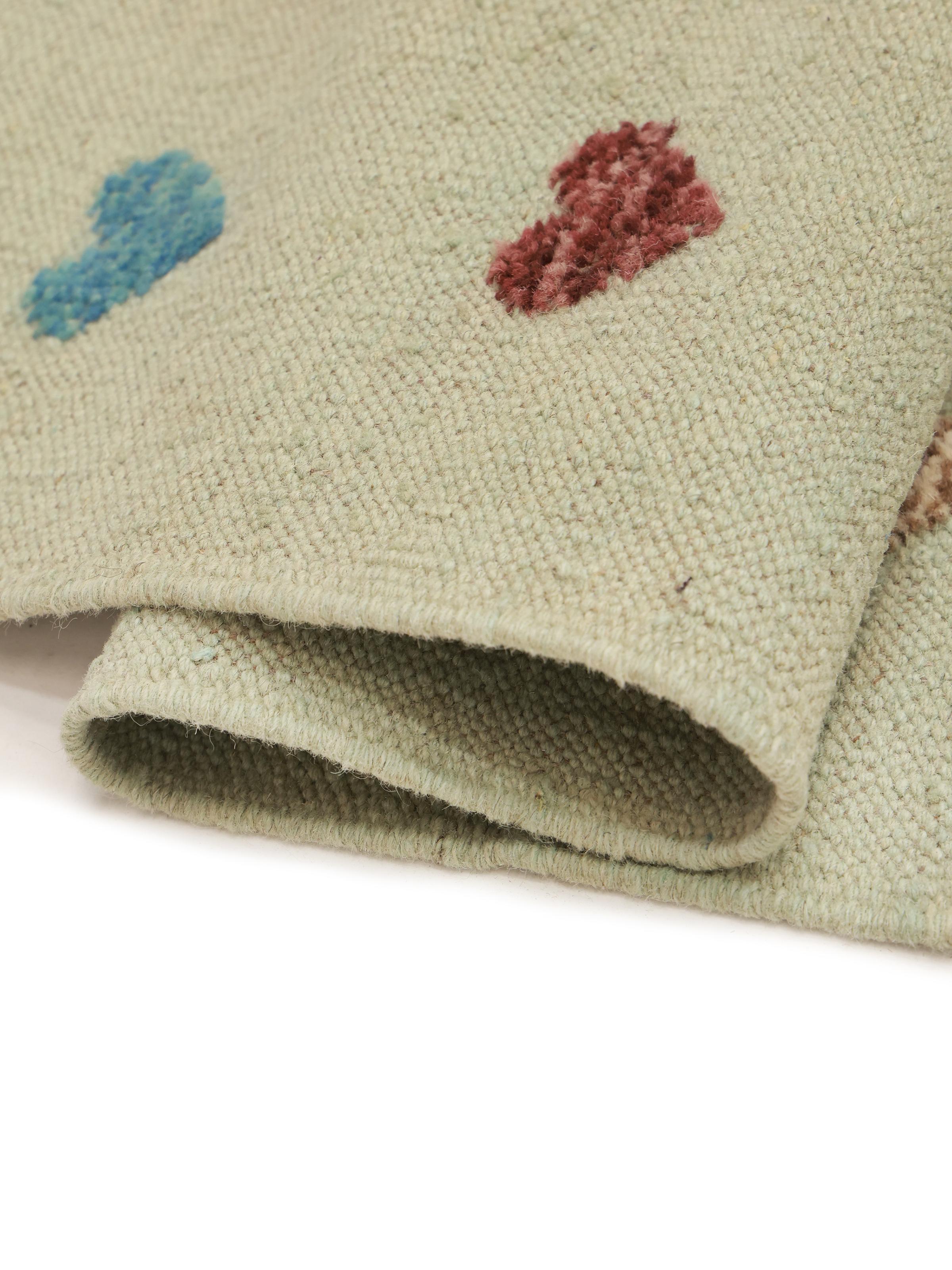
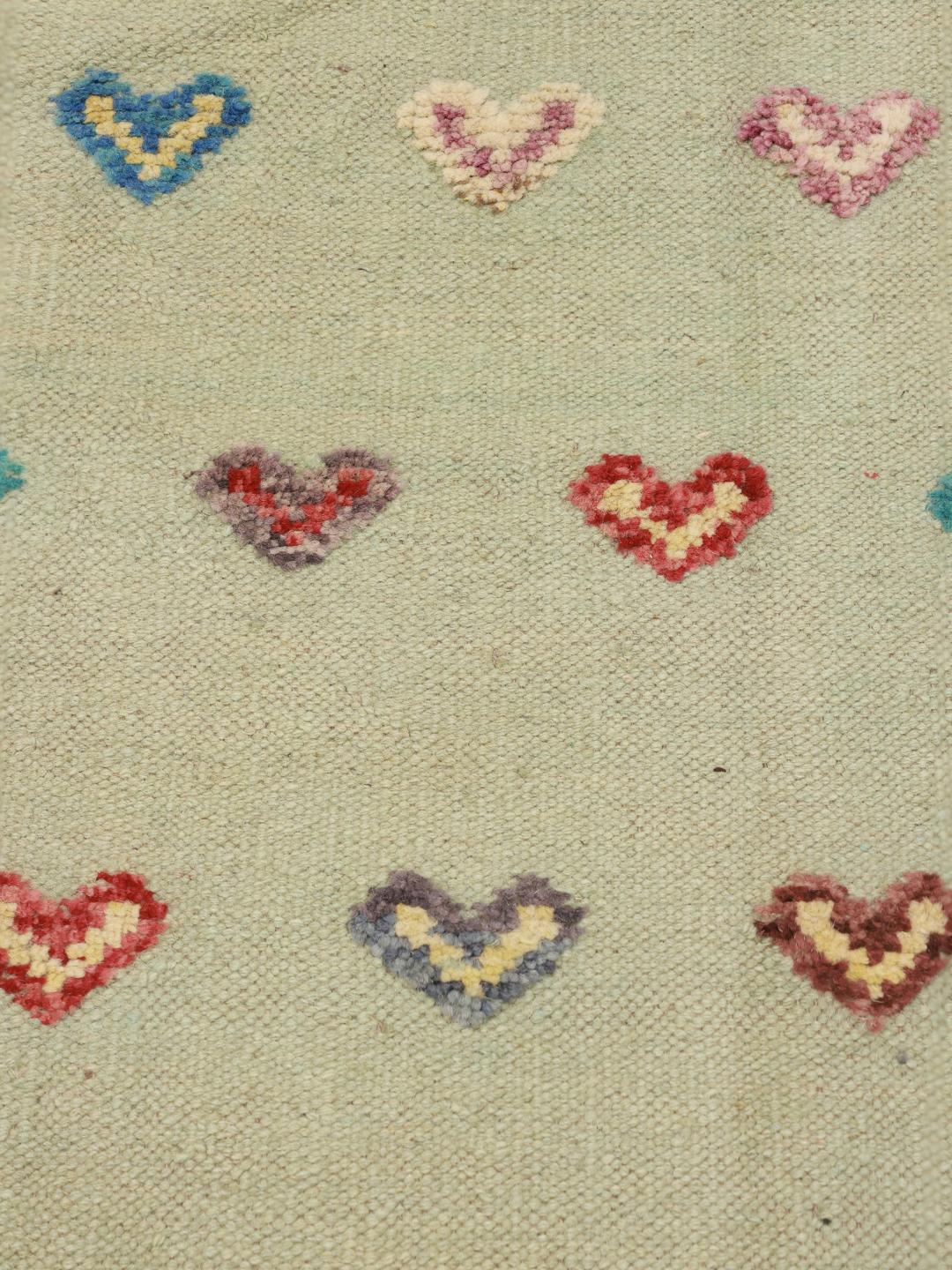
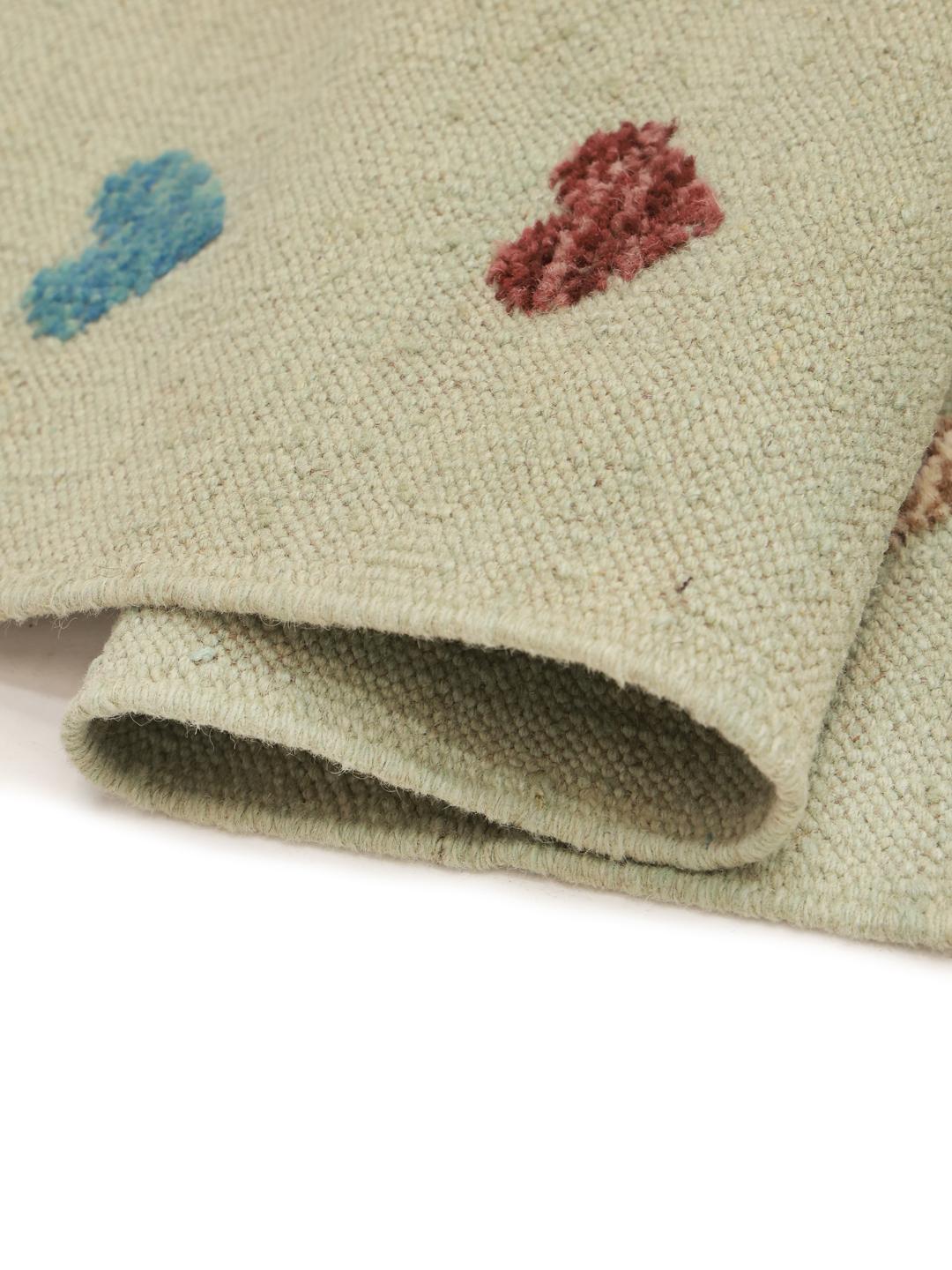
The term 'Kelim' refers specifically to this tapestry-weave technique, where the warp and weft threads are interlaced to create a smooth, pileless surface. This method allows for crisp, geometric pattern definition and a reversible design, making the rug highly practical for varied uses in the home.
This specific Nimbaft style highlights the Afghan tradition of incorporating playful, individual motifs within a larger field. While many traditional rugs rely on rigid, formal medallions, the Nimbaft often embraces a more scattered, rhythmic approach, using a variety of colours to create a sense of movement and visual interest that feels fresh and modern.
Collecting a Kelim is an opportunity to own a piece of cultural heritage that balances ancient skill with contemporary appeal. These rugs are highly valued for their raw, natural texture and the immense patience required to weave them, representing a commitment to preserving traditional craft in a modern world.