Kilim rugs represent one of the oldest and most respected weaving traditions in the Middle East, originating from the nomadic cultures that traversed the rugged landscapes of the region. These flat-woven textiles were historically essential to nomadic life, serving as everything from floor coverings and storage sacks to blankets and wall hangings, prized for their portability and immense strength.
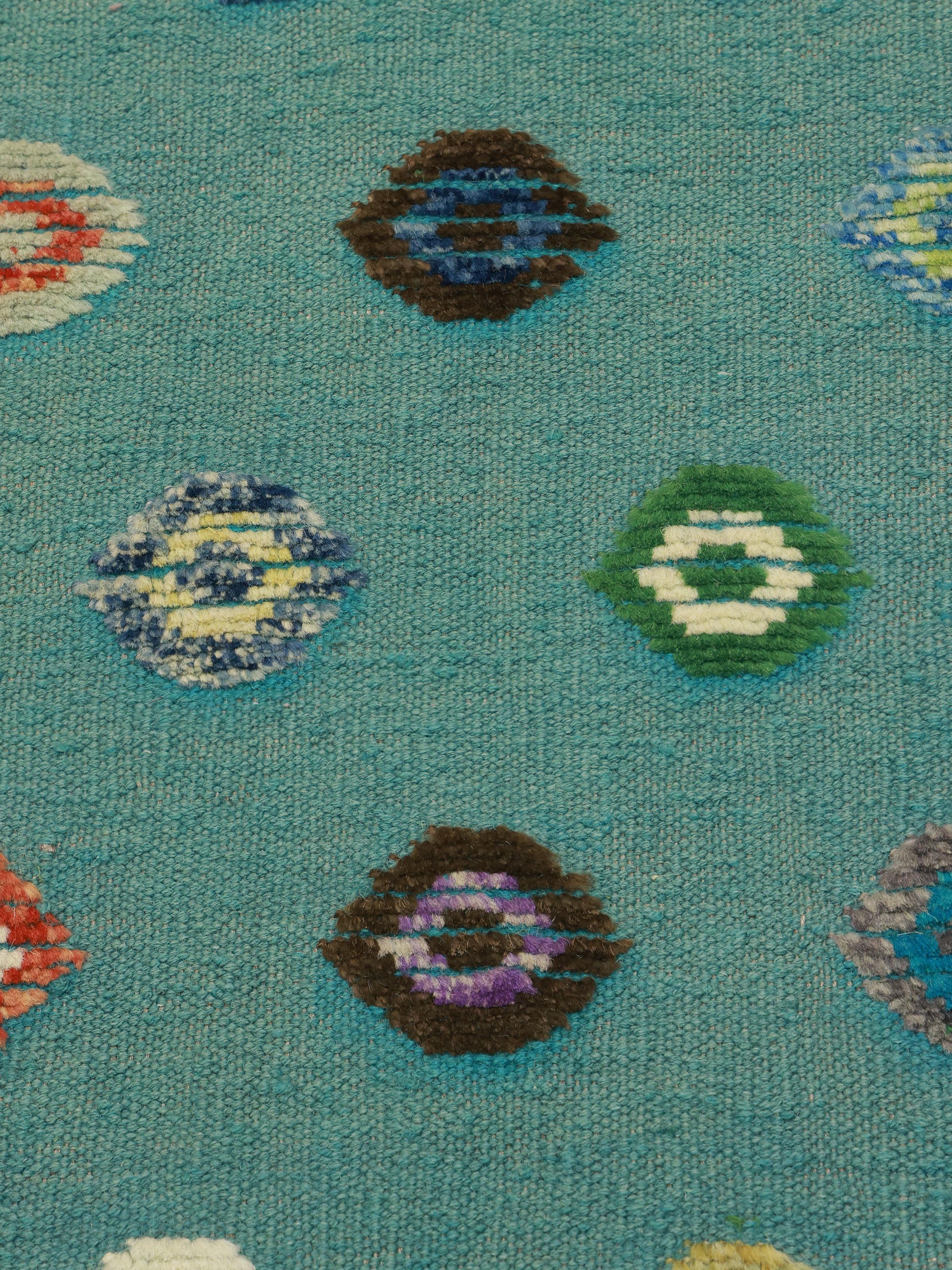
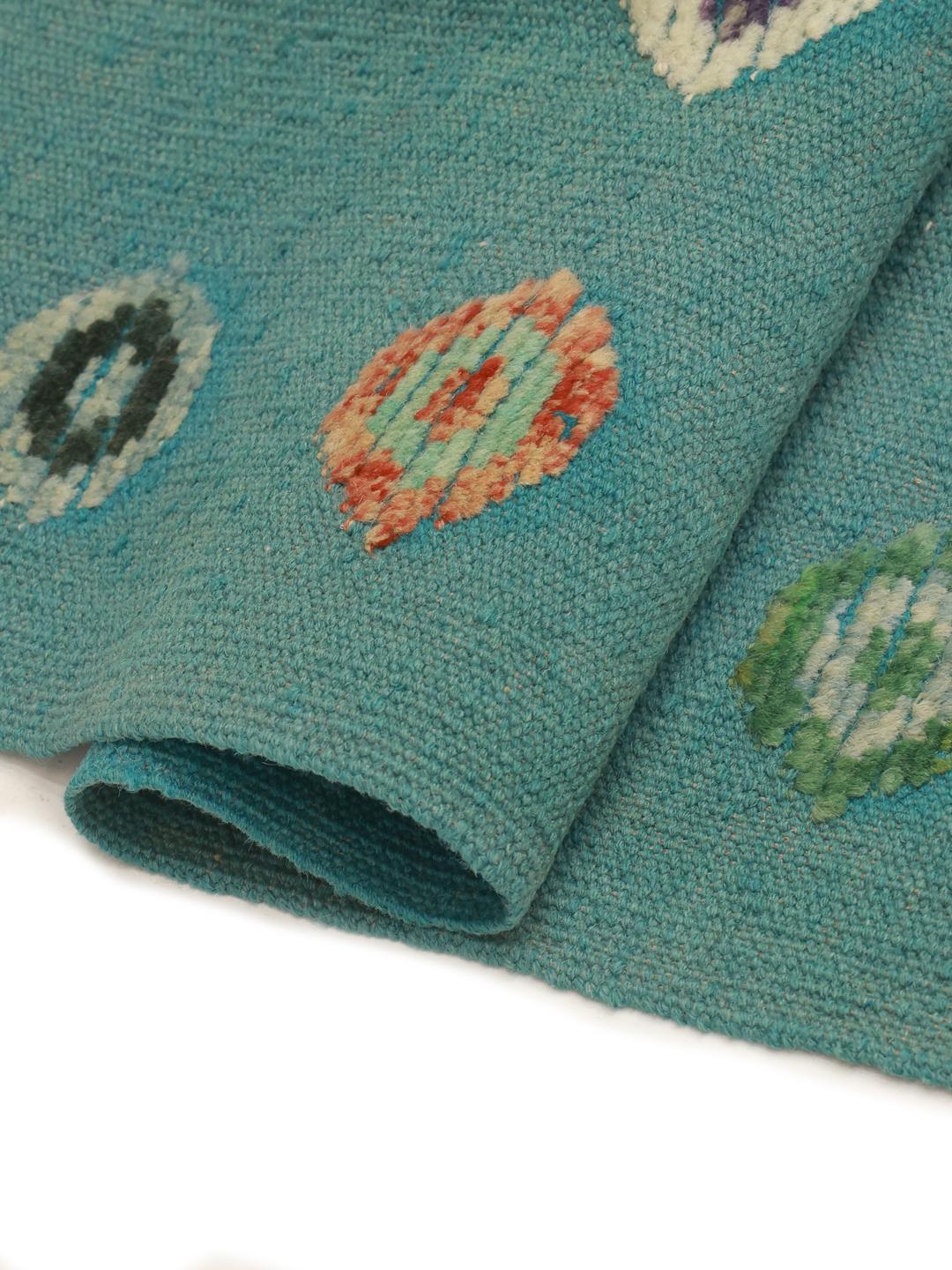
The term 'Nimbaft' refers to a specific style of weaving that emphasises a refined, lighter construction. Unlike traditional pile rugs, these are created by tightly interlacing the warp and weft threads, which results in a smooth, reversible surface. This technique allows for exceptionally clean, sharp geometric lines that define the rug's aesthetic, showcasing the weaver's ability to manipulate intricate patterns with precision.
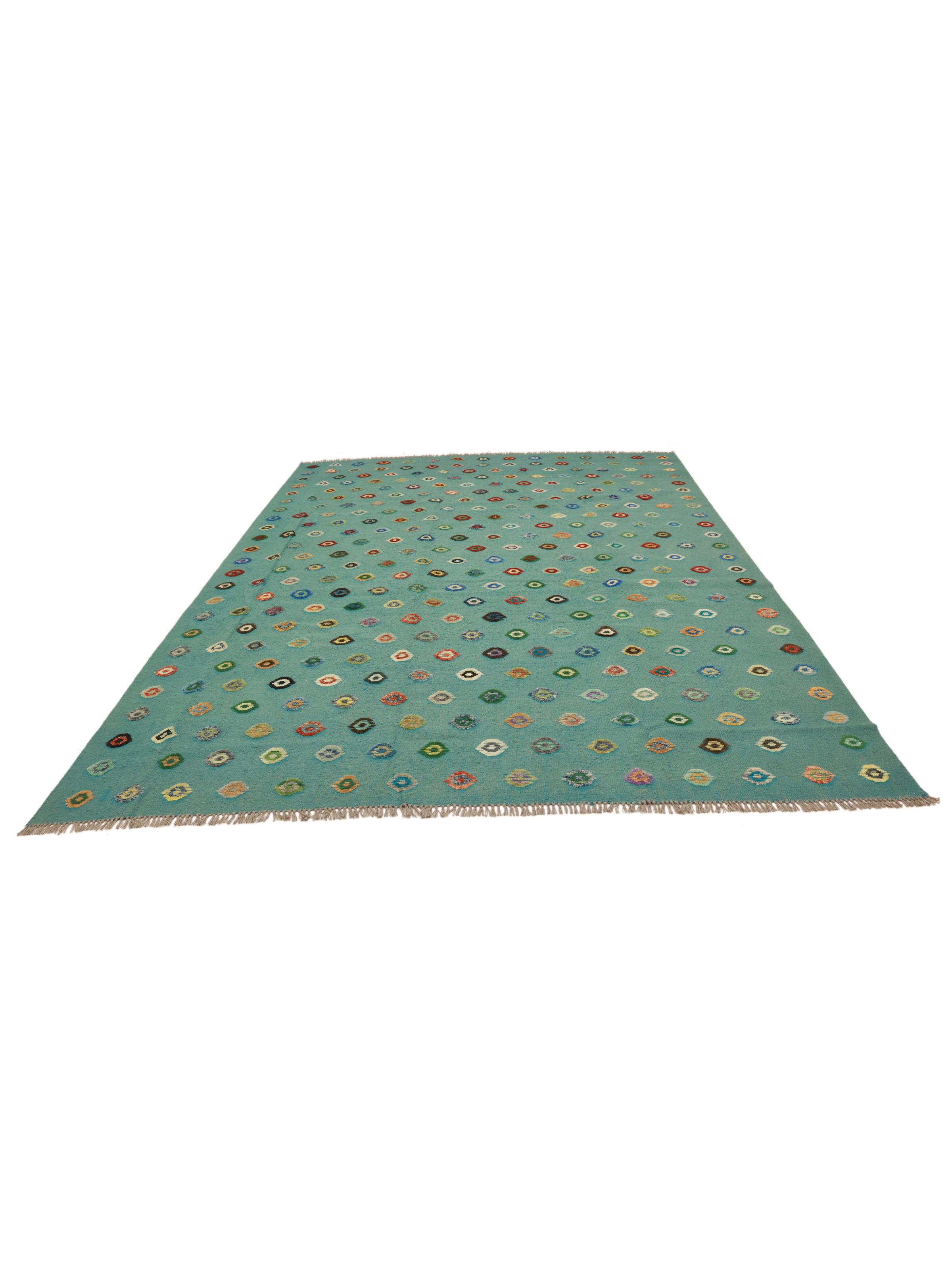
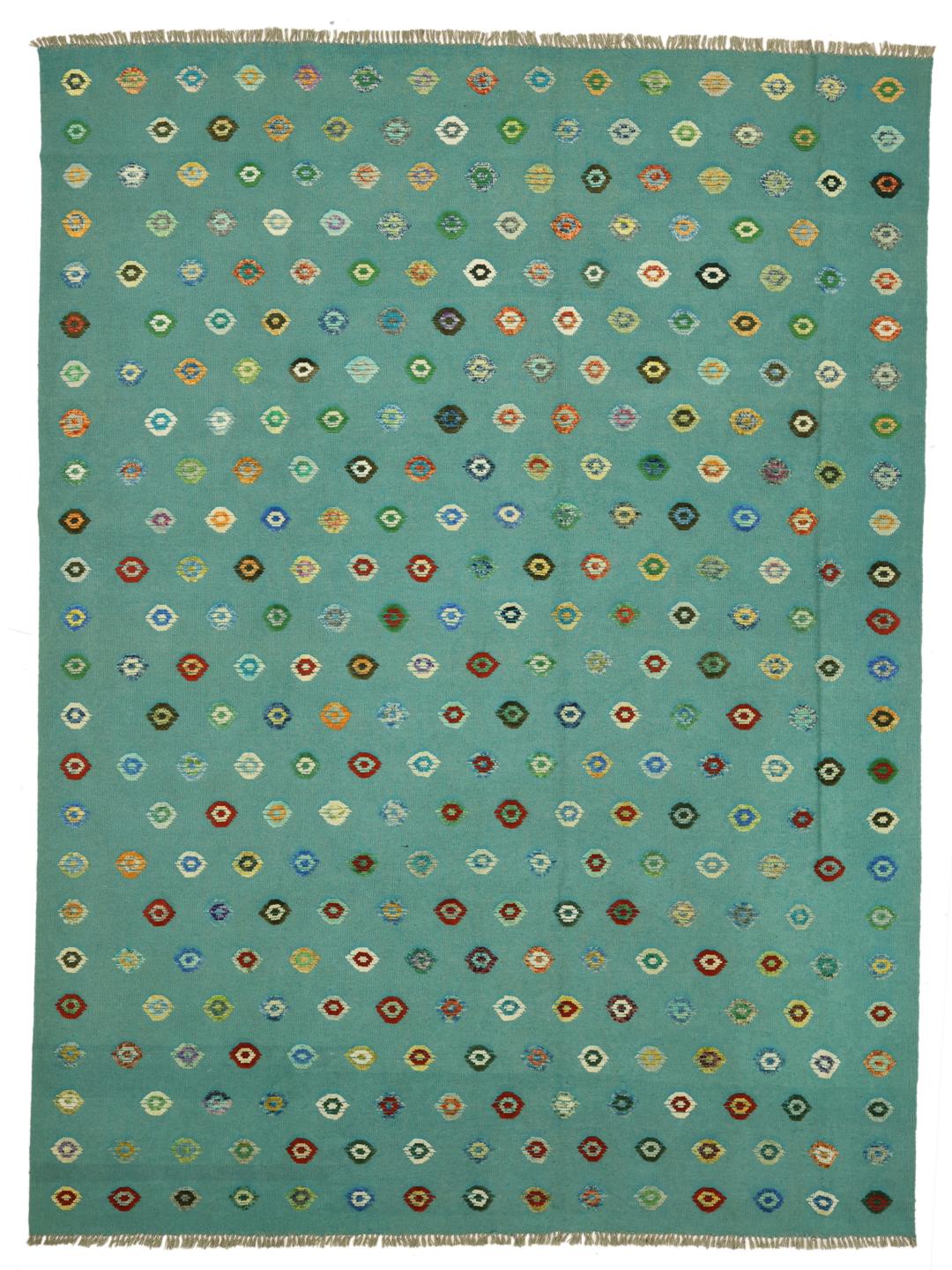
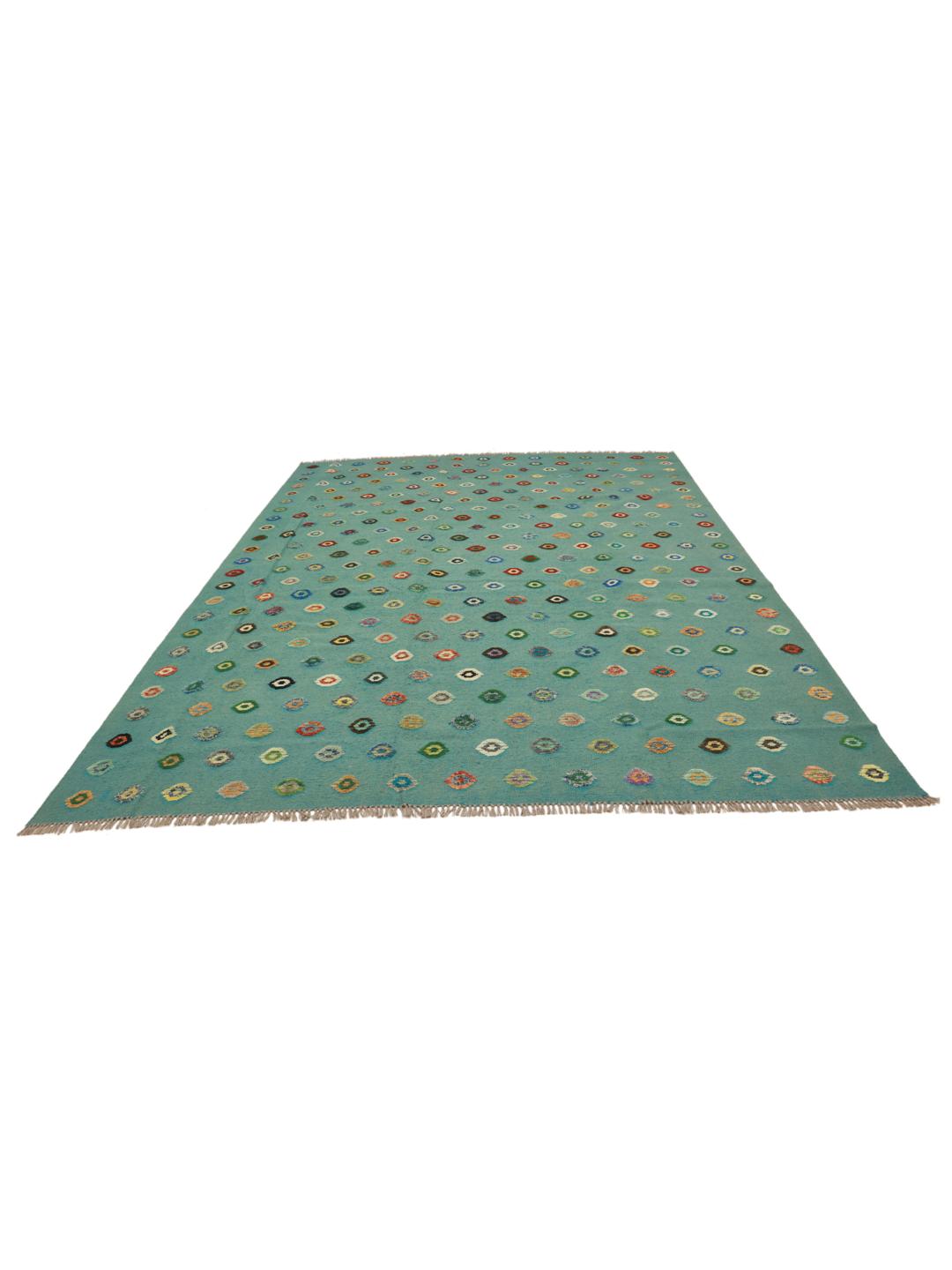
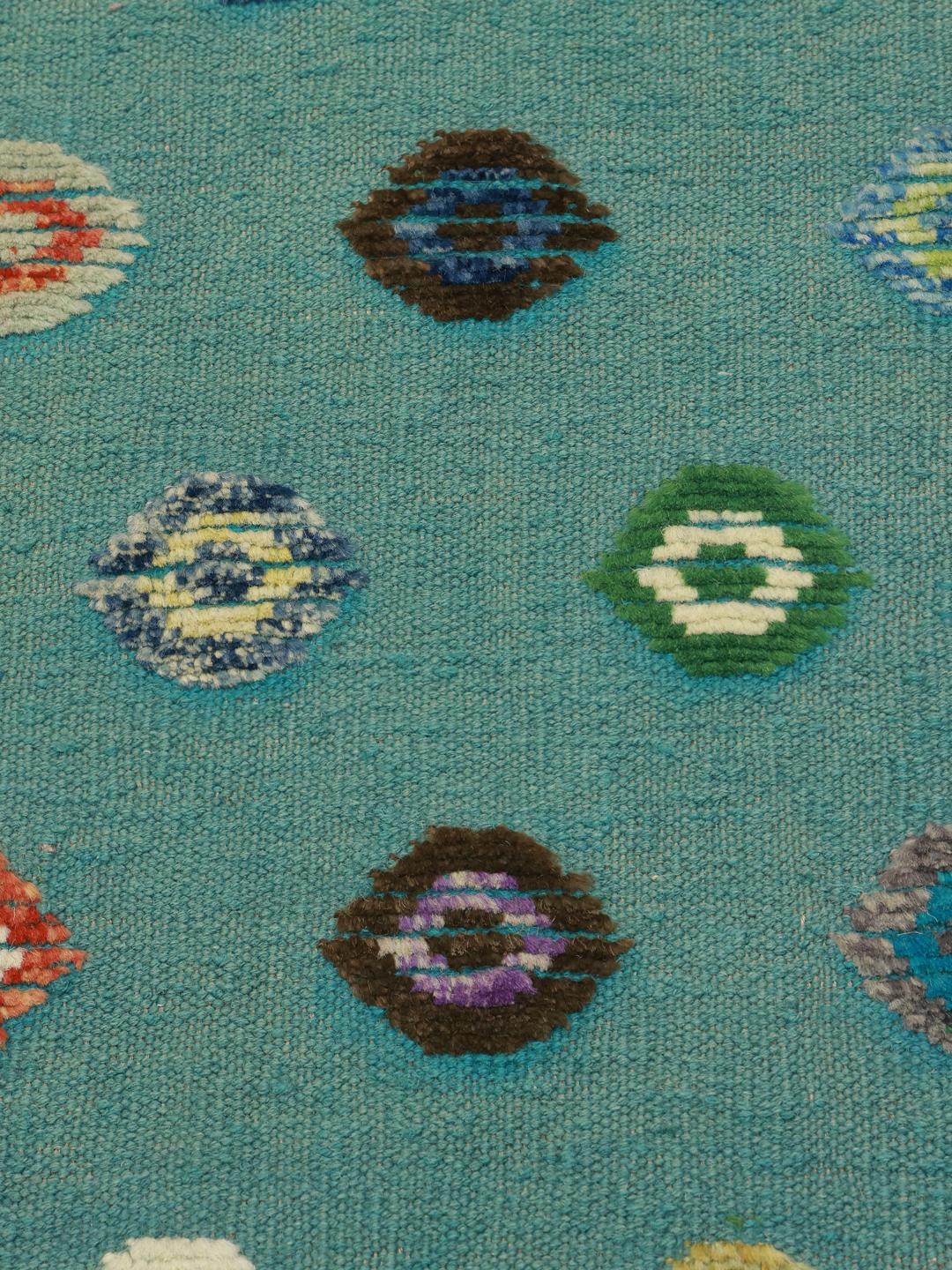
The visual language of this rug is deeply rooted in tribal heritage, where motifs often served as symbolic shorthand for the weaver's environment, beliefs, and family history. The scattered, repeating geometric shapes seen here are a hallmark of this tradition, designed to create a sense of harmony and balance. The choice of a teal field is a beautiful, contemporary evolution, offering a vibrant backdrop that makes the traditional motifs stand out with clarity.
Collecting a kilim from this tradition is an investment in cultural heritage. Because each rug is created without a formal blueprint, relying instead on the weaver's memory and skill, every piece tells a singular story. Owning one is a way to preserve these ancient techniques and bring a piece of authentic, hand-crafted history into a modern home.