The tradition of weaving flat-weave rugs, known as kelims, is deeply rooted in the history of the Middle East. These rugs were historically created by nomadic tribes who needed durable, portable, and functional textiles for their tents. Over generations, these weaving practices evolved from utilitarian necessities into a sophisticated art form that reflects the cultural landscape of the region.
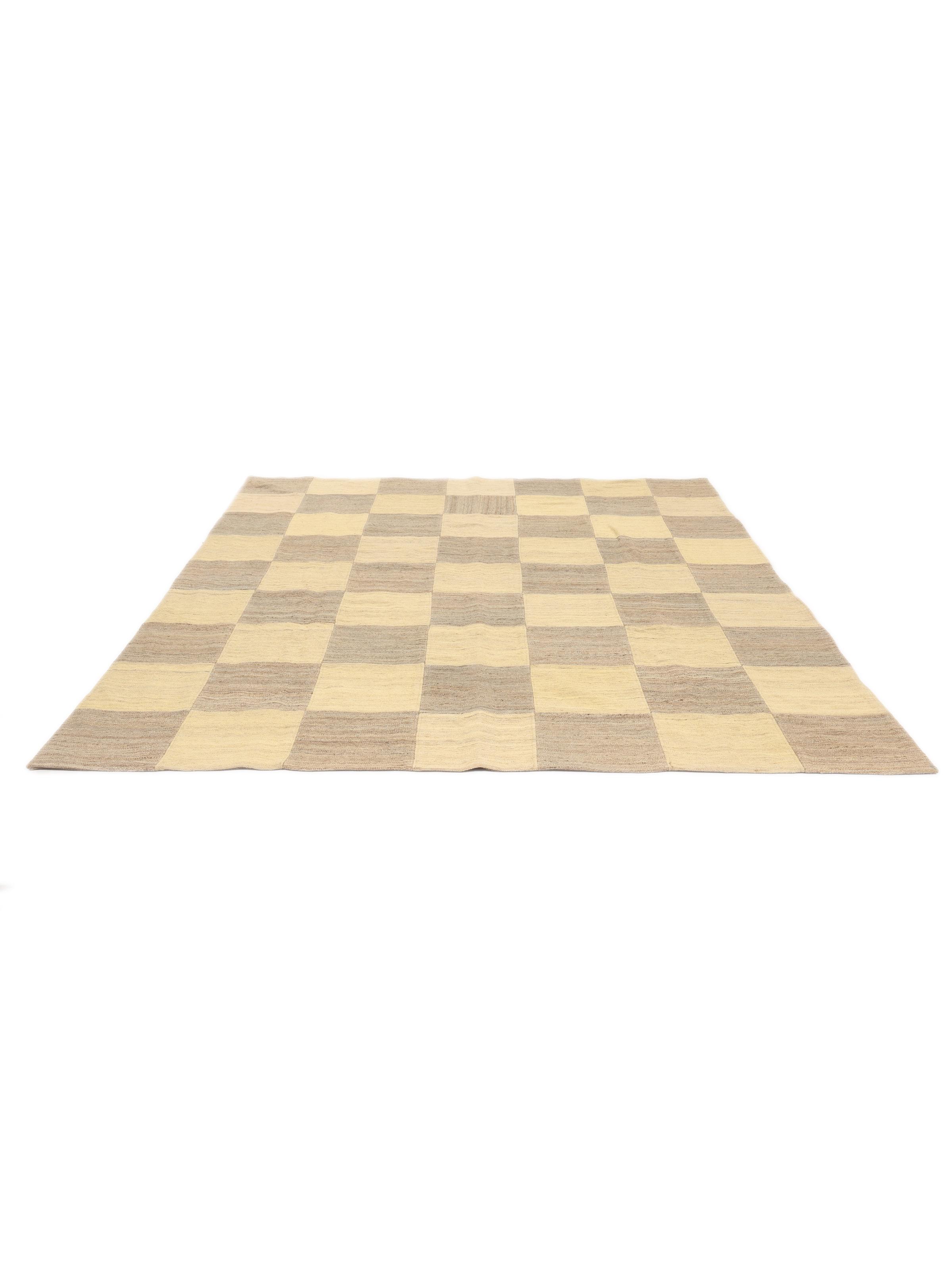
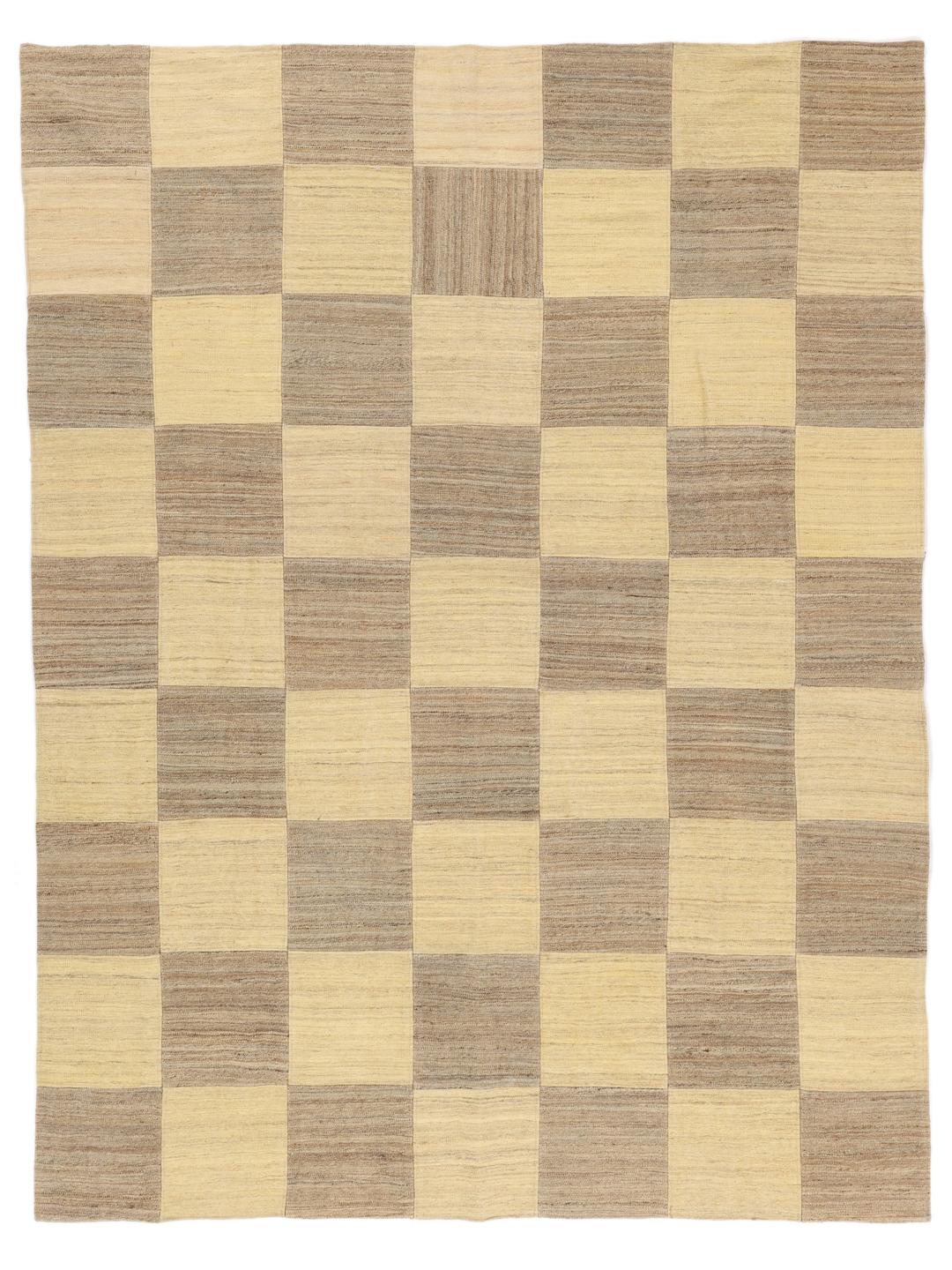
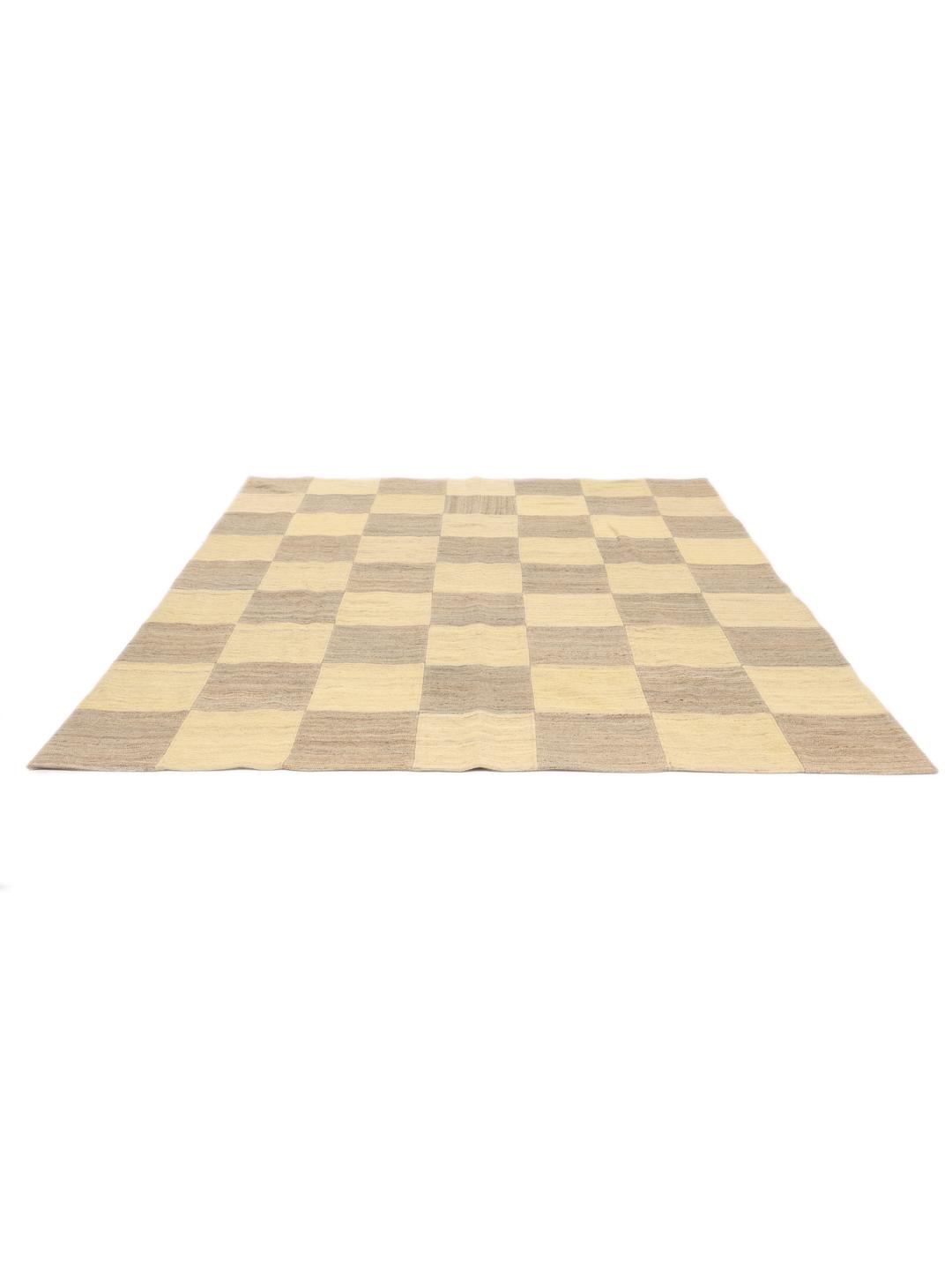
The term 'patchwork' in the context of these rugs refers to a design approach where different segments are carefully joined to create a cohesive whole. This technique allows for a playful exploration of geometry and colour, turning individual woven sections into a larger, harmonious composition. It is a modern interpretation of ancient weaving traditions, celebrating the modularity and flexibility that have always been hallmarks of regional rug-making.
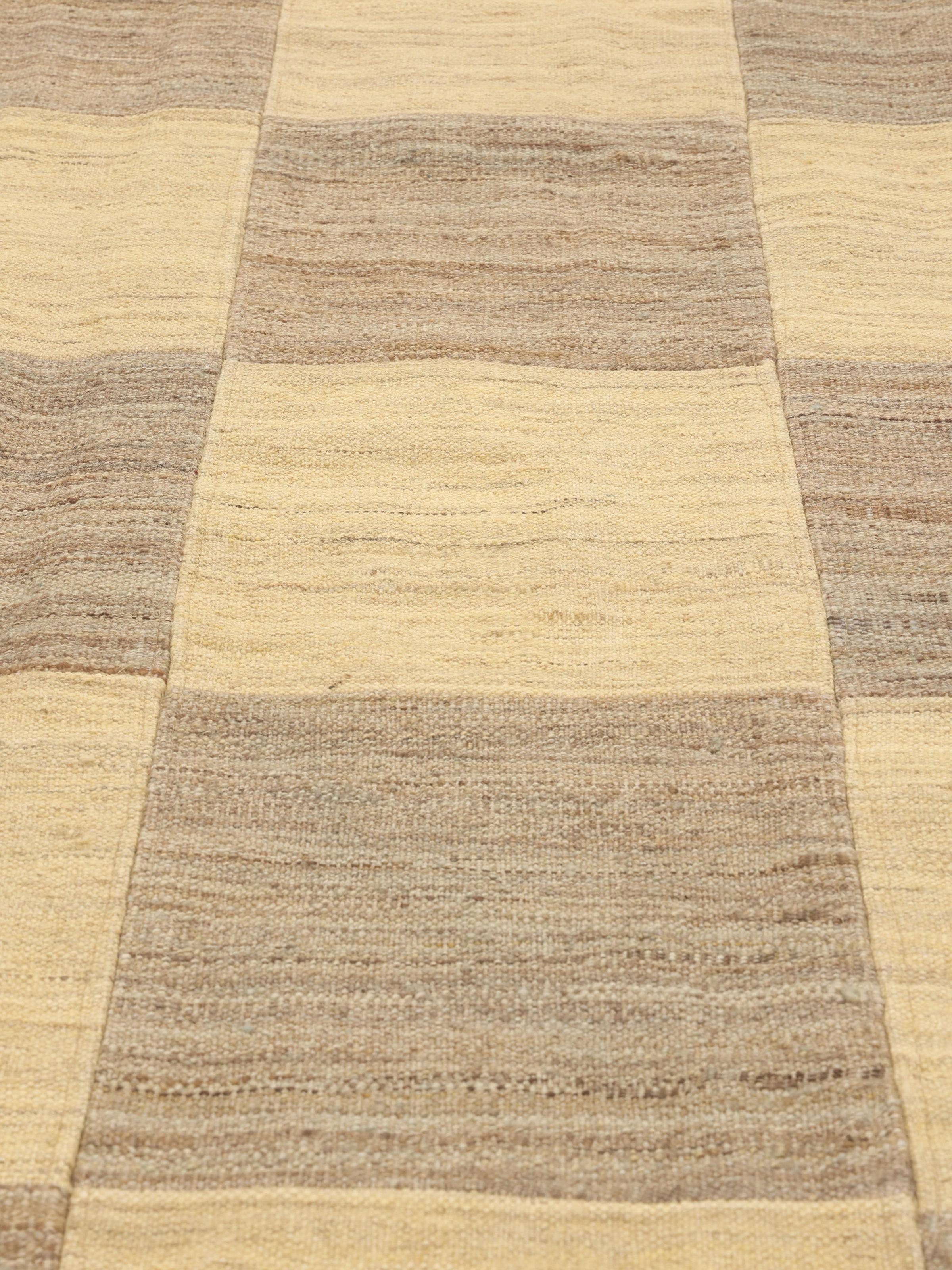
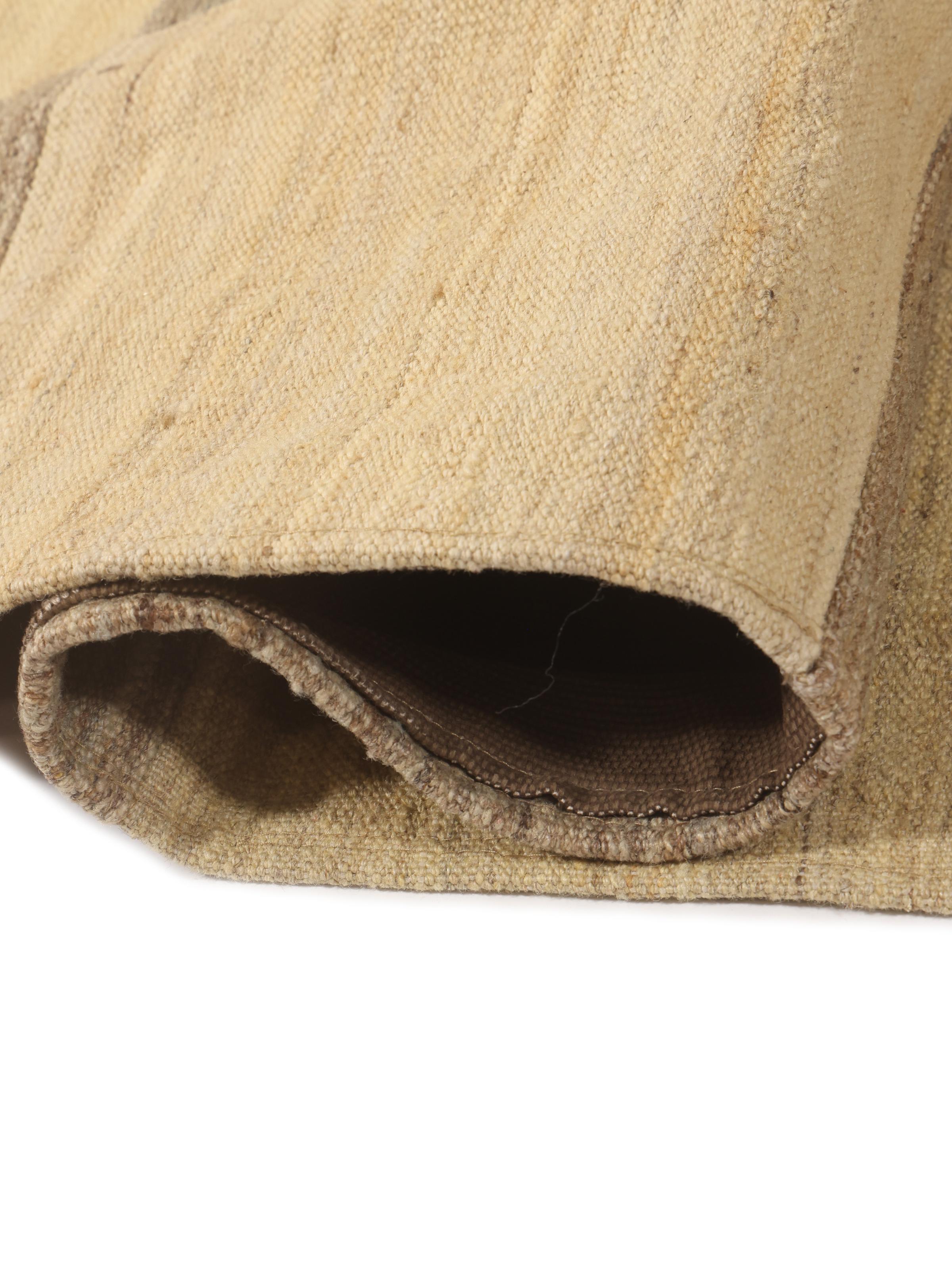
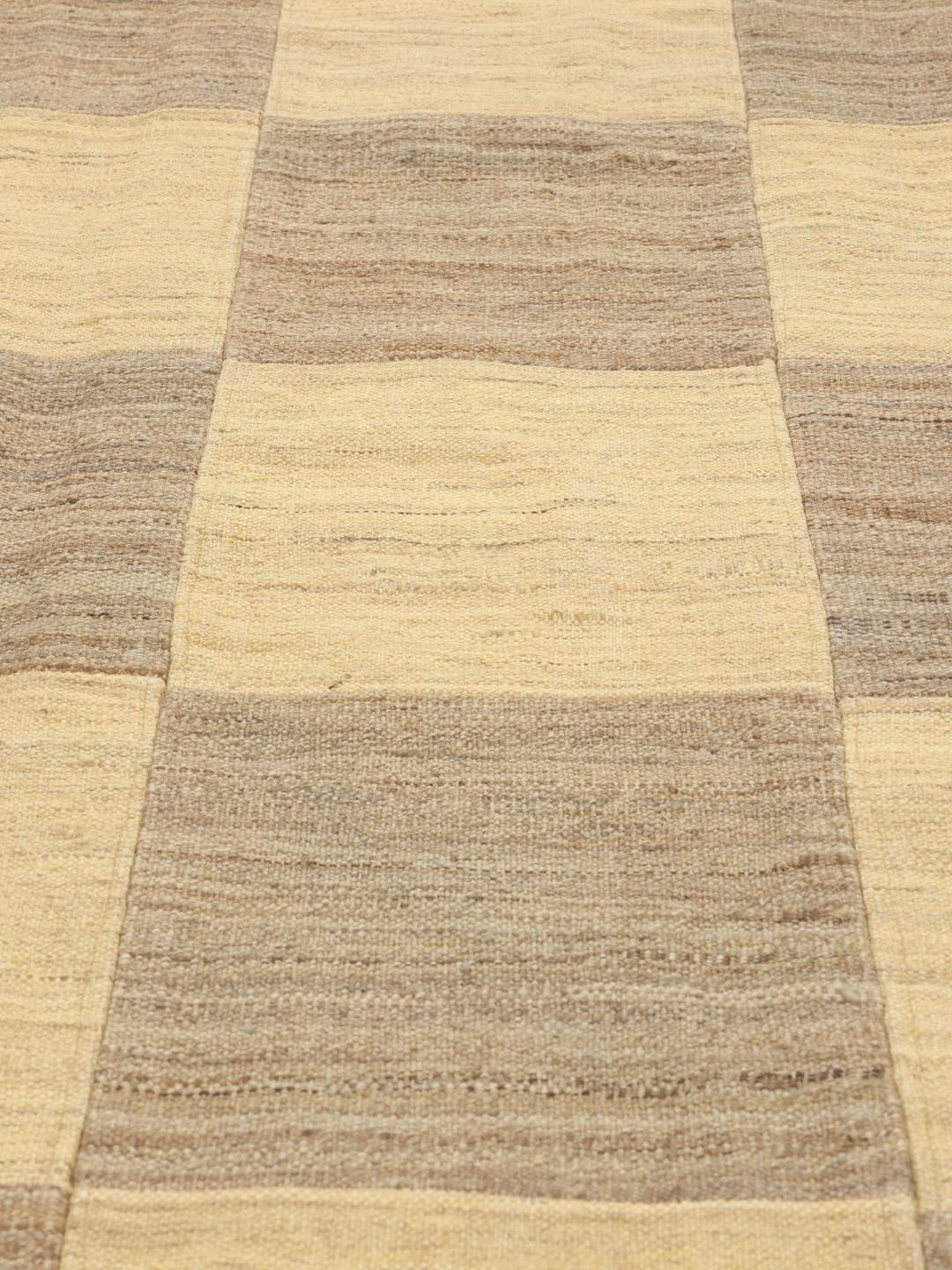
Signature elements of this tradition include the use of natural, undyed wool which highlights the inherent texture and warmth of the fibre. In this particular piece, the checkered design is a nod to traditional geometric motifs that have been used for centuries to bring order and visual interest to textile surfaces. The lack of elaborate patterns emphasises the purity of the weave and the high quality of the wool.
Owning a piece from this tradition is an opportunity to connect with a long-standing heritage of craftsmanship. These rugs are highly valued by collectors and design enthusiasts alike, not just for their aesthetic appeal, but for the skill and patience required to produce them. Each rug tells a story of cultural continuity, offering a sense of history and warmth that is rarely found in contemporary, mass-produced home furnishings.