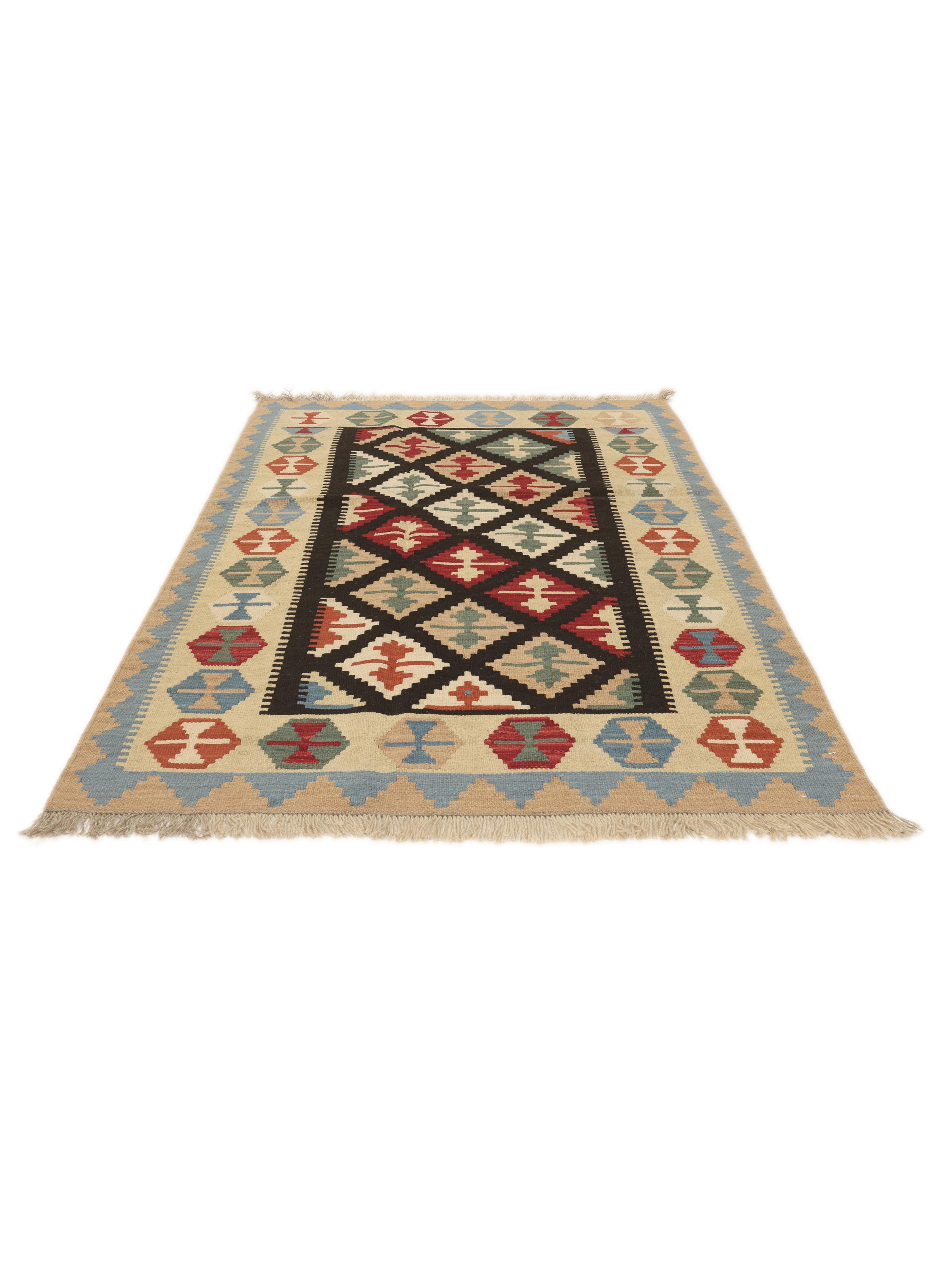
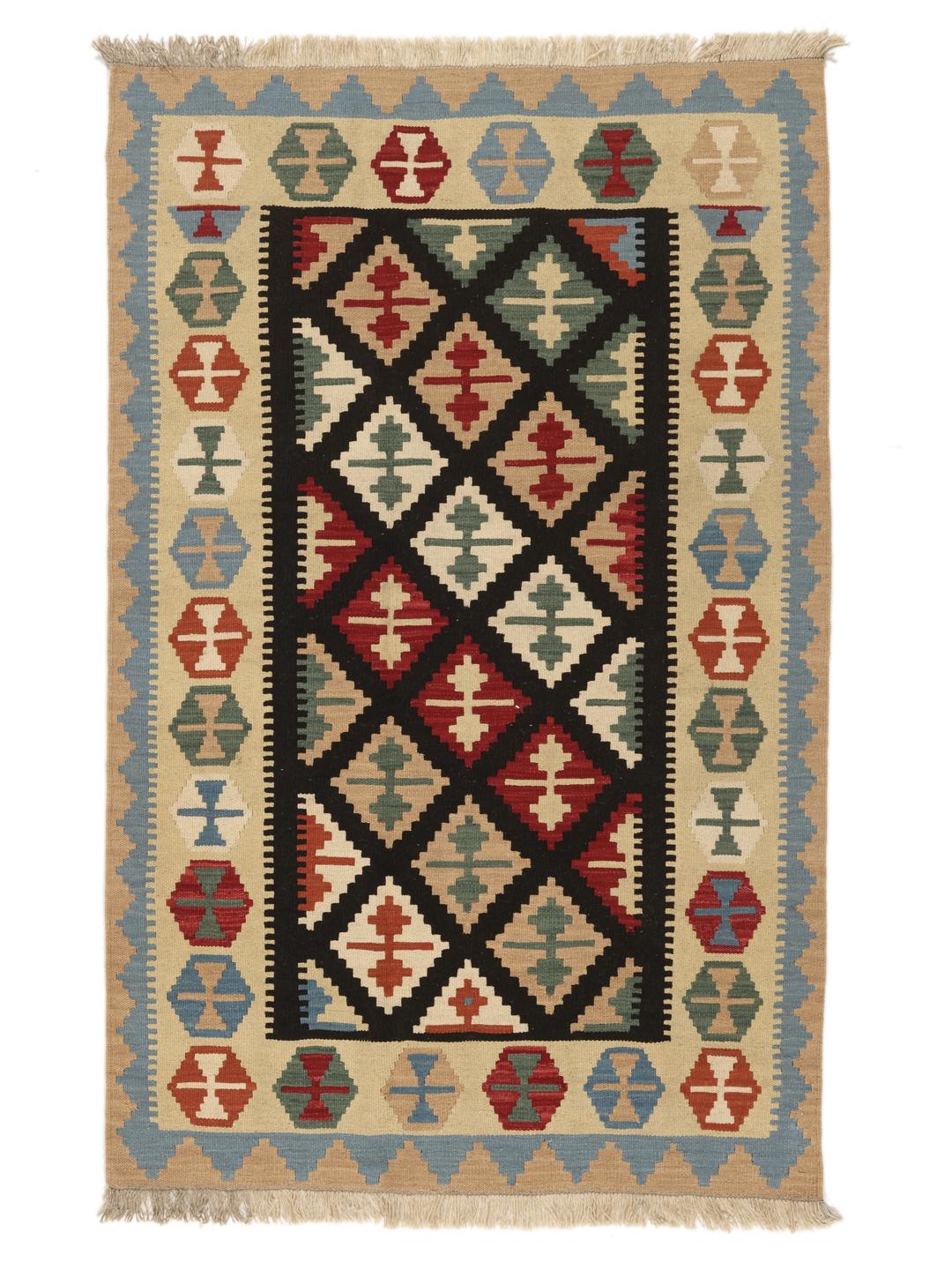
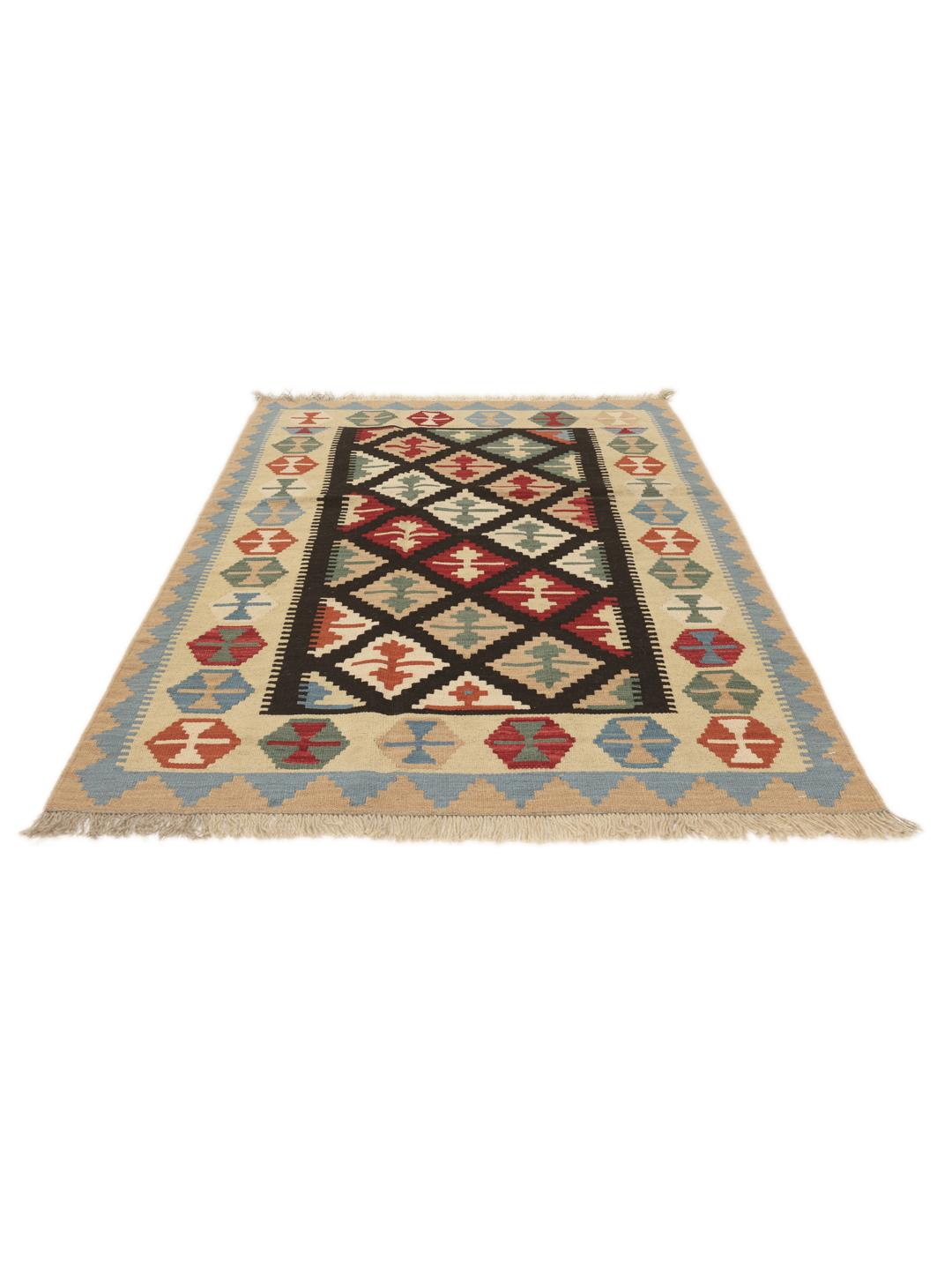
The Kelim Ghashghai tradition finds its roots among the nomadic tribes of the Middle East, a region with a long and storied history of textile production. These rugs were historically woven by tribal groups who moved with the seasons, creating functional yet beautiful items that were portable and durable. The designs were not merely decorative but served as a visual language, documenting tribal identity and the natural world through symbolic motifs.
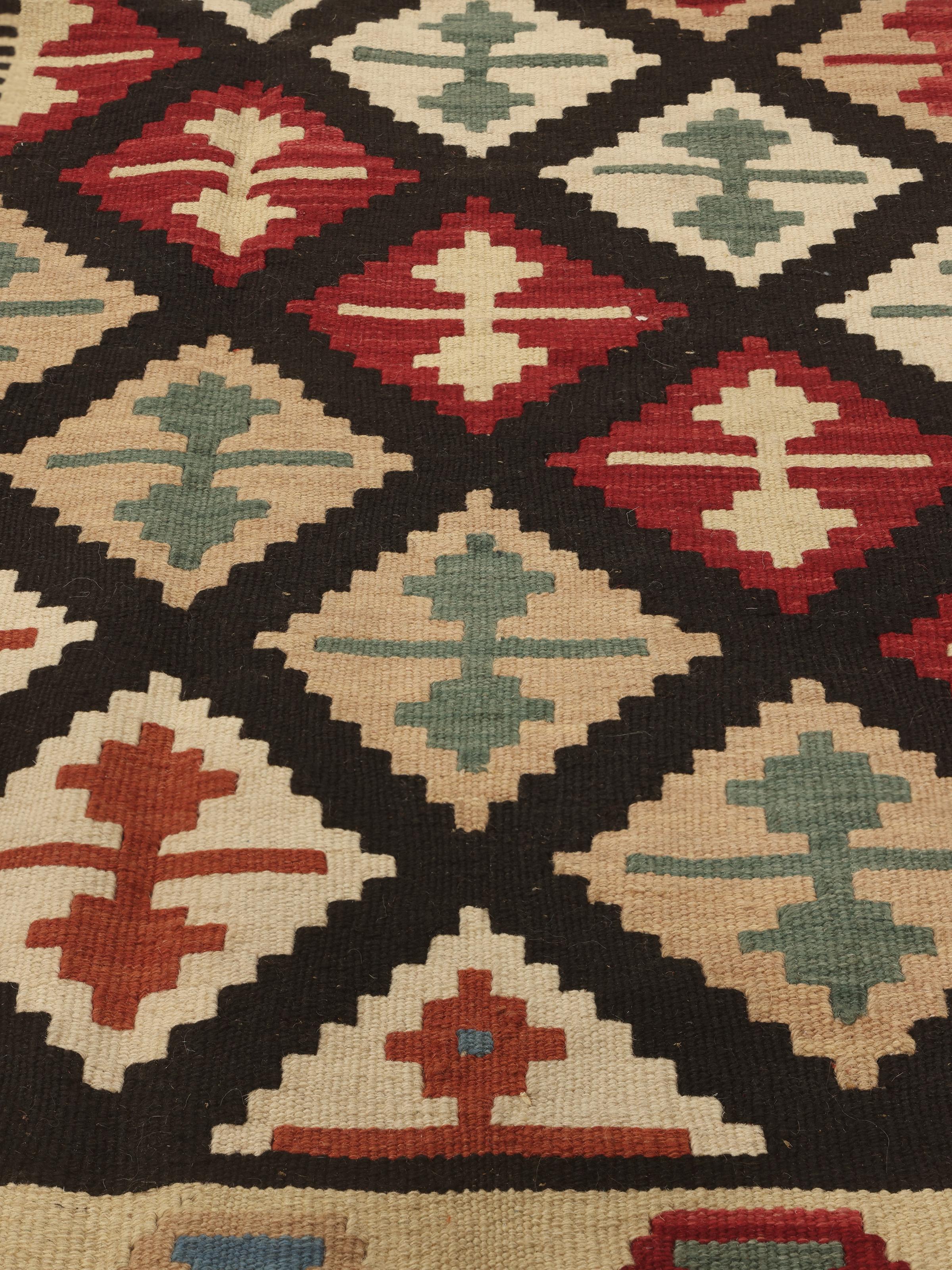
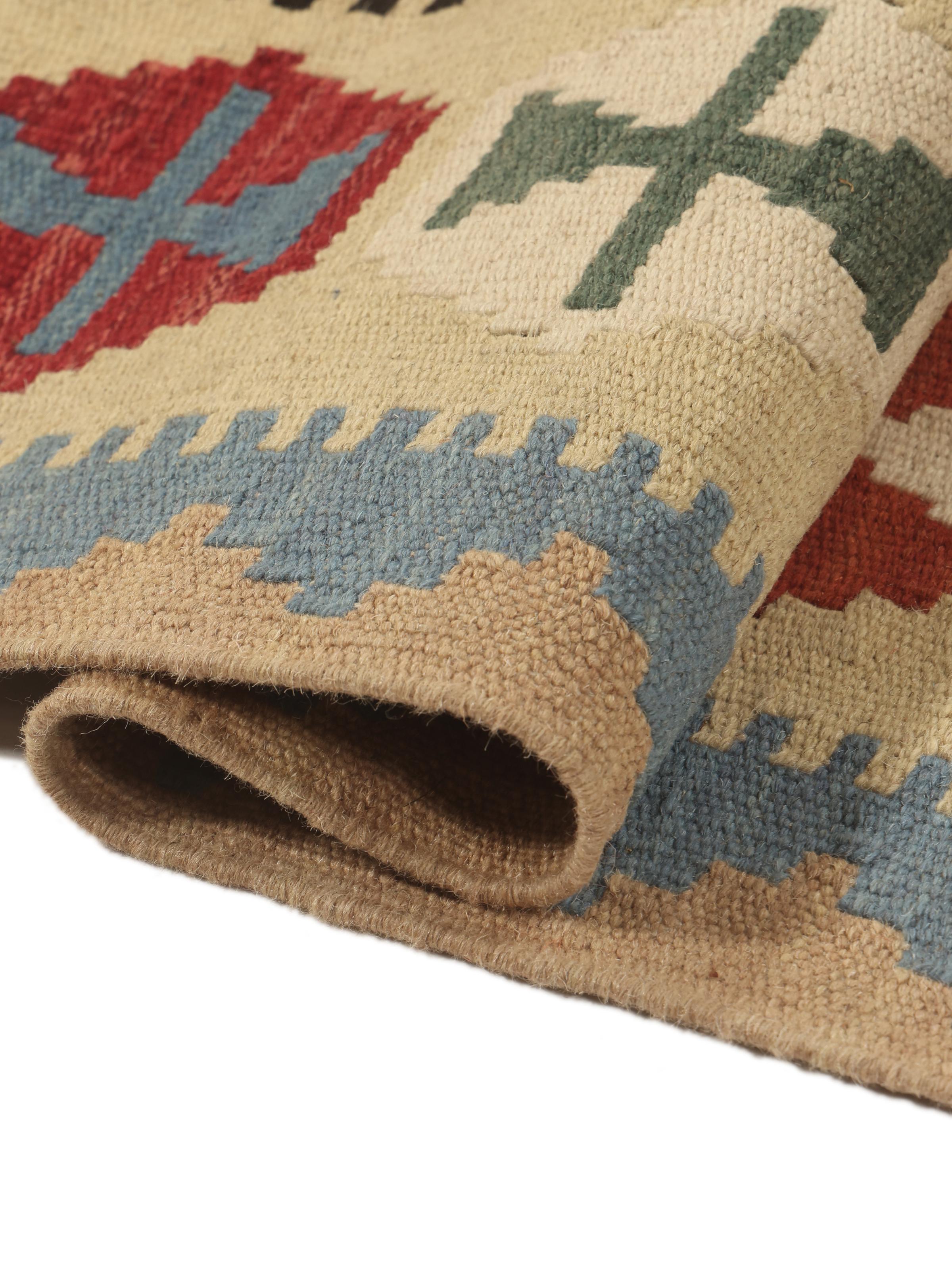
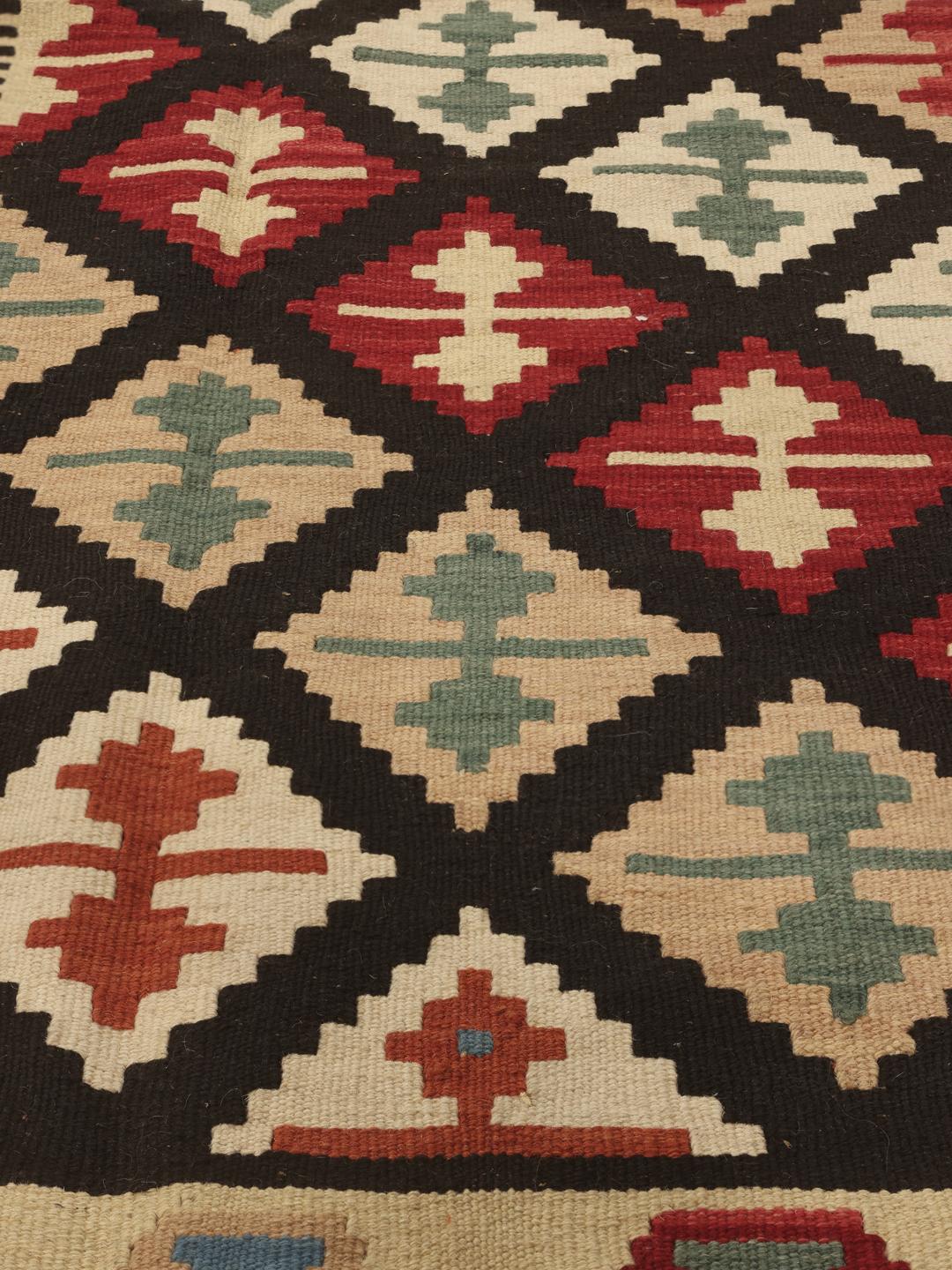
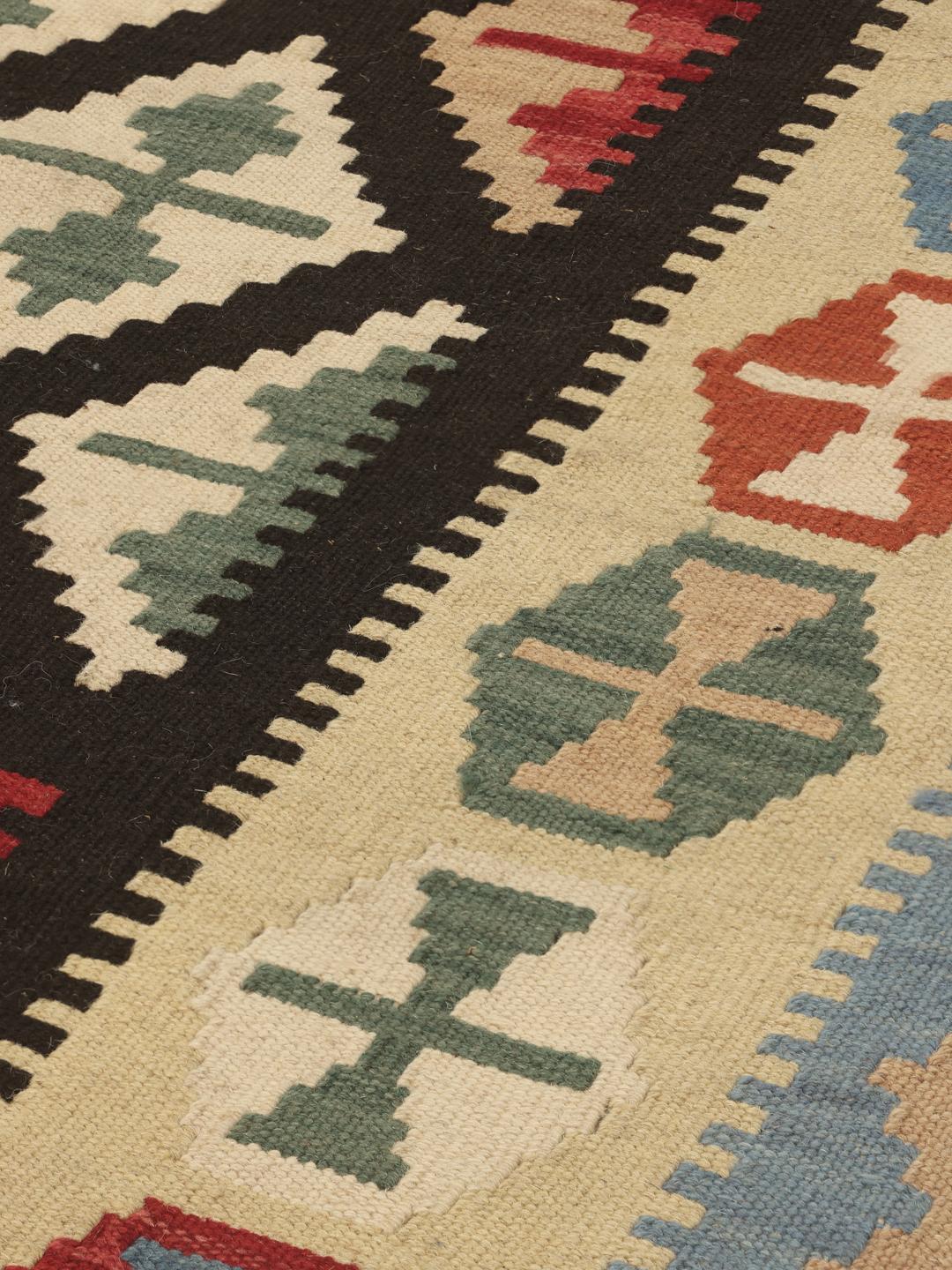
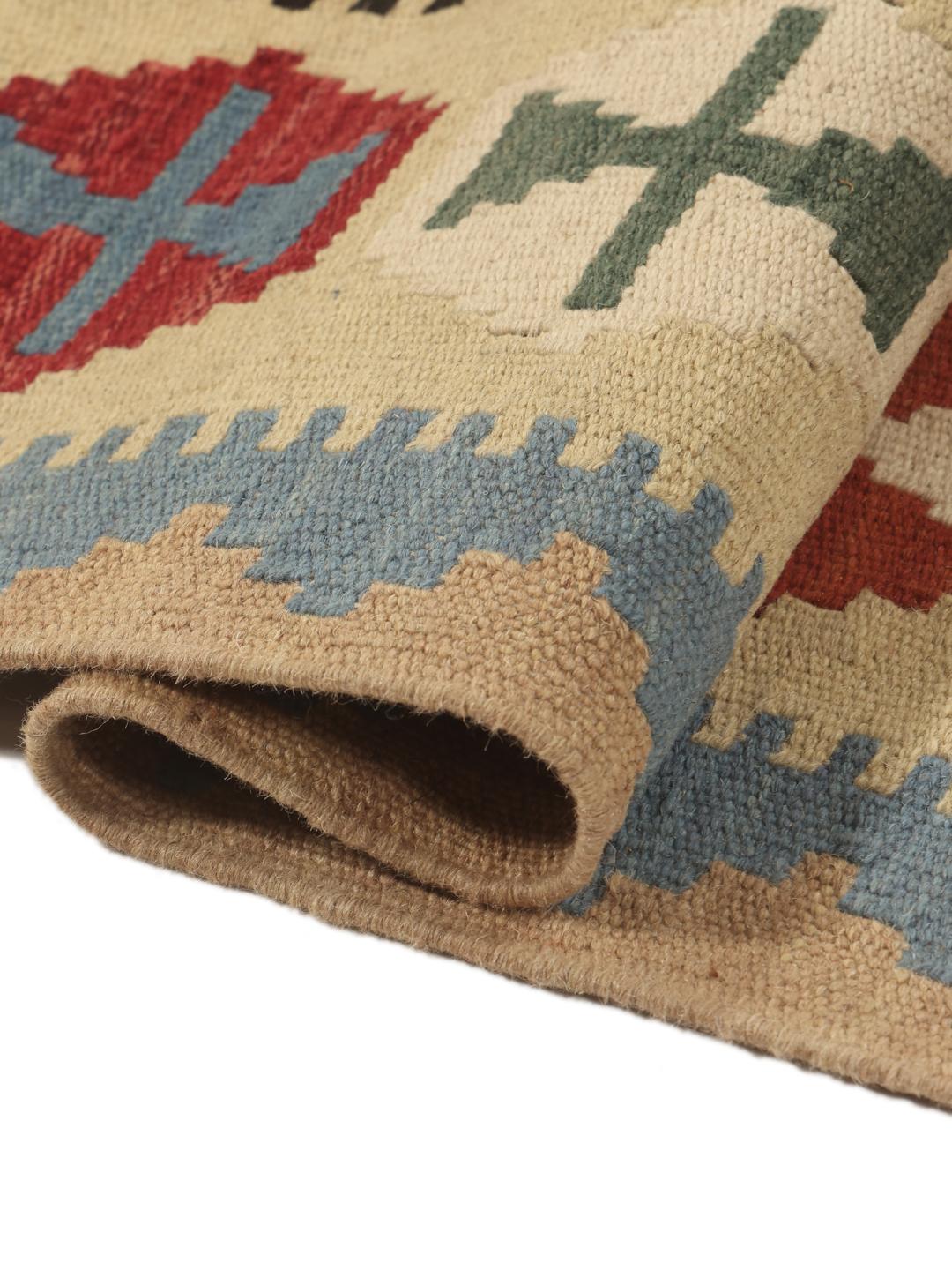
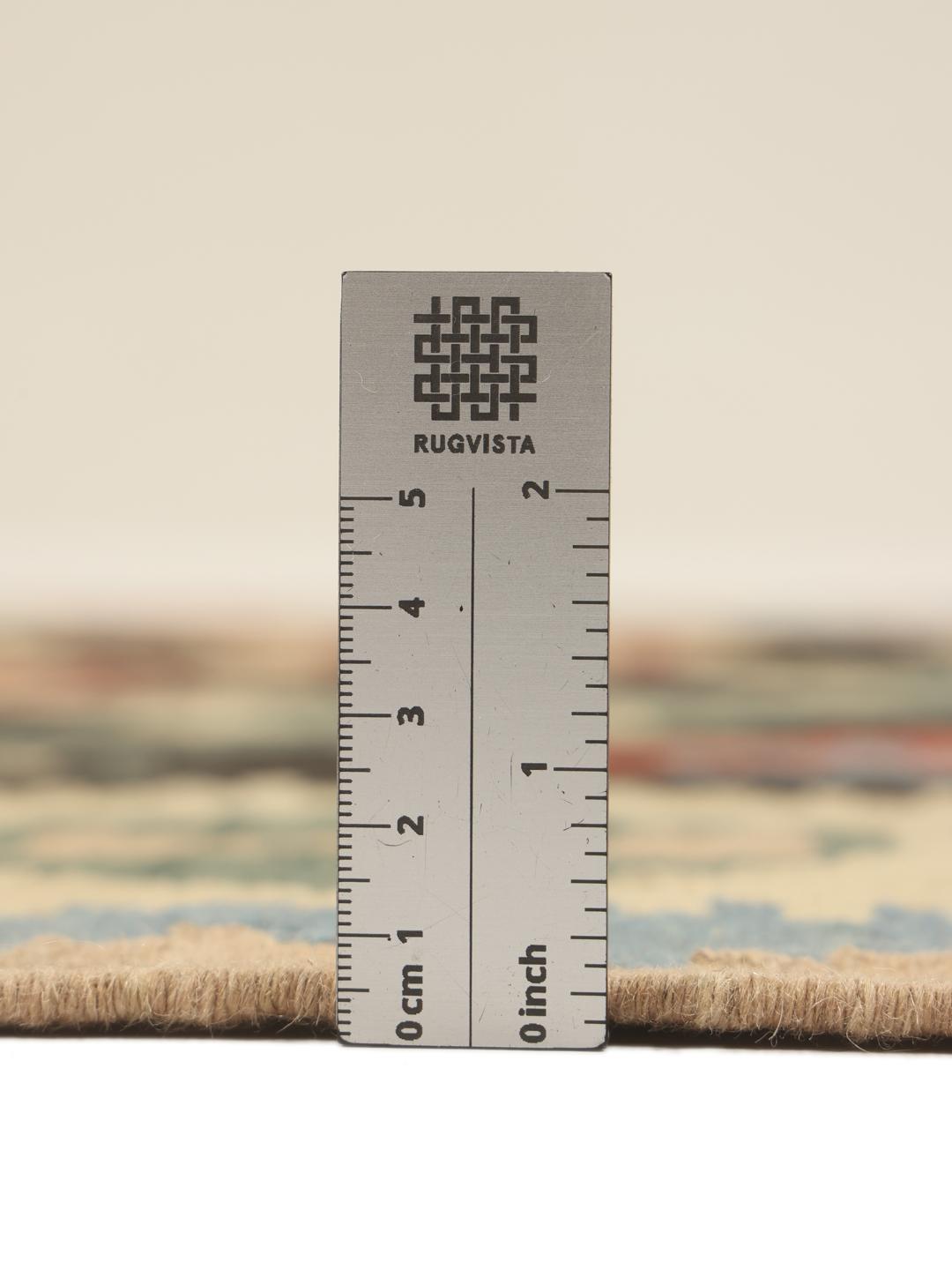
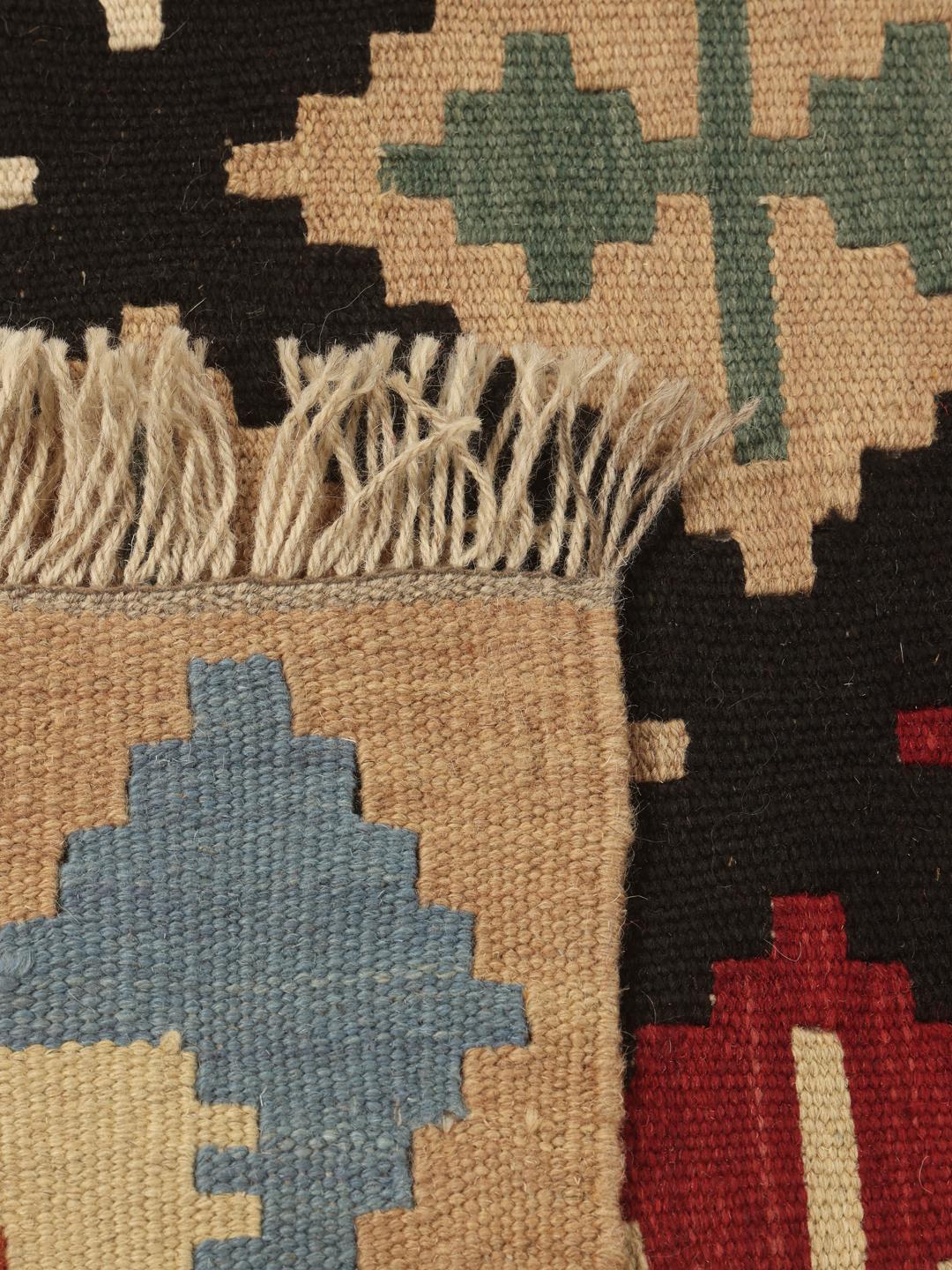
The term 'Kelim' refers to the flat-weaving technique, which is distinct for lacking a pile. In this method, the coloured weft threads are woven tightly over and under the warp threads to create the pattern, resulting in a thin, reversible textile. This process requires great precision, as the weaver must manage the tension of every thread to ensure the symmetry of the geometric designs throughout the finished piece.
Signature elements of Ghashghai designs often include diamond-shaped medallions, stylized floral motifs, and stepped borders. These motifs are traditionally rendered in a palette of earthy and vibrant tones, often derived from natural dyes. The bold, angular nature of the patterns is a hallmark of the style, reflecting a desire to capture complex forms through the constraints of the loom's grid-like structure.
Today, these rugs are highly prized by collectors for their cultural significance and the genuine human effort embedded in every thread. Owning a Kelim Ghashghai is an opportunity to preserve a piece of nomadic heritage. It represents a connection to a slower, more deliberate way of life where every object in the home was crafted with intention, skill, and a deep respect for traditional artistry.