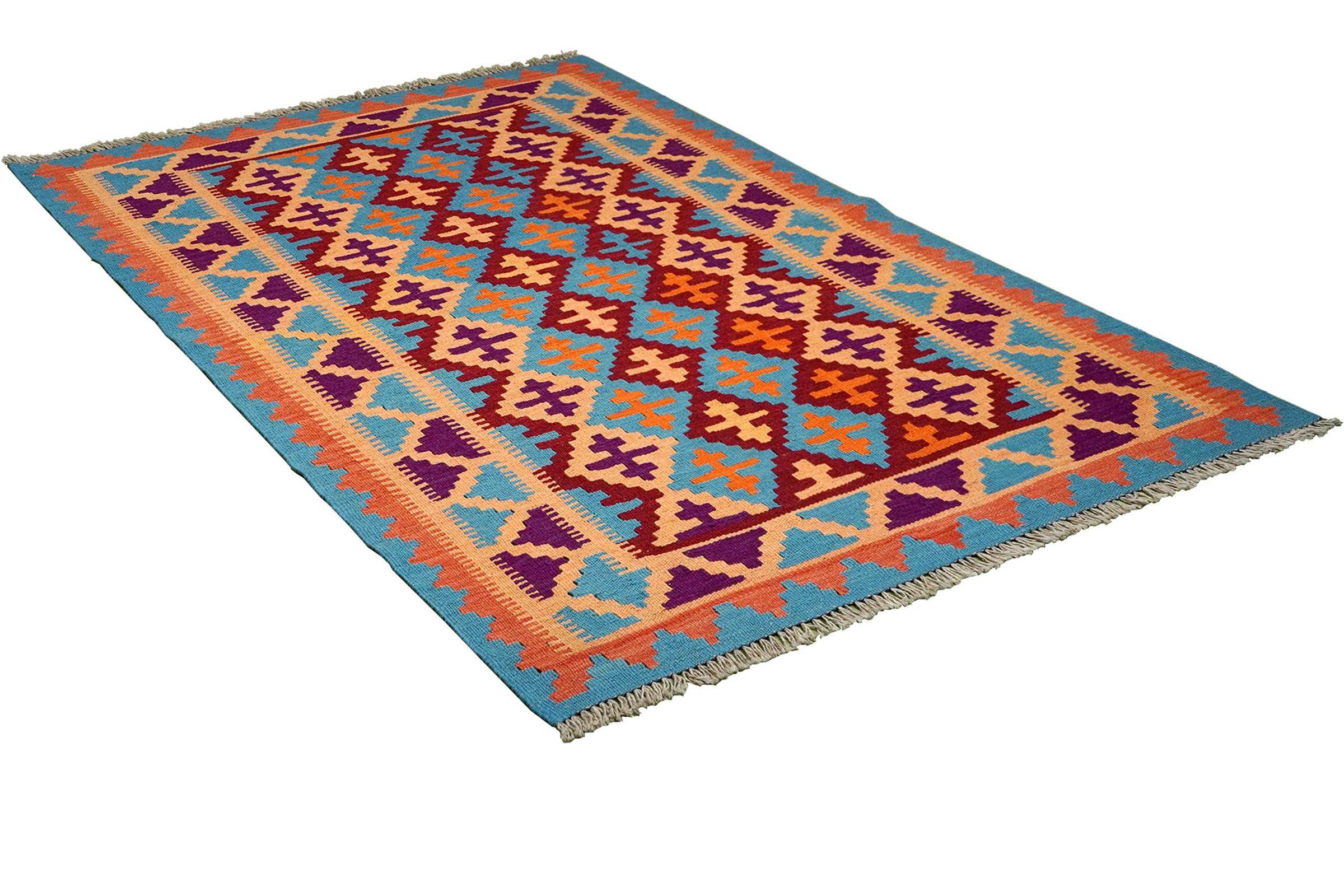
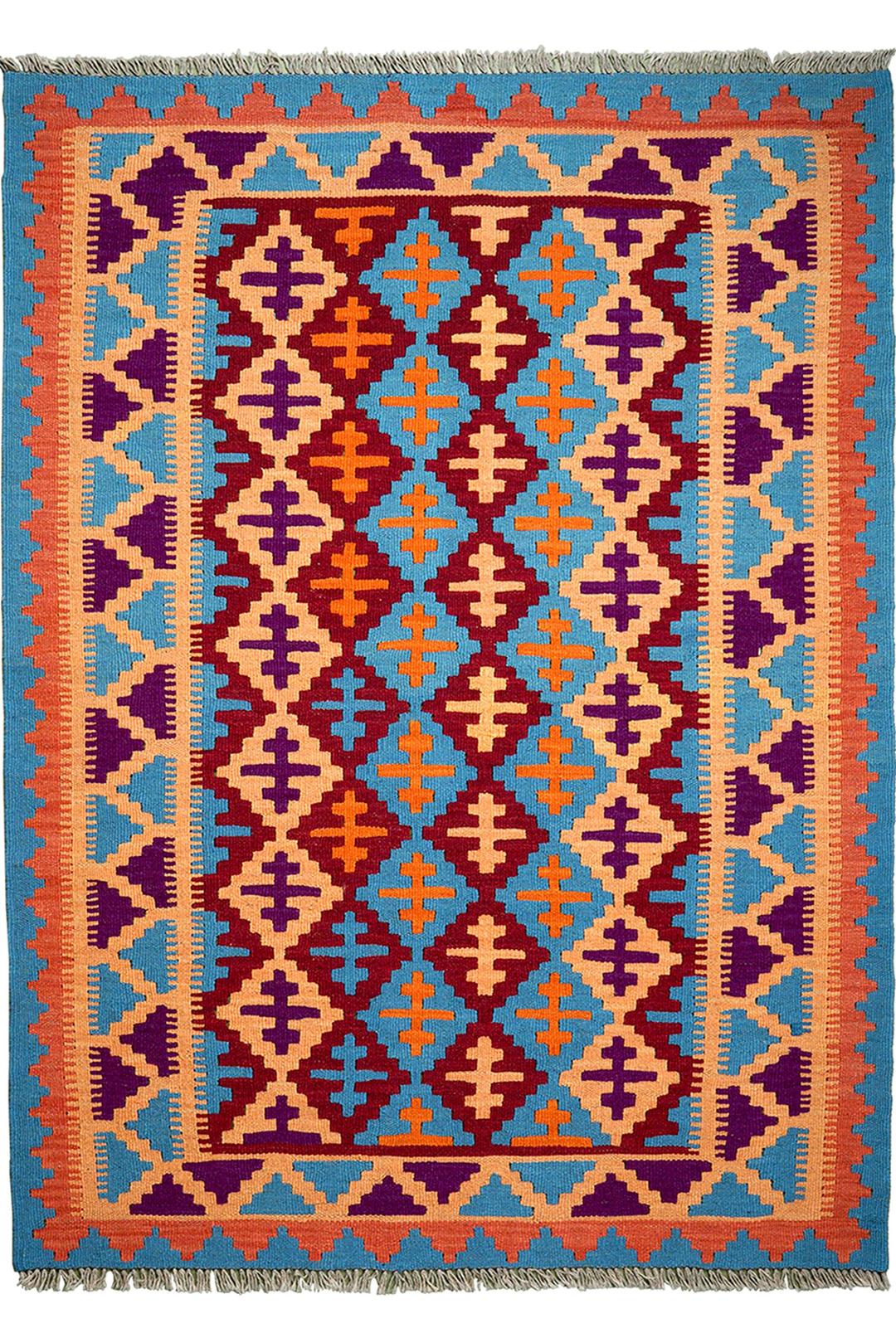
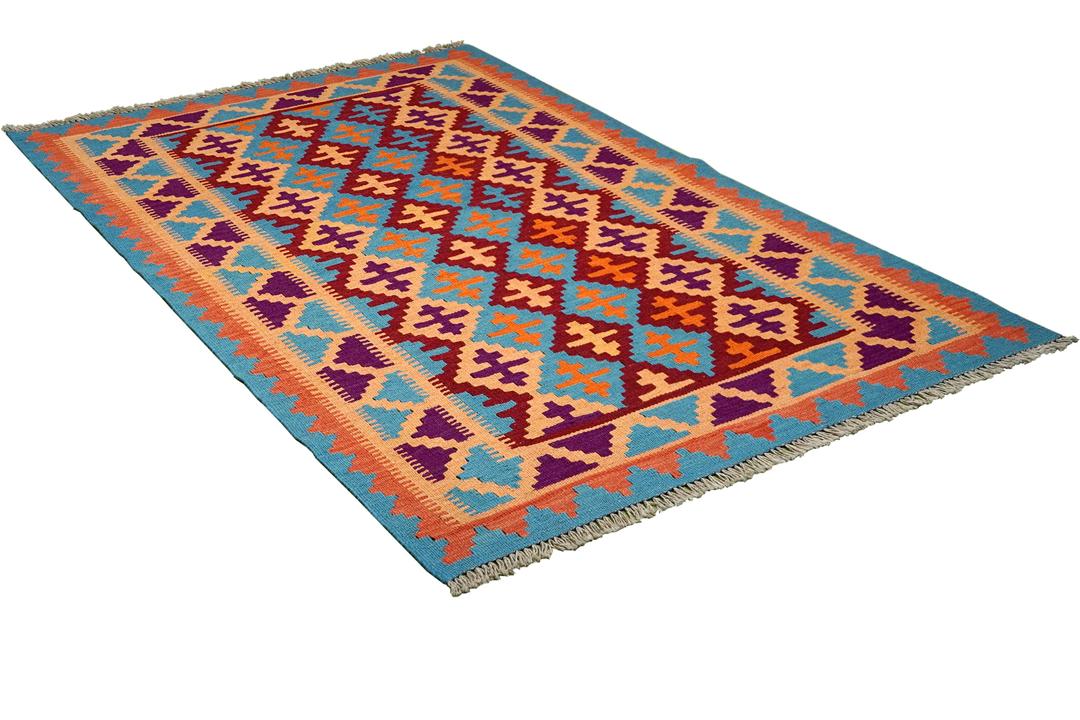
Ghashghai kilims originate from the nomadic Ghashghai tribes who traditionally roamed the southwestern regions of the Middle East. Woven on portable looms during seasonal migrations, these rugs were originally made for practical everyday use within tribal tents, serving as floor coverings, bedding, and wall hangings.
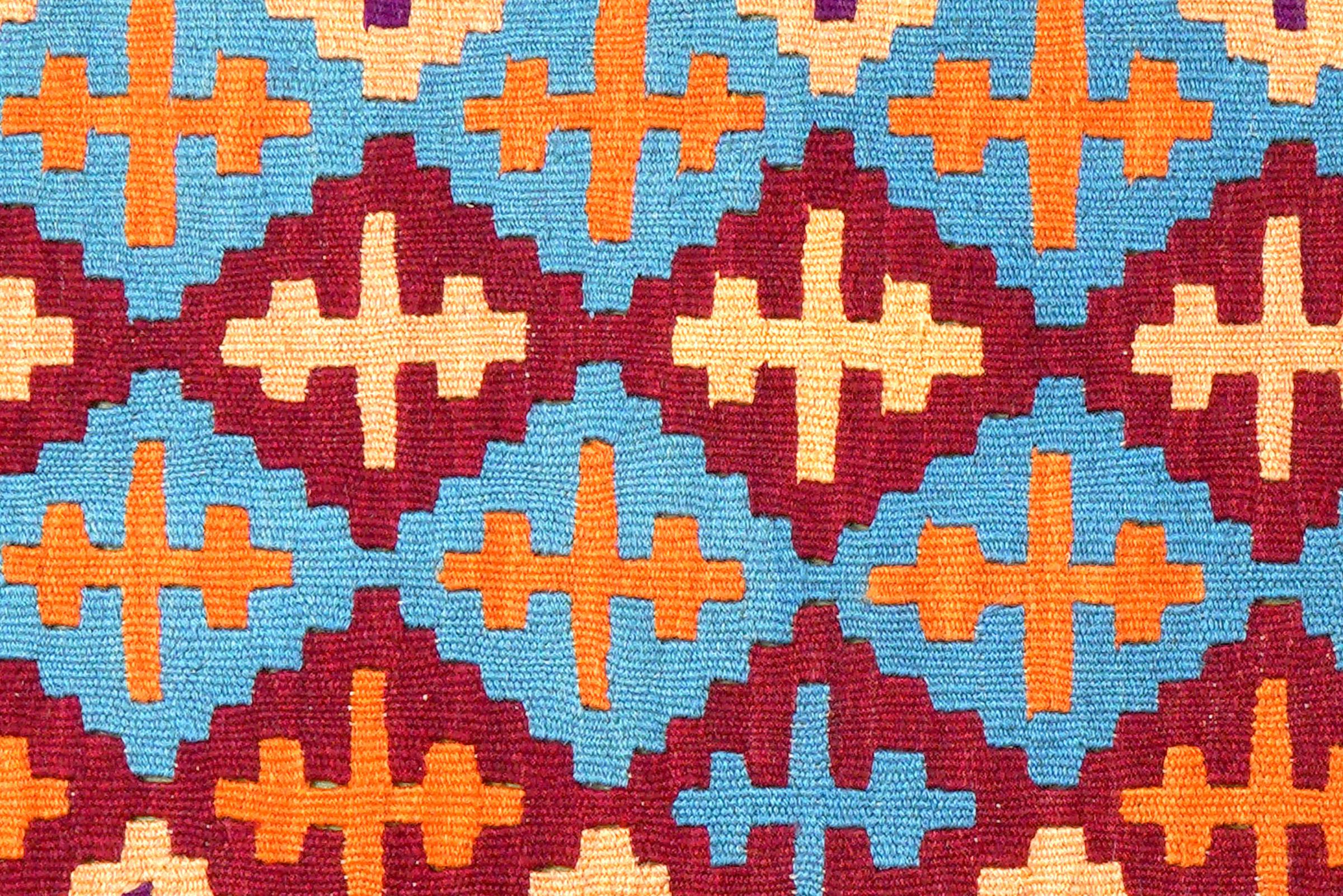
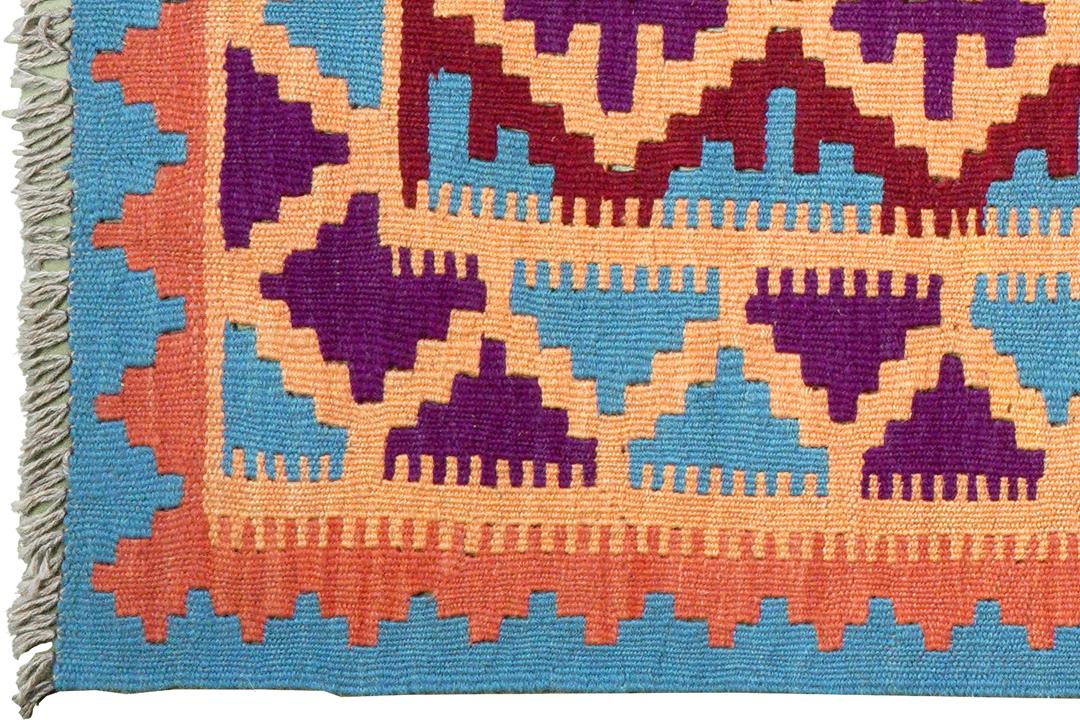
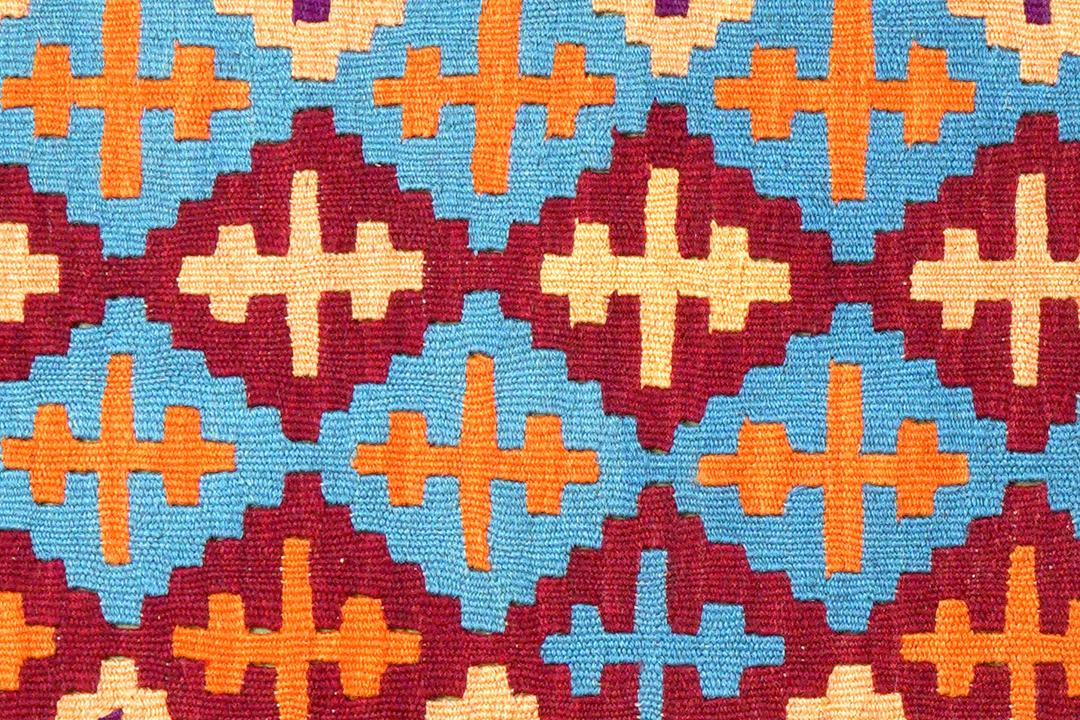
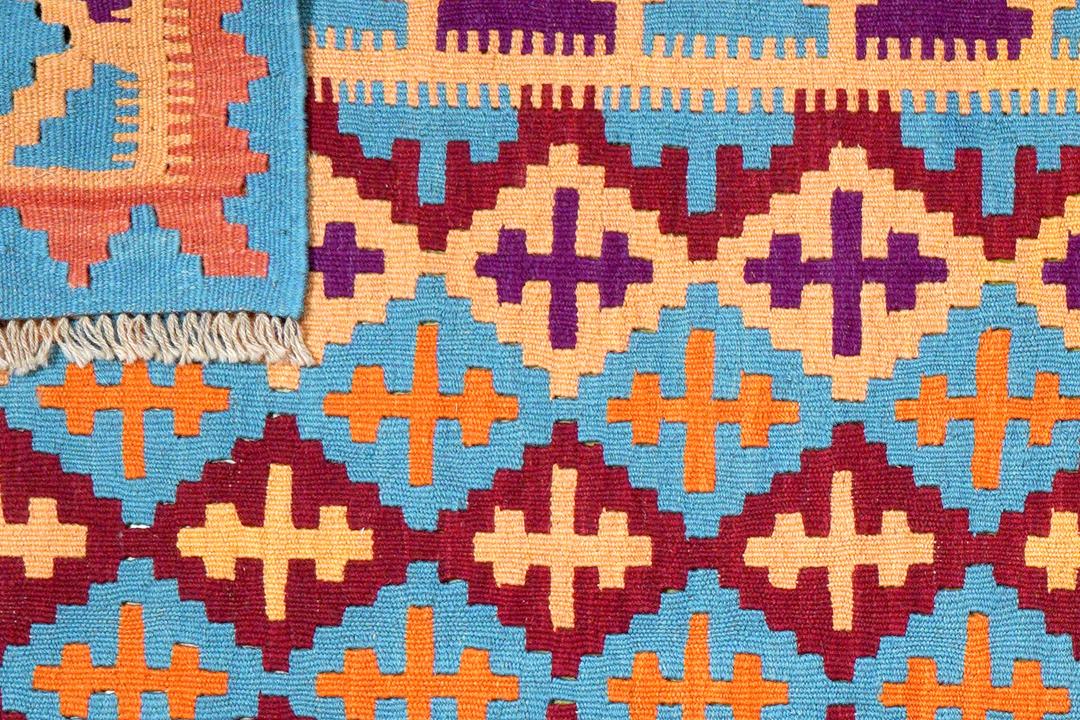
Flatweaving, or tapestry weaving, differs from pile knotting by interweaving the warp and weft threads to create a flat, backless textile. This technique produces clean, sharp geometric edges and makes the rug lightweight yet remarkably tough, perfectly suited to a nomadic lifestyle.
The visual language of Ghashghai kilims is deeply symbolic, featuring repeating diamond medallions, stepped borders, and stylized motifs representing protection, nature, and tribal identity. While bold reds and deep oranges are classic, examples with rich blue and multi-tonal fields show the expressive variety achievable with traditional dyeing techniques.
Today, vintage and modern Ghashghai kilims are highly prized by collectors and interior designers alike. Owning one connects your space to centuries of nomadic heritage, bringing a real sense of history, artistry, and authentic craft into the home.