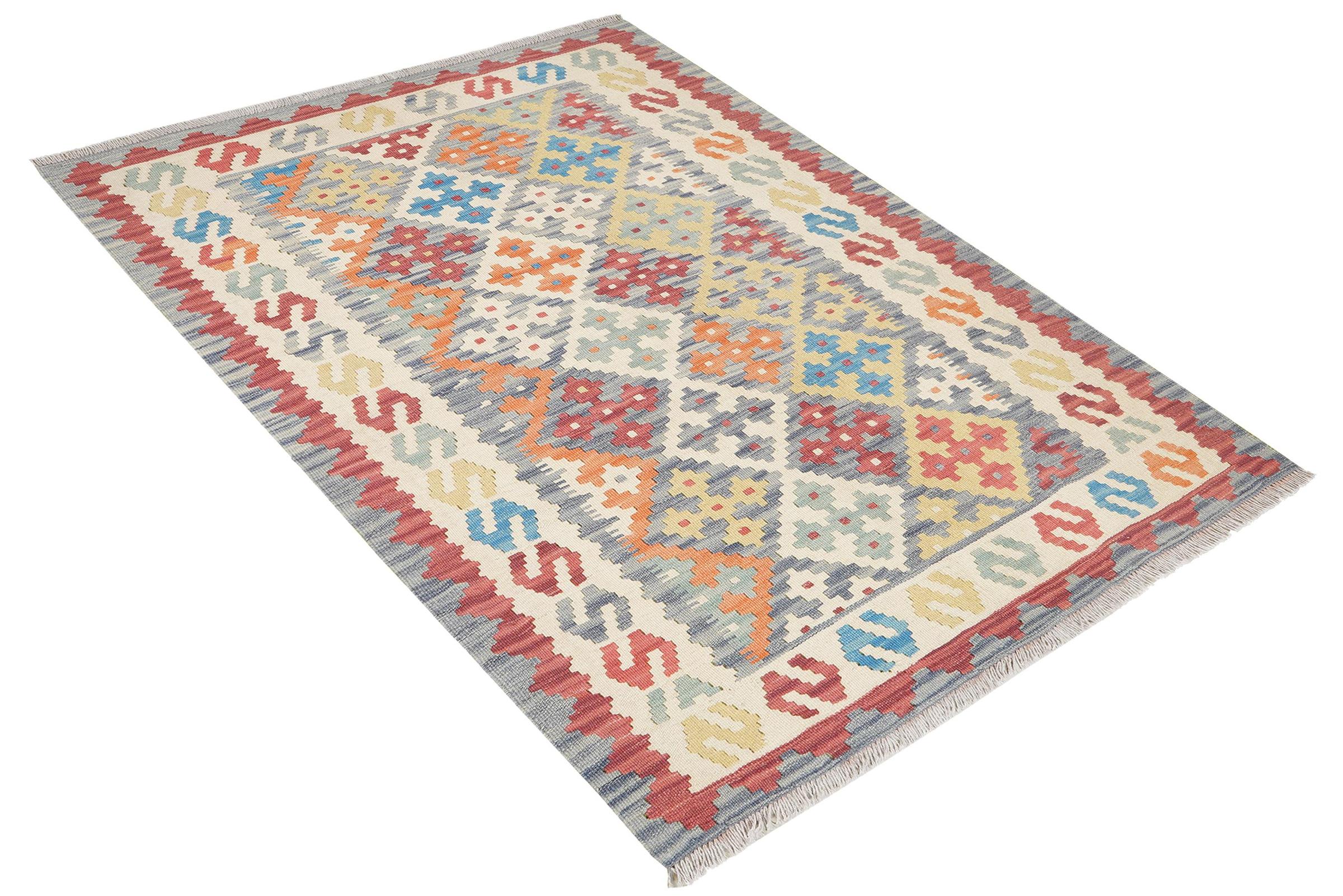
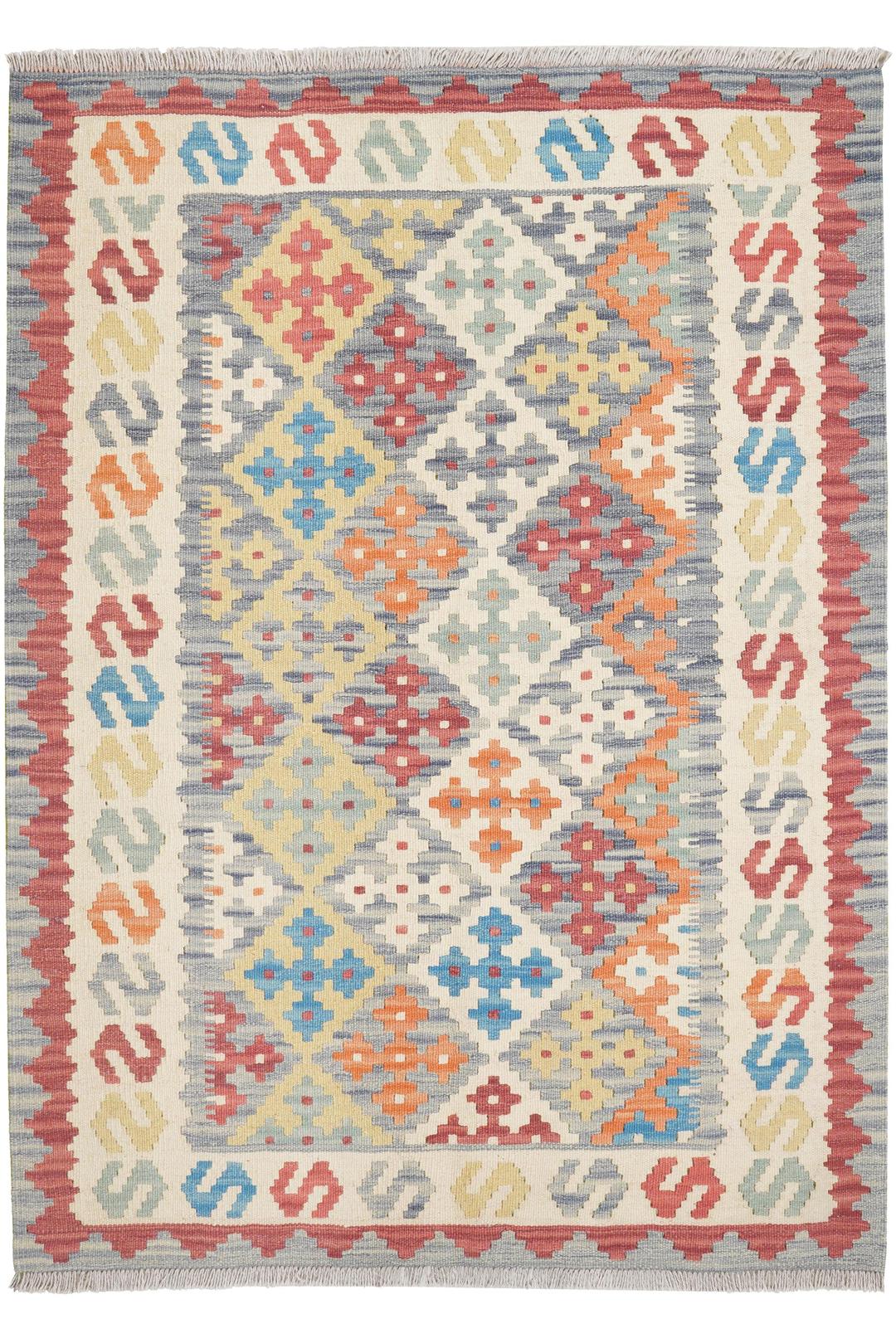
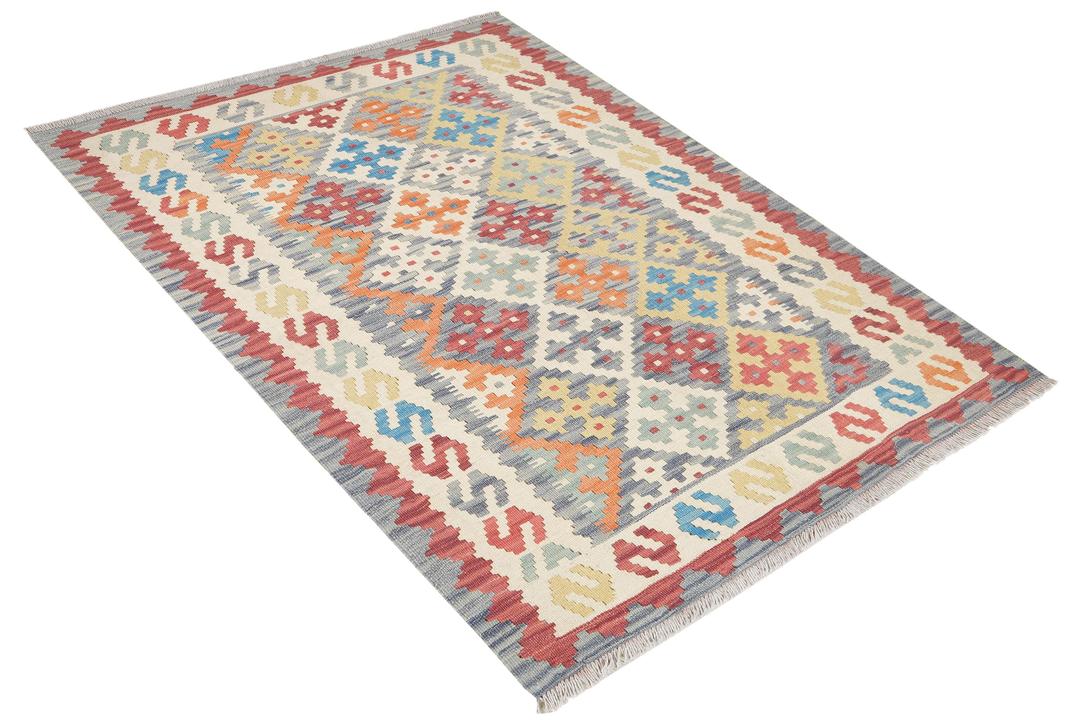
Ghashghai kilims originate from the nomadic and semi-nomadic Ghashghai tribes of the Middle East. Traditionally woven on portable horizontal looms, these flatweaves served practical purposes in daily tribal life, used as floor coverings, tent dividers, and storage bags designed to withstand travel across rugged landscapes.
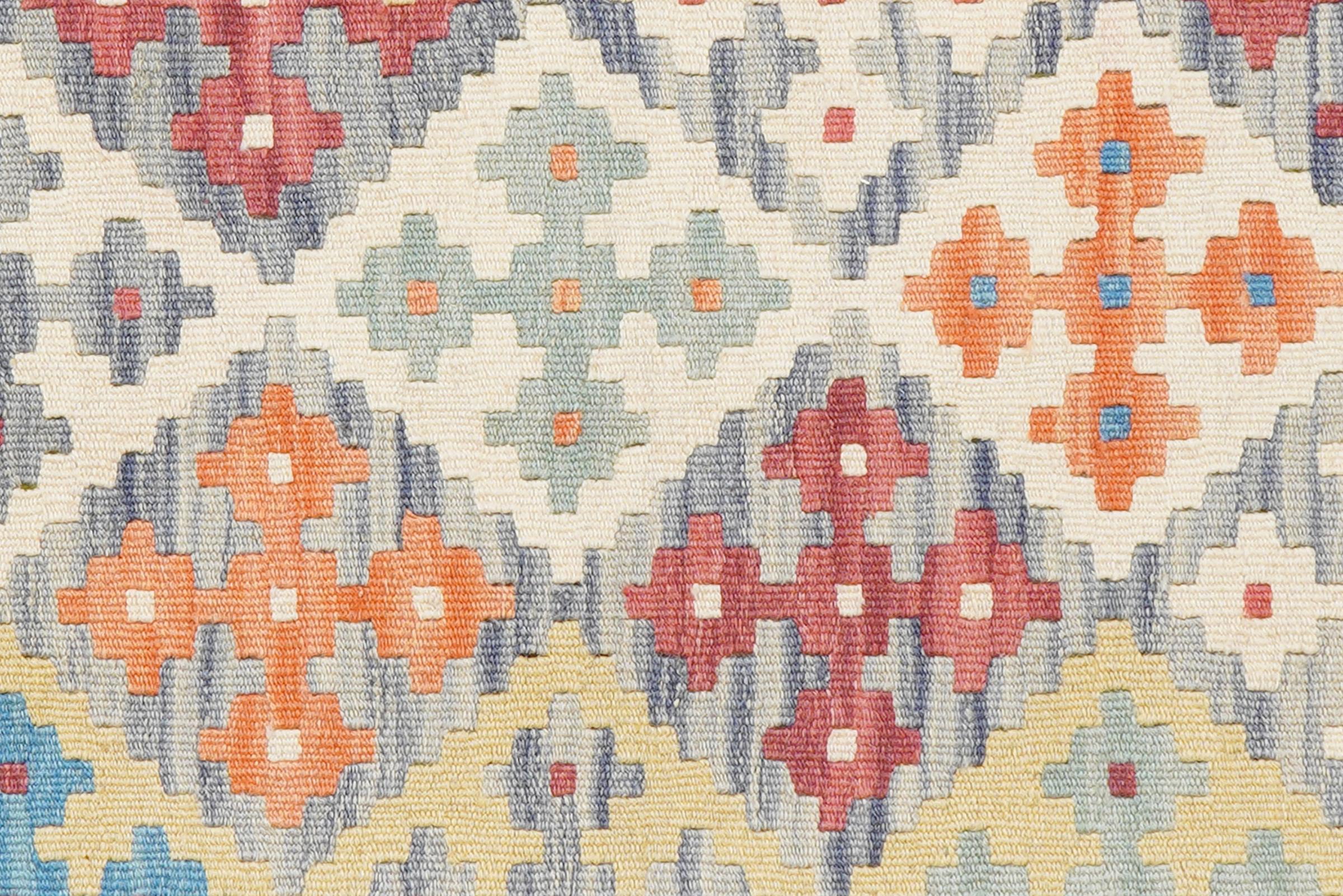
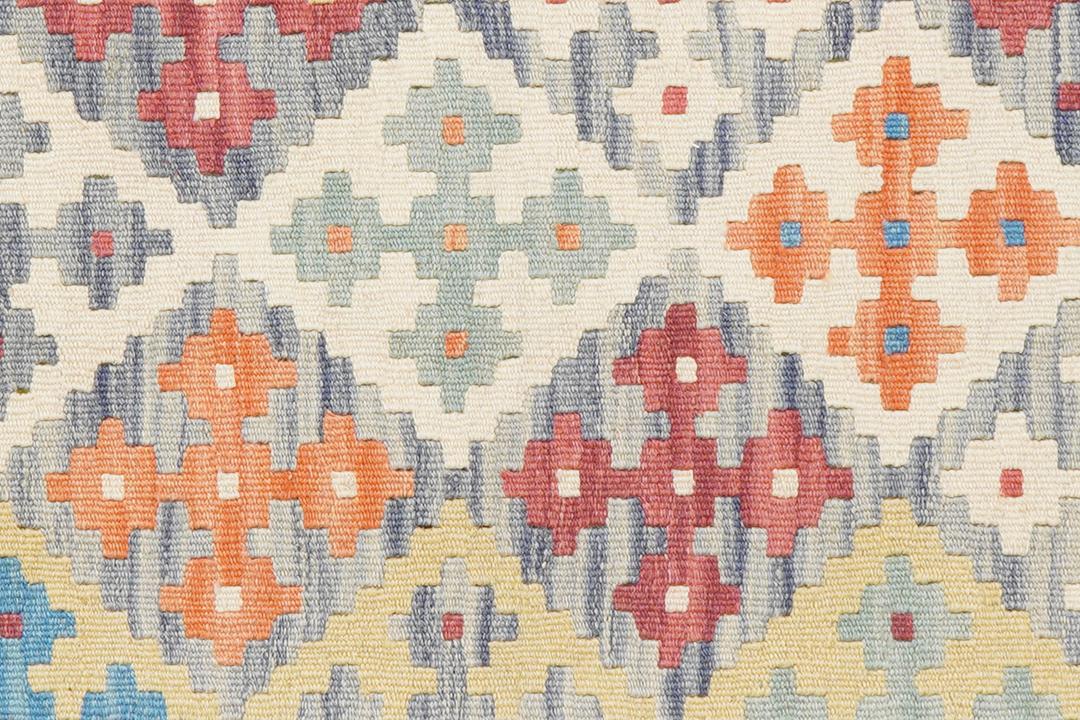
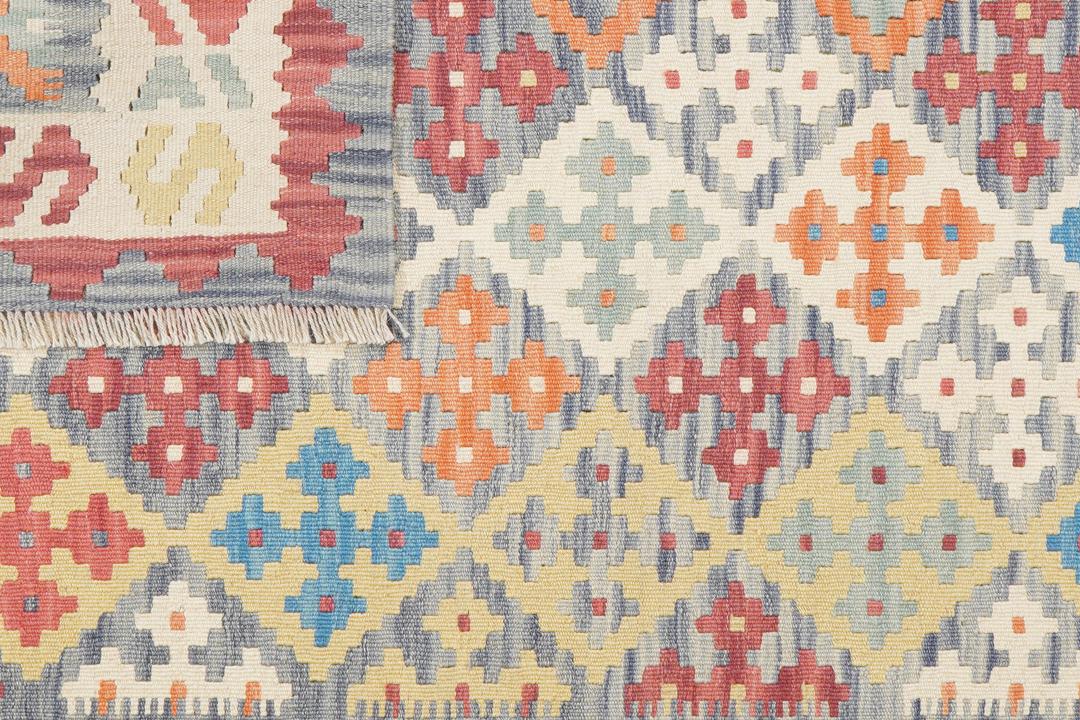
The term flatweave or kilim describes a rug crafted by tightly interweaving the warp and weft strands rather than knotting individual tufts onto a foundation. This technique produces a pileless surface that is light, flexible, and exceptionally durable, showcasing the natural texture of the spun wool.
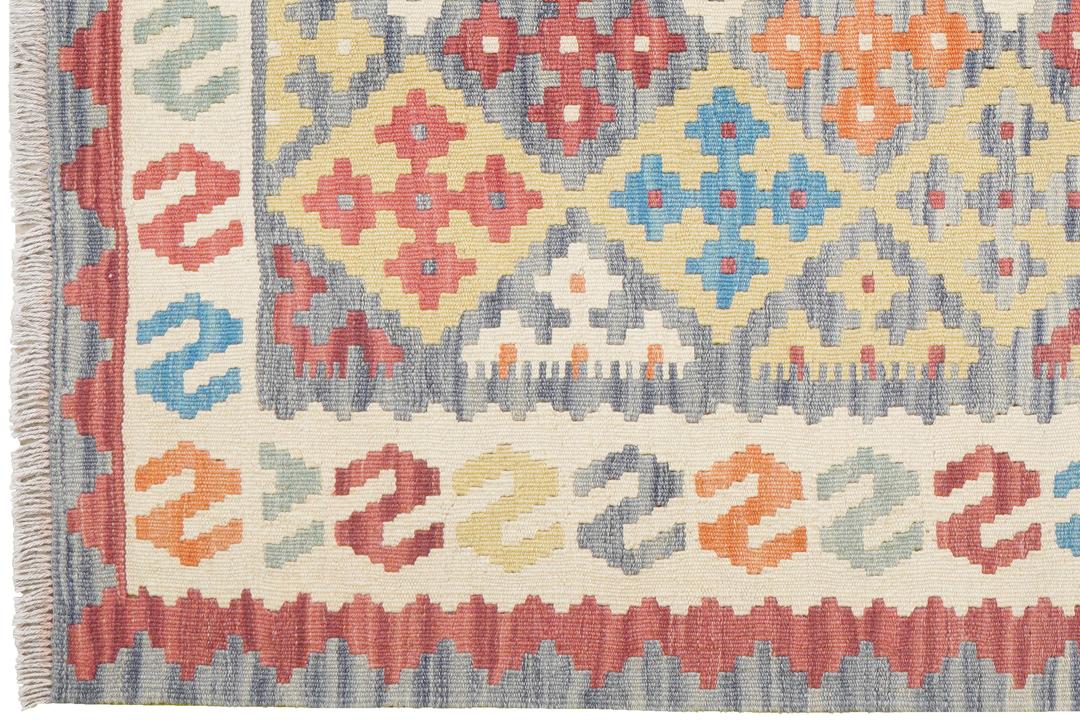
Ghashghai designs are renowned for their expressive visual language, composed entirely from memory rather than written patterns. Central diamond medallions, stepped motifs, and protective symbols are framed by detailed geometric borders, using rich color combinations of indigo blue, warm reds, and earthy natural tones.
Valued by collectors worldwide, Ghashghai flatweaves represent a direct link to ancient nomadic artistry. Each piece tells the personal story of the weaver through subtle variations in motif and shade, offering a tangible connection to authentic tribal culture.