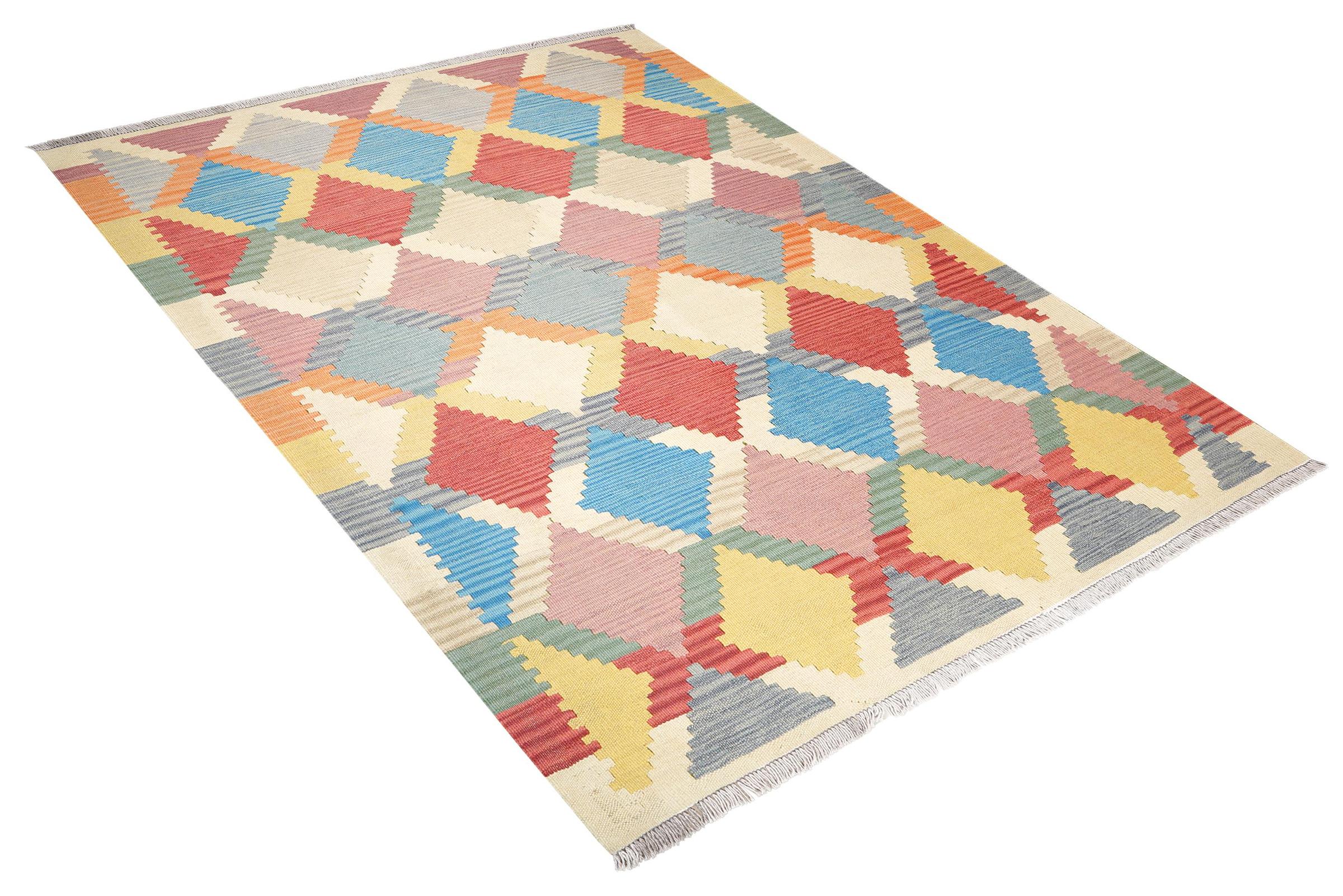
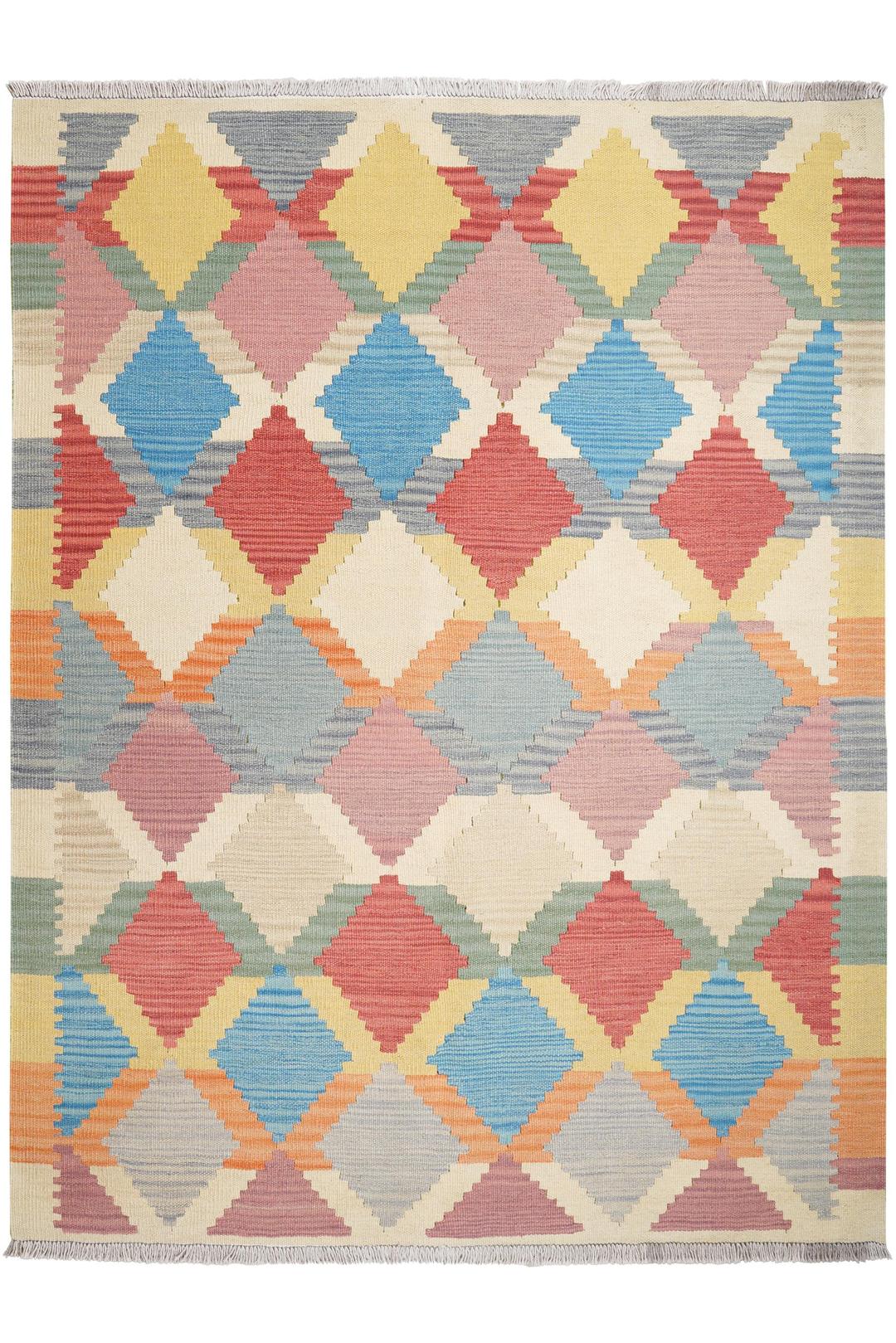
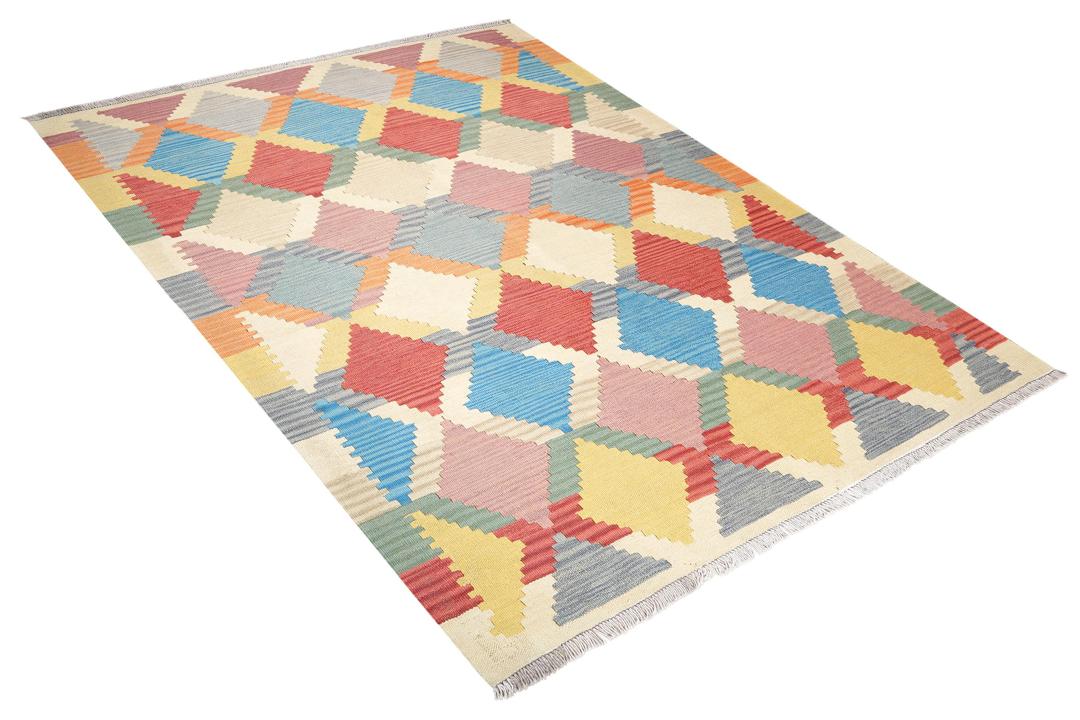
Ghashghai kilims originate from the nomadic tribes of southwestern Middle East. Historically woven by semi-nomadic artisans while moving across seasonal pastures, these textiles were created for practical daily use inside tents, serving as floor coverings, bedding bags, and wall insulation.
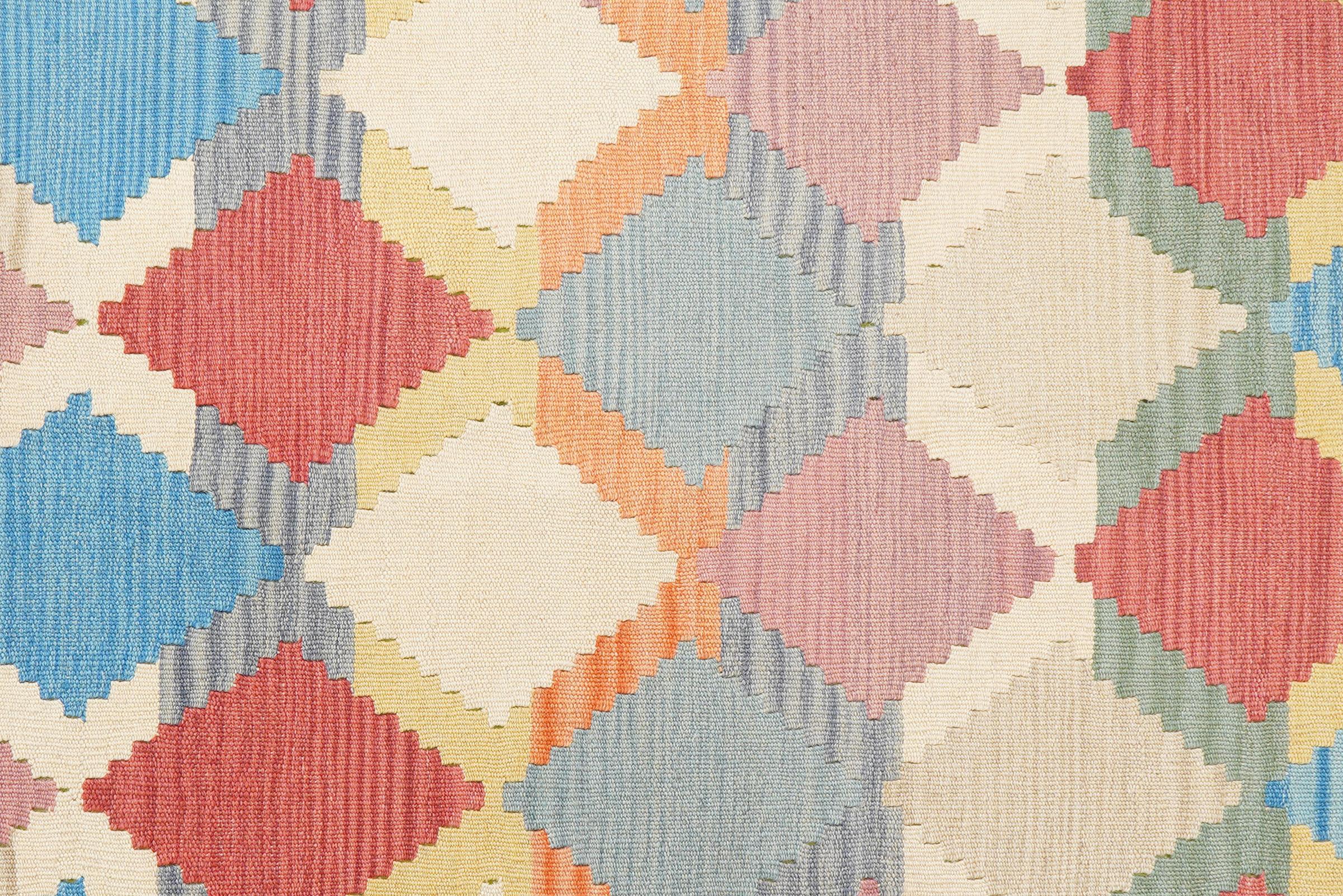
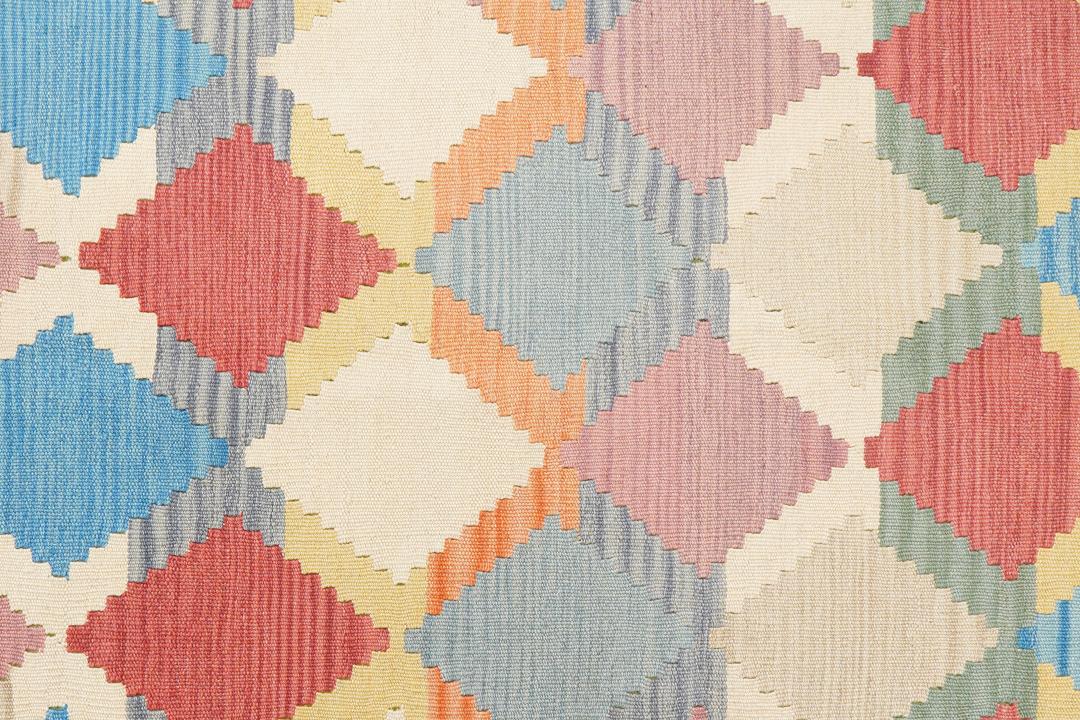
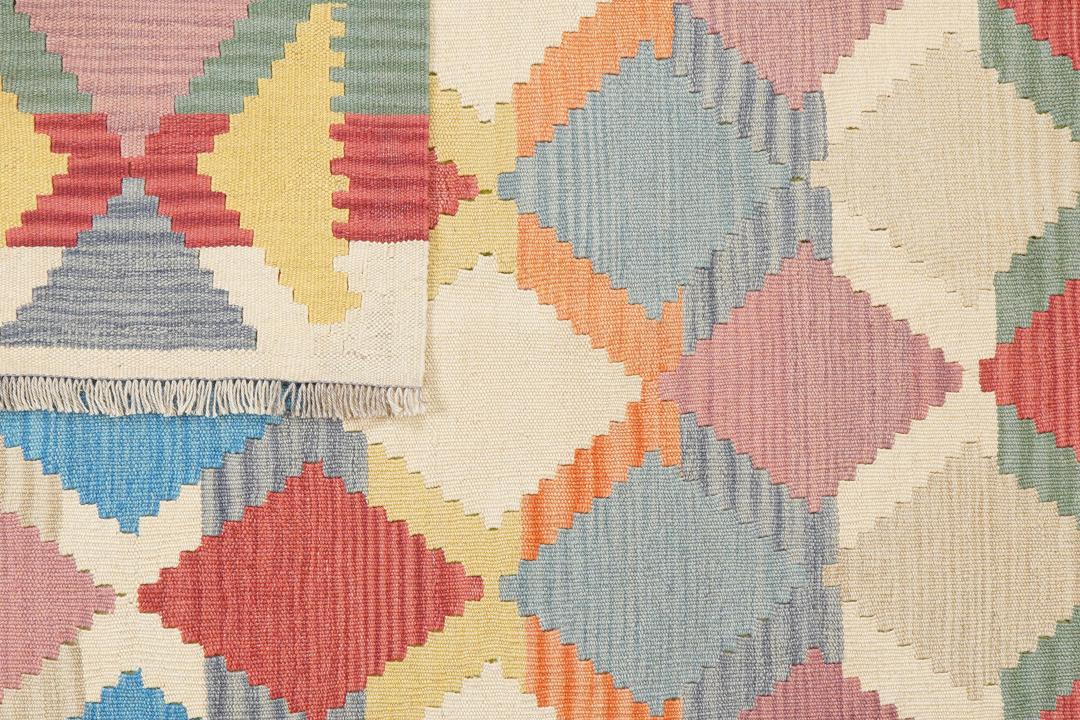
Unlike pile rugs, flatwoven kilims are constructed by tightly interweaving the warp and weft strands together. This technique creates a light, flexible, and reversible fabric that is exceptionally durable while featuring crisp, angular design motifs that cannot be achieved with traditional knotting.
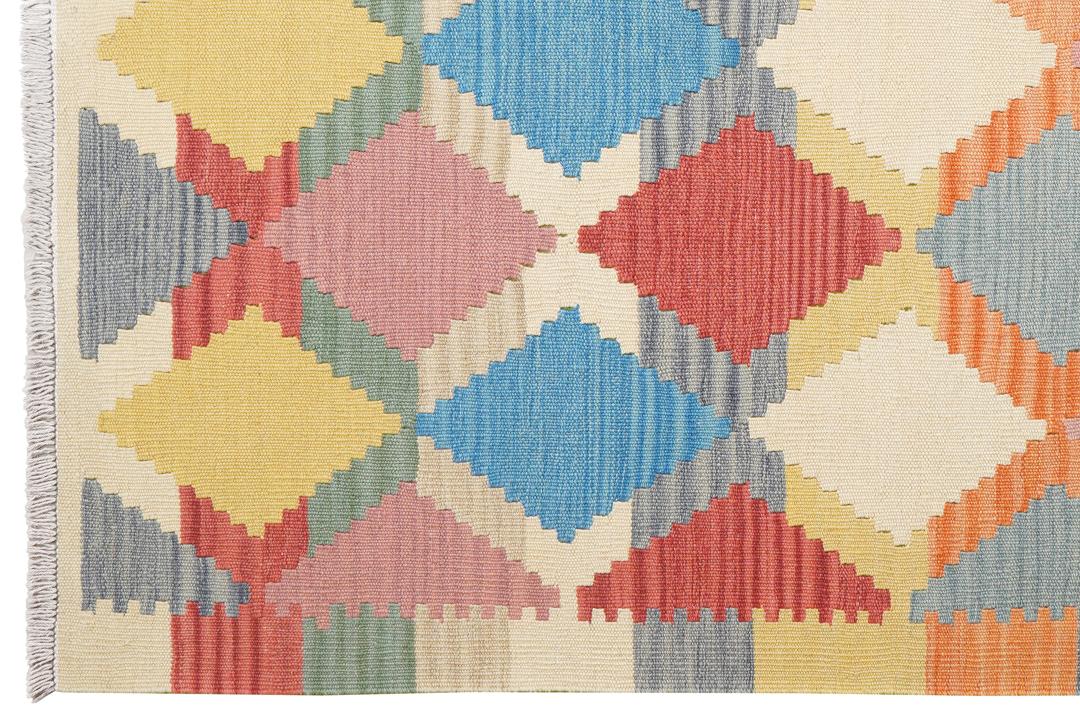
The visual identity of Ghashghai weaving is celebrated for its dynamic geometric patterns, including repeated diamond medallions, step-like borders, and abstract symbols representing local flora, fauna, and protective talismans. Each weaver dictates the composition from memory, infusing personal storytelling into the geometric grid.
Today, Ghashghai textiles are highly prized by collectors and design enthusiasts worldwide. Owning an authentic piece connects your home to a living heritage of nomadic weaving, where functional utility and artistic expression are seamlessly combined.