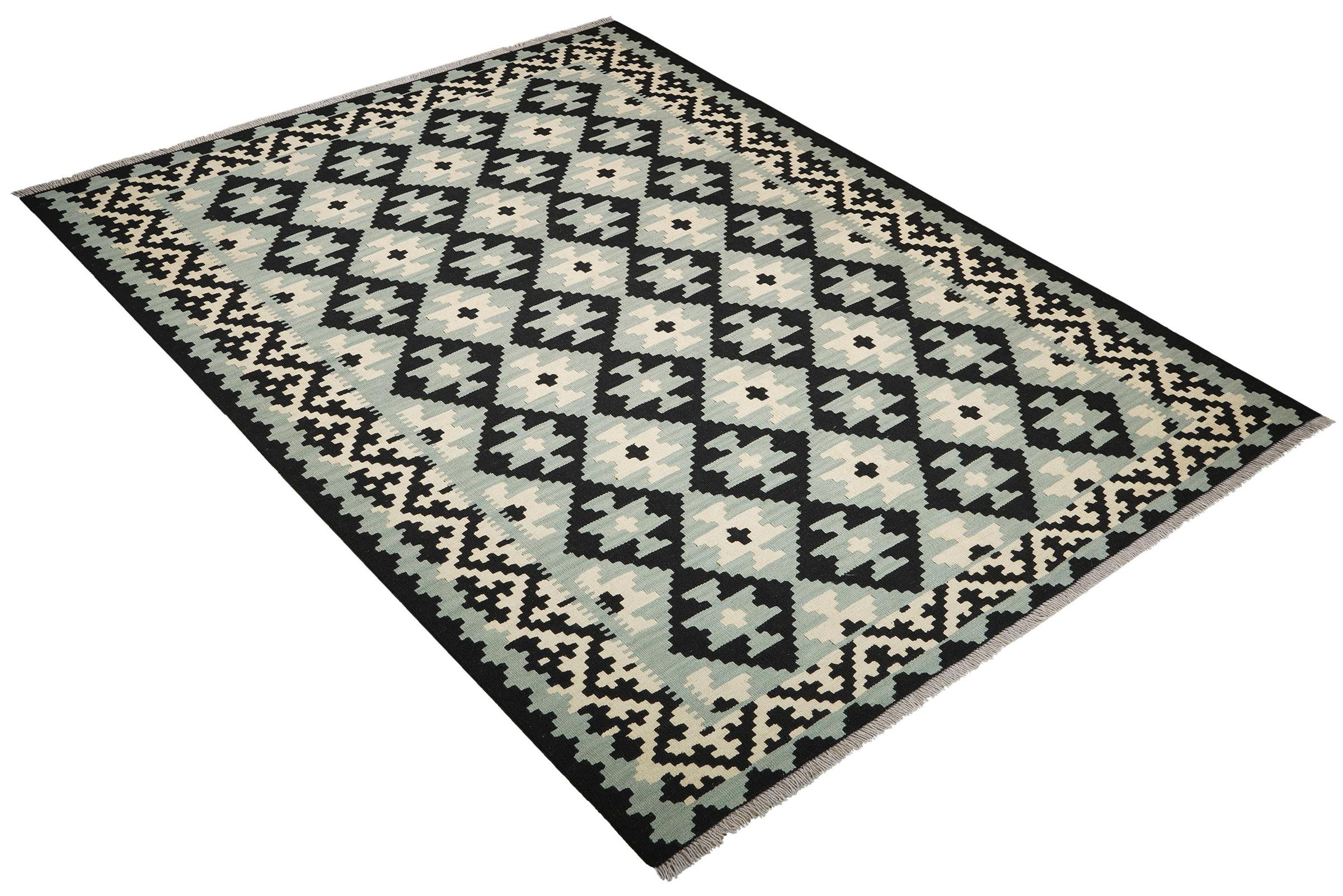
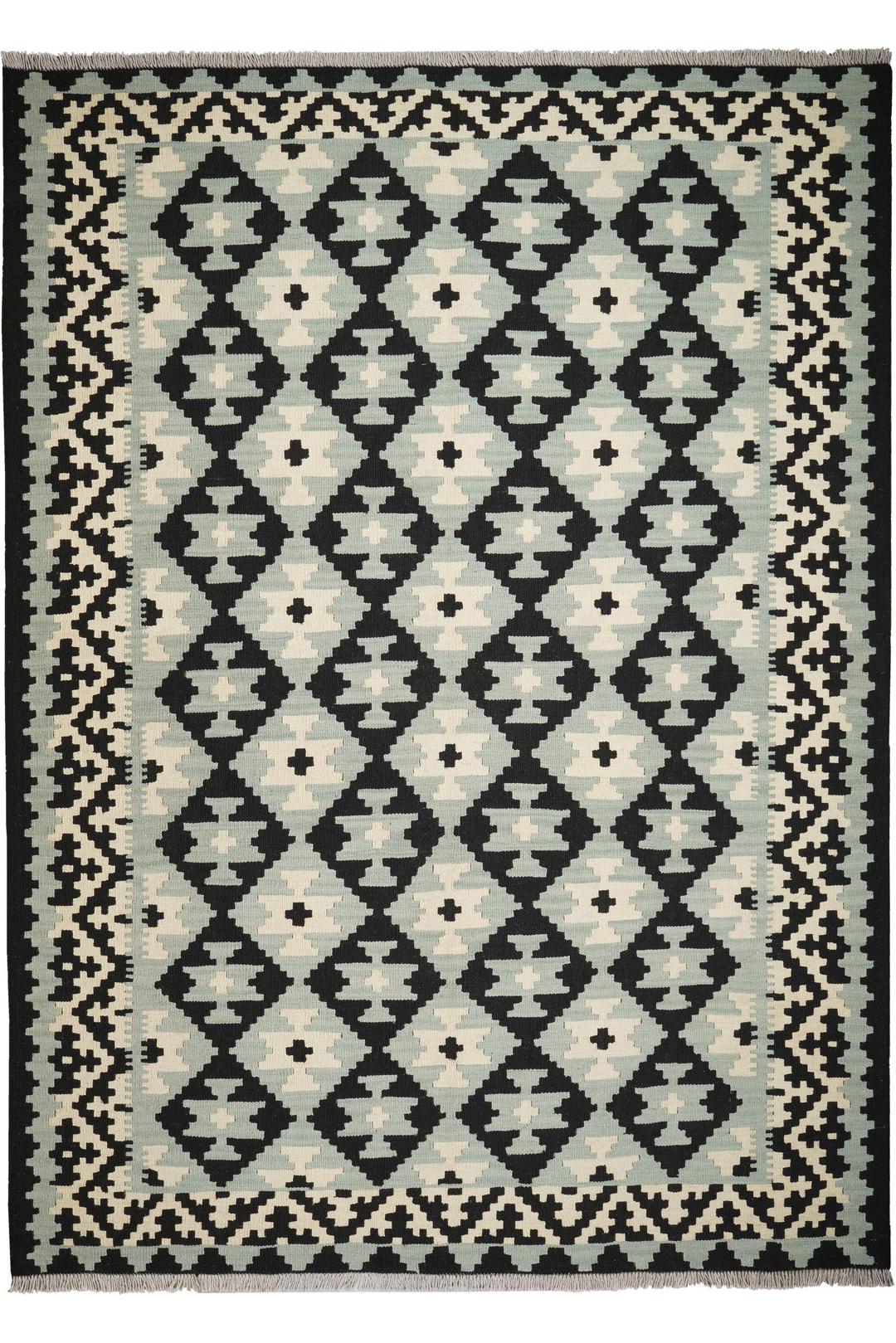
Kilim weaving has deep roots across the Middle East, where nomadic and semi-nomadic tribes crafted flatwoven textiles for daily utility and storytelling. The Ghashghai tradition comes from nomadic weavers known for creating bold, expressive patterns that reflect their surrounding landscape and cultural symbols.
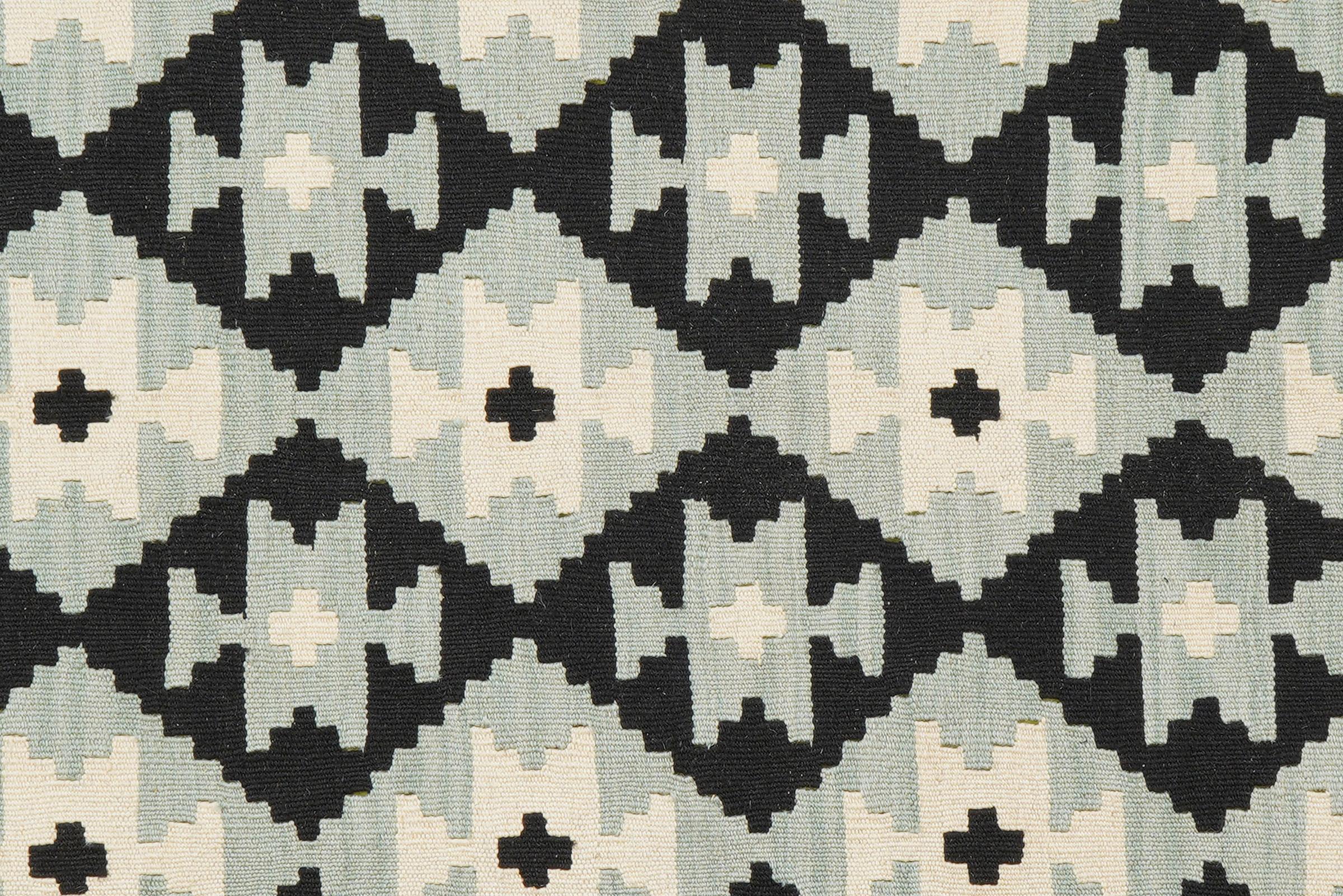
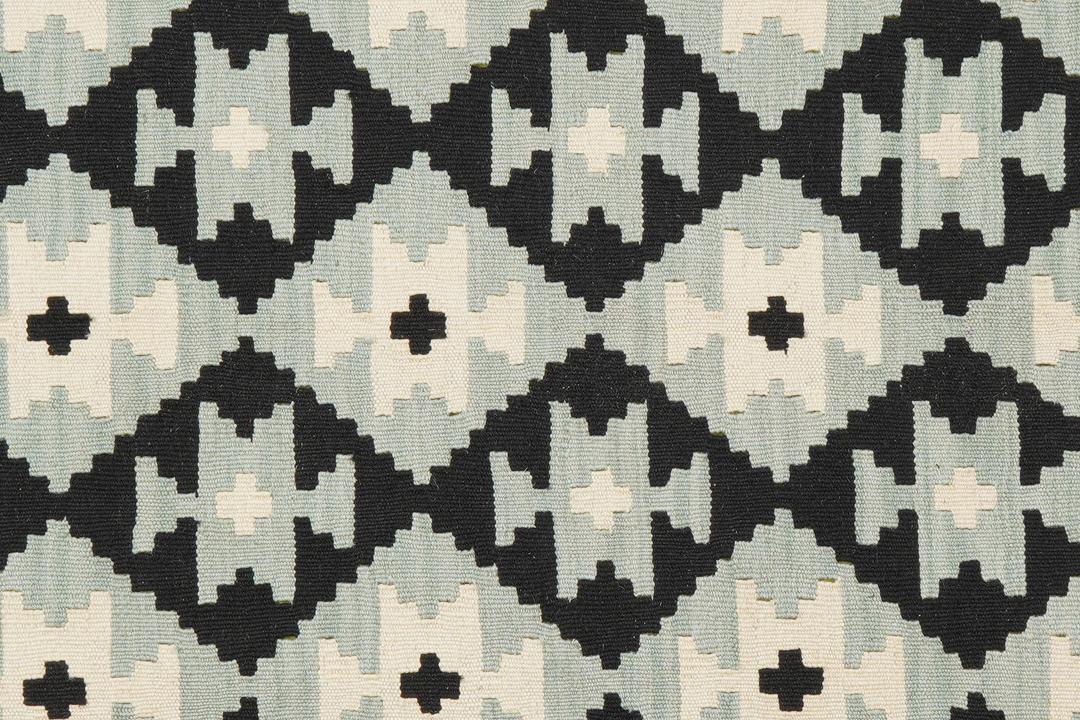
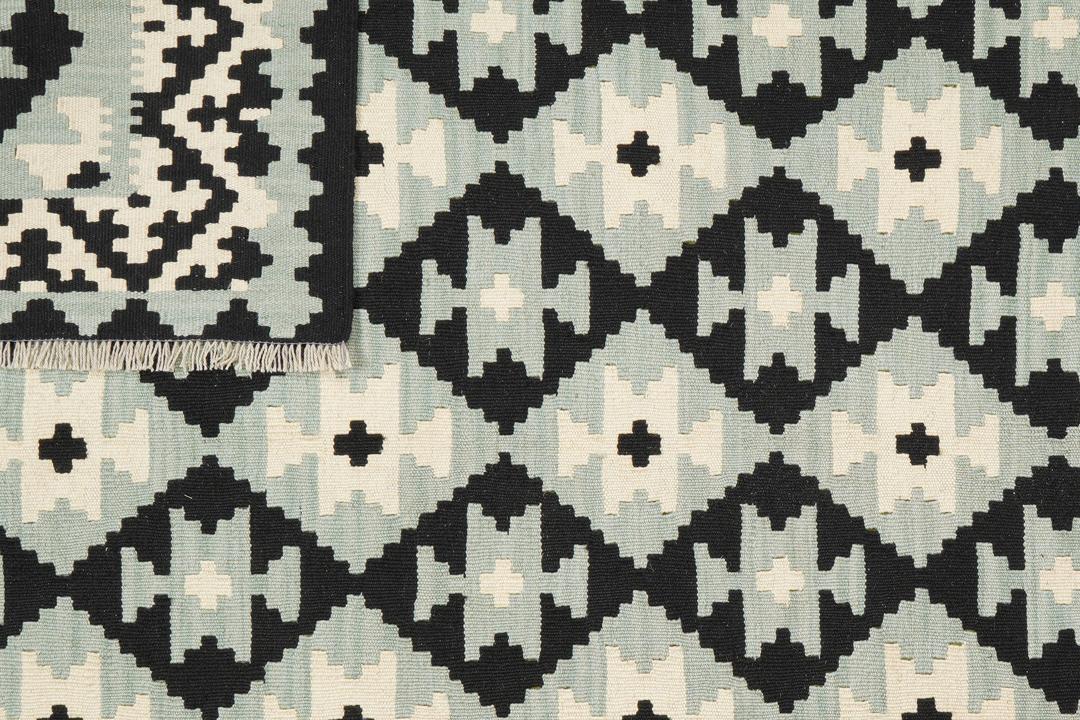
Unlike pile rugs which use knotted tufts, a kilim is created using a flatweave technique where the weft threads are tightly packed over the warp. This produces a smooth, pile-free surface that is lightweight, durable, and reversible, carrying a tactile simplicity that has made these rugs popular across centuries.
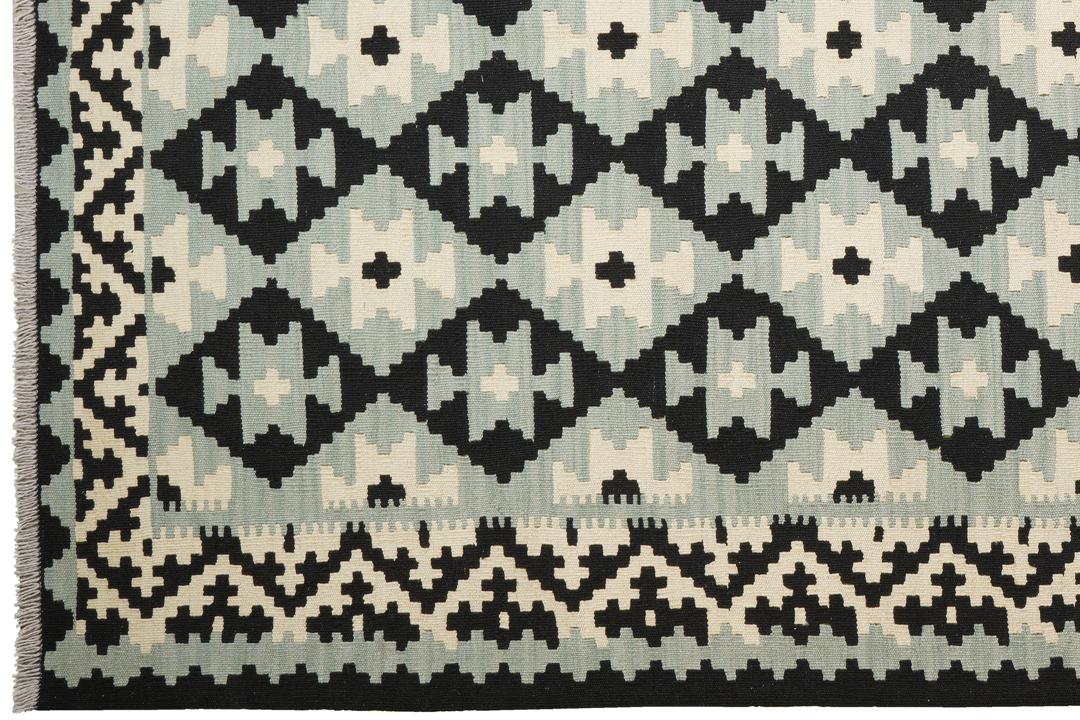
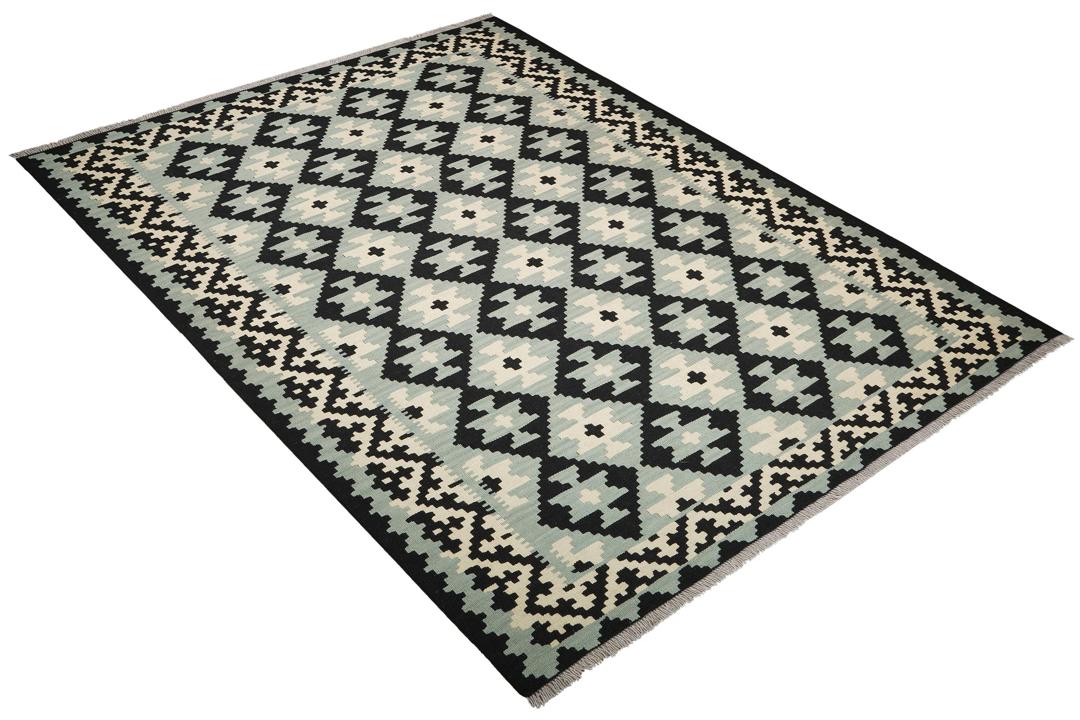
The design of this piece is defined by traditional geometric motifs, including repeating diamonds and tribal border structures. The combination of light-blue, black, and white accents offers a fresh interpretation of iconic tribal layouts, where each motif originally carried symbolic meaning connected to family protection or natural elements.
Owning a Ghashghai kilim means preserving a living tradition of nomadic art. These rugs remain highly valued by collectors and design enthusiasts alike for their balance of artistic expression, historical context, and enduring flatweave resilience.