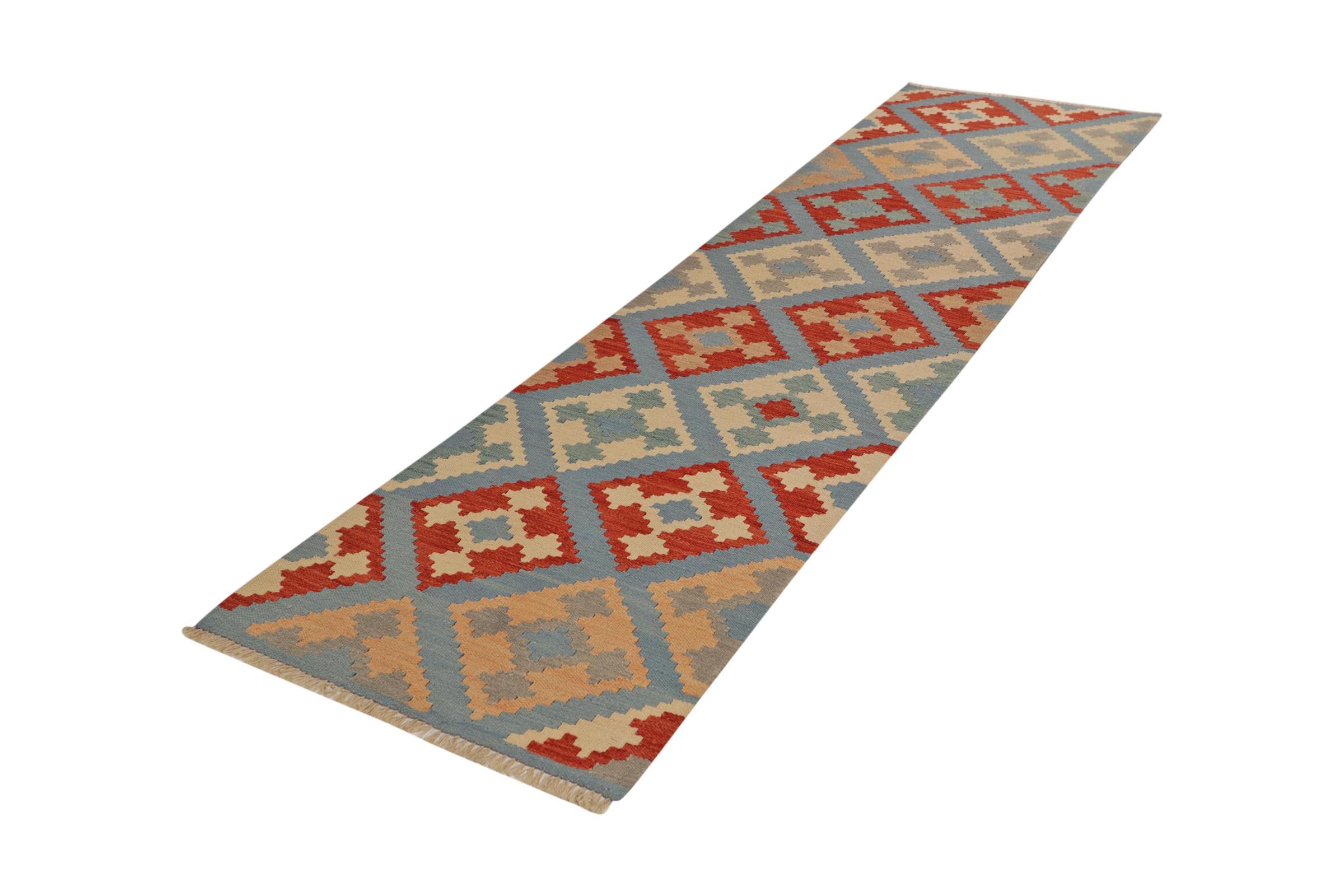
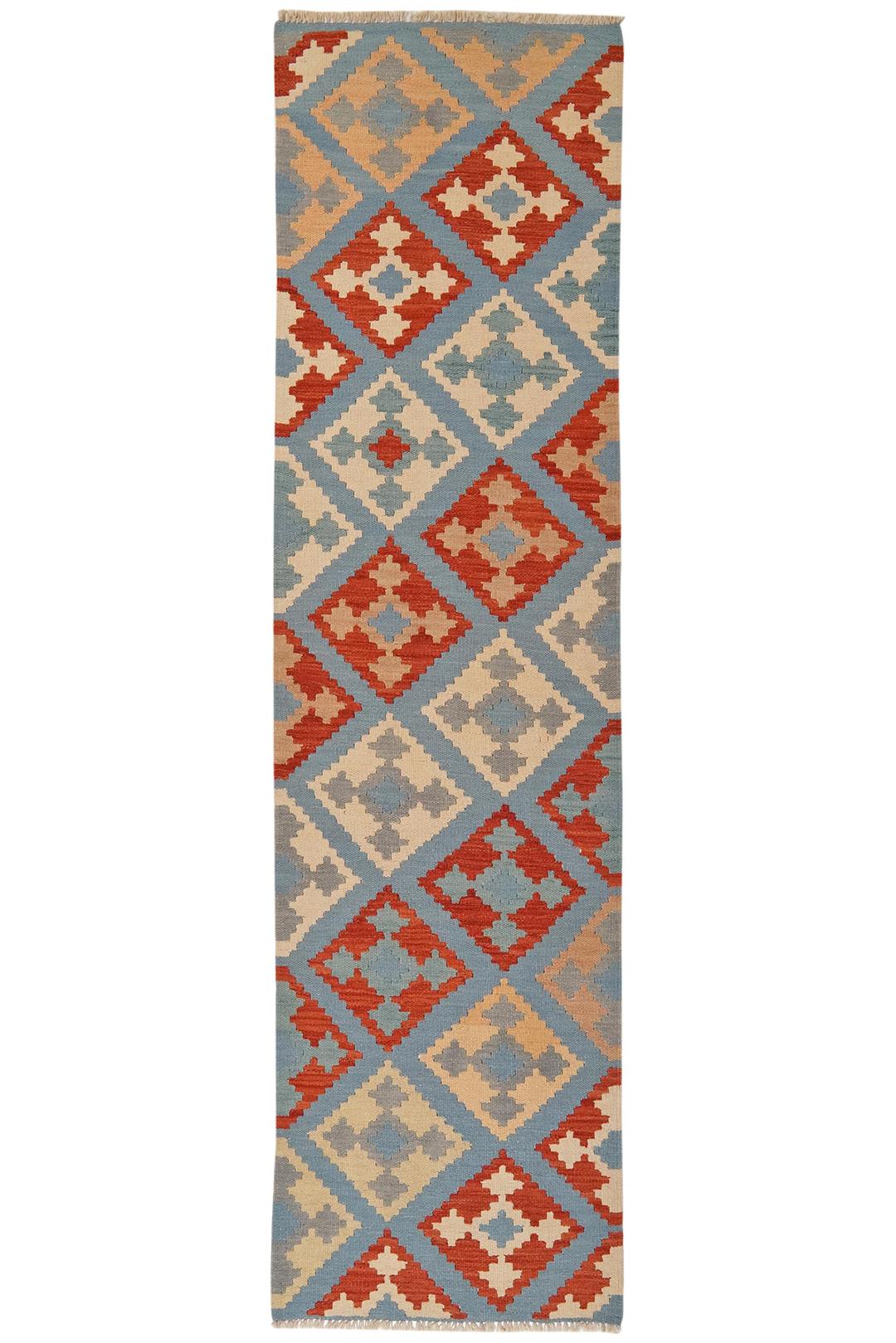
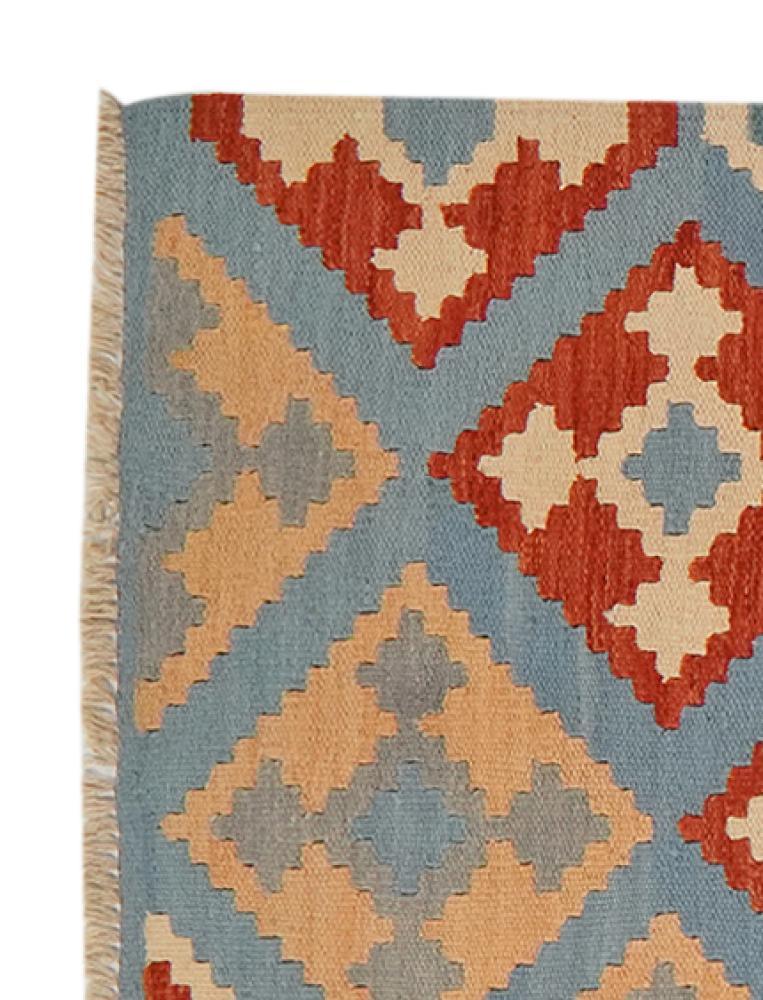
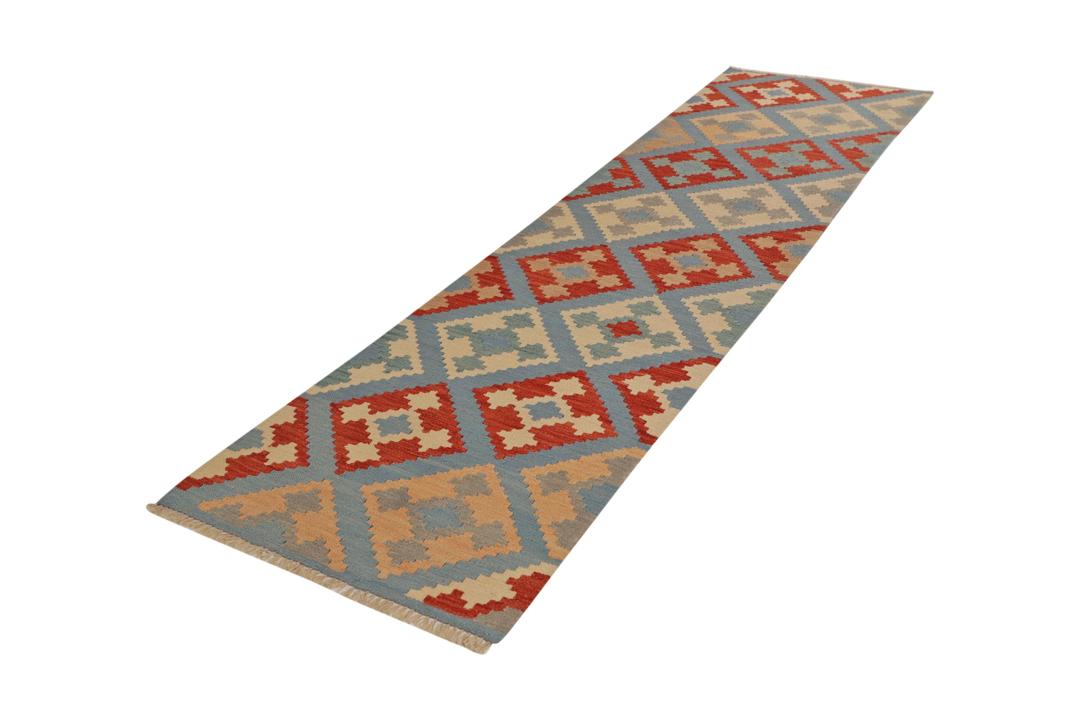
Kilim weaving has deep roots across the nomadic and semi-nomadic communities of the Middle East, particularly among Ghashghai weavers. Traditionally crafted on portable looms, these flatwoven textiles served both functional and decorative purposes within daily tribal life, valued for their durability and transportability.
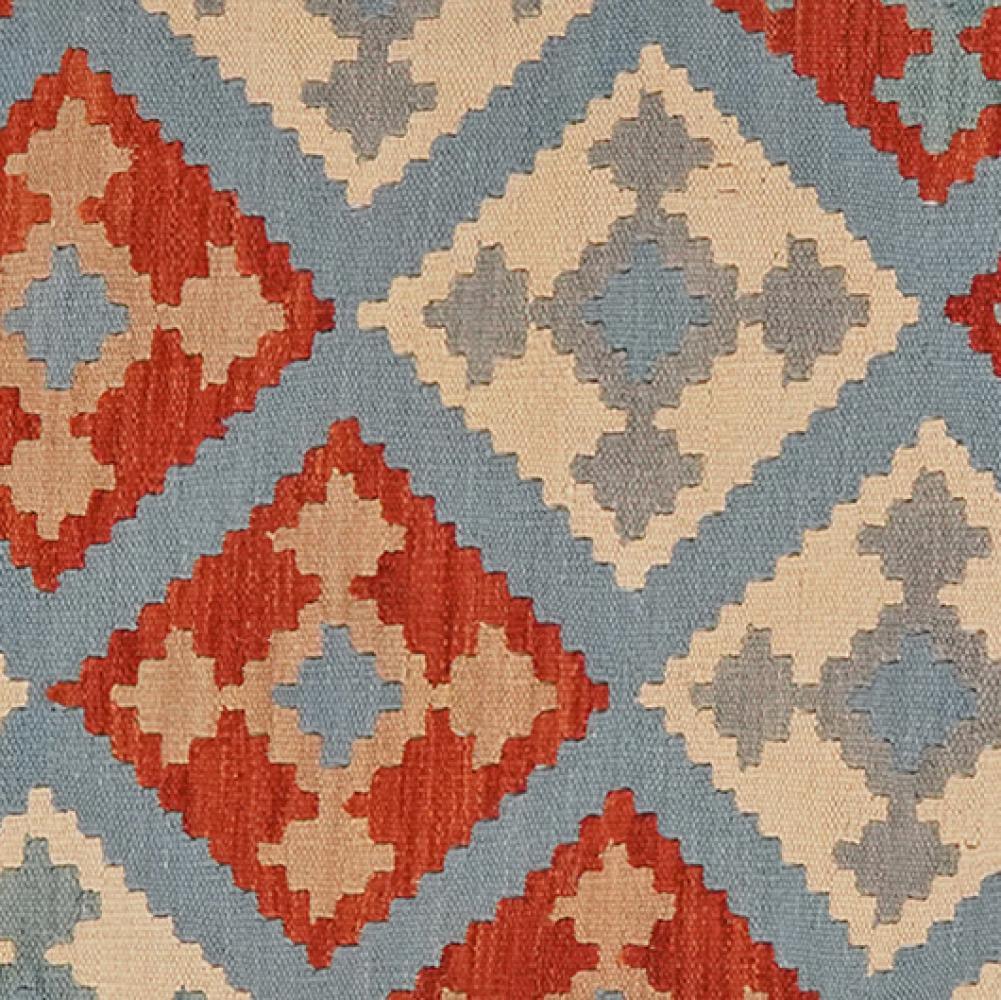
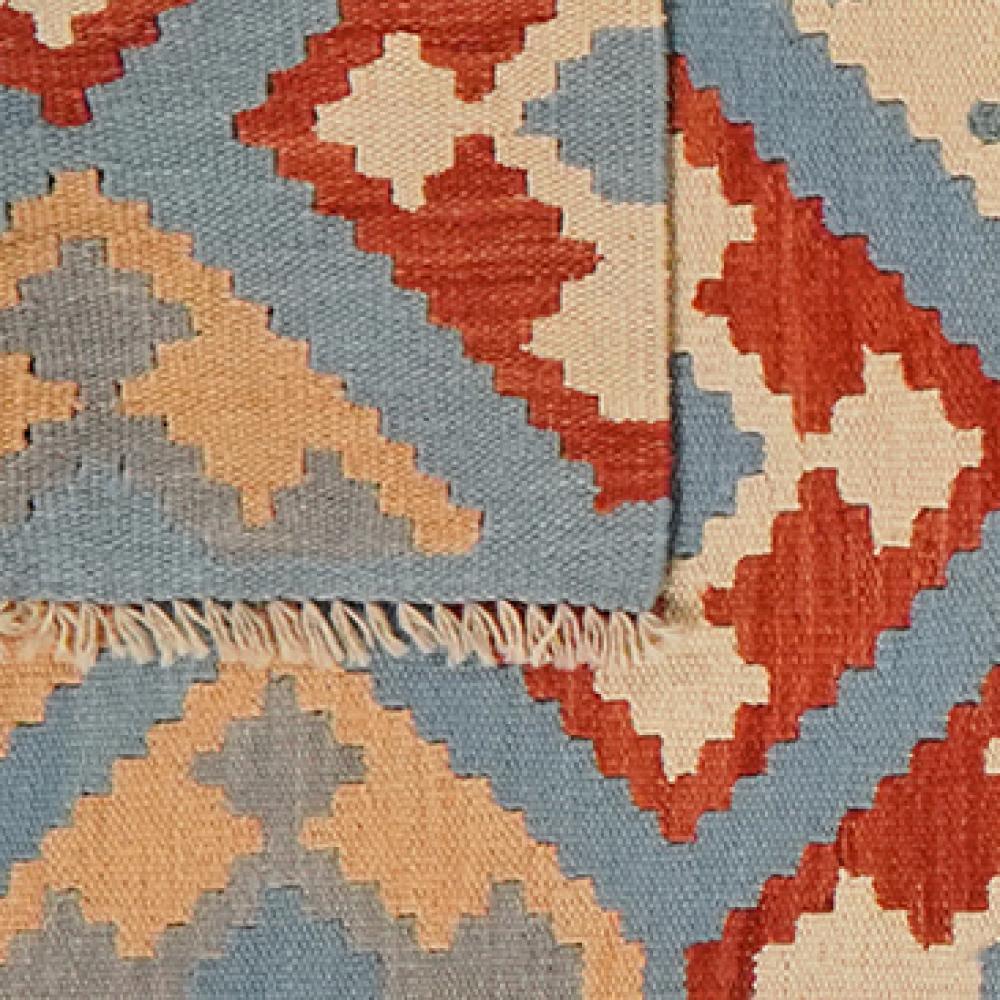
Unlike pile rugs created with individual knots, flatwoven kilims are formed by interlacing the weft and warp threads directly. This hand-woven technique produces a smooth, pile-free surface where the design is built straight into the structure of the weave itself, yielding crisp lines and a lightweight, flexible texture.
Visual storytelling defines Ghashghai kilims. Repeating diamond medallions, stepped motifs, and stylized natural symbols line the field in rhythmic harmony. While classic red tones are widely recognized in tribal textiles, examples featuring a deep blue field bring a cool, calm perspective to the graphic geometry.
Today, Ghashghai kilims are highly regarded by collectors and interior enthusiasts worldwide. Their bold, graphic quality fits effortlessly into contemporary spaces, offering a meaningful connection to regional weaving traditions and centuries of nomadic heritage.