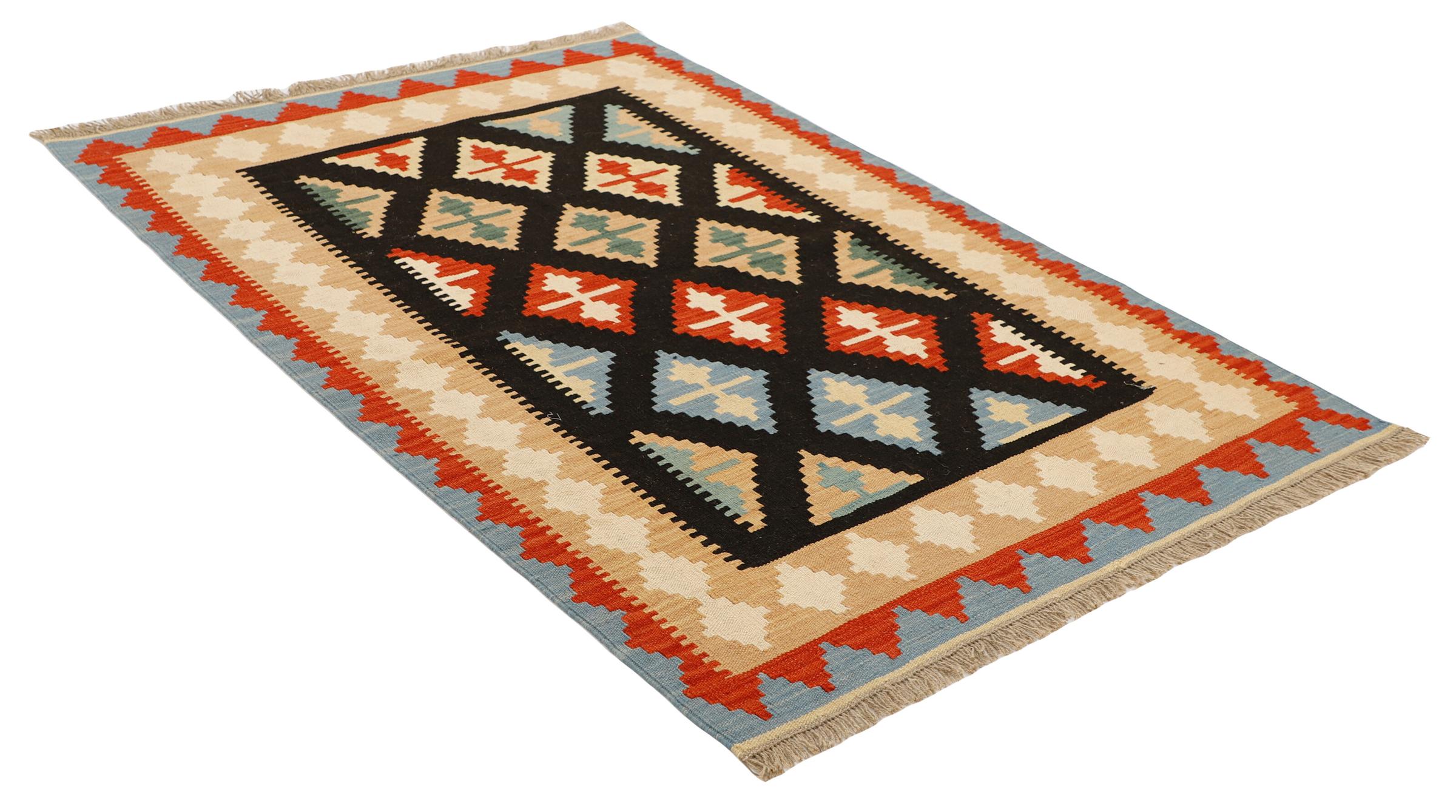
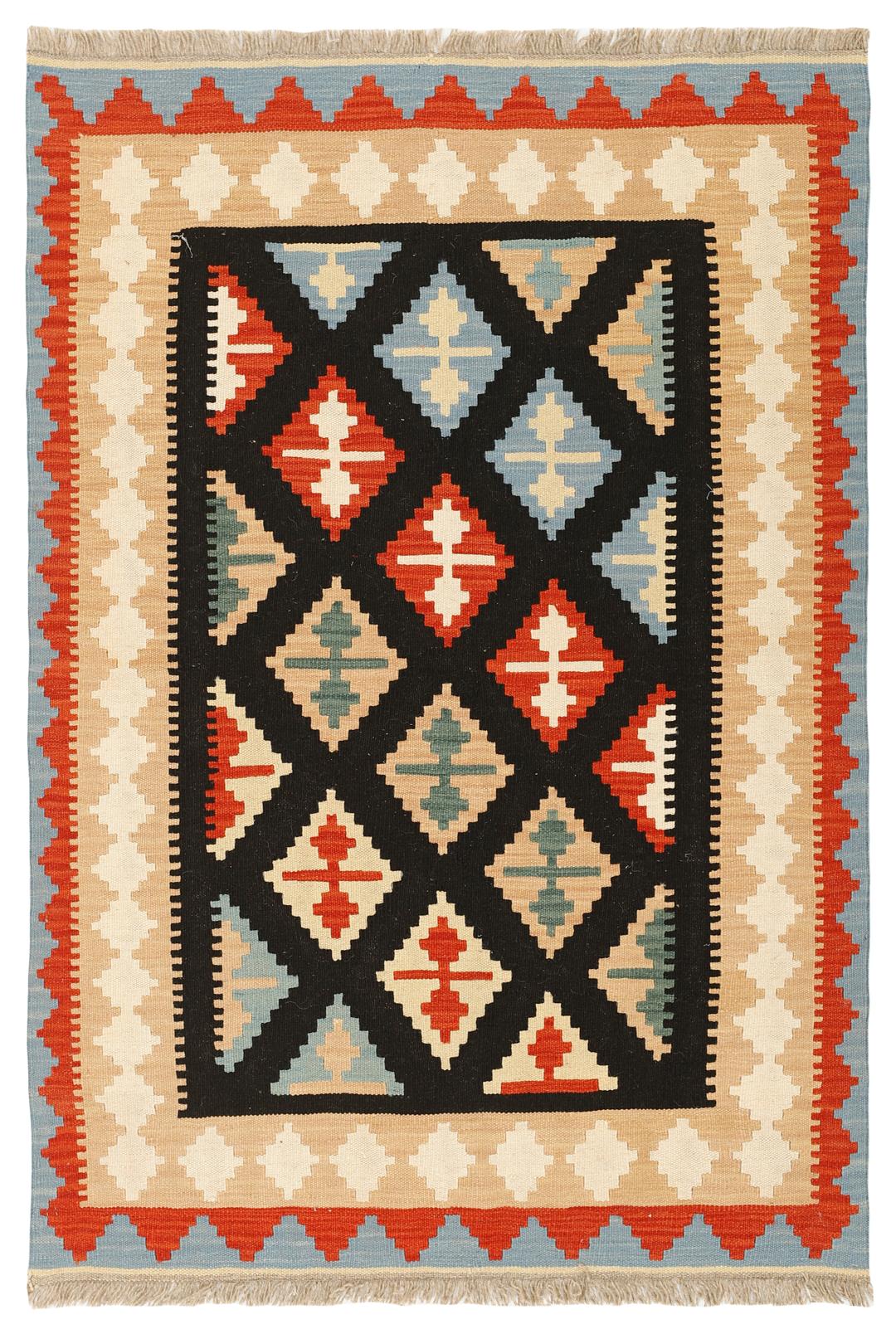
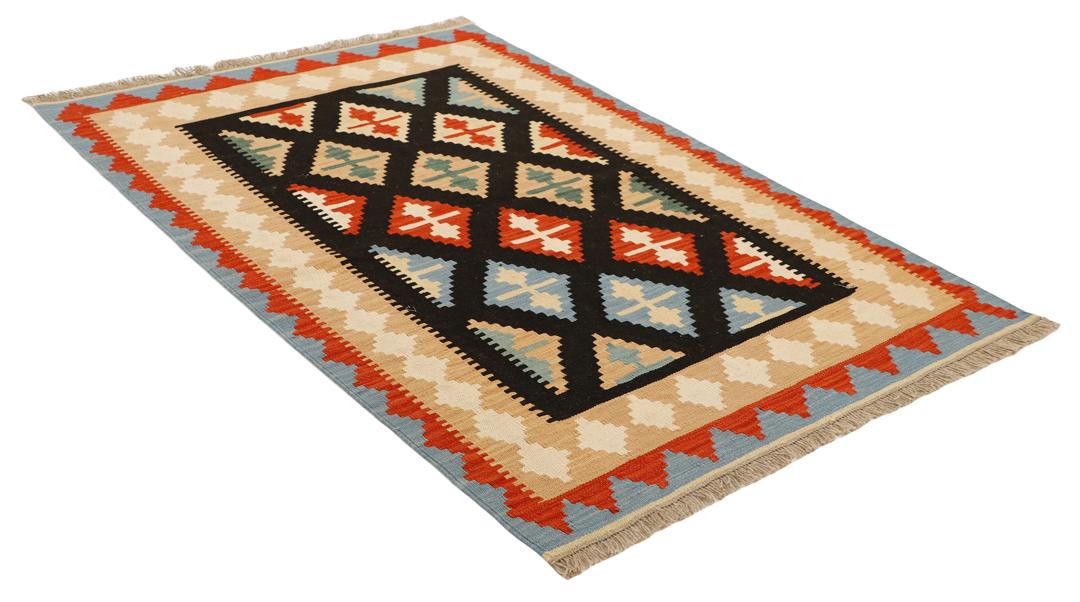
Kilim rugs are a cornerstone of Middle Eastern textile history, traditionally woven by nomadic and semi-nomadic tribes. These flat-woven rugs were historically essential for daily life, serving as floor coverings, wall hangings, and even as durable storage sacks for transport during migrations.
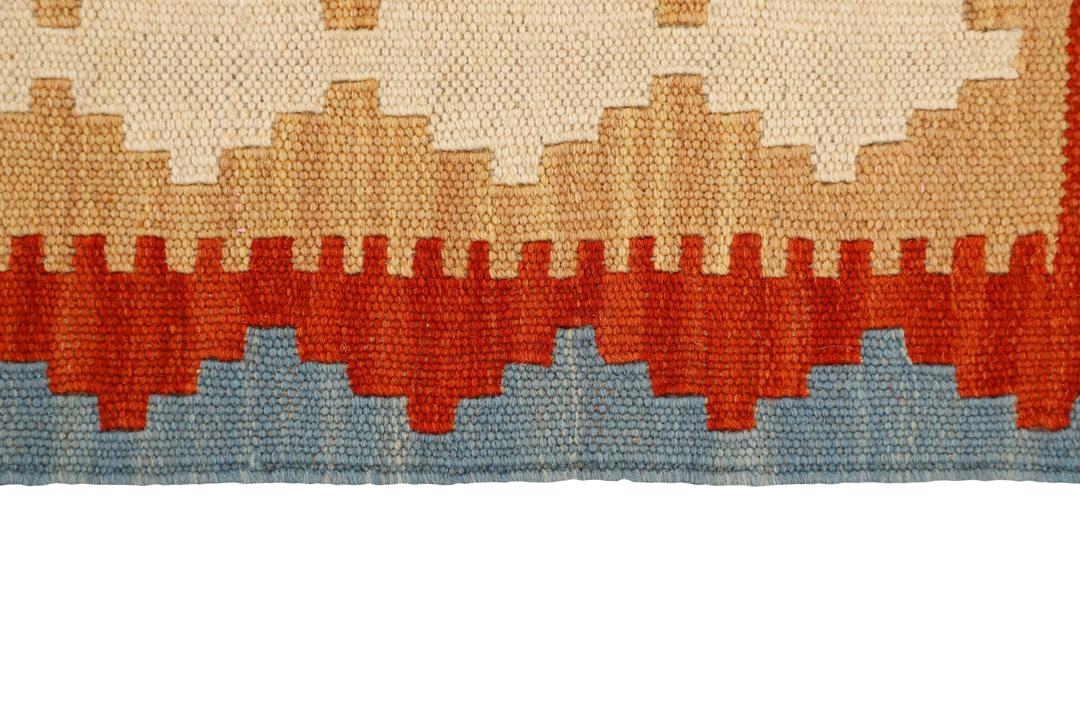
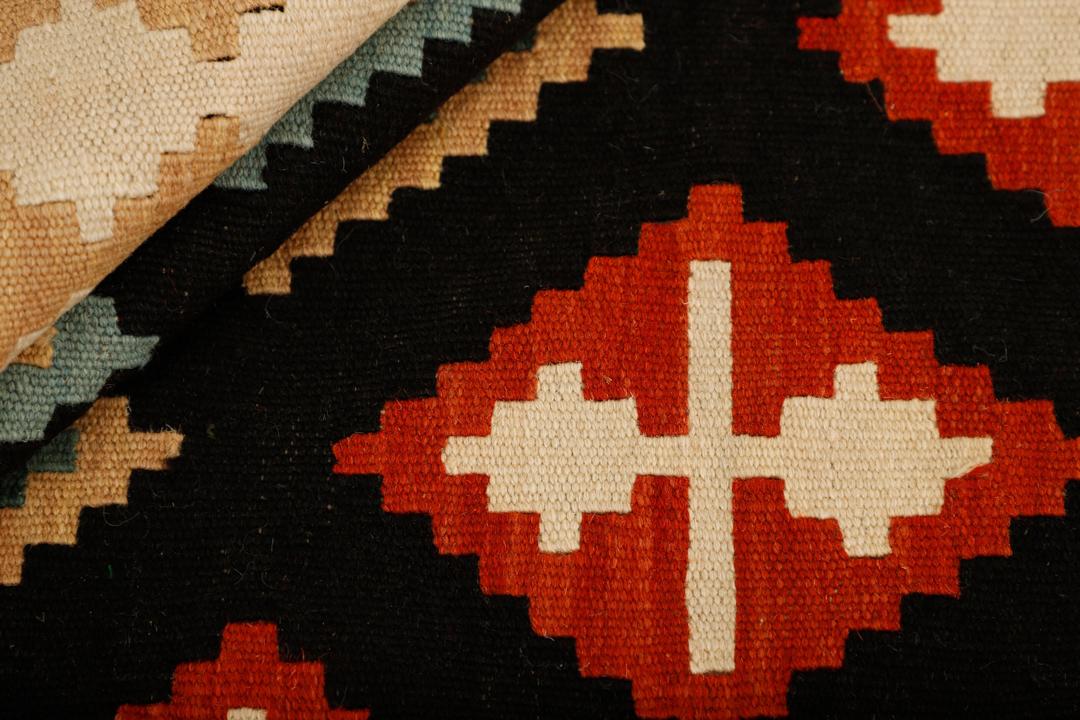
The term 'Kilim' refers to the specific slit-weave technique used to create the design. By separating different colour areas with small vertical slits, weavers can produce crisp, geometric motifs that define the rug's aesthetic. This requires immense focus, as the weaver must maintain perfect tension throughout the process to prevent the rug from distorting.
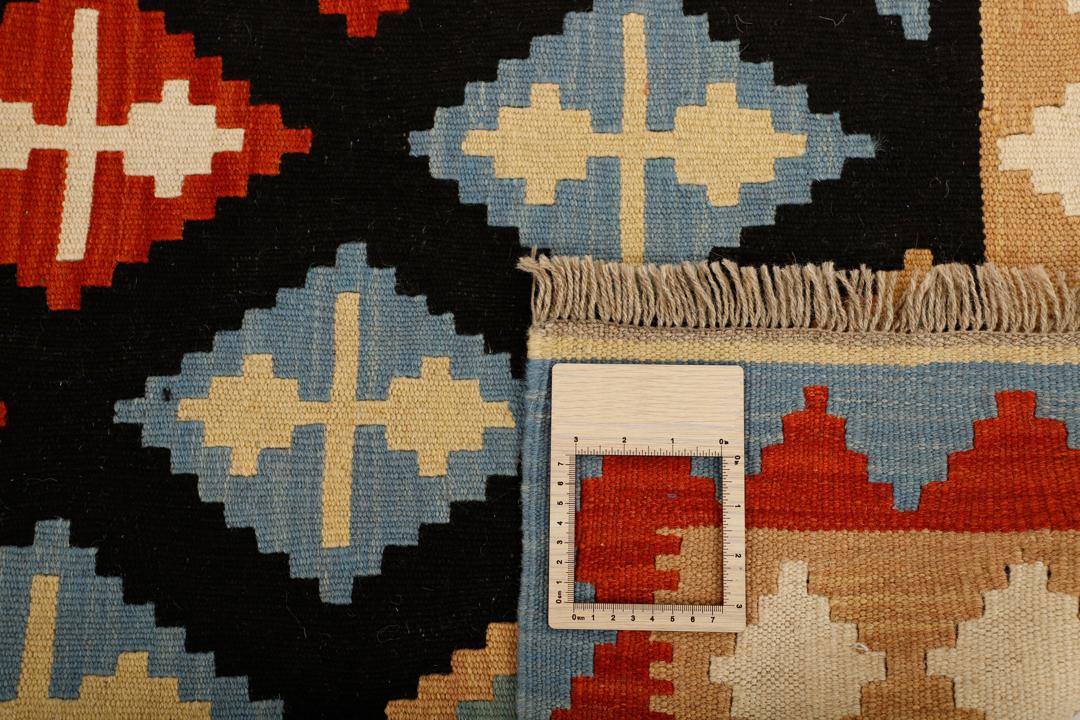
Design-wise, this Kilim showcases a classic diamond-based geometry, a motif often associated with protective symbolism in ancestral weaving cultures. The bold contrast between the dark background and the vibrant, alternating colours is a hallmark of the style, demonstrating a sophisticated use of natural dyes and traditional pattern arrangements.
Collecting a Kilim is an investment in cultural heritage. Because they are woven without a pile, they represent the pure, foundational form of rug-making. Owning one is a way to celebrate the skill of the artisans and the enduring, functional beauty that has been passed down through generations of weavers.