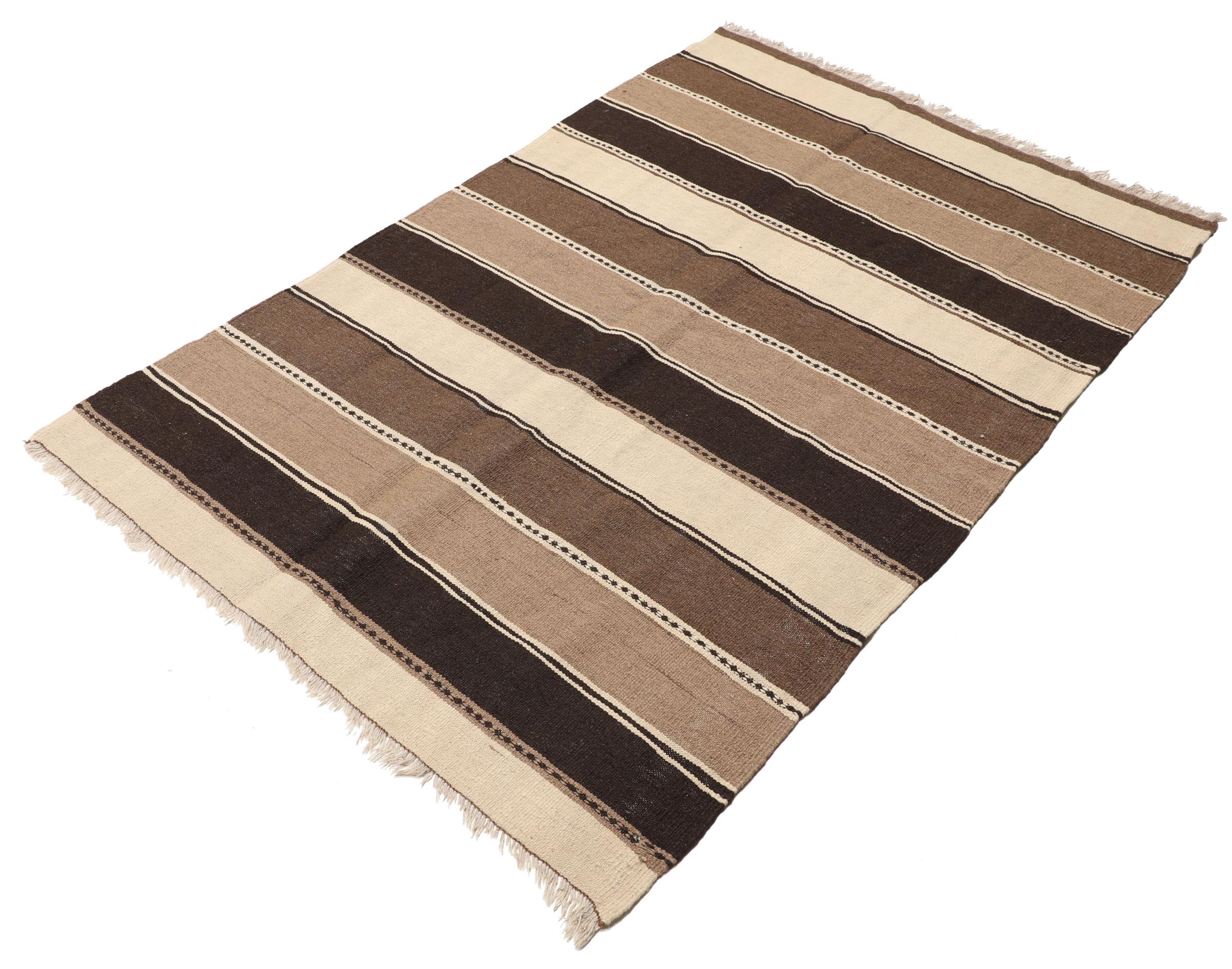
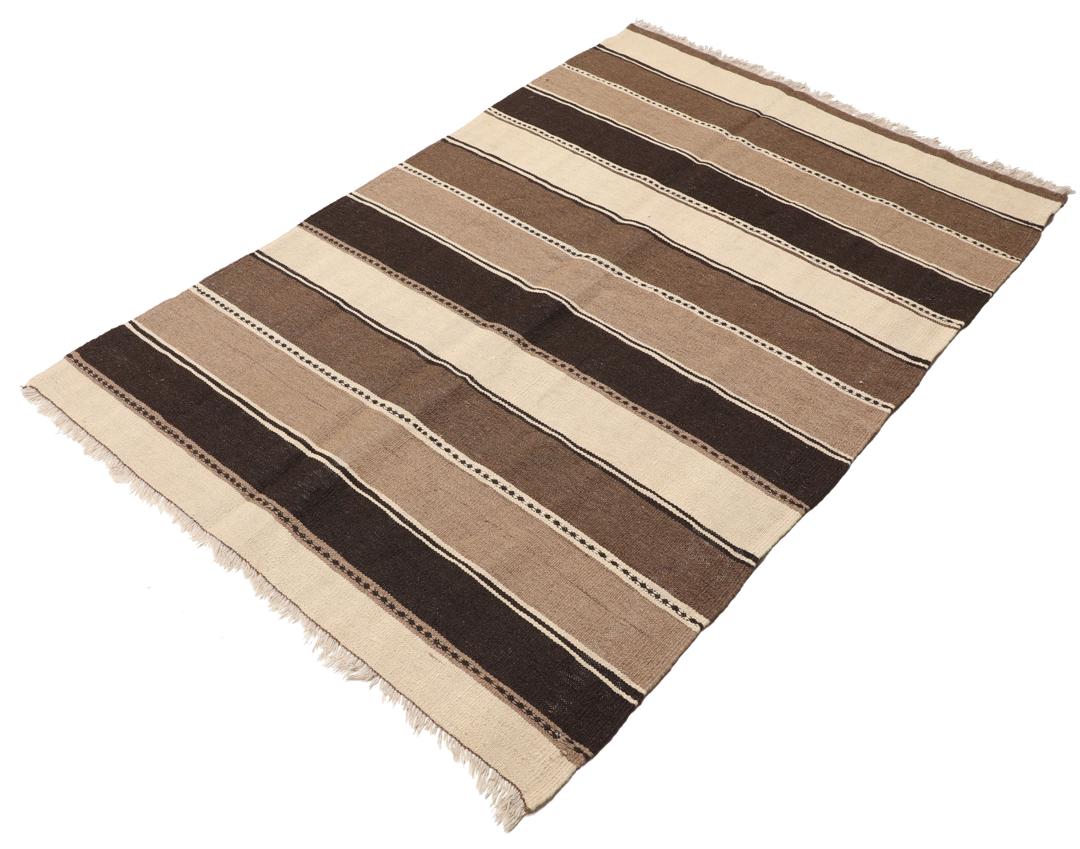
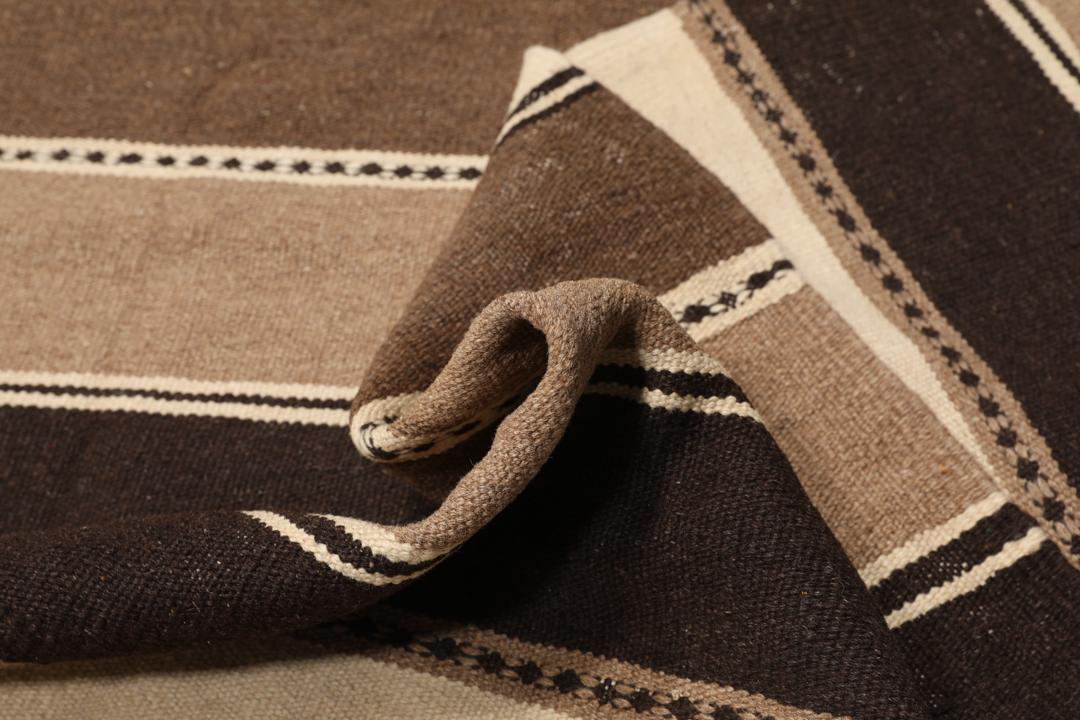
Kilim rugs are a foundational element of Middle Eastern textile history, traditionally woven by nomadic and semi-nomadic tribes. These flat-weave rugs were historically essential for daily life, serving as floor coverings, blankets, and storage bags, designed to be both portable and highly durable.
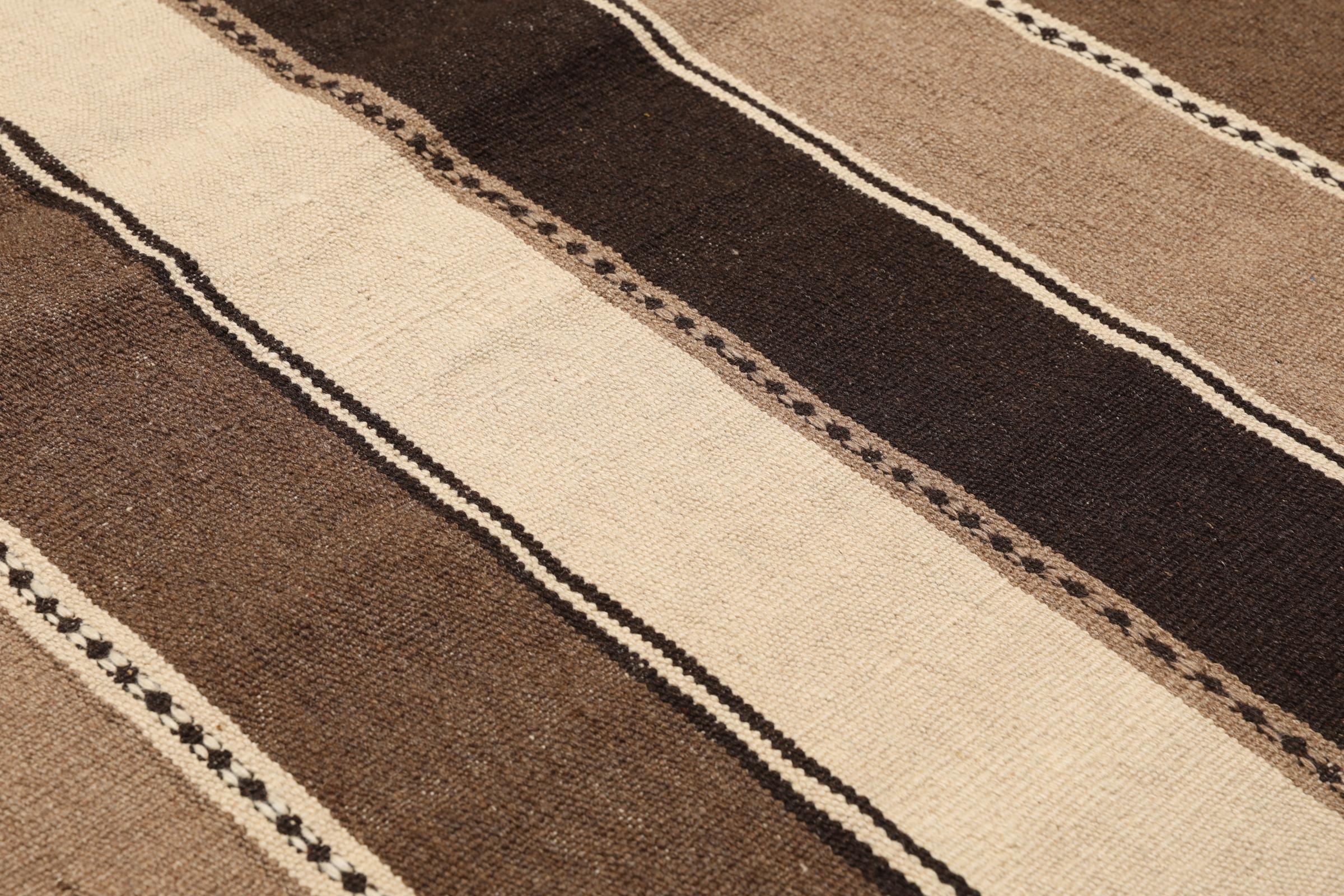
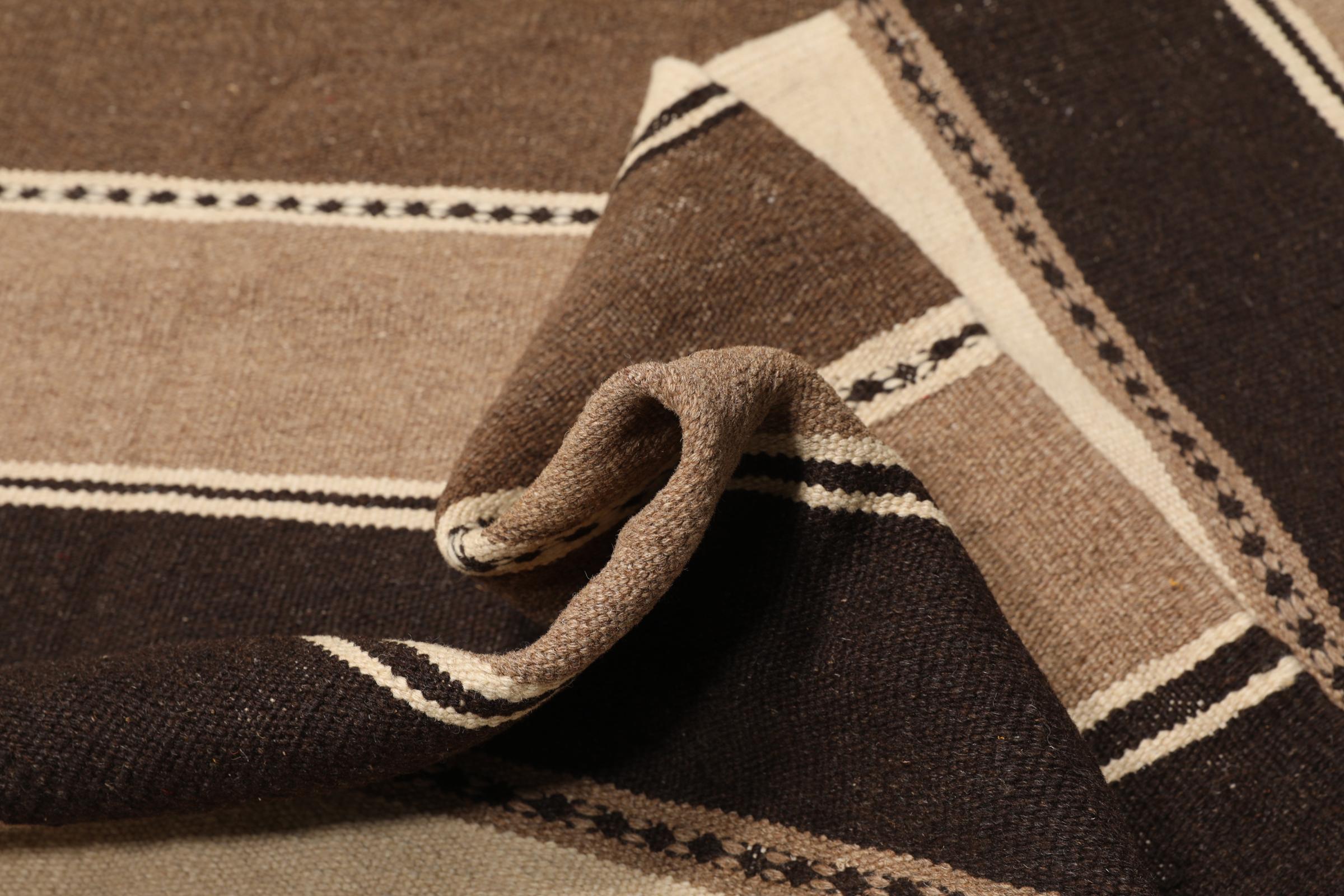
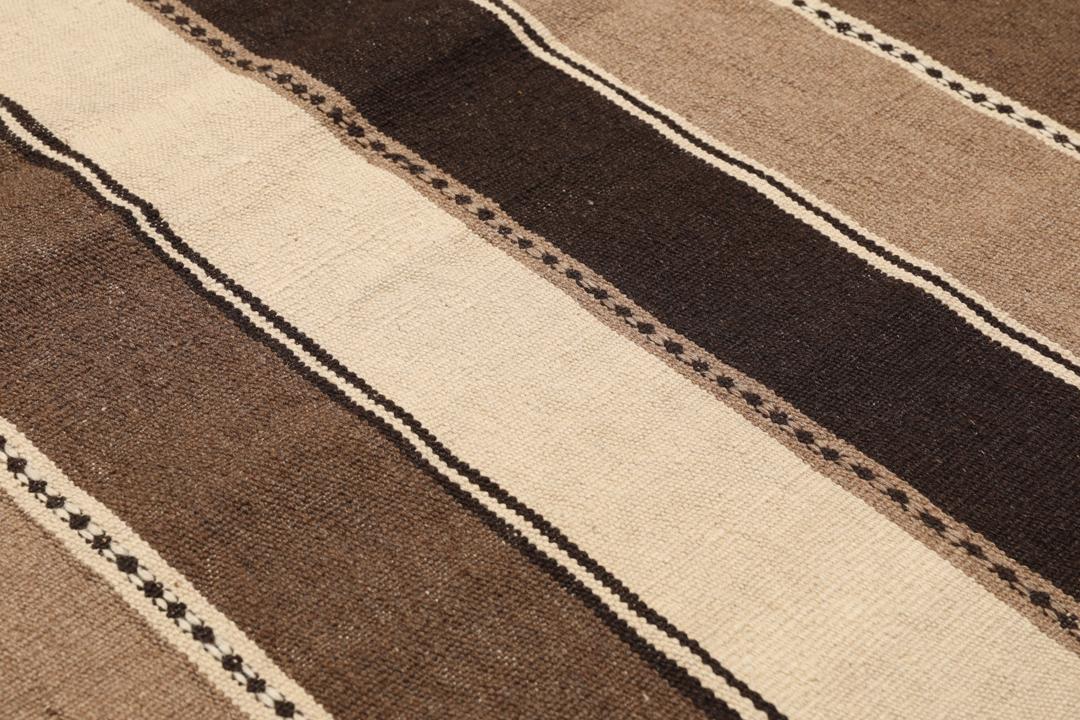
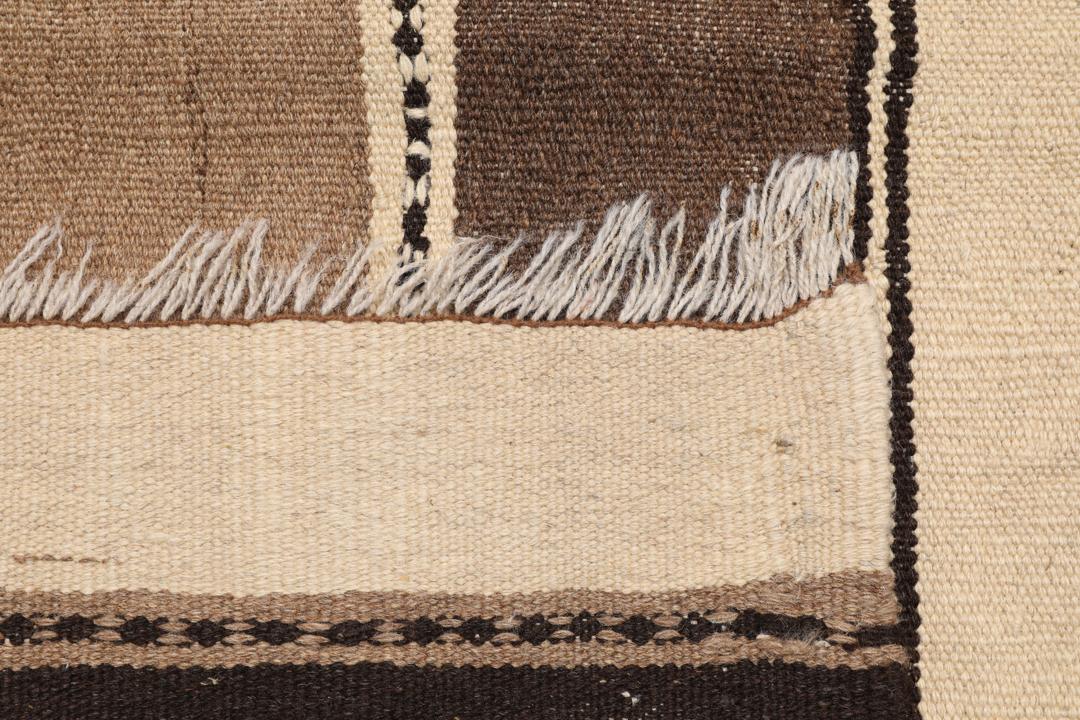
The term Kilim refers specifically to the slit-weave technique, where the weft threads are passed back and forth through the warp to create distinct colour blocks. This method produces a reversible, thin, and durable textile that lacks a pile, making it a distinct departure from the knotted-pile rugs commonly associated with the region.
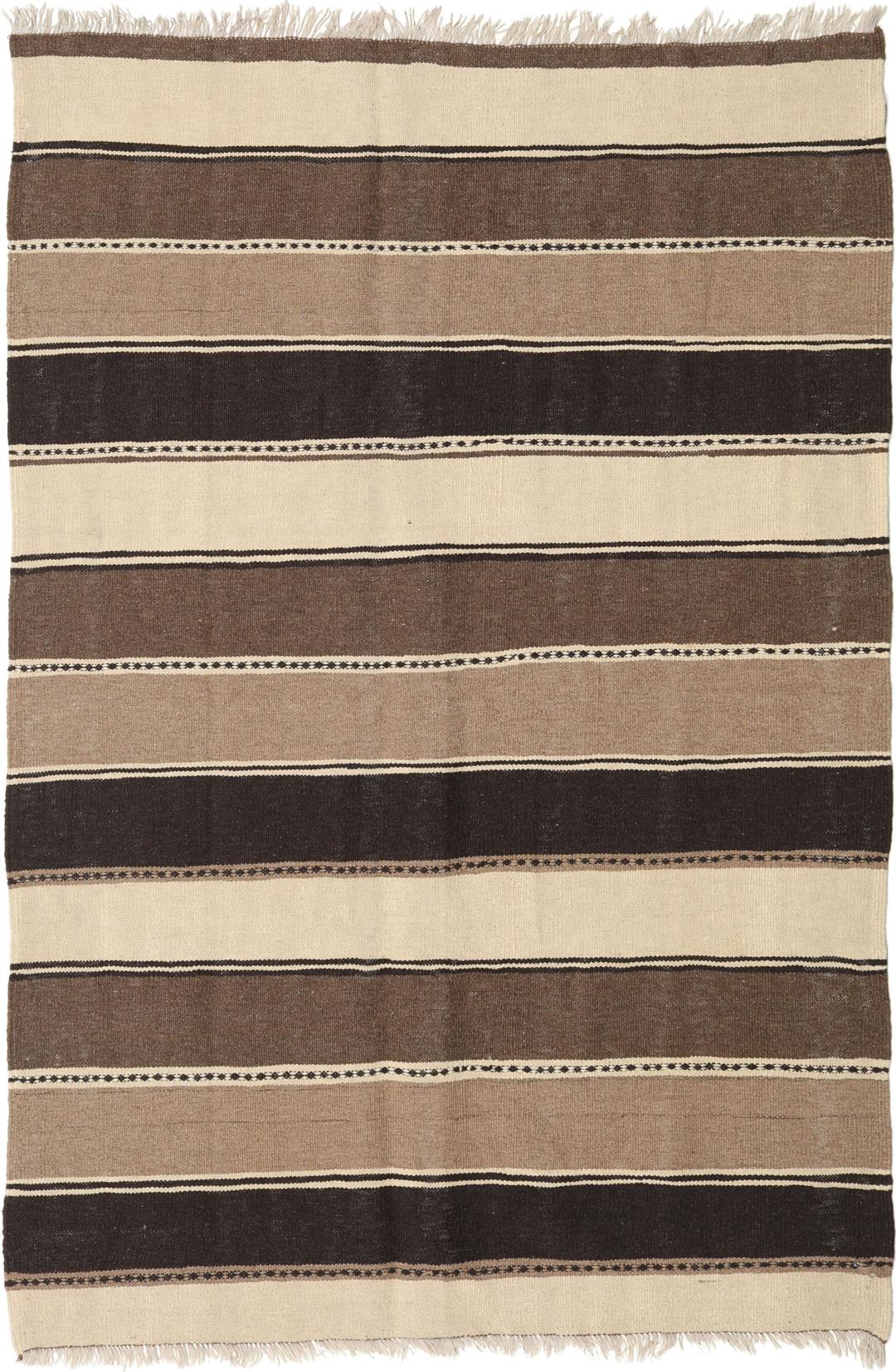
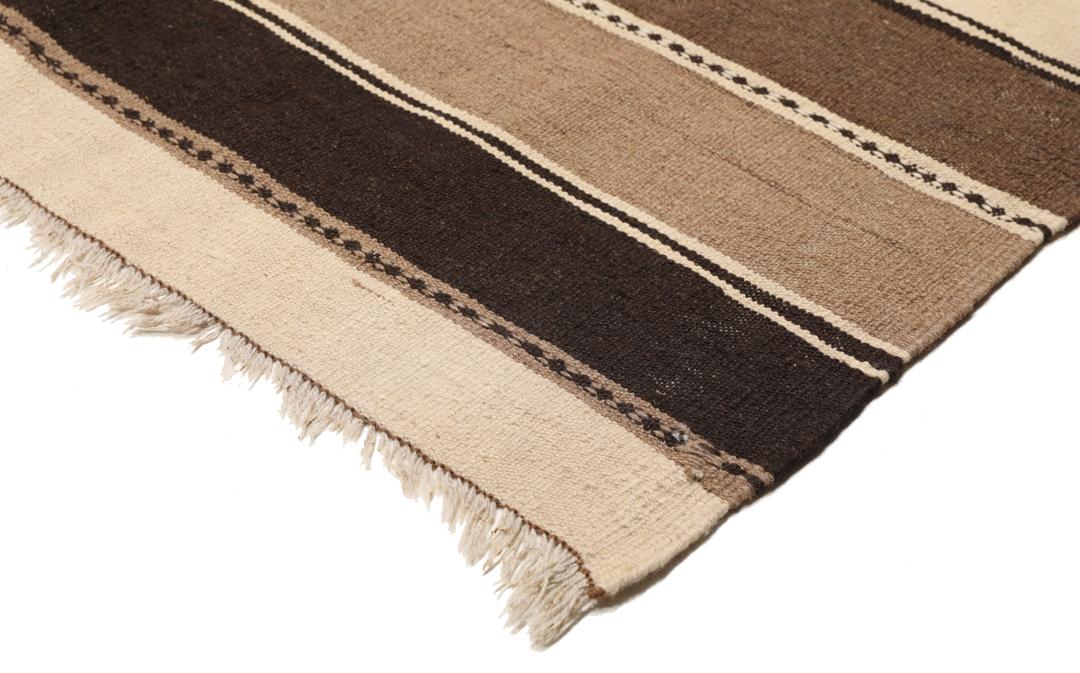
Striped patterns are among the oldest and most traditional motifs found in these textiles. While often simple in appearance, these stripes represent a complex balance of colour and proportion, reflecting the aesthetic traditions of the weavers who created them. The use of natural Wool, sourced directly from local flocks, ensures that the colours remain rich and the texture stays authentic.
Collecting a Kilim is an investment in cultural heritage, as these pieces offer a direct link to ancient weaving traditions. They are highly valued not only for their visual simplicity but for the human story embedded in every row of weaving, making them cherished additions to modern homes that value authenticity and craft.