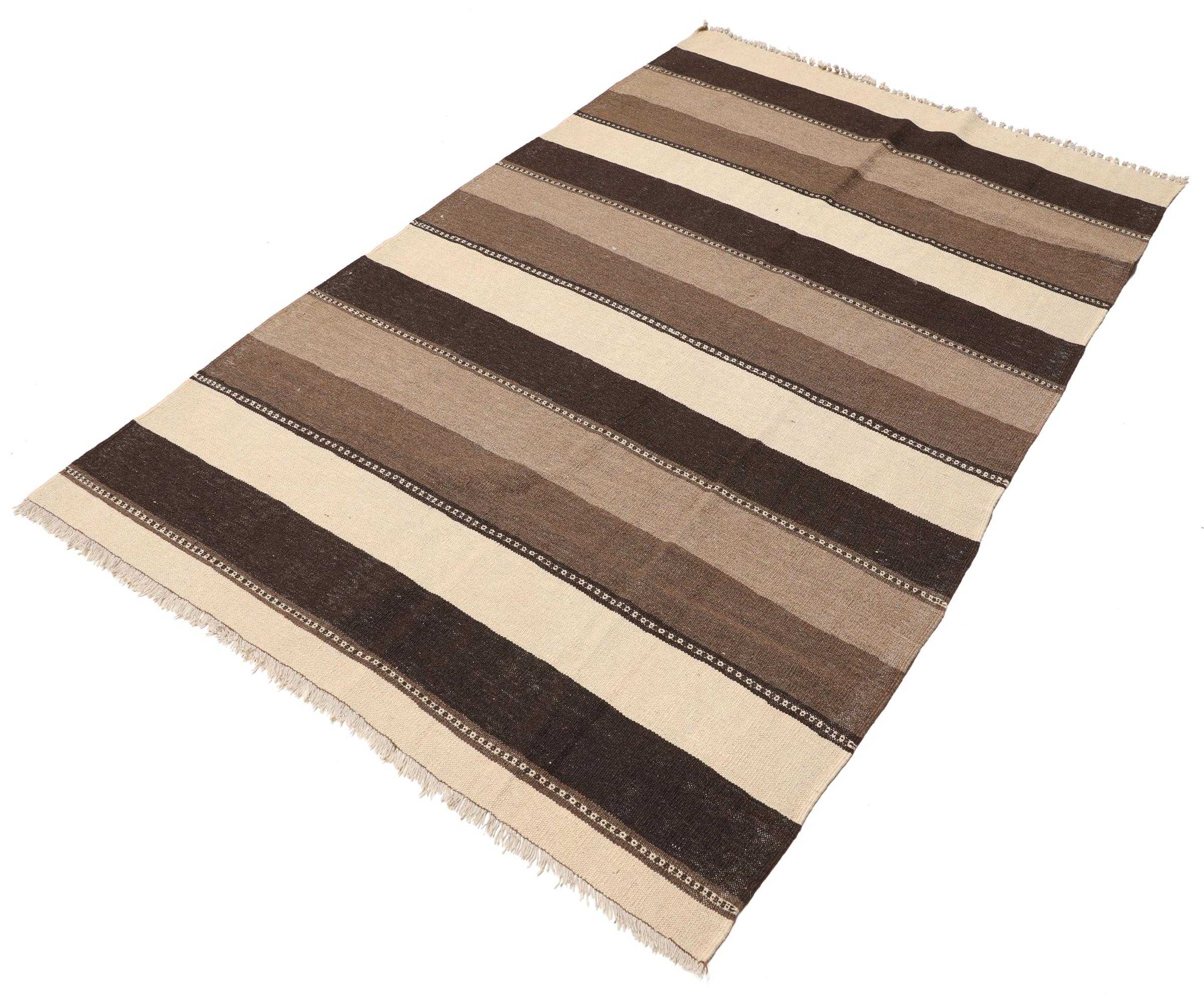
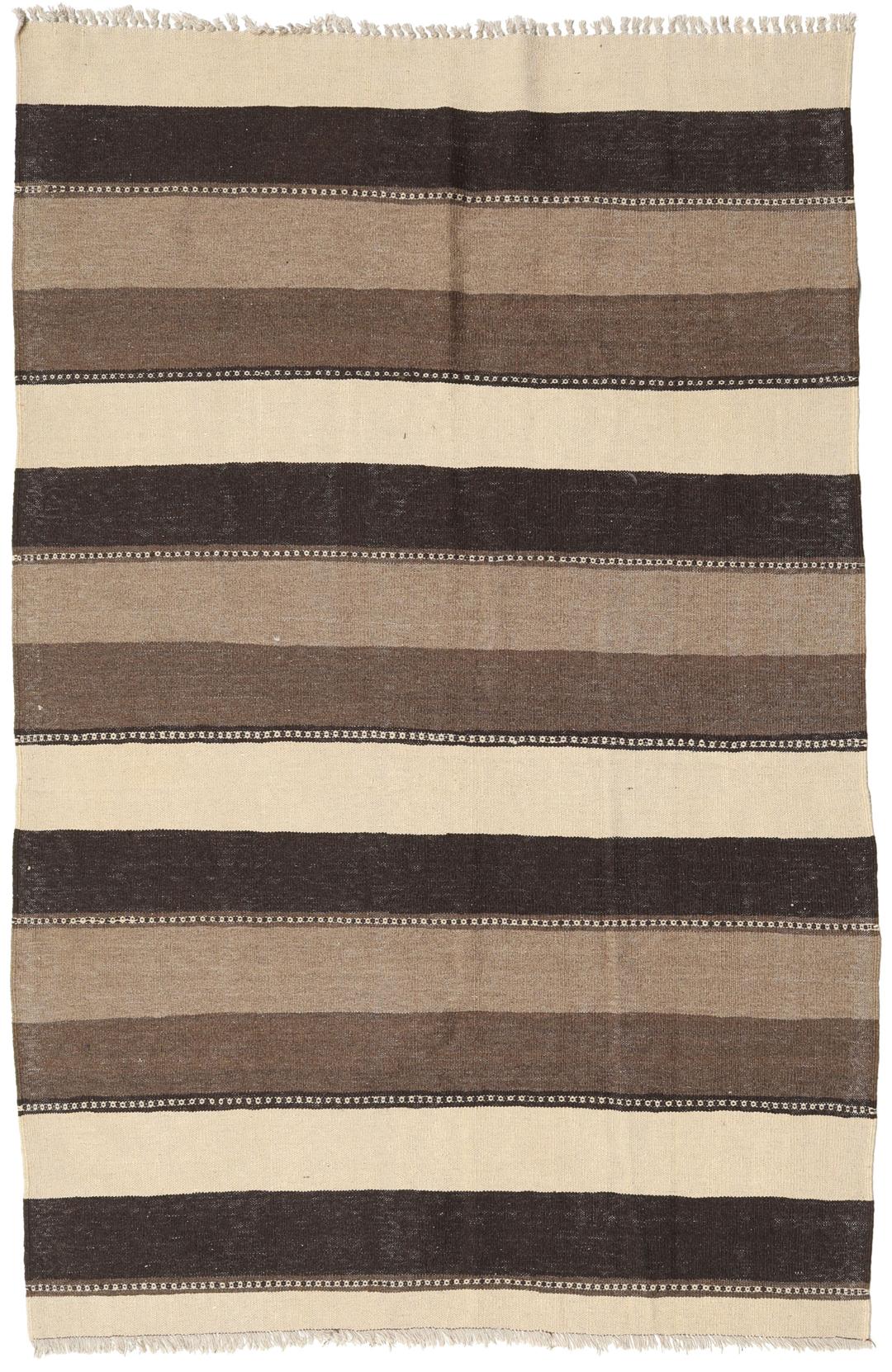
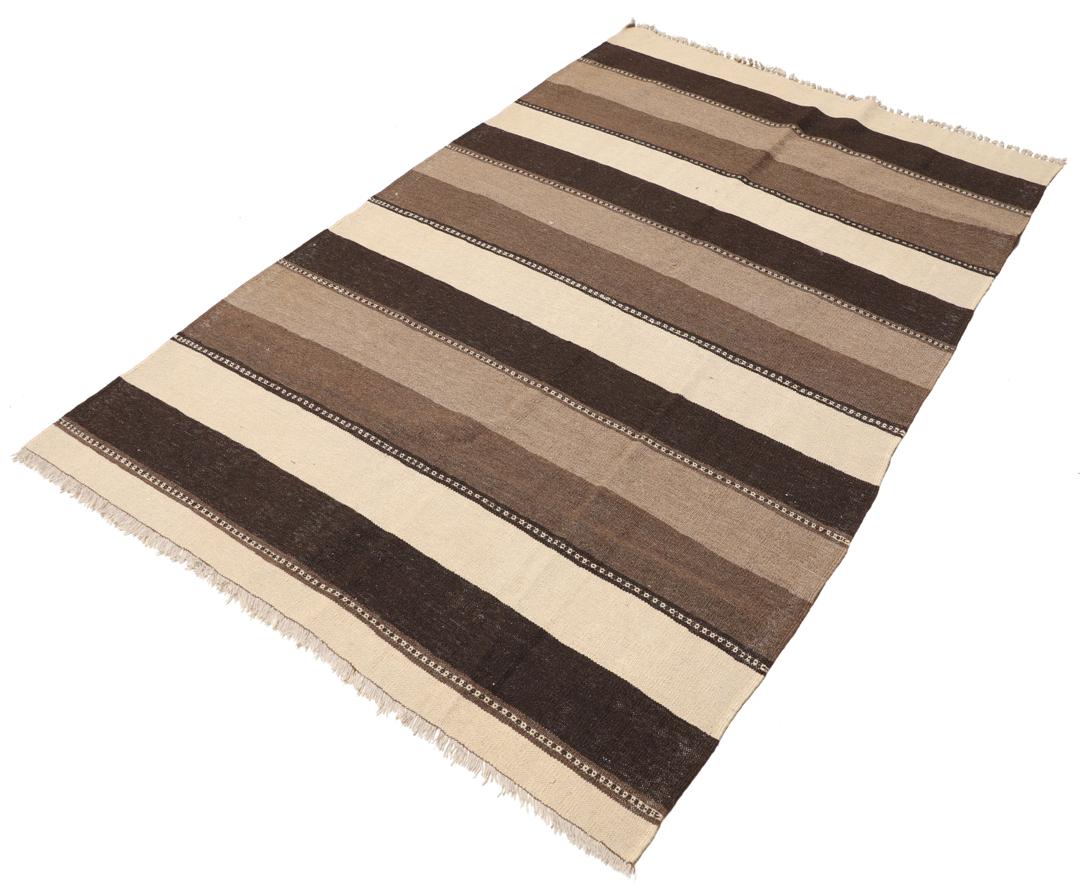
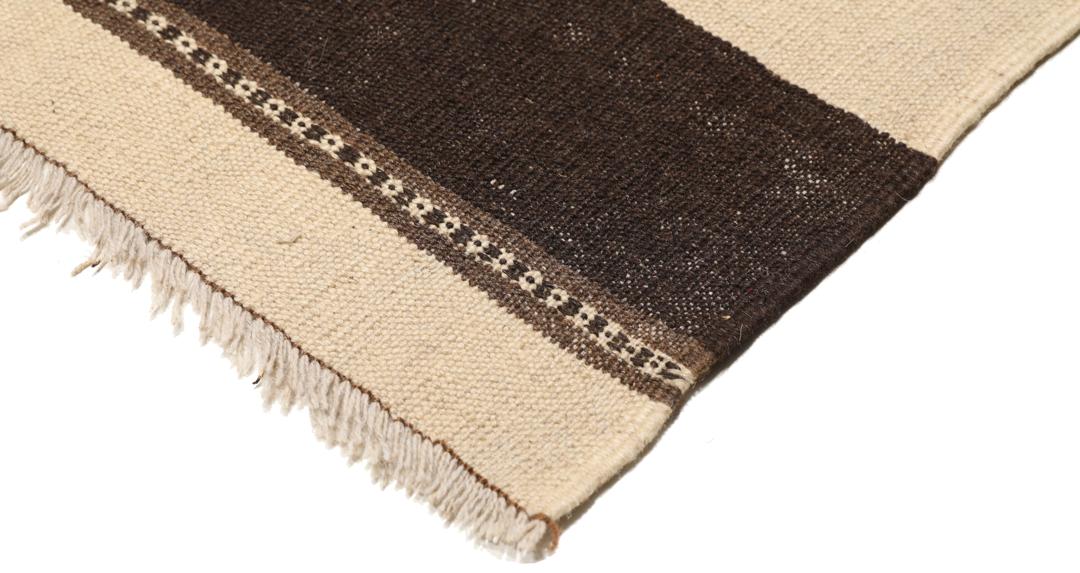
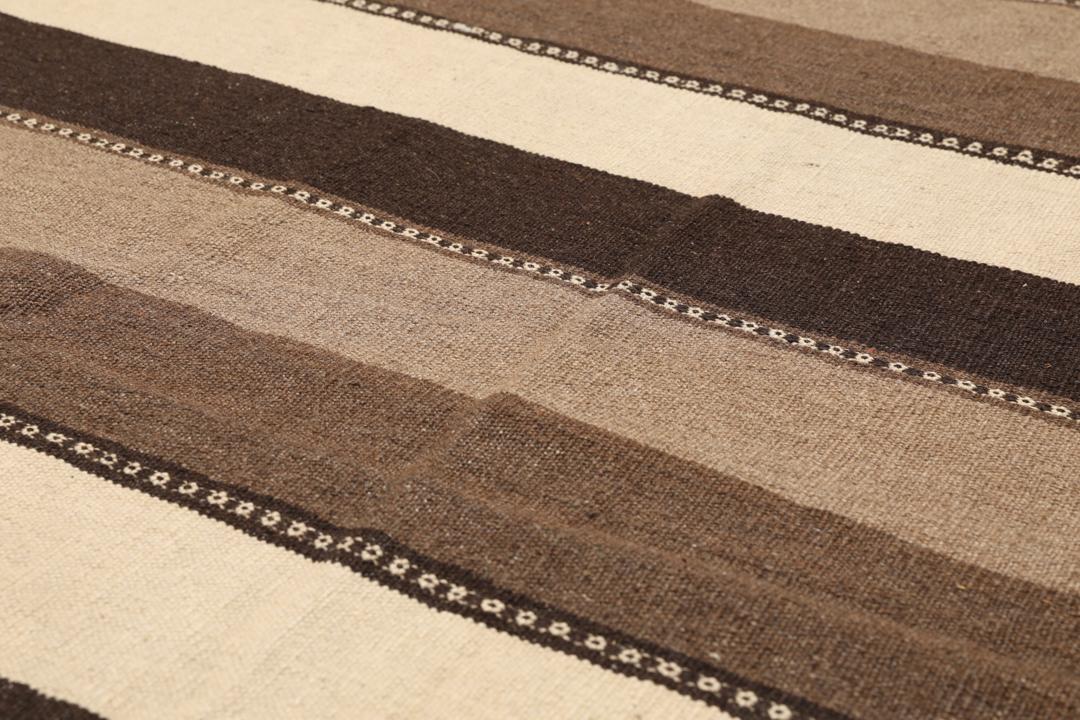
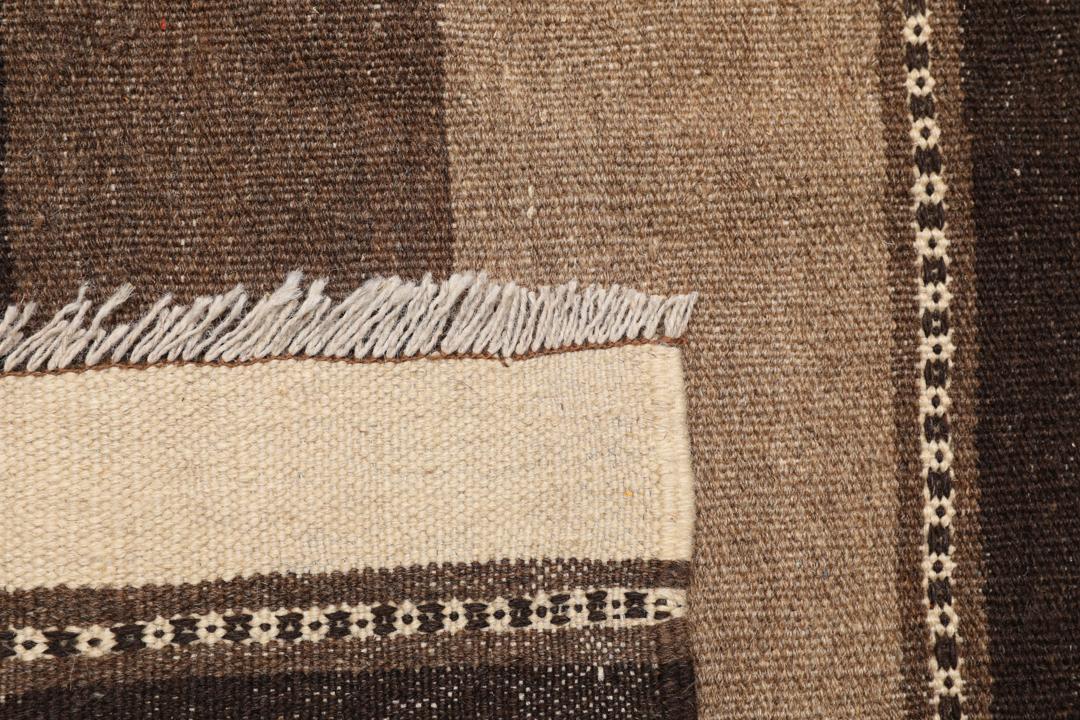
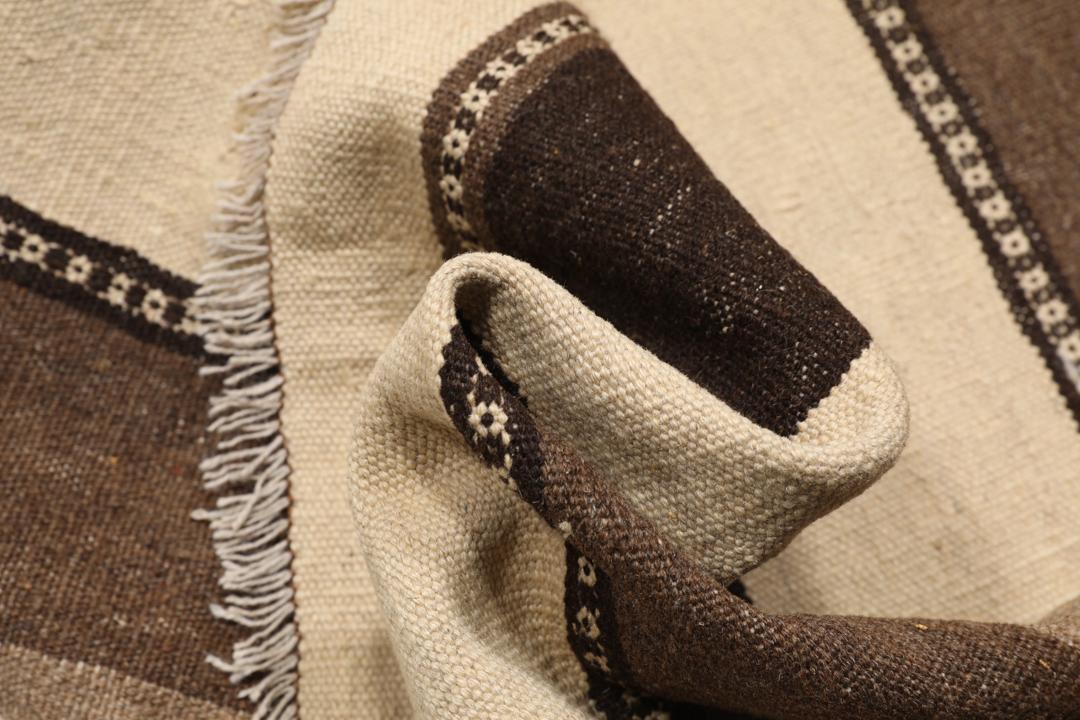
Kilim rugs are a foundational element of Middle Eastern textile history, with a tradition that spans centuries of nomadic and village life. These flat-woven masterpieces were originally designed to be functional, serving as floor coverings, wall hangings, or even saddlebags for traveling tribes, reflecting a lifestyle centered on portability and utility.
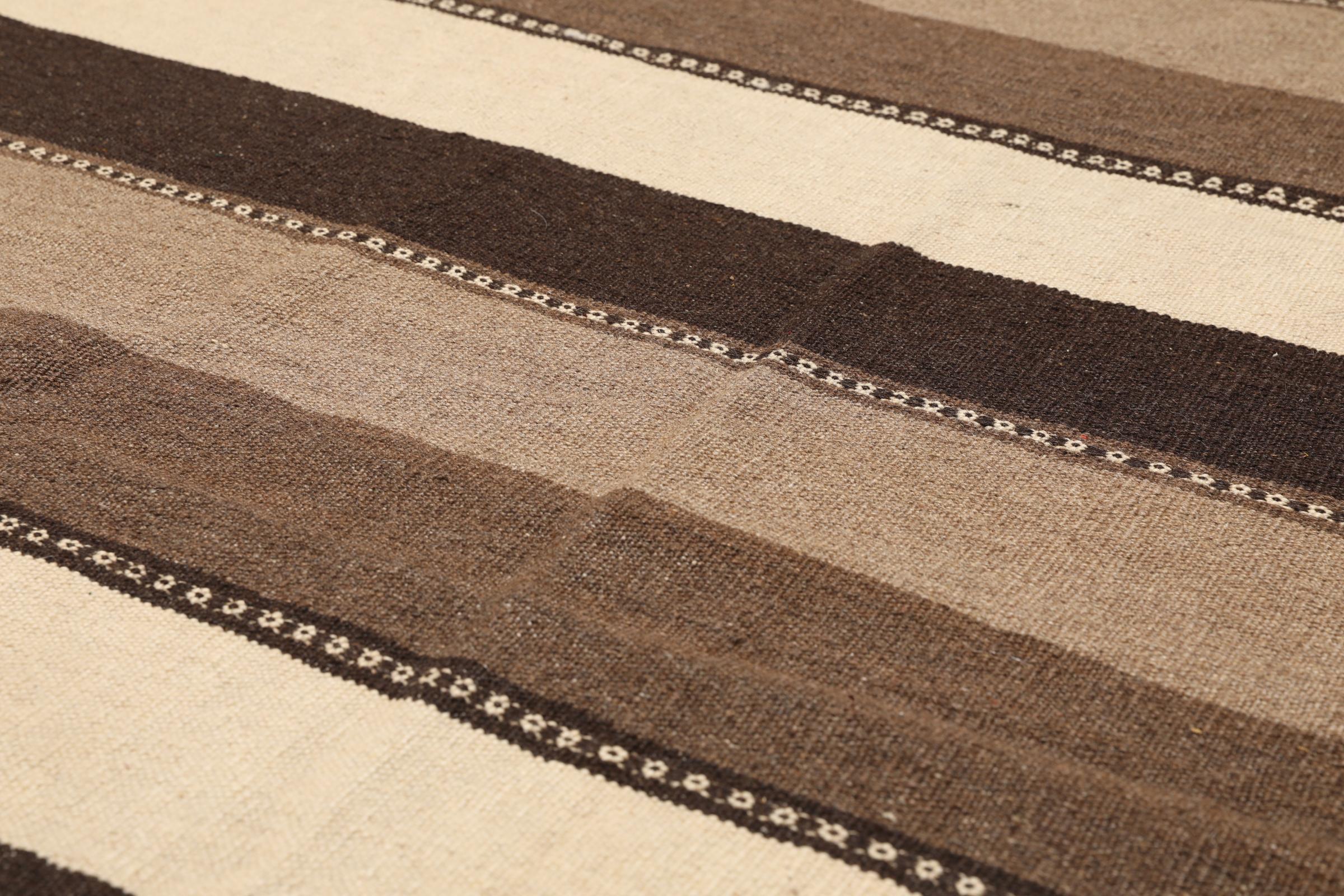
The term 'kilim' specifically refers to the tapestry-weaving technique where the weft threads are passed through the warp threads to create the design, resulting in a rug with no pile. This technique is highly valued for its ability to produce sharp, geometric patterns and a lightweight yet incredibly durable fabric that stands the test of time.
Design-wise, kilims are celebrated for their use of bold, repeating motifs and earthy, natural color palettes derived from traditional vegetable dyes. Stripes are among the most classic and ancient of these designs, often representing the simplicity of the landscape or the natural order of life in the regions where these rugs are traditionally crafted.
Owning a kilim is not just about acquiring a rug; it is about connecting with a rich cultural legacy. Collectors value these pieces for their authenticity, the skill required to maintain consistent tension during the weaving process, and the way they bring a sense of history and human connection into a modern home.