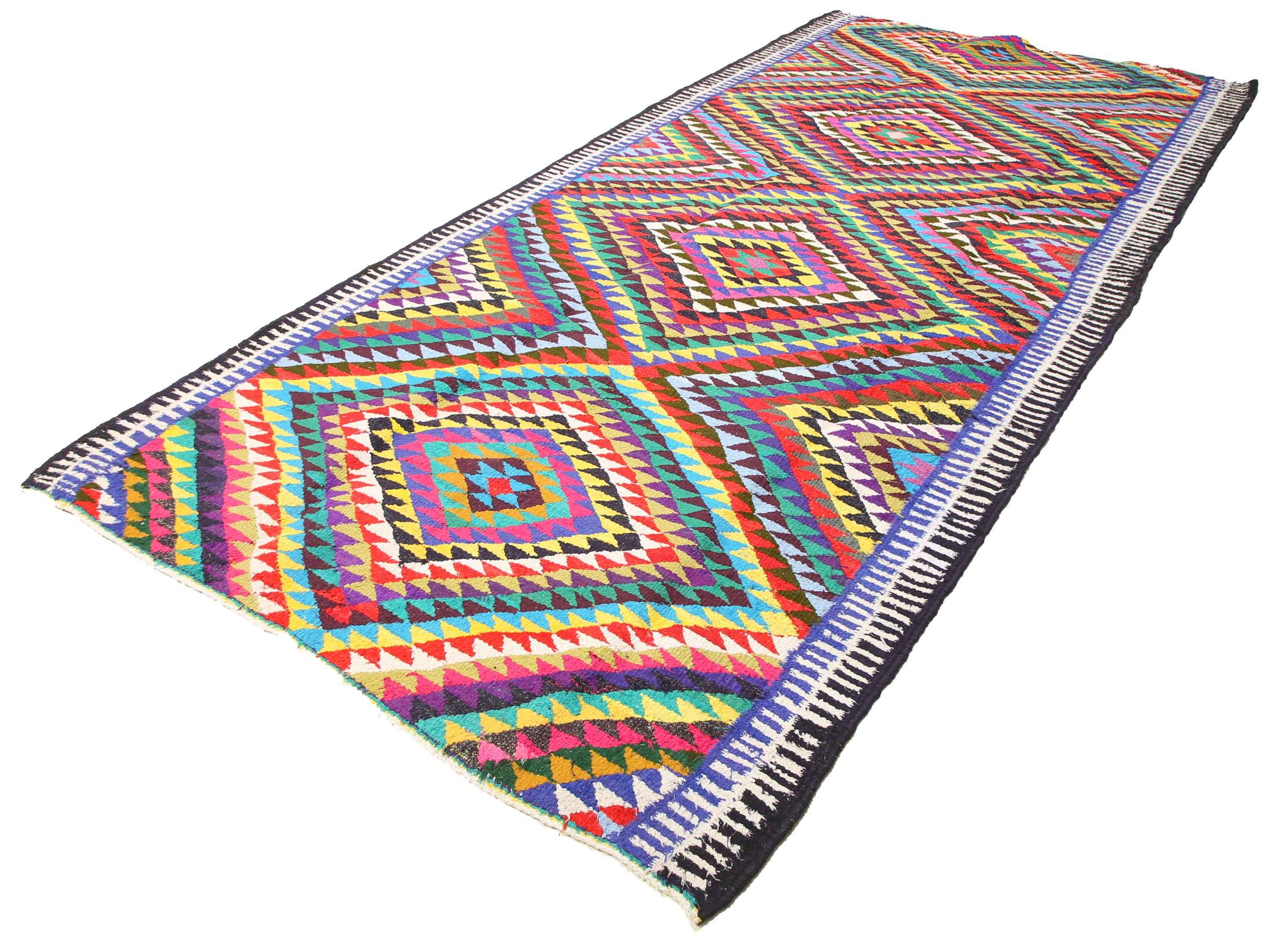
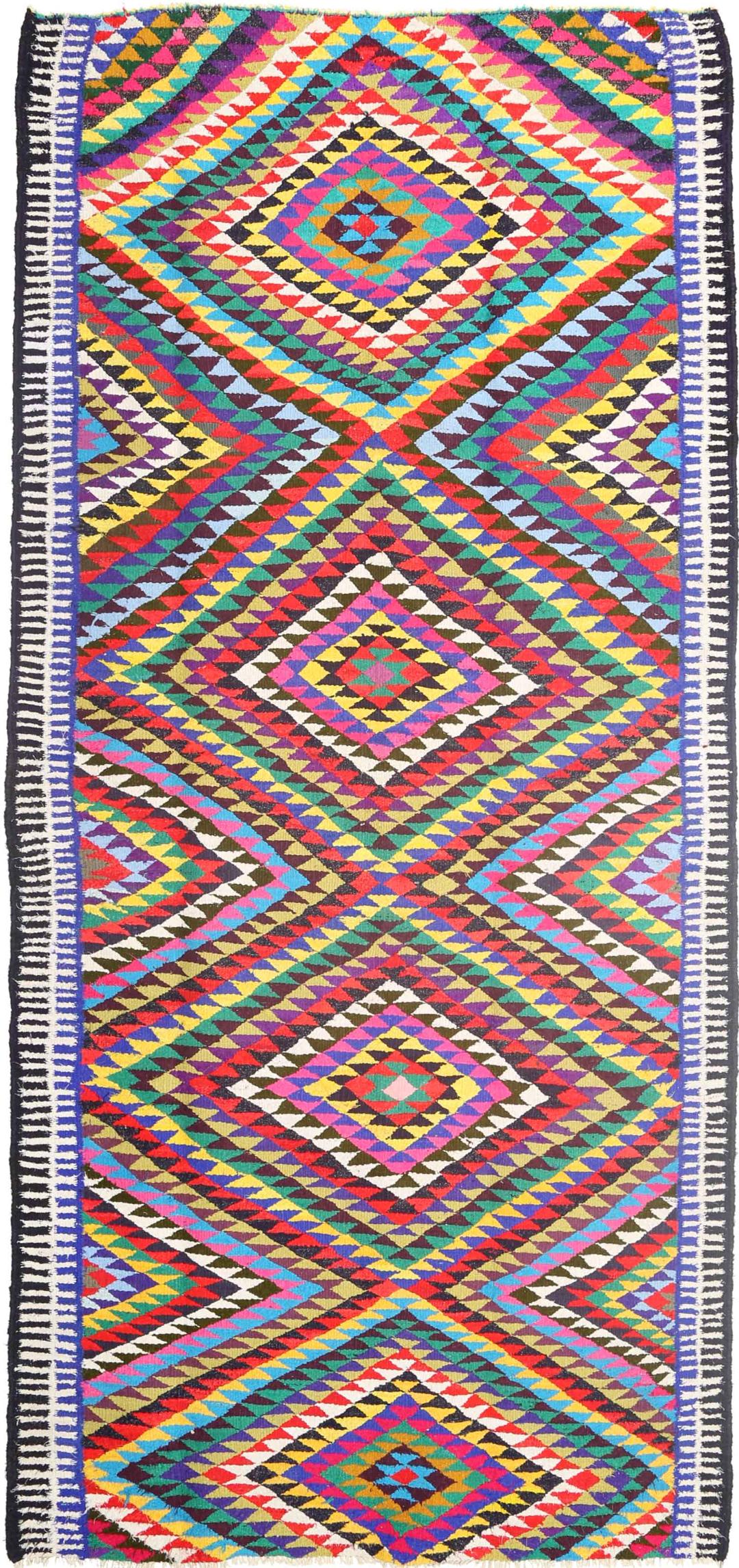
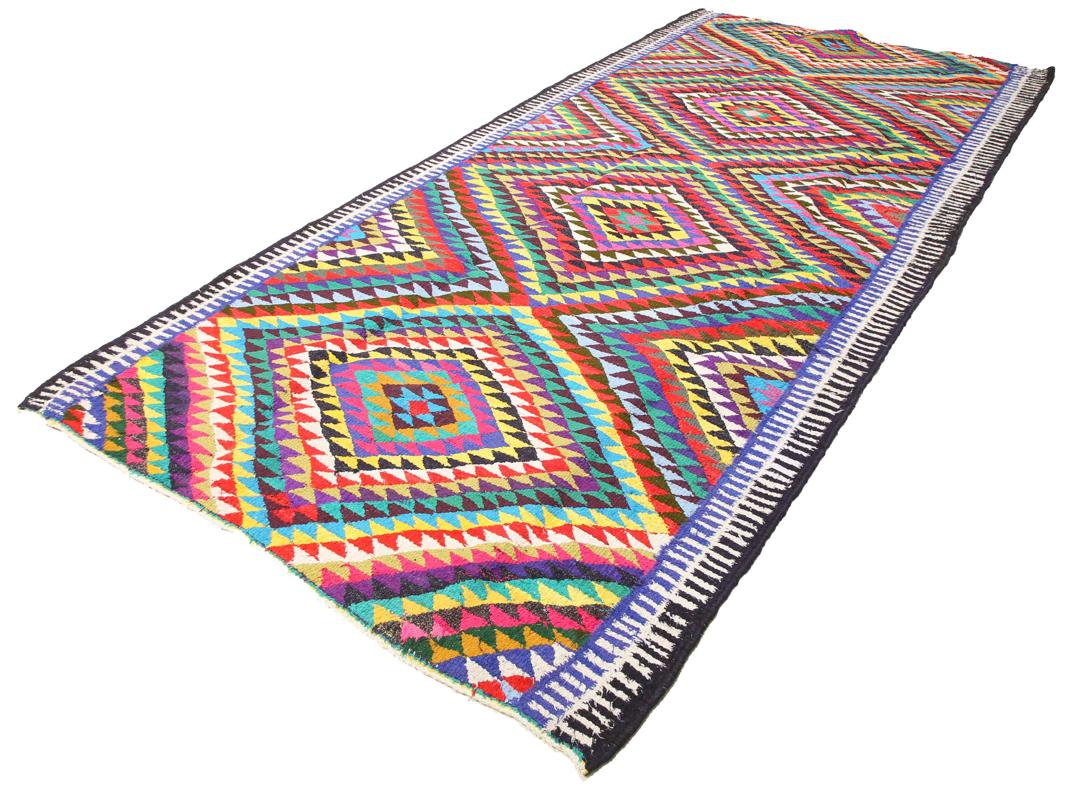
Kilim rugs are deeply rooted in the nomadic traditions of the Middle East, serving as versatile, durable textiles that have been essential to life in the region for centuries. Historically, these flat-woven pieces were crafted by tribal weavers to serve as floor coverings, blankets, and storage bags, reflecting the functional needs of a mobile lifestyle. The skills required to weave them were passed down through generations, making each rug a carrier of cultural identity and local visual storytelling.
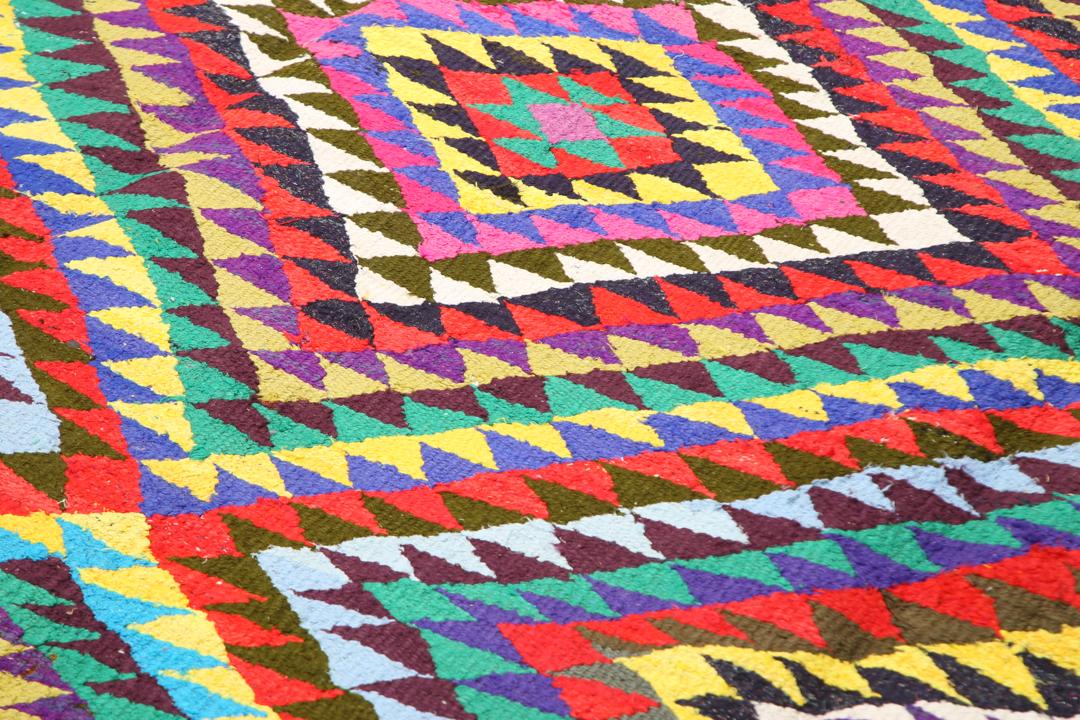
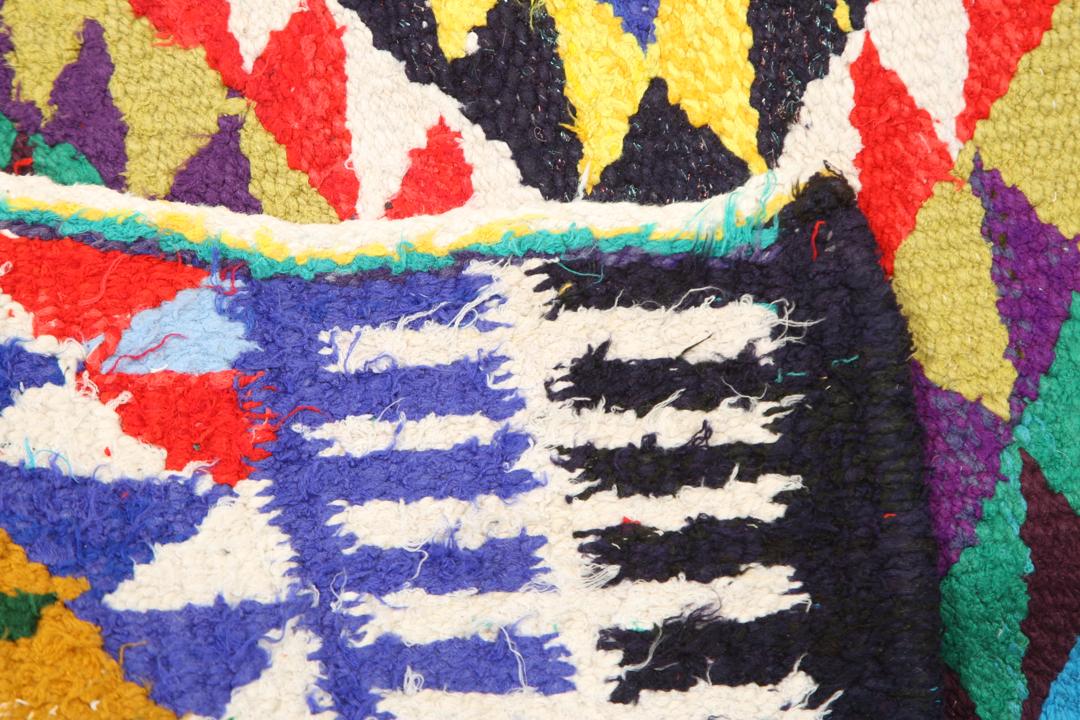
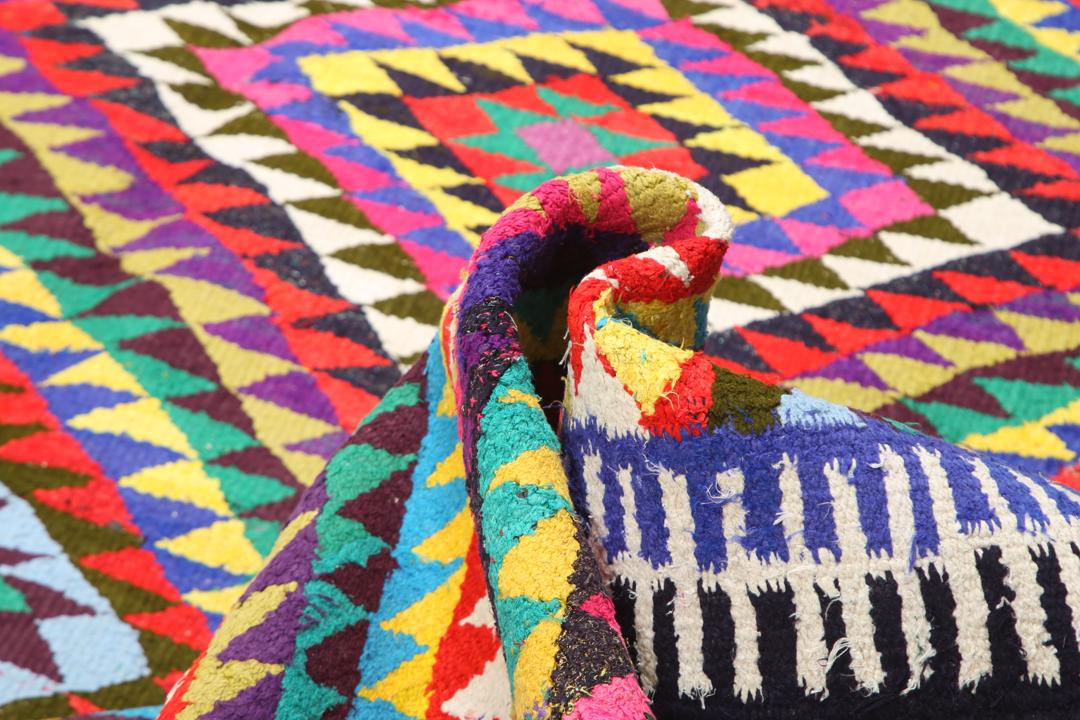
The term 'Kilim' refers specifically to the slit-weave technique, where the weft threads are looped back at the edges of each colour block. This creates small vertical slits in the fabric, which are characteristic of the style and allow for the sharp, clean lines seen in geometric motifs. Because there is no pile to hide the structure, the quality of the weave is immediately visible, demanding high precision from the artisan to ensure the rug remains strong and uniform.
Signature design elements of the Kilim tradition include bold, geometric shapes like diamonds, triangles, and stylized floral motifs, often arranged in repeating patterns. These designs are not merely decorative but often hold symbolic meaning, representing elements of nature, protection, or tribal lineage. The use of vibrant, natural dyes has long been a hallmark of these rugs, allowing weavers to create high-contrast patterns that have defined the aesthetic for generations.
Today, these rugs are highly valued by collectors and design enthusiasts alike for their historical significance and the immense skill required to produce them. Owning a Kilim is an invitation to engage with a long-standing heritage of textile art. Each rug represents a unique chapter in a continuing tradition, offering a sense of depth and cultural weight that brings a grounded, authentic feeling to any modern home.