Kilim rugs are a foundational element of the textile heritage of the Middle East, originating from nomadic and village traditions where weaving was a vital part of daily life. These flat-woven textiles were historically used as floor coverings, wall hangings, and functional storage bags, serving as essential items for travelling communities. The evolution of the Kilim reflects the history of migration and trade, with regional styles developing unique vocabularies of colour and form.
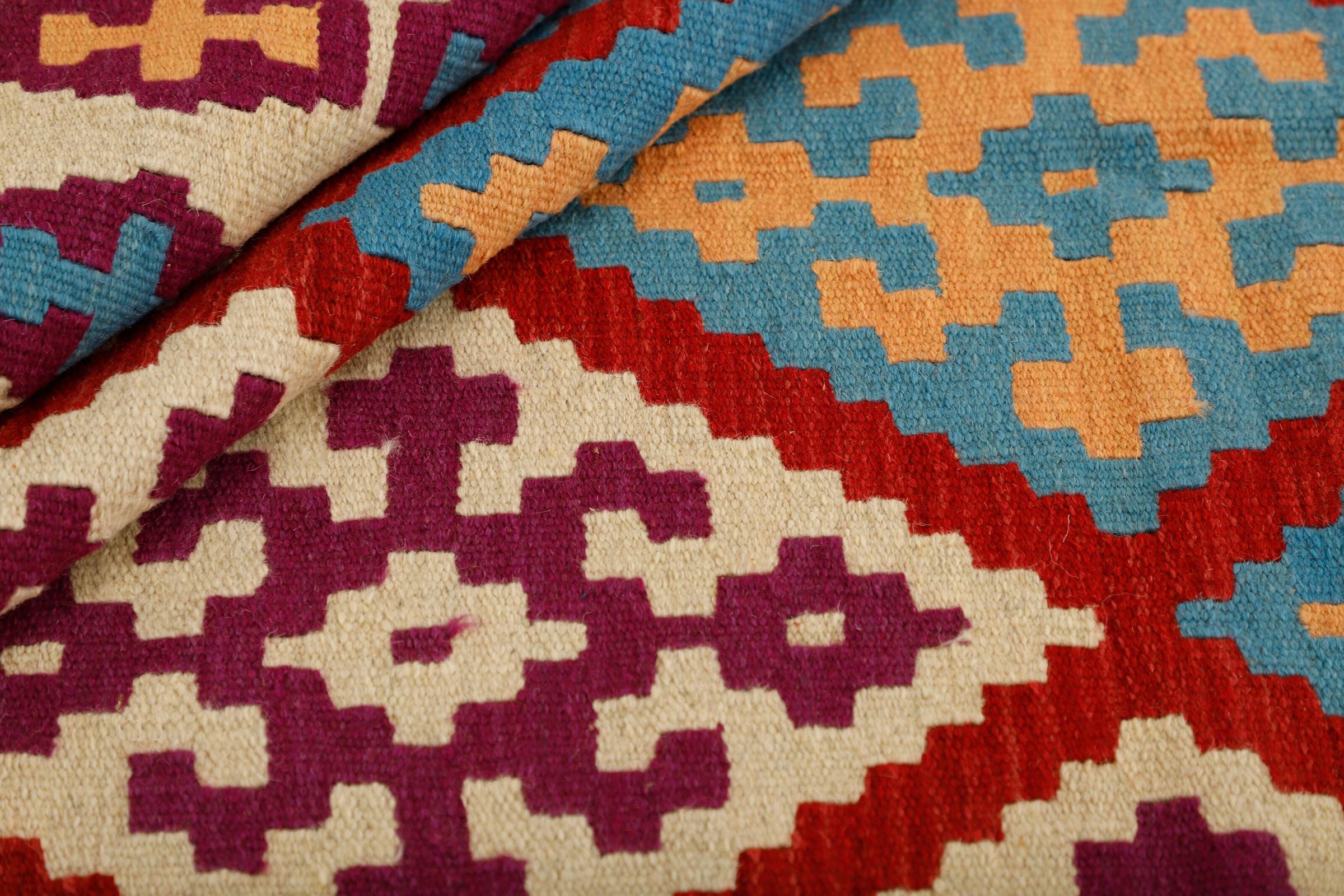
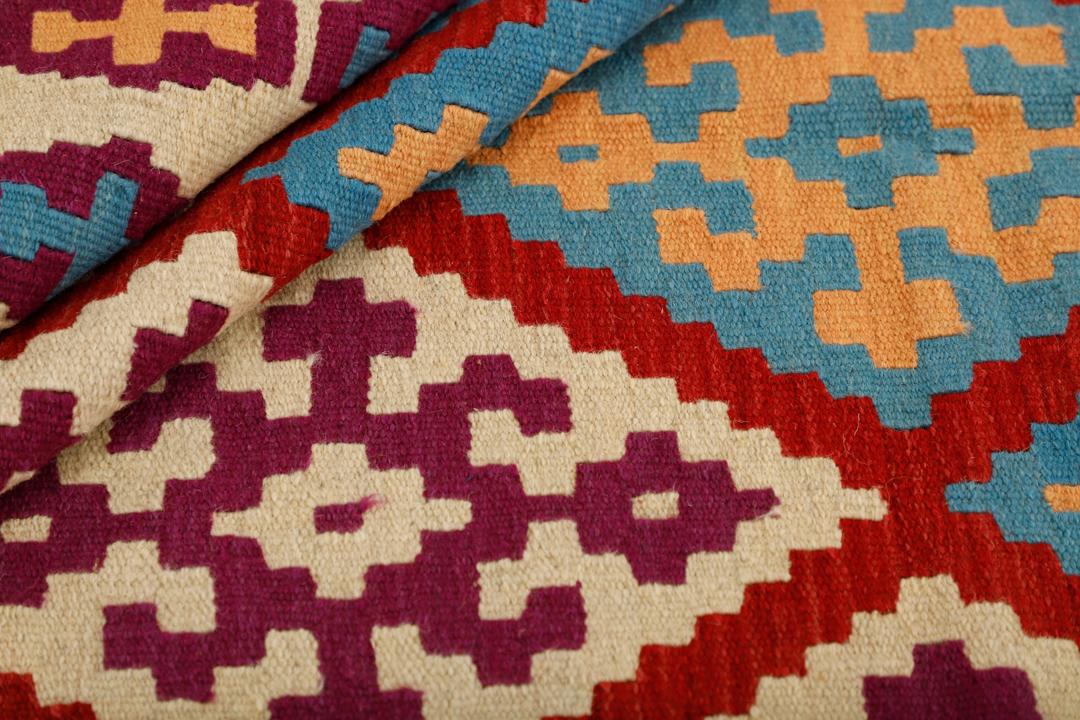
The term 'Kilim' refers specifically to the slit-weave technique used to create the patterns. By leaving small gaps or slits between colour changes in the design, weavers are able to create sharp, angular geometric shapes that define the look of the rug. This technique requires immense precision, as the weaver must manage the tension of the threads perfectly to ensure the rug remains flat and symmetrical throughout its long lifespan.
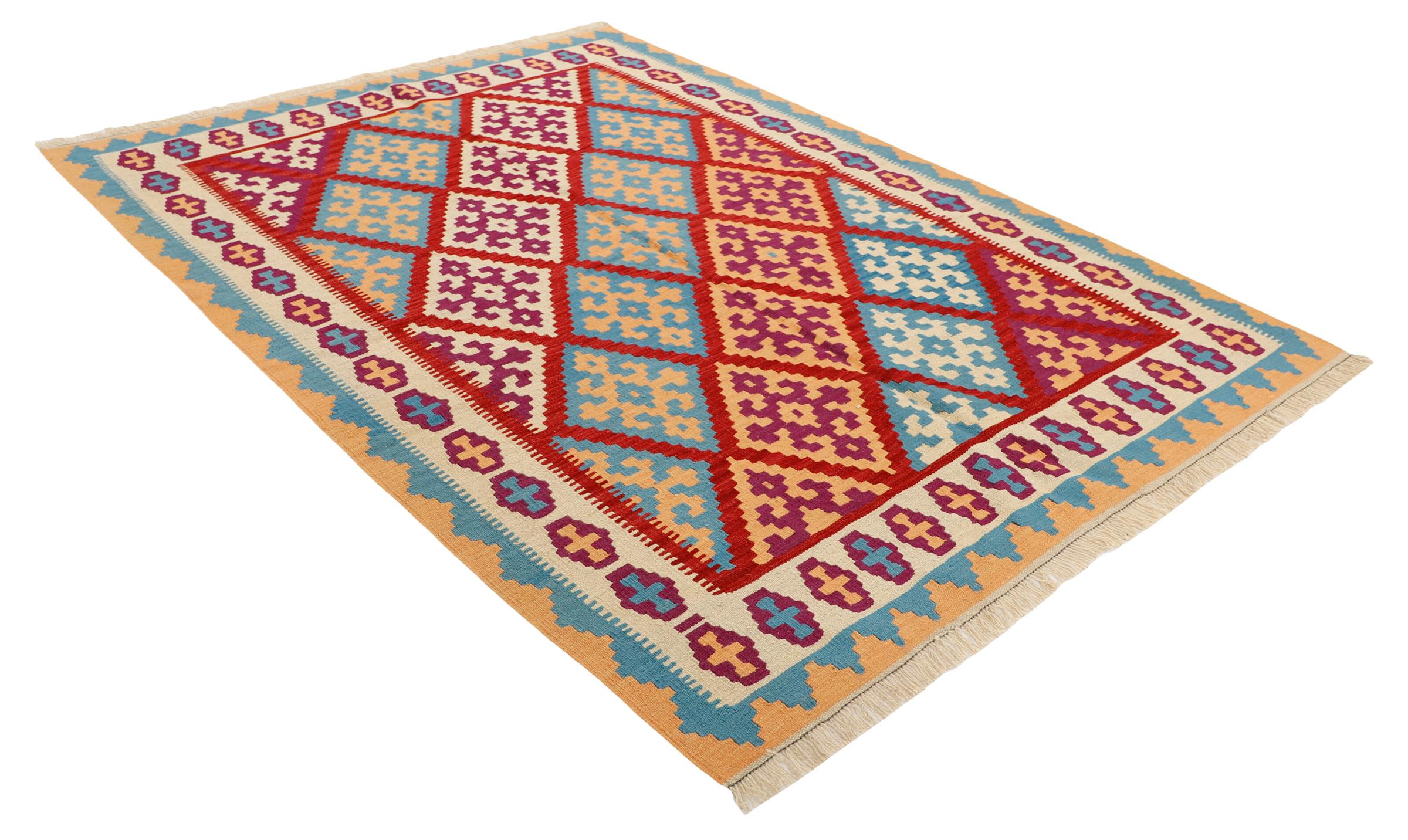
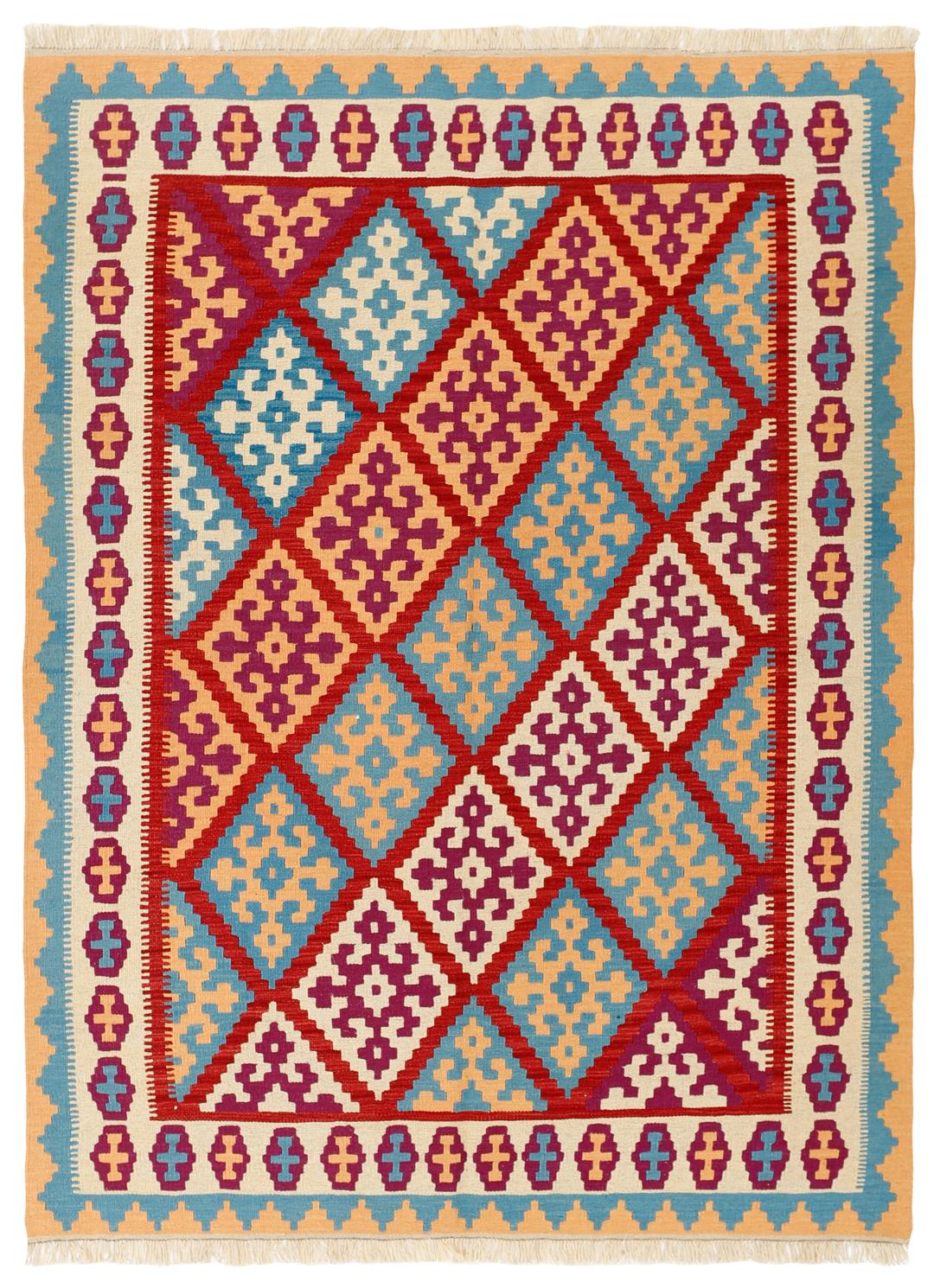
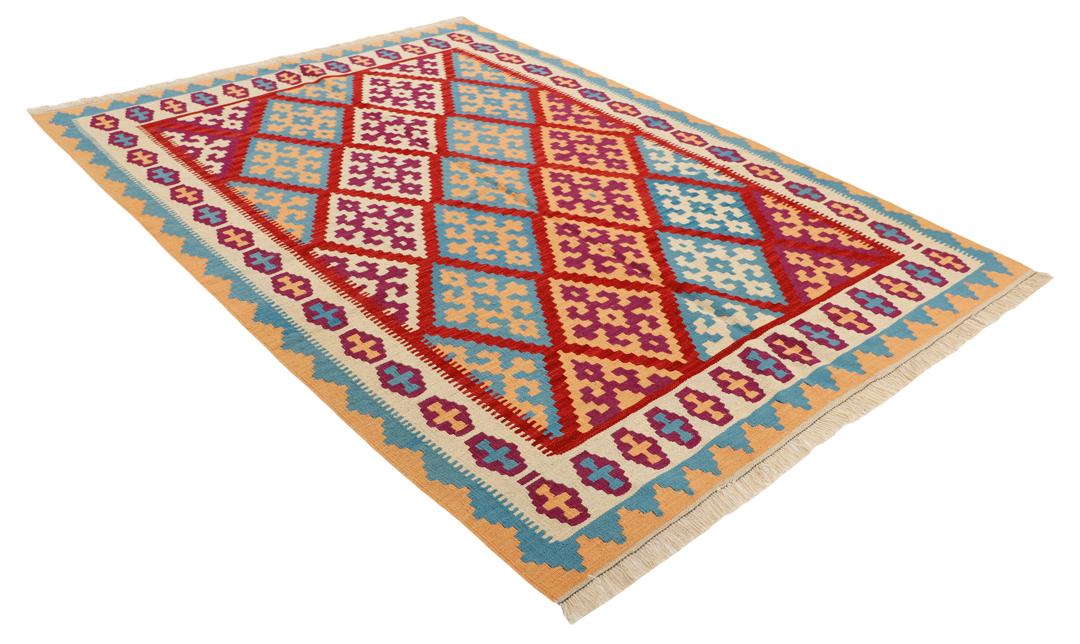
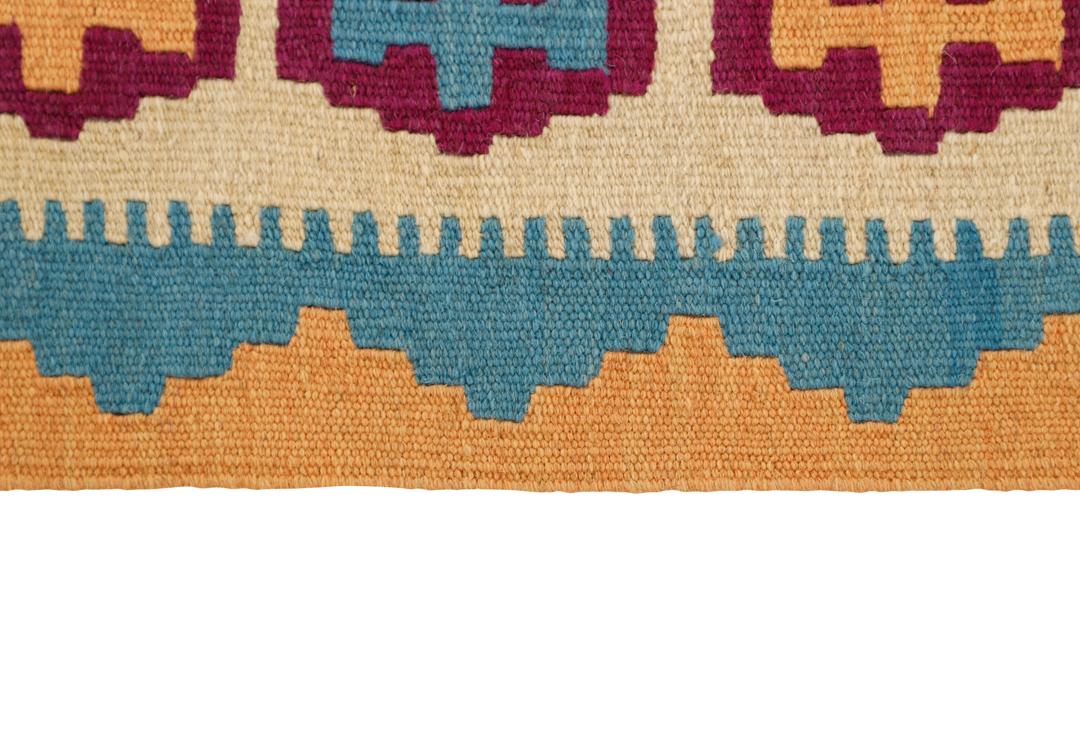
The visual language of this Kilim is dominated by repeating geometric motifs, particularly the diamond shape, which is a classic symbol of protection and fertility in many weaving cultures. The border features decorative patterns that frame the central field, providing a sense of order to the vibrant interplay of colours. Such designs are deeply rooted in the cultural identity of the region, where patterns often function as a visual language communicating stories or regional affiliations.
Today, these rugs are highly valued by collectors and design enthusiasts alike for their historical significance and artistic depth. Owning a Kilim is an investment in a tradition that values skill, patience, and the preservation of ancient craft. Each piece serves as a link to the past, offering a level of authenticity and cultural weight that brings a sense of depth and history to any modern home.