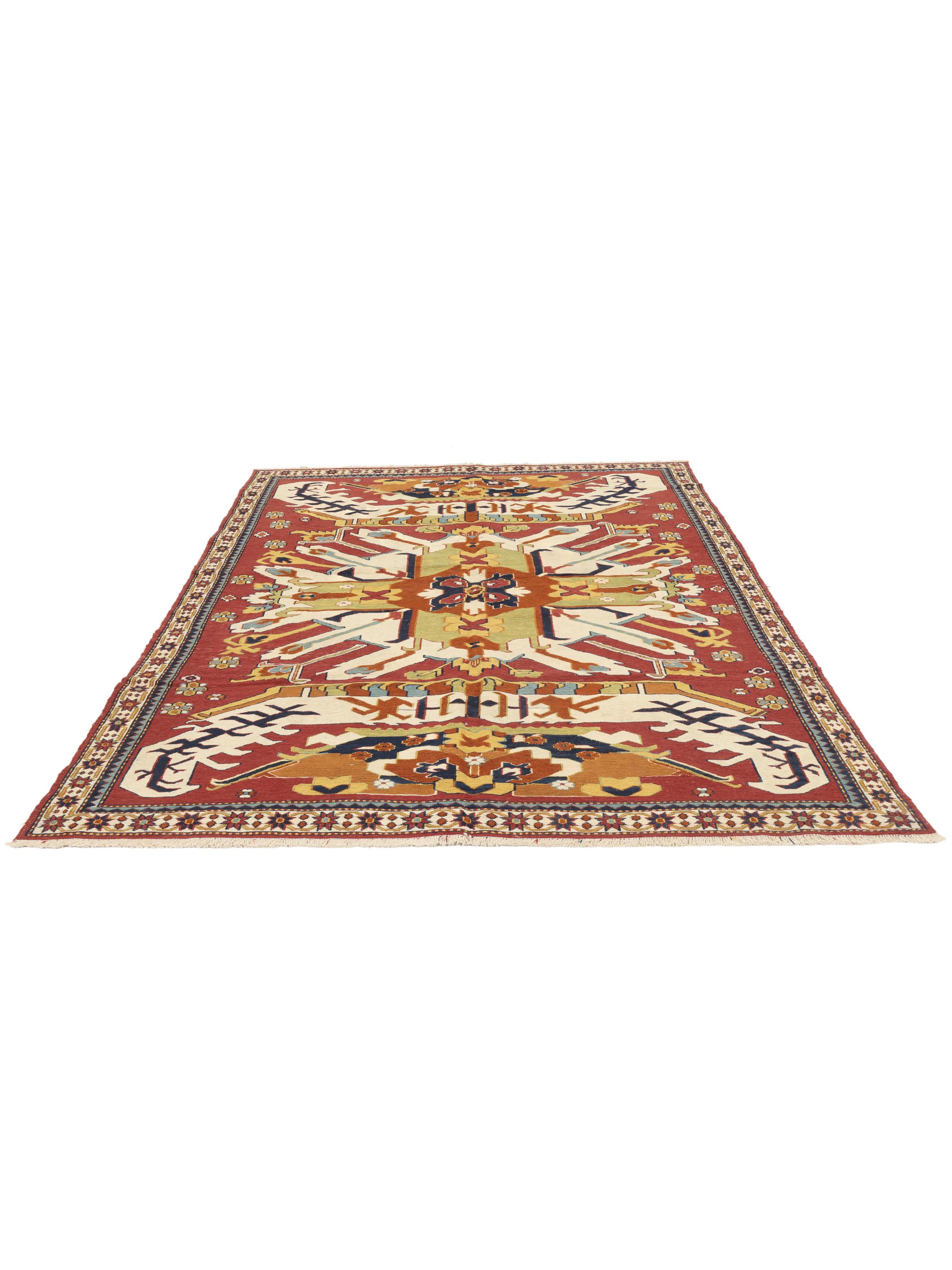
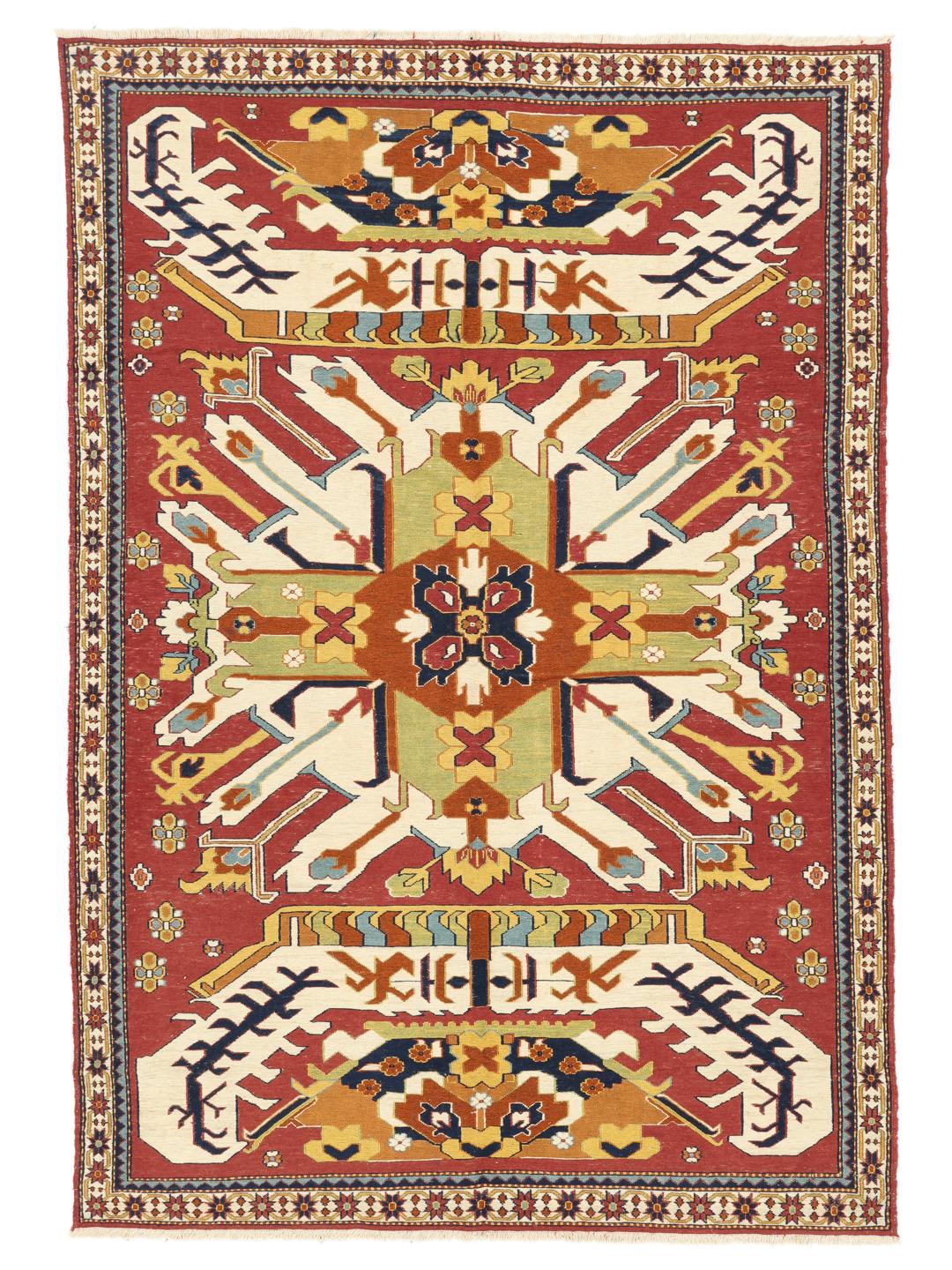
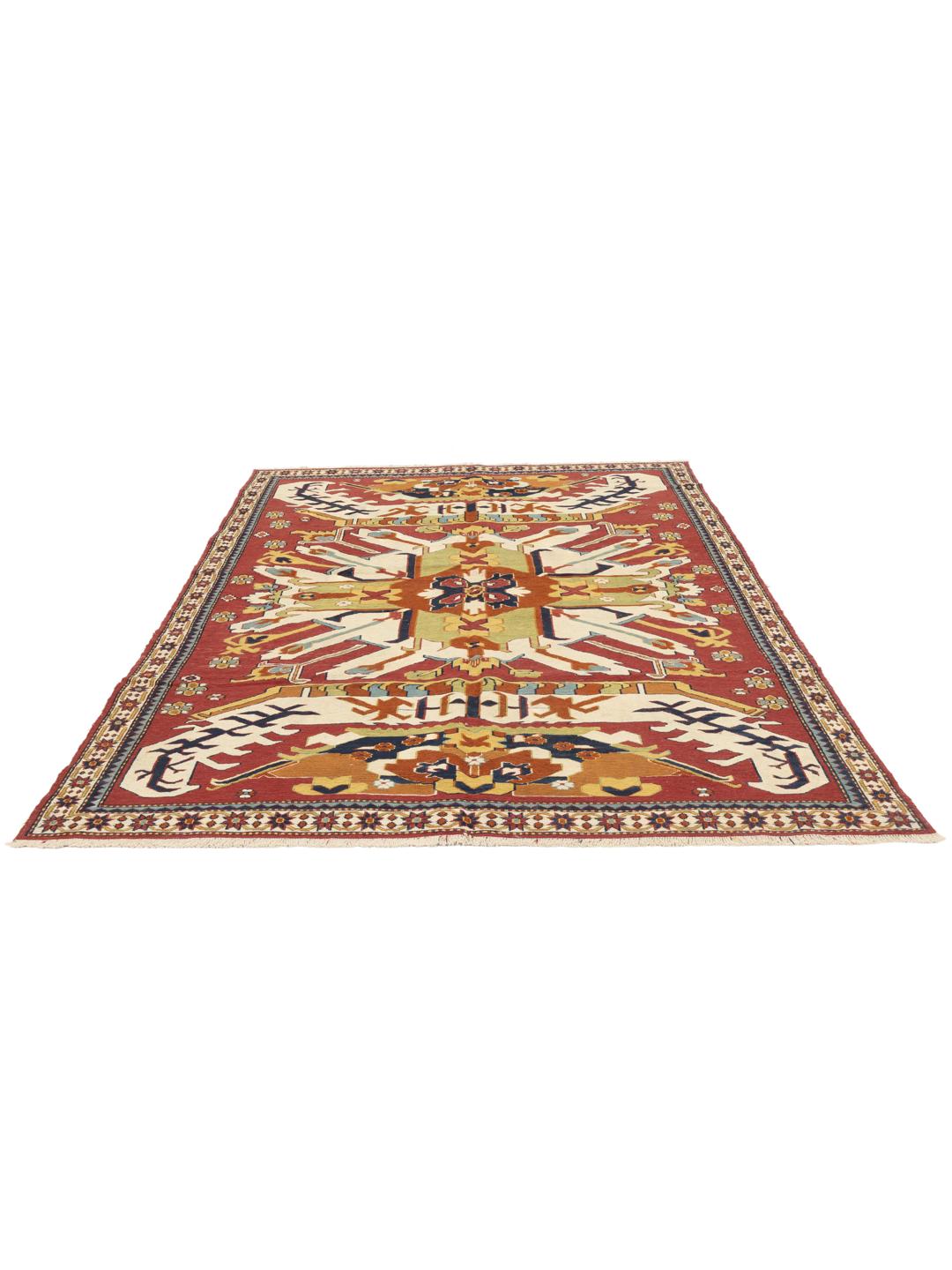
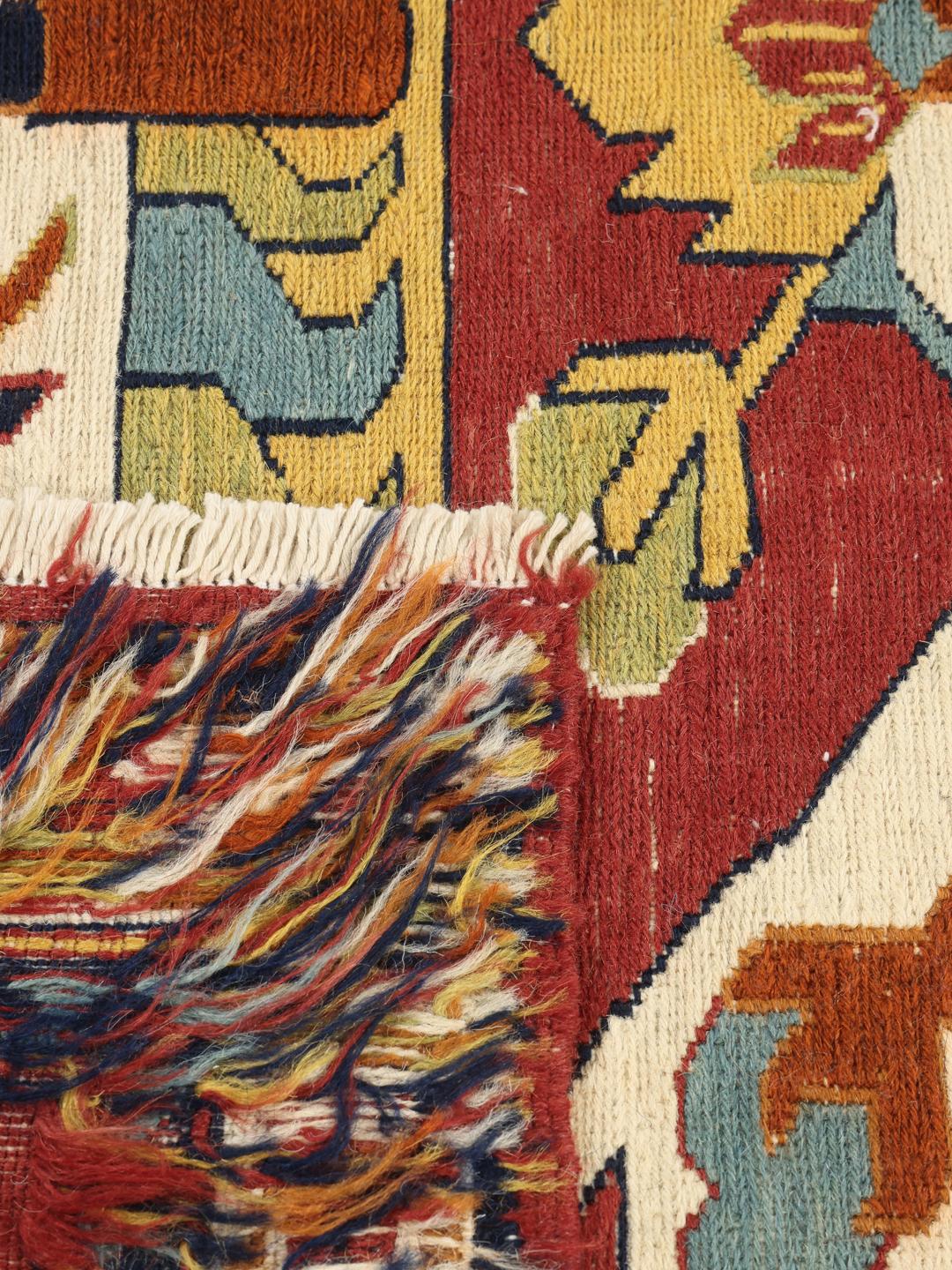
The Kelim Suzani tradition originates from the crossroads of Central Asia, where nomadic weaving techniques meet the refined artistry of needlework. While the term 'Suzani' traditionally refers to intricate, embroidered textiles, the 'Kelim Suzani' style translates these complex, floral, and geometric visual languages into the sturdy, flat-woven medium of the kilim, a craft deeply rooted in the history of Afghanistan.
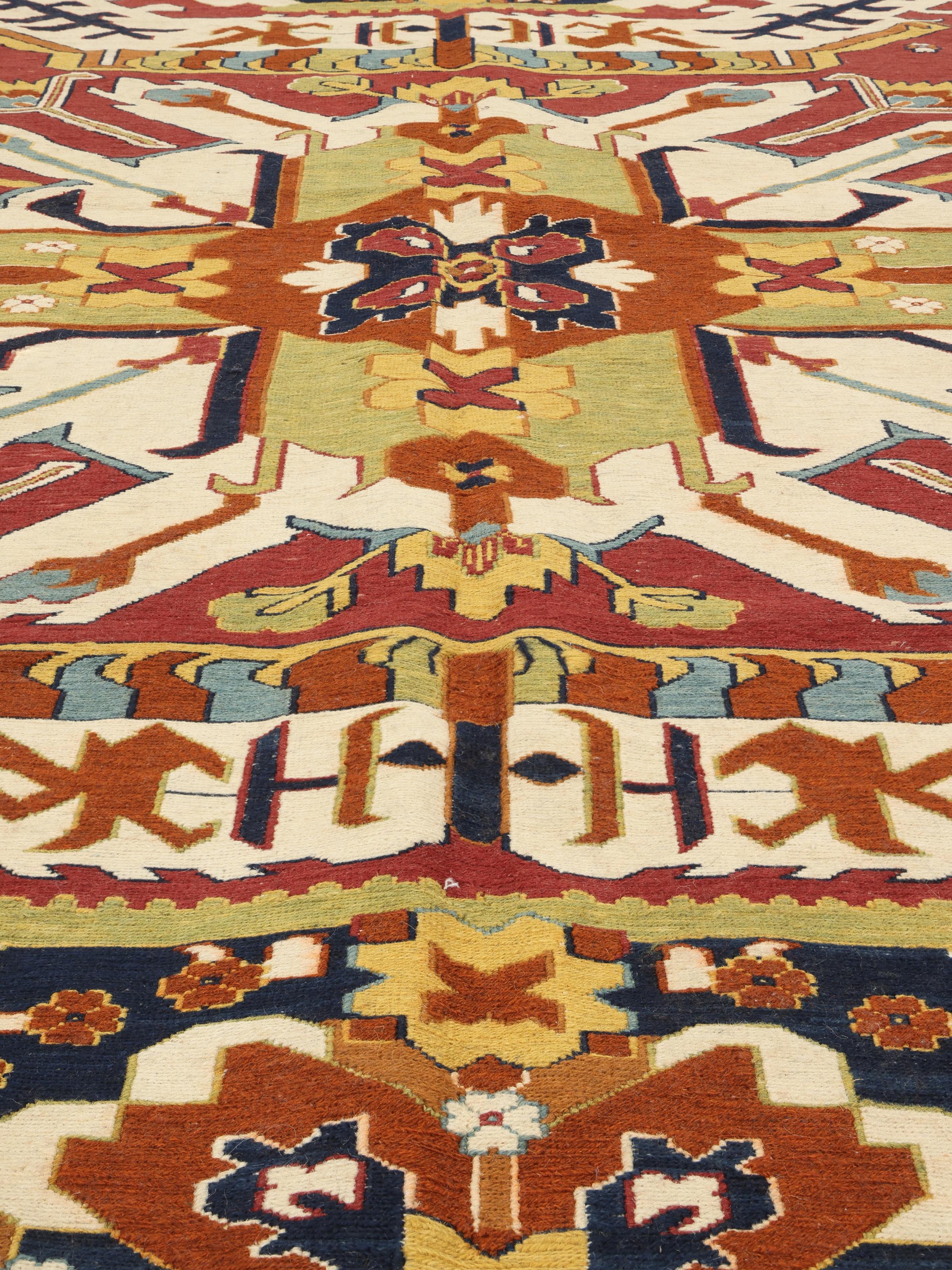
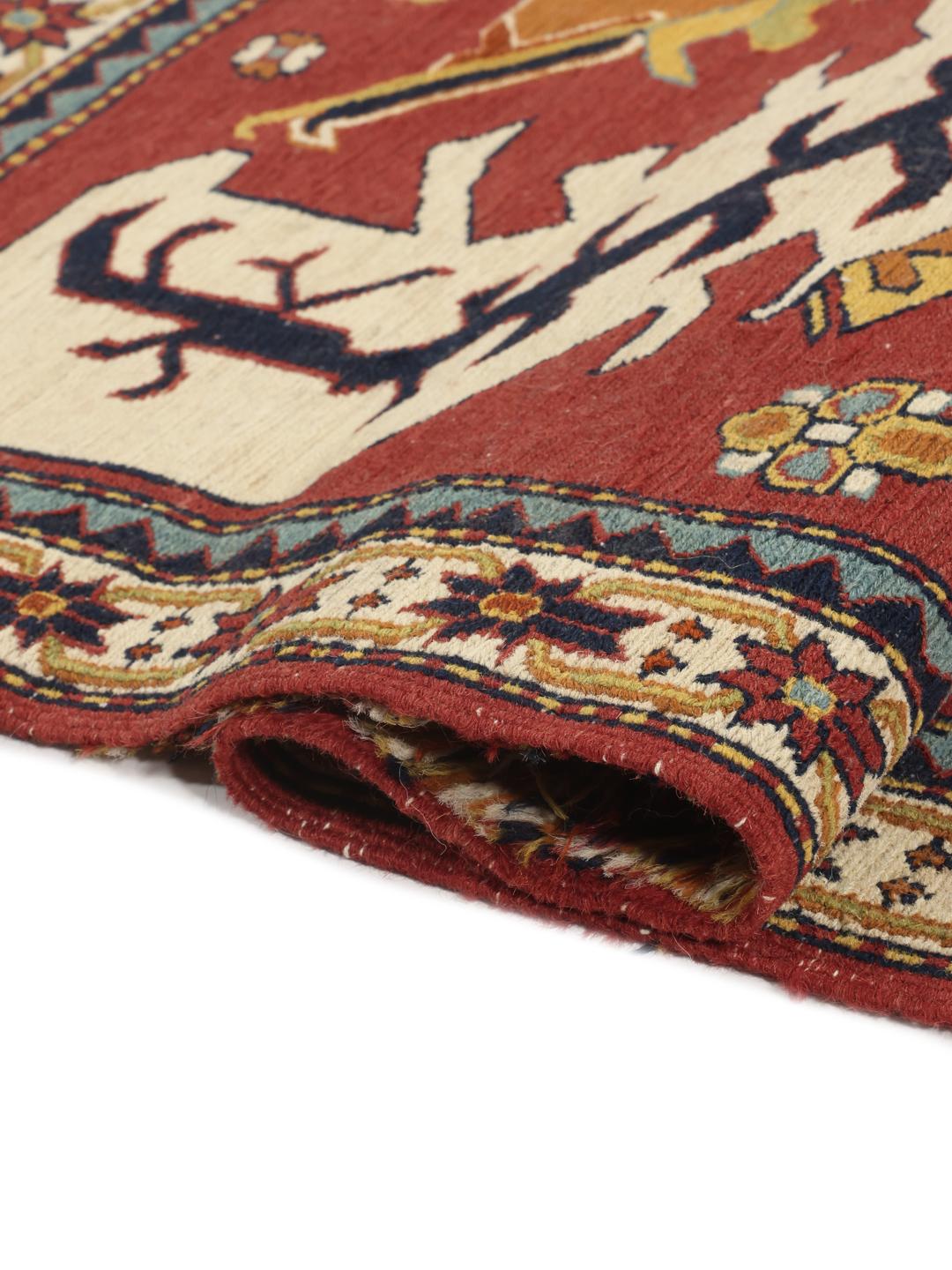
In terms of technical construction, the kilim is a tapestry-woven rug, which means the pattern is created by the interweaving of coloured weft strands rather than by knotting individual piles. This technique results in a thin, versatile fabric that is prized for its portability and strength. The process requires a high level of skill to ensure that the colour transitions are sharp and the structural integrity remains sound across the entire surface.
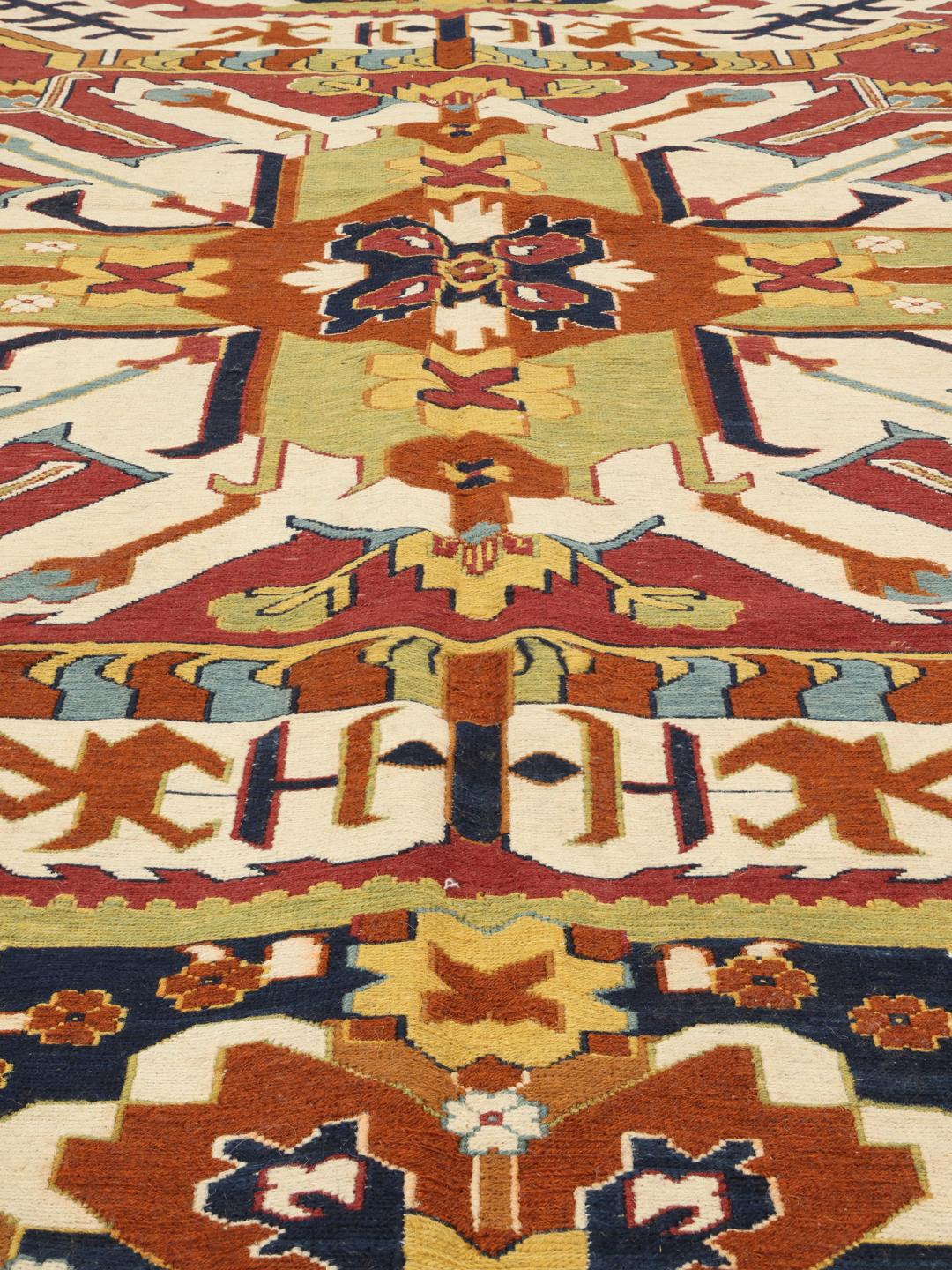
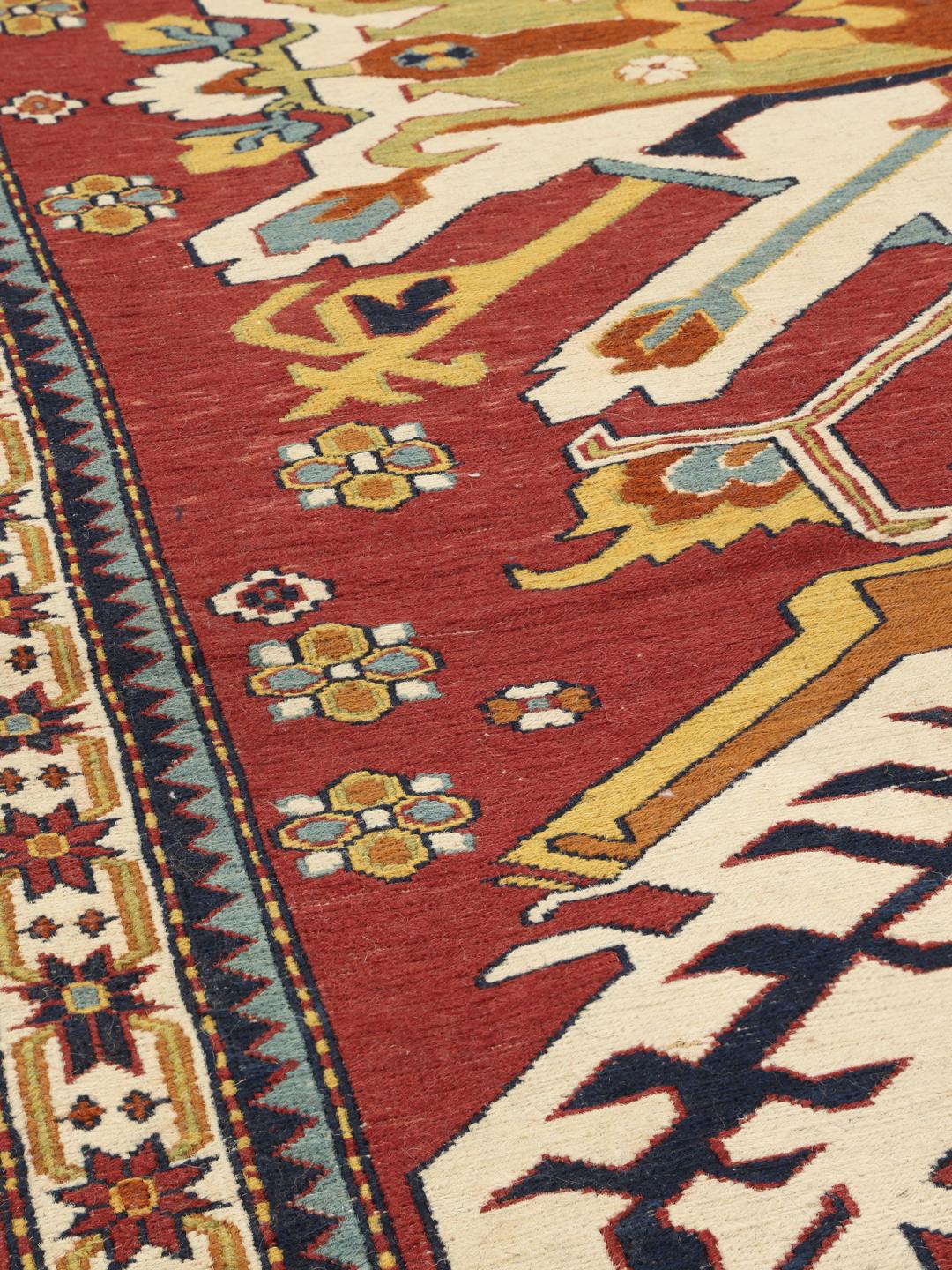
Visually, these rugs are defined by their bold, symbolic motifs that often draw inspiration from the natural world, including stylised florals, vines, and geometric medallions. The use of a vibrant red field, as seen here, is a hallmark of the region's aesthetic, often balanced by contrasting lighter shades in the intricate border and central design. Each motif is not merely decorative but carries a legacy of cultural storytelling.
Owning a Kelim Suzani is an invitation to hold a piece of history. These rugs are highly valued by collectors not only for their striking beauty but for the centuries of tradition they represent. By bringing this piece into your home, you are continuing a long-standing practice of honouring human skill, local materials, and the enduring artistic heritage of the Middle East.