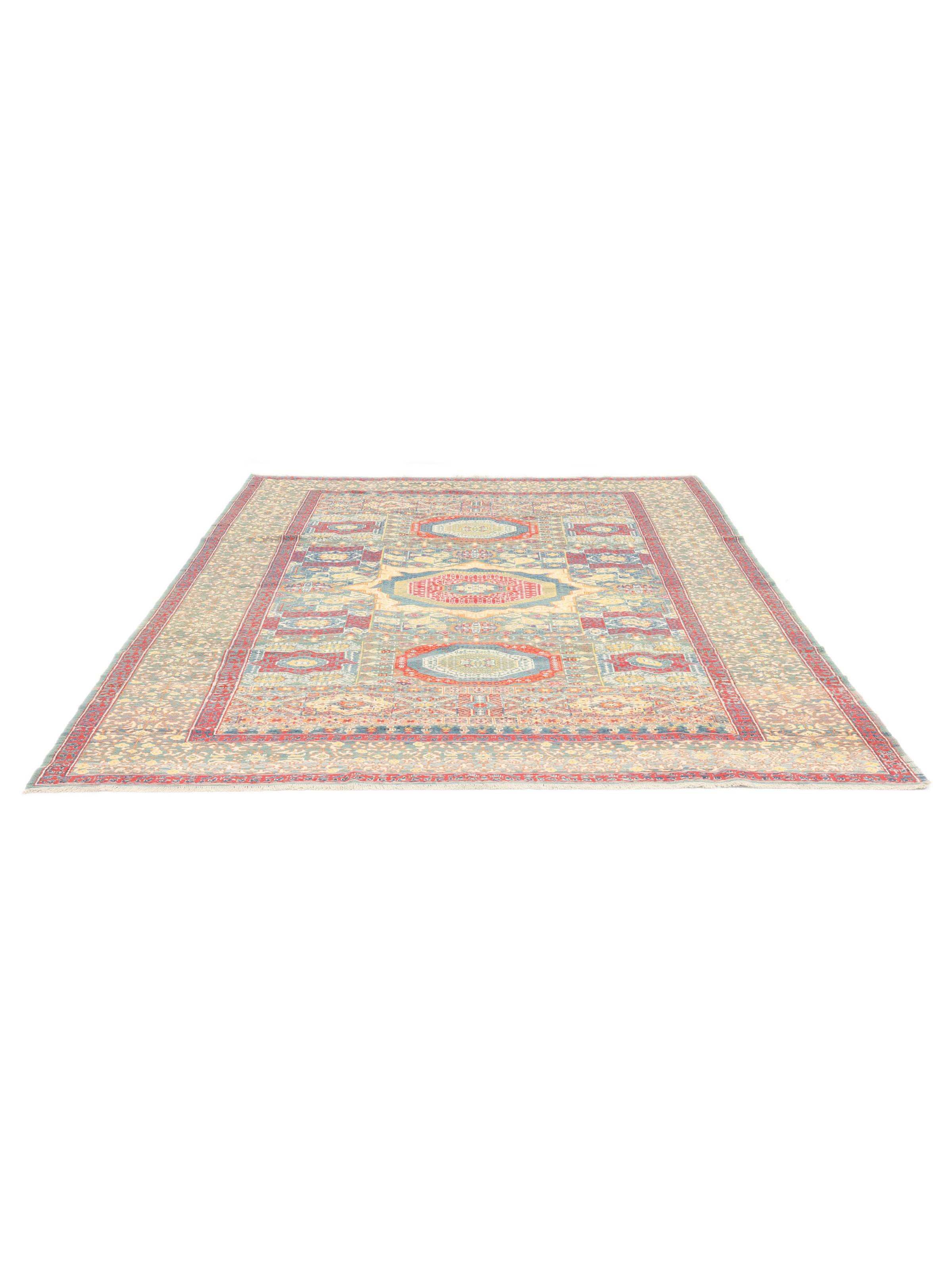
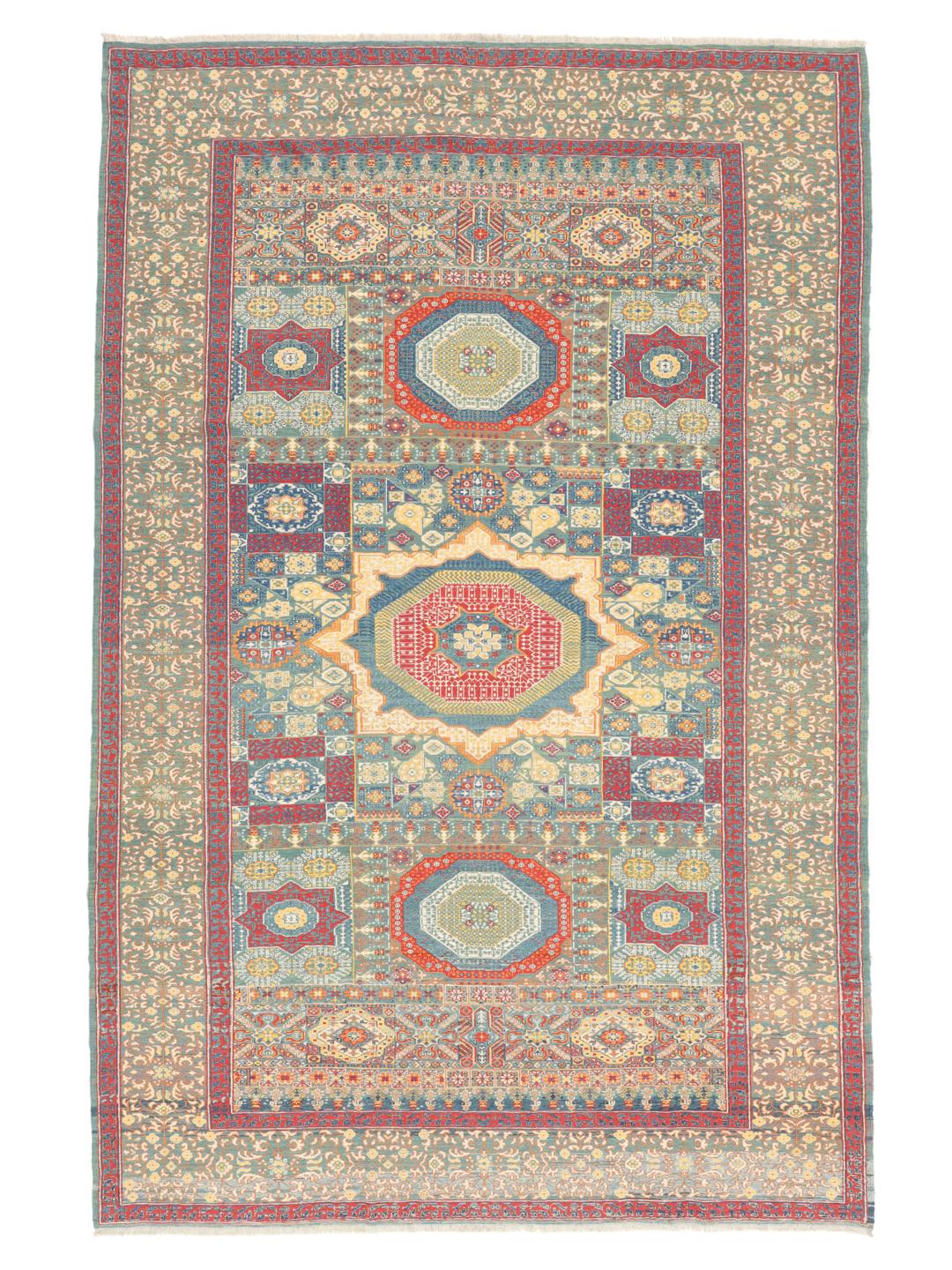
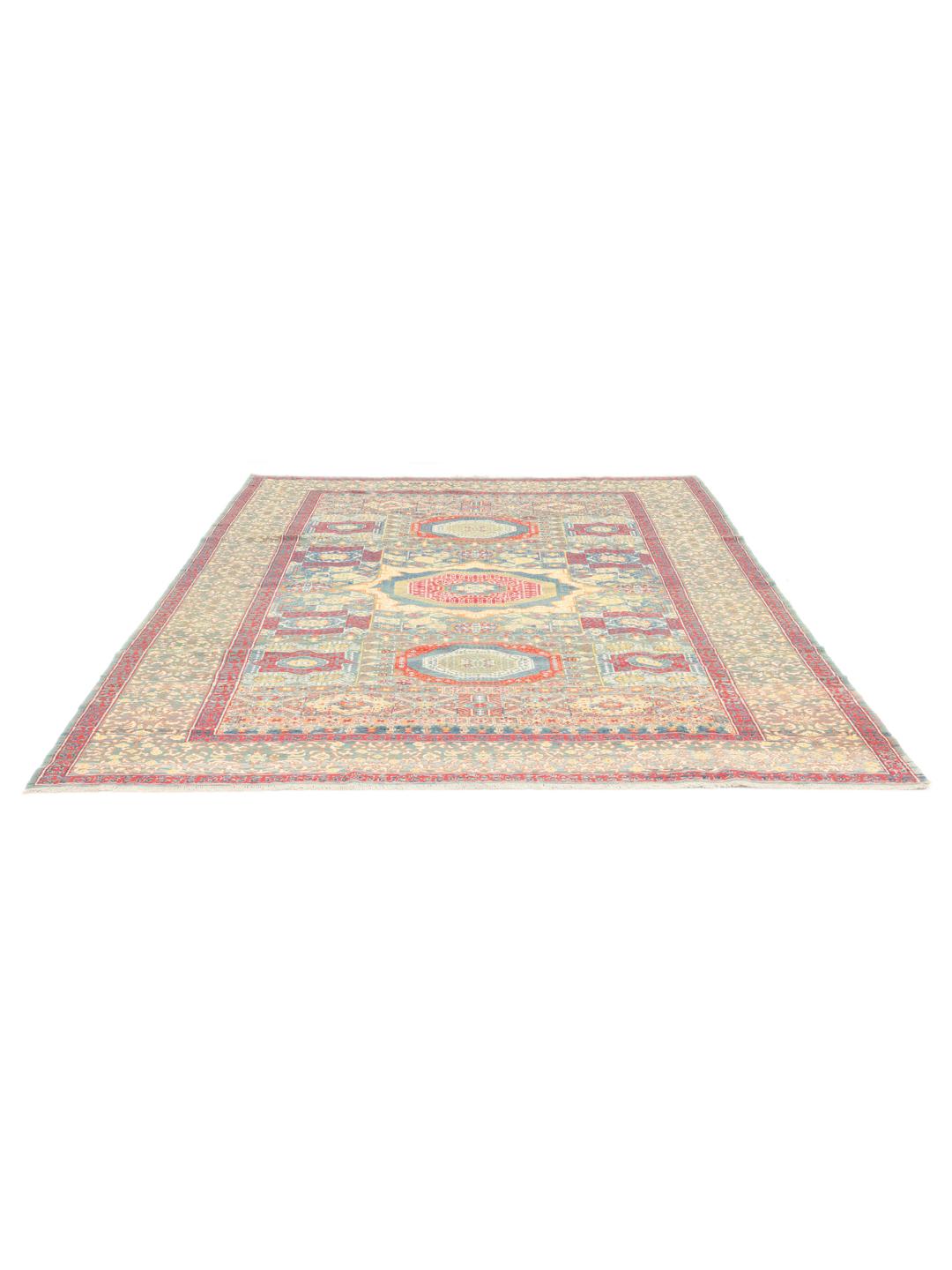
The Kelim Suzani represents a fascinating marriage of two distinct textile traditions from the Middle East and Central Asia. While kilims are known for their flat-woven, slit-weave construction, the term 'Suzani' refers to elaborate, needle-worked embroidery traditions often found in the region. When these two styles converge, the result is a rug that captures the vibrancy of nomadic textile art with the refined, decorative floral and geometric motifs typically reserved for fine embroidery.
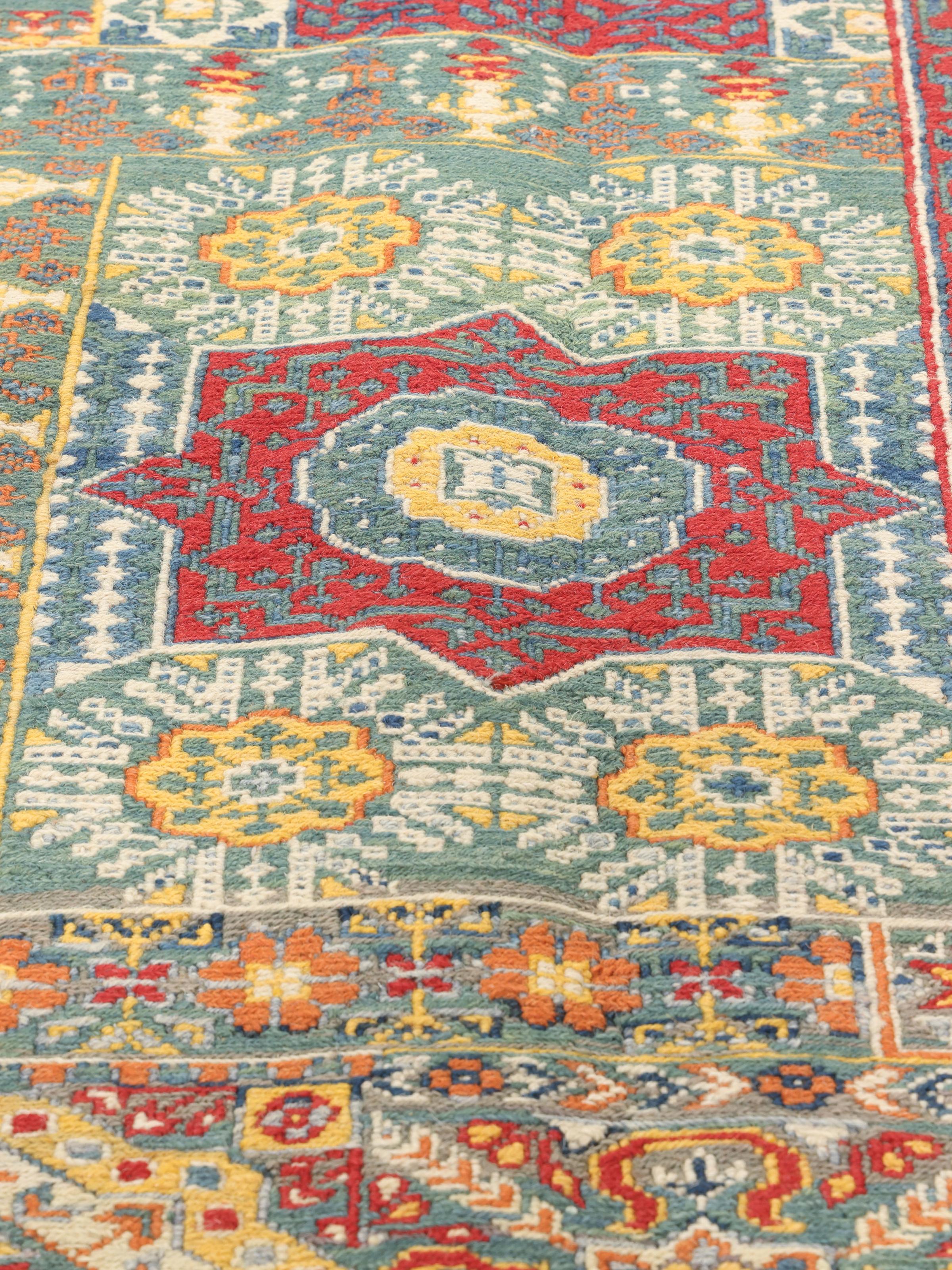
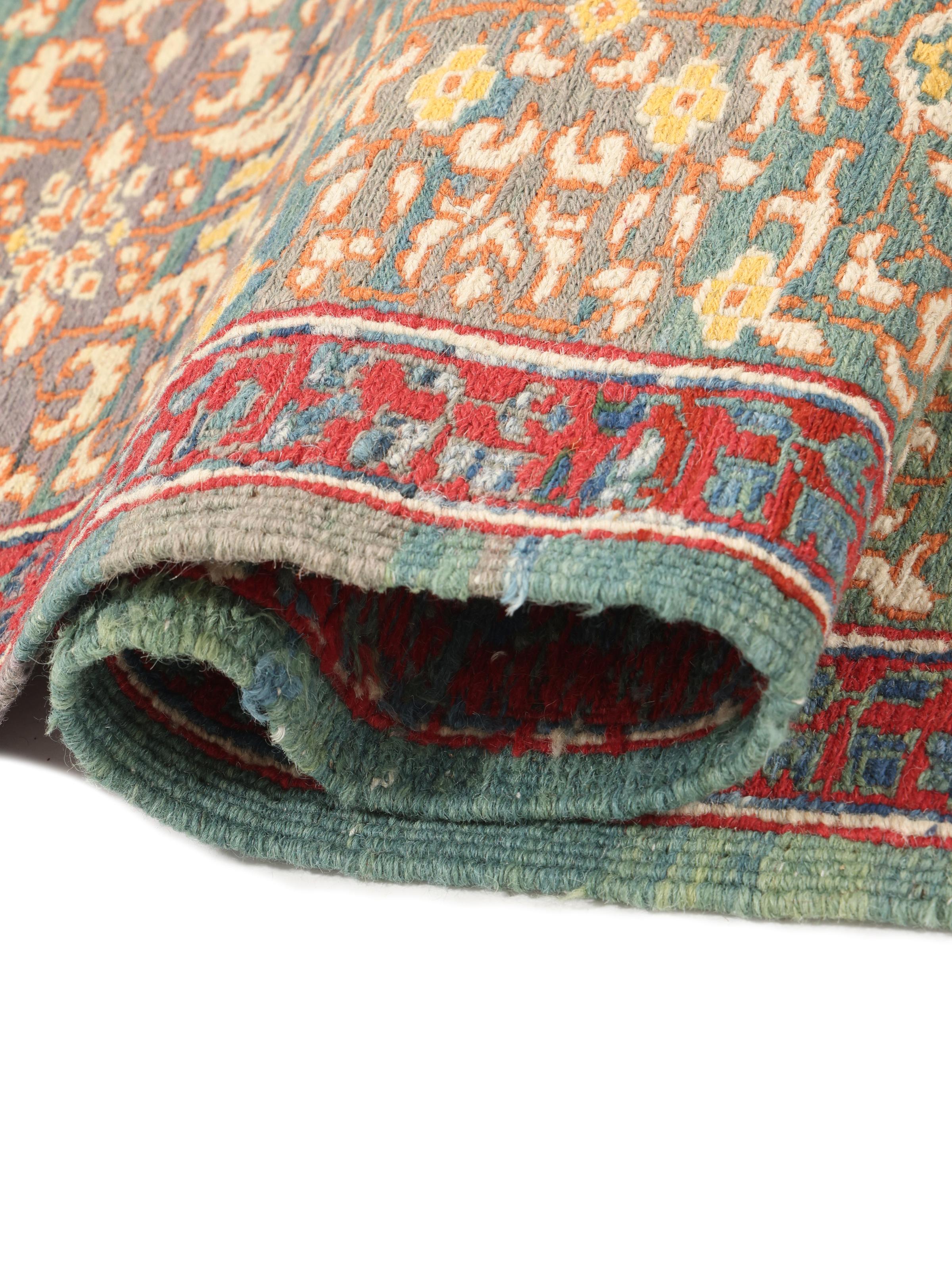
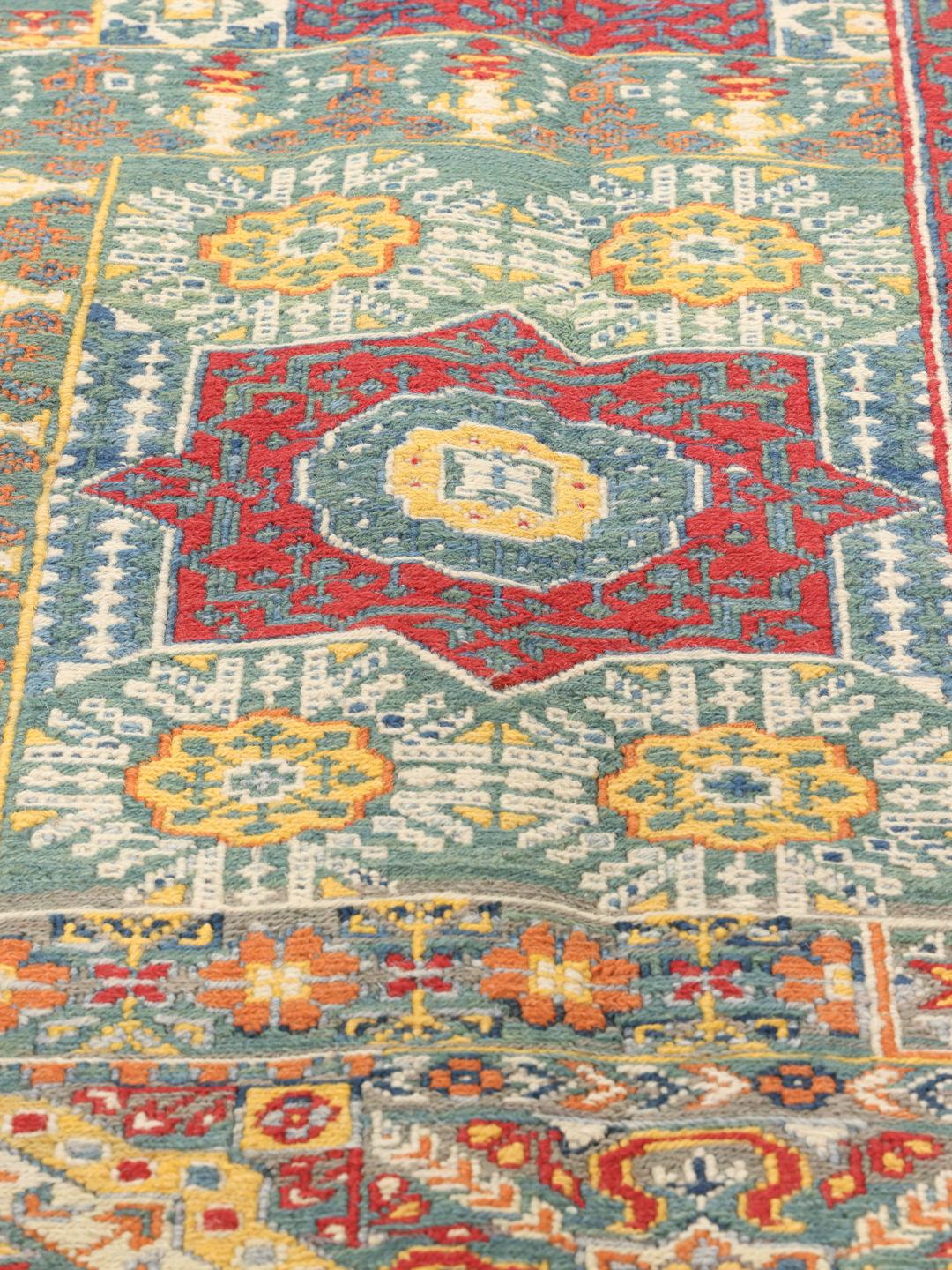
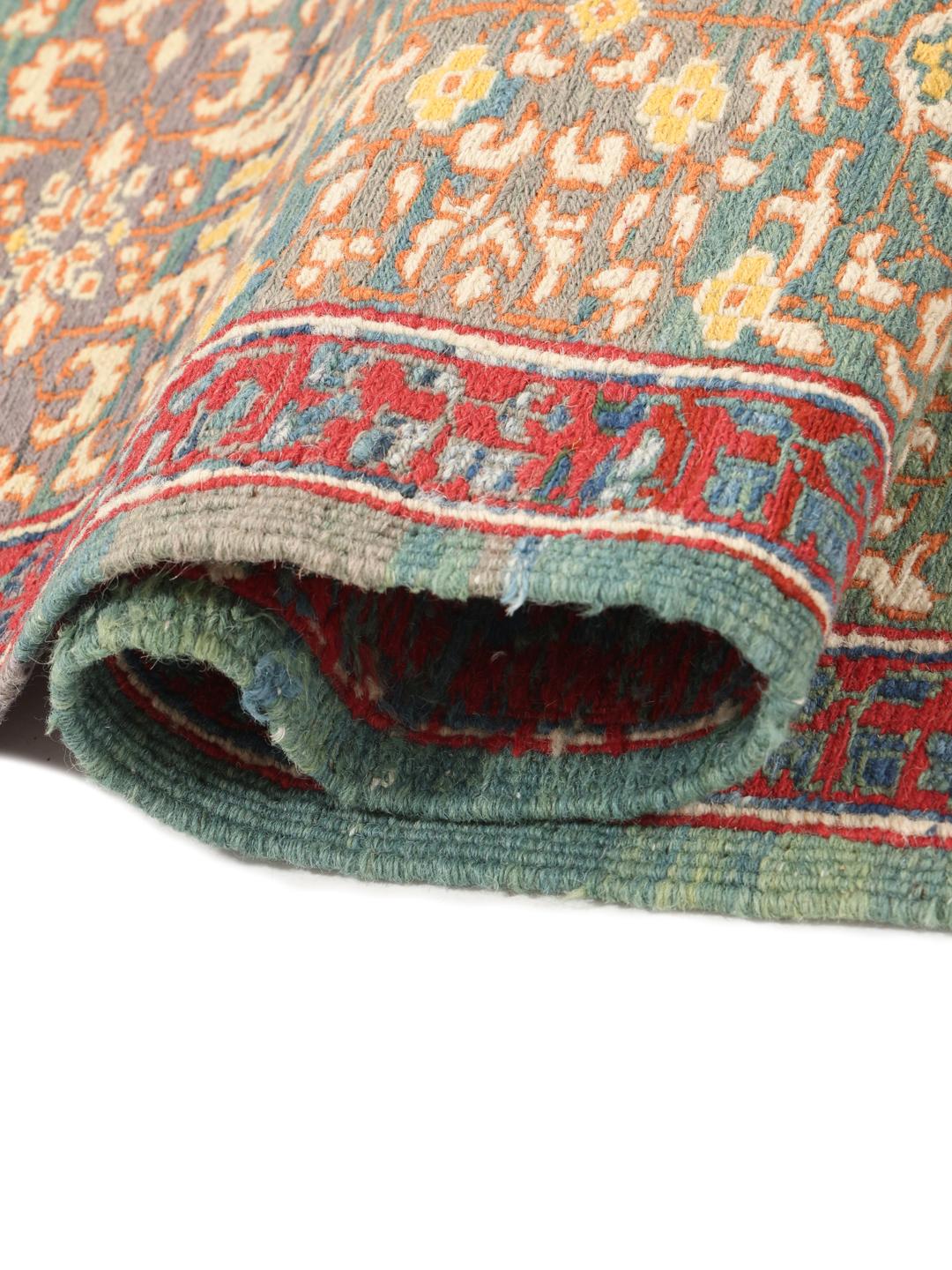
The term 'kilim' describes the specific flat-weaving technique where the warp and weft threads are tightly interlaced to create a durable, reversible fabric without a pile. This method has been used for centuries by nomadic and village tribes to create functional items that were portable yet beautiful. In this piece, the technique allows for crisp, clear pattern definition that highlights the complex interplay of motifs.
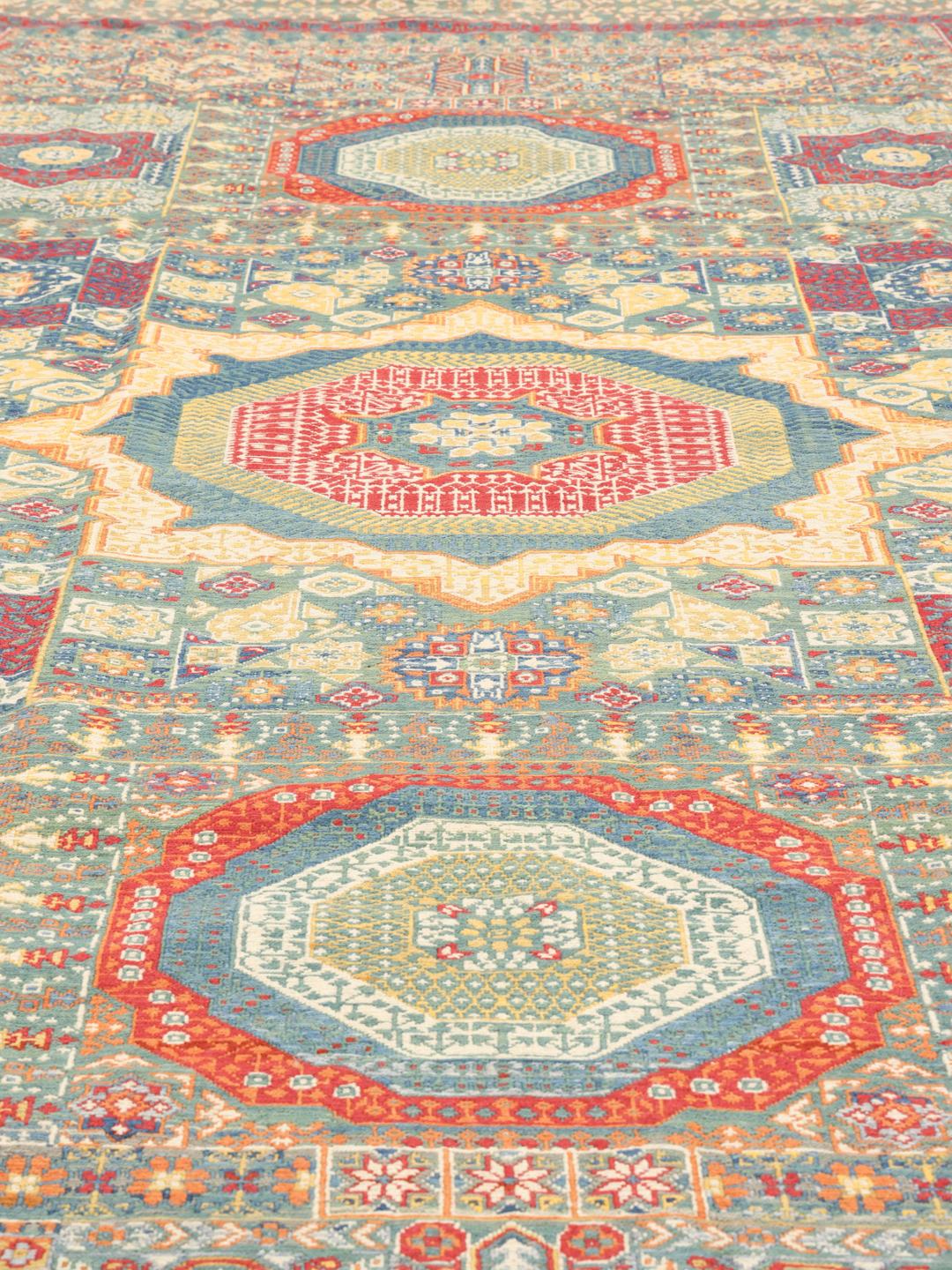
Visually, this rug is defined by its bold, medallion-centric layout, surrounded by intricate floral and tribal-inspired borders. The use of vibrant, contrasting colours is a hallmark of the Afghan weaving tradition, which is renowned for its ability to balance complex geometric structures with a harmonious, organic flow. Each motif is carefully placed to guide the eye across the entire field of the rug.
Collecting a piece like this is a way to preserve a living heritage. These rugs are valued not just for their aesthetic appeal, but for the cultural history embedded in every thread. By choosing a hand-woven Kelim Suzani, you are supporting a legacy of craft that has been passed down through generations of skilled weavers, ensuring that these beautiful traditions continue to thrive in modern homes.