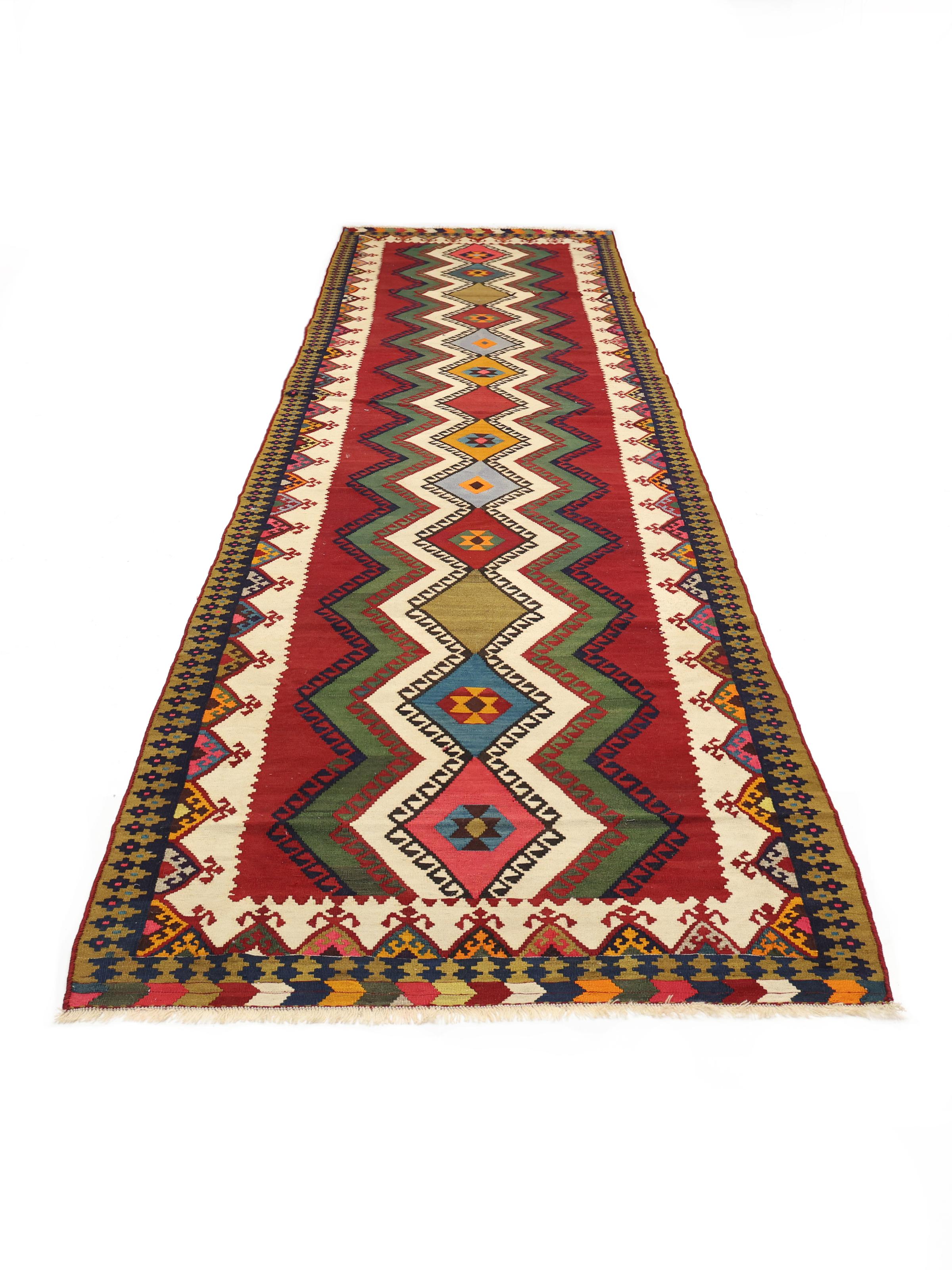
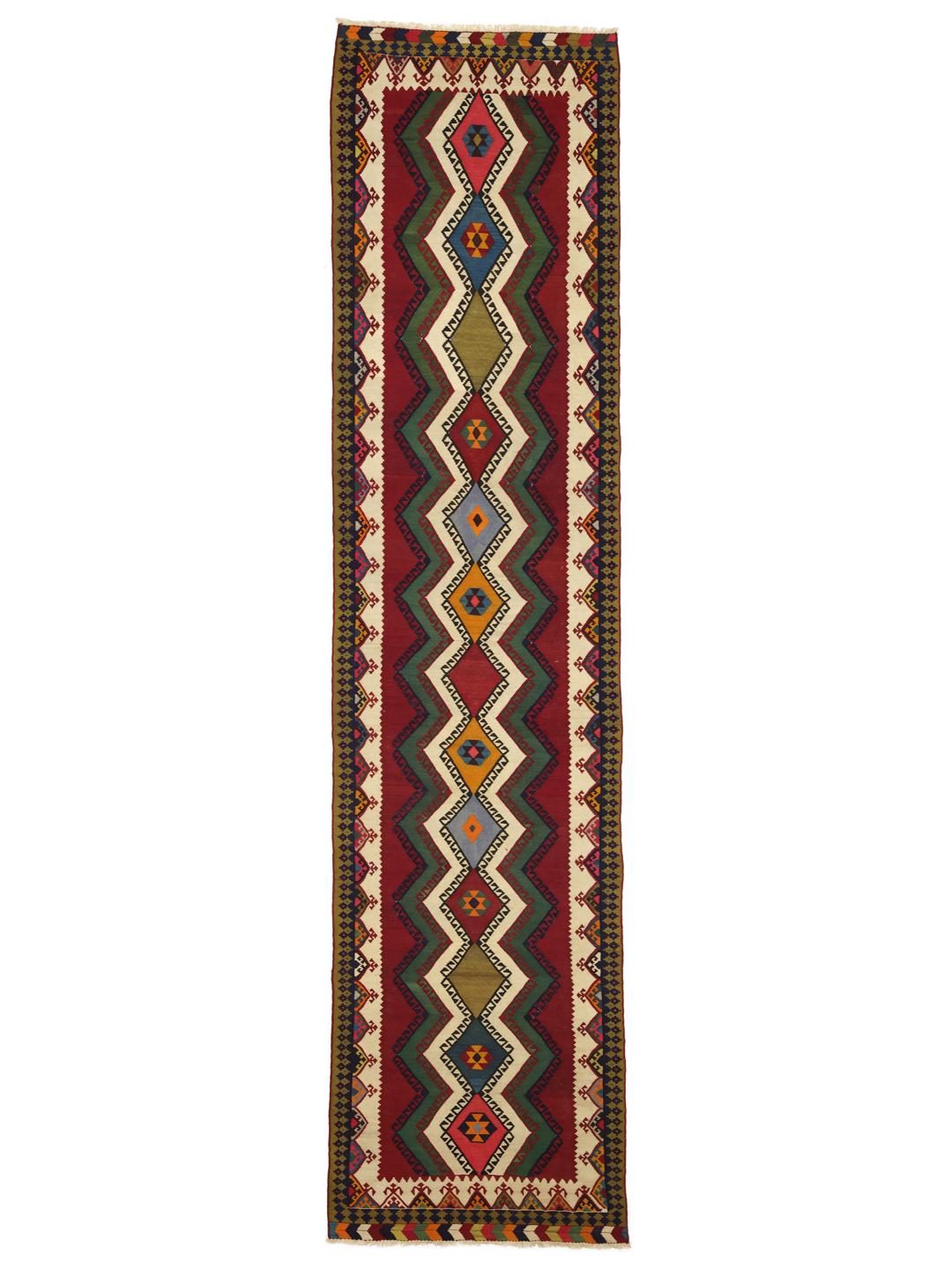
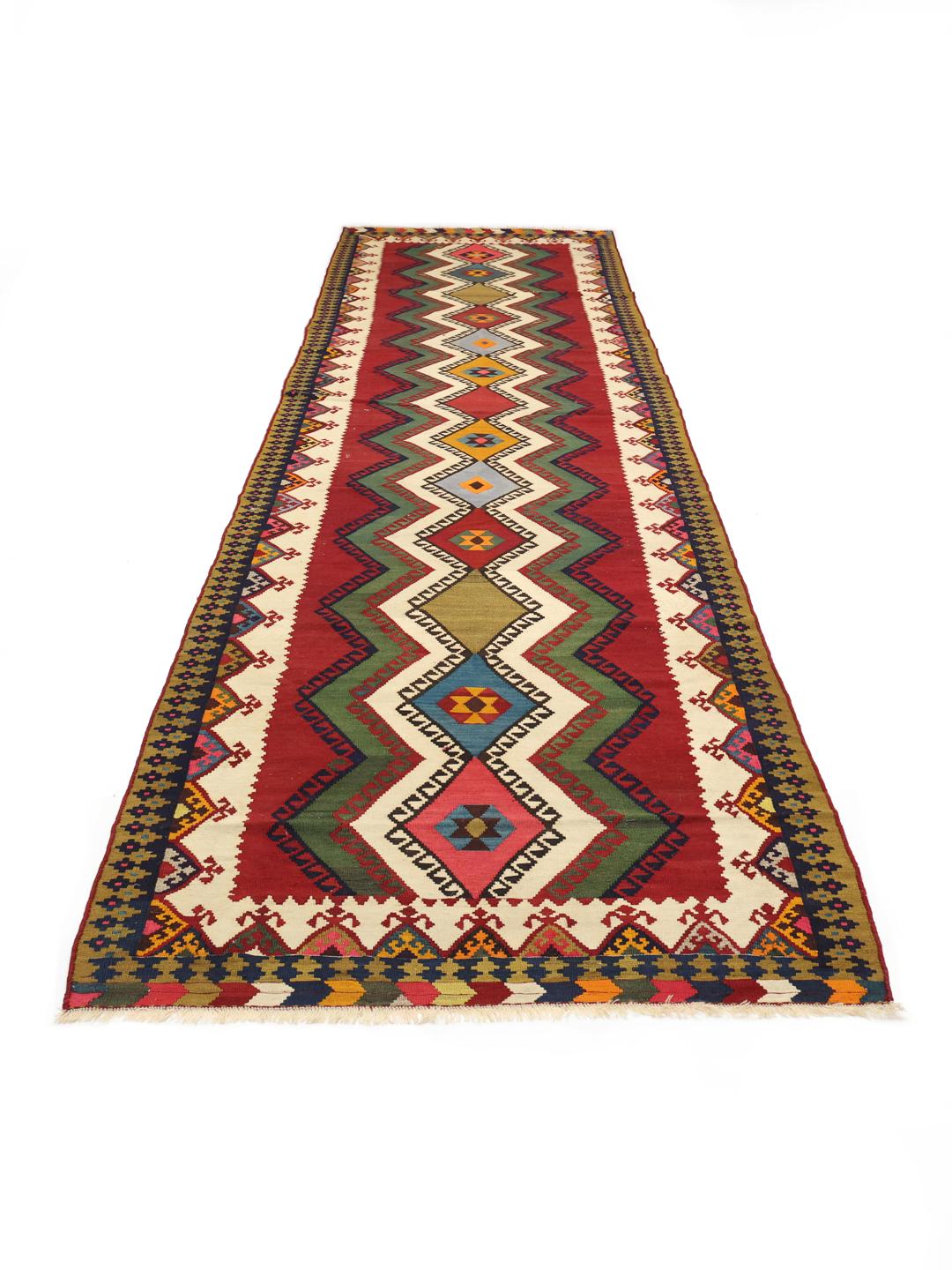
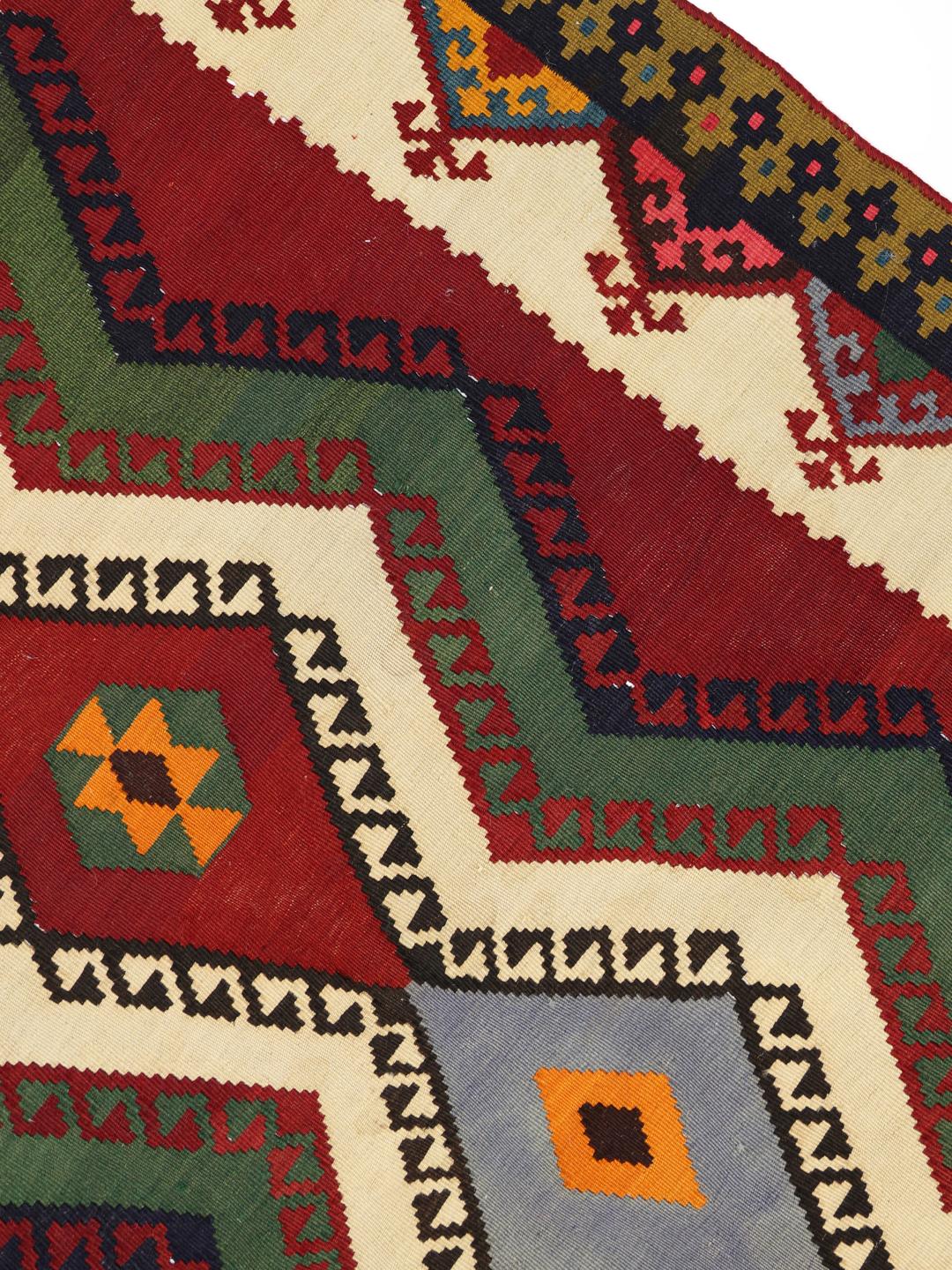
Kilim flatweaves from Turkey represent one of the world's oldest textile arts, deeply rooted in nomadic weaving traditions across Anatolia. Historically woven by women for use in daily life, these flatwoven textiles served as floor coverings, wall hangings, and protective blankets, woven on simple looms using local wool.
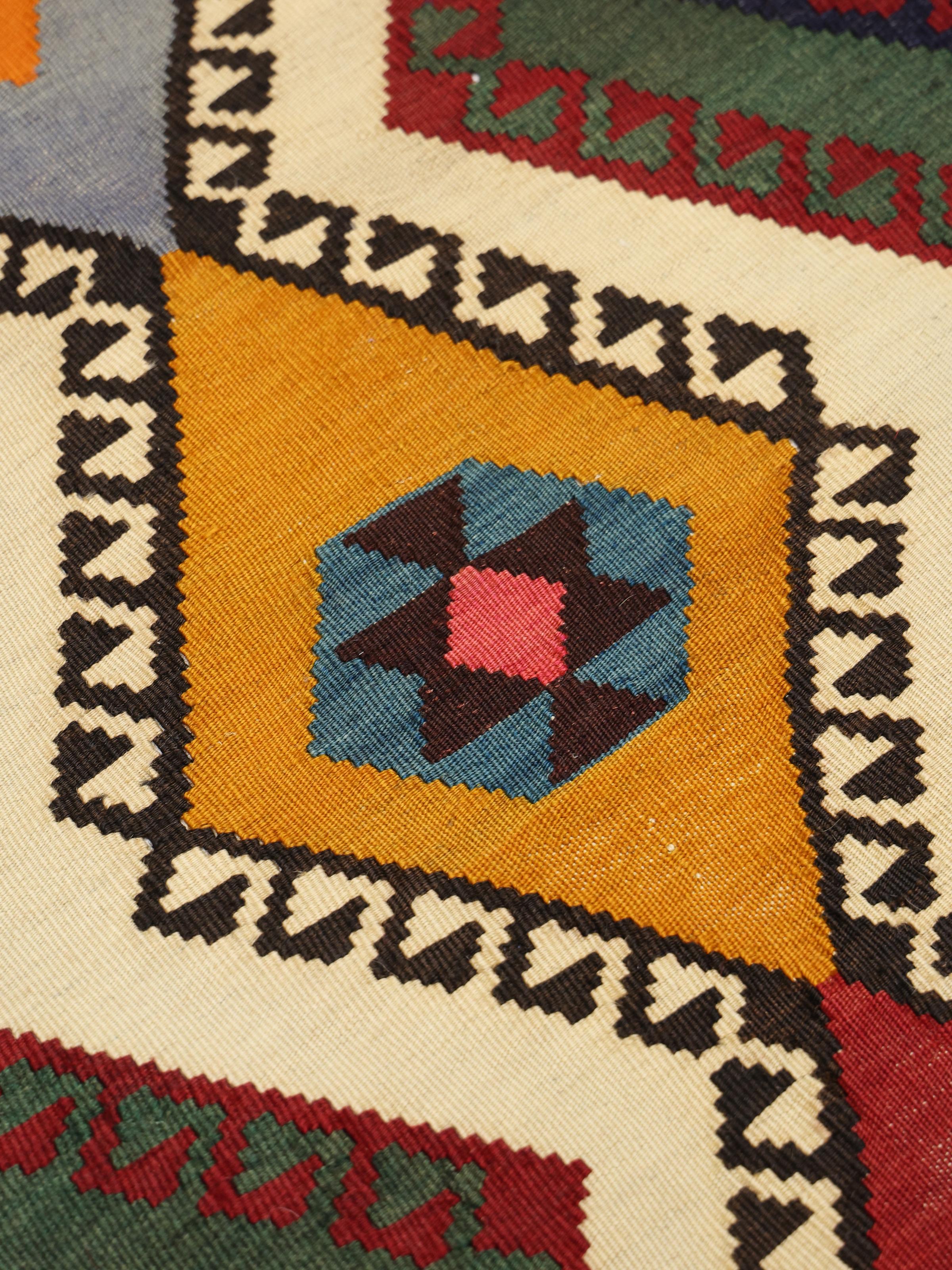
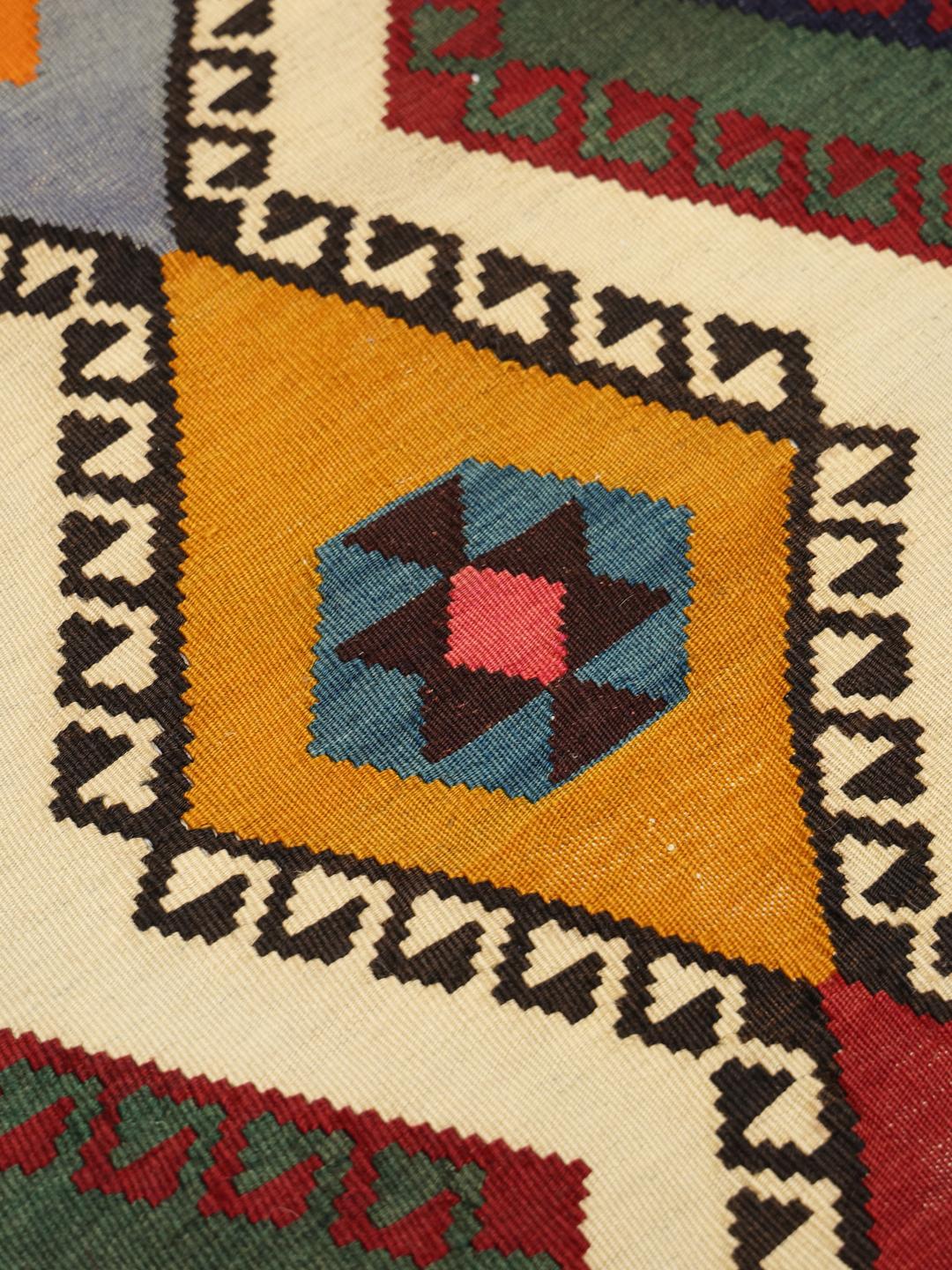
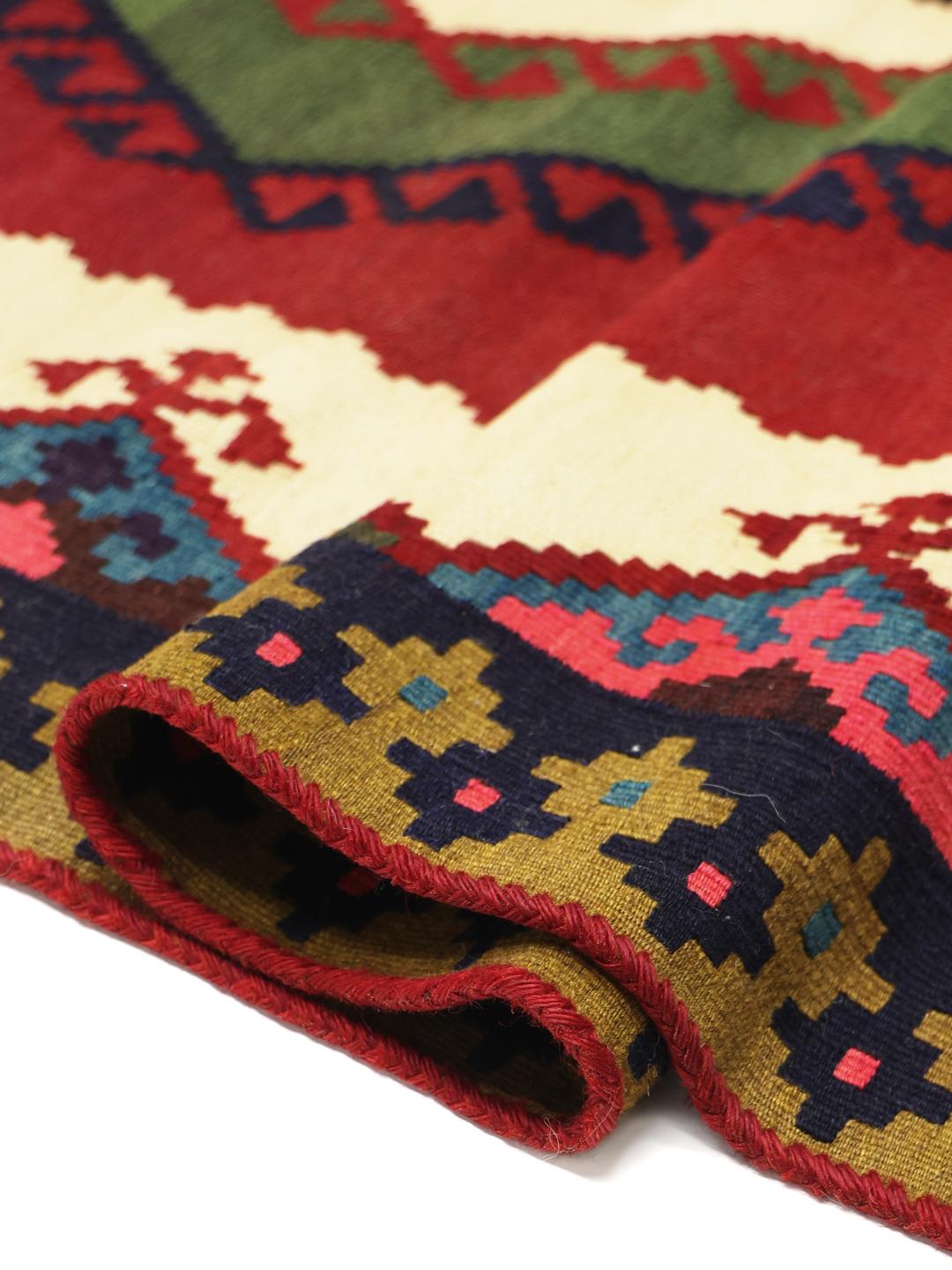
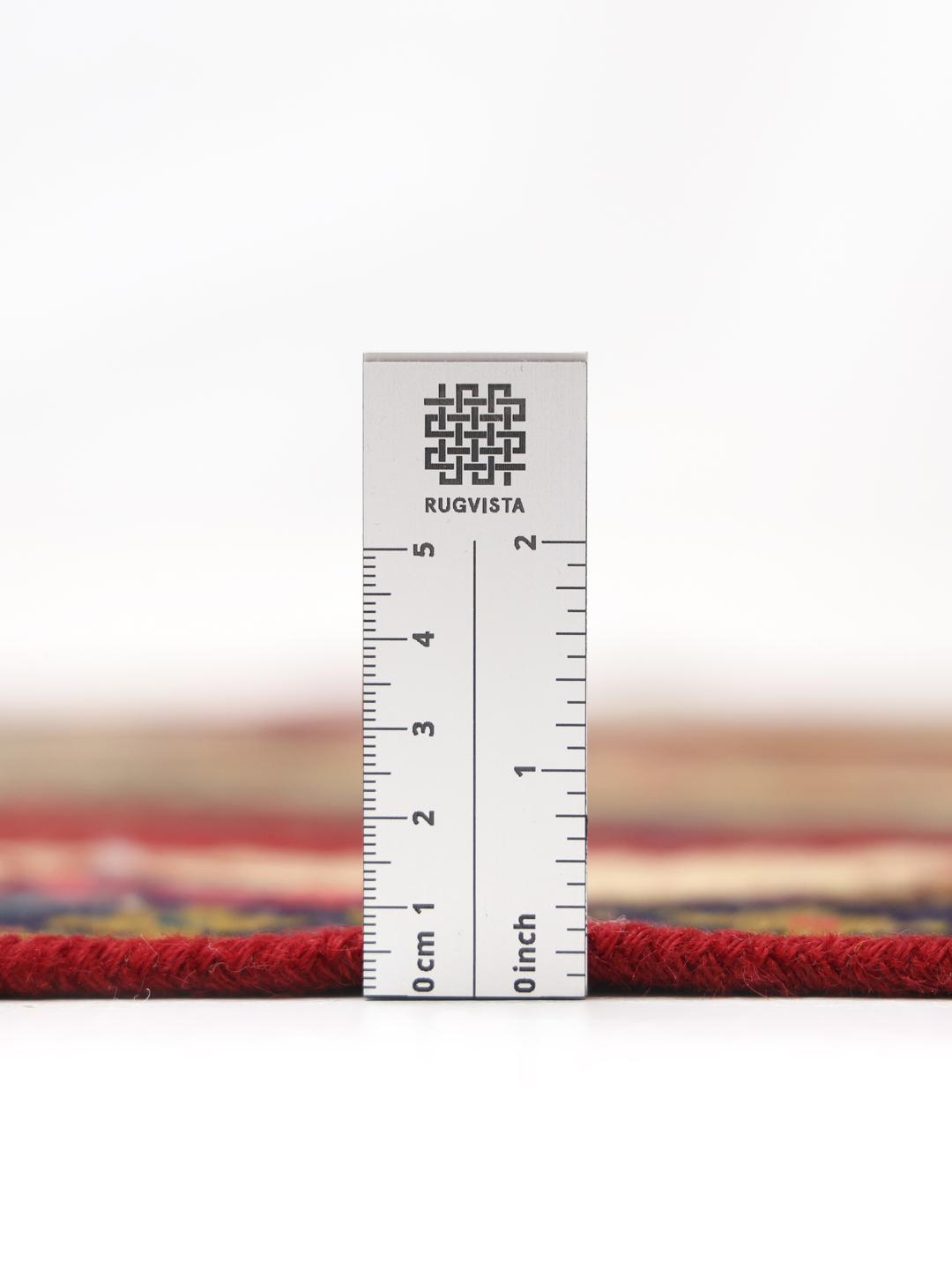
Unlike pile rugs, flatwoven kilims are constructed by tightly interweaving warp and weft strands, creating a smooth surface without a raised pile. This technique creates a light yet exceptionally strong fabric, allowing intricate geometric patterns to be rendered with crisp lines and vibrant color contrast.
The visual language of Turkish kilims relies on repeating geometric motifs, diamond columns, and decorative borders. Each symbol traditionally carried protective or personal meanings for the weaver, turning the flatweave into a personal storytelling narrative passed down across generations.
Vintage kilims aged between 20 and 50 years are highly sought after by collectors and interior enthusiasts alike. The natural aging process softens the tones while preserving the structural integrity of the hand-spun wool, resulting in a piece rich in cultural weight and individual character.