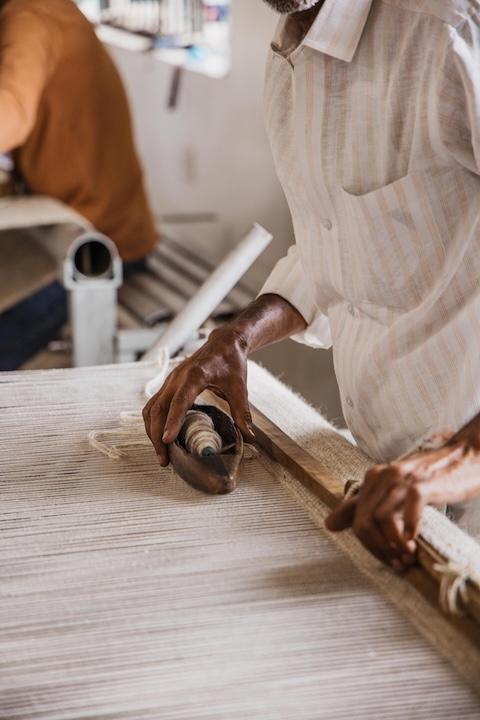
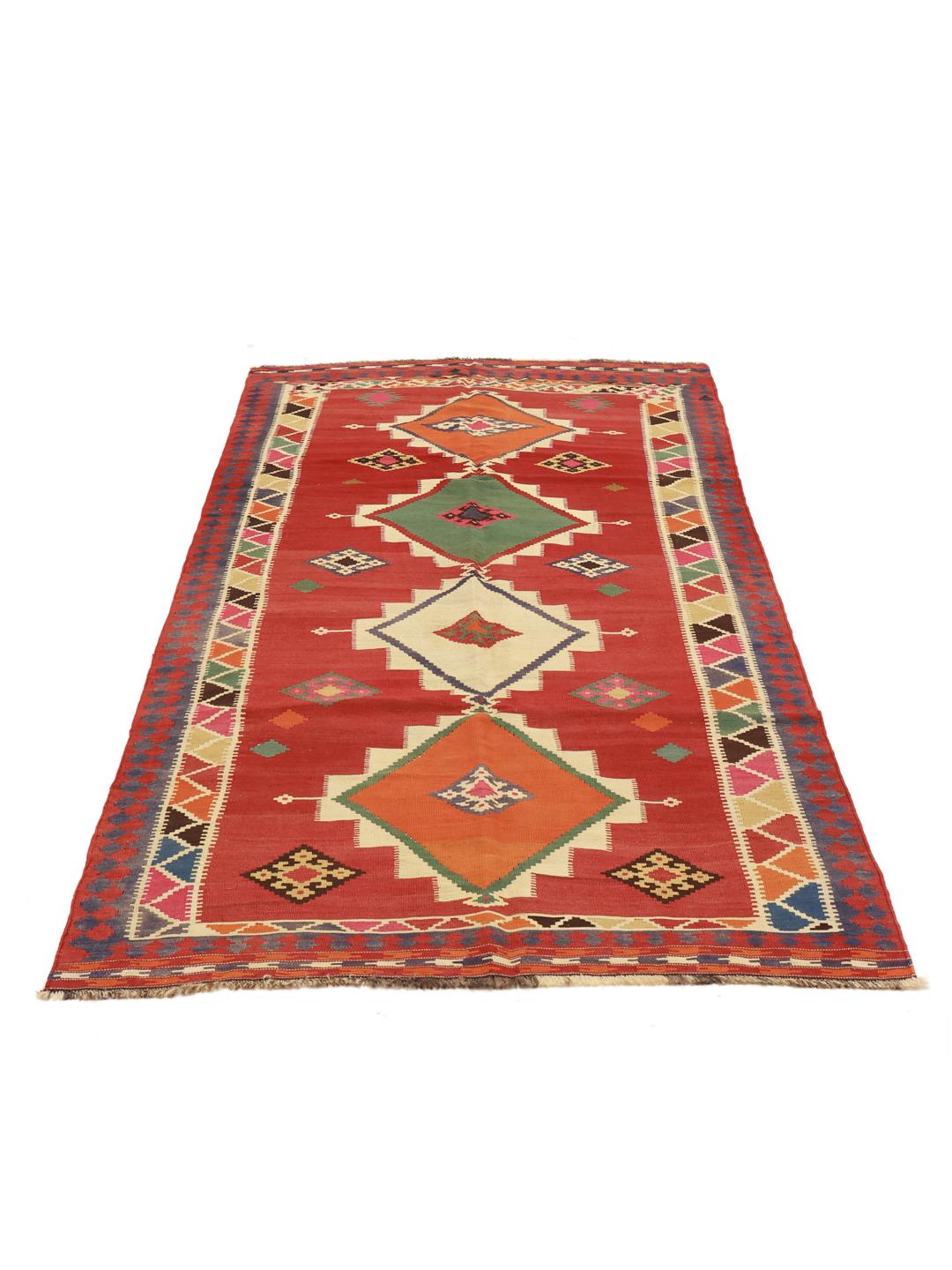
Kilim weaving is one of the oldest textile traditions in Anatolia, Turkey. Historically created by nomadic and village weavers for daily home use, these flatwoven textiles served as floor coverings, wall hangings, and storage bags, reflecting the nomadic rhythm of life in the region.
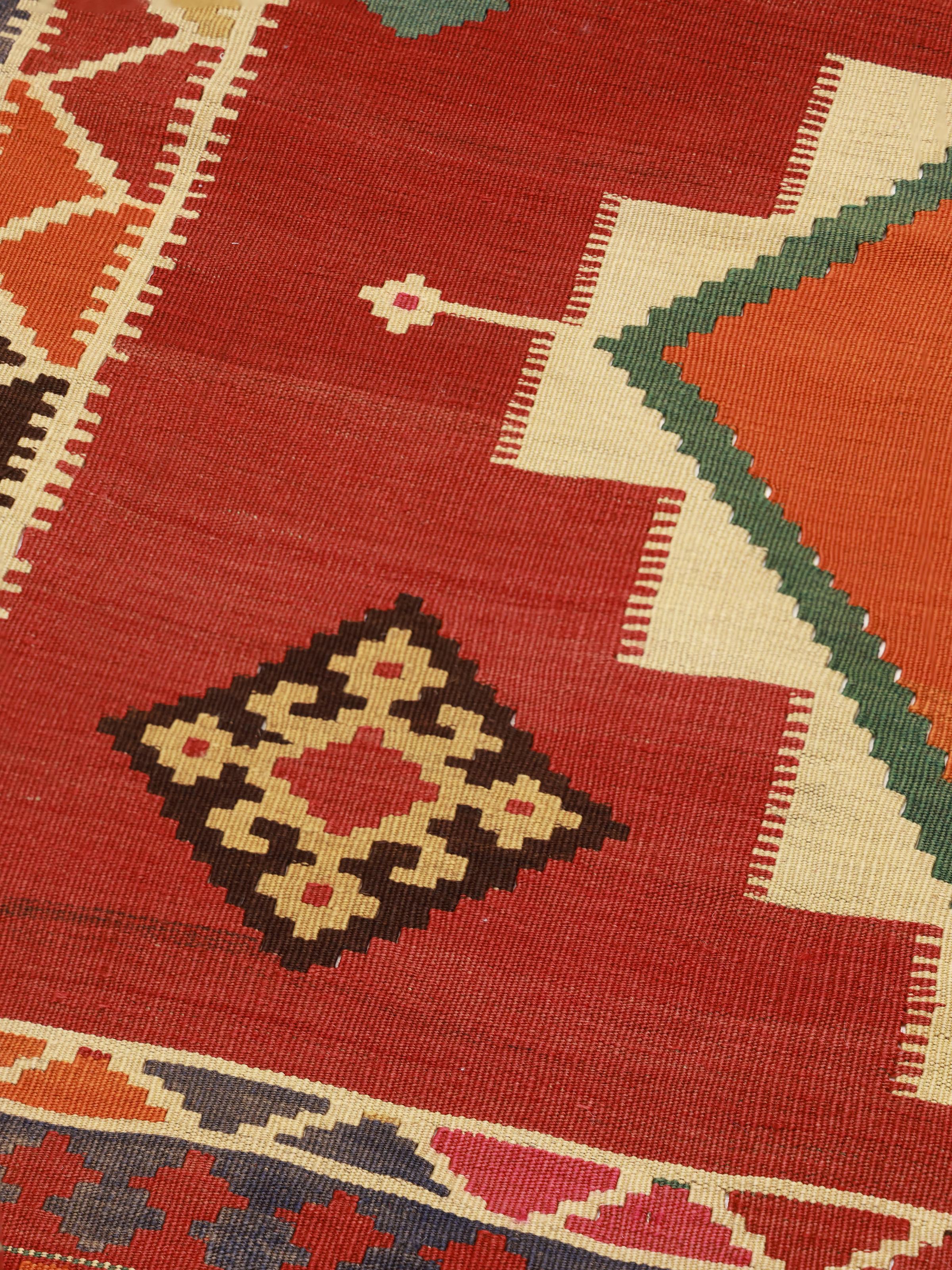
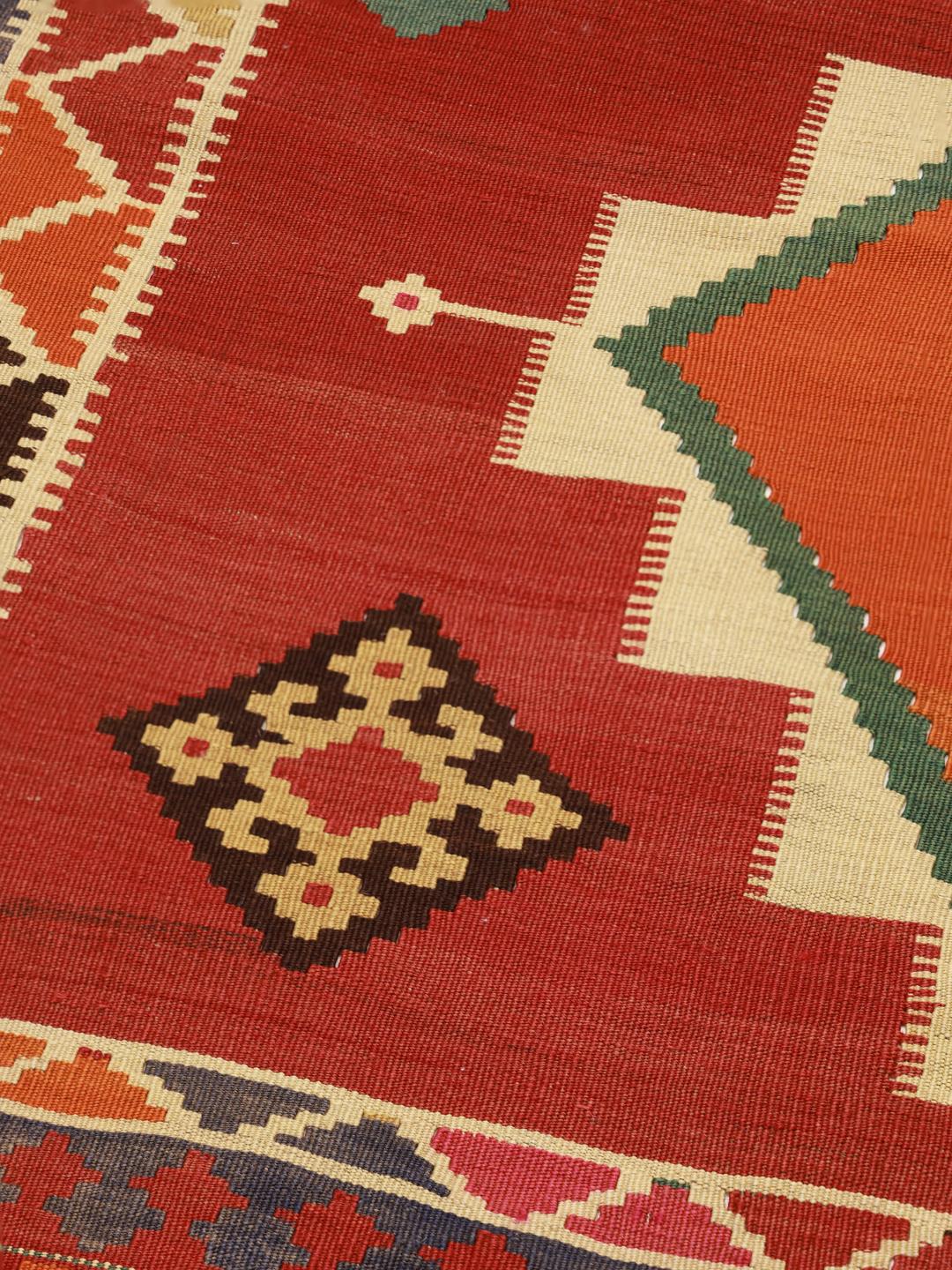
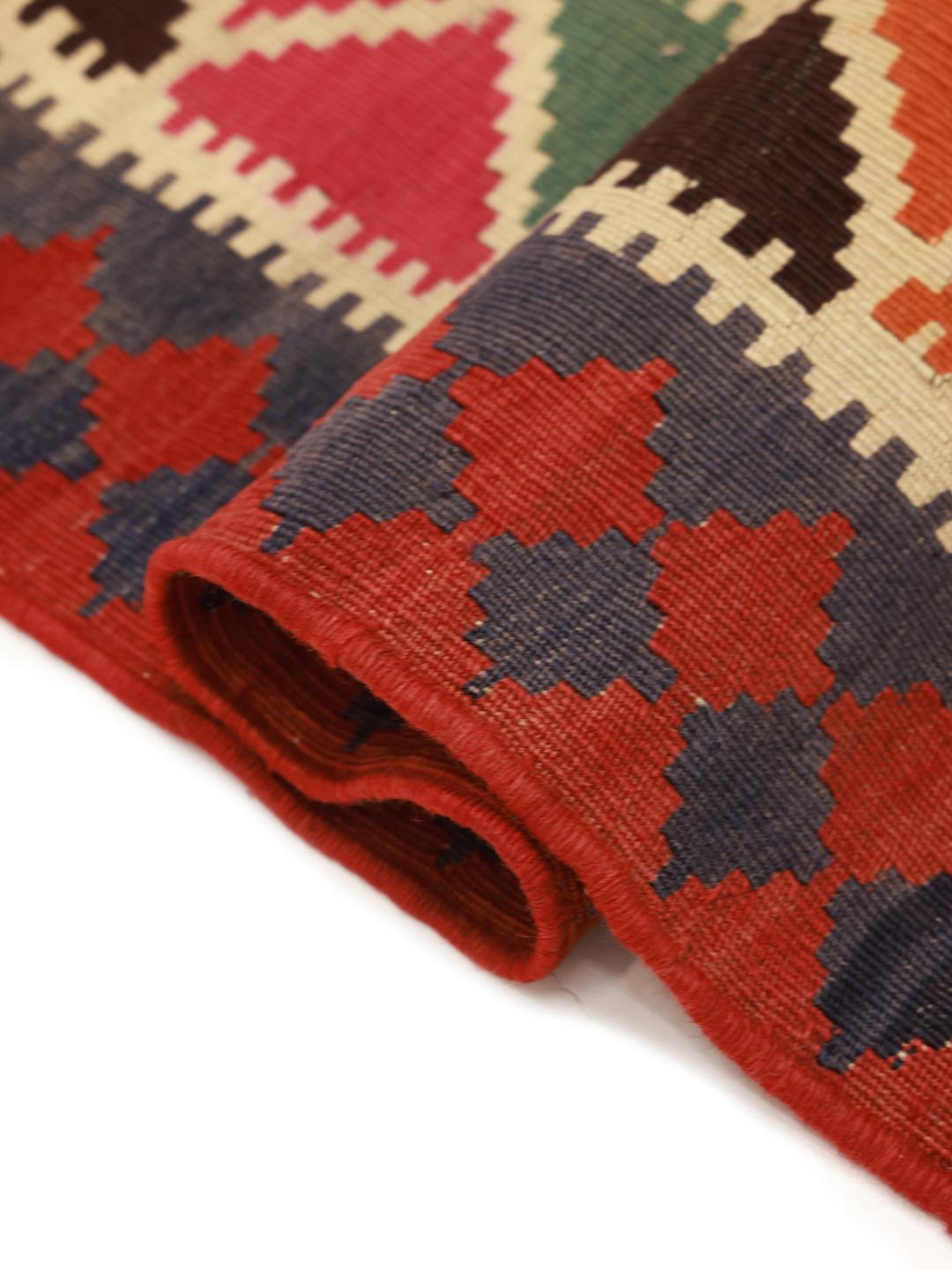
Unlike pile rugs, a kilim is crafted by tightly interweaving the warp and weft strands to create a flat, pileless surface. Using natural wool for both structural foundation and surface patterning ensures exceptional tensile strength and flexibility while giving the colors a soft, organic texture.
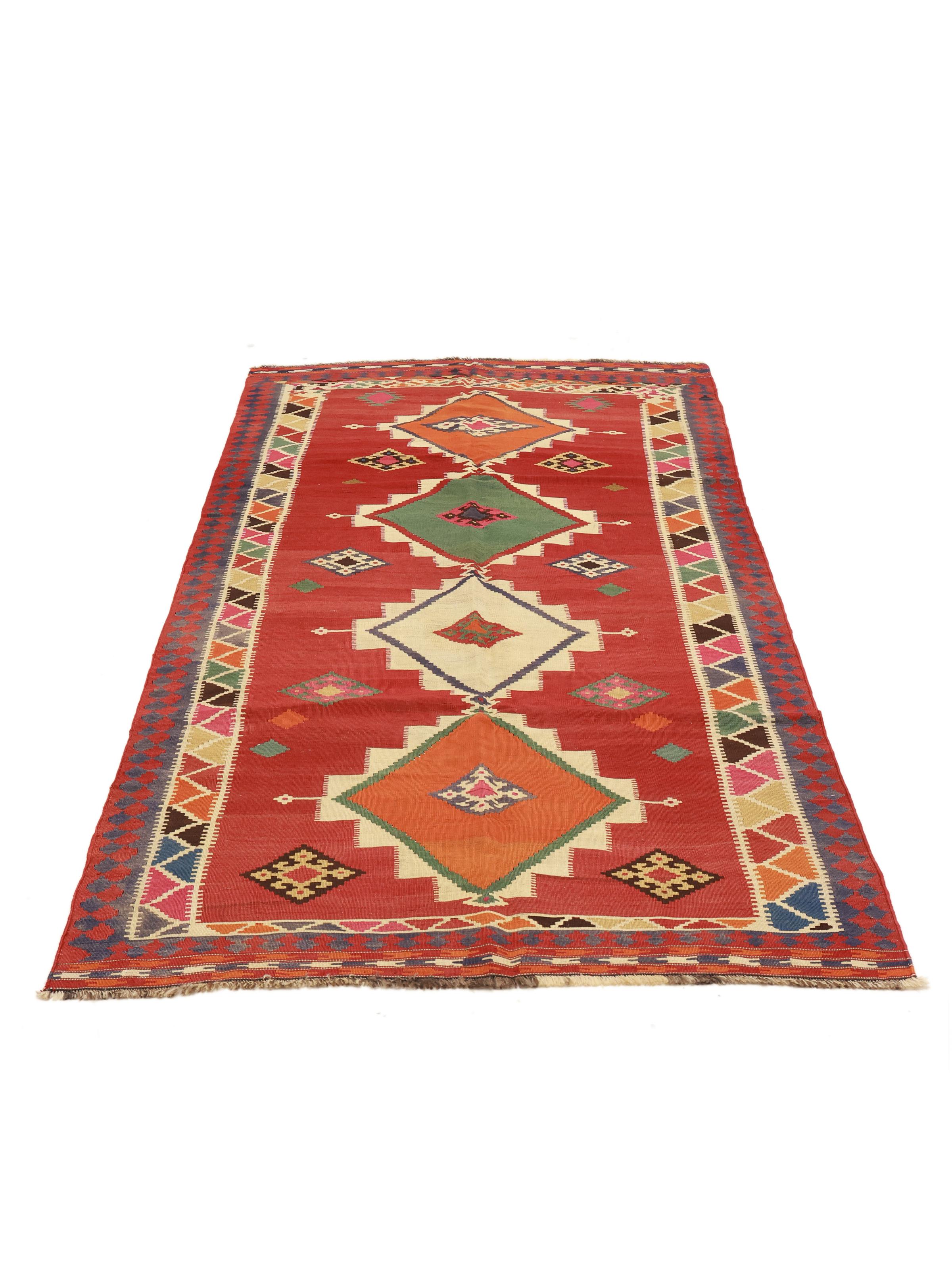
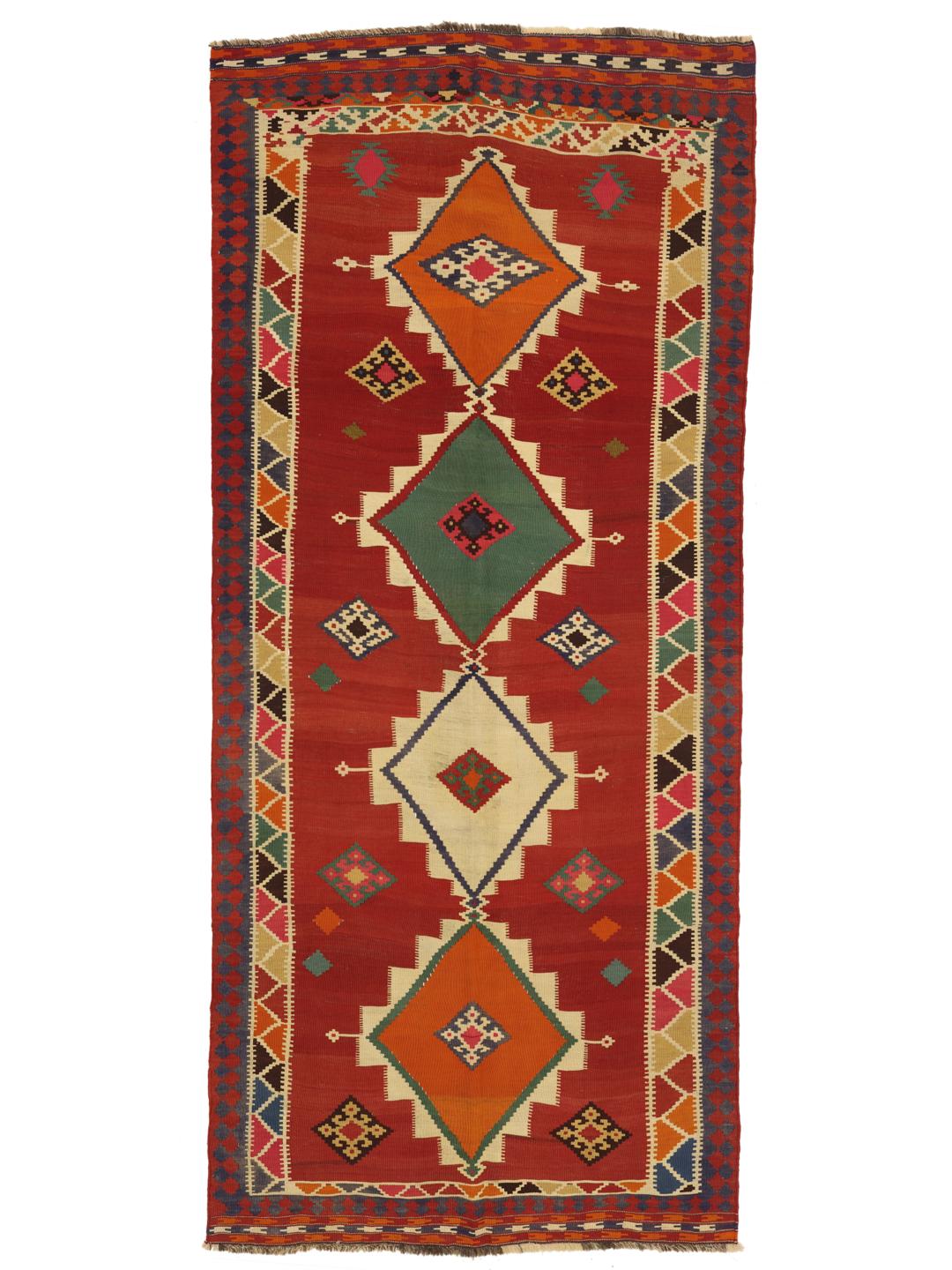
The visual language of Turkish kilims relies on symbolic geometric motifs passed down through generations. Diamond shapes, known as elibelinde or eye motifs, were often woven to offer protection, good fortune, and family harmony, framing the central field within structured decorative borders.
Vintage Turkish kilims aged between 20 and 50 years are sought after for their softened color palettes and softened wool fibers. Owning a vintage piece means preserving a fragment of regional folk art that gains character and emotional value as it continues to live in modern homes.