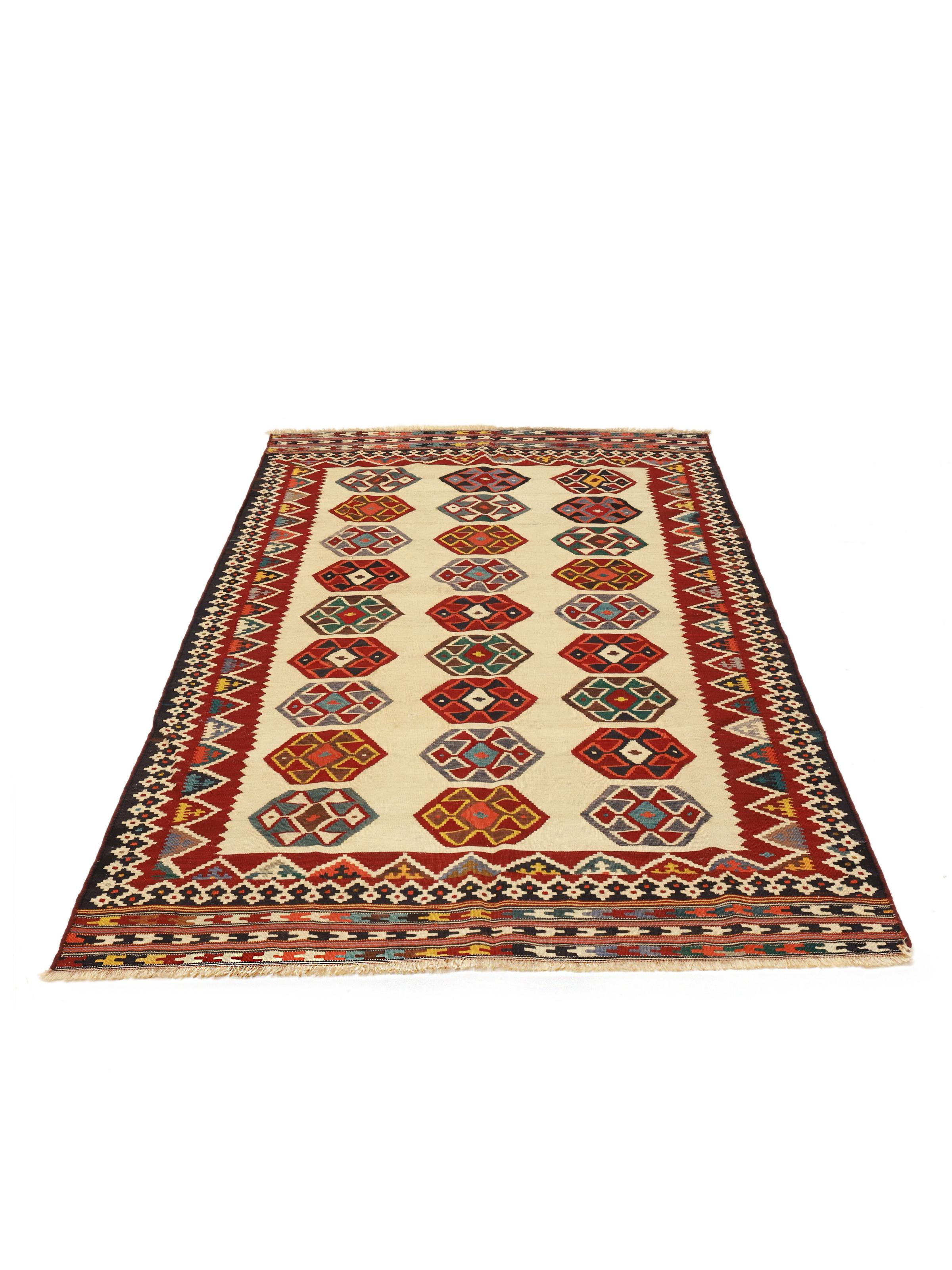
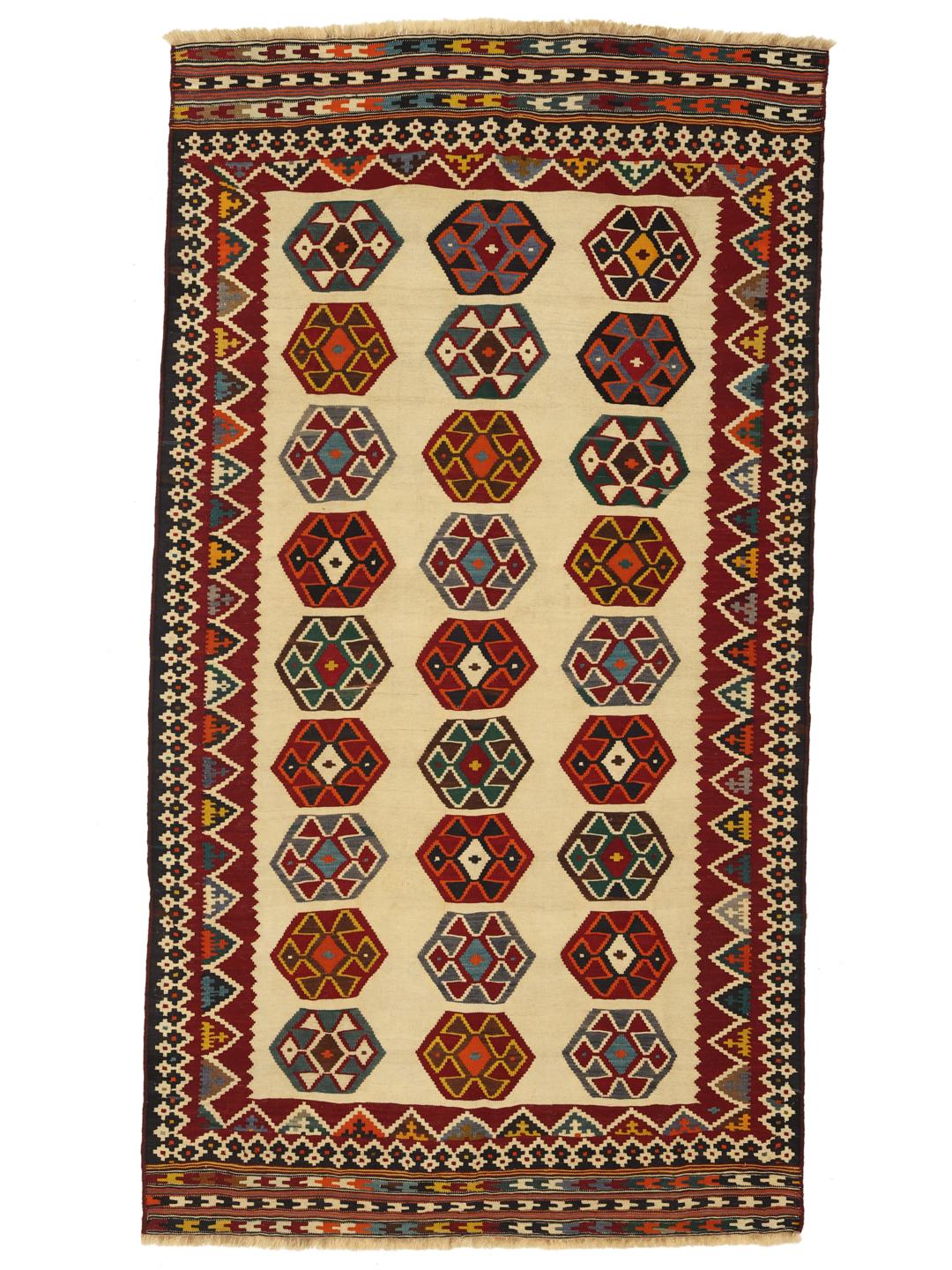
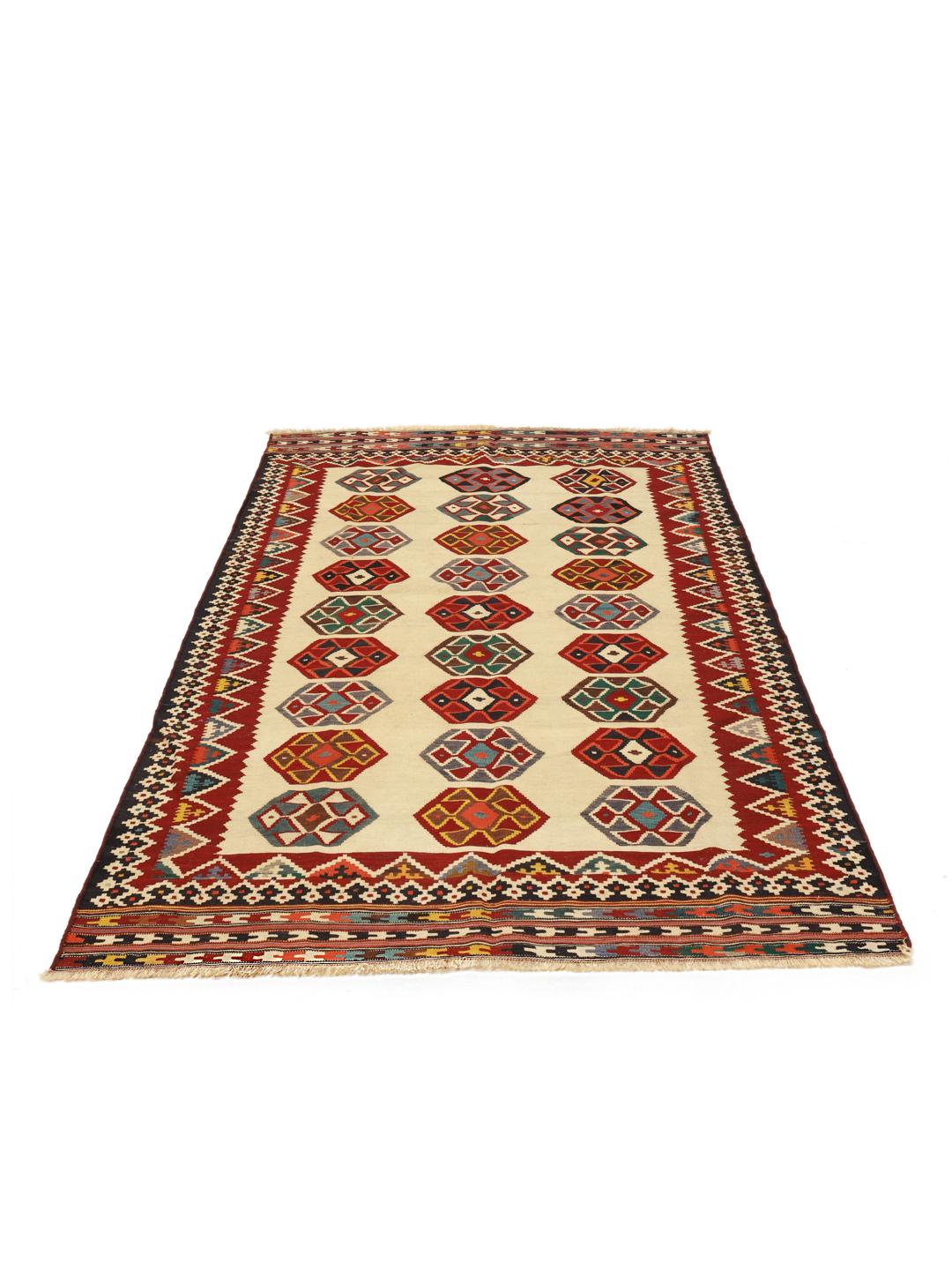
Kilim flatweaves have been woven across Anatolia for thousands of years, originally crafted by nomadic and village weavers for daily domestic life. These flatwoven textiles served as floor coverings, wall hangings, and storage bags, designed to be easily transported while providing essential insulation.
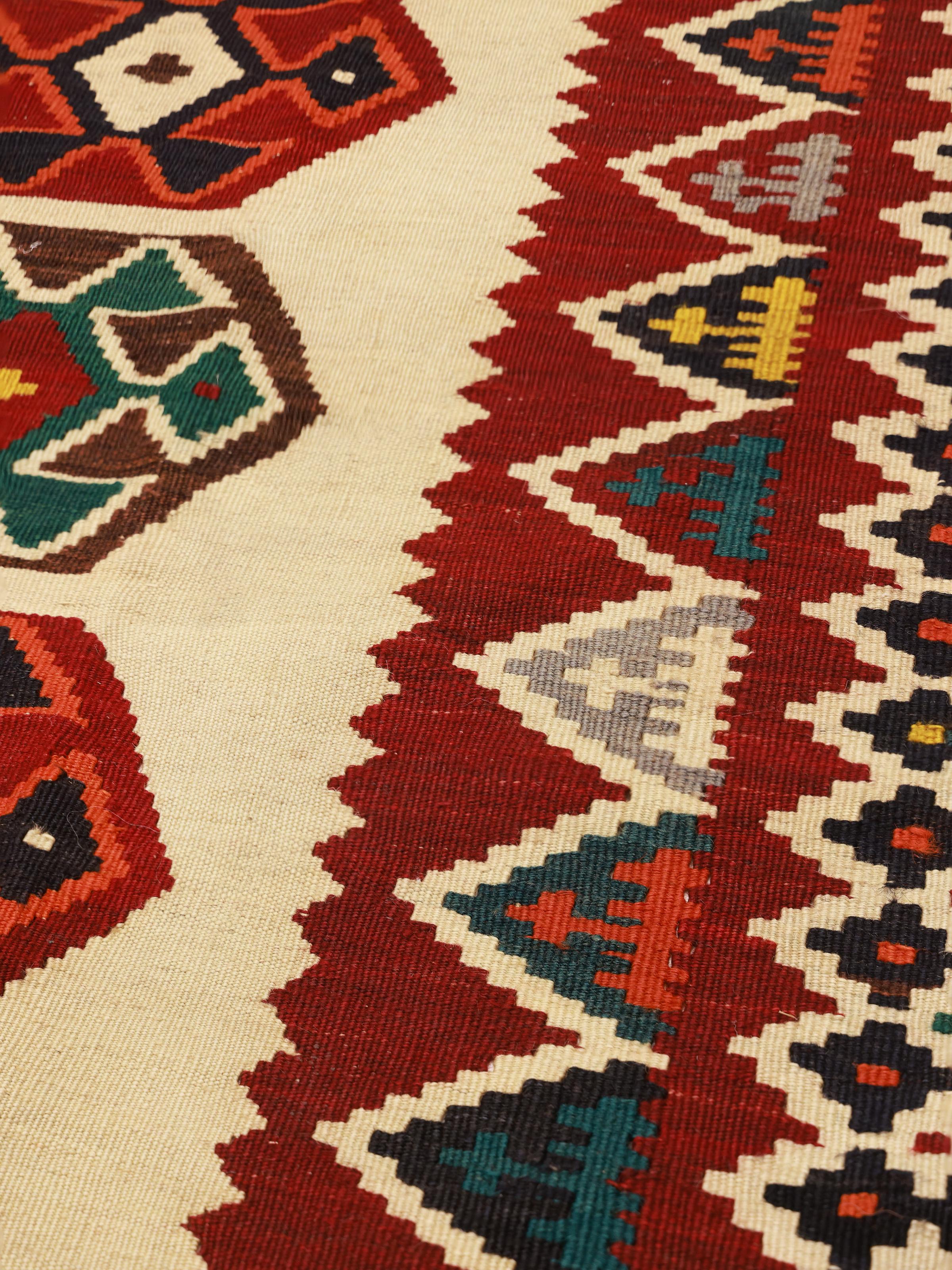
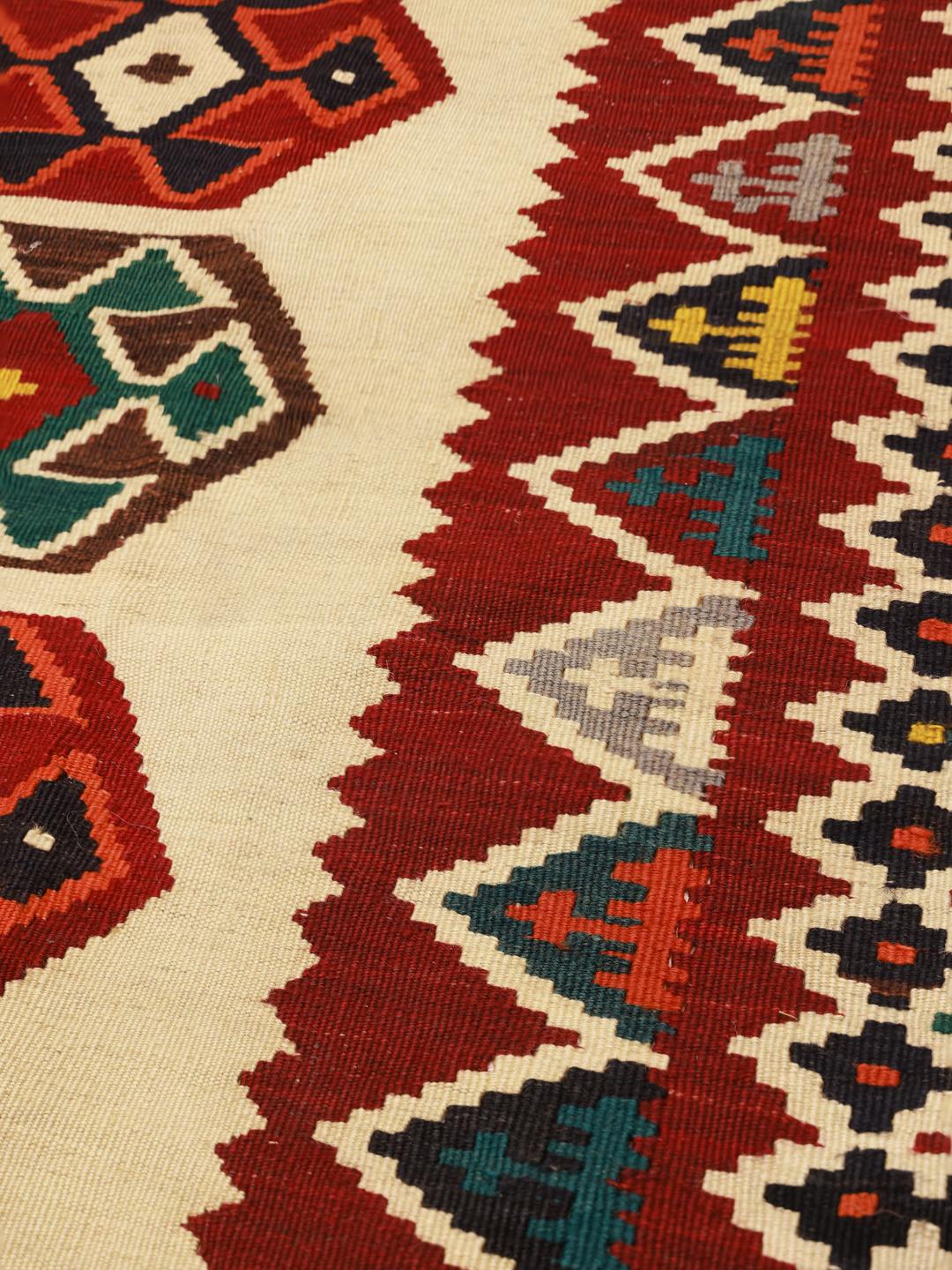
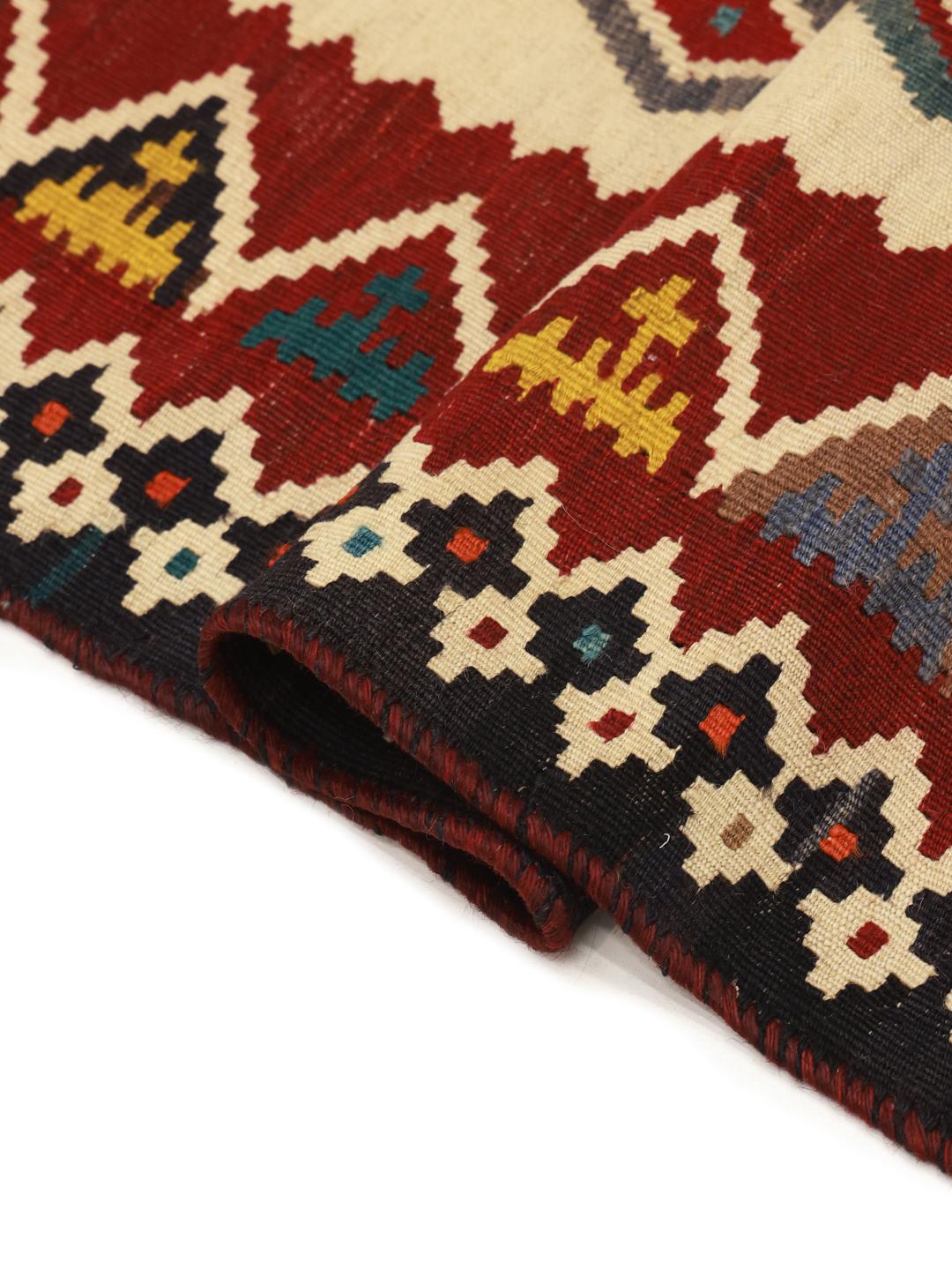
Unlike pile rugs, Kilims are made using a flatweave construction where the horizontal weft threads completely cover the vertical warp strands. This technique produces a smooth, pileless surface with clean lines and sharp pattern definition, making the intricate geometry of the motifs remarkably clear.
The visual language of Anatolian Kilims is built on ancestral tribal symbols. Repeating hexagonal shapes, geometric borders, and contrasting color fields were often used to express local heritage, protection, and harmony. The dark red borders and muted background colors reflect regional dye traditions native to traditional Turkish weaving villages.
Vintage pieces aged between 20 and 50 years are sought after for their softened tones and relaxed feel. Having softened gracefully over time, a vintage Kilim represents an enduring piece of textile history that connects contemporary interiors with a deep weaving heritage.