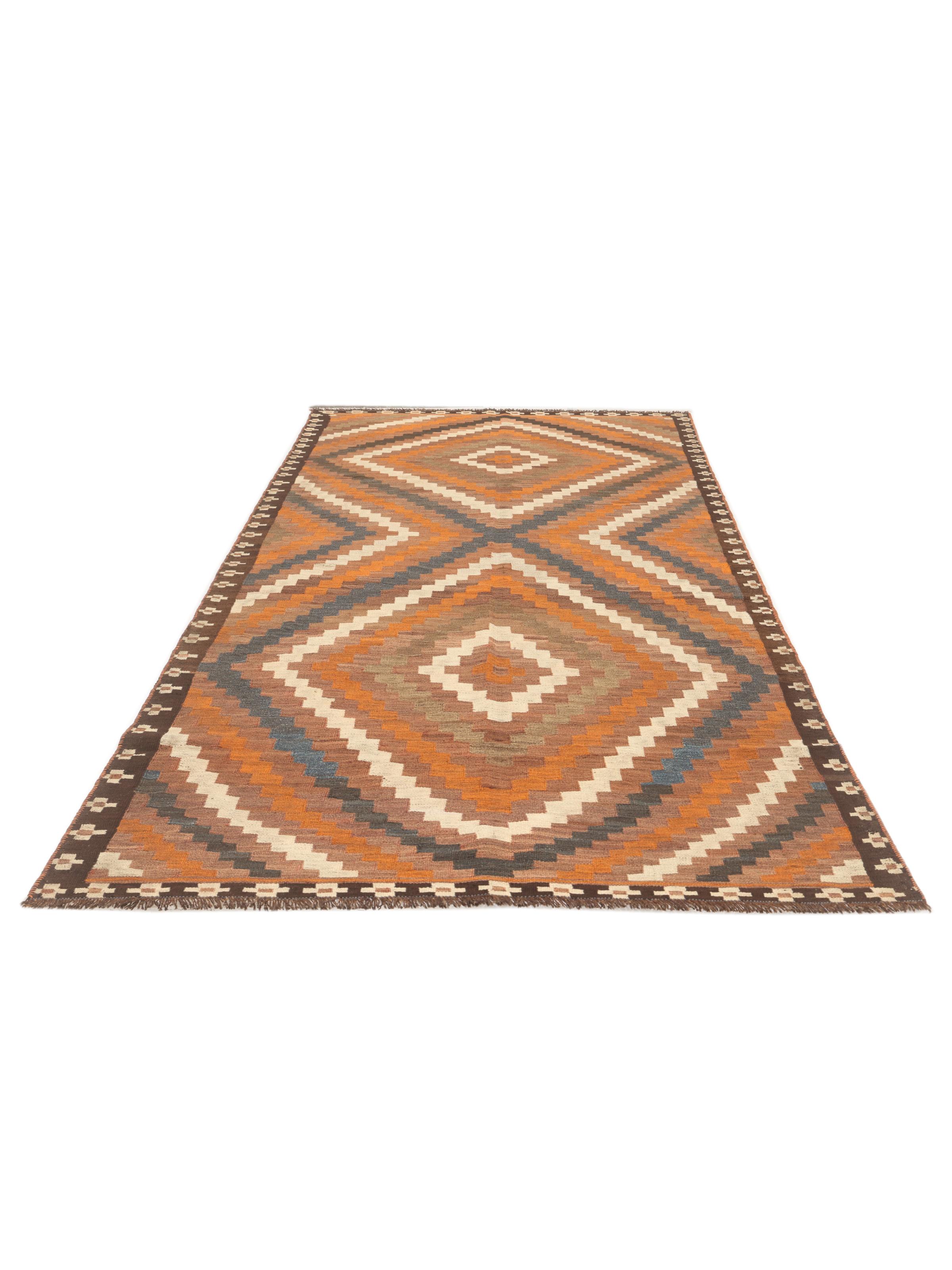
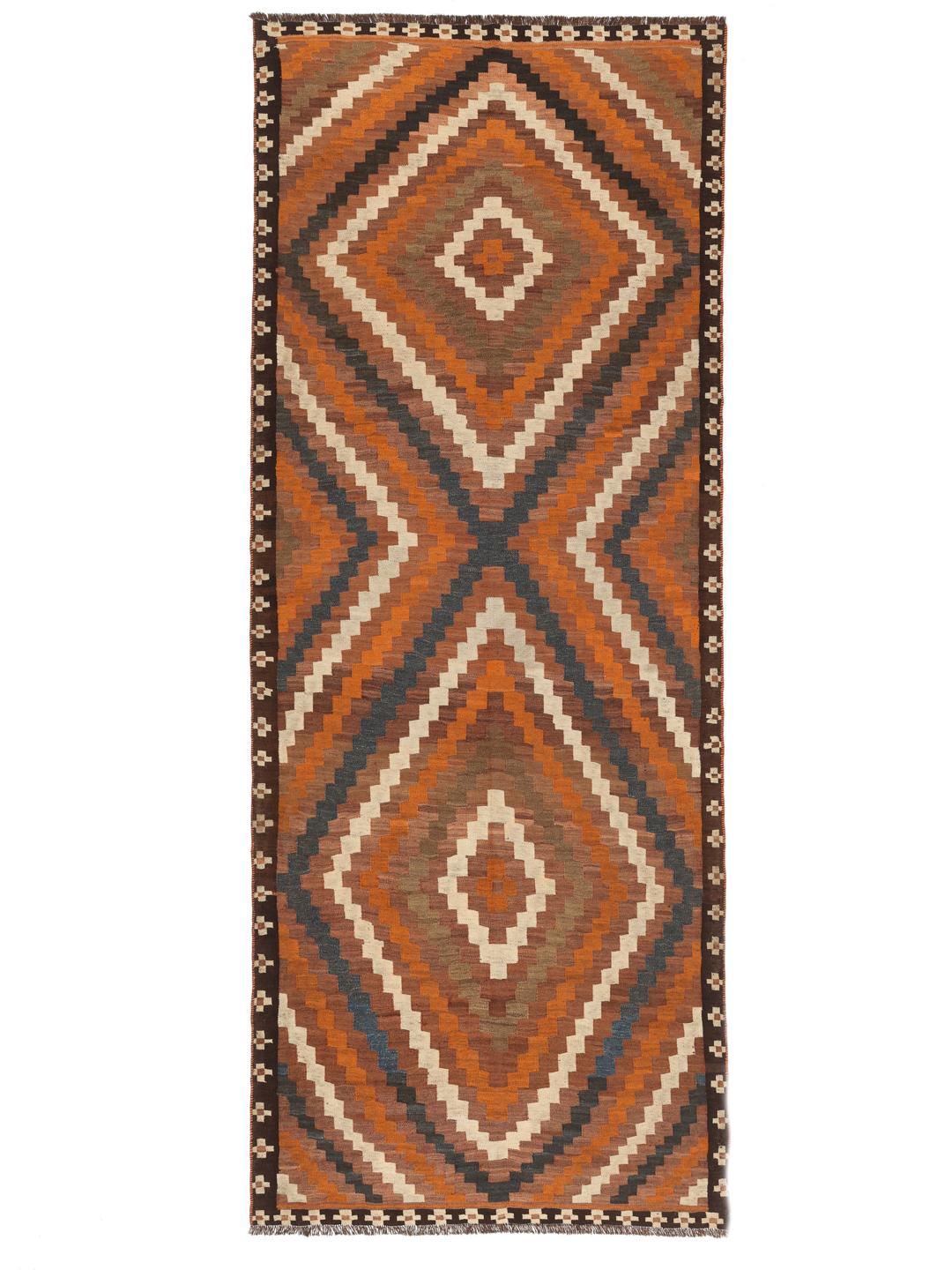
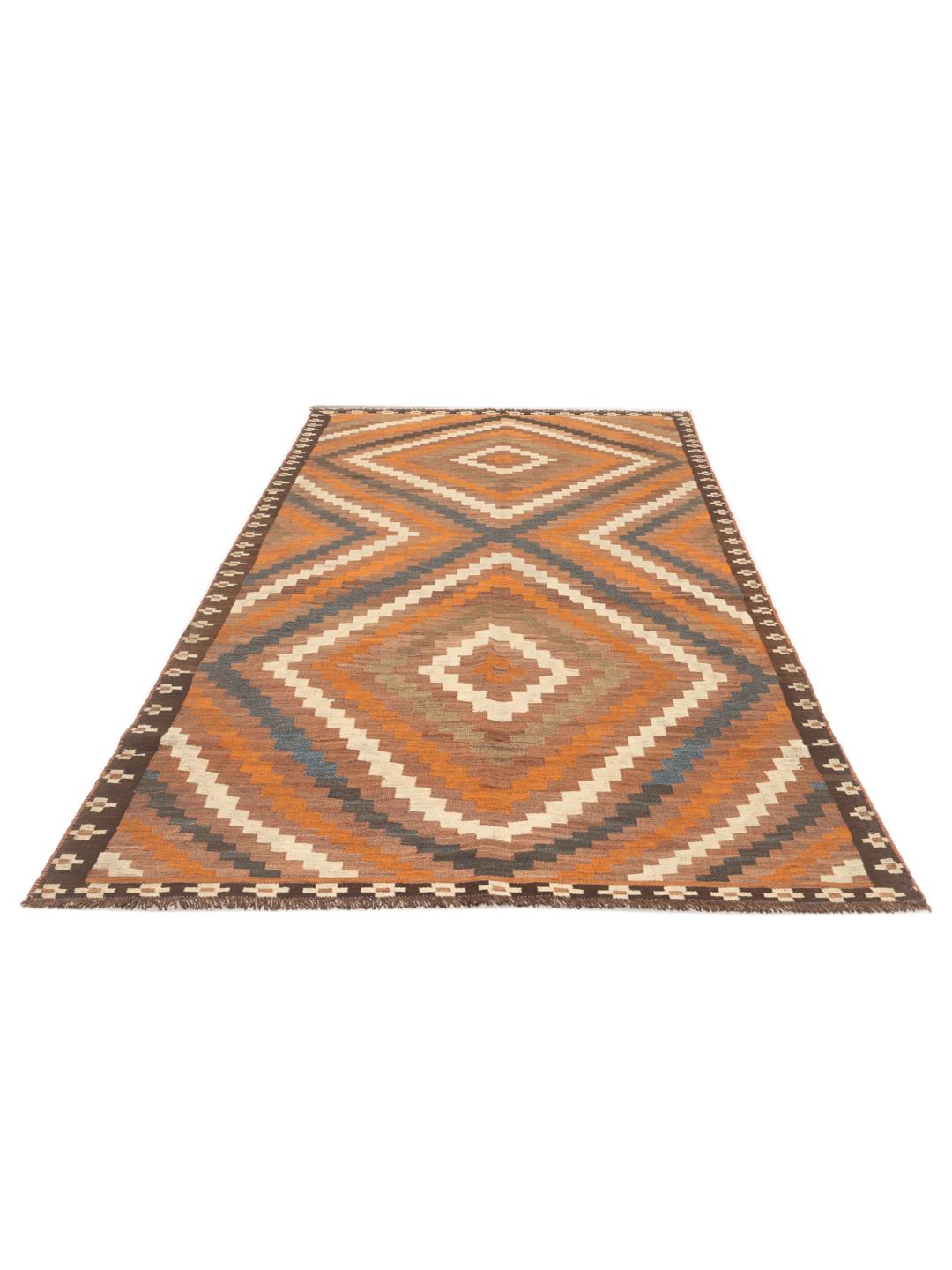
Kilim rugs are a foundational element of Middle Eastern textile traditions, stemming from a nomadic heritage where portable, durable, and versatile floor coverings were essential for daily life. These flat-woven textiles have been produced for centuries, serving as everything from floor rugs and wall hangings to saddlebags and tent covers, reflecting the ingenuity of the artisans who created them.
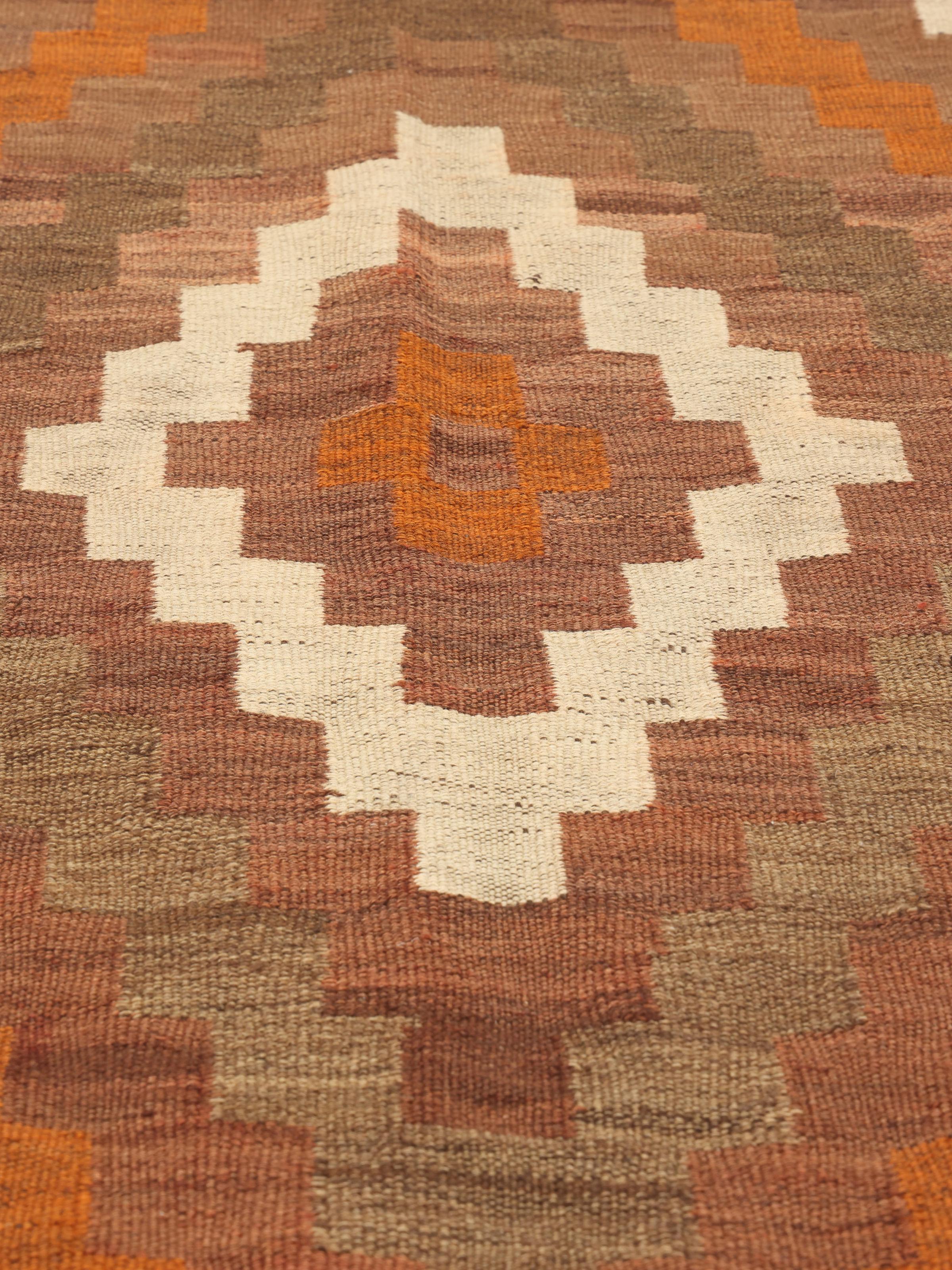
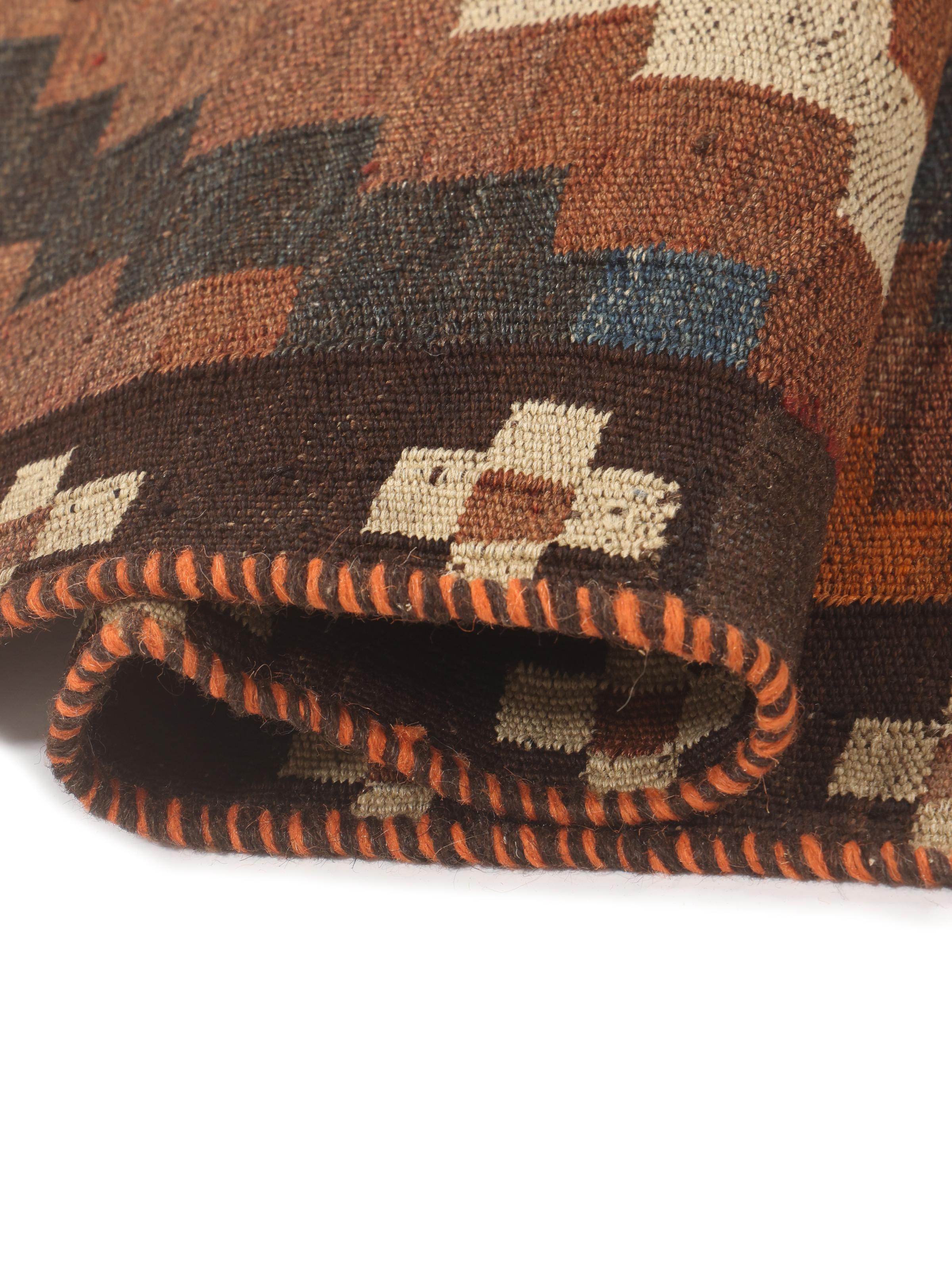
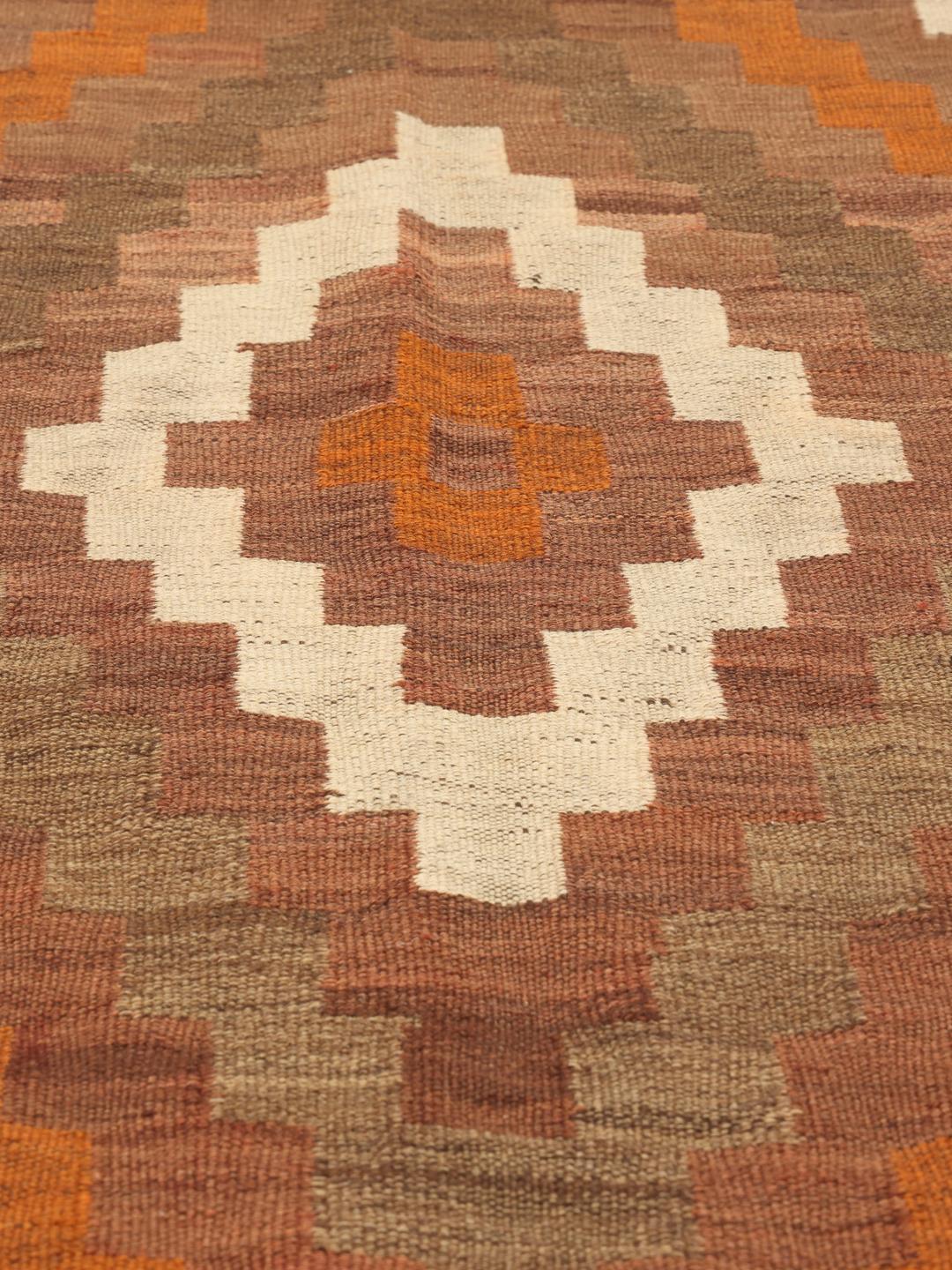
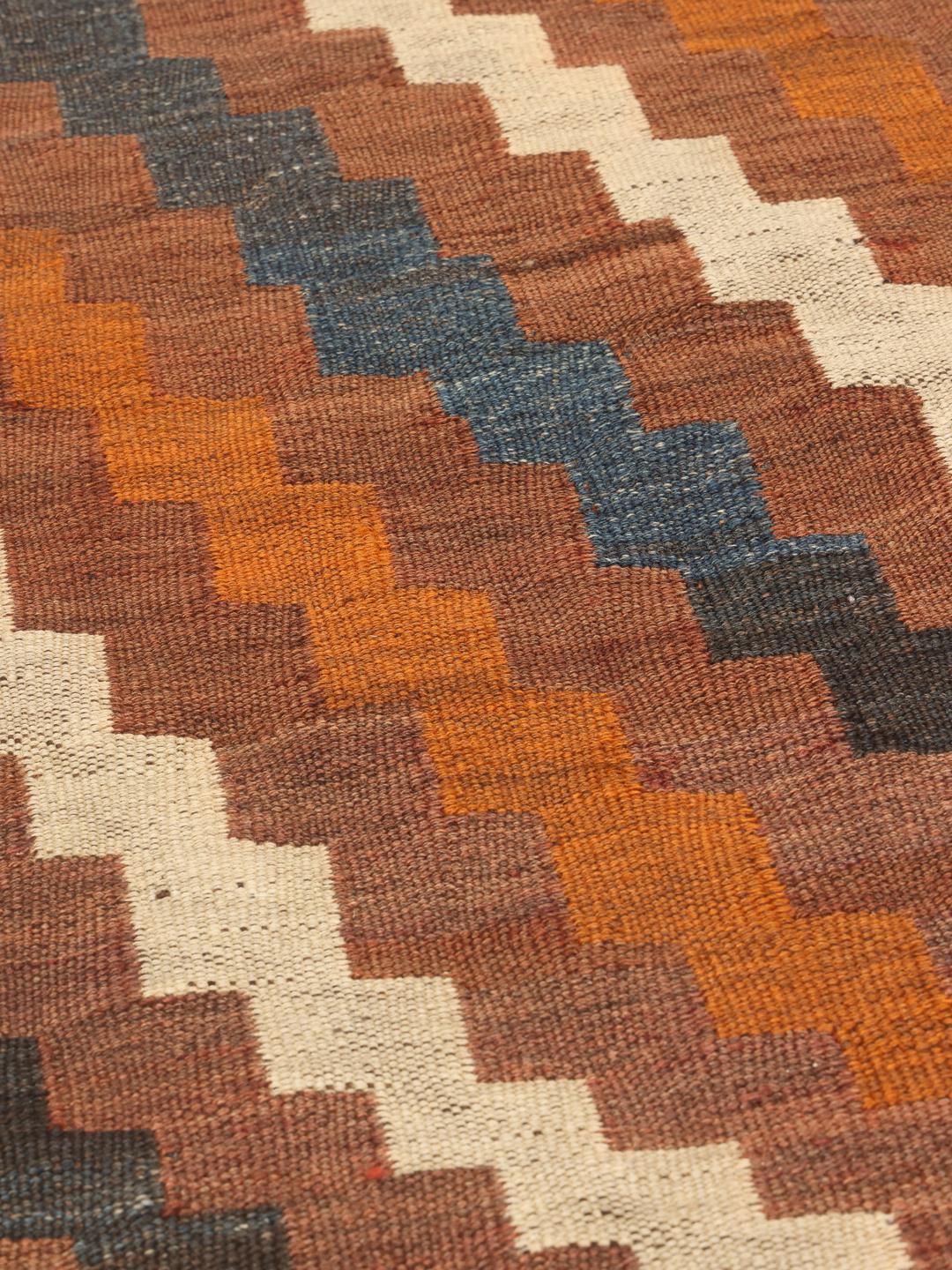
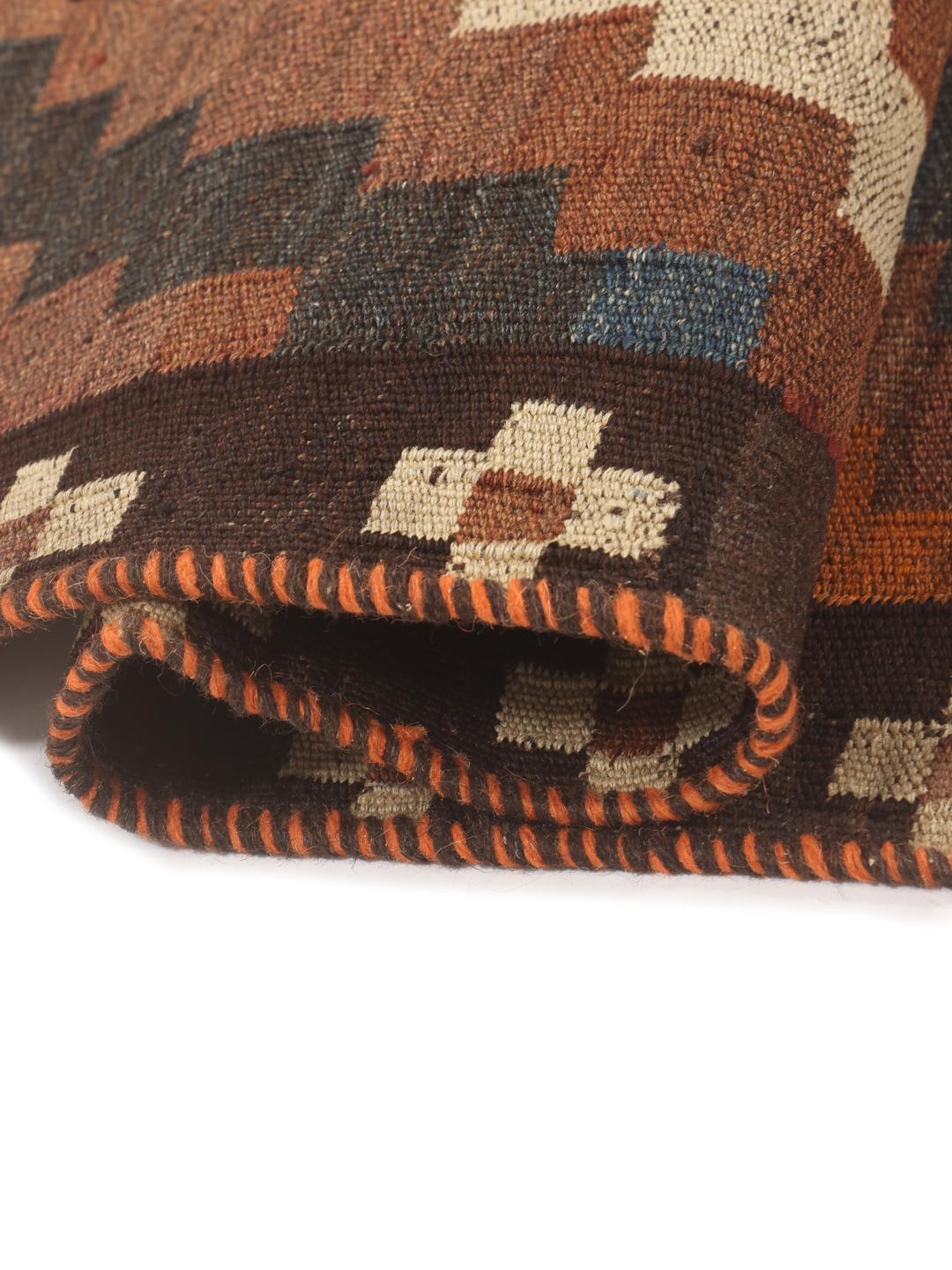
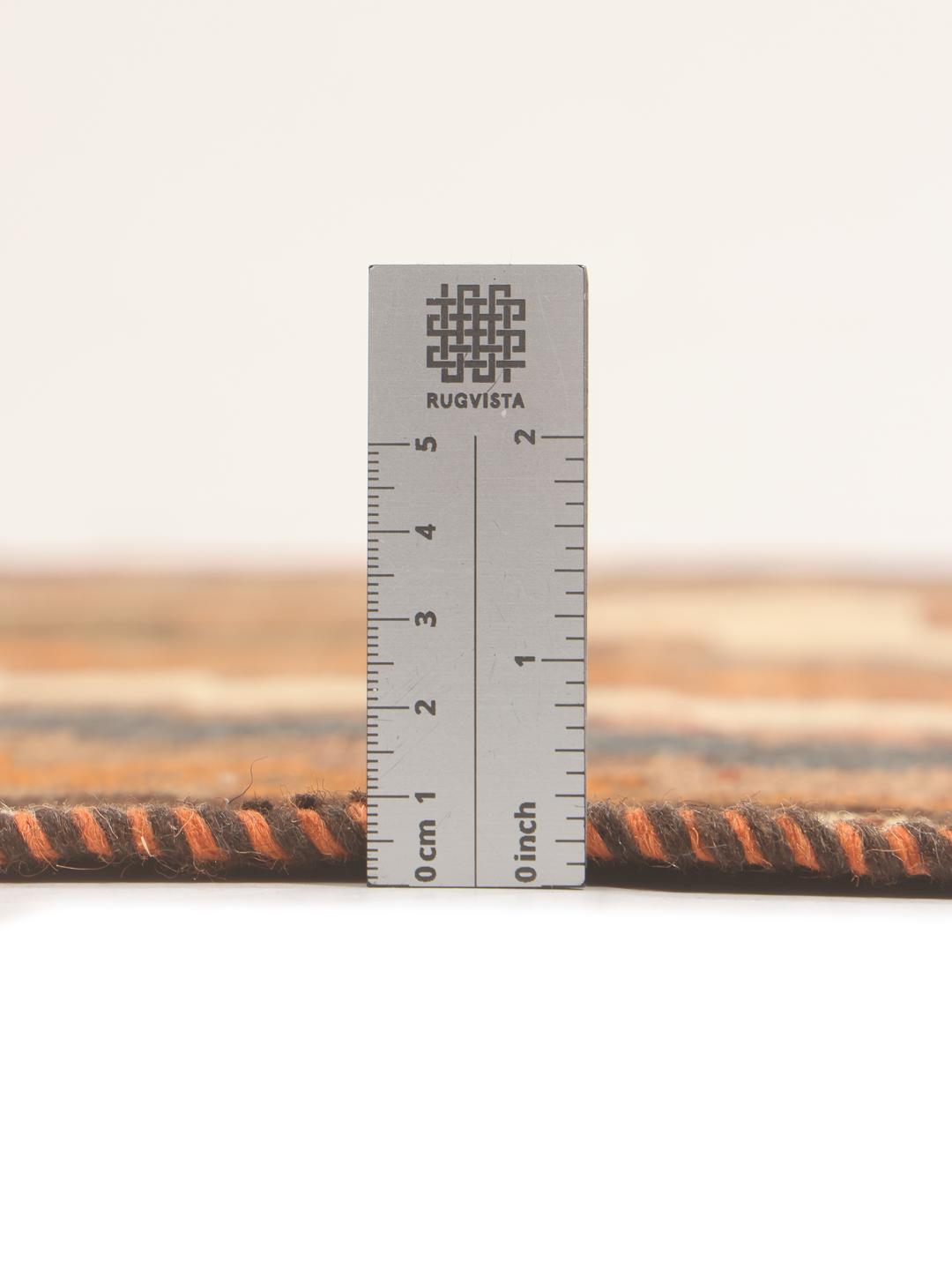
The term Kilim refers to a specific weaving technique where the weft threads are pulled tightly over the warp threads to create a flat, pattern-filled surface. This method creates a clean, reversible textile that is prized for its strength and versatility. Because there is no pile to wear down, these rugs are exceptionally durable and maintain their crisp, geometric motifs over many years of use.
Visually, this tradition is defined by its bold, angular design language, which often utilises diamonds, triangles, and stepped borders. These motifs are not merely decorative but are deeply rooted in the cultural symbolism of the weaving communities, often representing protection, prosperity, or the natural landscape. The use of natural dyes and earthy tones is a hallmark of the style, creating a warm and grounded aesthetic.
Collecting vintage pieces like this allows you to preserve a piece of human history and craftsmanship that is increasingly rare in the modern world. Owning a traditional Kilim is a commitment to quality and a celebration of the skilled artisans who transformed simple Wool into complex, beautiful objects that define the character of a home.