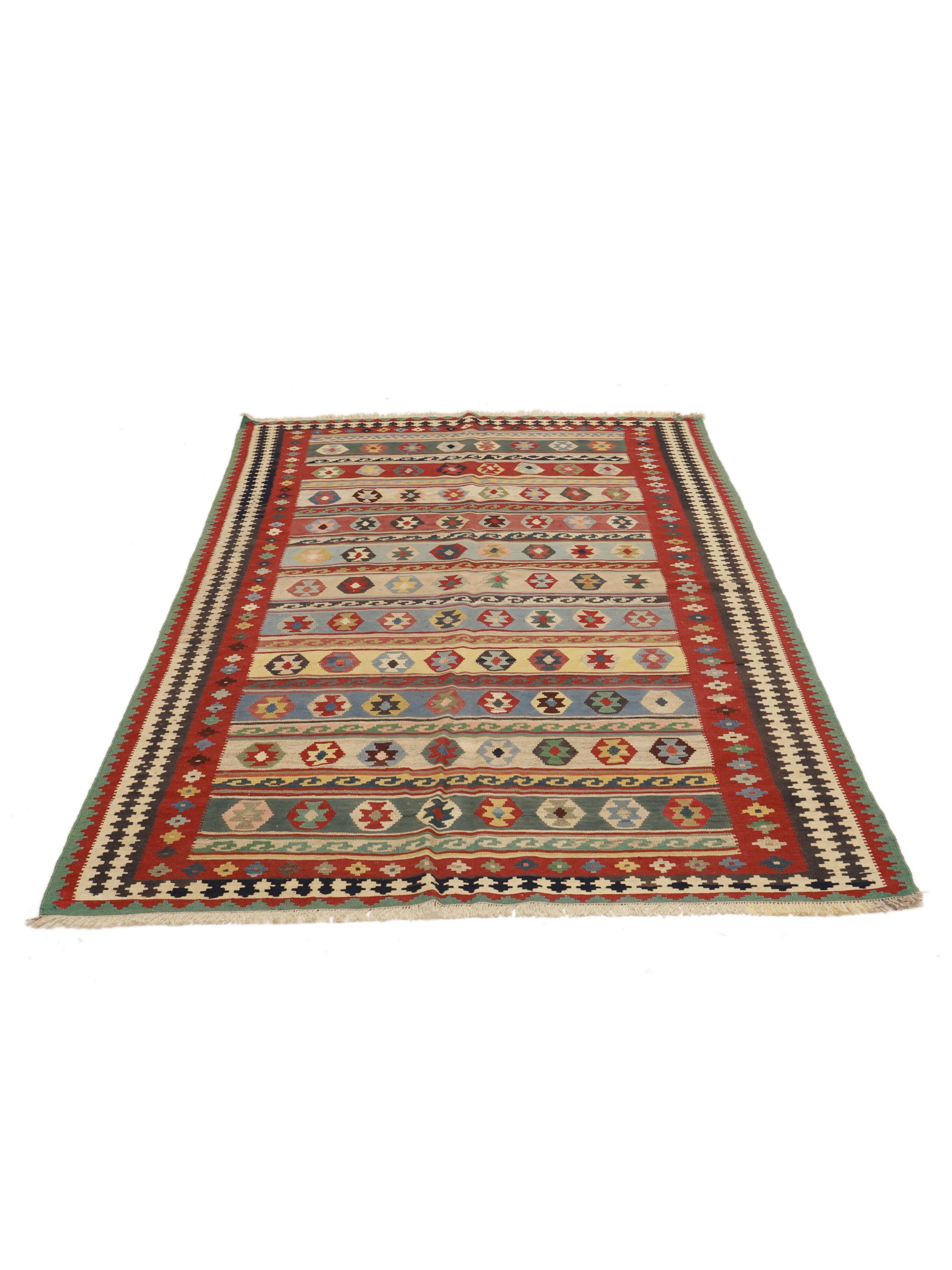
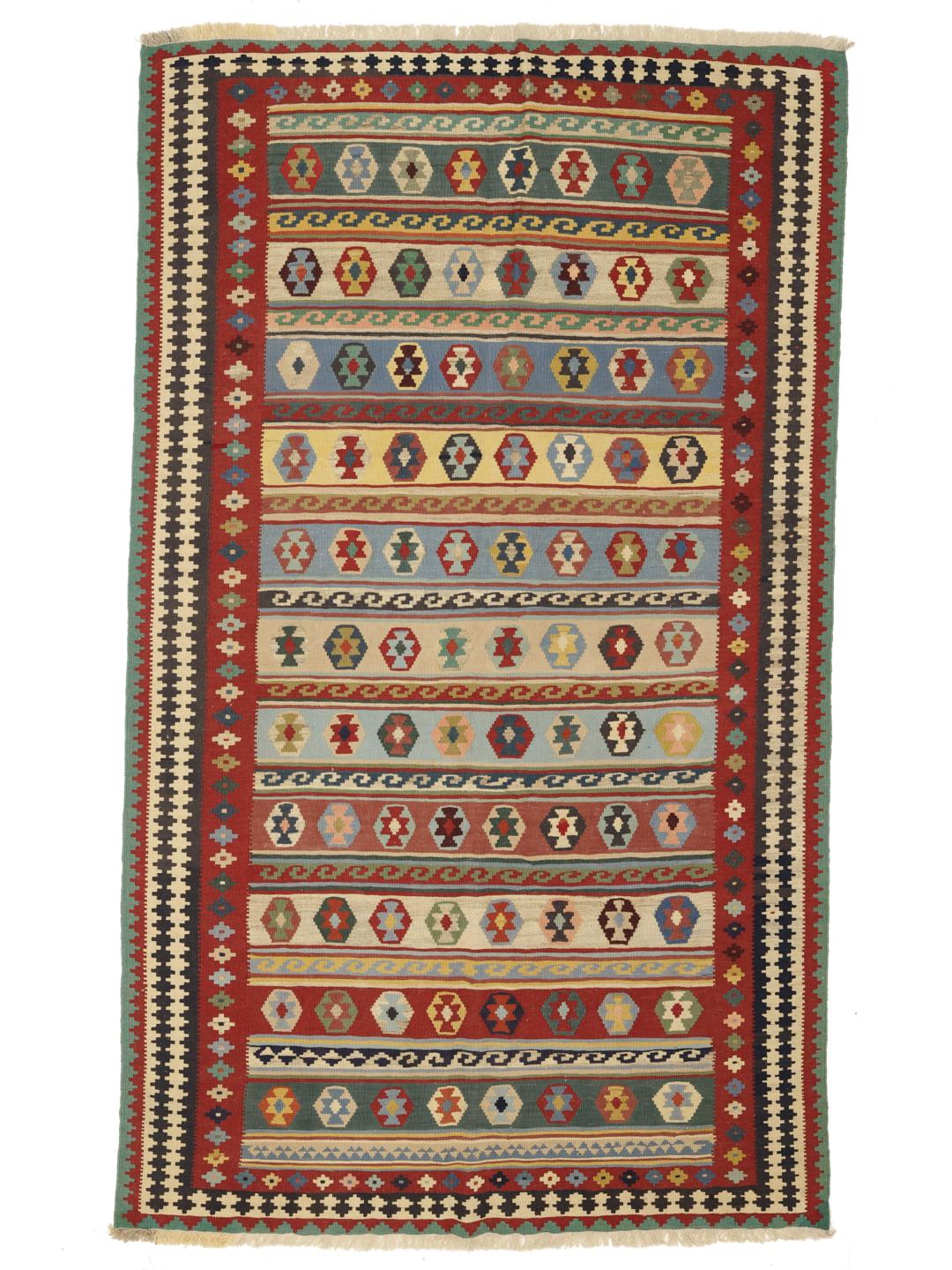
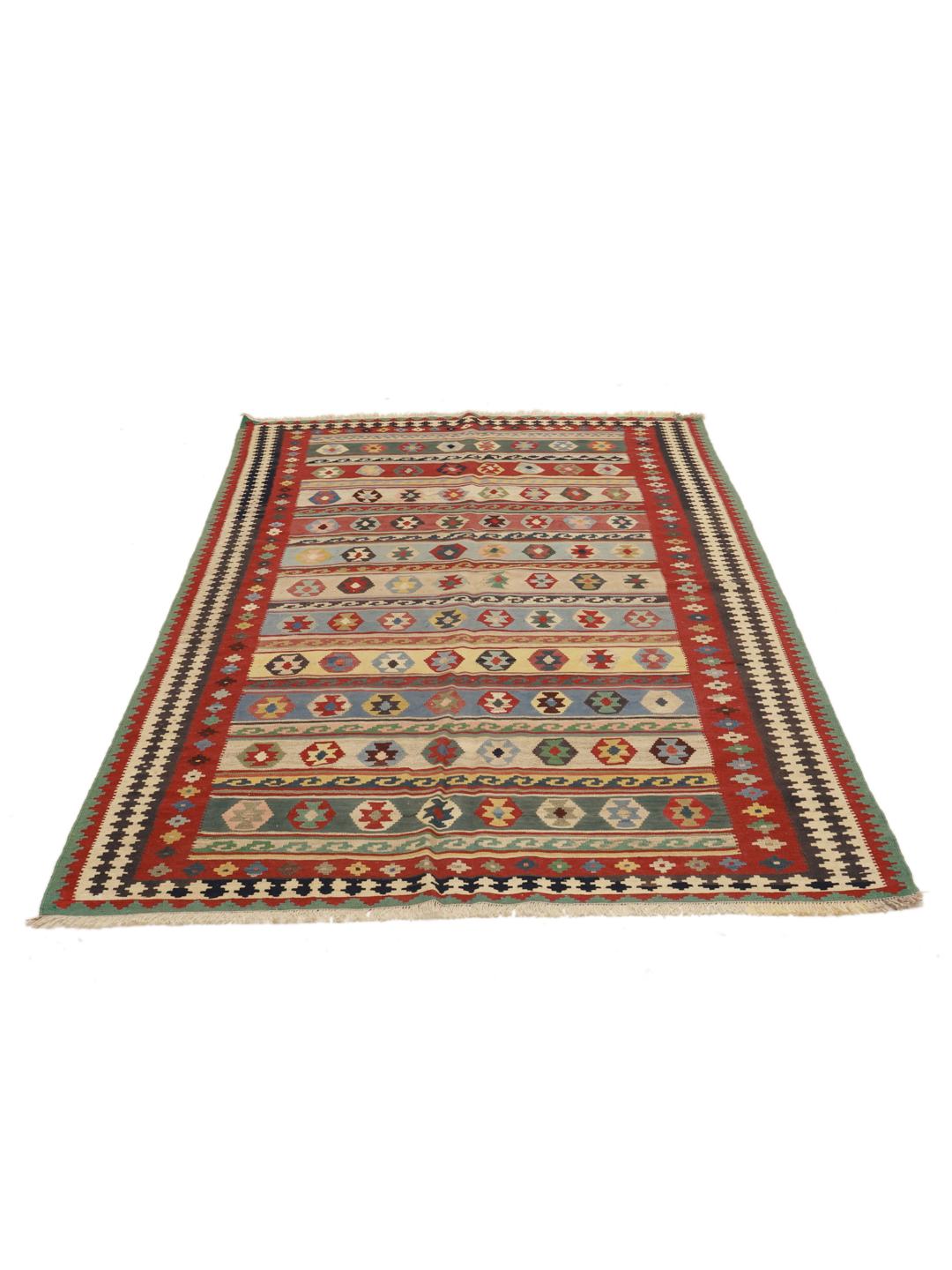
Kilim weaving is one of the oldest textile arts in Anatolia, deeply embedded in the nomadic traditions of Turkey. Historically, these flatwoven rugs were created by village weavers for personal household use, serving as floor coverings, wall hangings, and protective blankets.
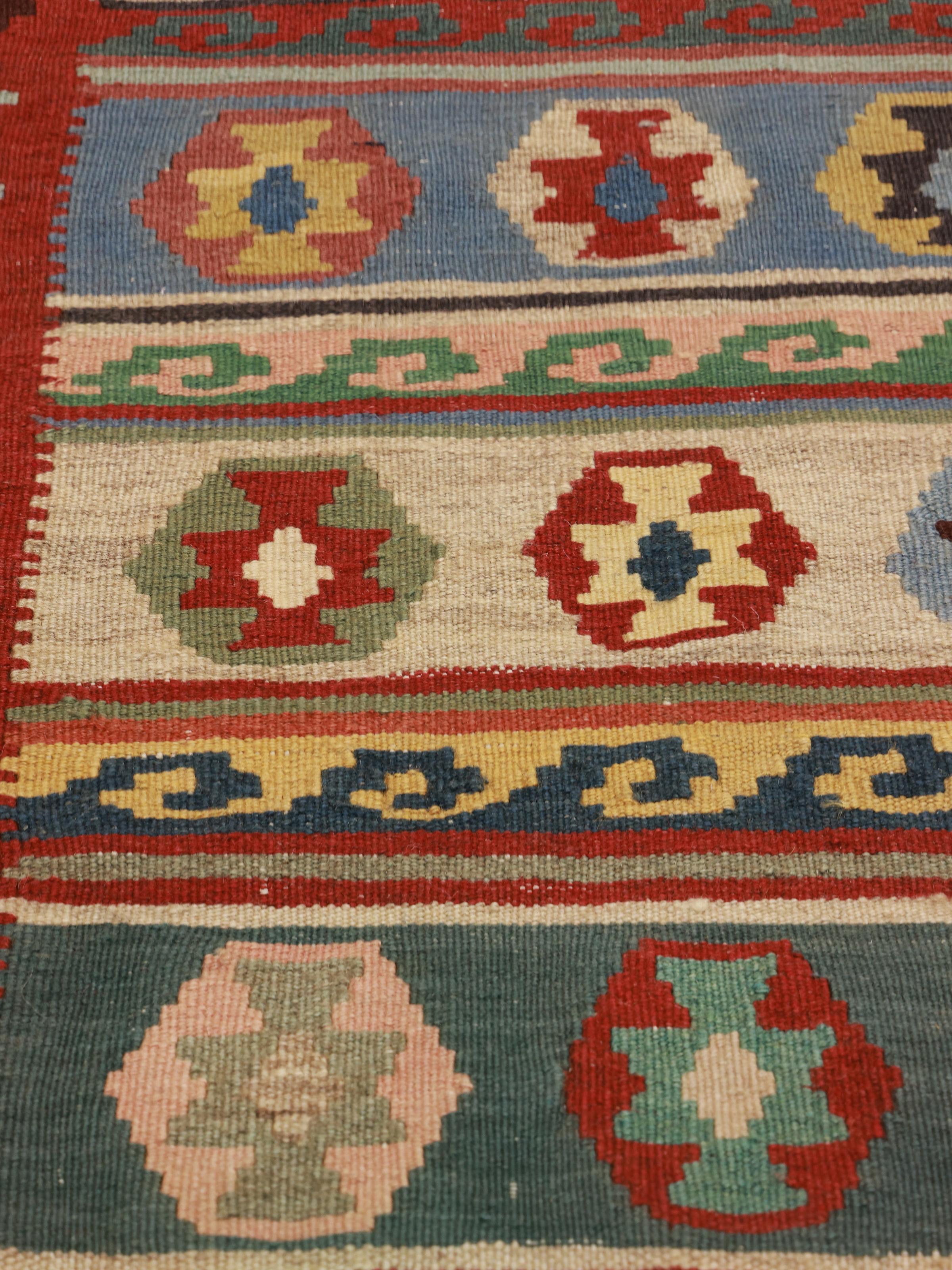
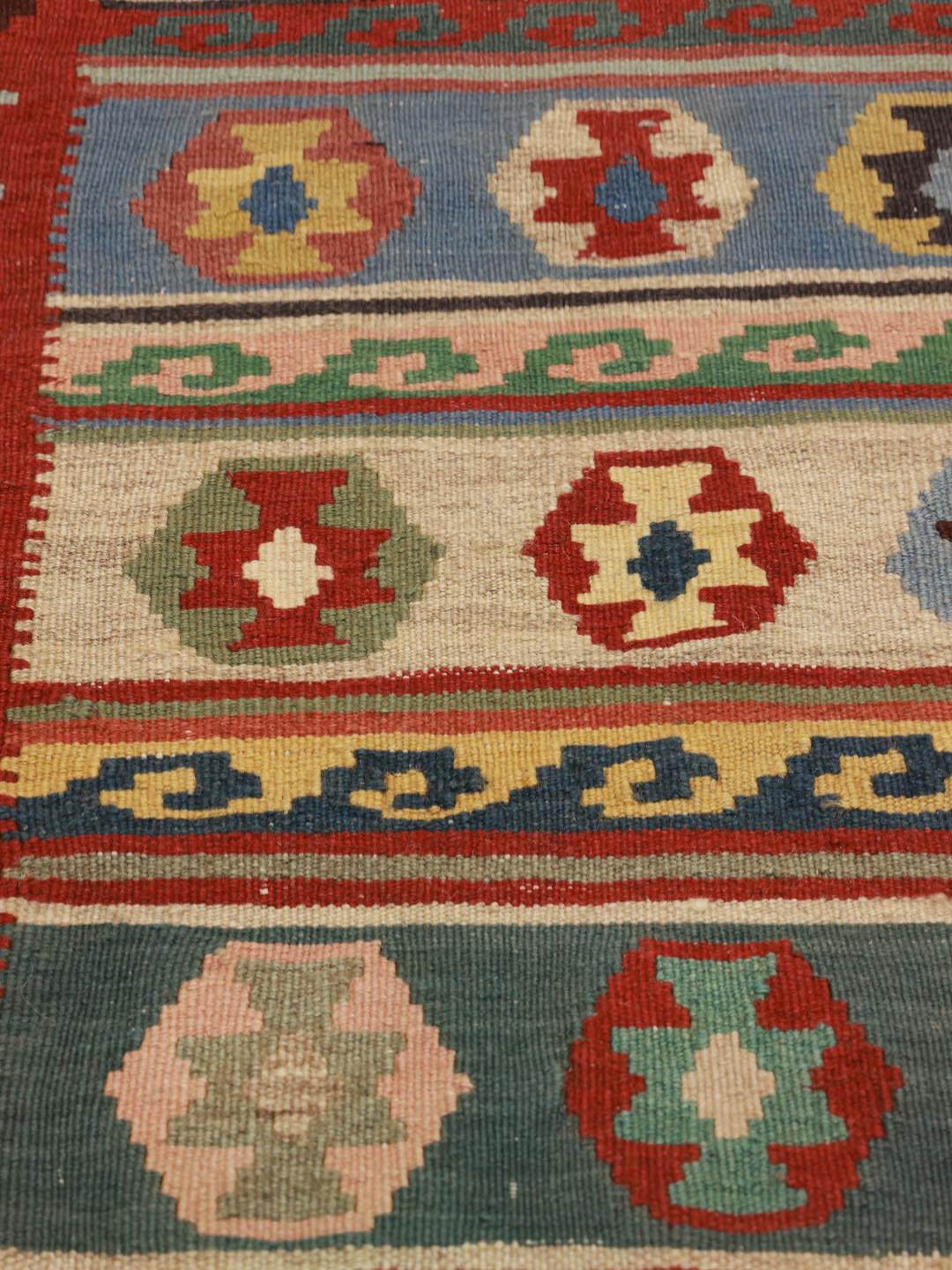
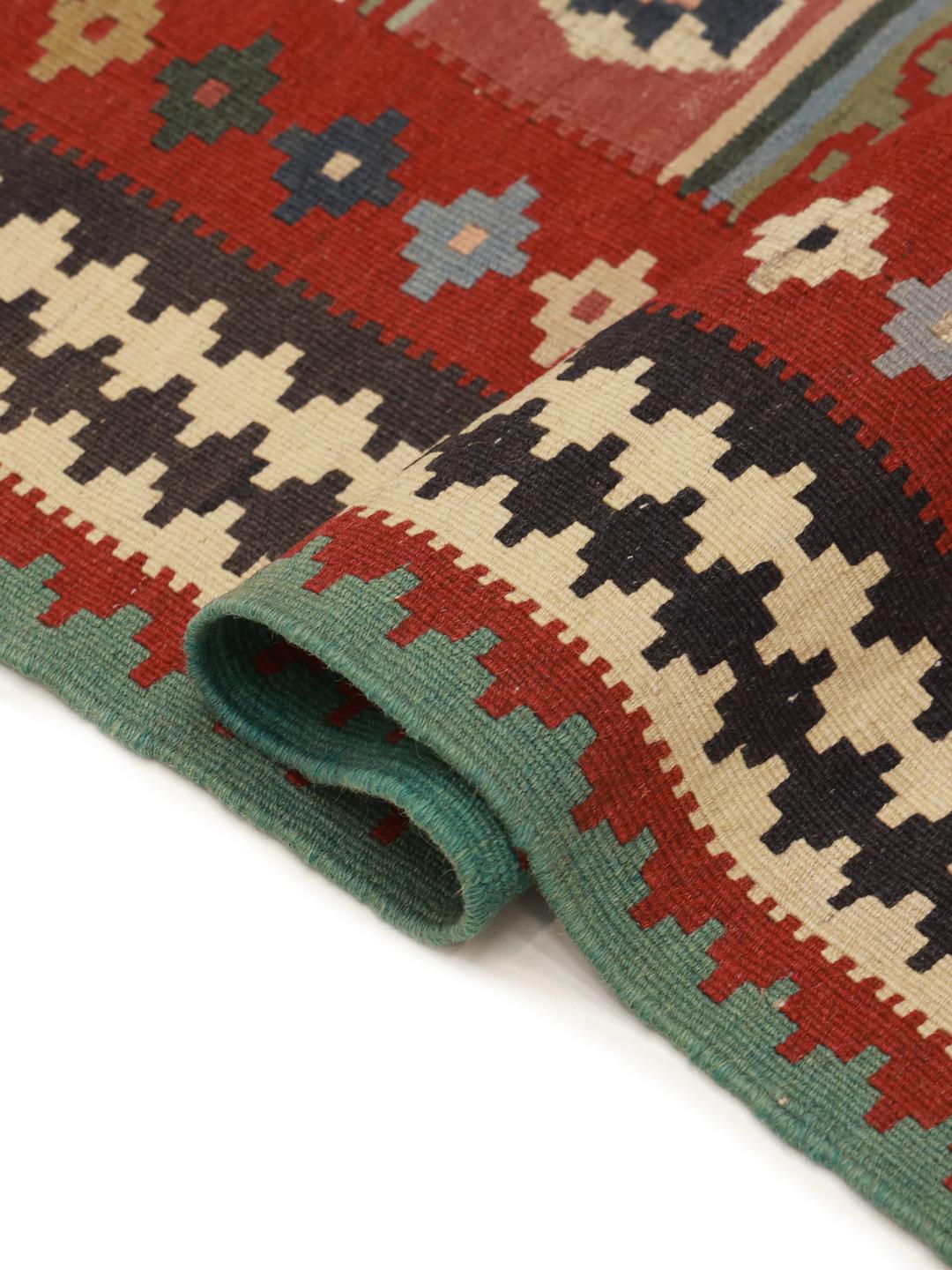
Unlike pile rugs, a flatweave Kilim is made by interlacing the warp and weft strands directly, creating a smooth, pile-free surface. This technique produces lightweight yet remarkably durable textiles that display crisp geometric shapes and sharp pattern edges on both sides of the rug.
The visual language of Turkish Kilims relies on sacred geometric motifs, diamond grids, and stylized borders that traditionally conveyed protection, family harmony, and local identity. The vibrant bands of red, blue, and yellow in this piece reflect regional dyeing traditions that give vintage Anatolian flatweaves their famous warmth and character.
Vintage Kilims aged between 20 and 50 years are highly prized by collectors and interior enthusiasts alike. They offer the ideal balance between historical authenticity and functional durability, representing a preserved moment of mid-20th-century weaving culture.