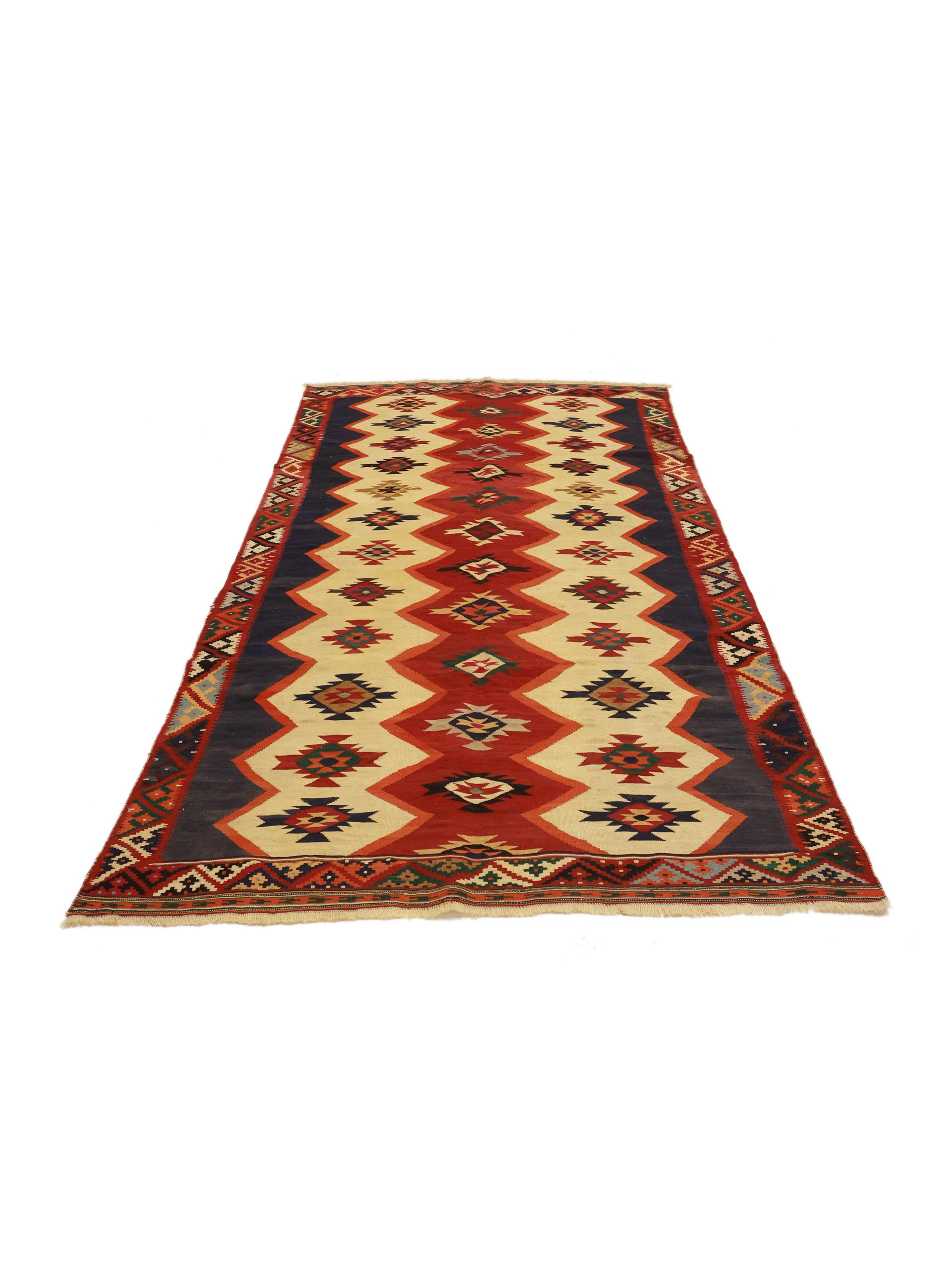
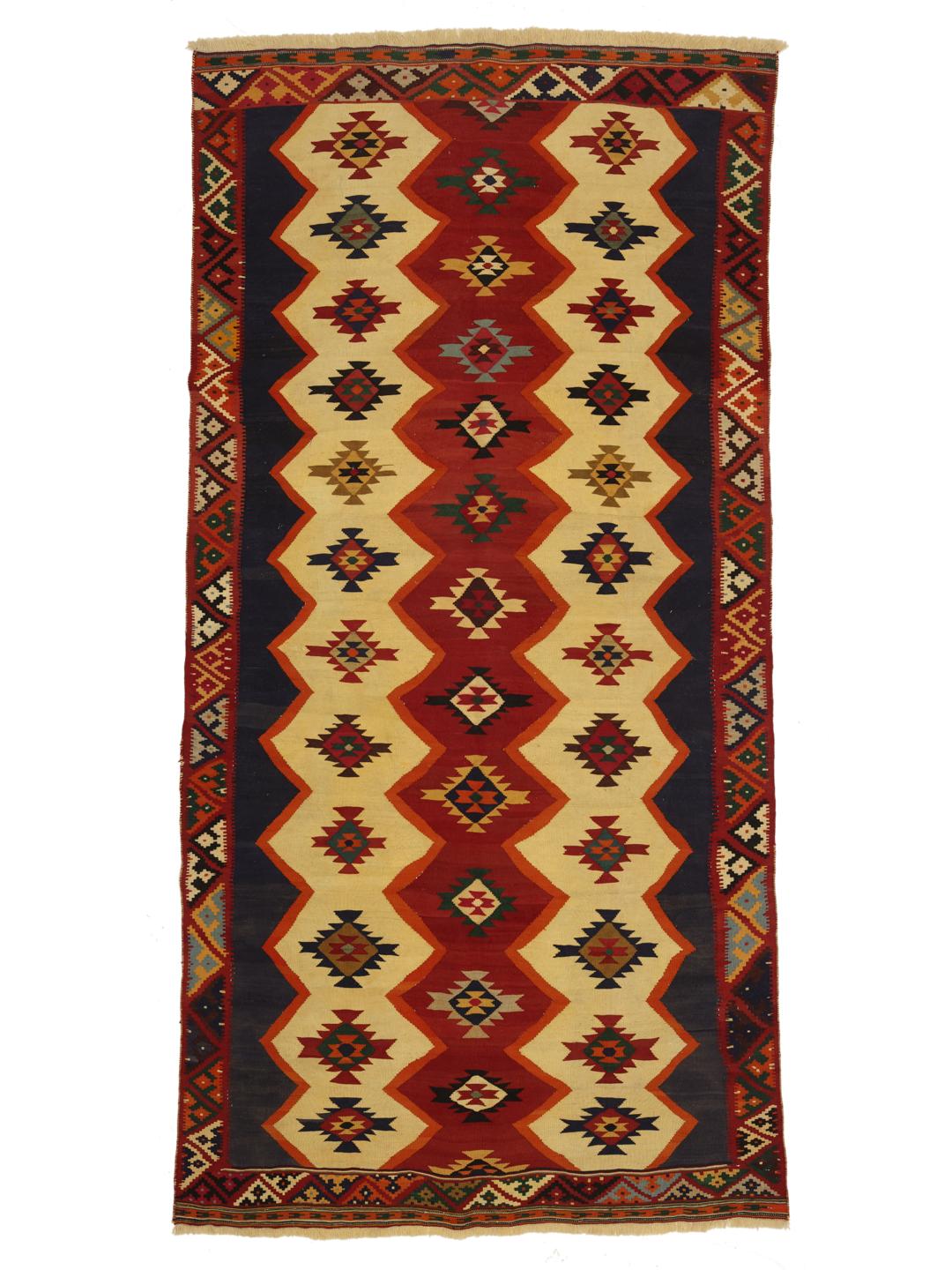
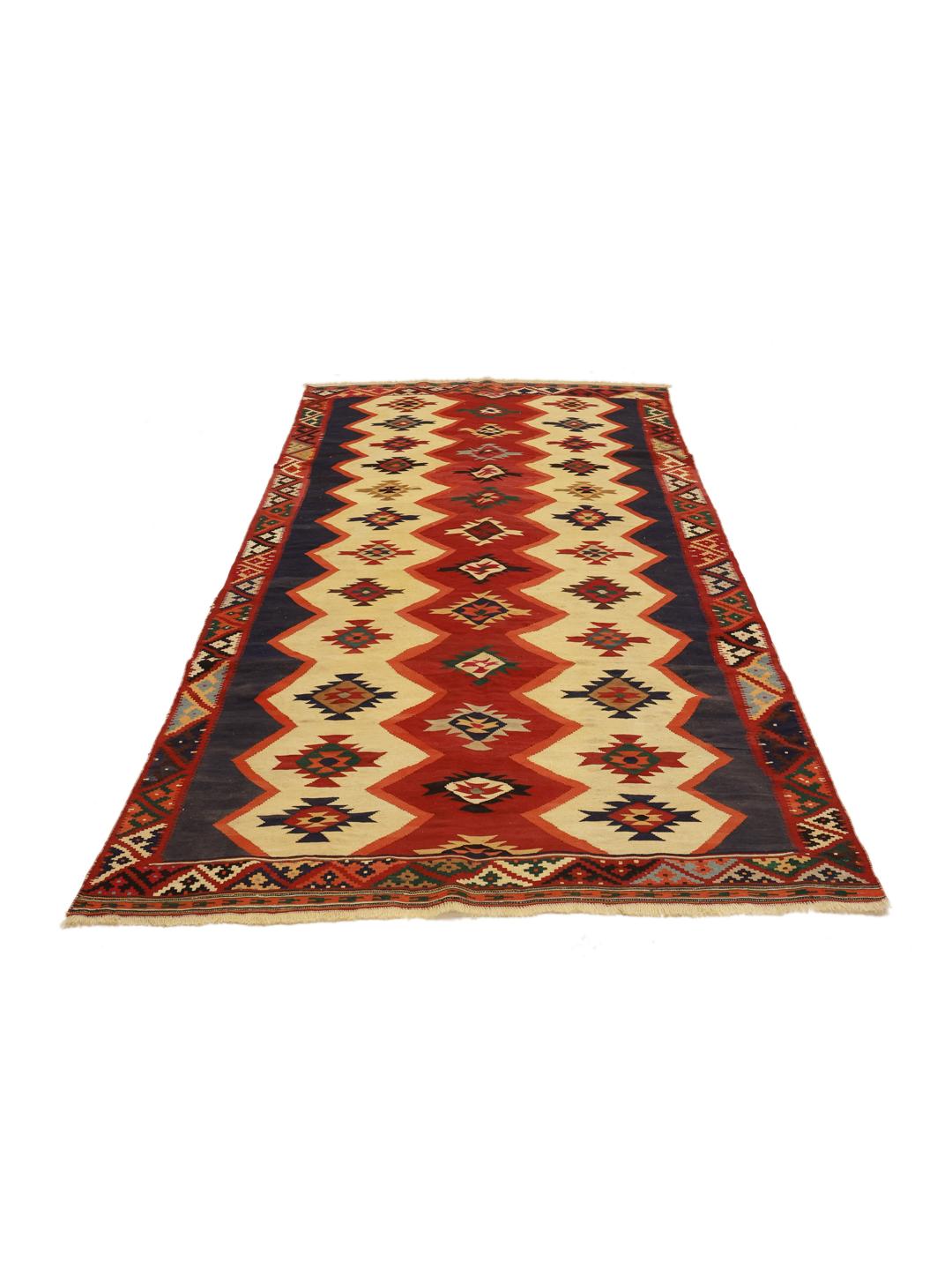
Kilim flatweaves from Turkey represent one of the oldest textile traditions in the world. Originally crafted by nomadic and village weavers across Anatolia for functional household use, these flatwoven rugs served as floor coverings, blankets, and storage sacks. Unlike pile rugs, Kilims are created by tightly interweaving the warp and weft strands, resulting in a smooth, pileless surface deeply rooted in regional folk heritage.
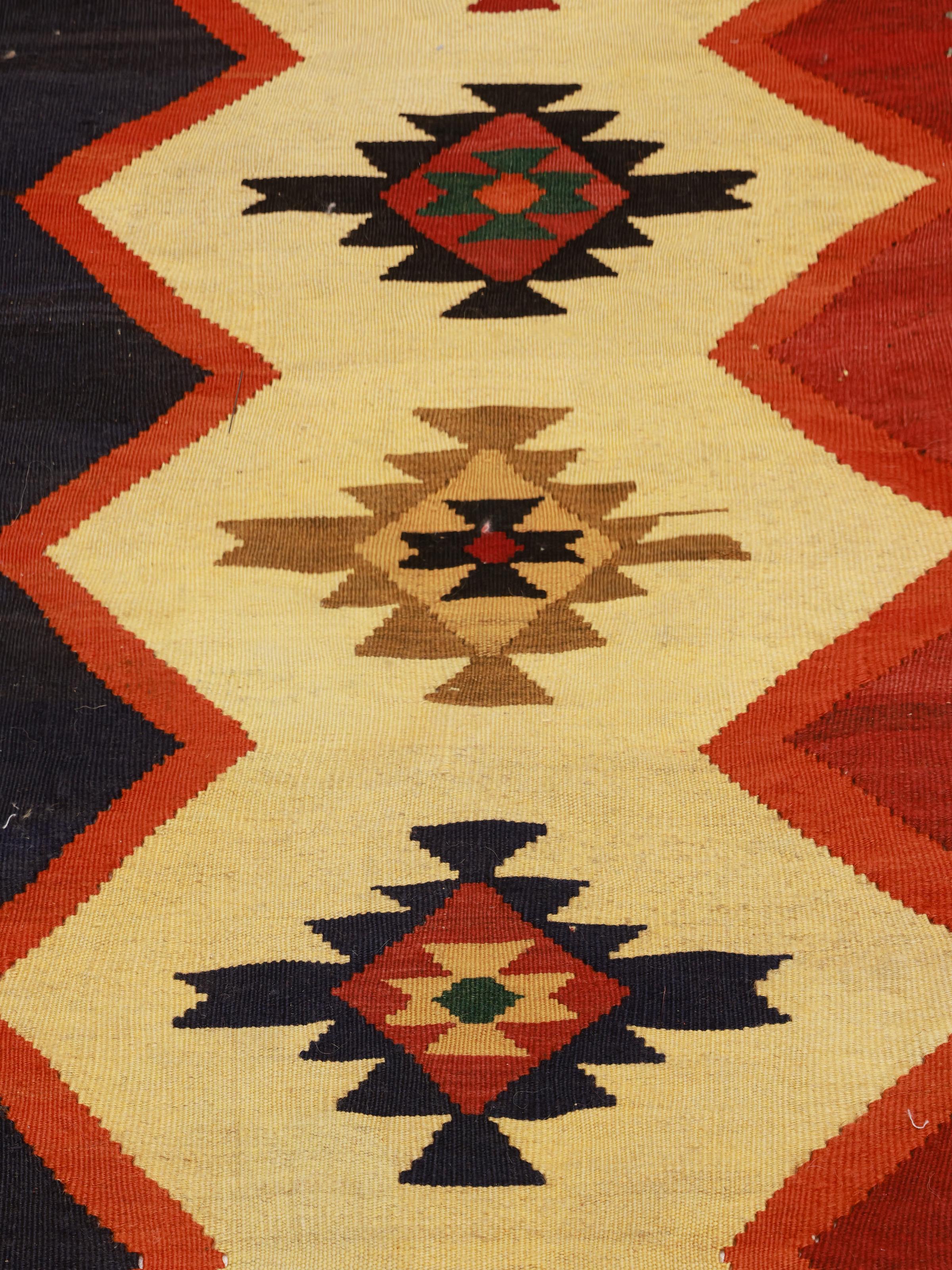
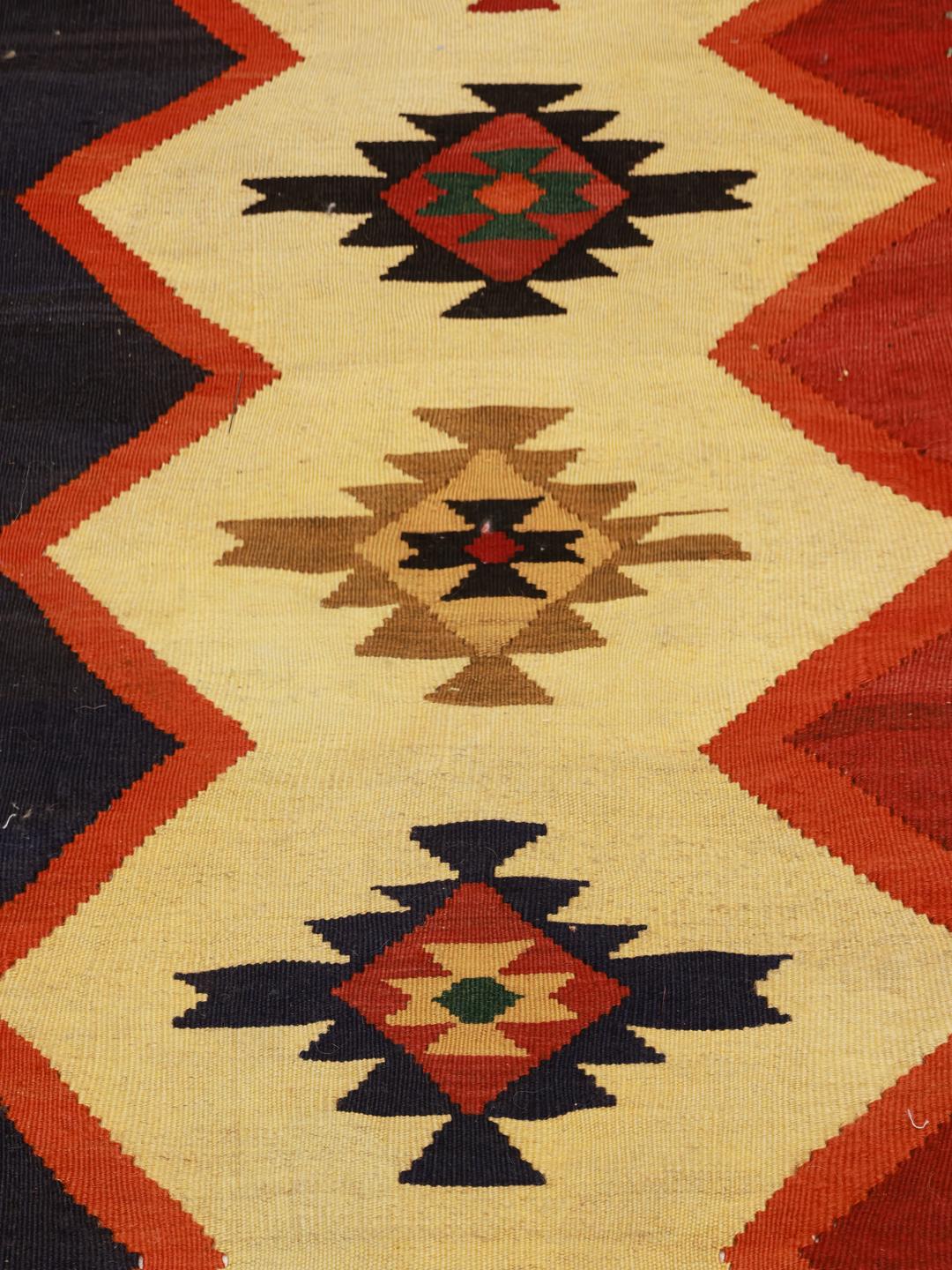
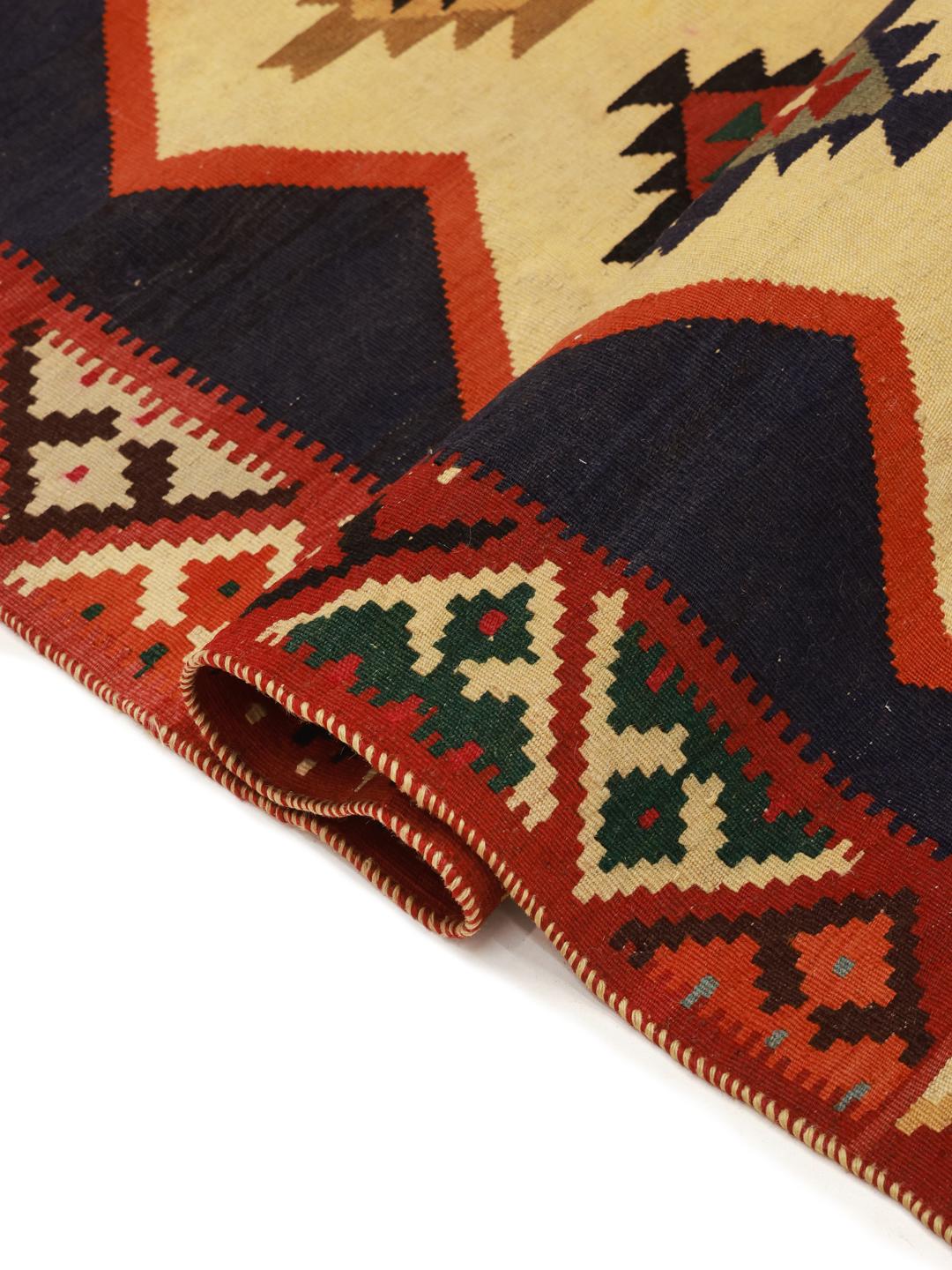
The term flatweave or Kilim describes the technique where weft threads are tightly packed to completely cover the vertical warp threads. This structure produces sharp, clean geometric edges and makes the rug reversible in many cases. The method creates a durable, lighter rug that easily withstands everyday use while preserving the clarity of complex patterns.
Signature visual elements of vintage Turkish Kilims include repeating geometric diamonds, stair-stepped medallions, and protective tribal symbols. Each motif historically carried specific meanings, from wishes for prosperity to protection against good fortune. Framed by structured borders, the dark-red and multicolor palette of this vintage piece reflects the traditional vegetable-dye traditions popular across Anatolian weaving communities.
Vintage Turkish Kilims aged between 20 and 50 years are highly valued by collectors and homeowners alike. They bridge the gap between historical craft and contemporary interior design, bringing real cultural weight, authentic age patina, and individual storytelling to modern living spaces.