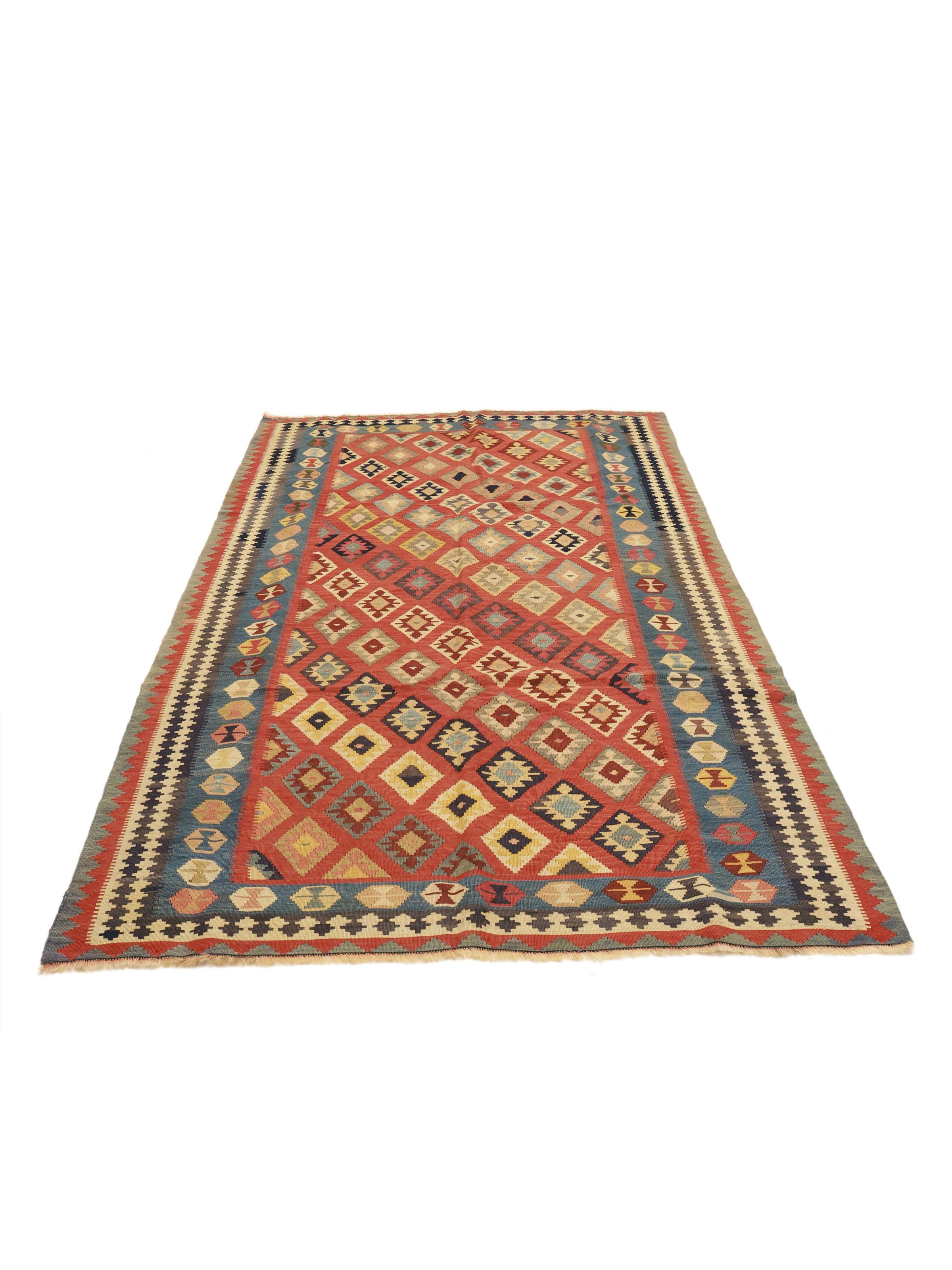
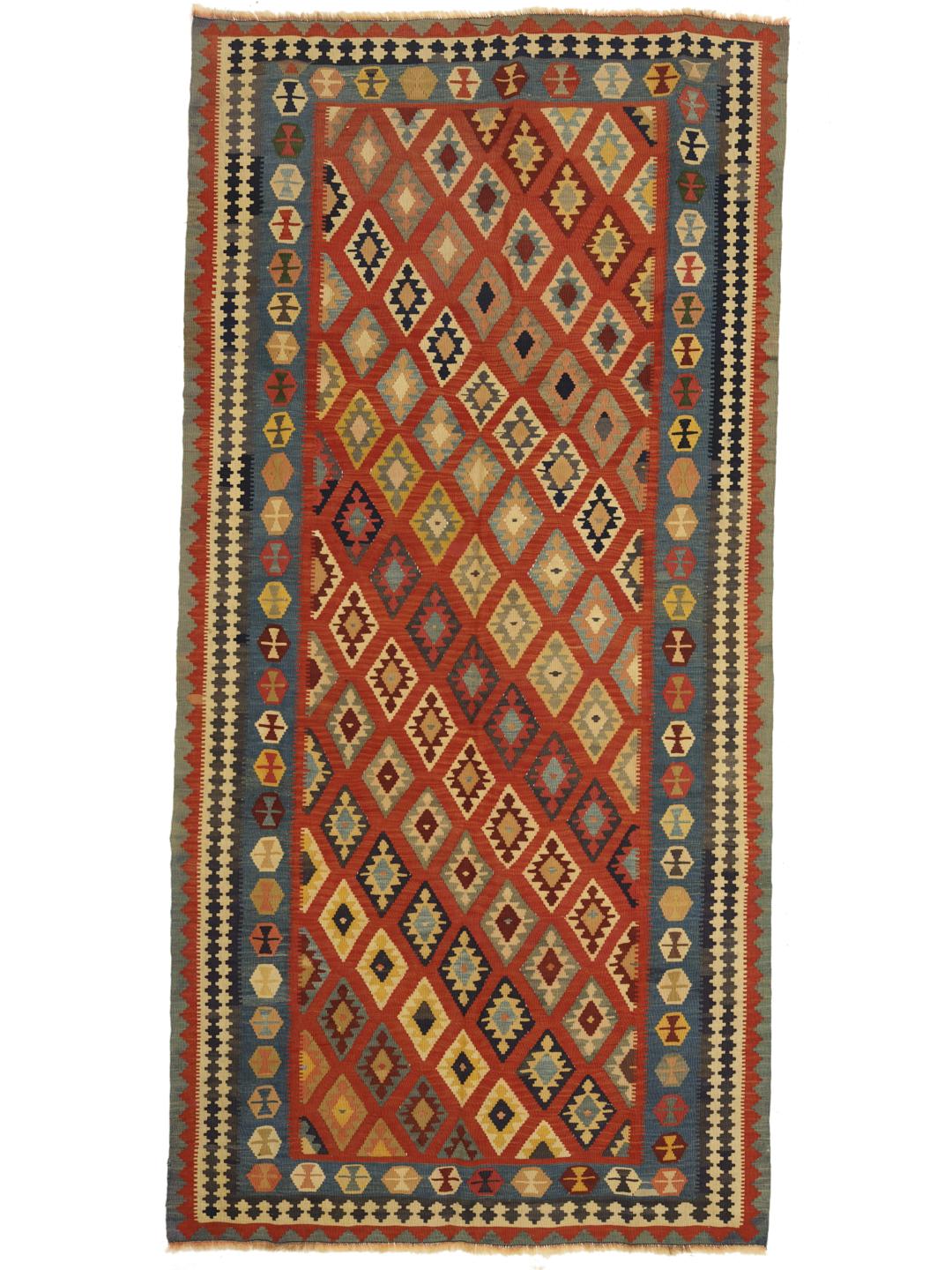
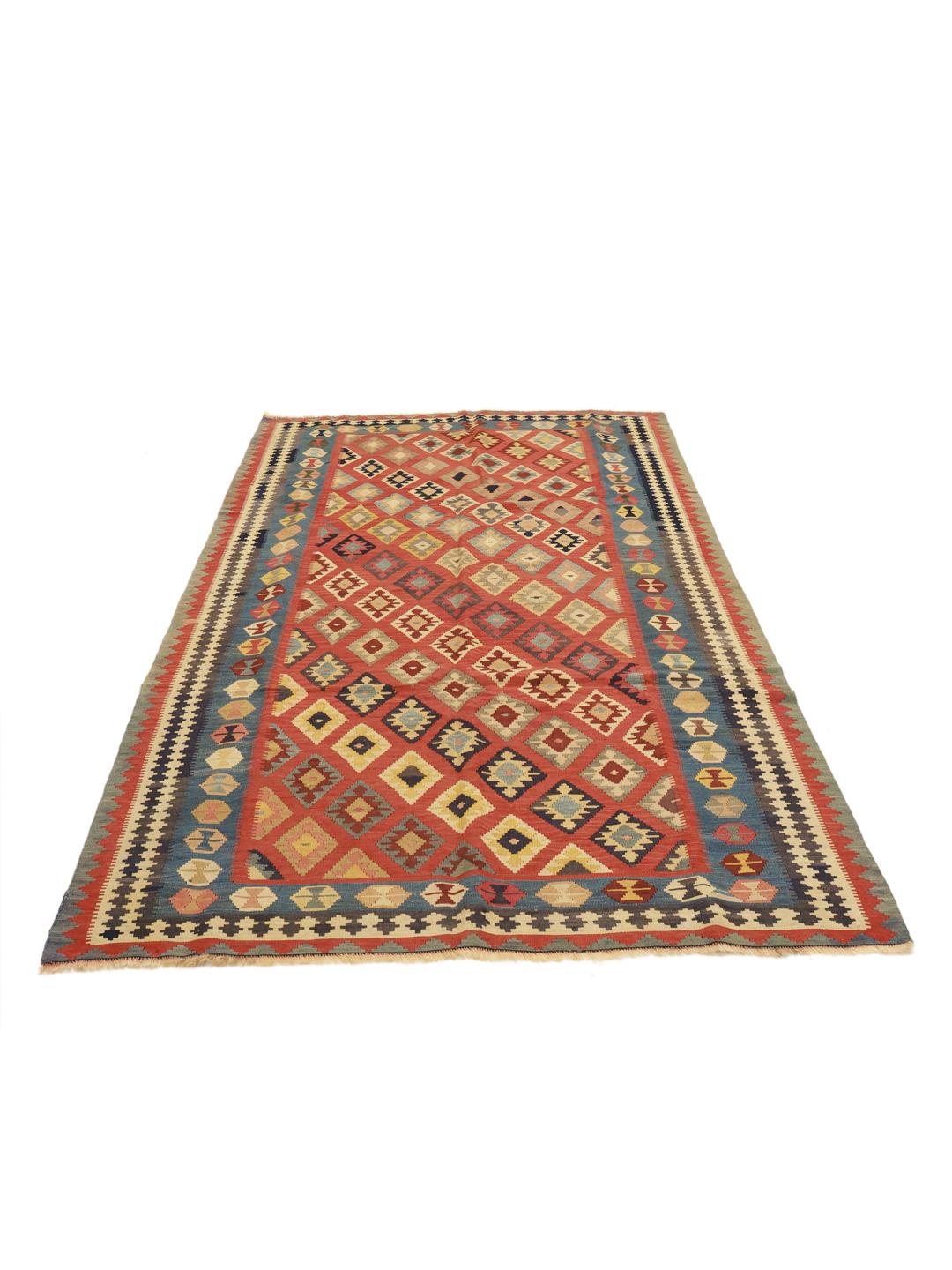
Kilim weaving in Anatolia is one of the oldest textile traditions in the world. Originally woven by nomadic and village women for practical household use, such as floor coverings, wall hangings, and storage sacks, these flatweaves were deeply intertwined with everyday life and local culture.
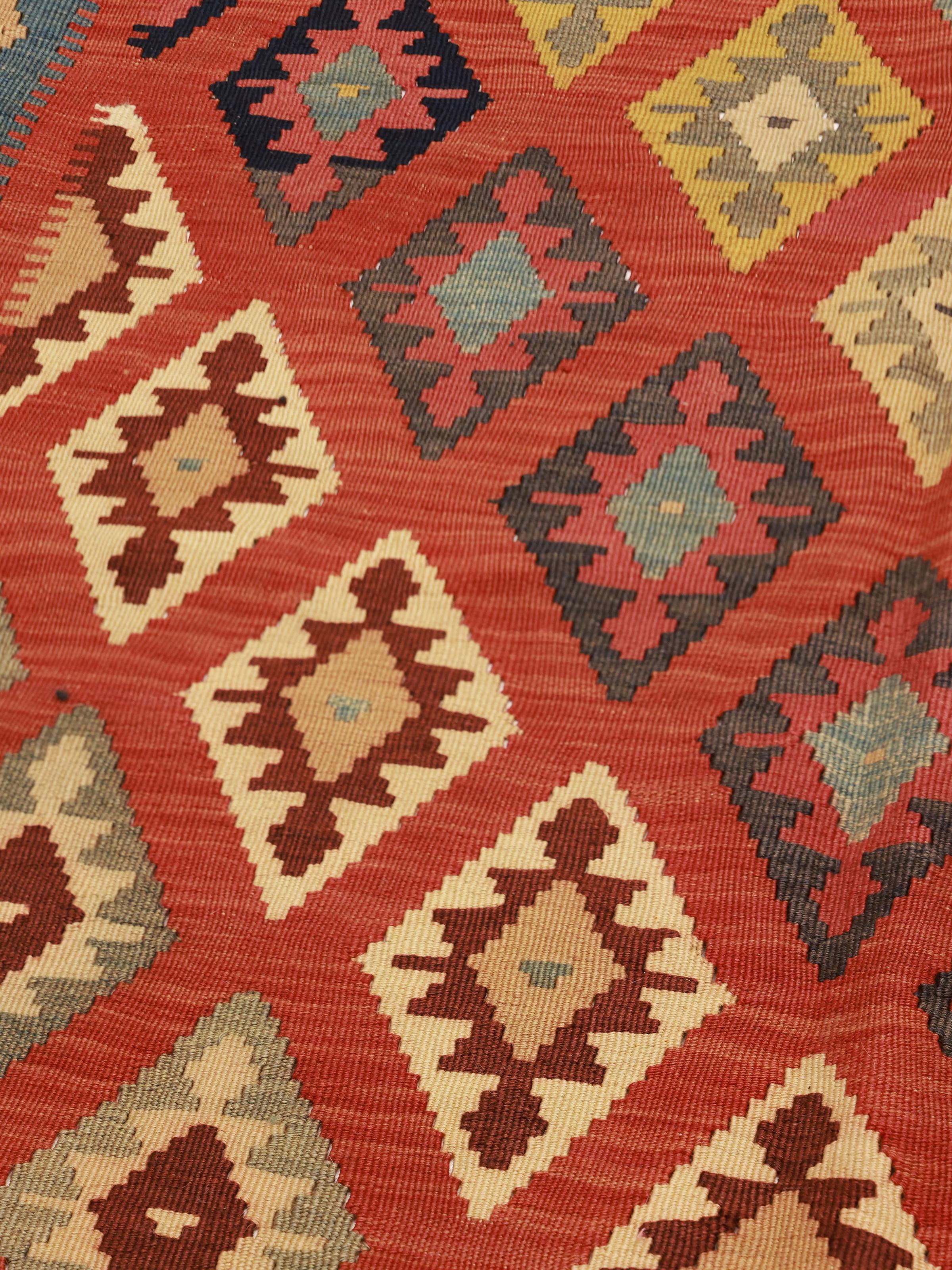
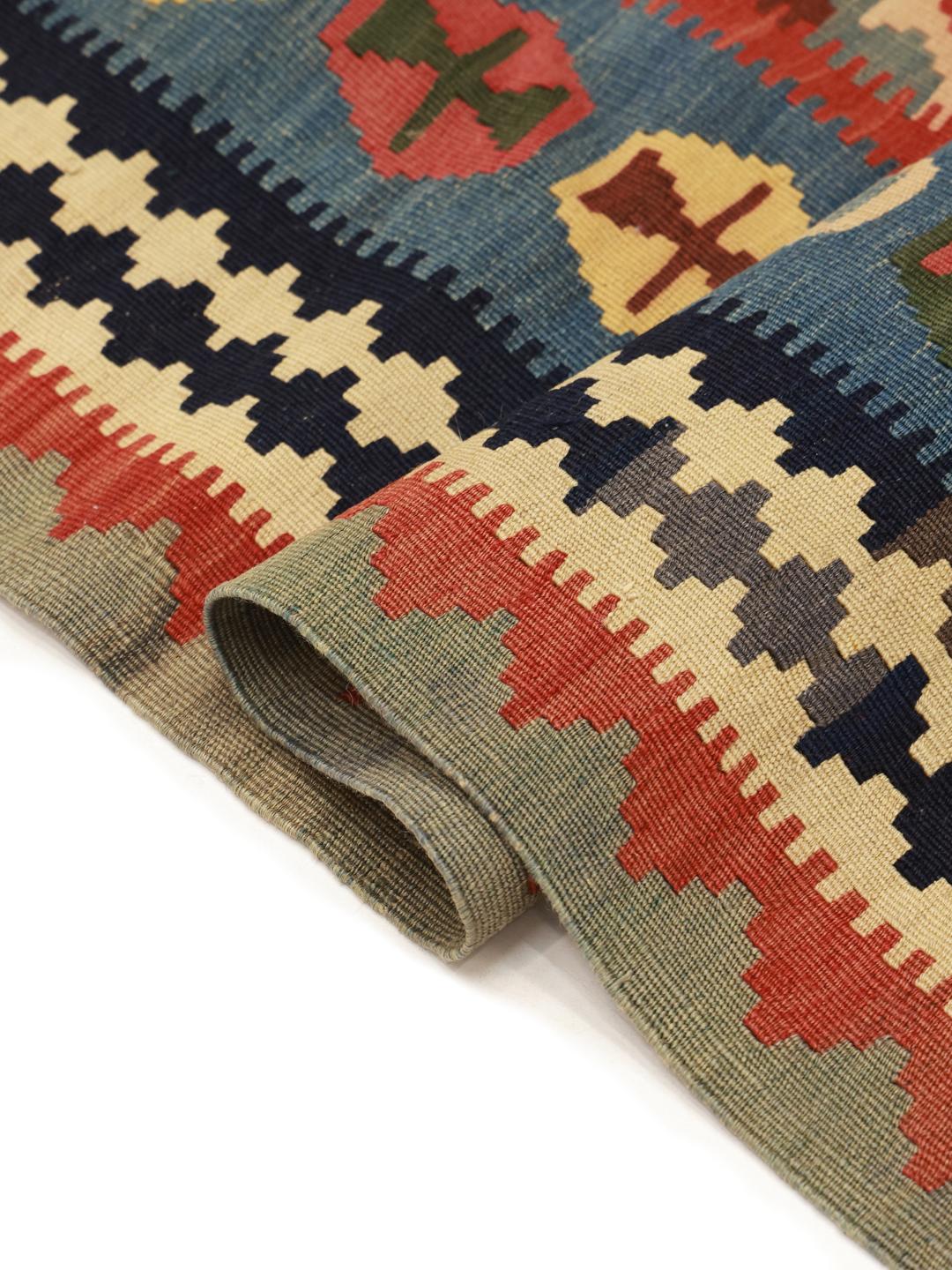
Unlike pile rugs which are knotted onto a base structure, a kilim is formed by tightly interweaving the warp and weft threads to create a flat, pileless surface. This flatweave technique produces light, reversible, and extremely durable textiles that were easily transported across regions.
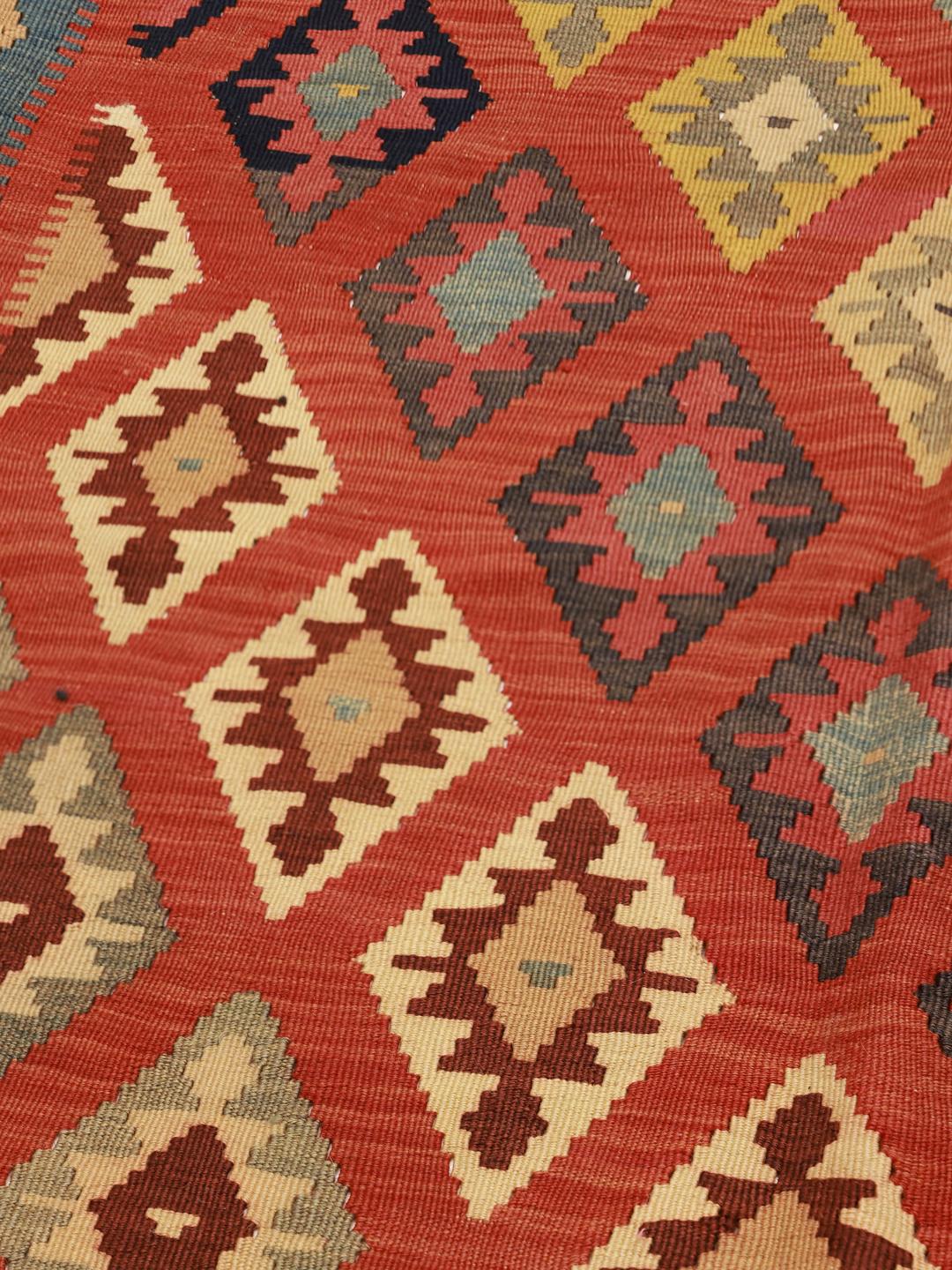
The visual language of Turkish kilims relies heavily on geometric motifs and symbolic diamonds, often representing protection, fertility, or natural surroundings. The color palette typically drew from locally available natural dyes, resulting in rich reds, deep blues, and warm earth tones that age gracefully over time.
Vintage kilims aged between 20 and 50 years are highly valued by collectors and interior enthusiasts. They occupy a sweet spot in textile history, offering authentic mid-century craftsmanship and natural wear that imbues a space with real soul and provenance.