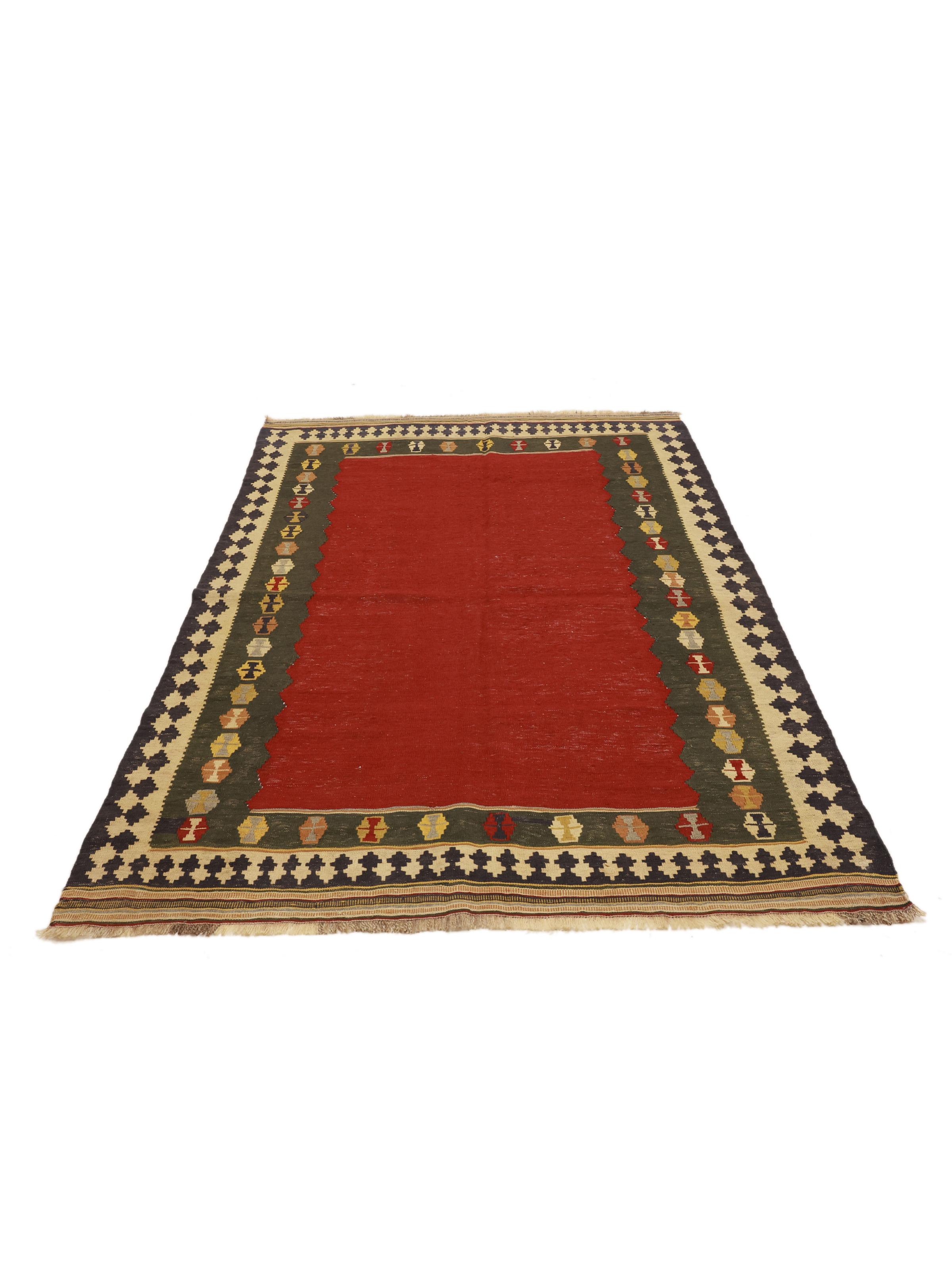
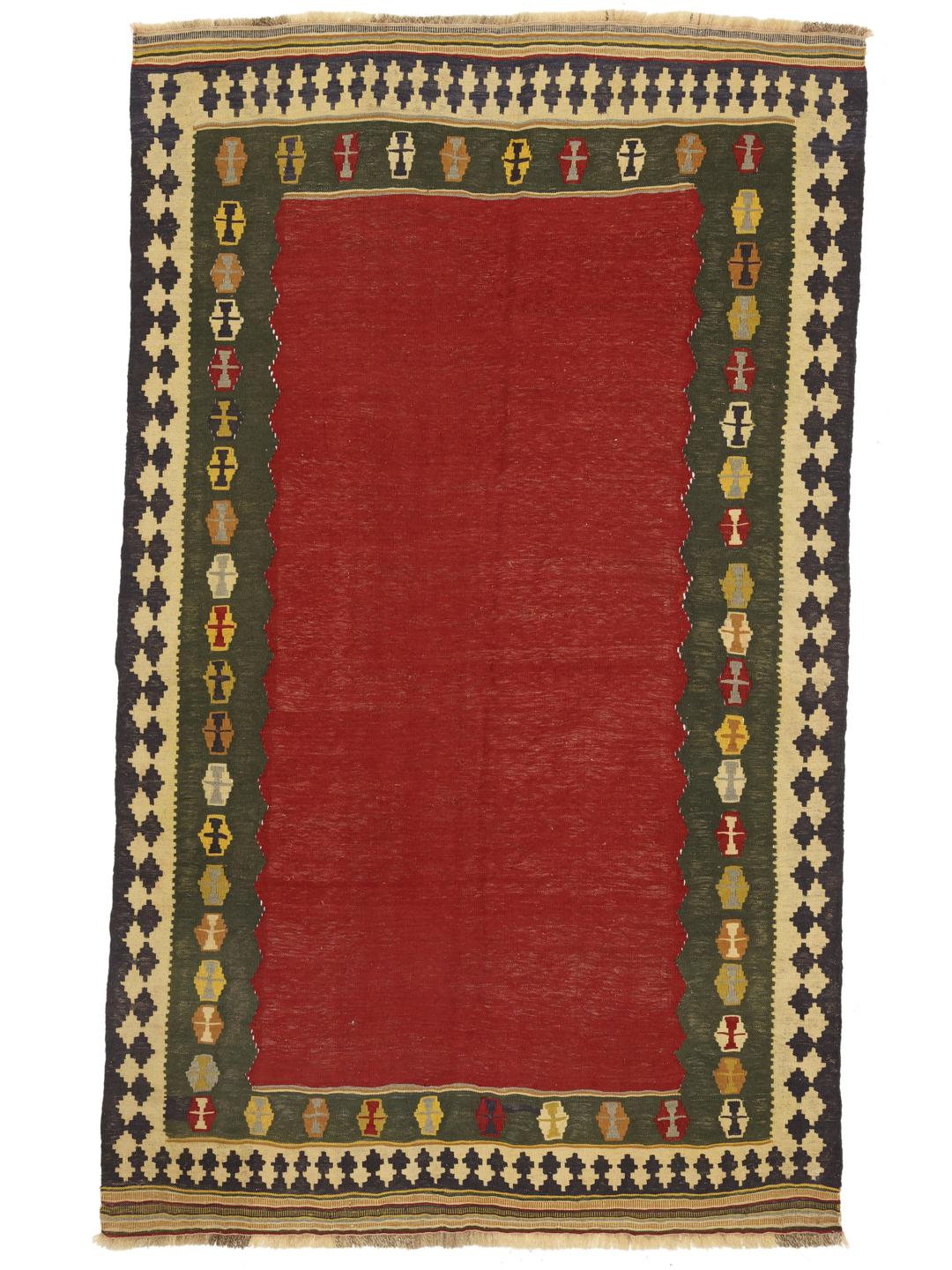
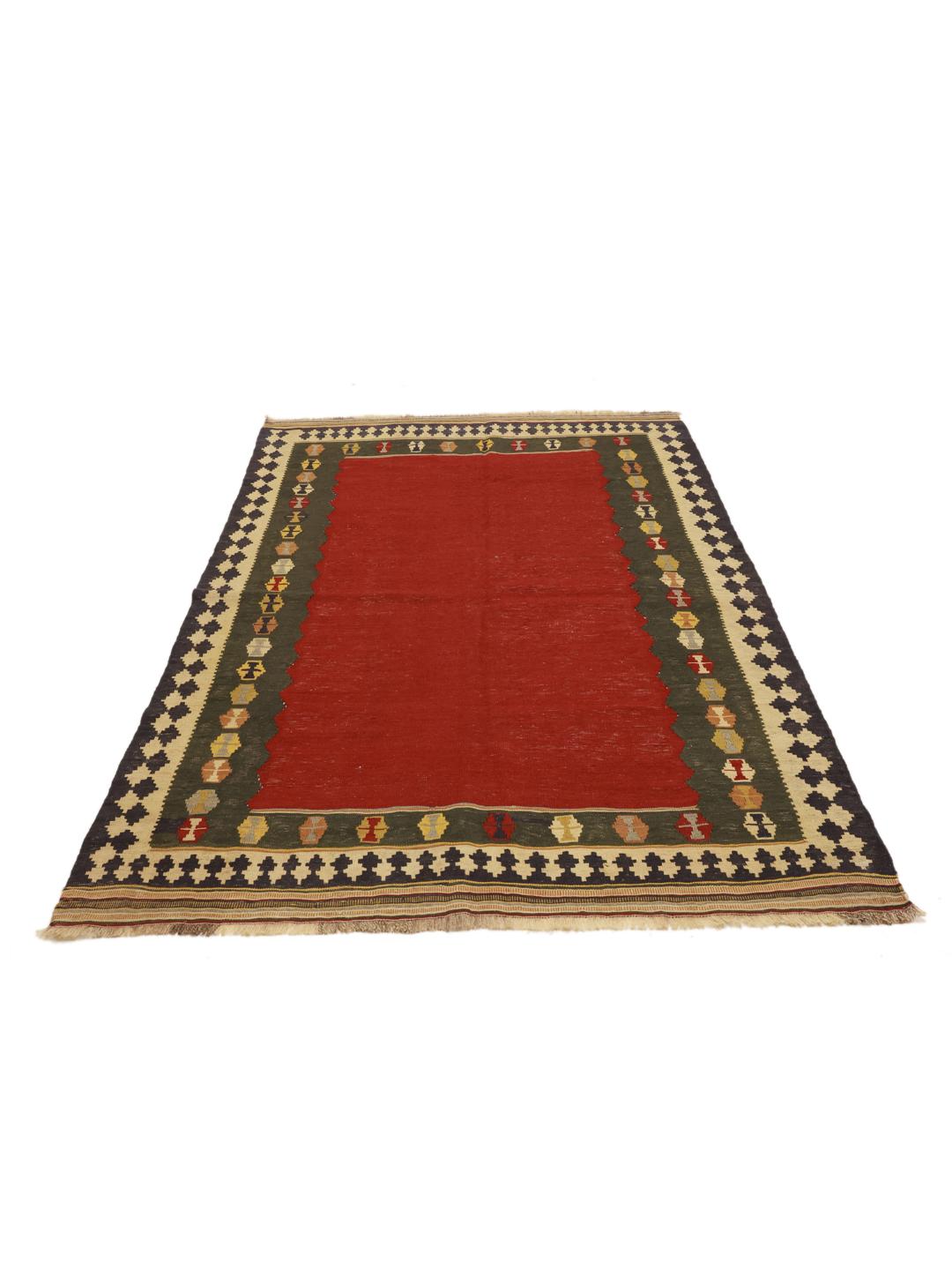
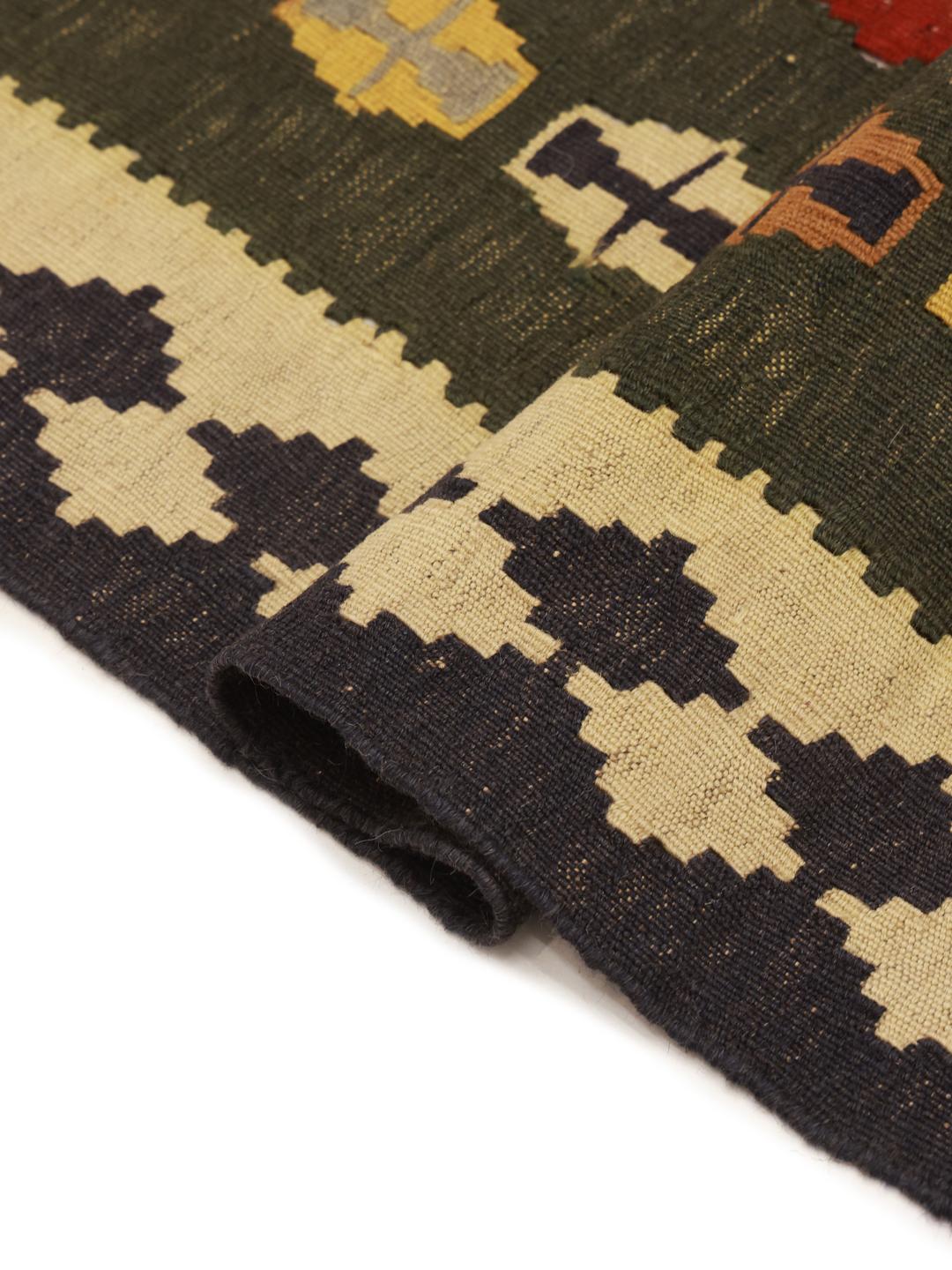
Kilim weaving is one of the oldest textile traditions across Asia Minor and the Middle East, developed over centuries by nomadic tribes and village weavers. In Turkey, these flatwoven rugs served vital everyday purposes as floor coverings, wall hangings, and protective blankets. Over time, each region developed its own distinct weaving styles and regional color combinations.
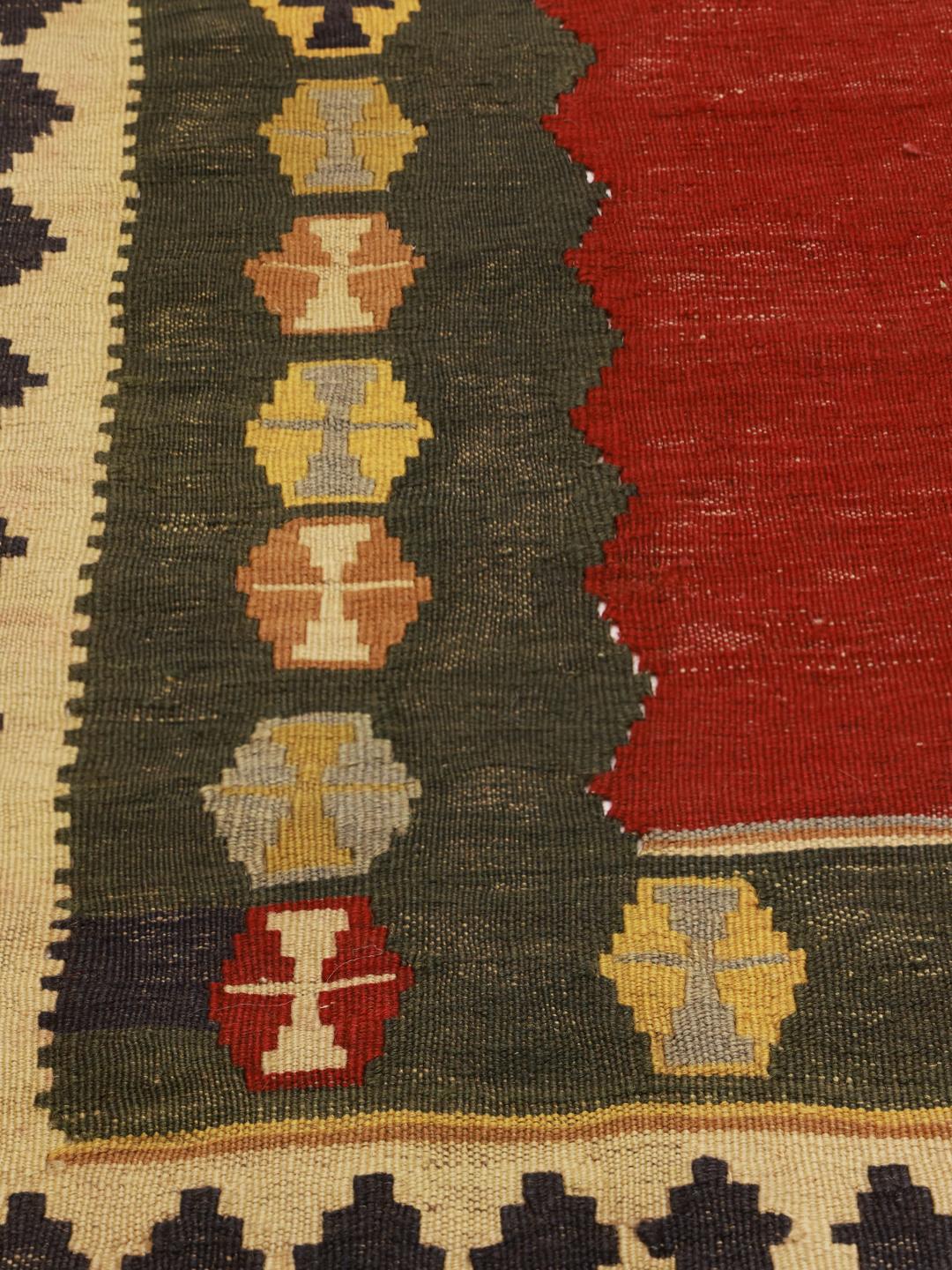
The word kelim or kilim refers to a flatweave technique where the colored weft threads are tightly packed down over the structural warp threads. This process creates a flat surface without a raised pile. Because wool naturally absorbs dyes deeply, flatwoven wool kelims display soft, rich shades that age gracefully, developing a soft patina across the years.
Visual storytelling defines the traditional kelim style. Regional artisans used repeating geometric motifs, stepped diamonds, and decorative borders to represent protection, luck, and connection to nature. The balance of a clear central field surrounded by detailed borders gives the rug a structured, architectural quality that works smoothly in contemporary spaces.
Vintage Turkish kelims remain sought after because each piece represents an irreplaceable slice of cultural craft. Aged between 20 and 50 years, a rug like this carries authentic character, capturing the personal handiwork of its original weaver while bringing genuine warmth and context into modern homes.