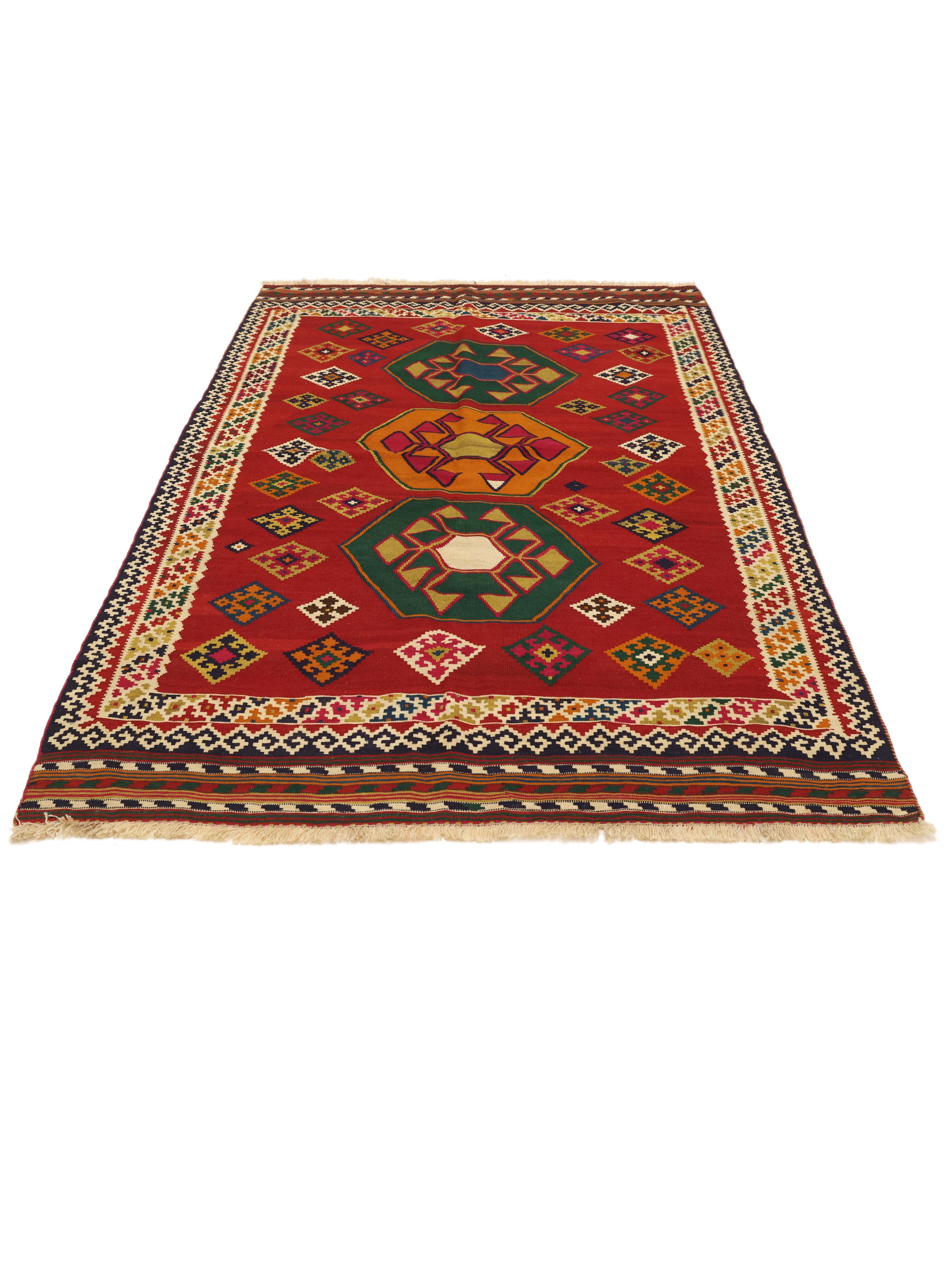
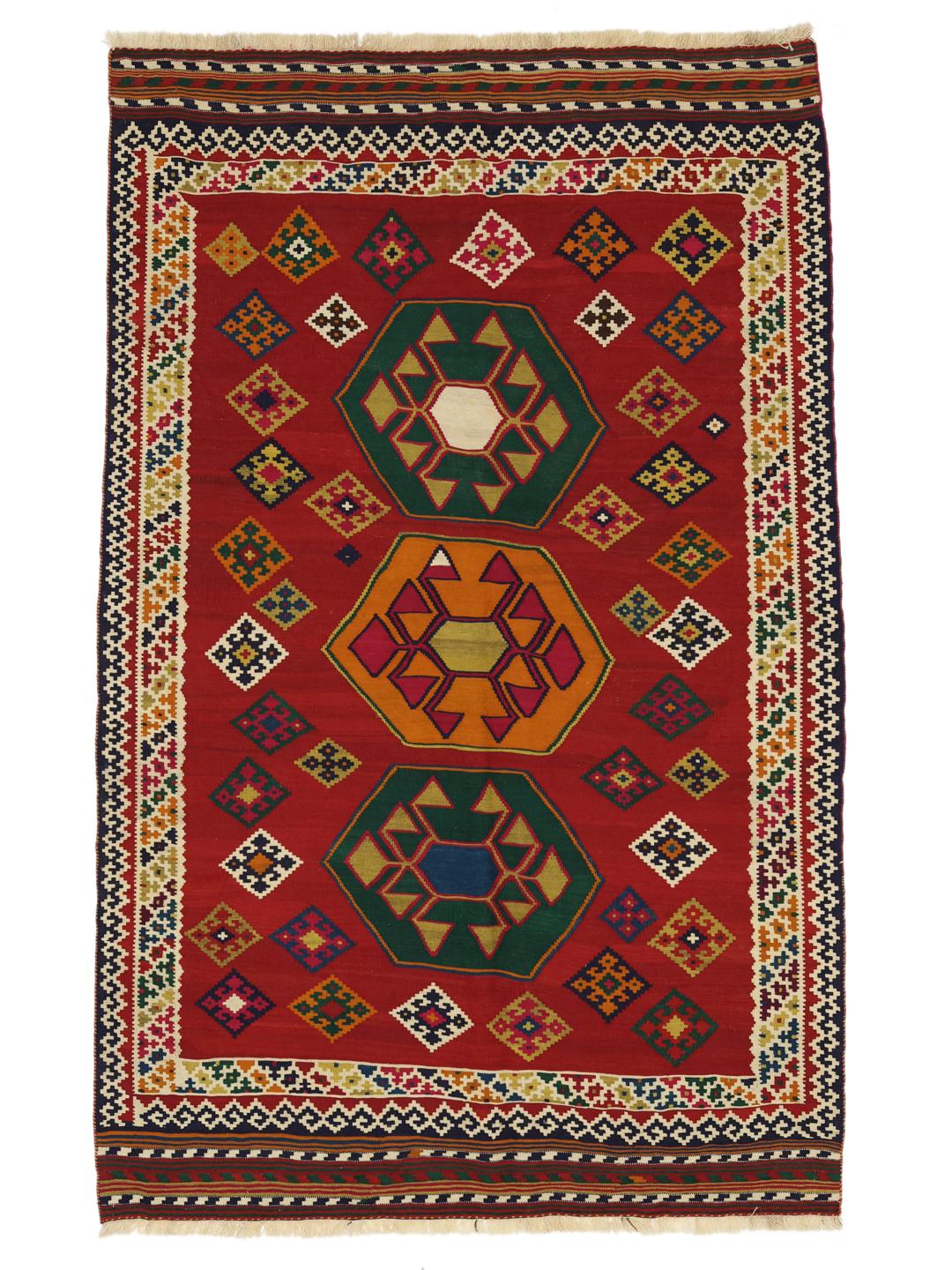
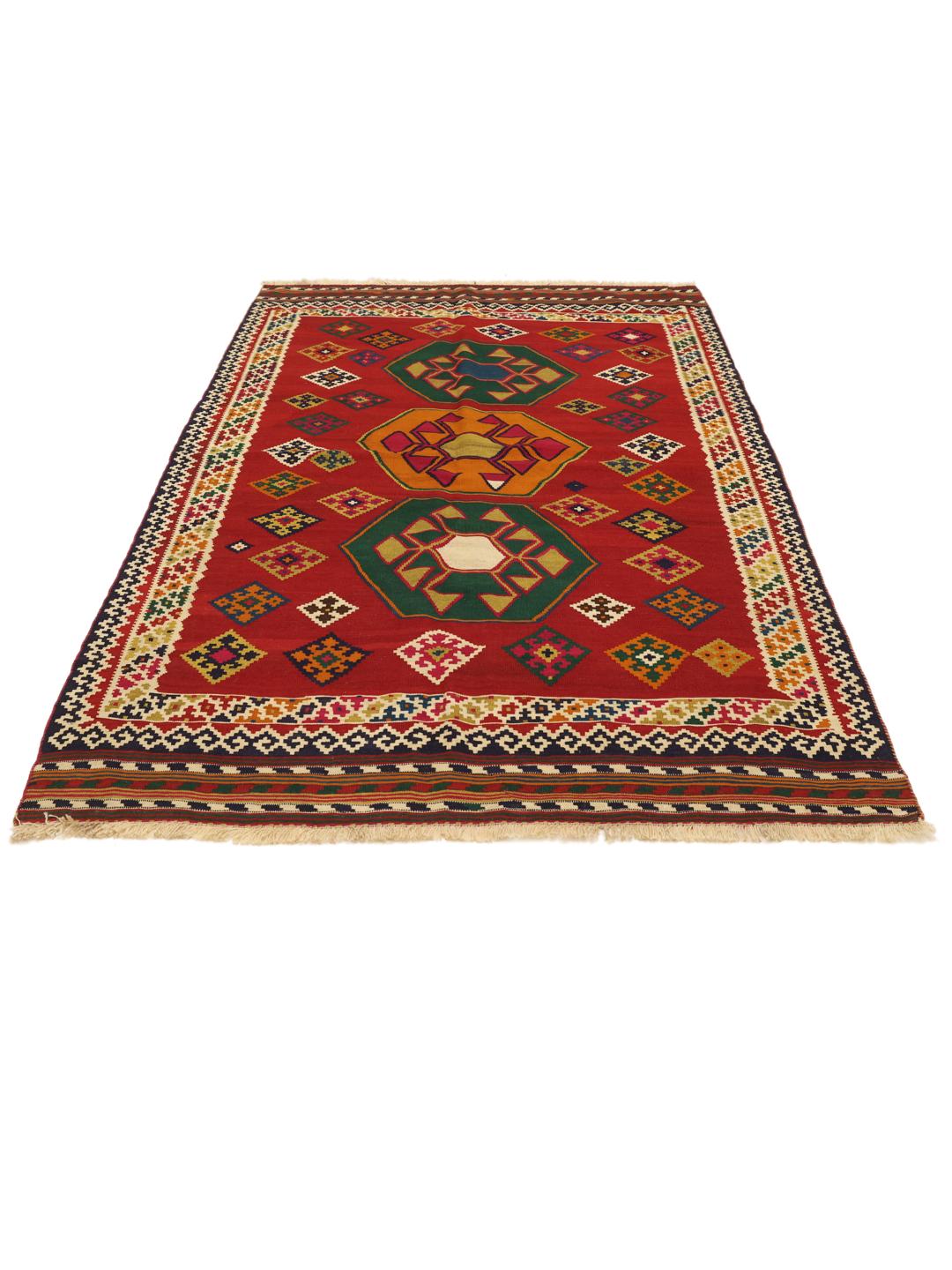
Kilims have a long and celebrated history throughout Turkey and the broader Middle East, where flatweave traditions have flourished for generations. Historically woven by nomadic and village women, these rugs served both functional purposes as floor coverings and blankets, as well as creative expressions of regional identity.
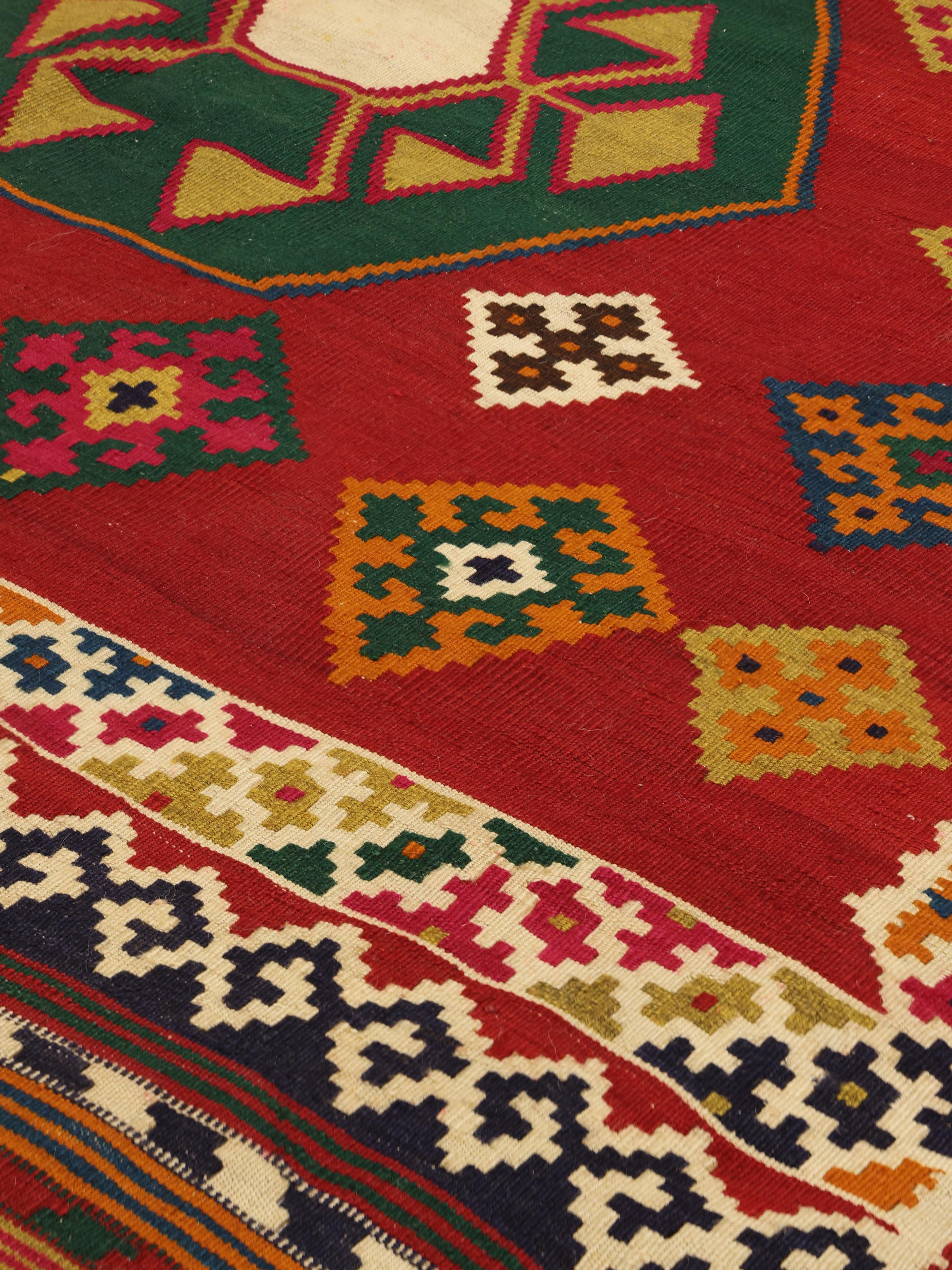
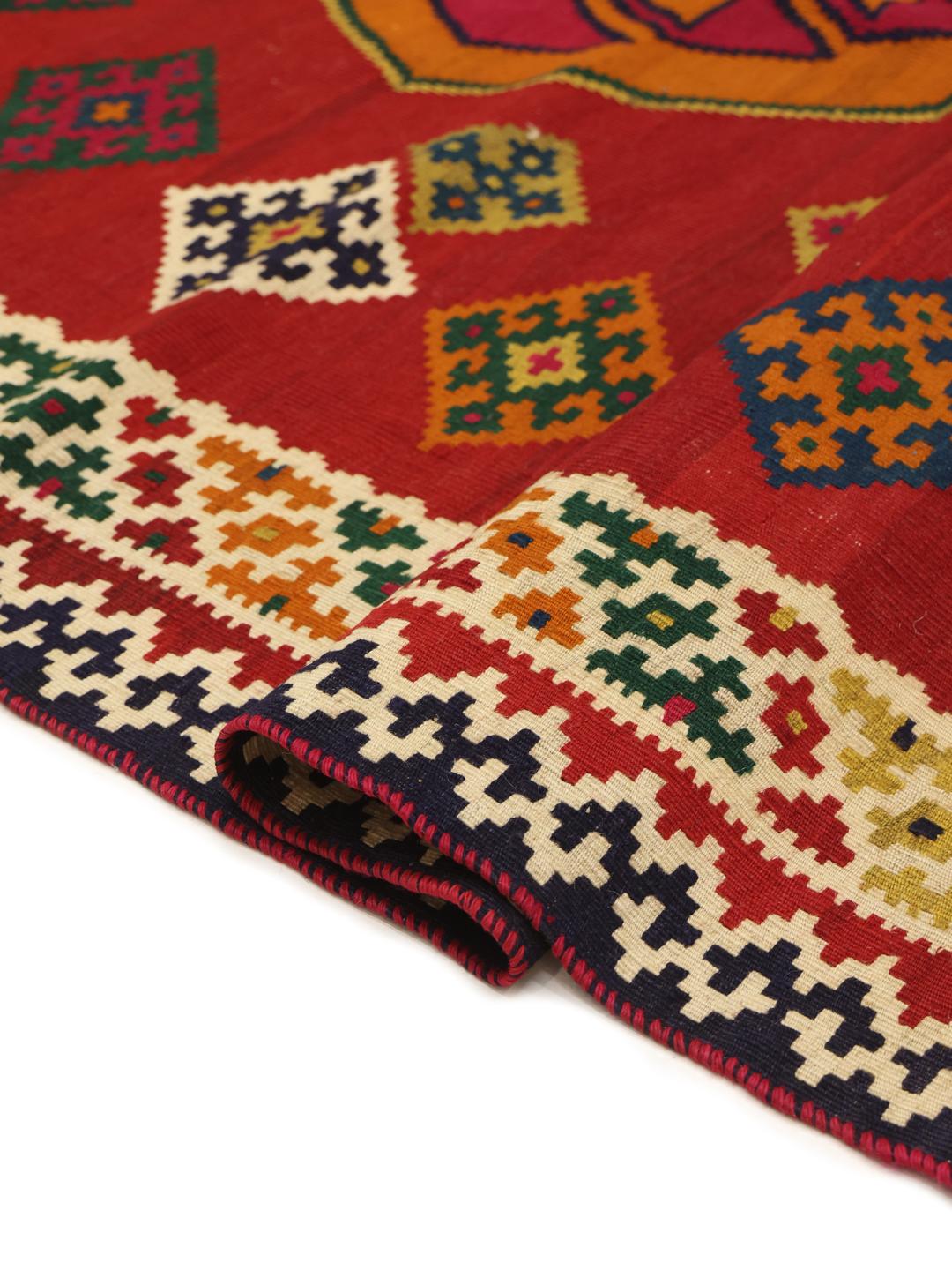
Unlike pile rugs created by knotting yarn around warp threads, flat-woven kilims are constructed by tightly interweaving the colored weft threads through the warp. This technique creates a smooth, pile-free surface that is durable, lightweight, and reversible, showcasing the pure geometry of the weave structure.
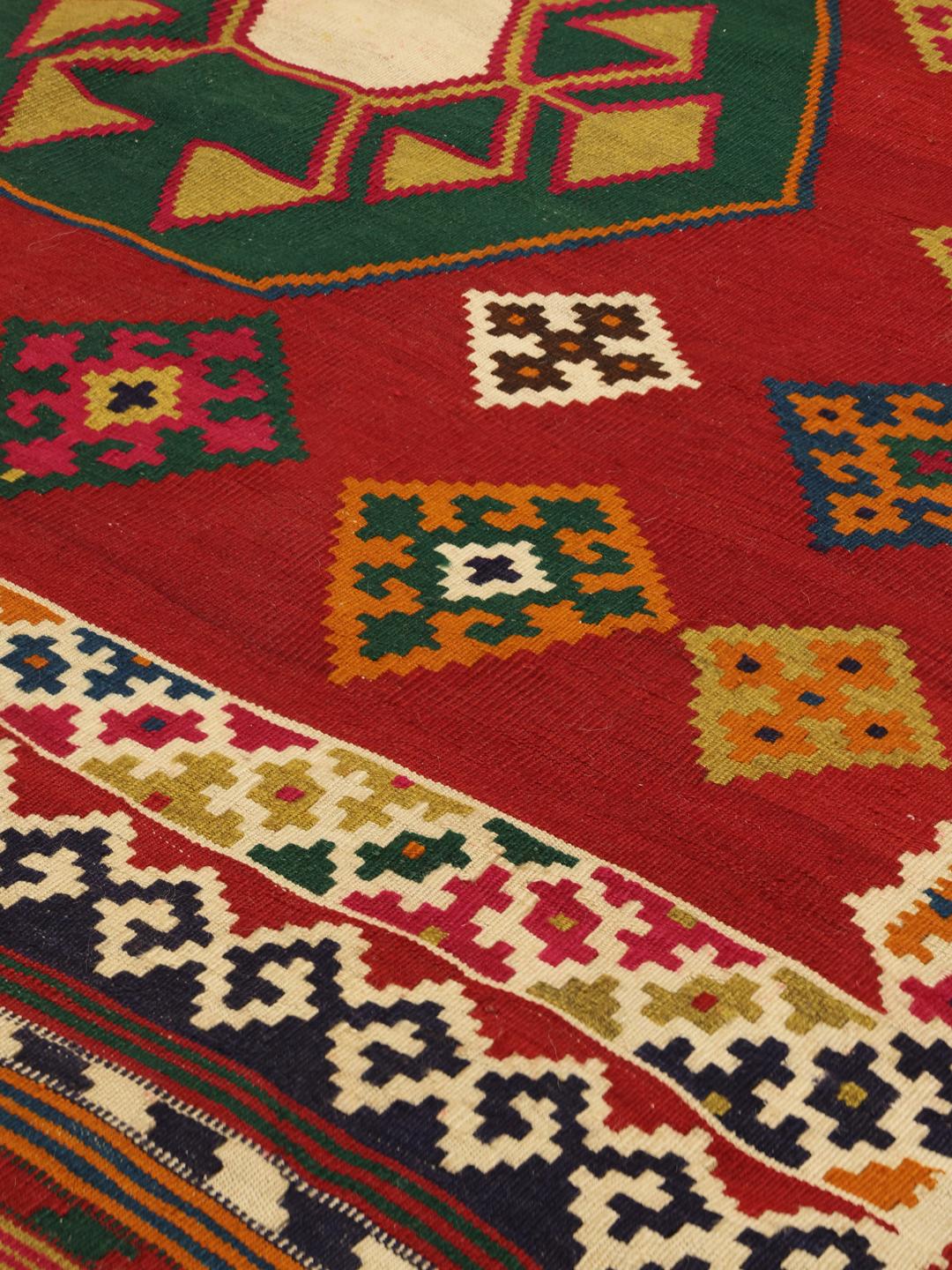
The visual language of Turkish kilims relies on symbolic geometric motifs, intricate decorative borders, and bold central medallions. Repeating diamonds and stylized borders often represent local weaving traditions, with vibrant reds and contrasting multicolor accents defining classic regional palettes.
Vintage kilims aged between 20 and 50 years hold a special place for collectors and design enthusiasts. They represent a sweet spot where the natural wool has softened and aged gracefully while maintaining structural integrity, offering a genuine piece of textile history.