Kilim weaving is one of the oldest textile traditions in Anatolia and the broader Middle East. Historically woven by nomadic and village weavers for practical home use, these flatwoven textiles served as floor coverings, wall hangings, and storage bags. Over centuries, regional communities developed distinct visual dialects based on available local dyes and inherited weaving practices.
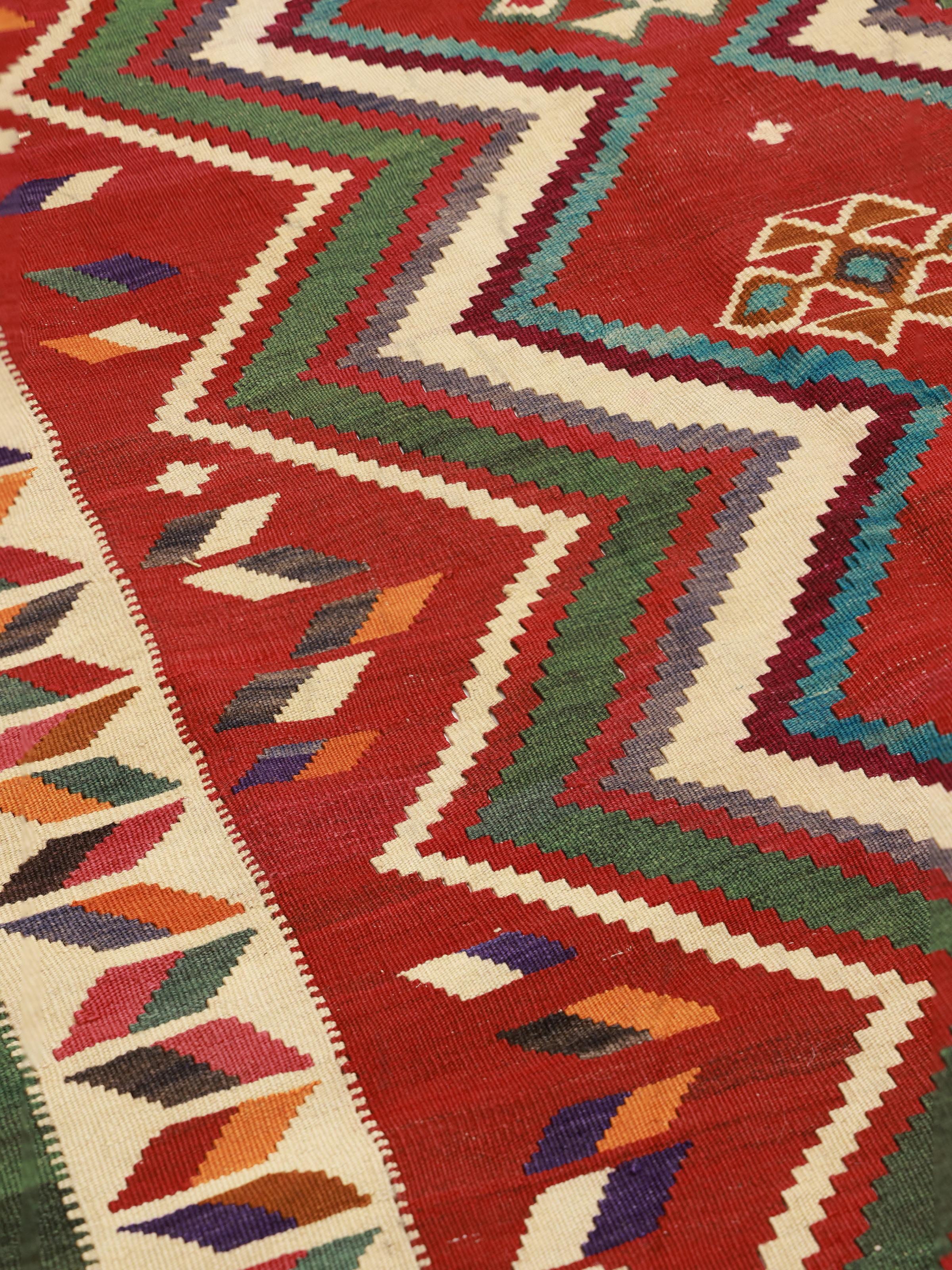
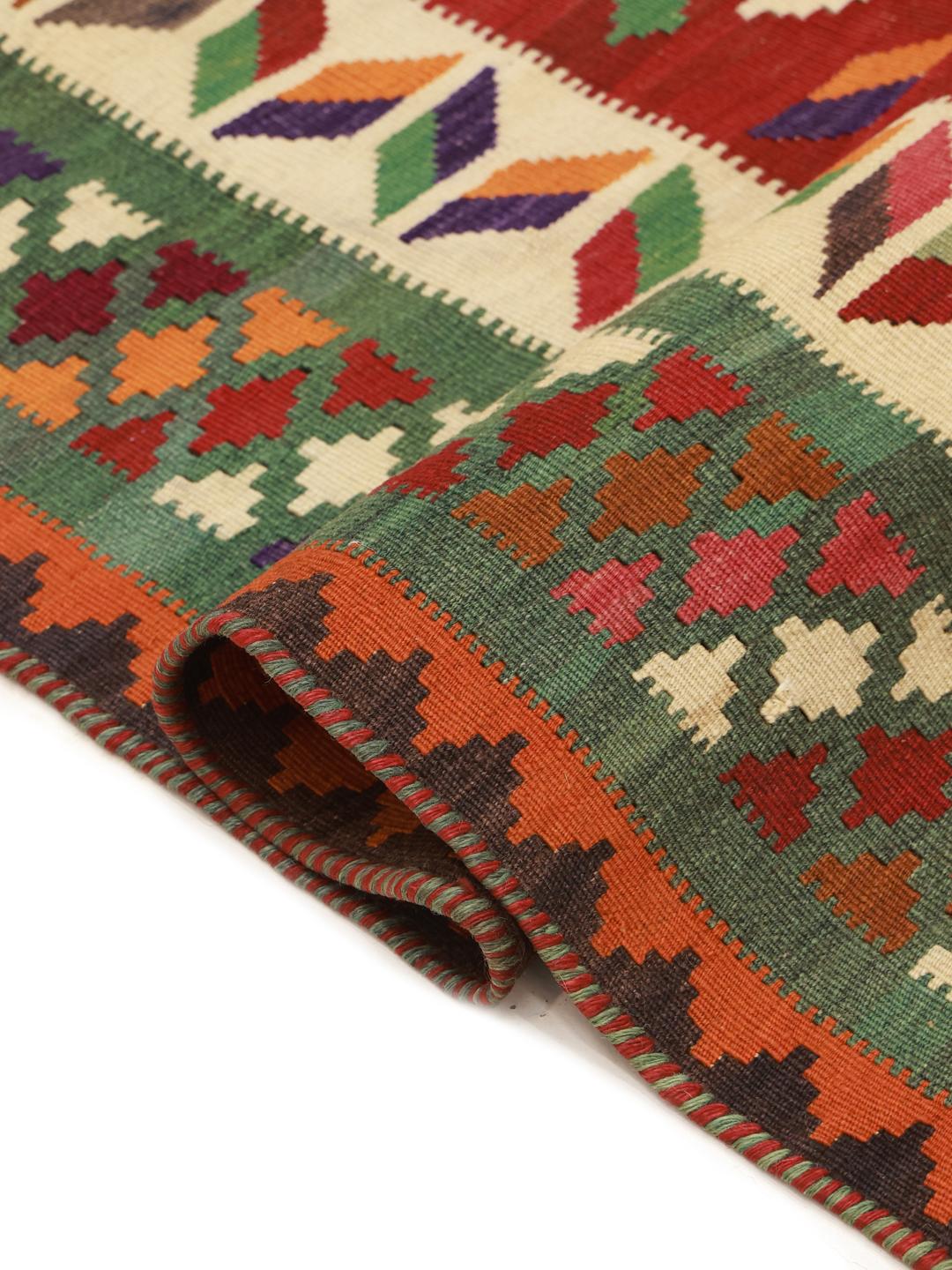
Unlike pile rugs, flatwoven kilims are constructed by tightly interweaving the warp and weft strands, creating a smooth surface with no pile. This hand-weaving technique creates crisp edges for geometric patterns while resulting in a lightweight, durable structure that holds up exceptionally well over decades of use.
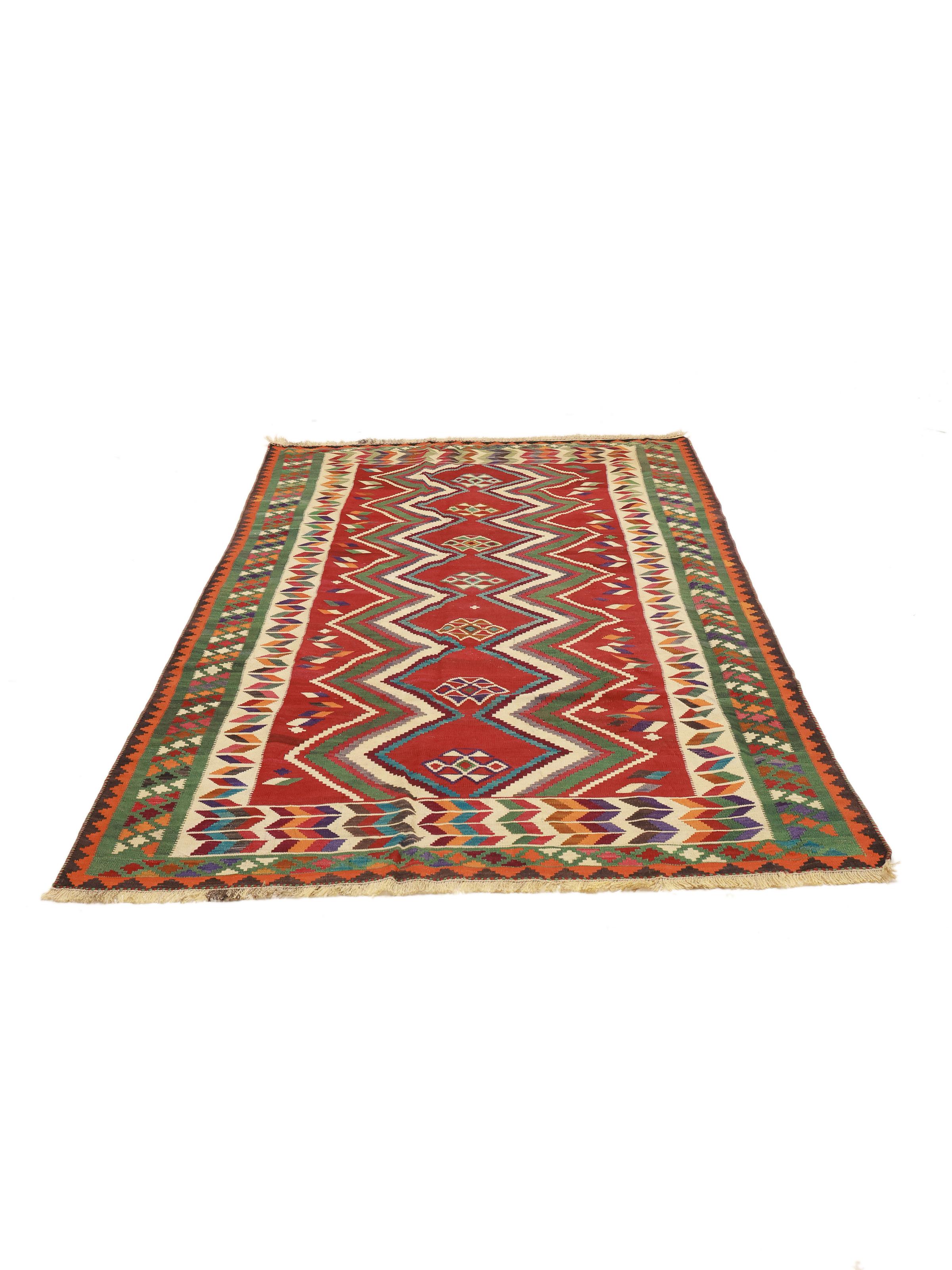
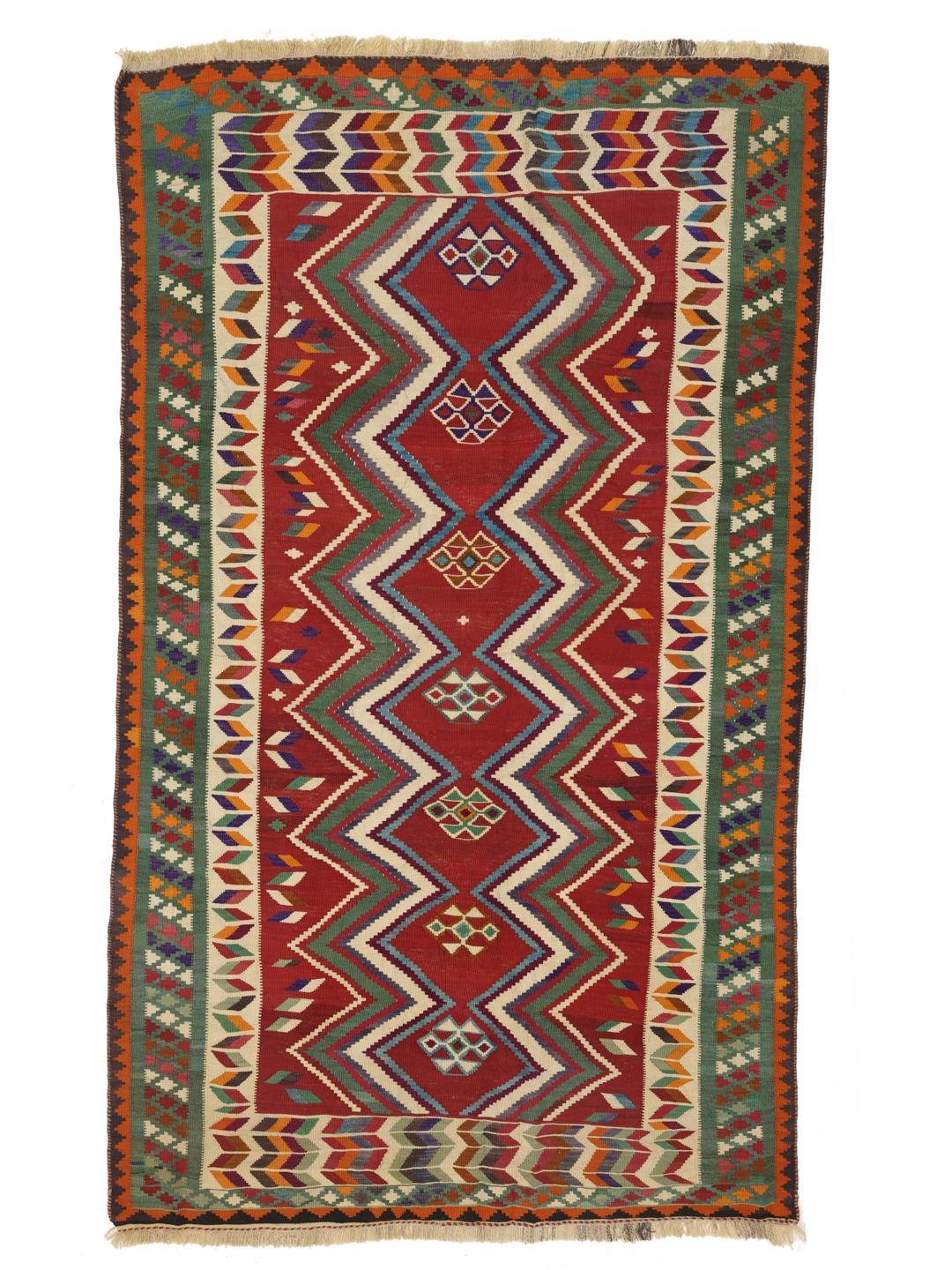
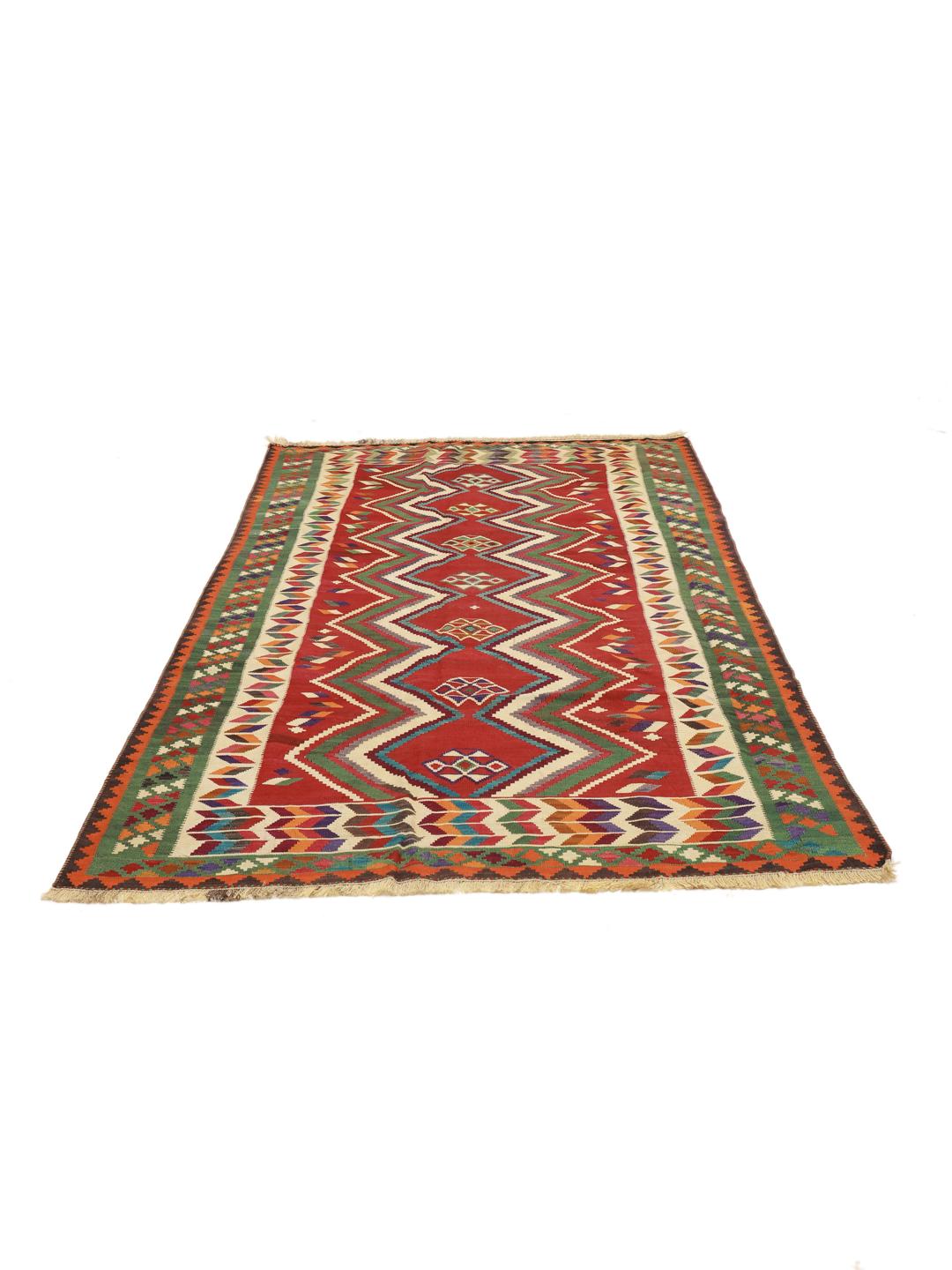
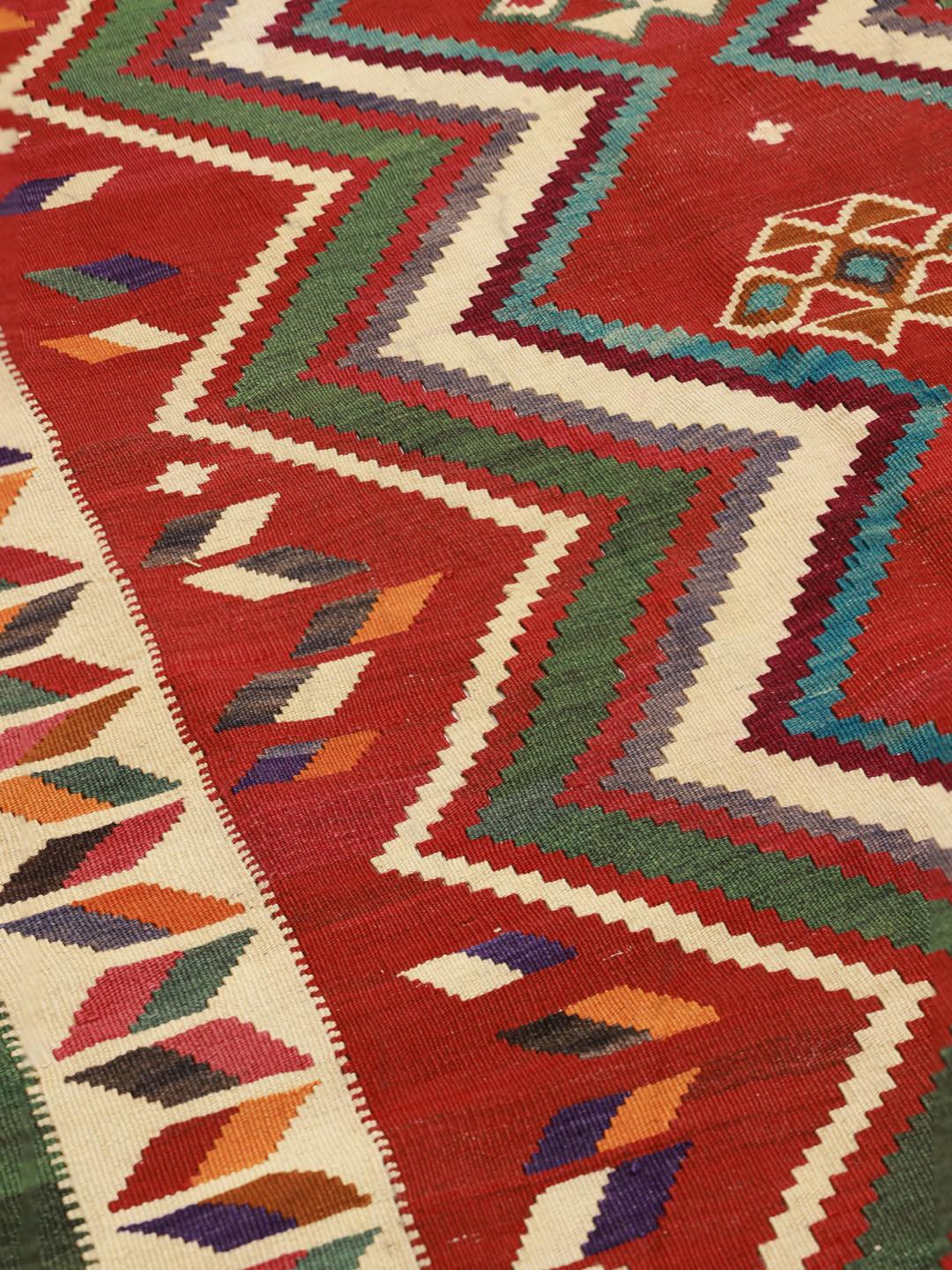
The design language of vintage Turkish kilims relies on symbolic geometric motifs, including stepped diamonds, zig-zags, and protective tribal symbols. In this piece, the vibrant red field and contrasting geometric bands showcase the expressive color choices and balanced geometry typical of mid-20th century Anatolian weaving traditions.
Vintage kilims aged between 20 and 50 years are highly valued by collectors for their softened hues and natural maturation. Owning a vintage piece connects your living space to historical artisan craft, bringing a touch of authentic heritage into the modern home.