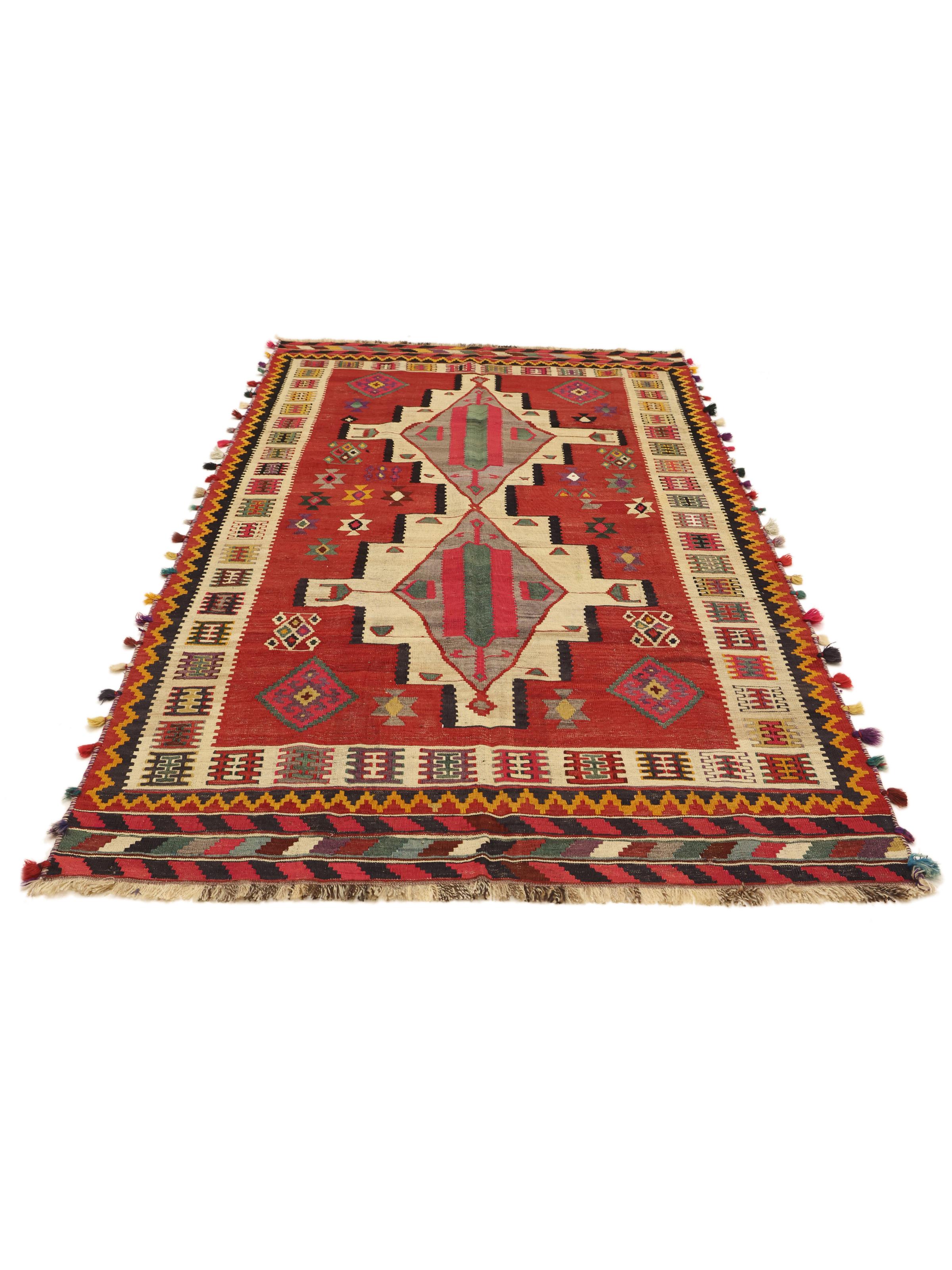
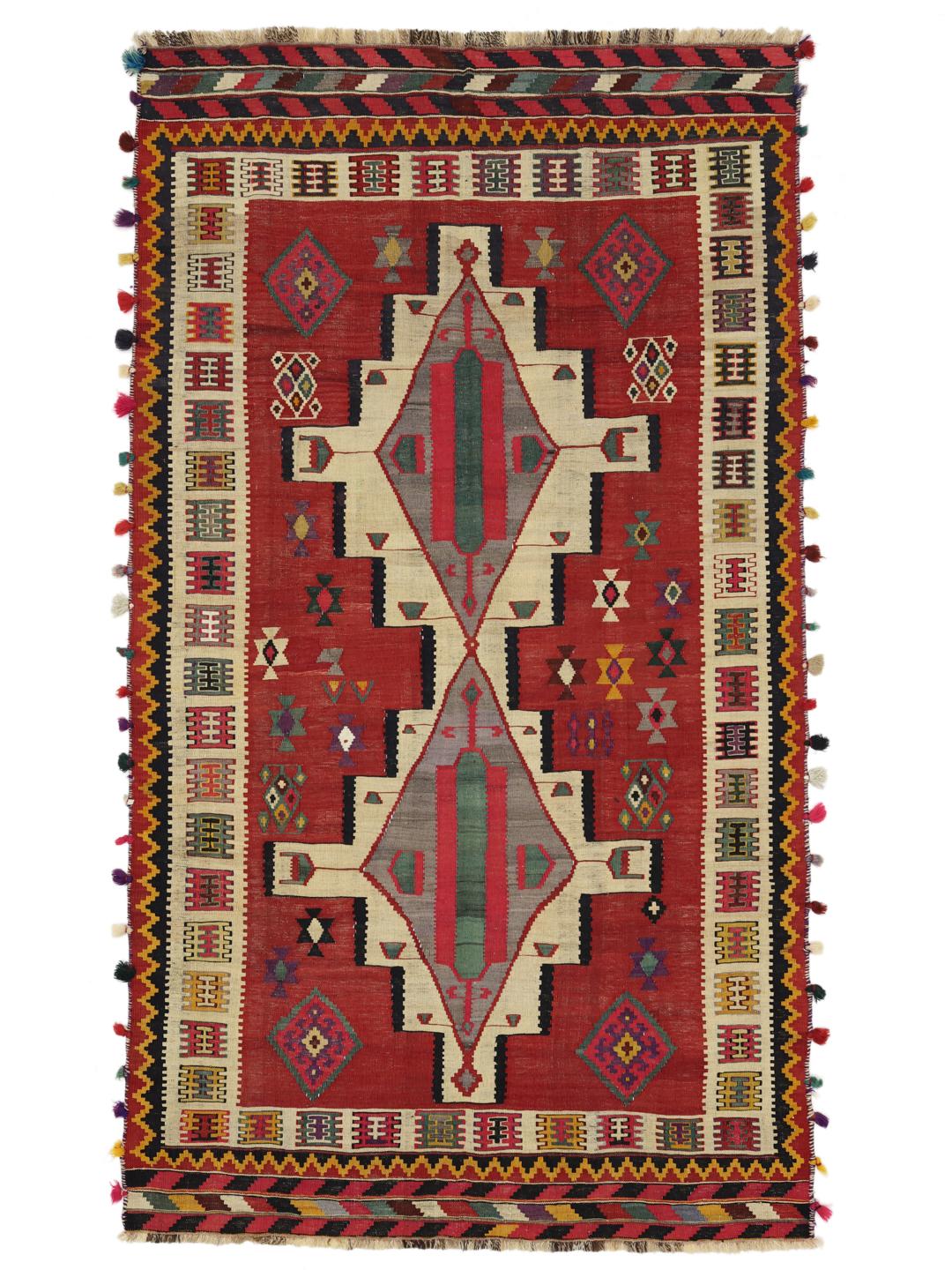
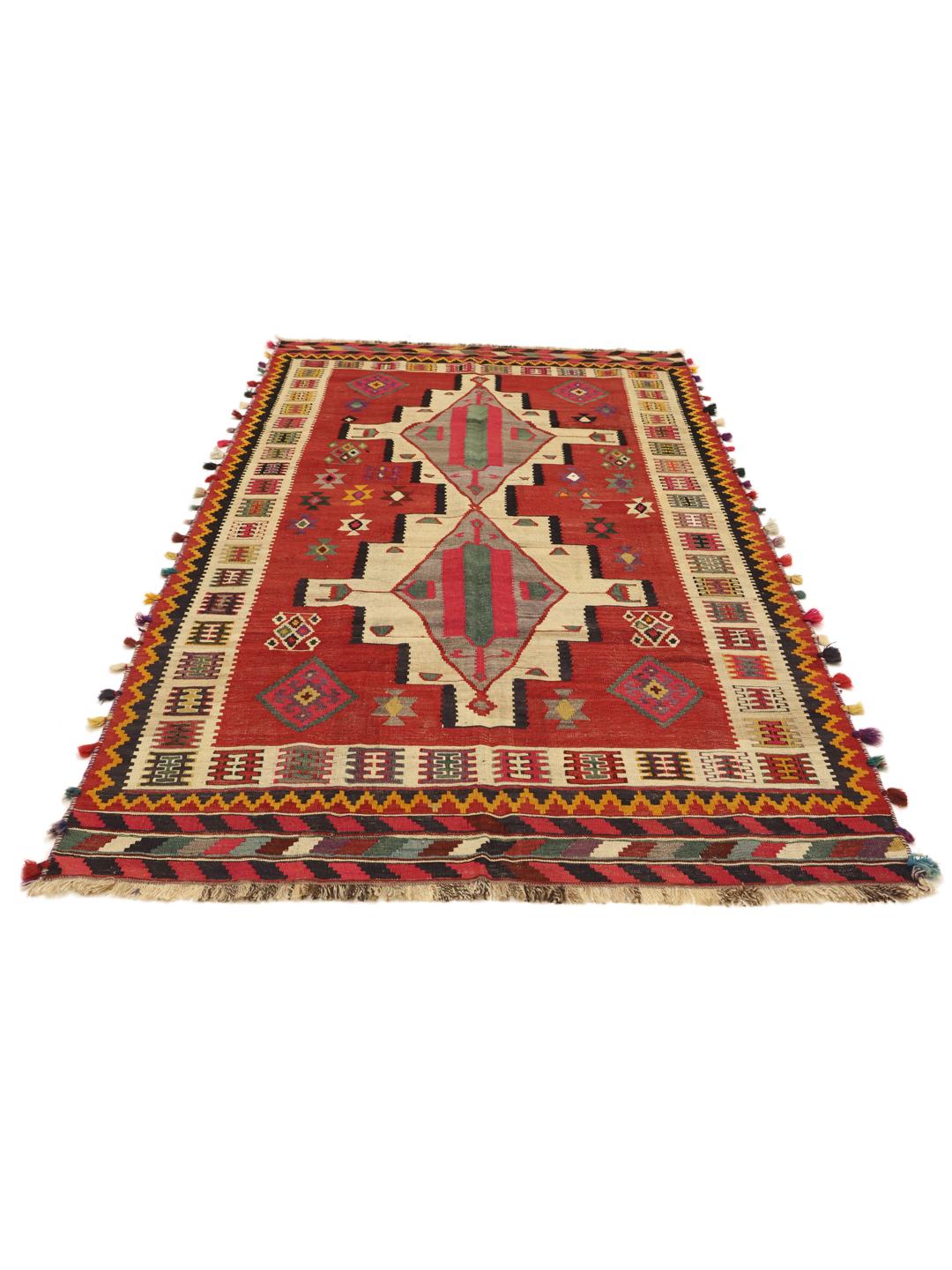
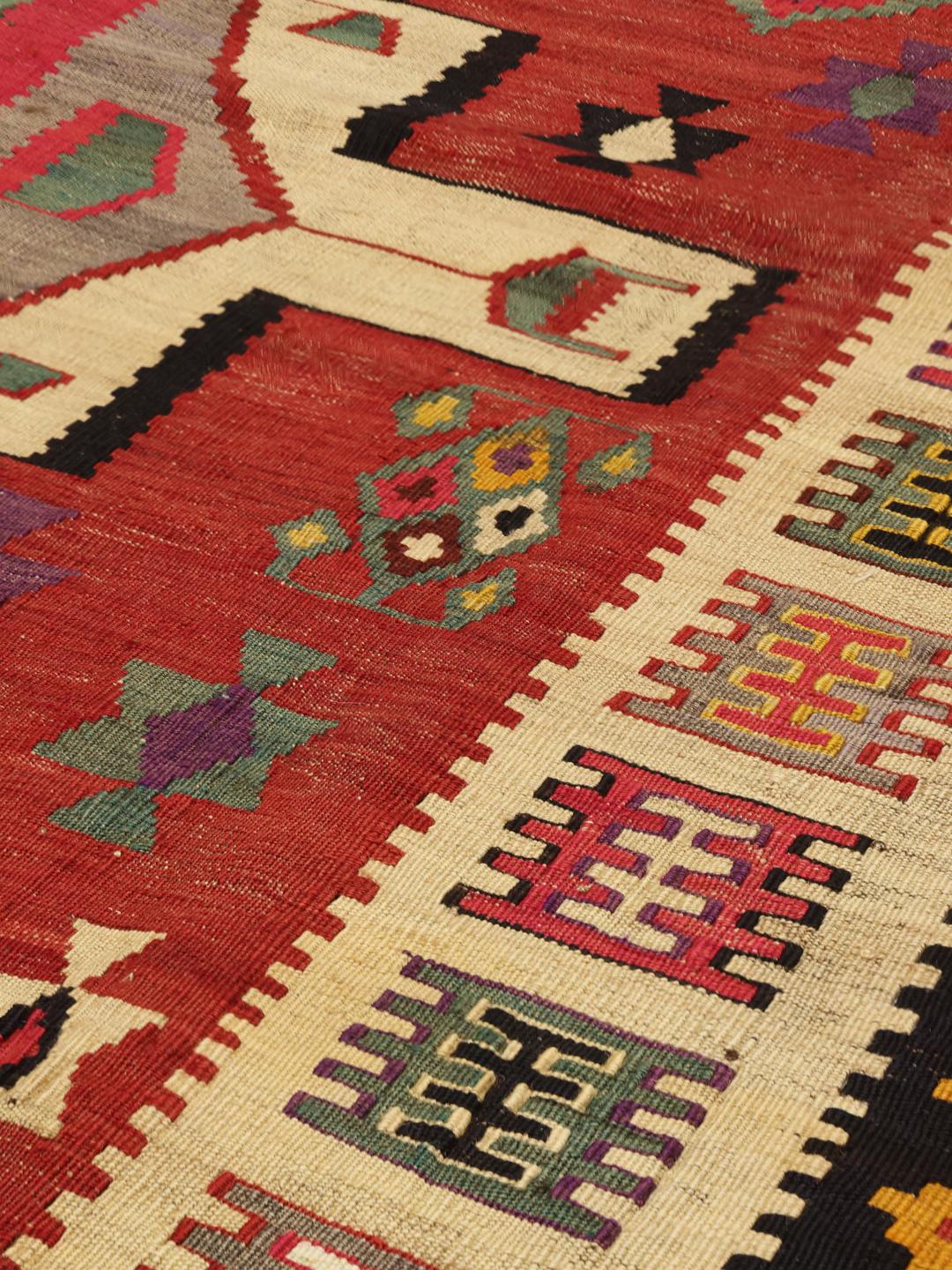
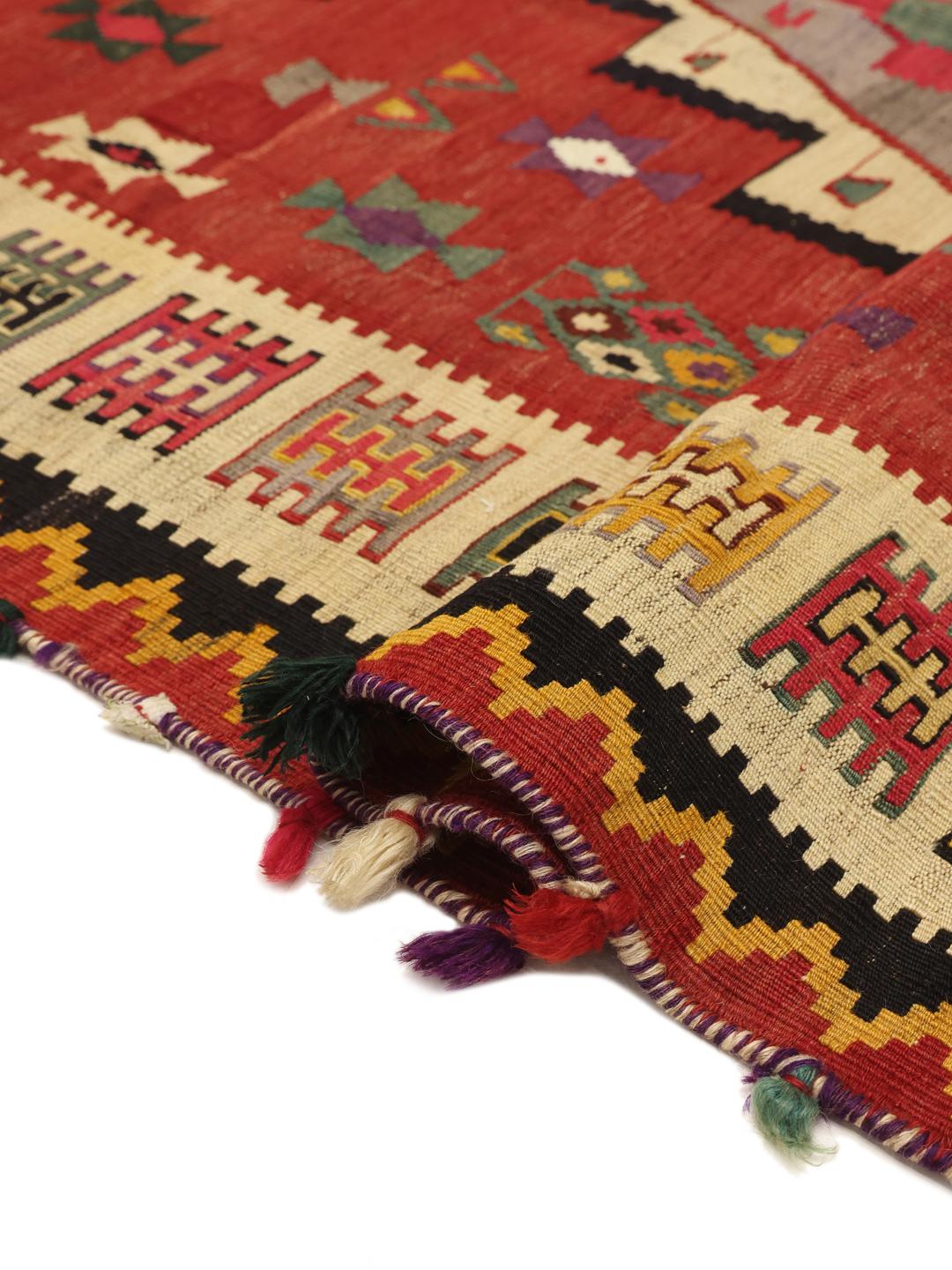
Kilims have been hand woven across Anatolia and Turkey for centuries, originating as functional everyday textiles created by nomadic tribes. These flatwoven pieces served as floor coverings, wall hangings, and storage bags, designed to be durable, portable, and visually meaningful to the weavers who crafted them.
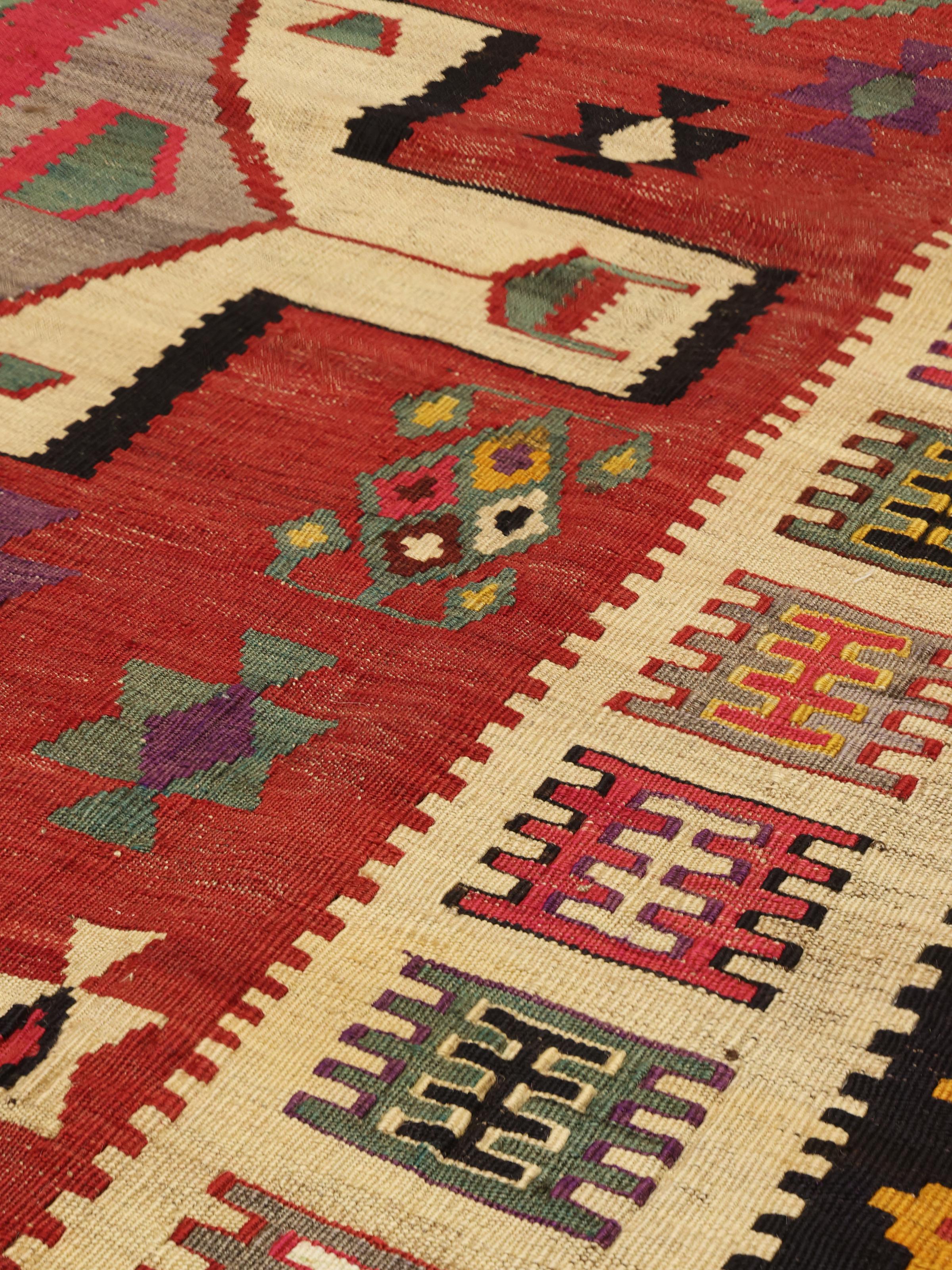
The term flatwoven describes a technique where the vertical warp threads and horizontal weft threads are tightly interwoven, creating a fabric with no raised pile. This results in a lighter, flexible structure with a firm surface that displays crisp geometric lines on both sides of the rug.
Turkish Kilims are celebrated for their rich geometric language. Weavers embedded traditional motifs into the designs, using repeating diamonds, stars, and intricate borders to convey local symbols and regional heritage. The natural variations in the dyes over time add depth and warmth to every section of the rug.
Vintage Turkish Kilims are prized by collectors and homeowners worldwide for their authenticity and historical weight. Owning a piece woven decades ago means bringing a fragment of Anatolian cultural heritage into the modern home, celebrating natural materials and human skill that endure over time.