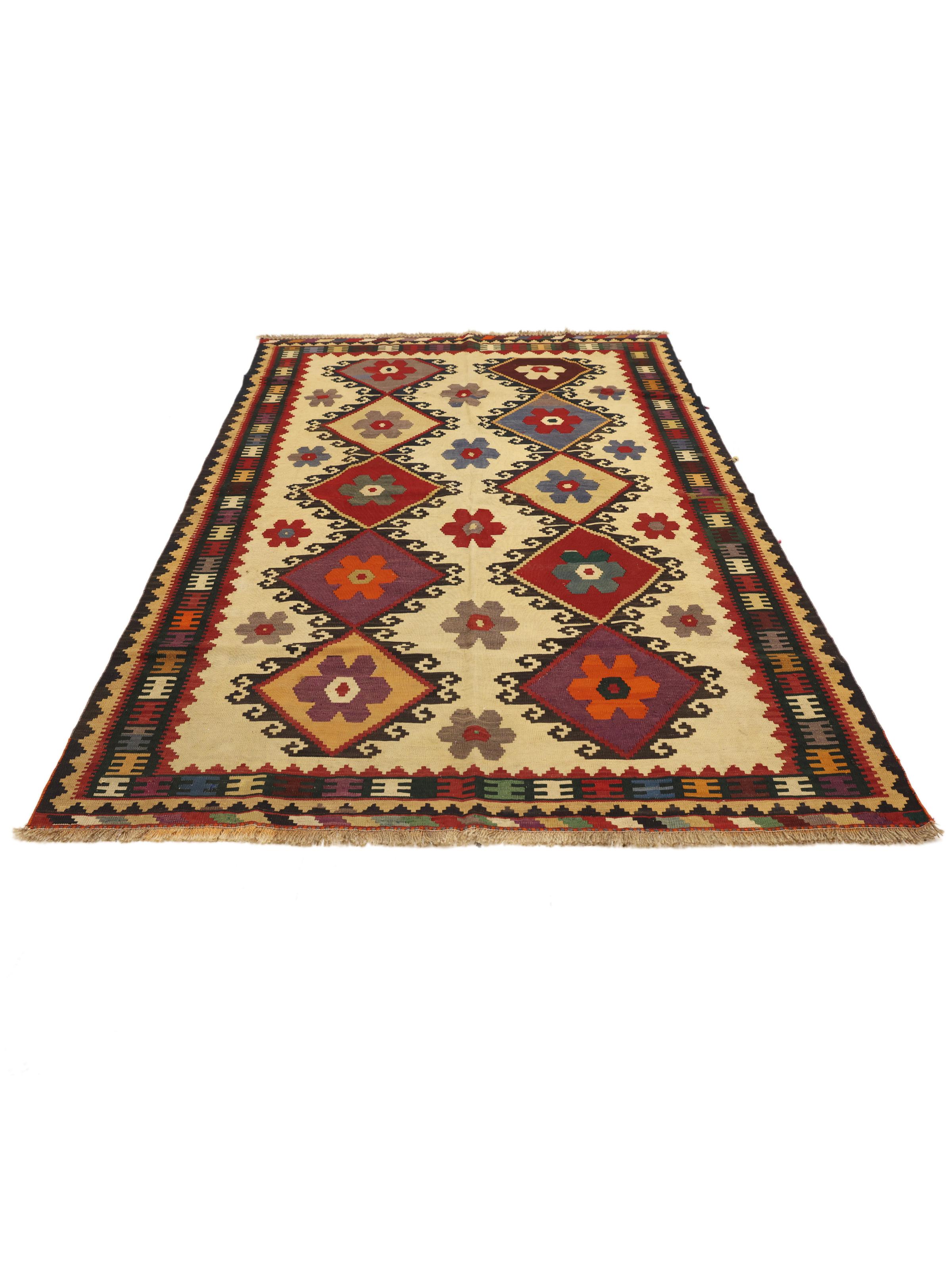
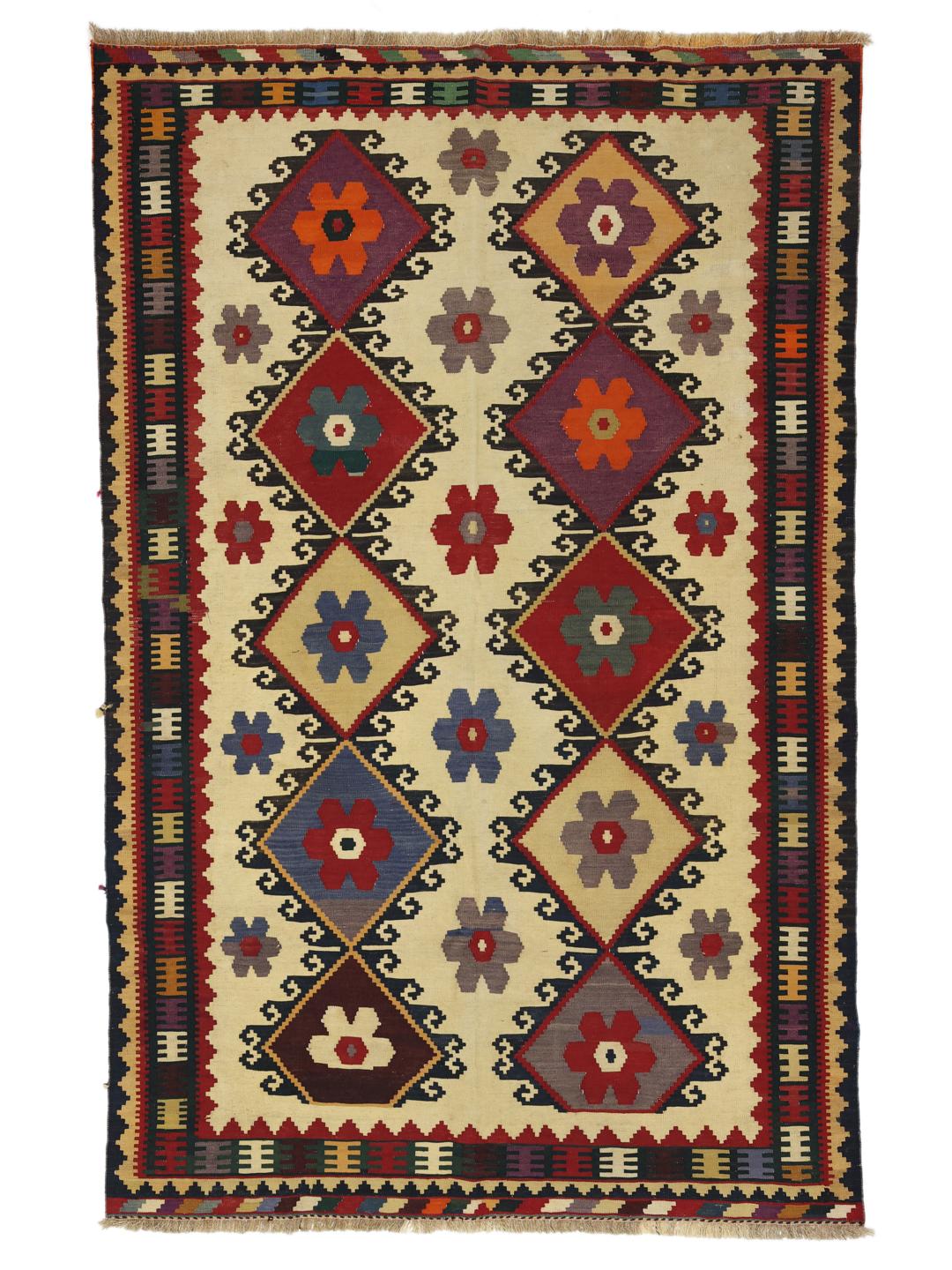
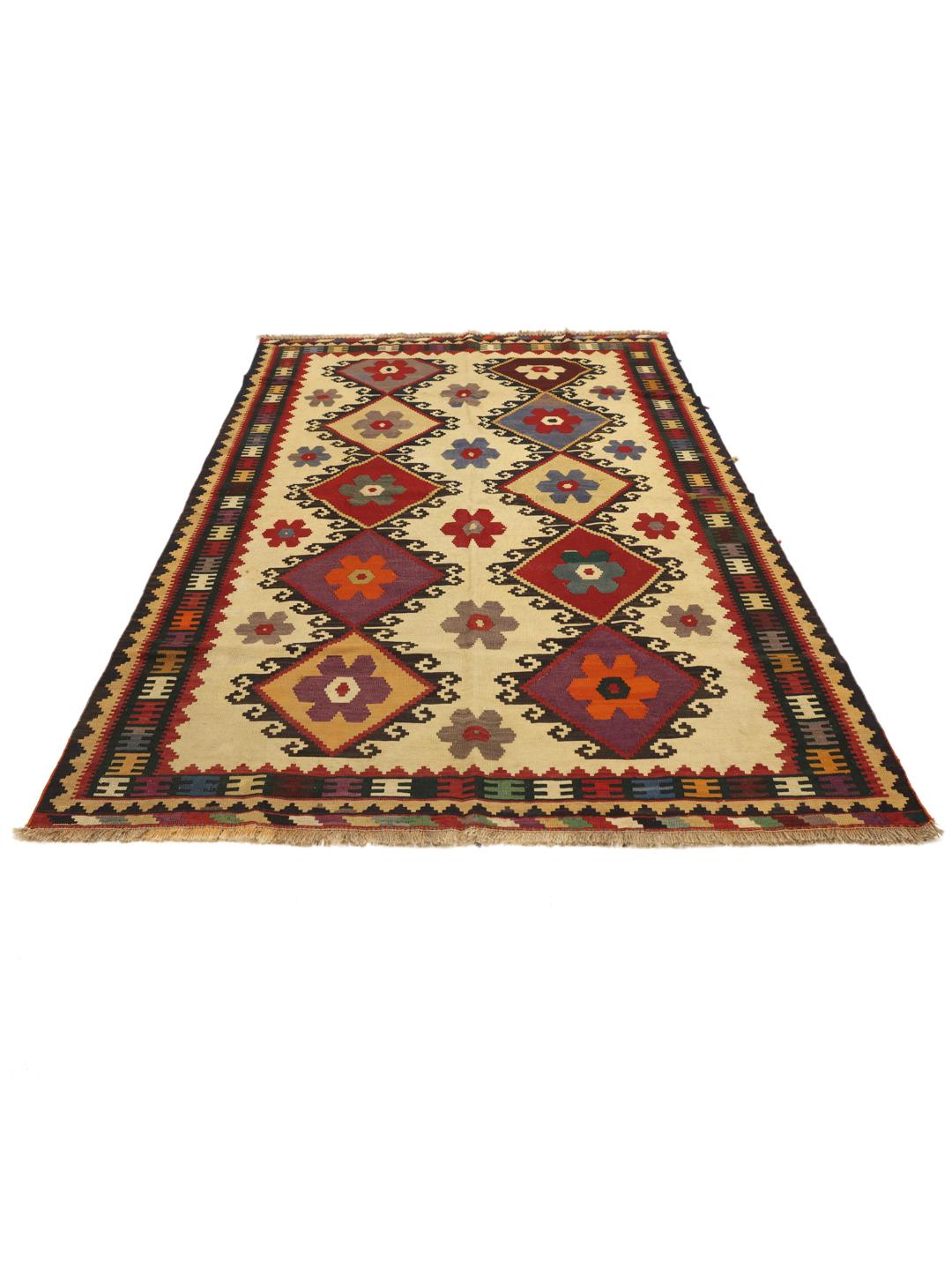
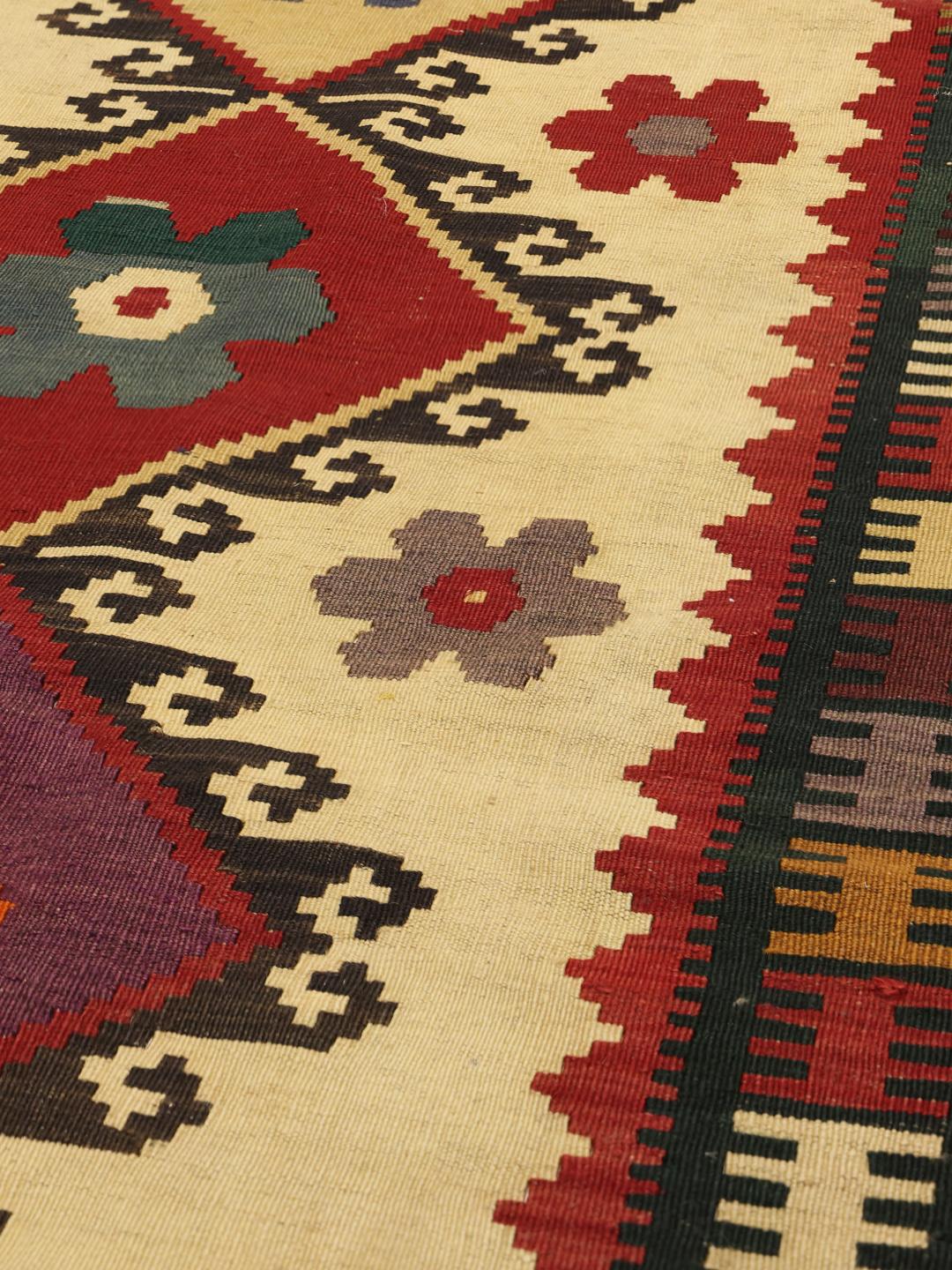
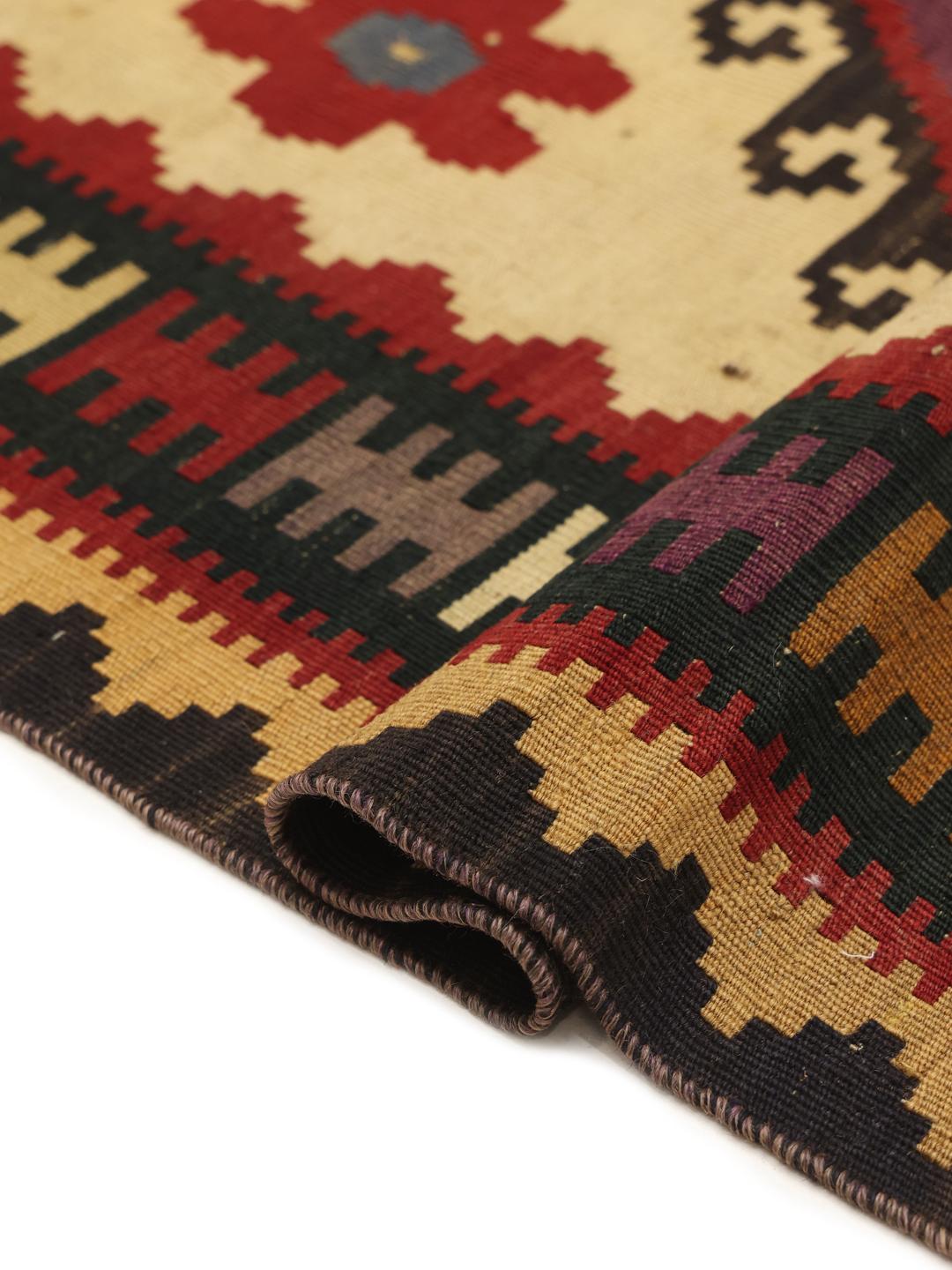
Kilim weaving is one of the oldest textile traditions in Anatolia, historically crafted by nomadic and village weavers across Turkey. These flatwoven textiles were made for daily domestic use, serving as floor coverings, wall hangings, and storage bags rather than purely decorative items.
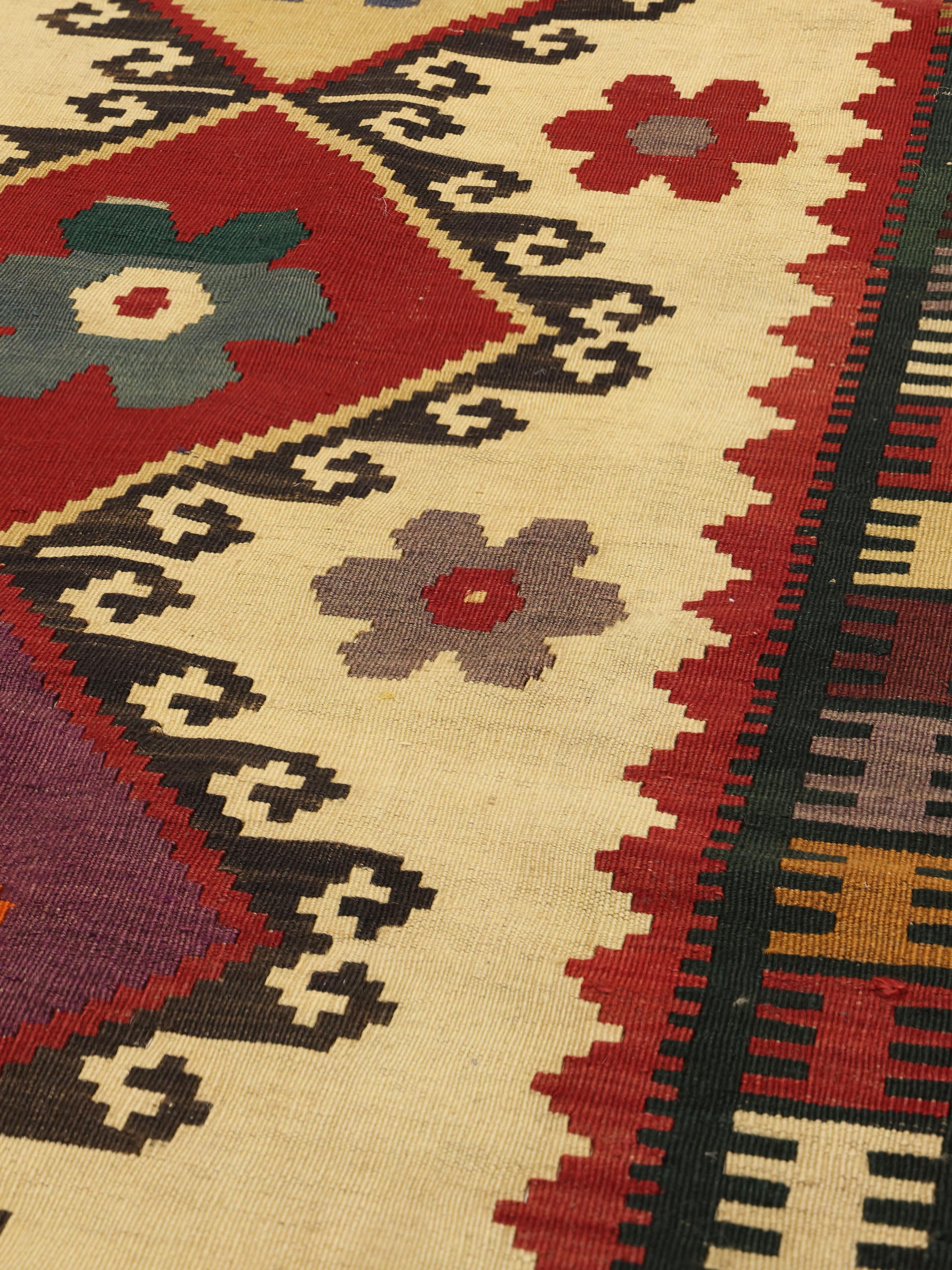
The term flatwoven describes a technique where the pattern is created directly by interlacing the weft threads over and under the warp without adding tufts of pile. This yields a lightweight, flexible, and sturdy fabric that is easily transported and built to endure heavy practical use.
The visual language of Turkish Kilims relies on repeating diamond motifs, geometric borders, and tribal symbols. Each motif historically carried specific meanings, representing protection, good fortune, or family identity, woven into balanced compositions that vary from region to region.
Vintage Kilims aged between 20 and 50 years are highly valued by collectors because they offer a physical connection to traditional village weaving practices. As these traditional craft methods become rarer, owning a genuine vintage piece offers both cultural weight and lasting aesthetic value.