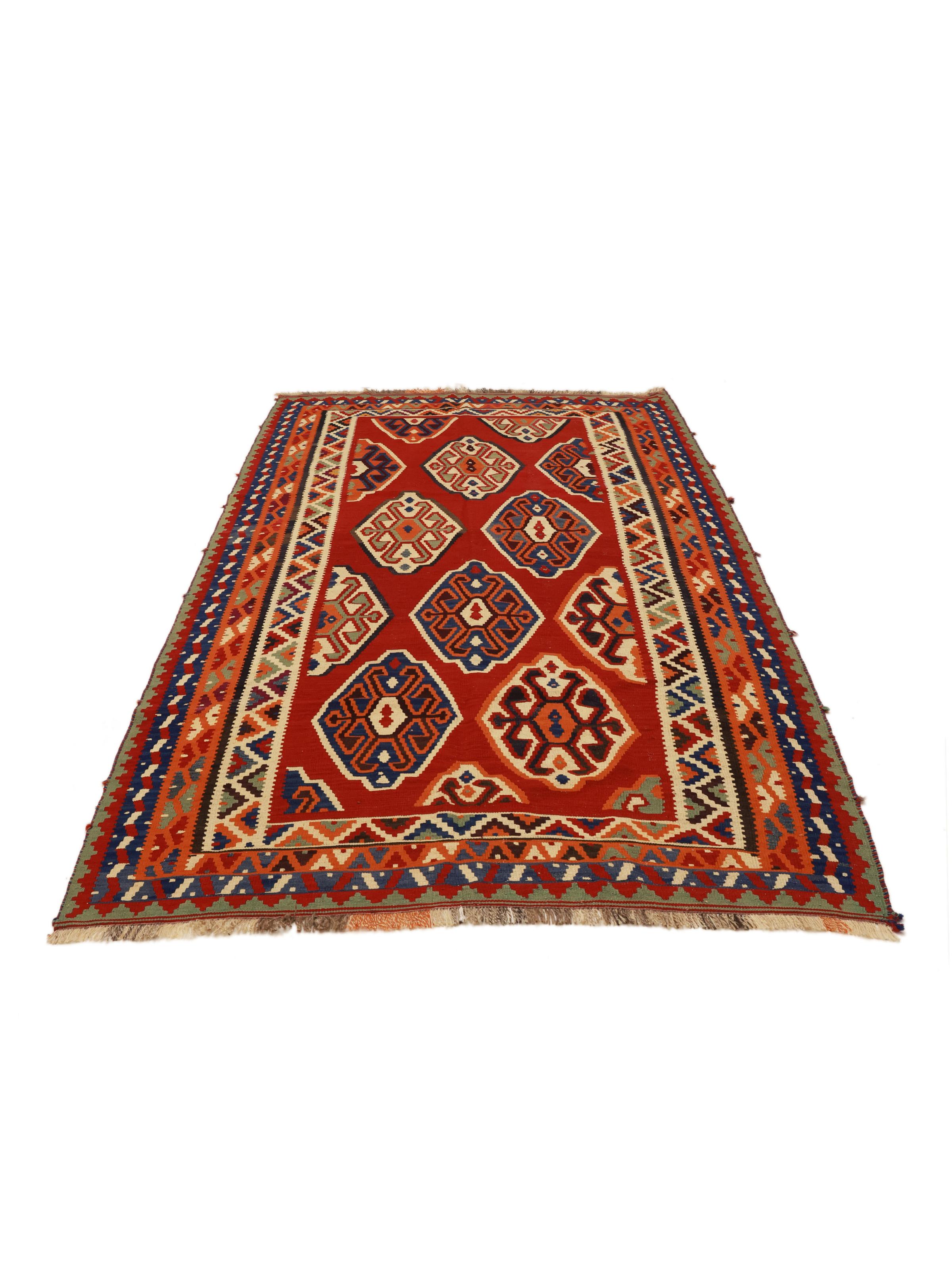
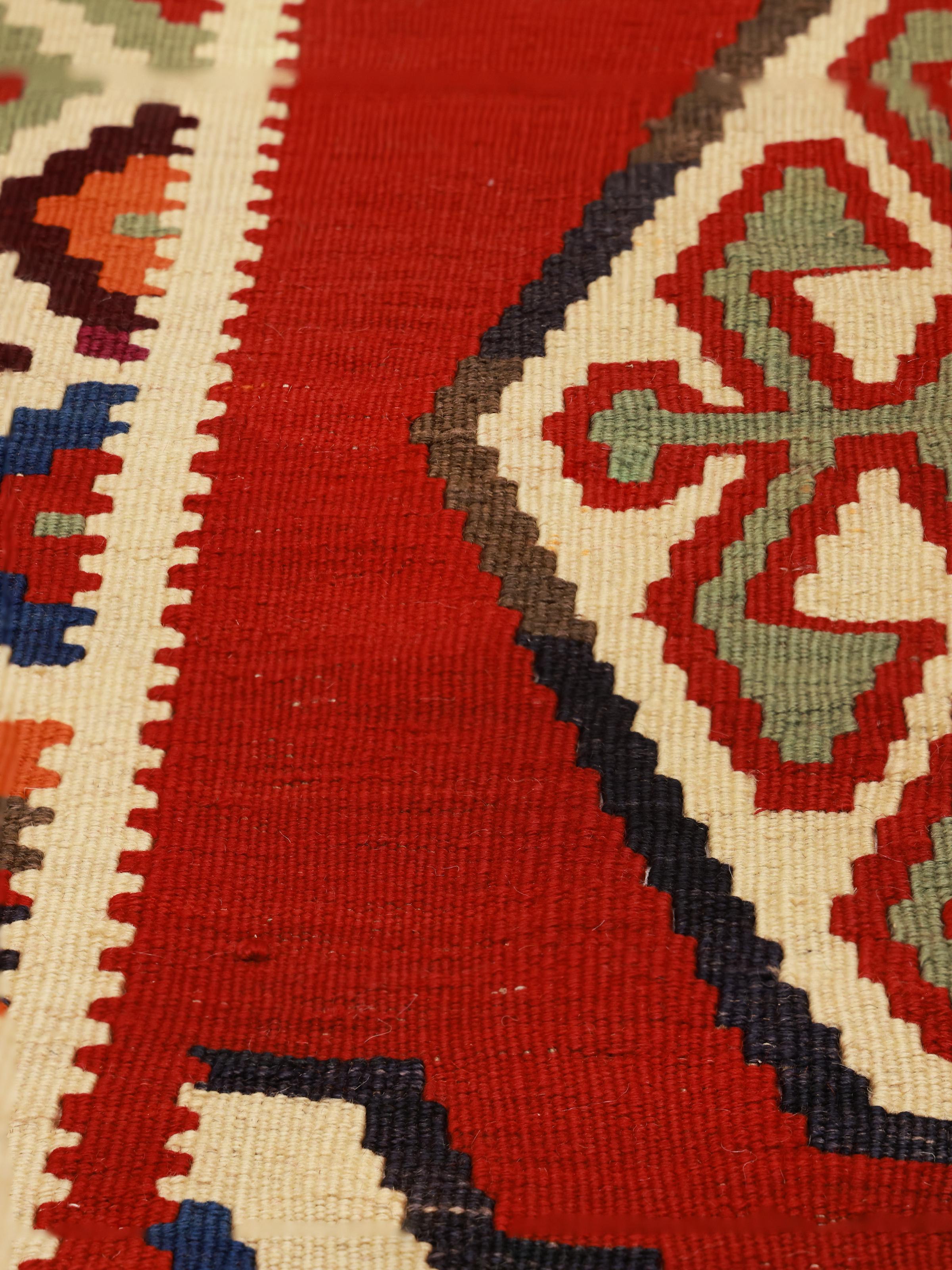
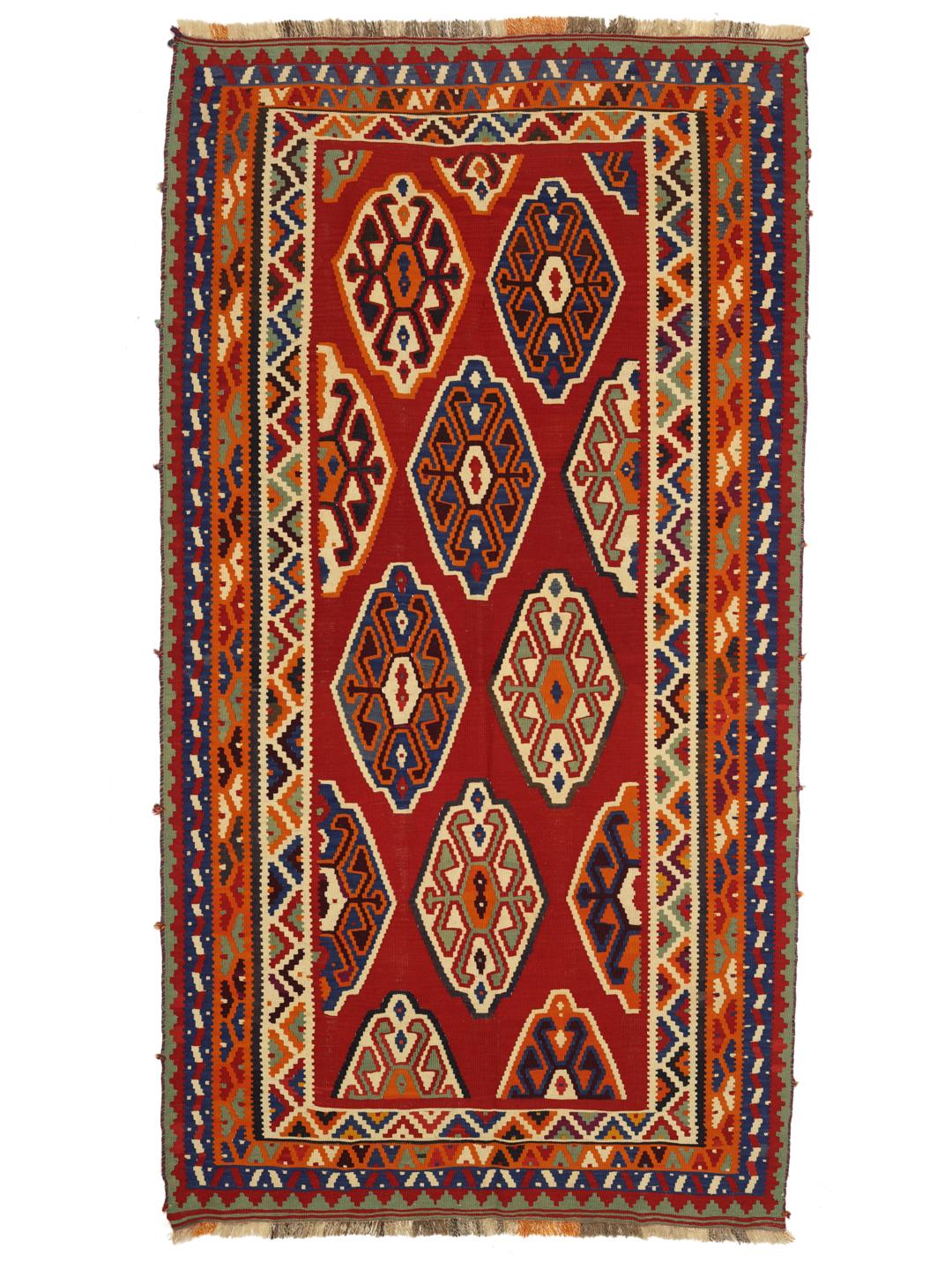
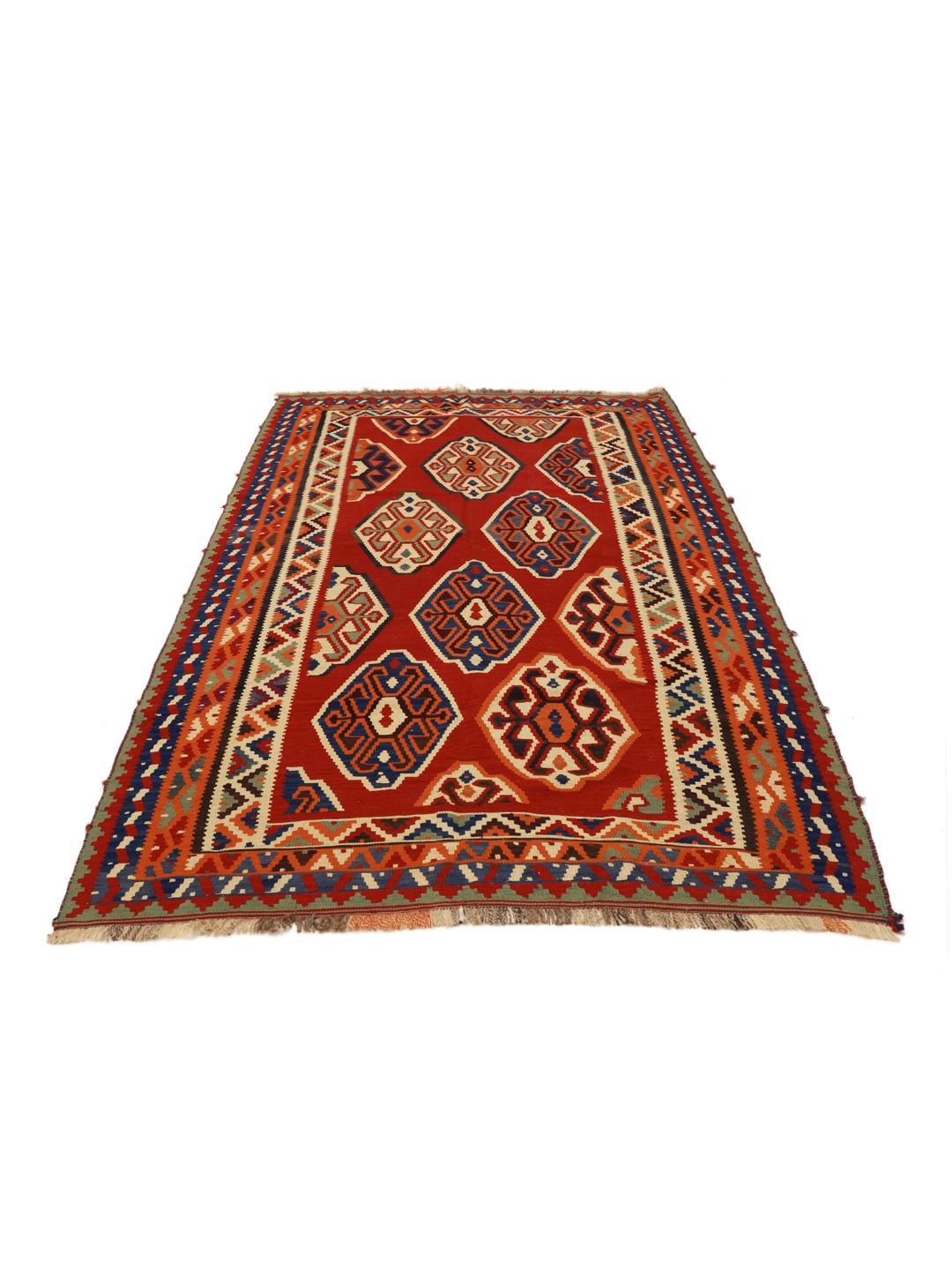
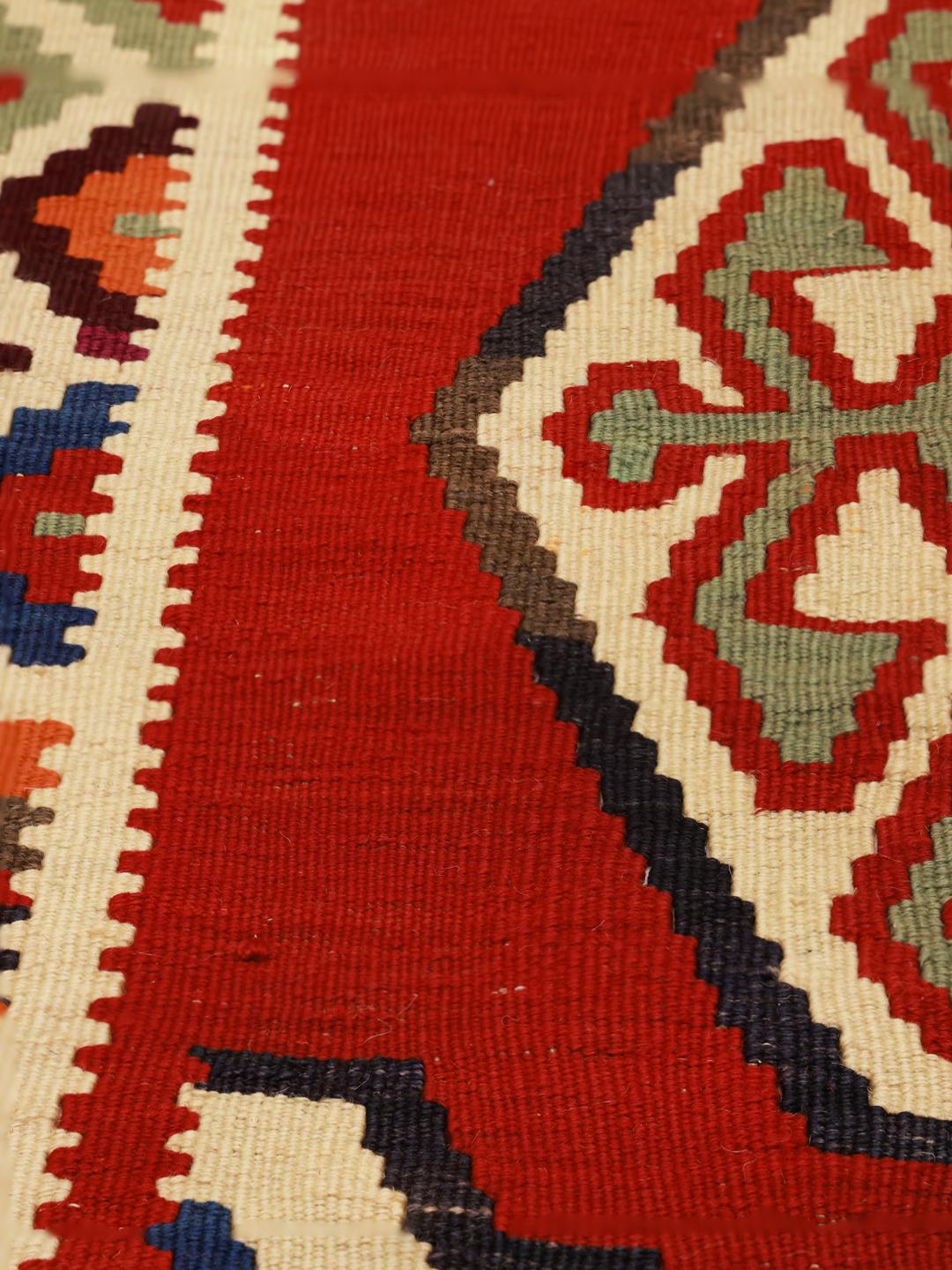
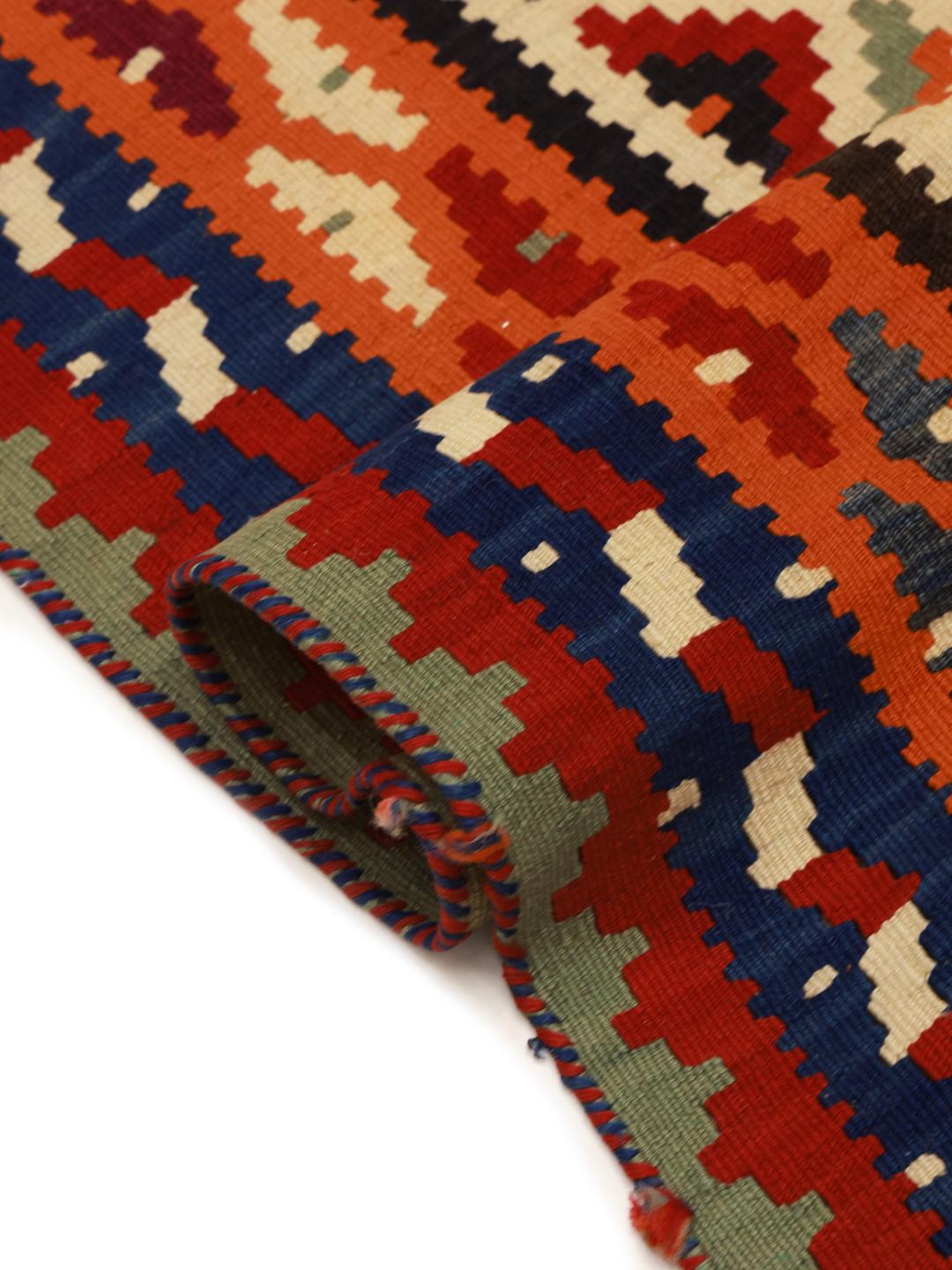
Kilim flatweaves have deep roots across Anatolia and the broader Middle East, where local weaving tribes created them both for practical household use and cultural expression. Unlike pile carpets, Kilims are produced using an ancient flatweaving technique where the weft threads are tightly packed over the warp, resulting in a flexible, double-sided textile.
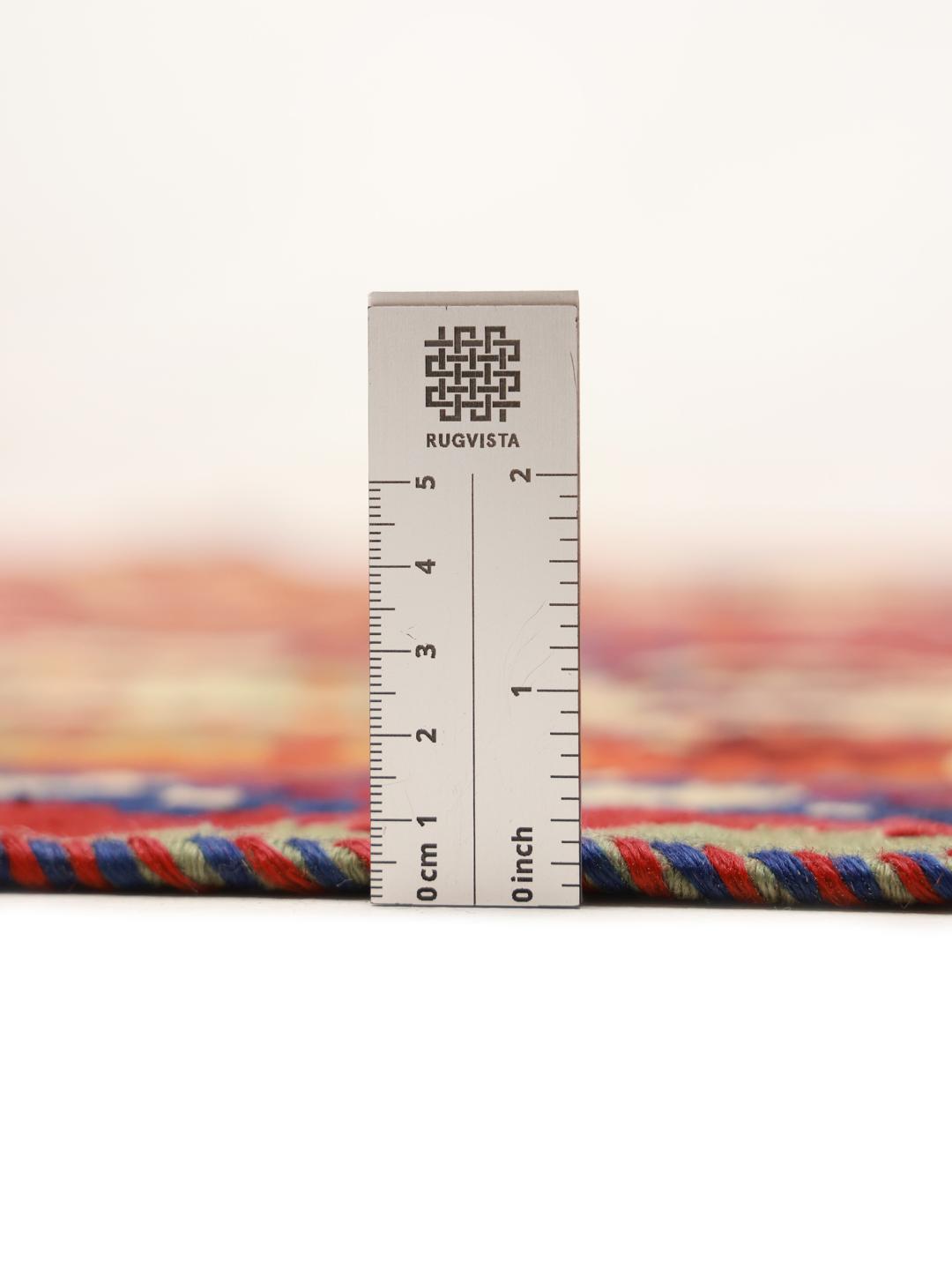
The term flatweave refers to textiles created without a raised pile. This construction relies on the tension of the wool strands to build pattern and structure simultaneously. Because both the face and backing are woven together in a single continuous process, the resulting rug is durable, lightweight, and smooth underfoot.
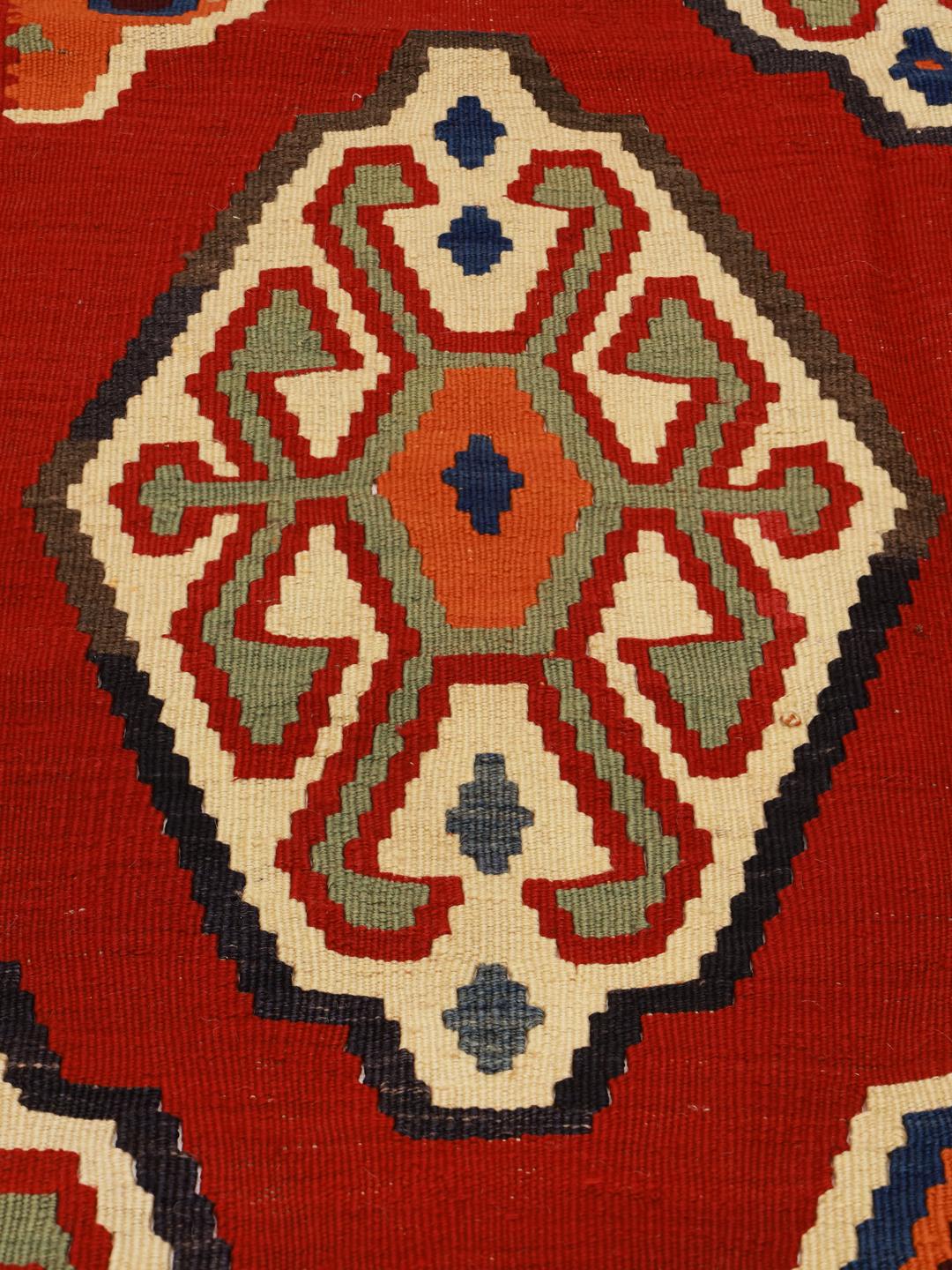
Visually, traditional Turkish Kilims are celebrated for their geometric symbols and framed borders. The central diamond medallions and surrounding zig-zag motifs seen here carry ancestral meanings connected to protection, abundance, and family life, while the bold contrast of red, blue, and orange reflects regional dye traditions.
Vintage Kilims aged between 20 and 50 years are especially sought after by collectors and interior enthusiasts. As natural dyes settle over time, the colours soften into unique tones that modern rugs cannot replicate, making each vintage piece a distinct historical record of Anatolian craft.