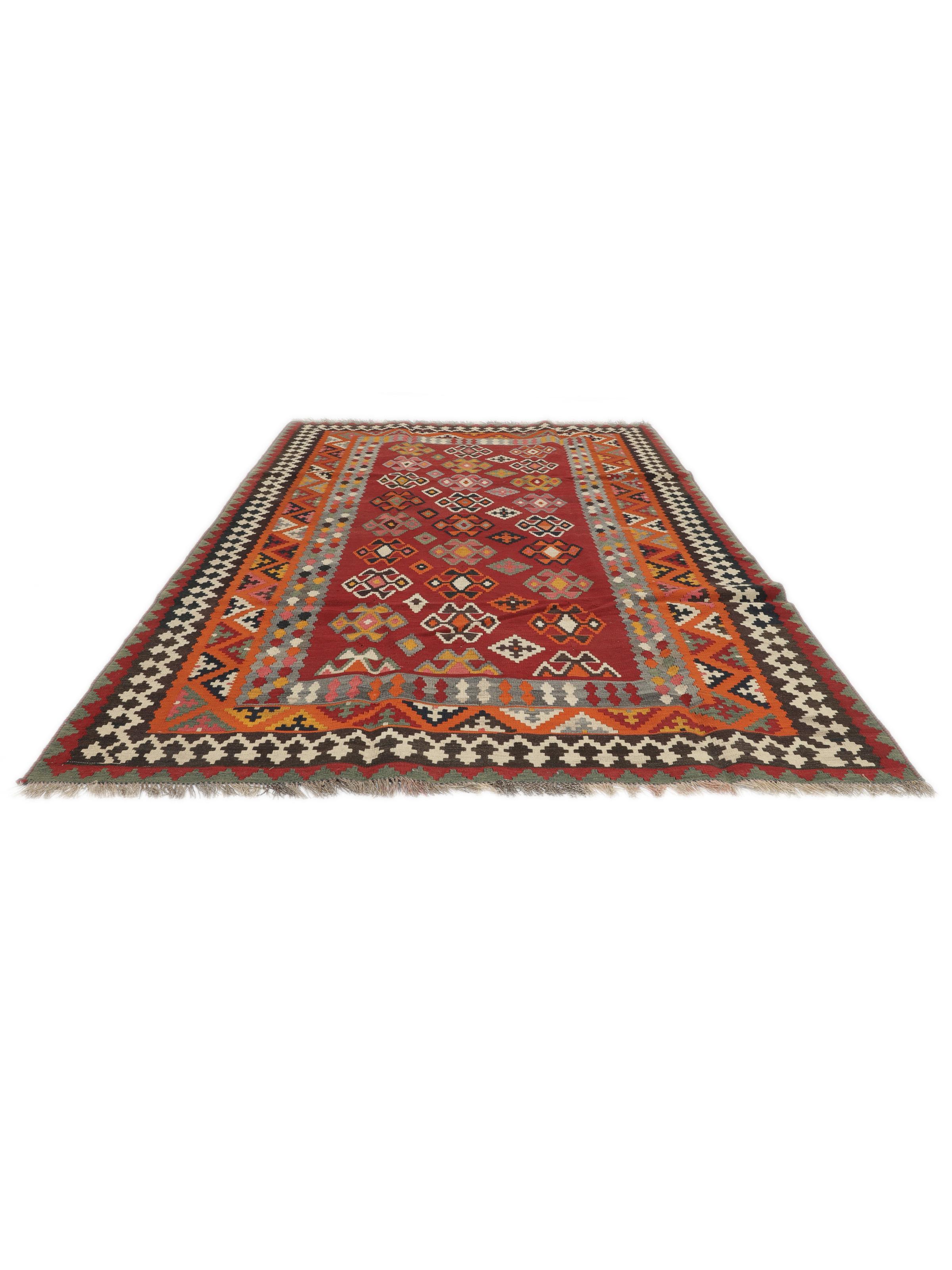
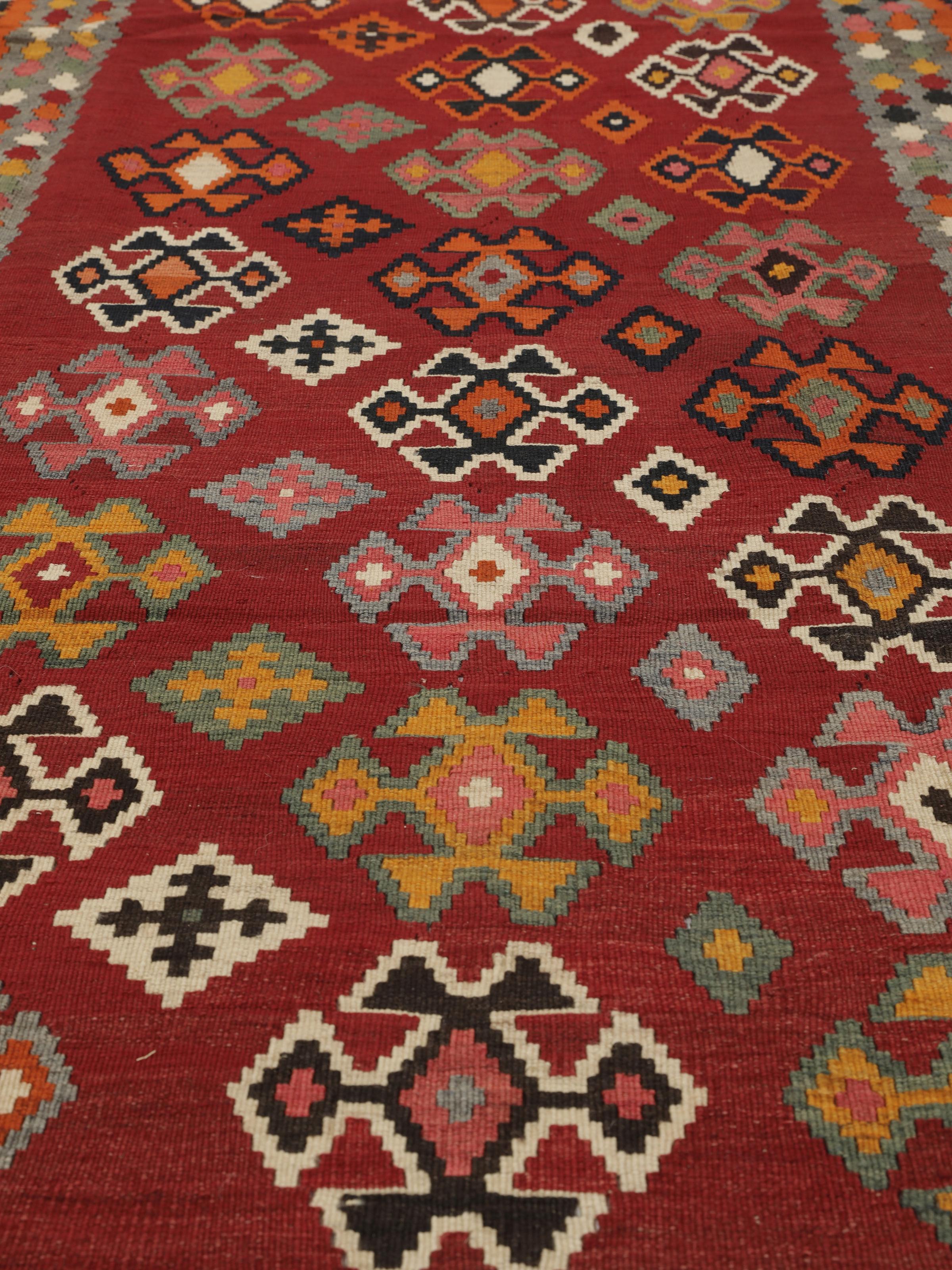
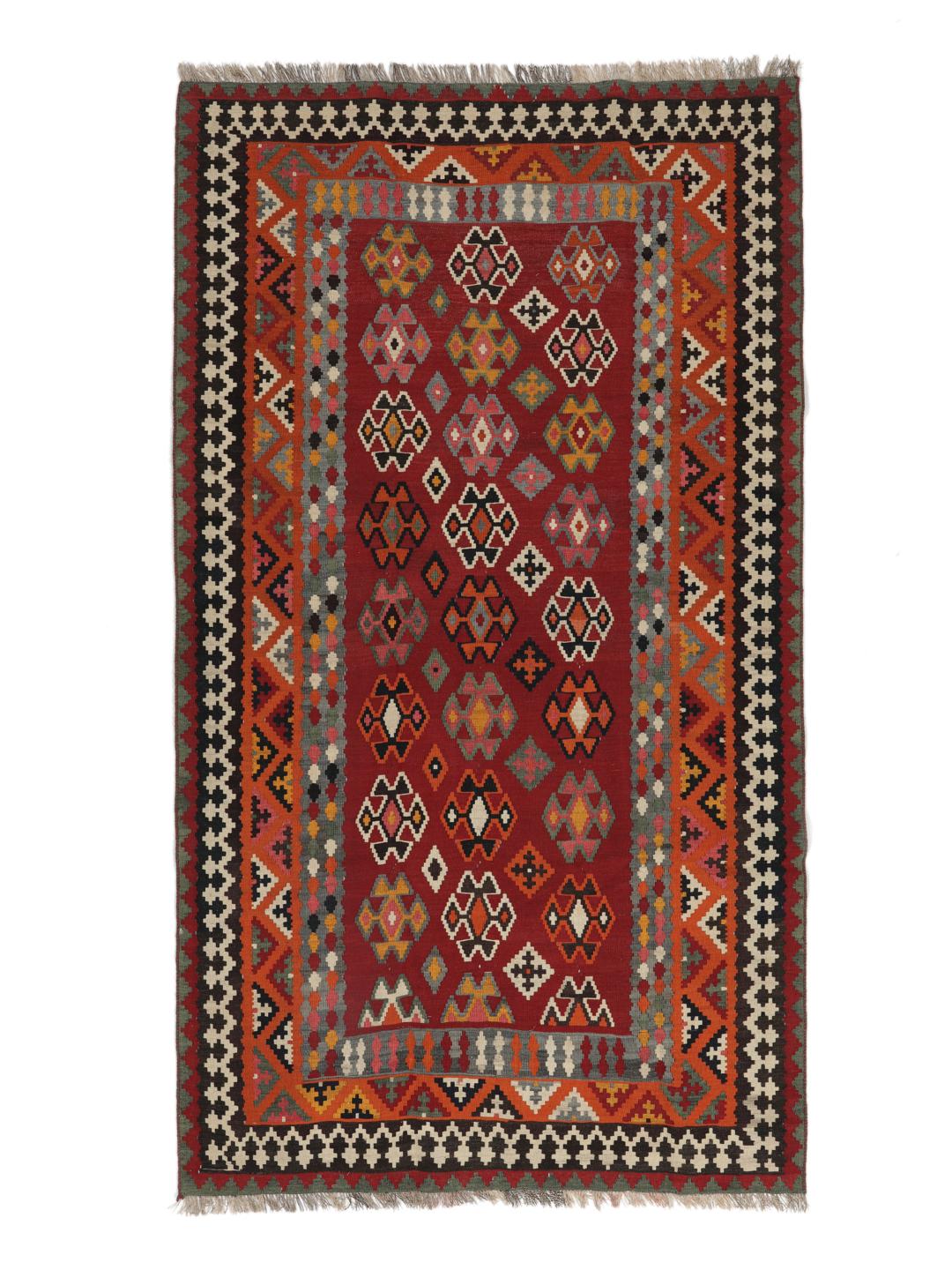
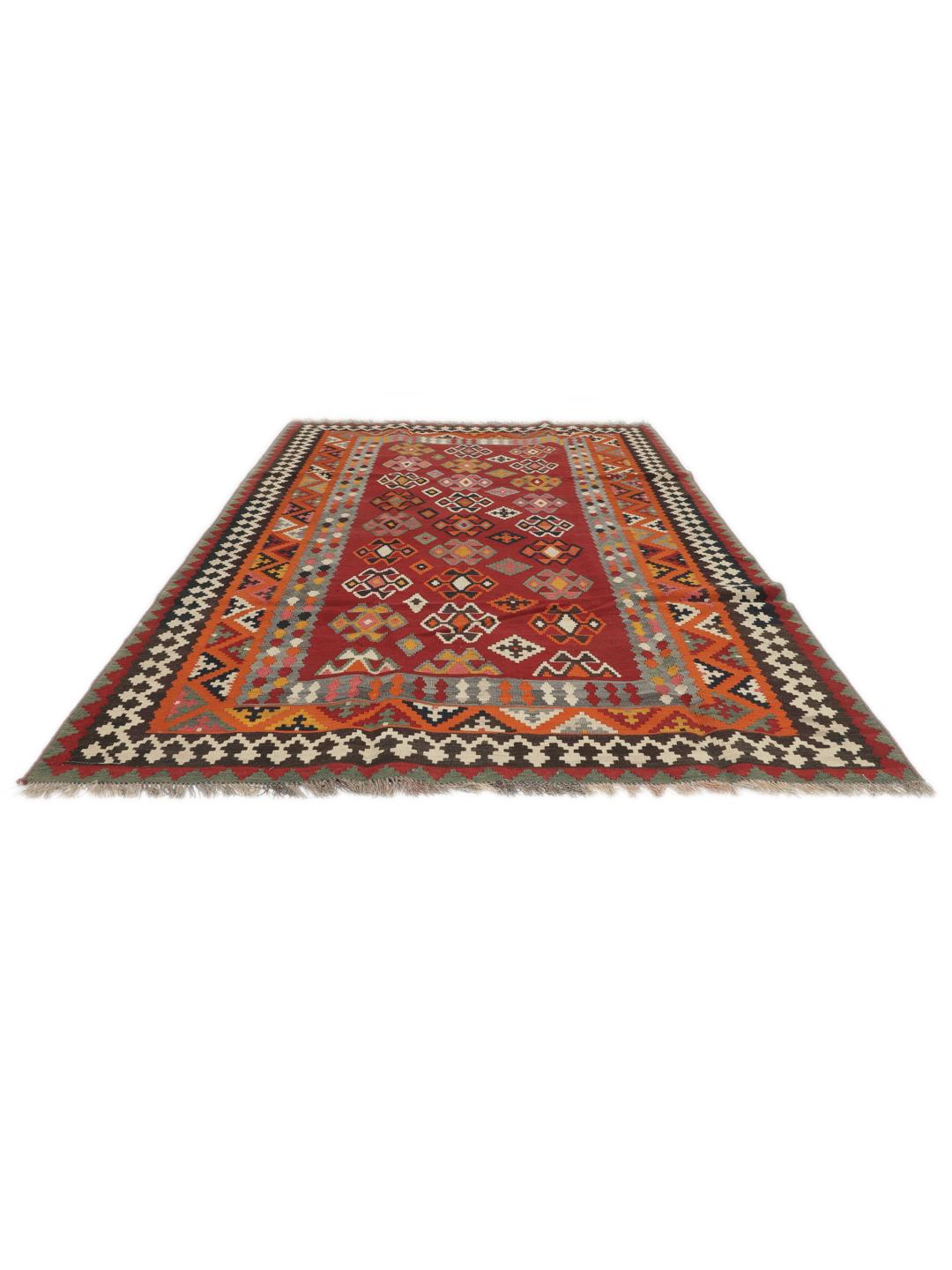
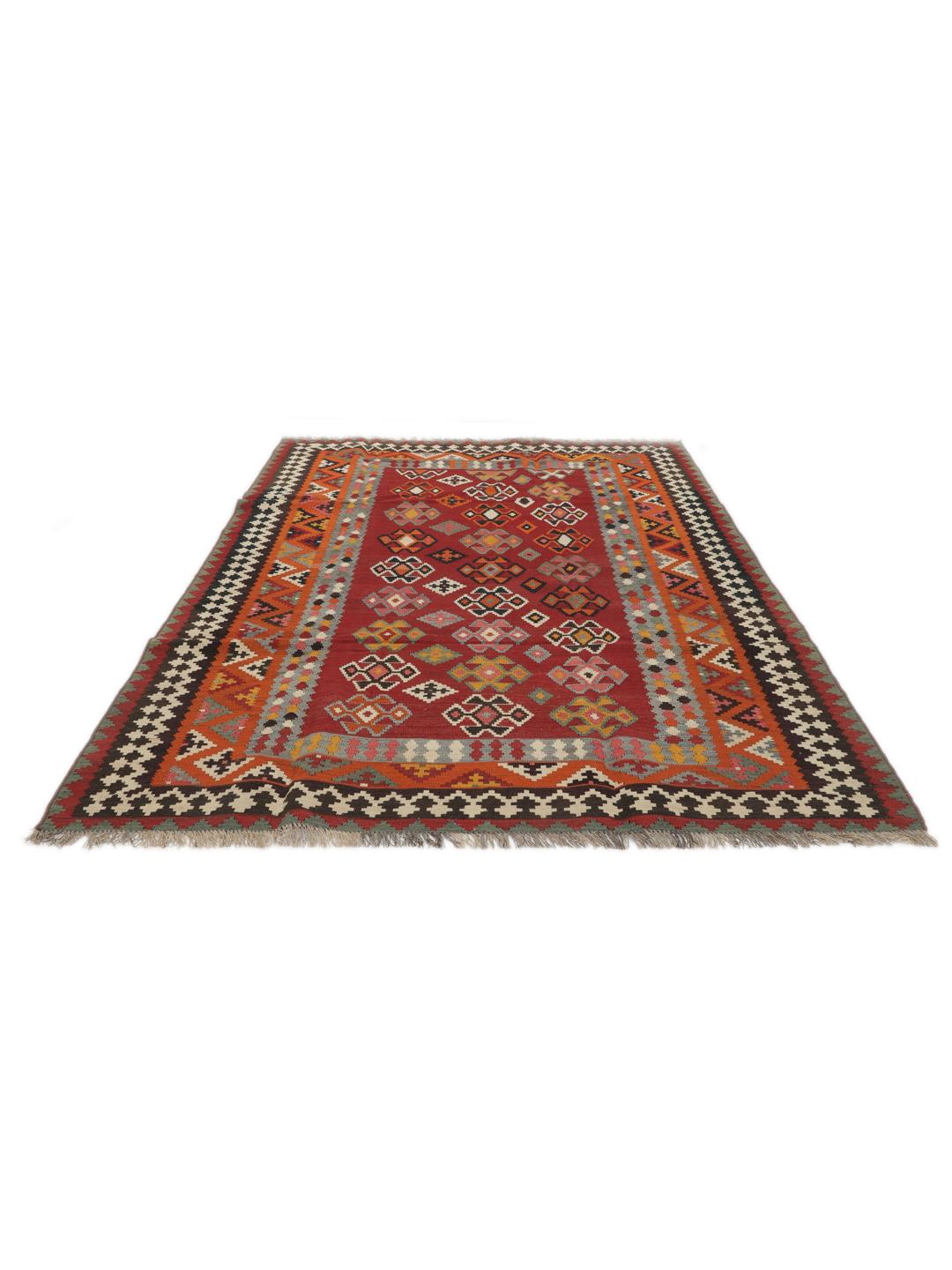
Kilim rugs are deeply rooted in the nomadic and village traditions of the Middle East. Historically, these rugs were created as essential, portable items for daily life, serving as floor coverings, blankets, or saddlebags for travelling tribes. Over centuries, the craft evolved into a sophisticated art form, with each region developing its own specific visual language and weaving styles.
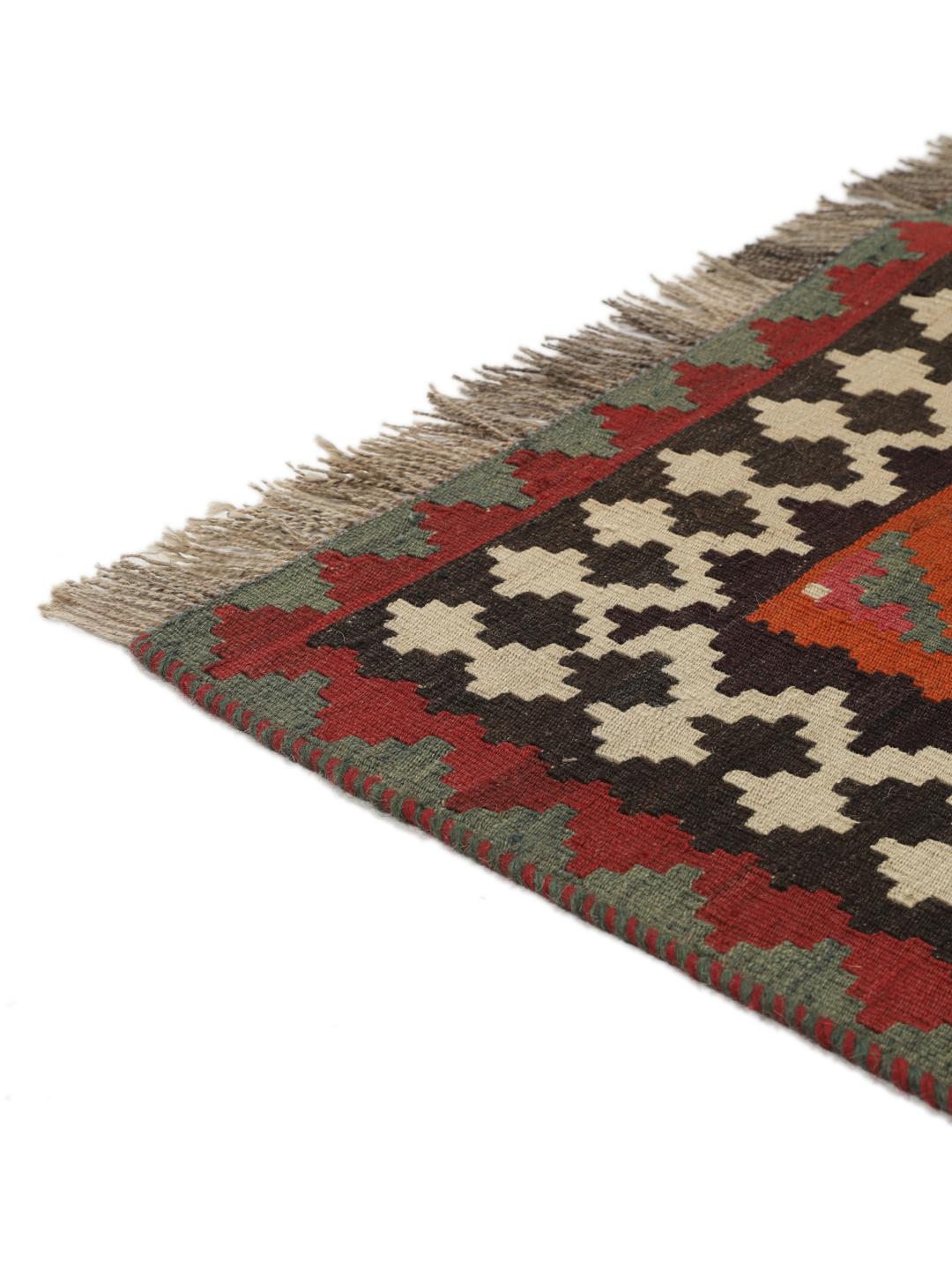
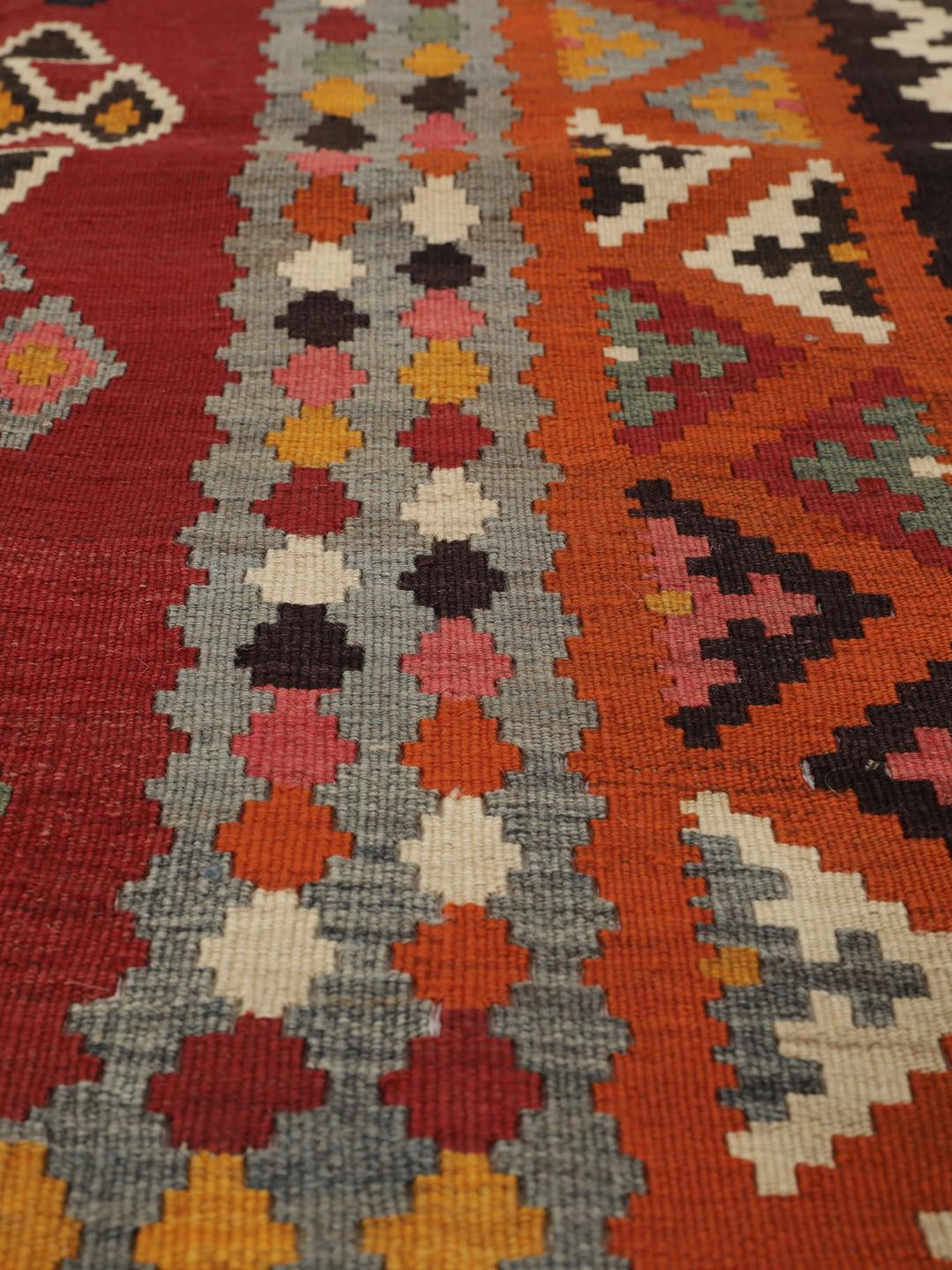
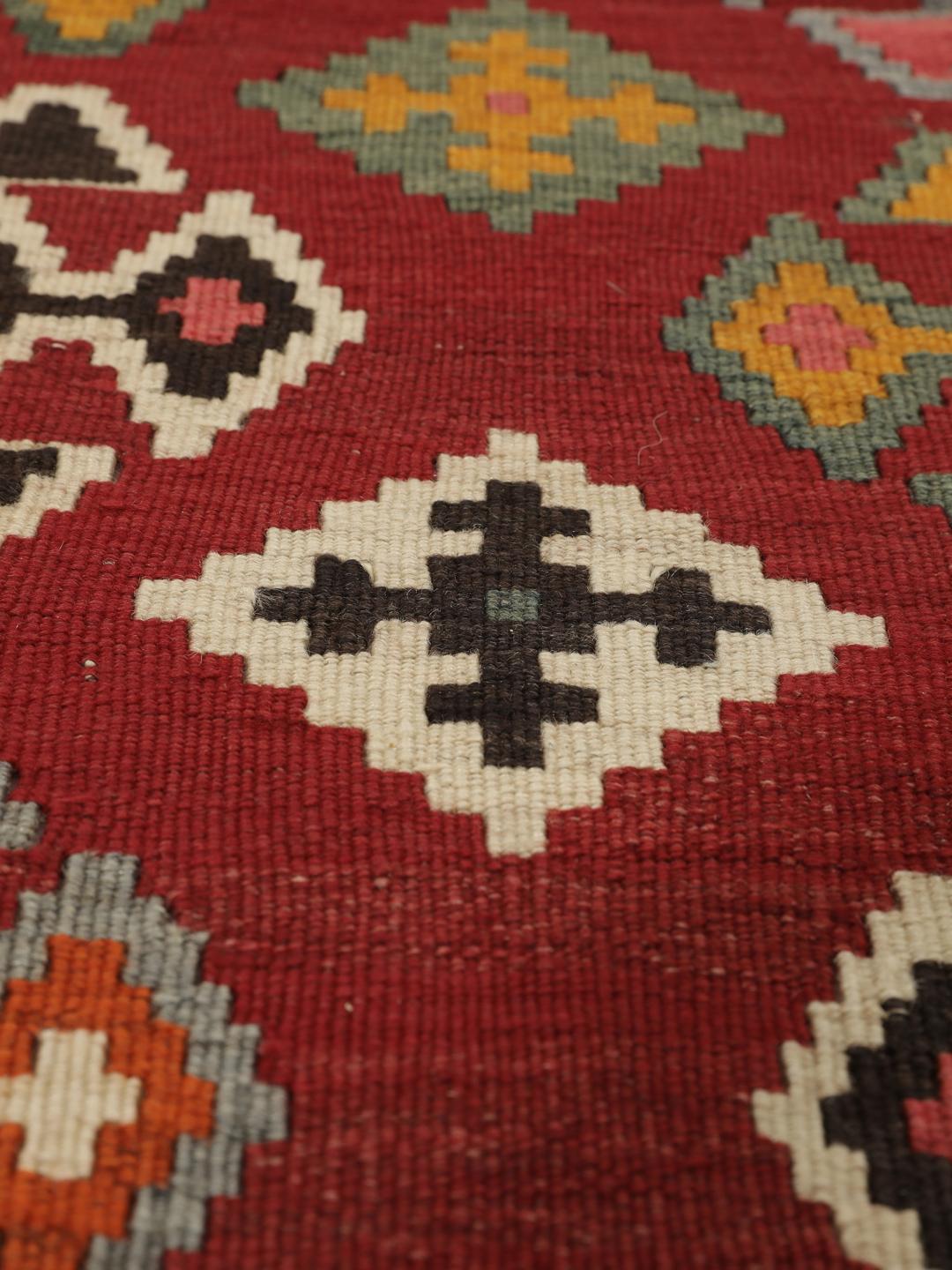
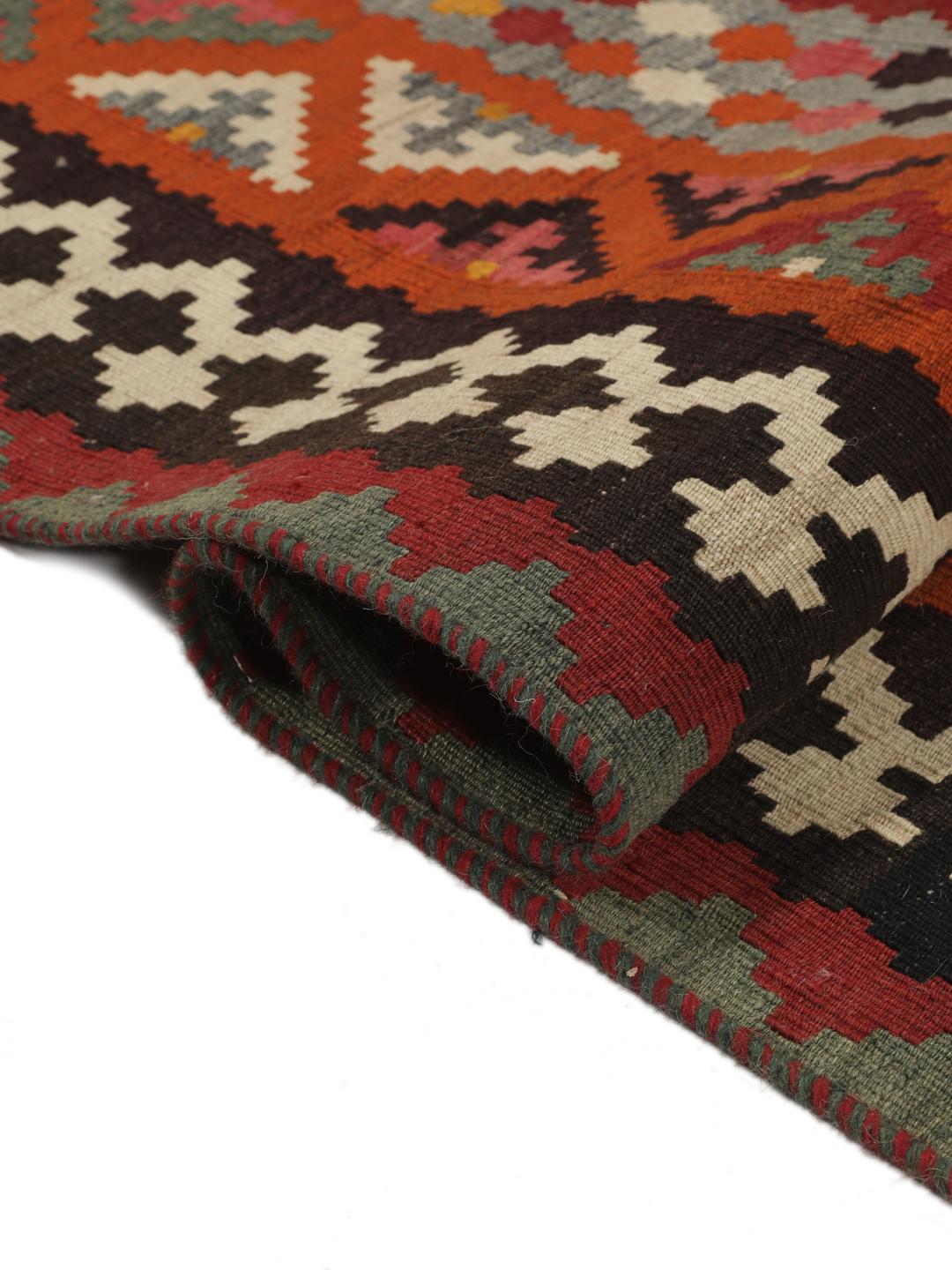
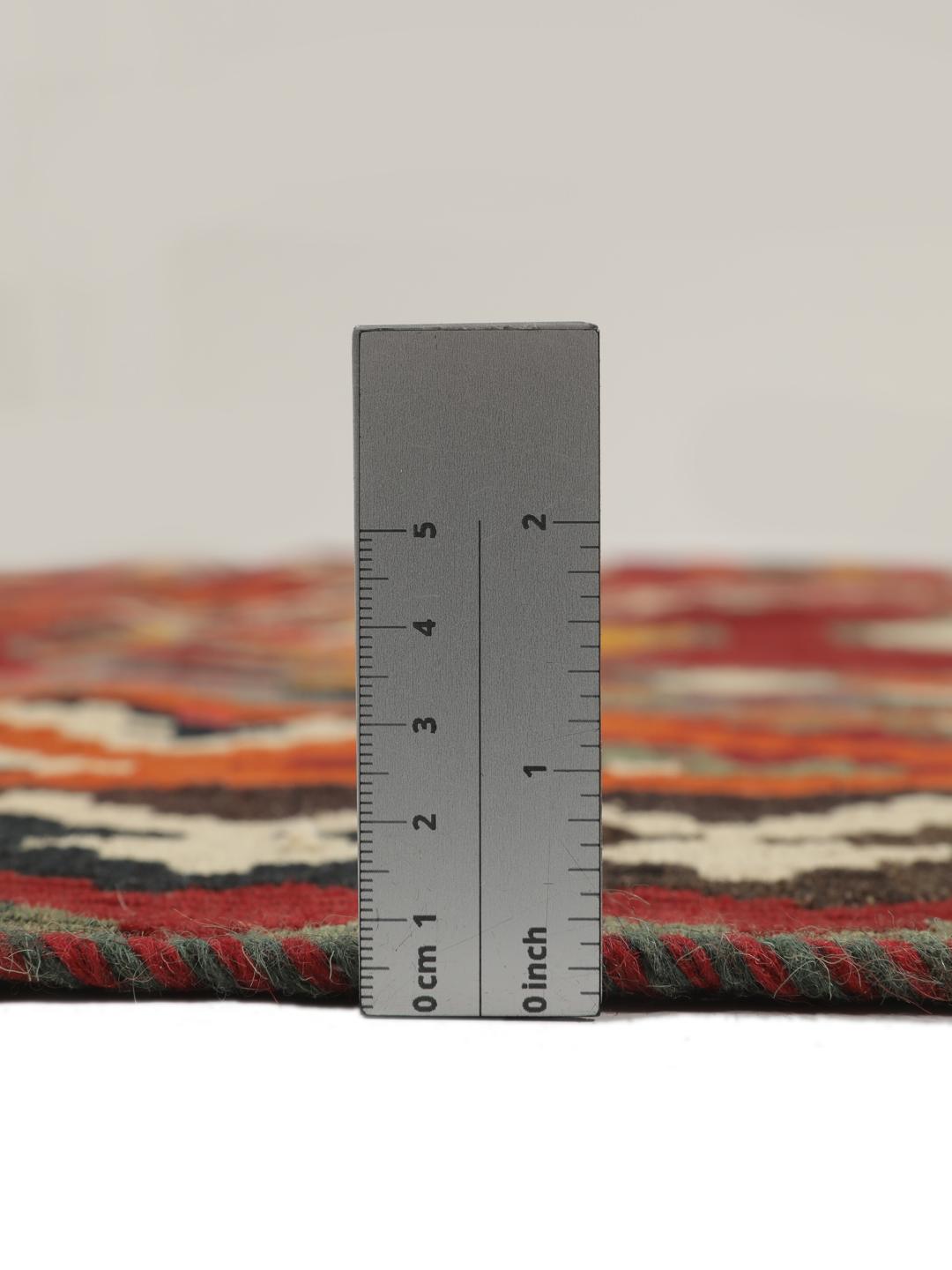
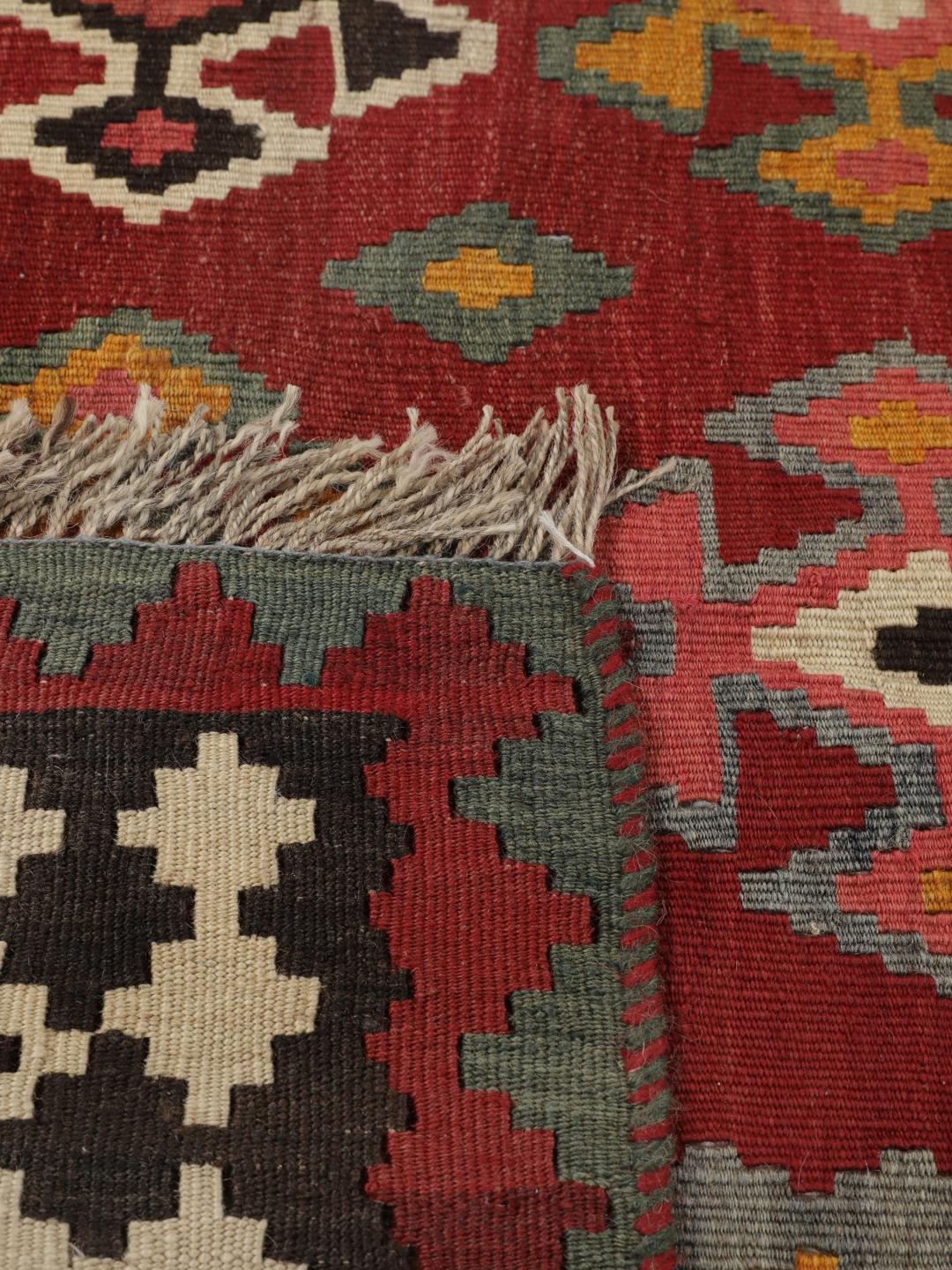
The term Kilim refers to a specific flat-weaving technique where the weft and warp threads are interlaced to create a smooth, pileless surface. This method is highly prized for its clarity of pattern and lightweight nature, allowing for intricate geometric designs that are visible on both sides of the textile. This construction technique is a hallmark of quality, ensuring the rug remains durable despite its relatively slim profile.
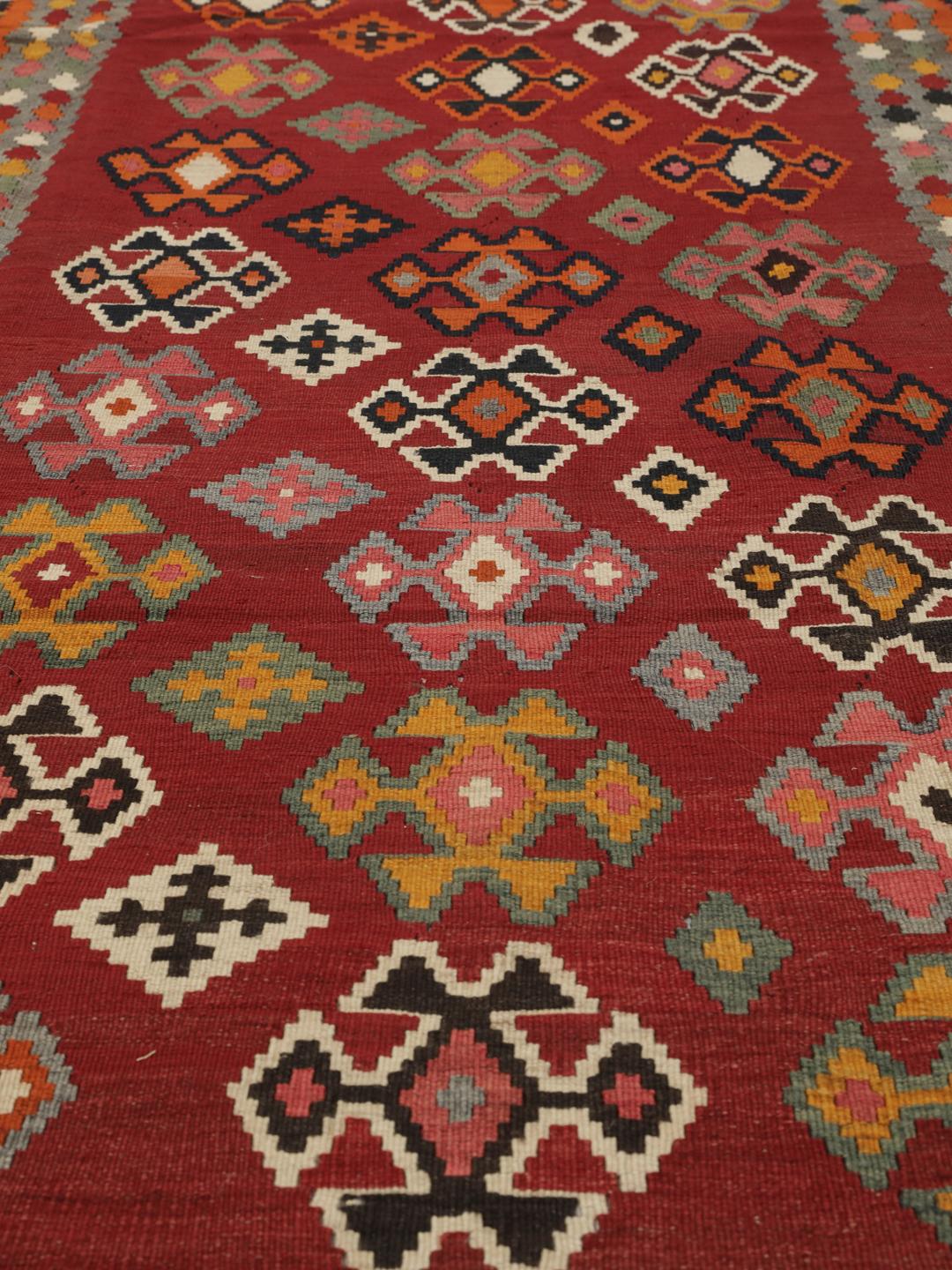
Signature design elements of these rugs include bold geometric motifs such as diamonds, stylised flowers, and latch-hook borders. These patterns are often symbolic, representing protection, fertility, or the natural landscape of the weaver's home. The colour palettes traditionally rely on rich, earthy pigments derived from natural dyes, which develop a beautiful, muted patina as the rug ages.
Collecting these vintage pieces is a way to preserve a fading cultural heritage. Each rug is a testament to the skill and creative vision of the weaver, capturing a moment in time through its specific arrangement of motifs and colours. Owning a vintage Kilim is not just about floor decor, but about honouring a lasting tradition of human ingenuity and artistic expression.