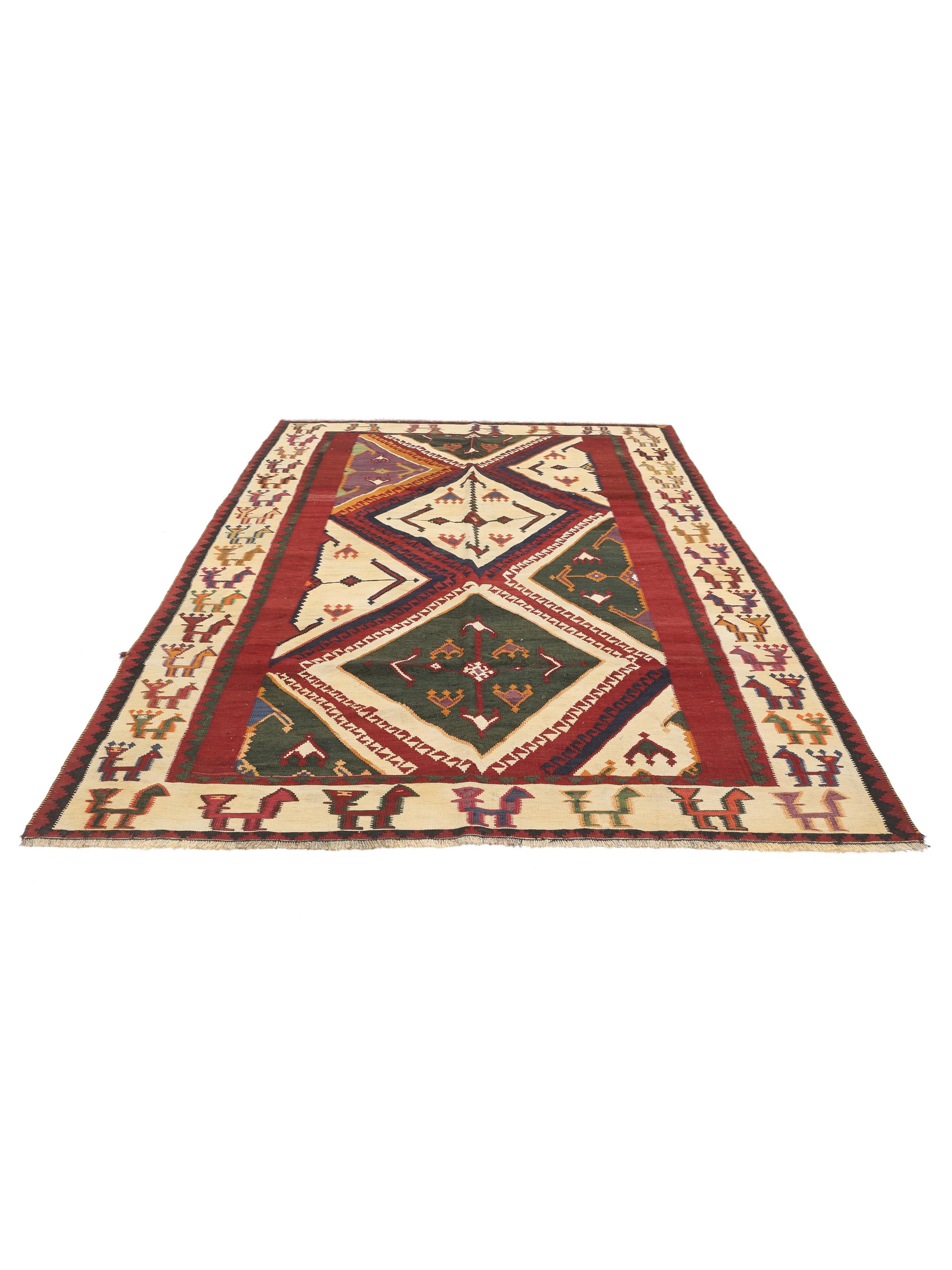
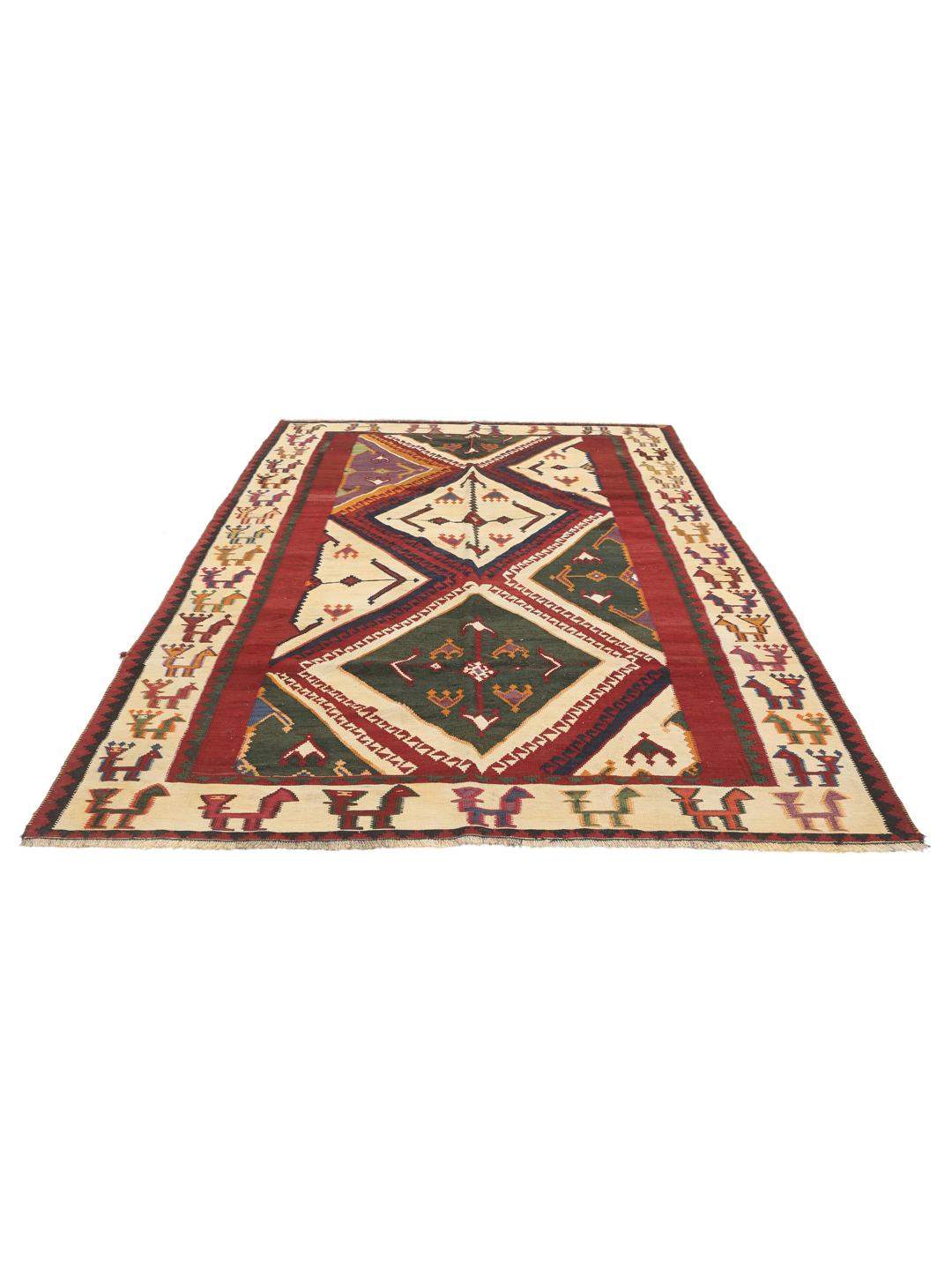
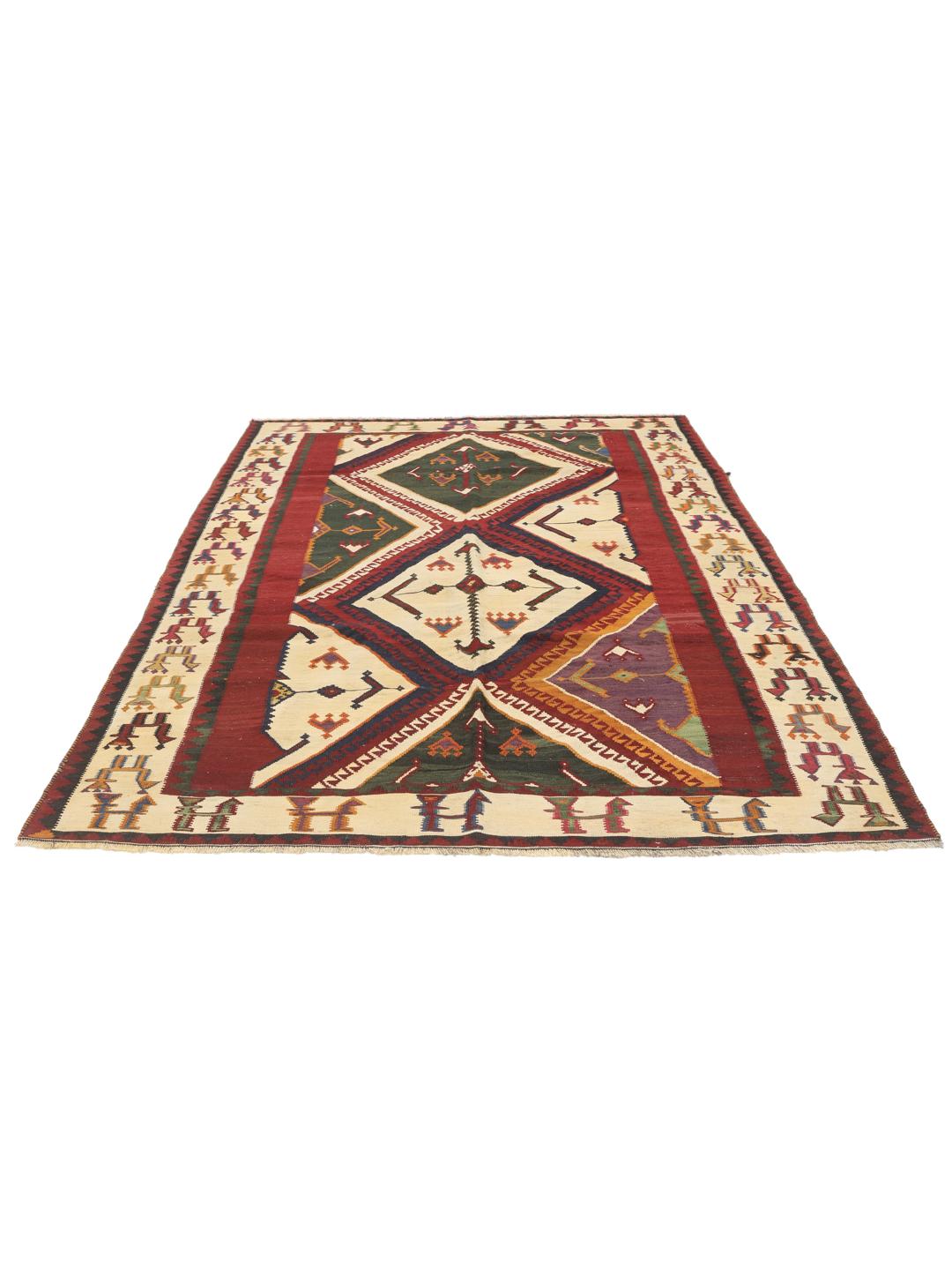
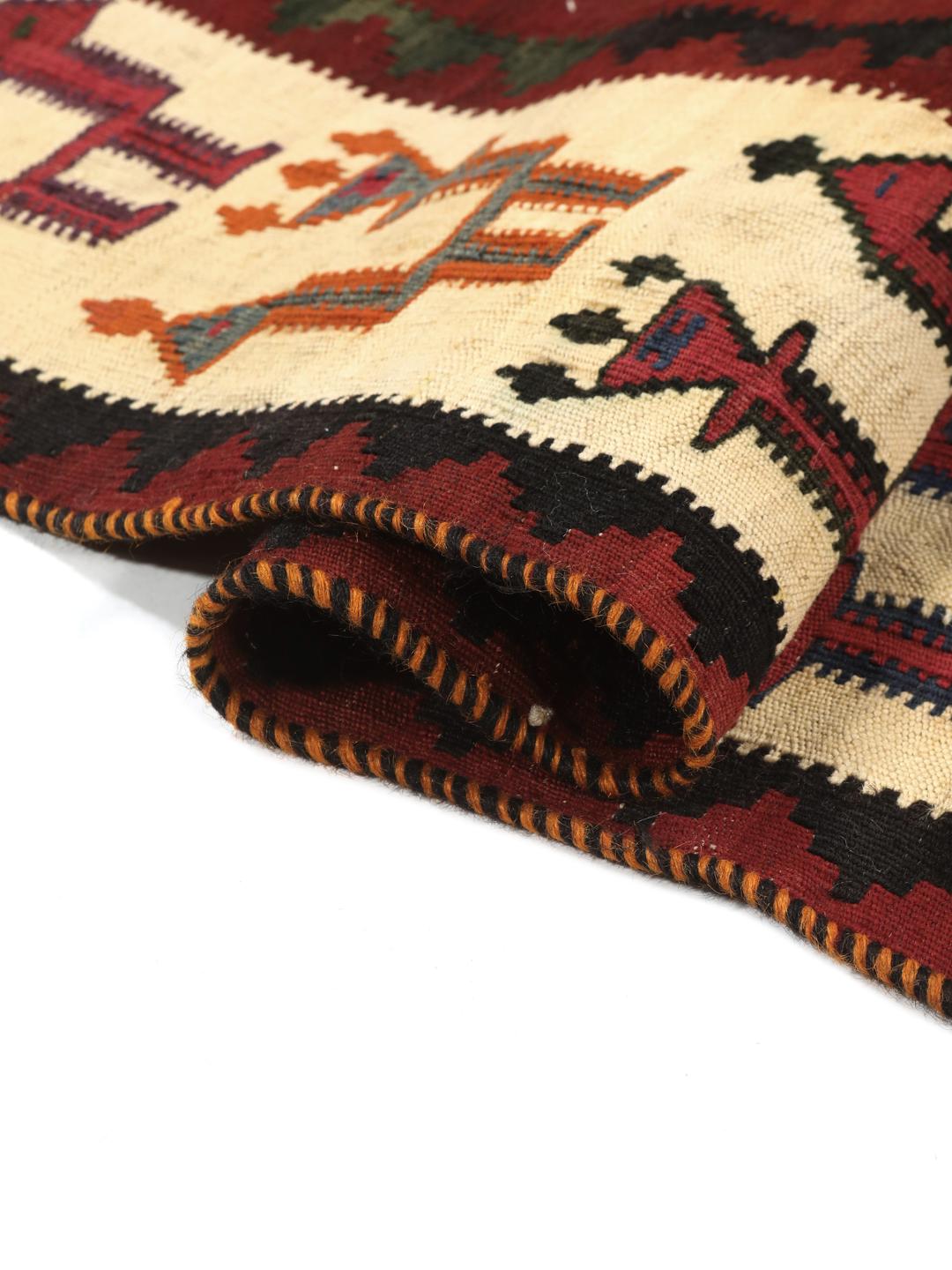
Kilim rugs are a storied part of Middle Eastern textile heritage, originating from nomadic and village cultures where weaving was not only a necessity for daily life but a primary medium for artistic expression. These flat-woven textiles were historically used as floor coverings, tent curtains, and storage bags, serving as essential, portable assets for families on the move. Over time, these functional objects evolved into the decorative treasures we value today.
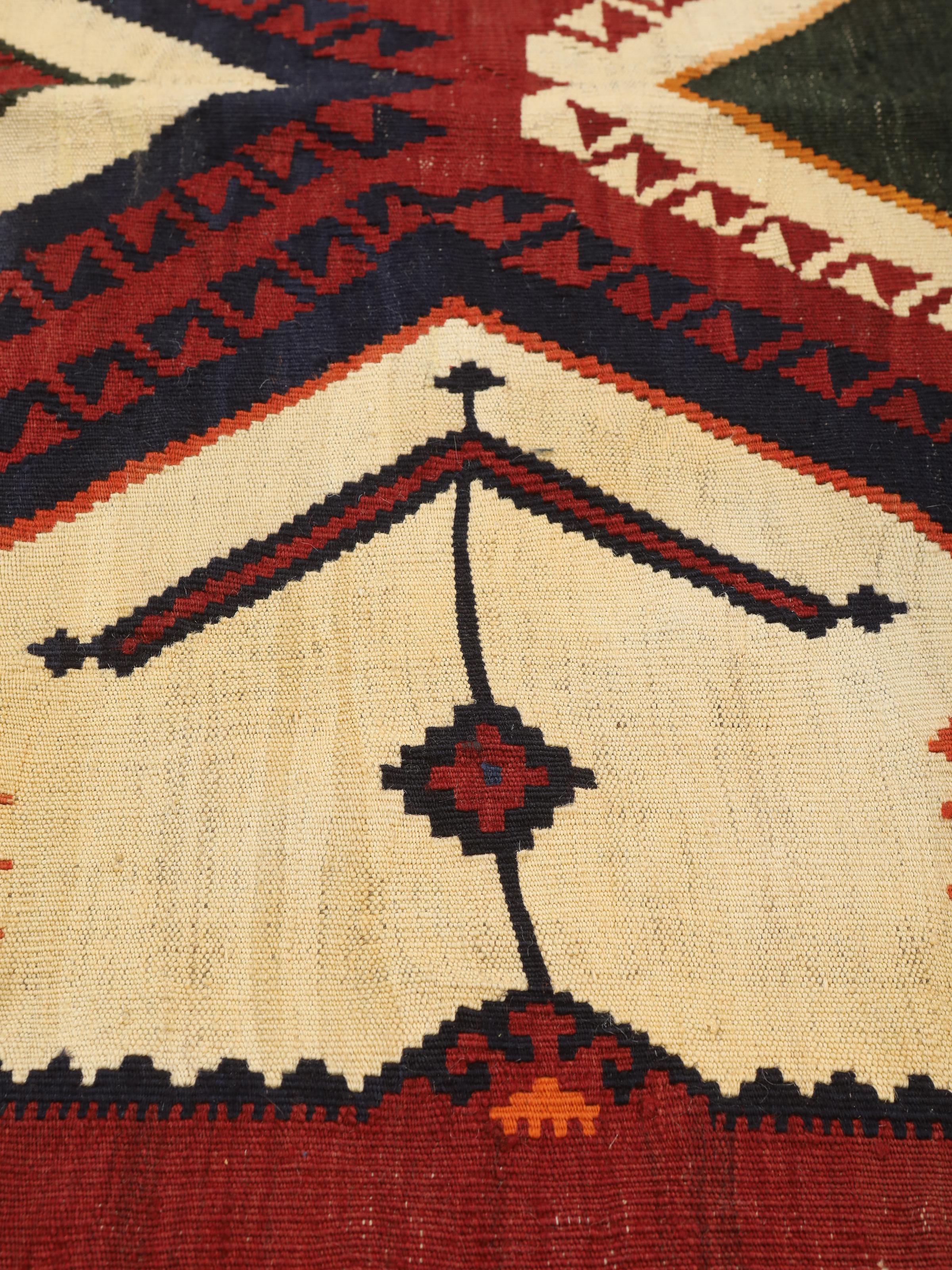
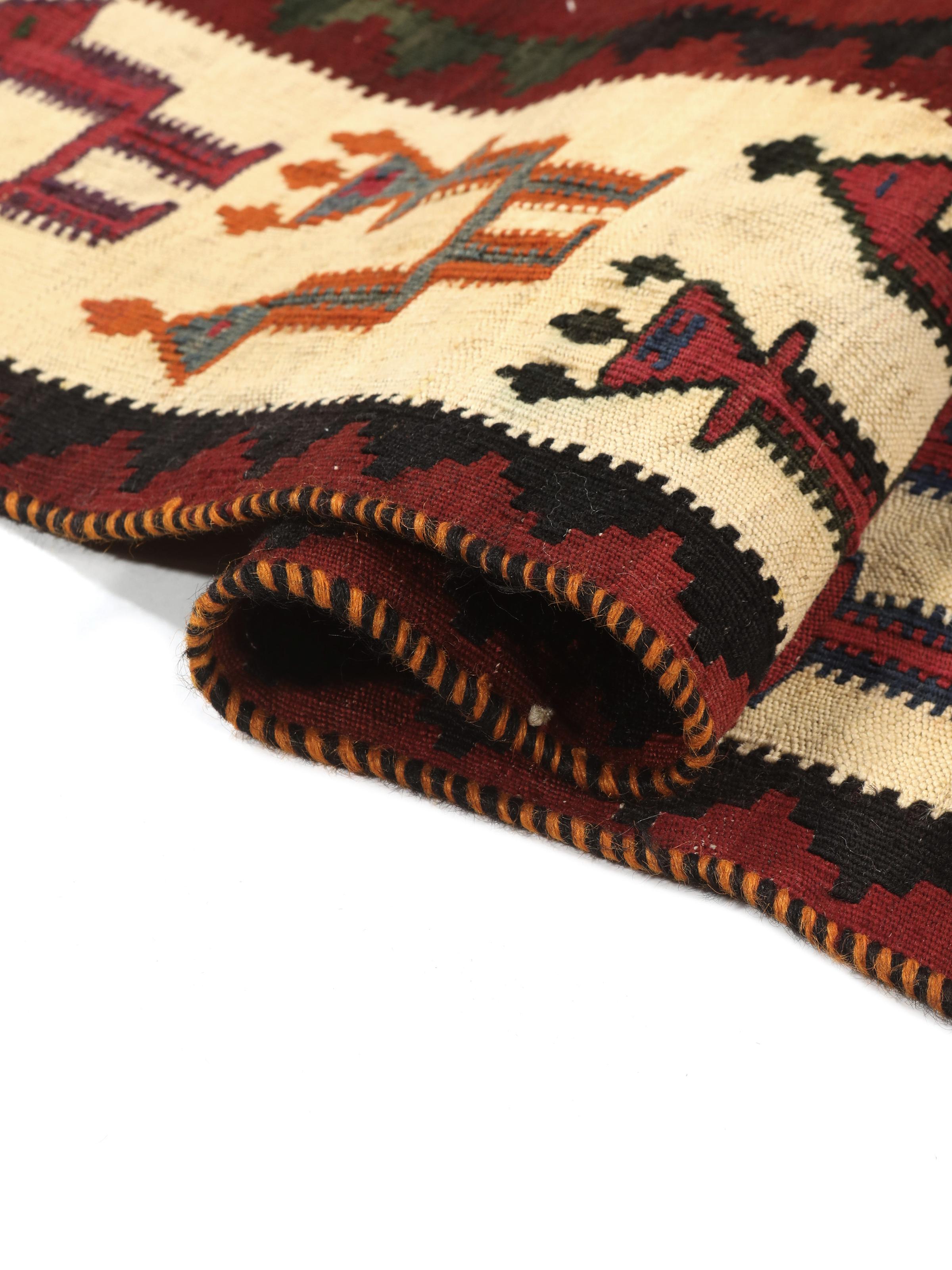
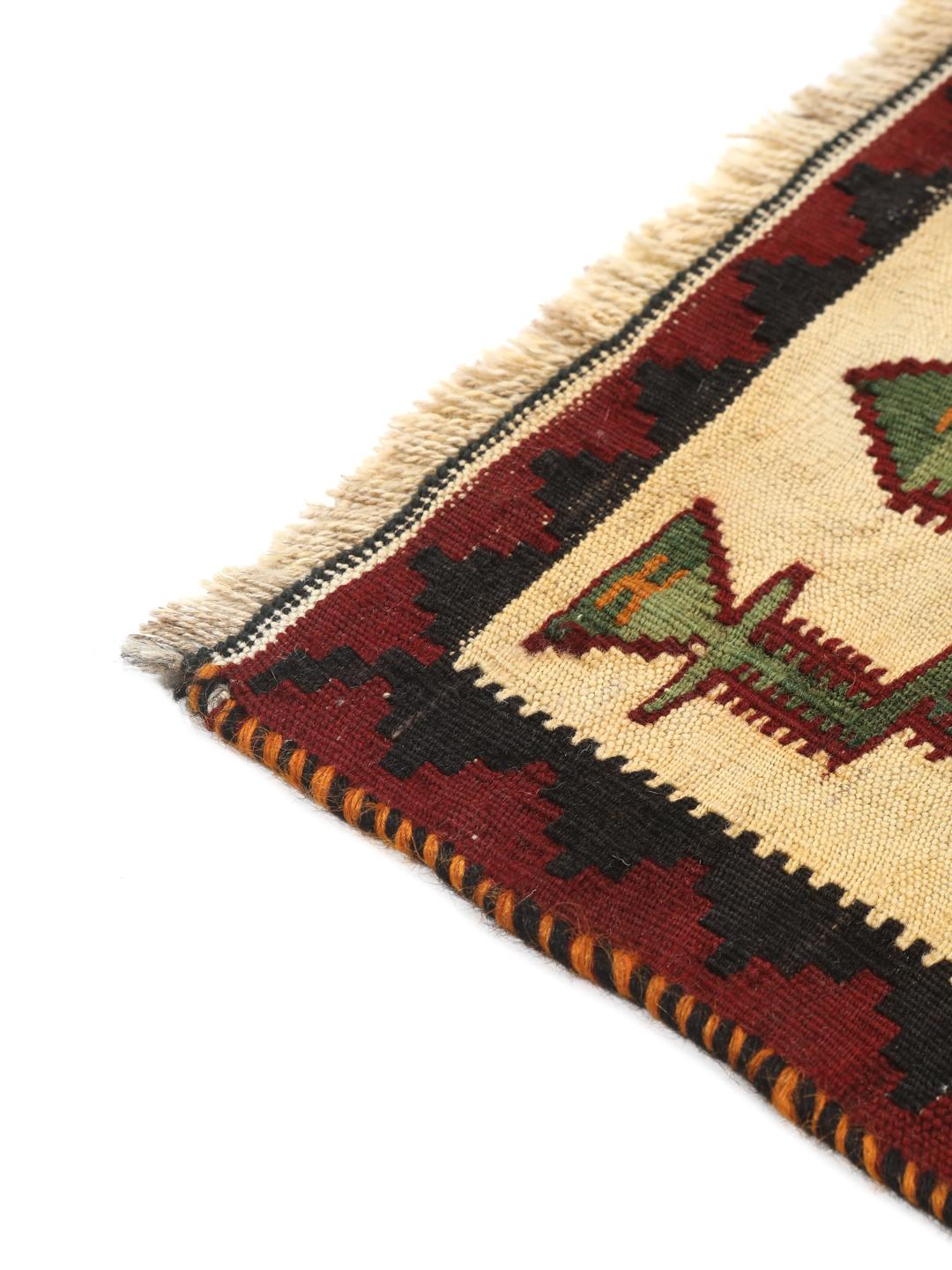
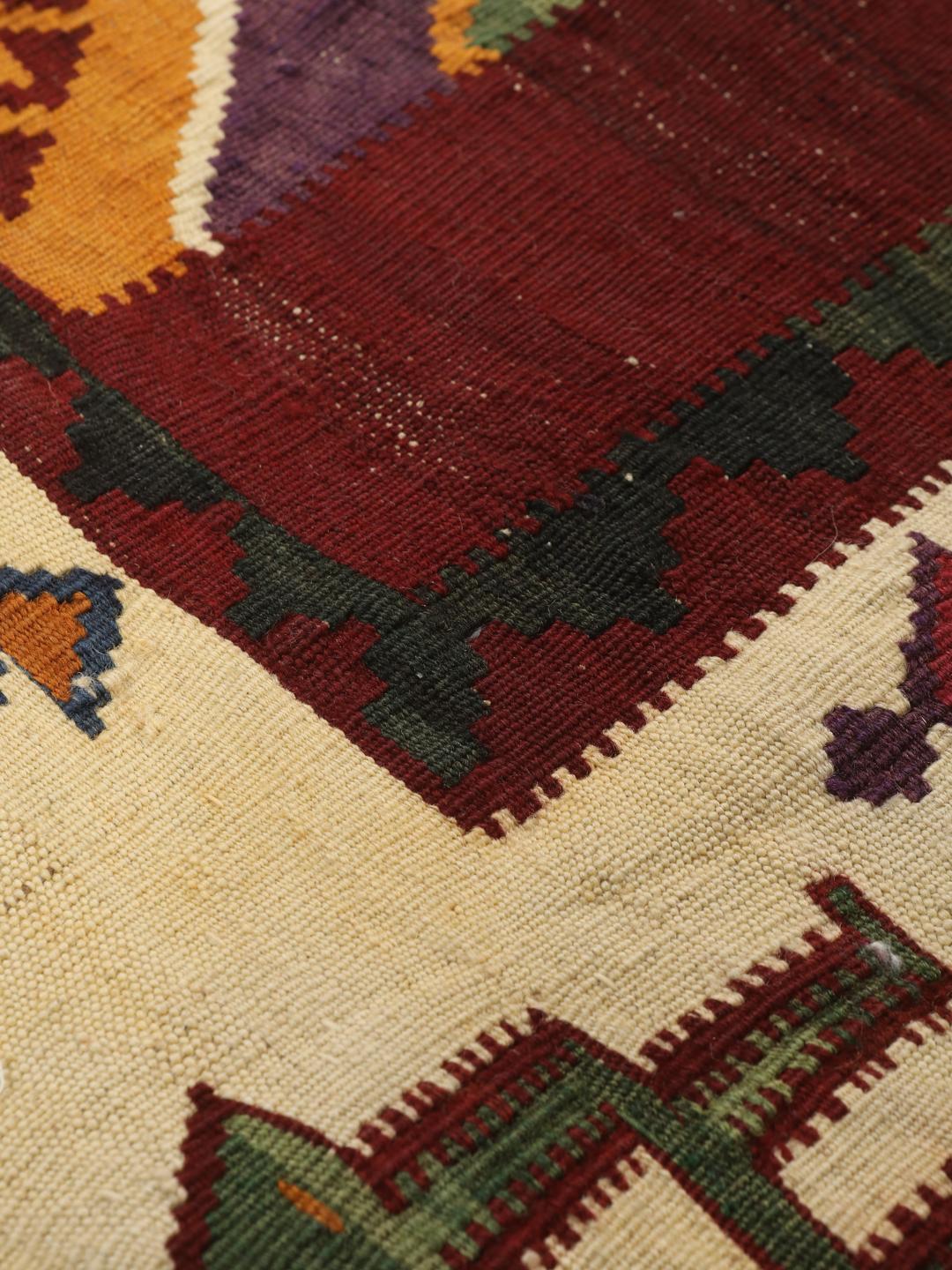
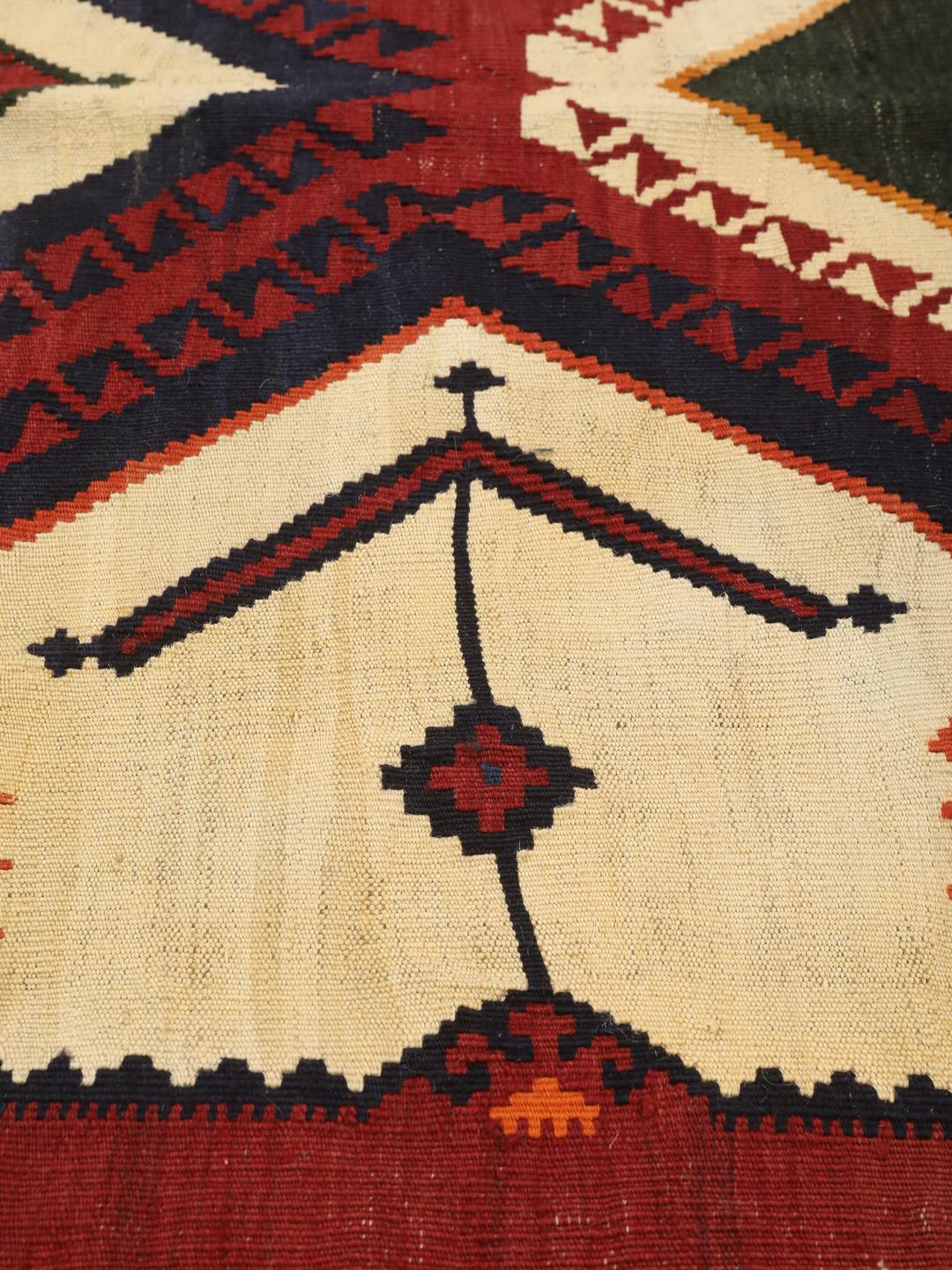
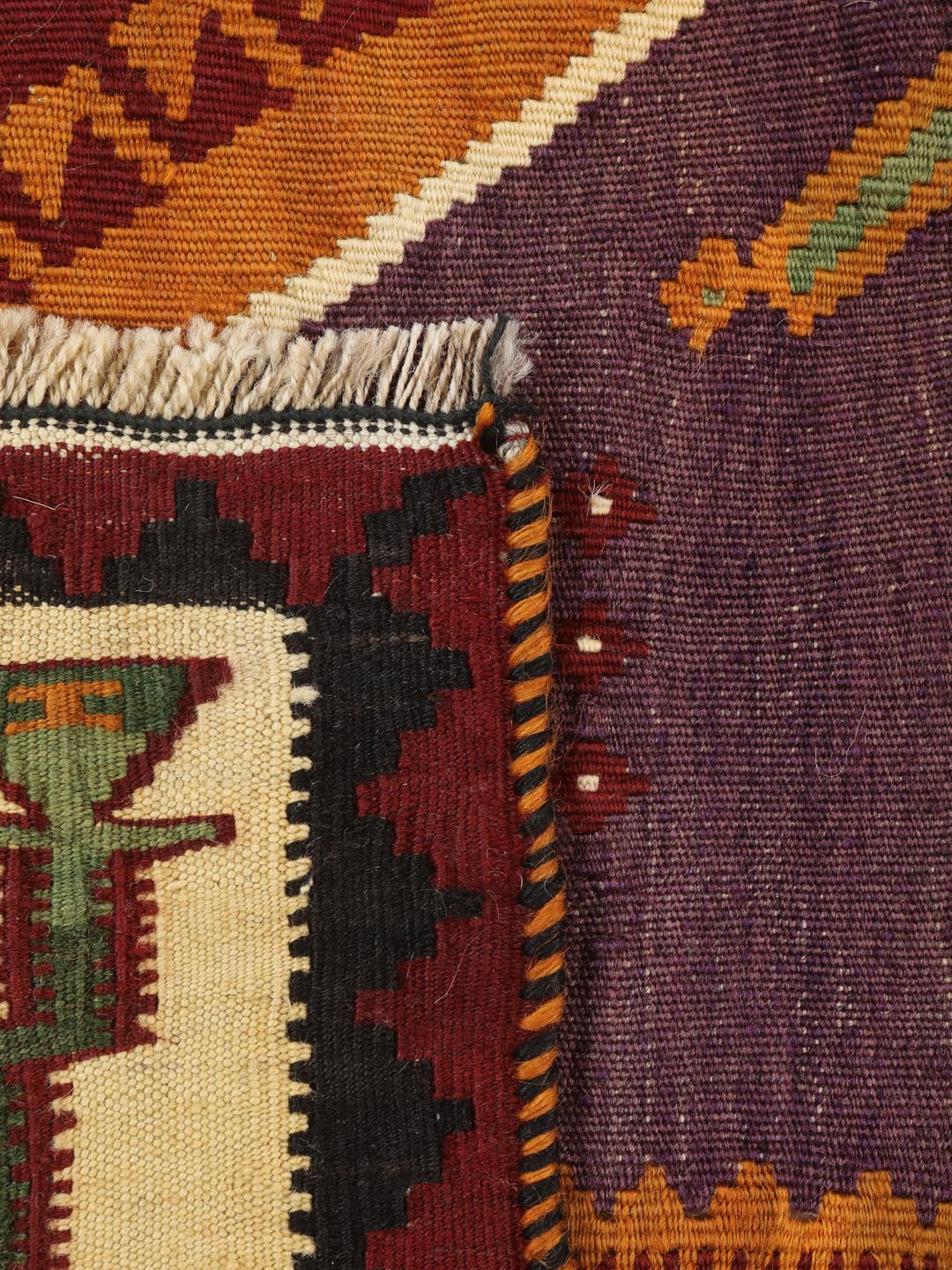
The term 'kilim' specifically refers to the slit-weave technique used to create the patterns. By wrapping the weft threads tightly around the warp, weavers create small vertical slits between colour changes, which define the characteristic sharp, angular edges of the geometric shapes. This method demands a high level of technical mastery, as the weaver must manage the tension of the yarns perfectly to prevent the fabric from buckling, resulting in a crisp, clean aesthetic that is highly prized for its precision.
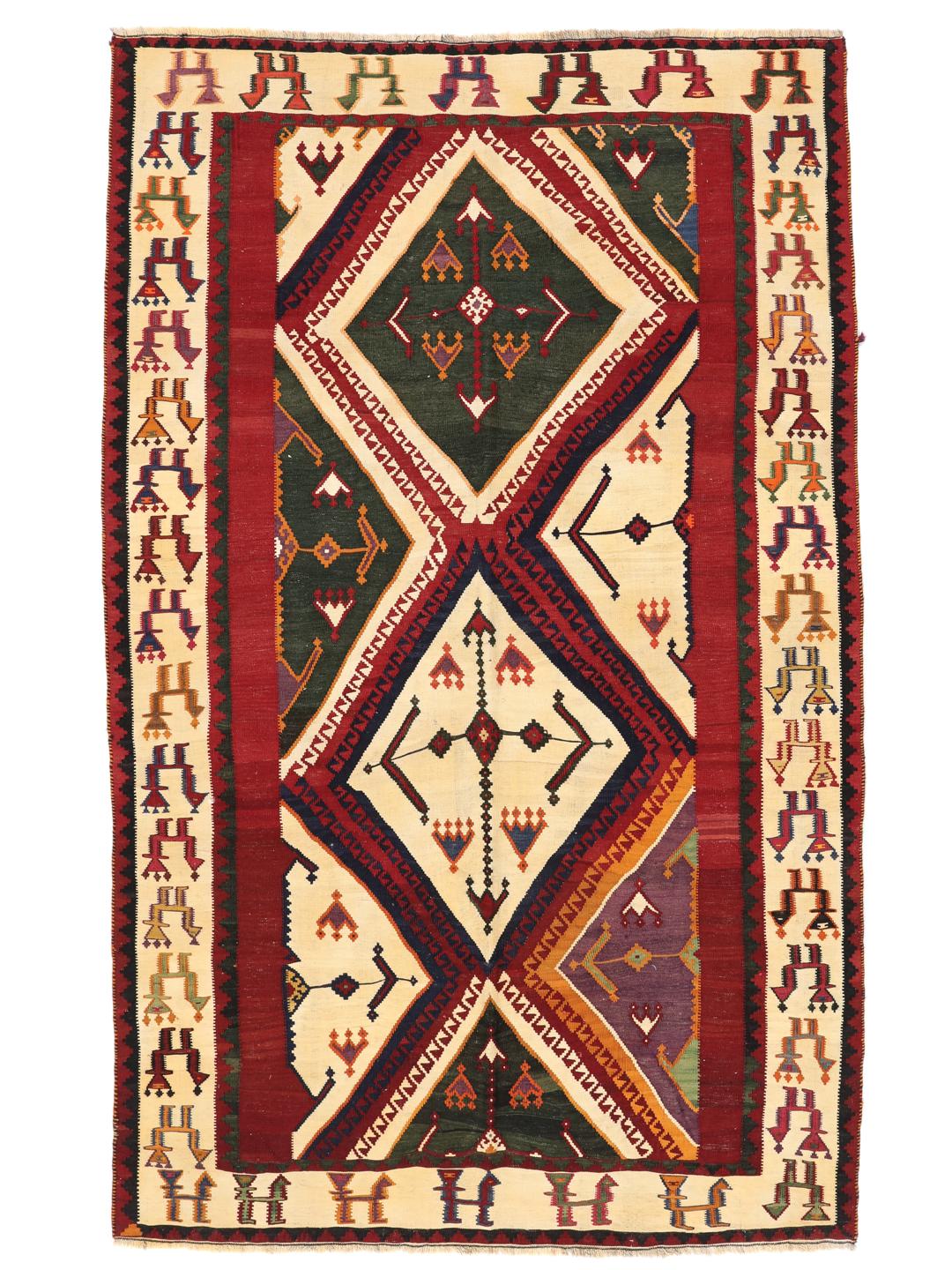
Signature design elements in these rugs often include bold medallions, diamonds, and stylized tribal motifs that carry deep cultural symbolism. While the patterns often appear abstract to the modern eye, they frequently represent protective symbols, fertility, or elements of the natural landscape. The use of vibrant, natural dyes in this particular piece highlights the traditional preference for strong, contrasting colours that make the geometric composition truly stand out.
Collecting these rugs is an investment in cultural heritage and human skill. Each piece acts as a narrative, reflecting the local traditions and personal creativity of the artisan who made it. By choosing a vintage kilim, you are preserving a craft tradition that has been passed down through generations, ensuring that these unique expressions of history continue to be celebrated and enjoyed in modern homes.