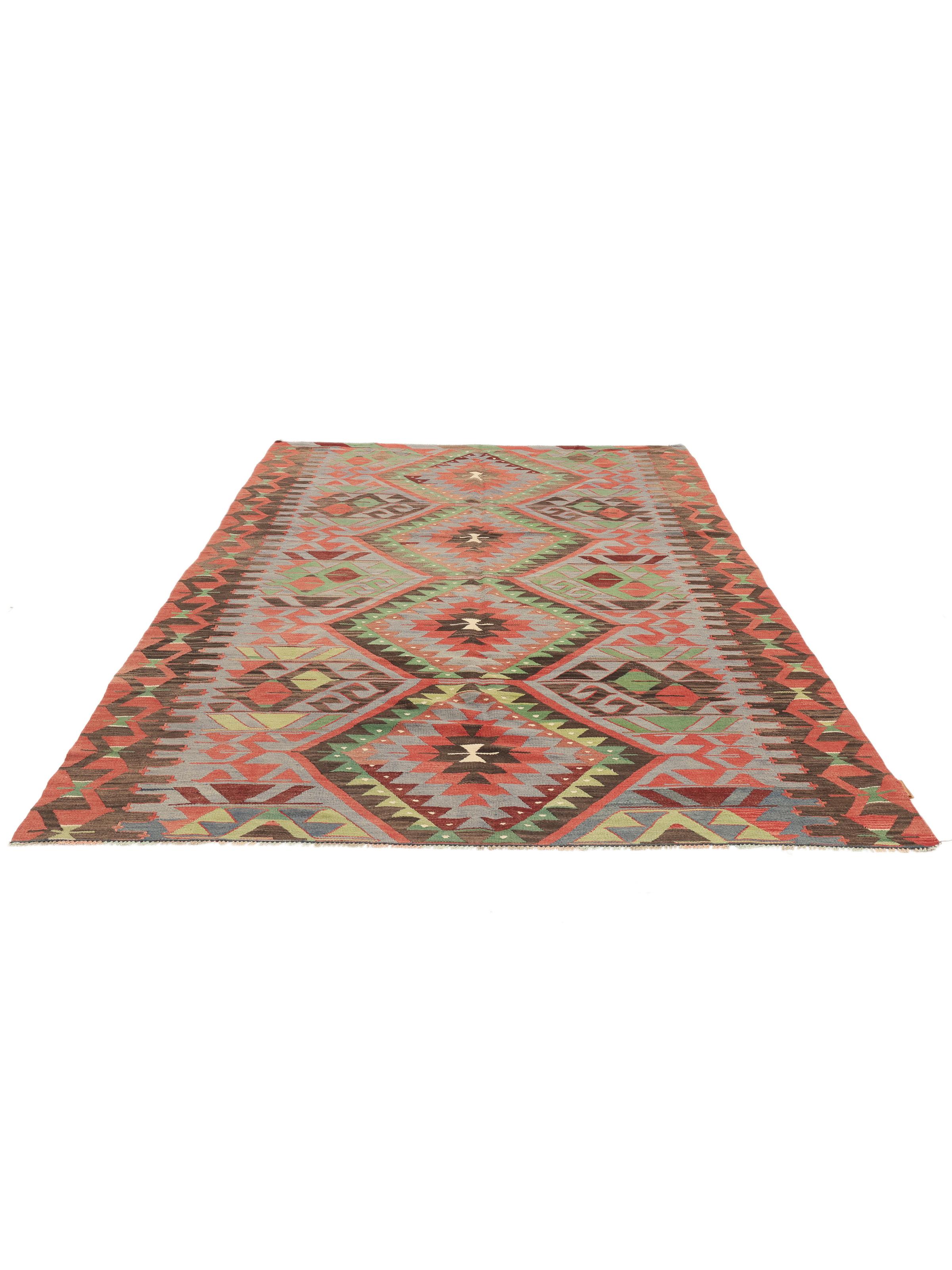
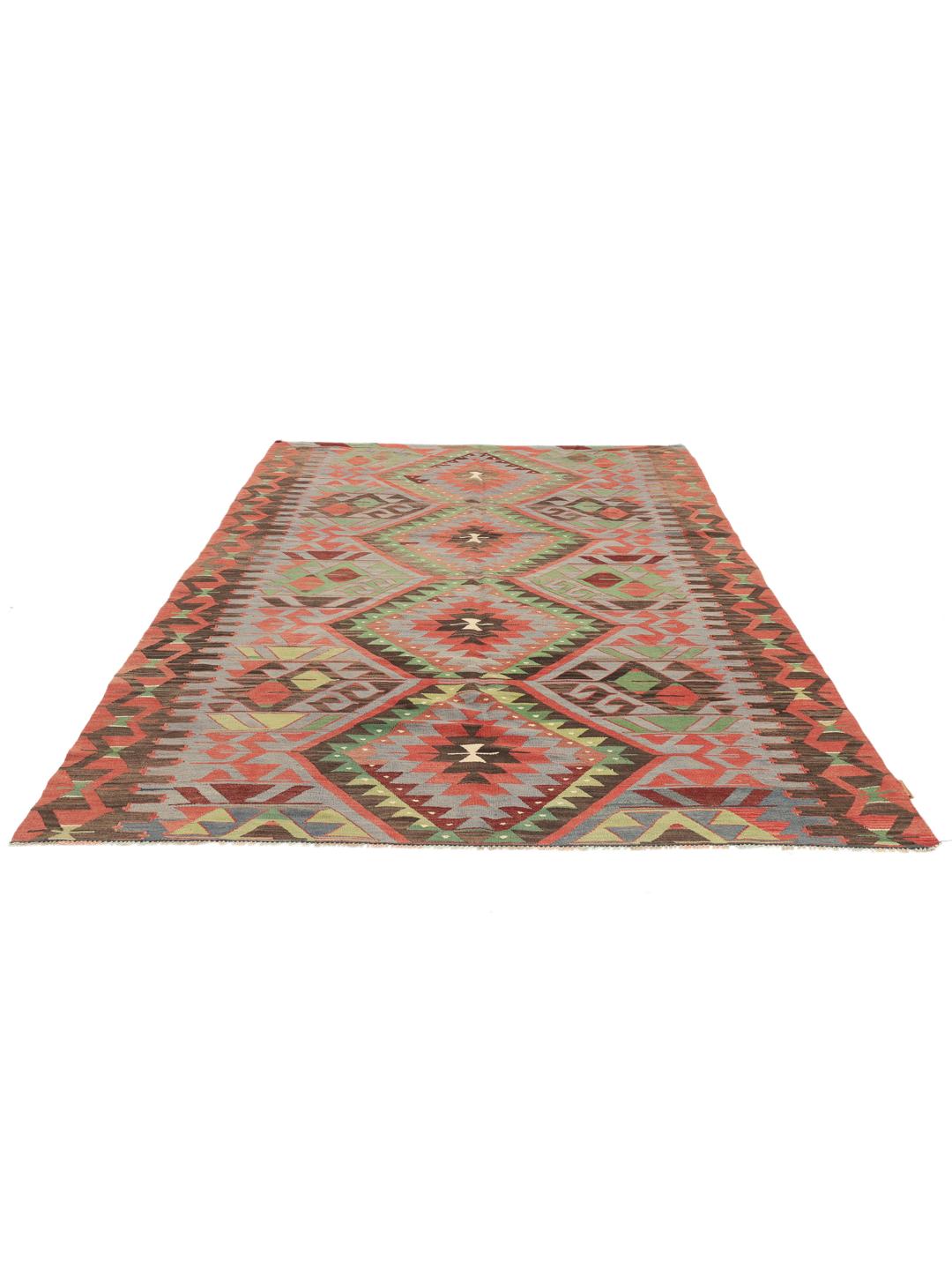
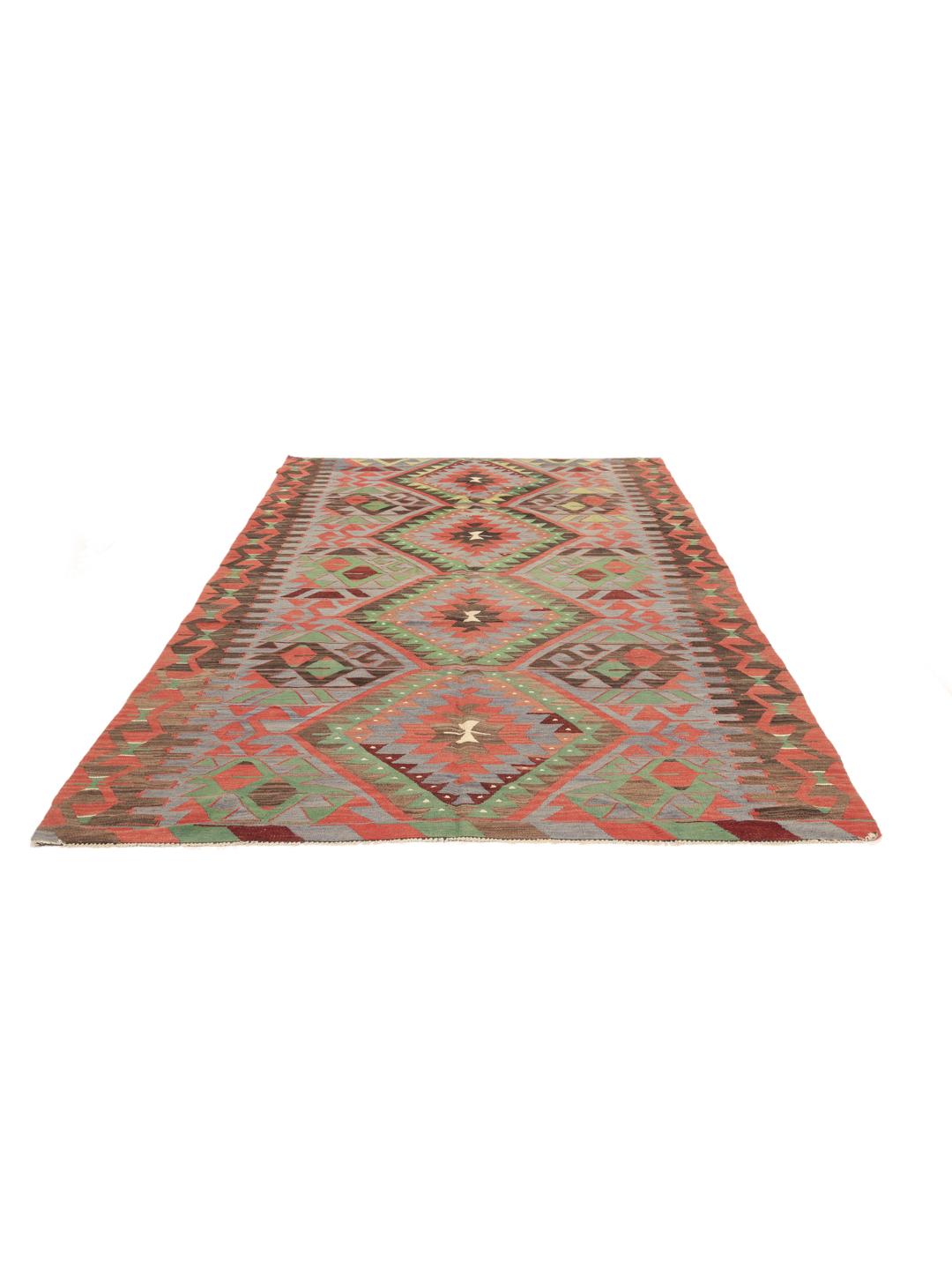
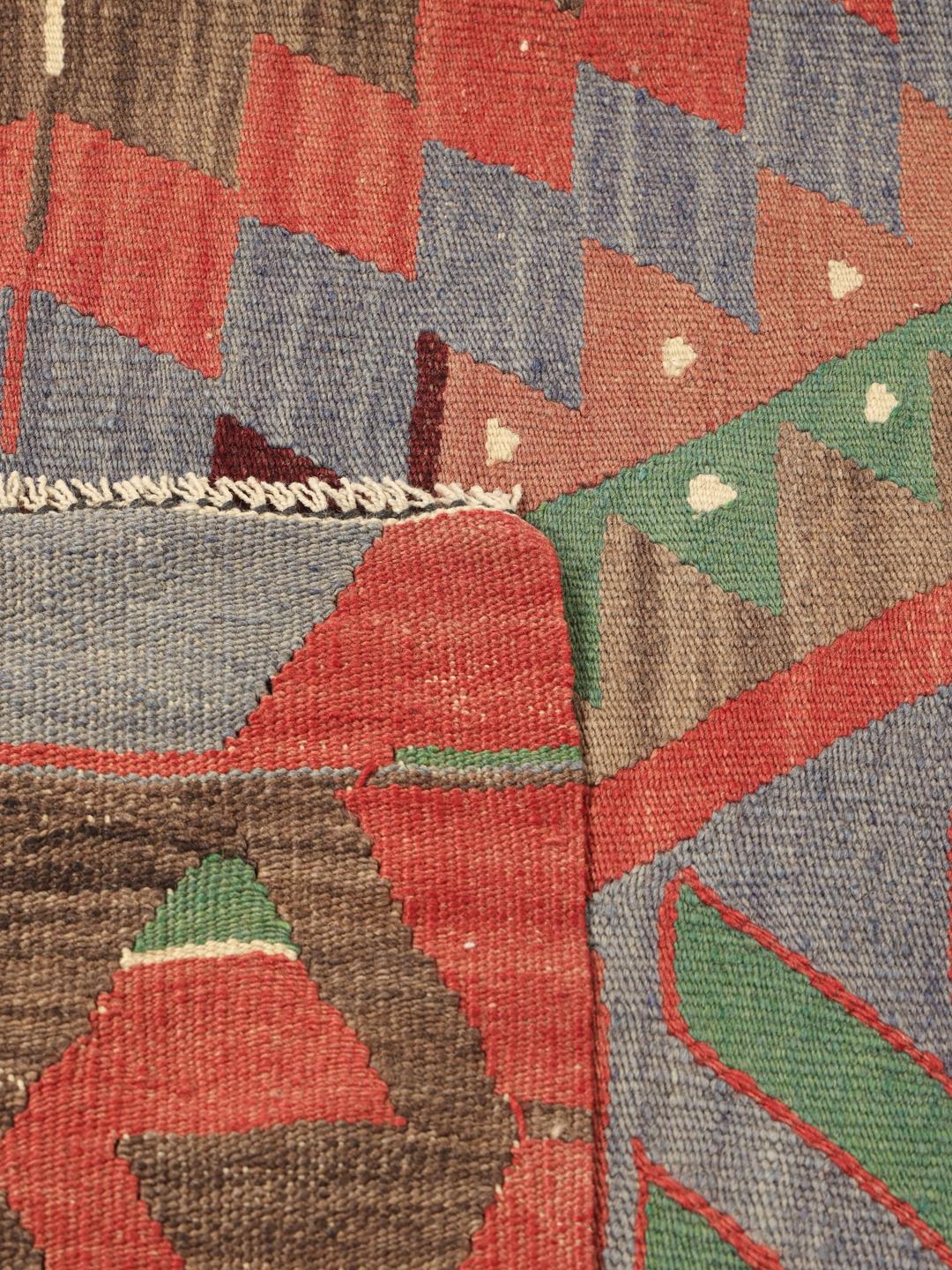
Kilim rugs are a foundational element of the textile heritage in Turkey and the broader Middle East. These flat-woven pieces have been used for centuries by nomadic and semi-nomadic tribes, serving not just as floor coverings, but as essential household items for insulation, wall hangings, and even as decorative storage bags.
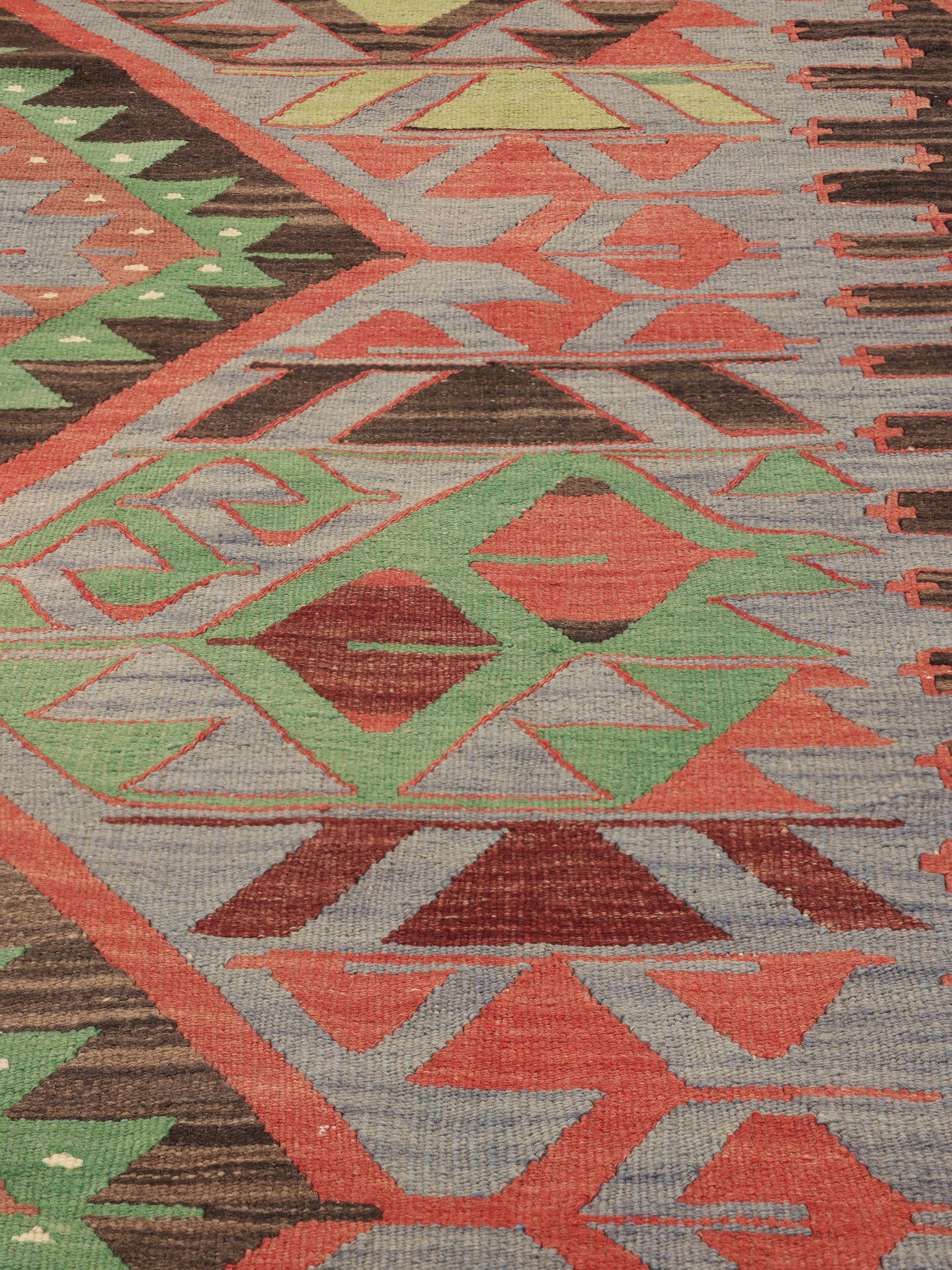
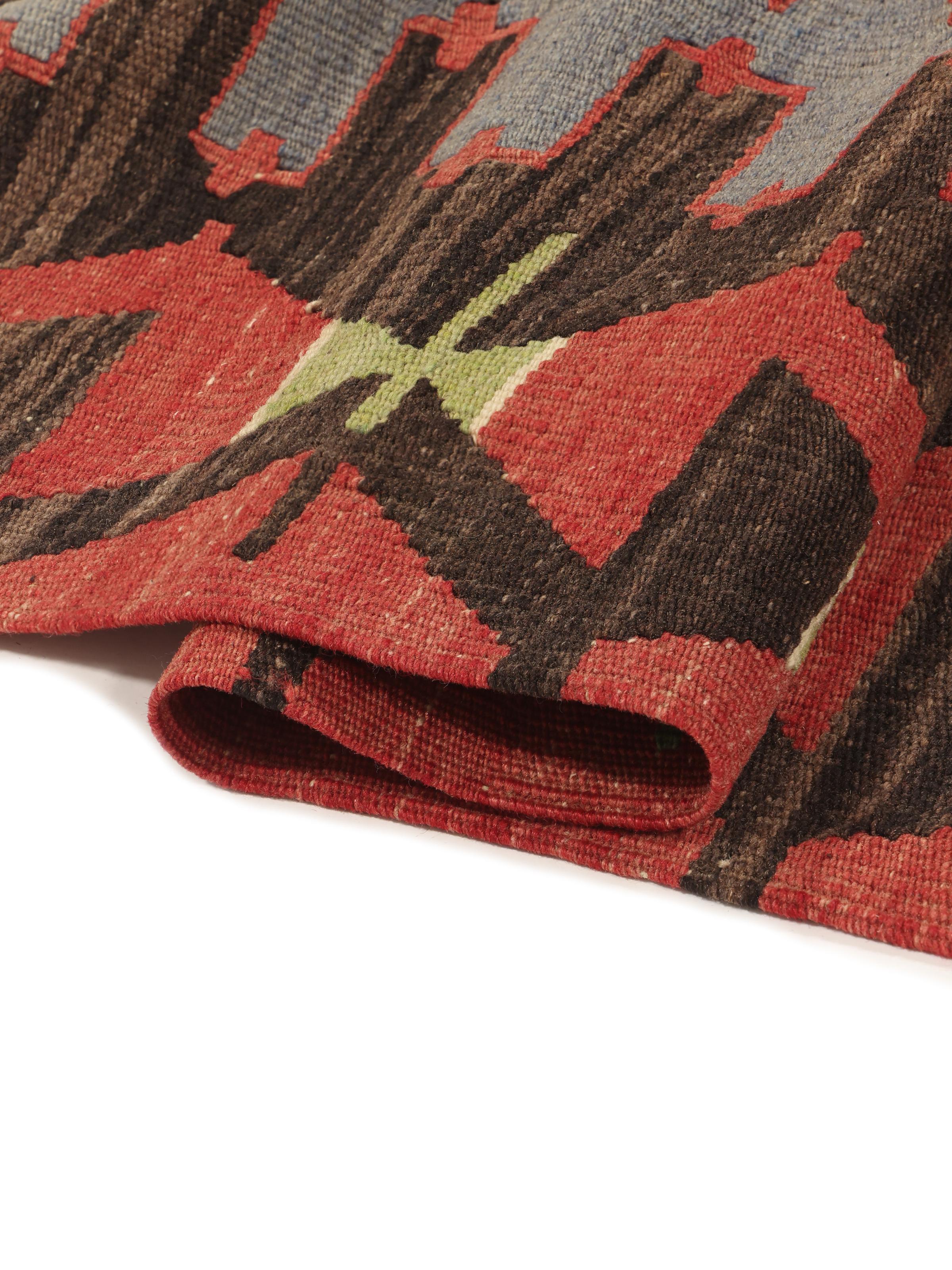
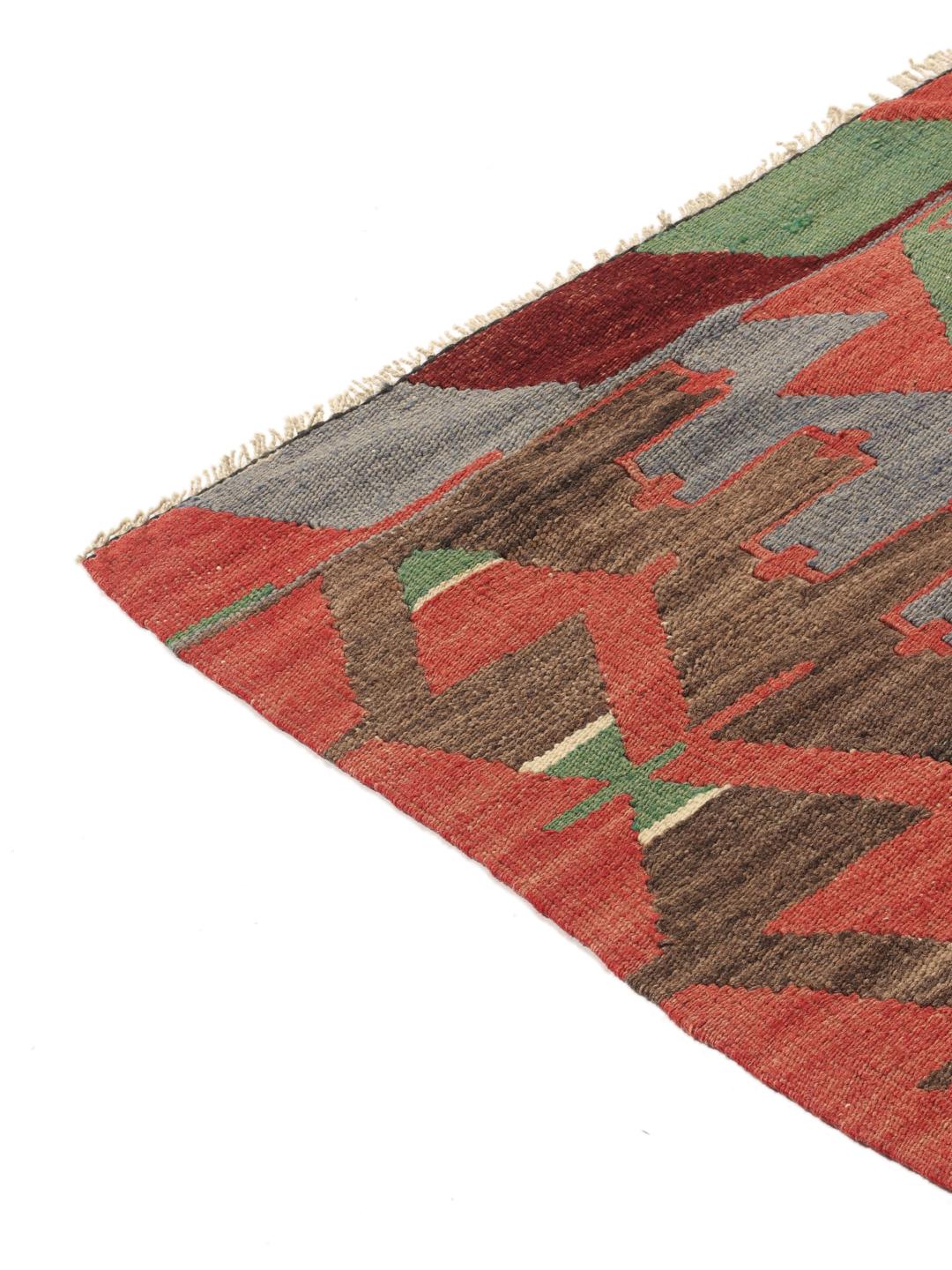
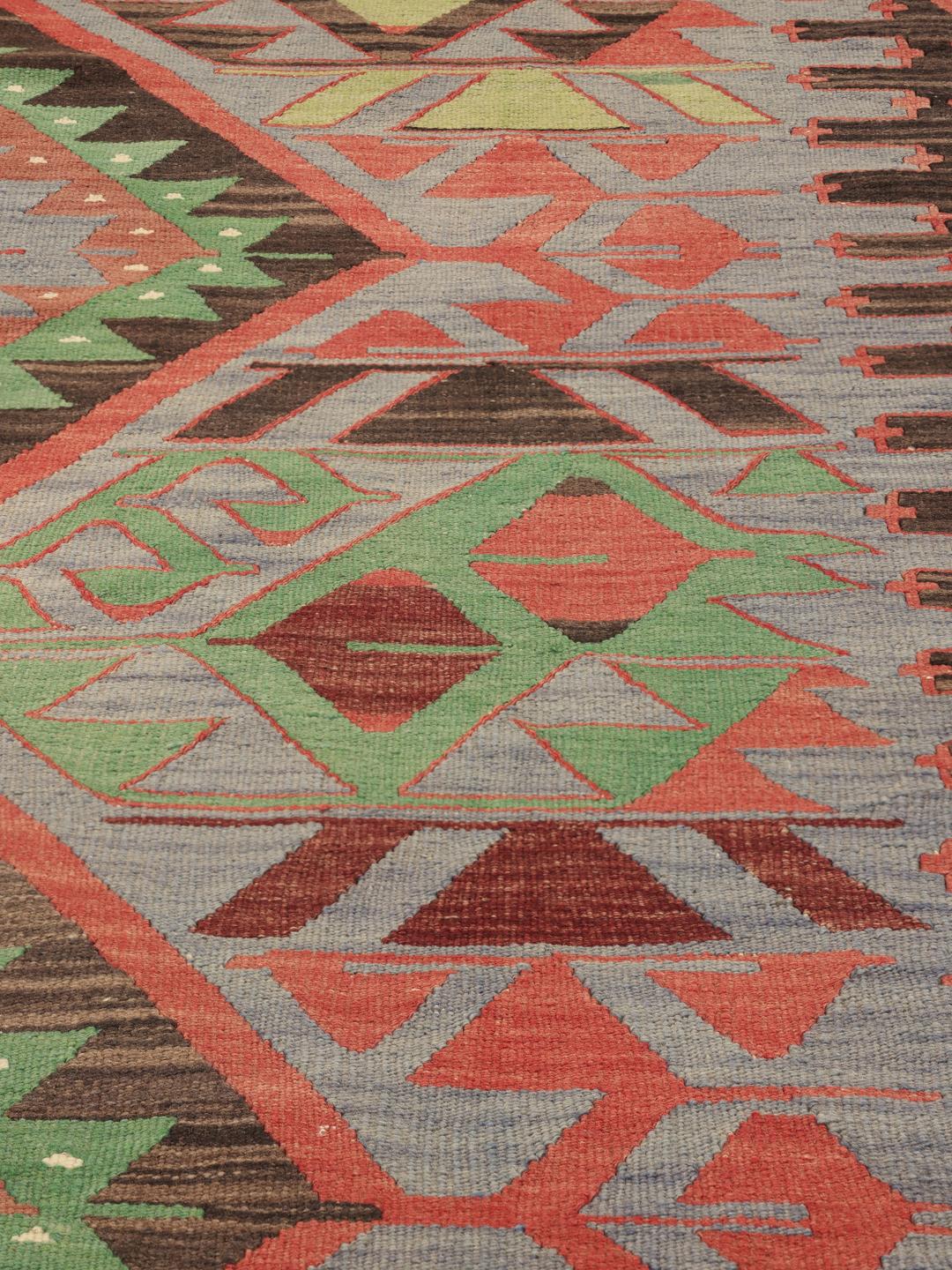
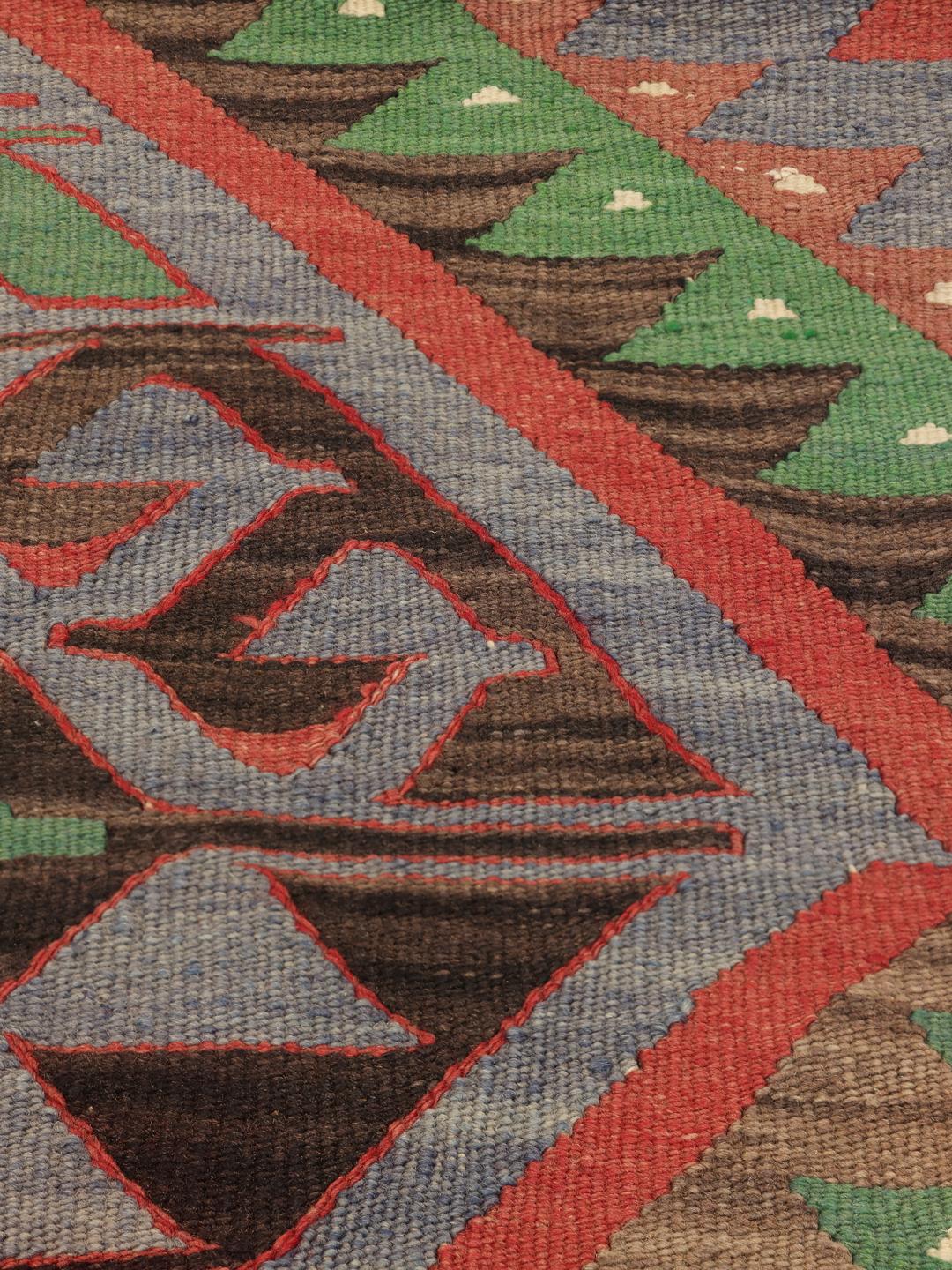
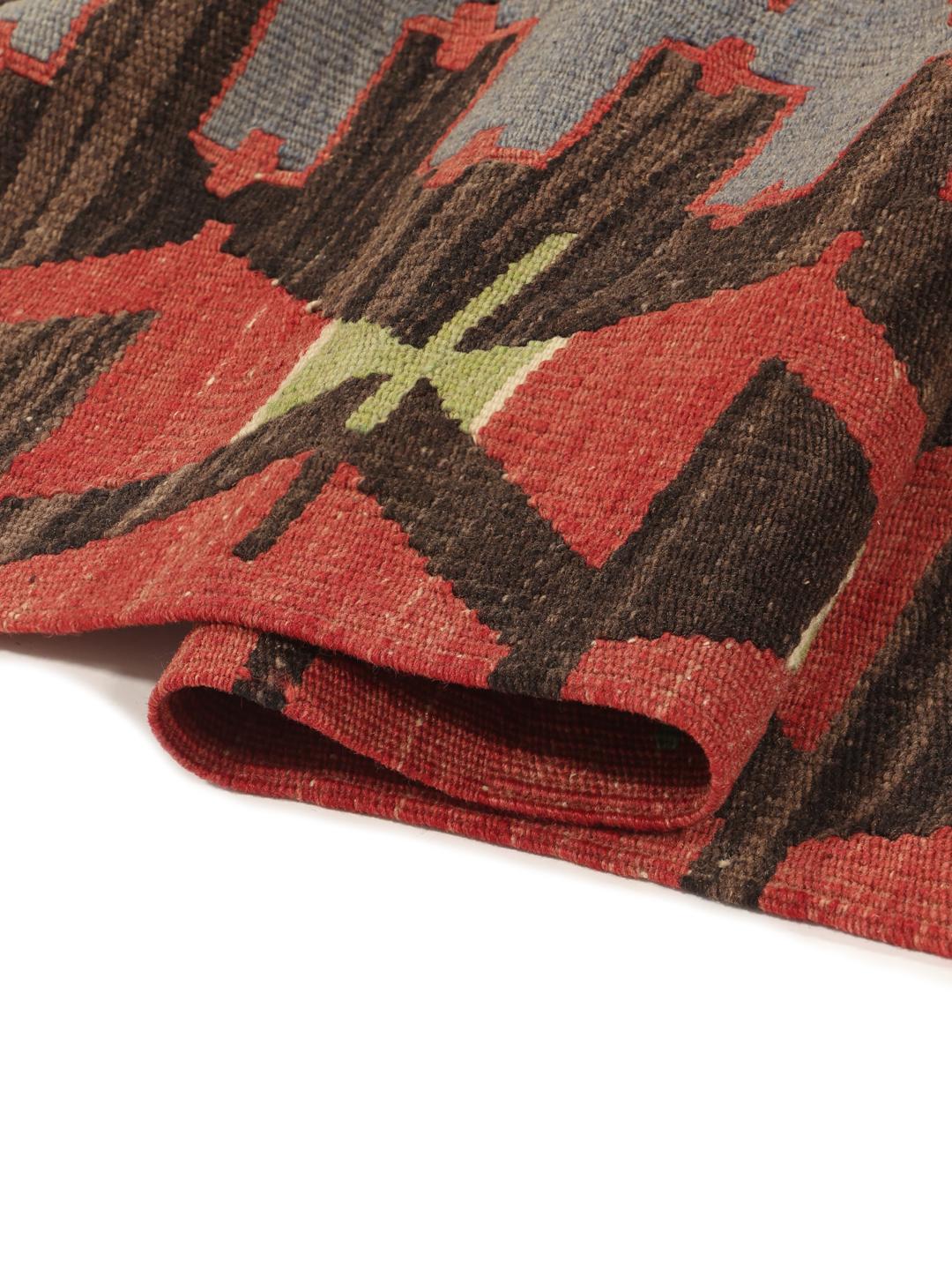
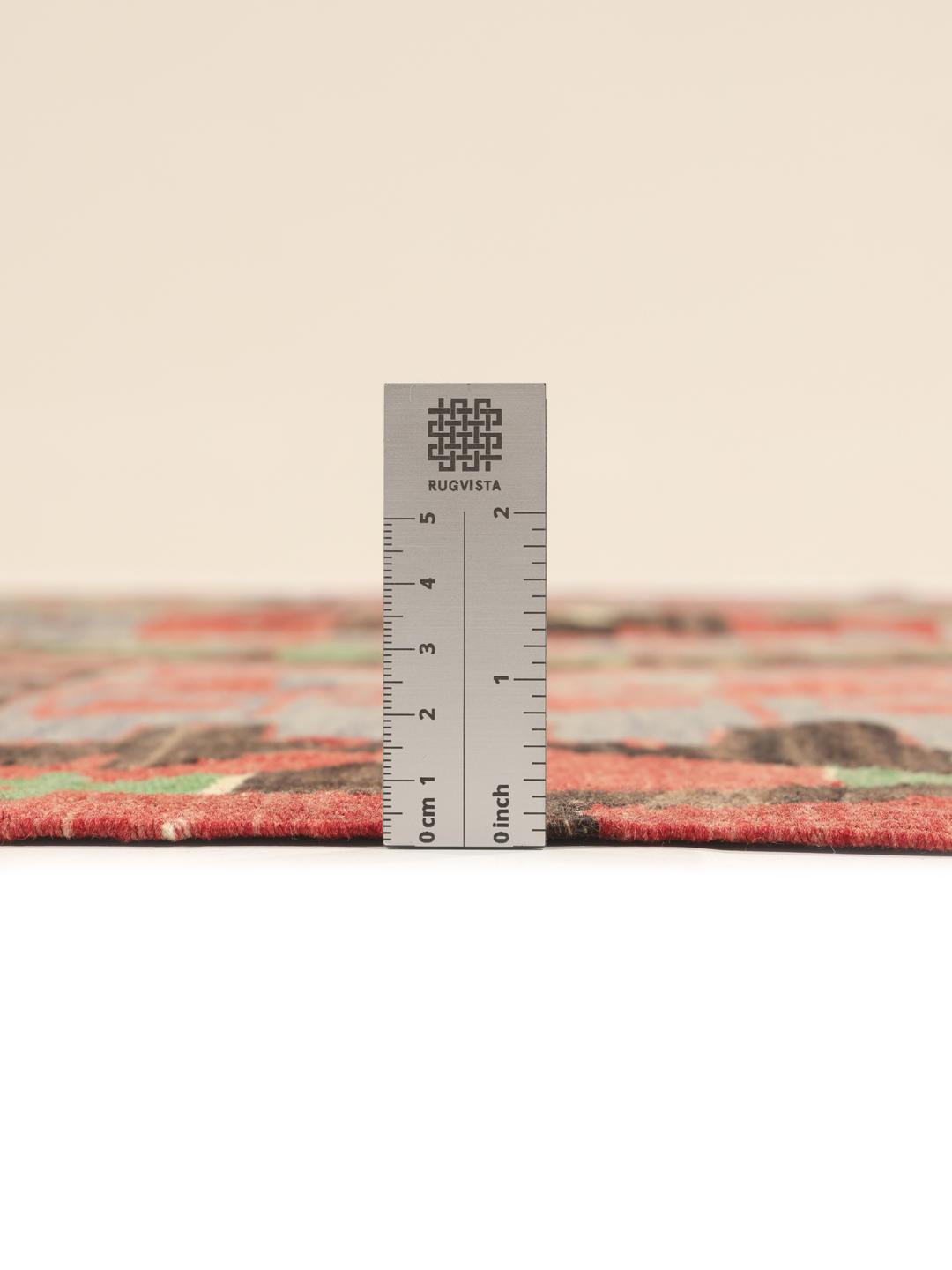
The term Kilim refers to the specific flat-weaving technique where no pile is created, resulting in a lightweight yet incredibly sturdy textile. Unlike knotted rugs, the design is created by the weft threads themselves, which are passed back and forth to create the pattern. This technique requires the weaver to have a complete mental map of the design before they even begin, as the pattern is built row by row.
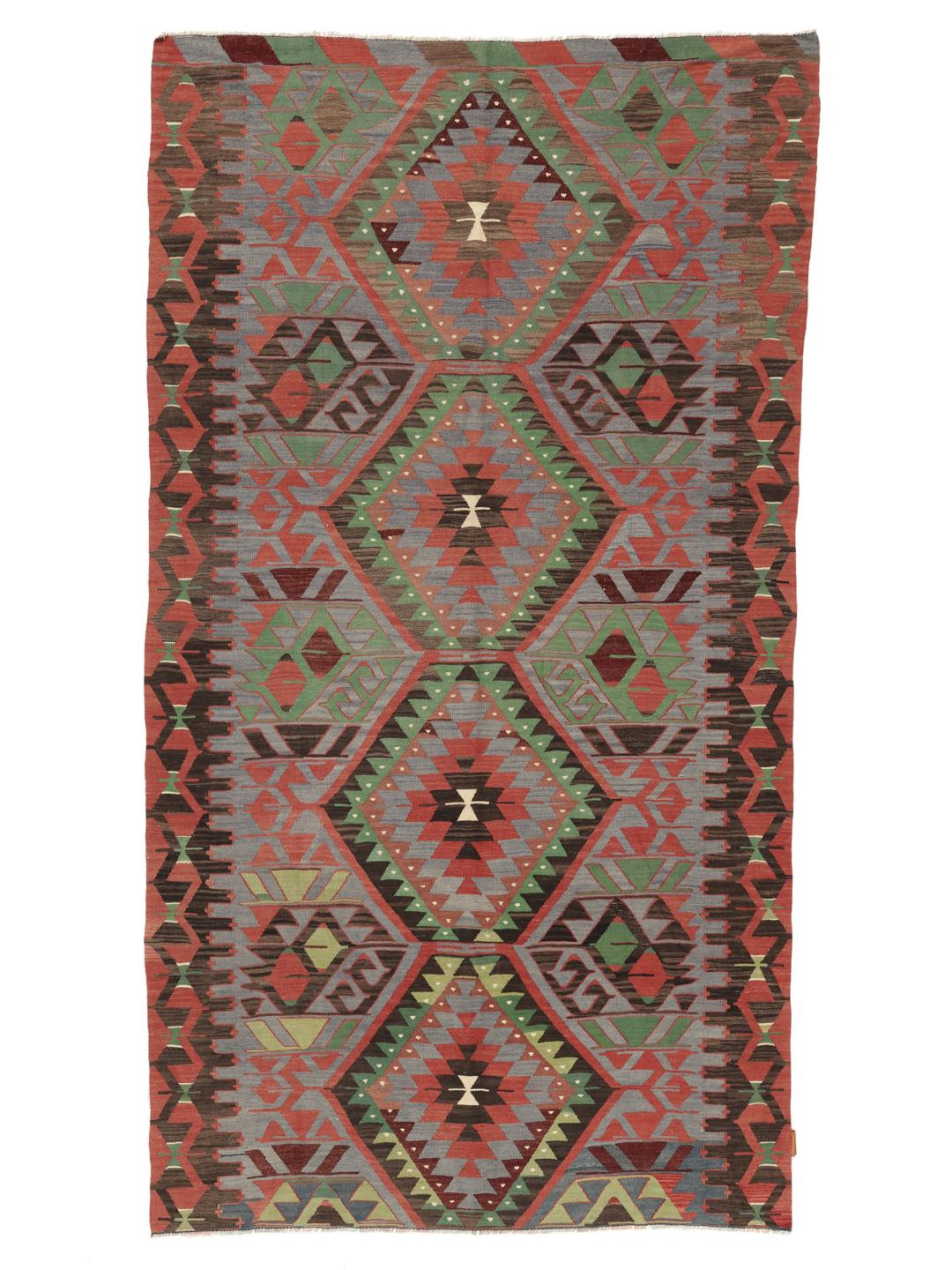
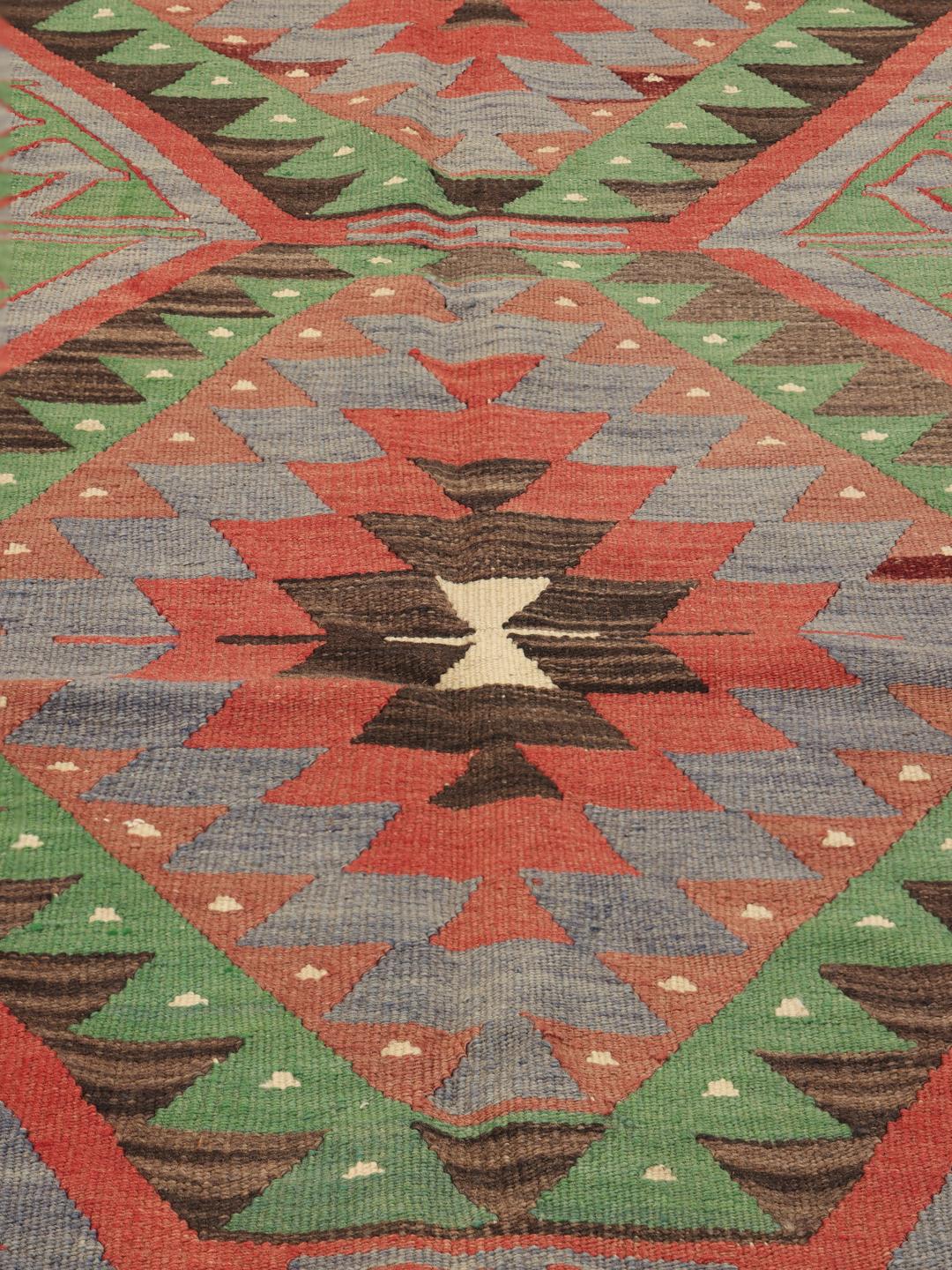
Visually, these rugs are defined by their sharp, geometric motifs and vibrant, often earthy colour palettes. You will frequently find diamond patterns, medallions, and stylized floral or tribal symbols that have been passed down through families for generations. The use of repeating shapes is not just for decoration; these symbols often carry meanings related to protection, fertility, or the weaver's own life experiences.
Today, vintage Kilims like this one are highly valued by collectors and design enthusiasts alike. They represent a tangible link to a nomadic past and the exceptional skill of the individuals who created them without the aid of modern tools. Owning a piece like this is an investment in cultural heritage, offering a depth of character and history that breathes life into any modern home.