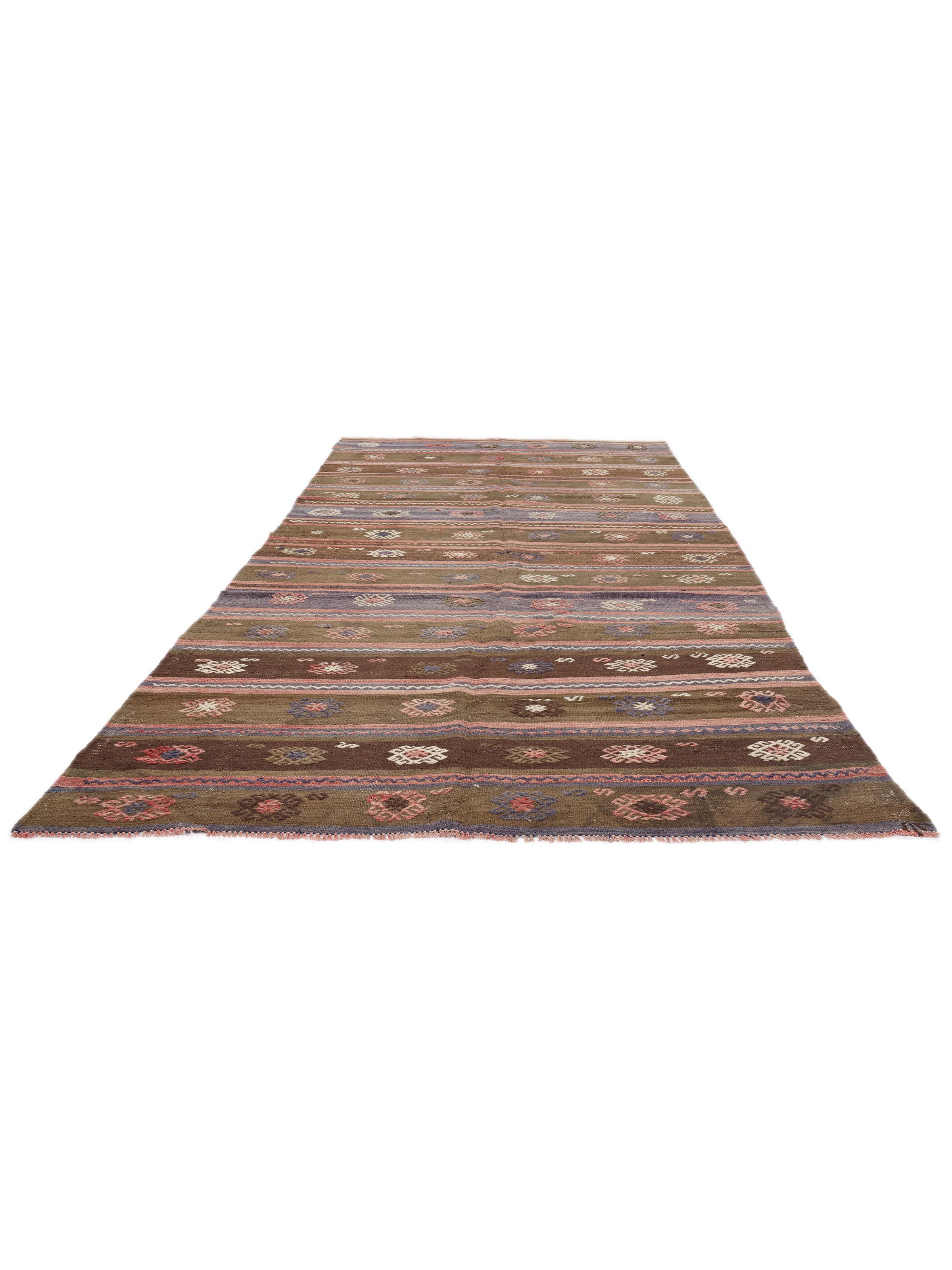
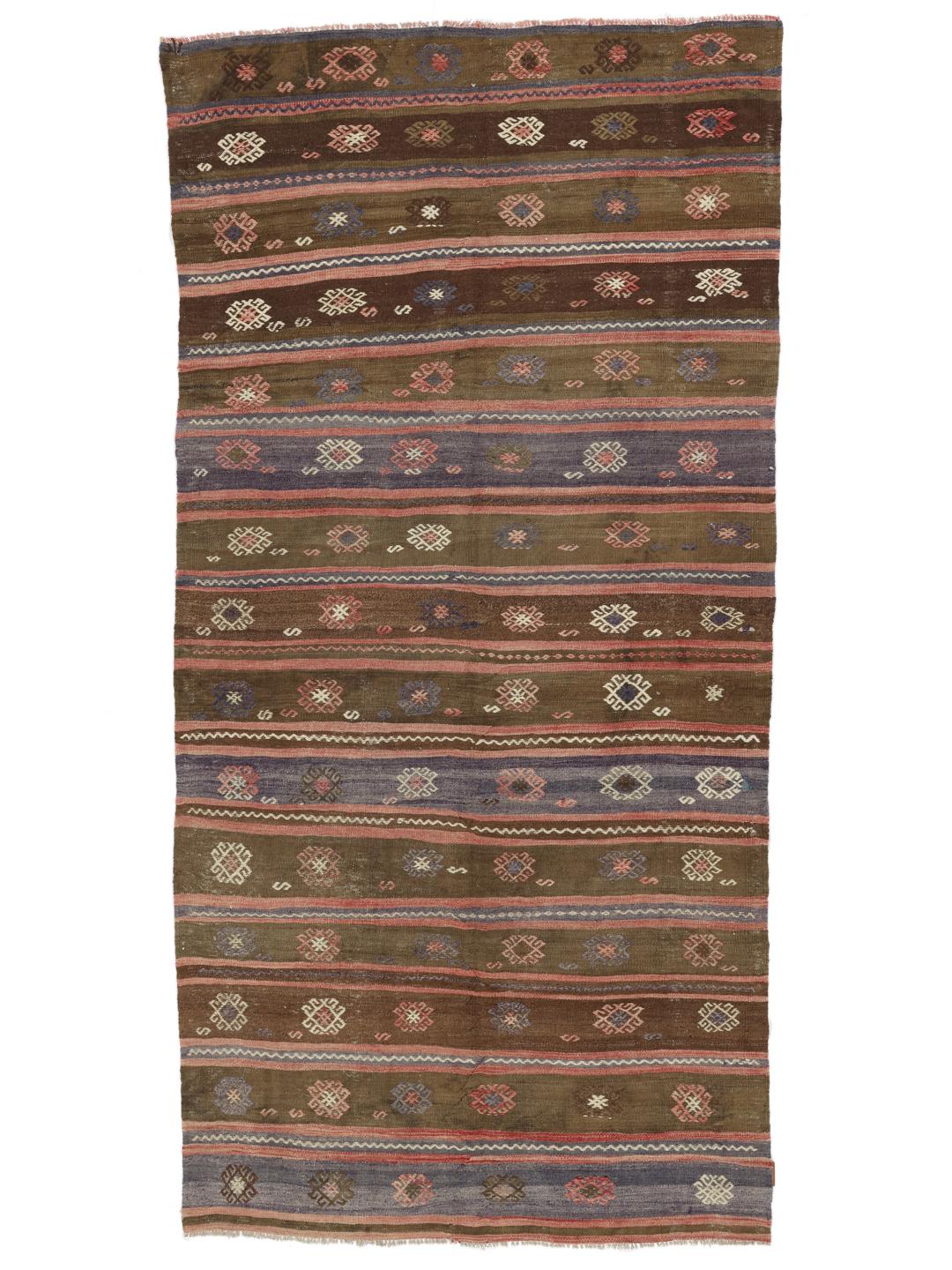
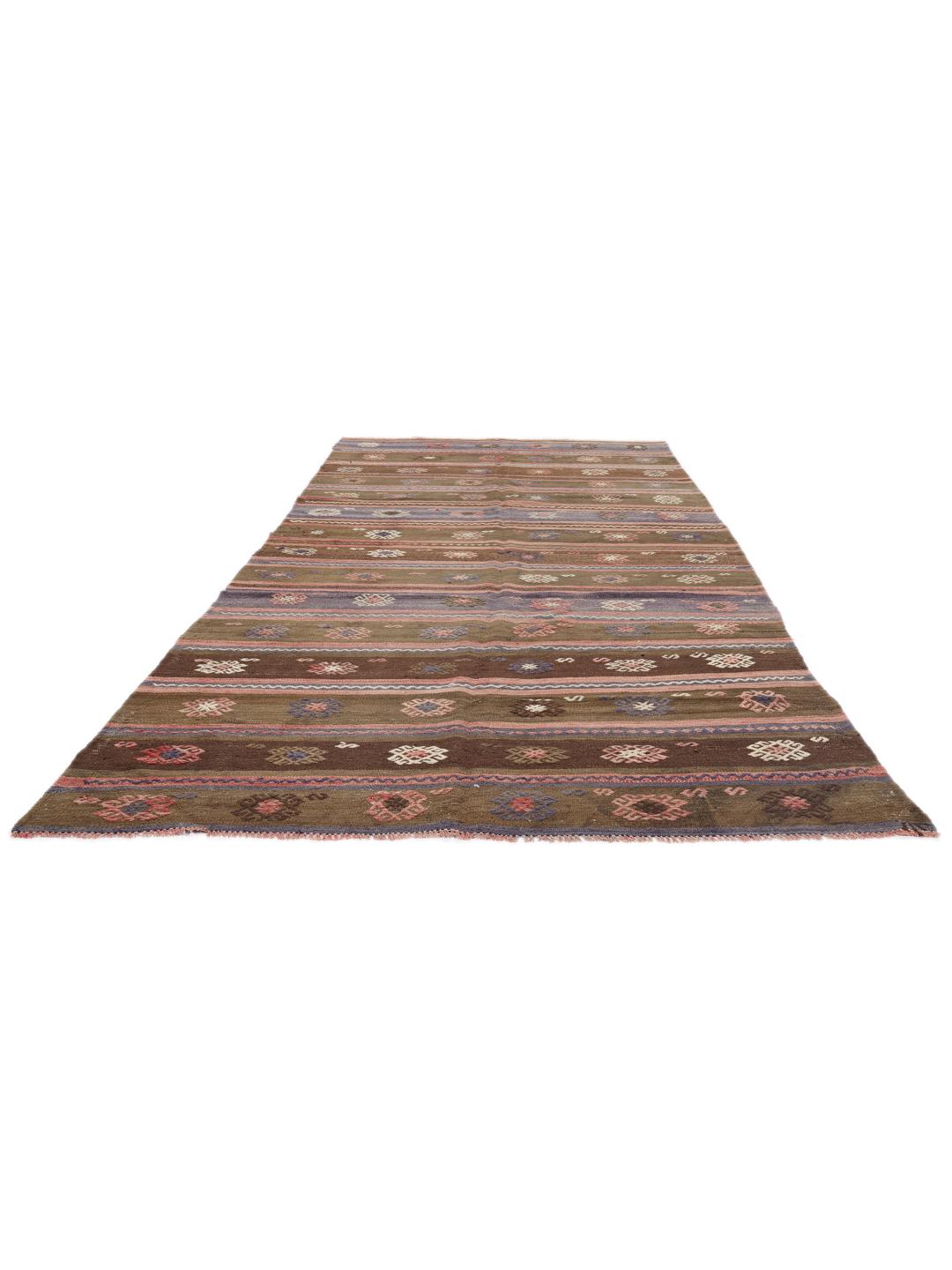
Kilims are a storied form of flat-woven textile originating from the Anatolian region of Turkey. For centuries, these rugs have been central to the nomadic and village cultures of the Middle East, serving as versatile floor coverings, blankets, and storage bags within the home.
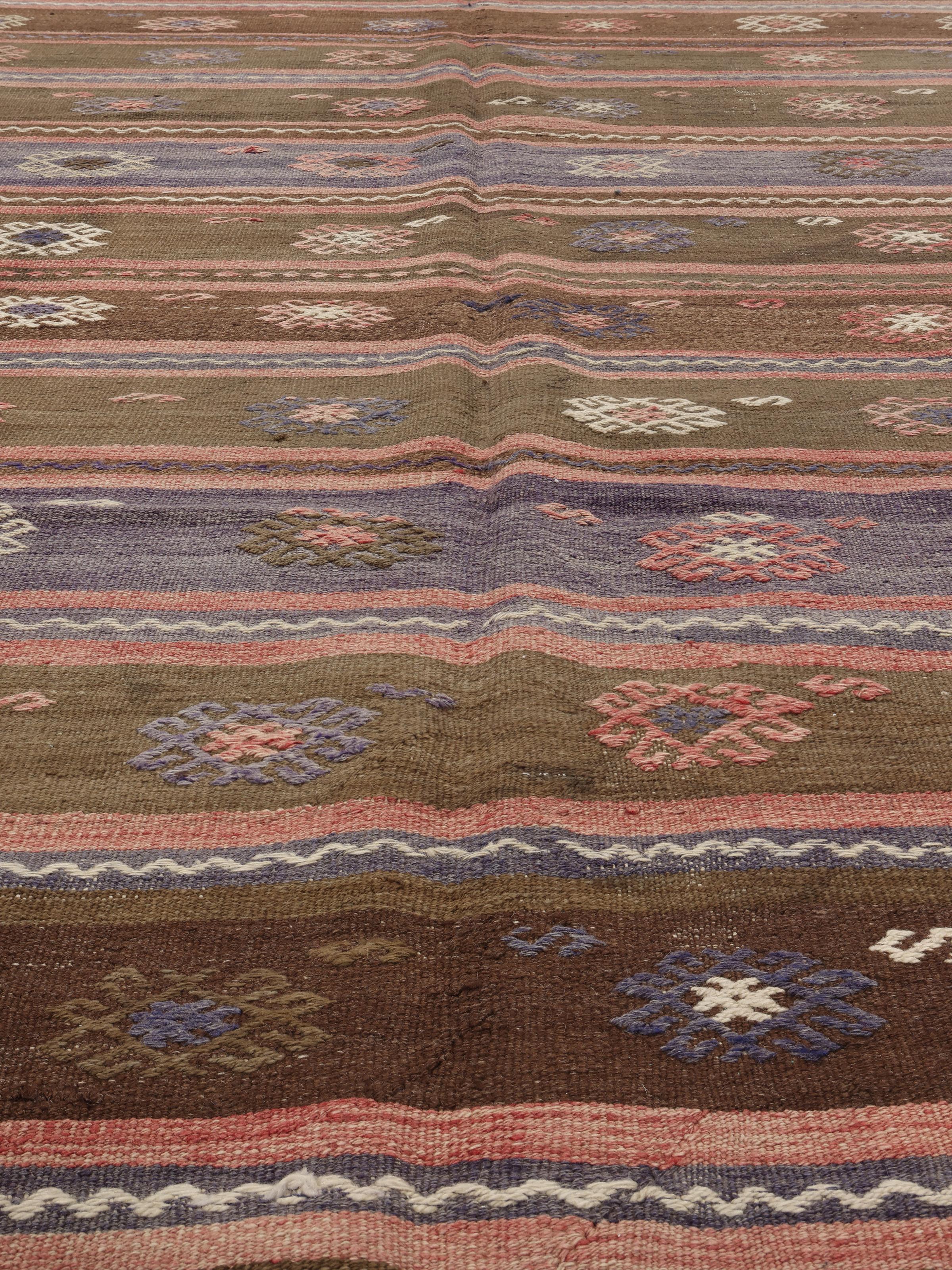
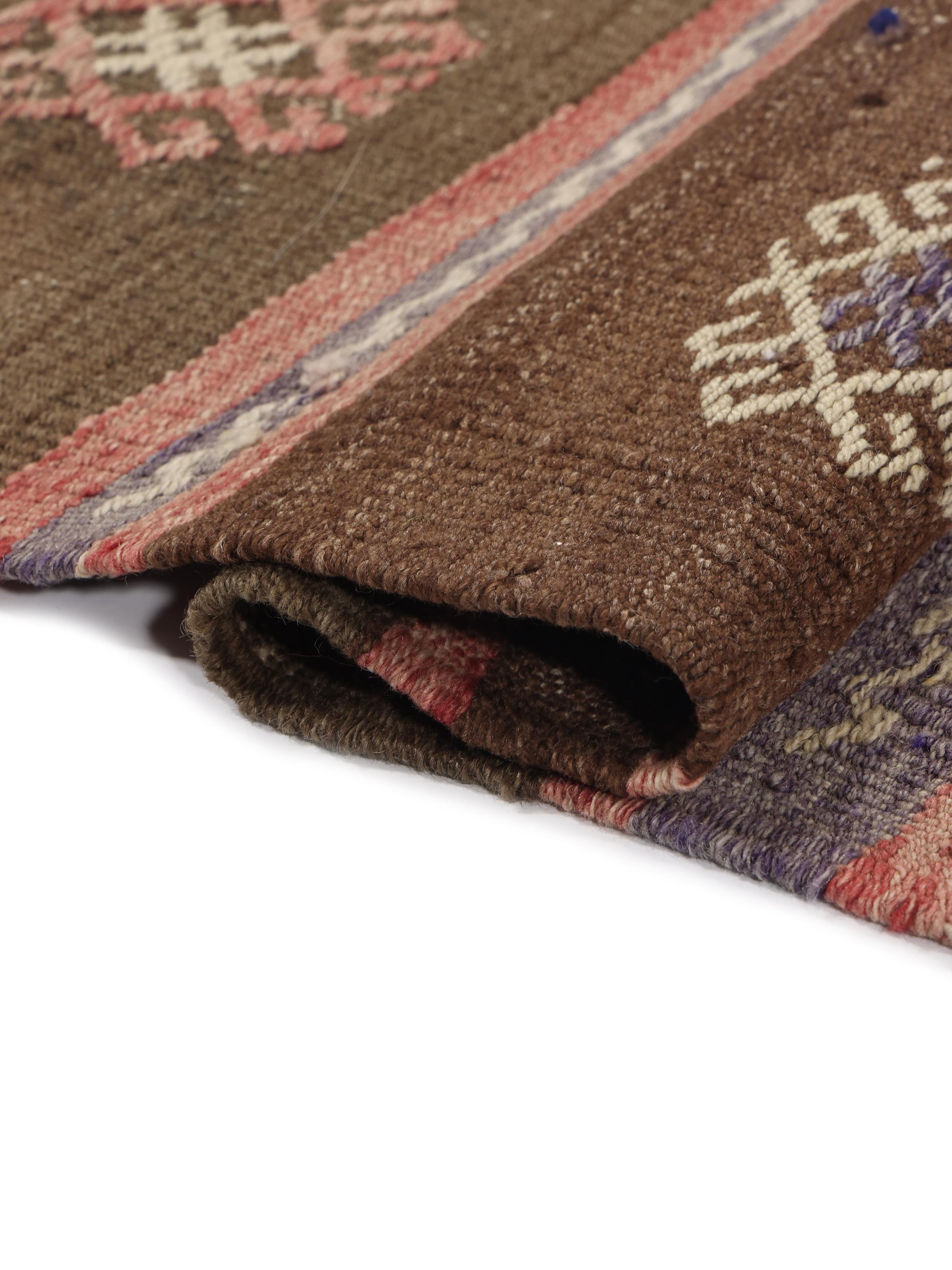
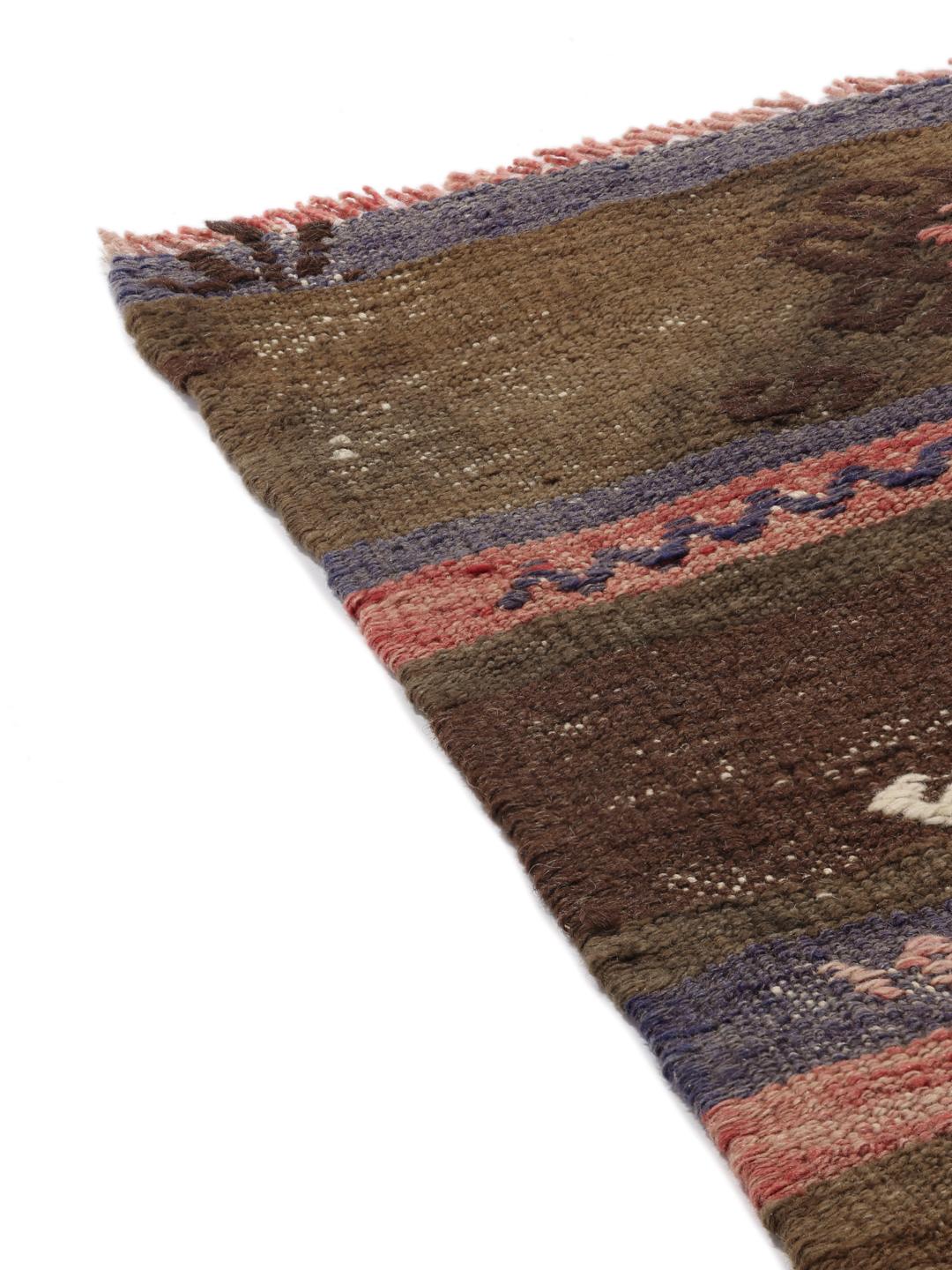
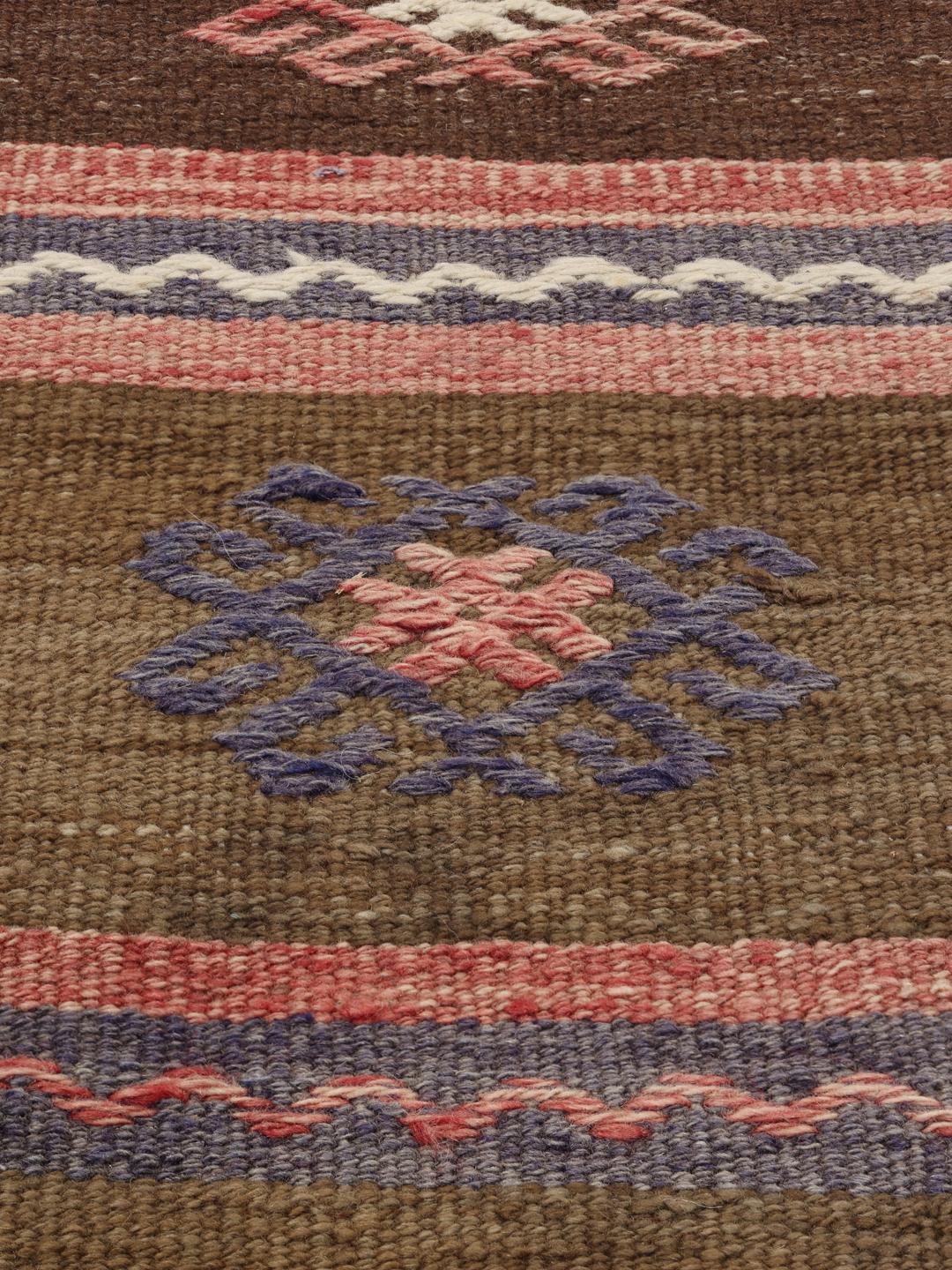
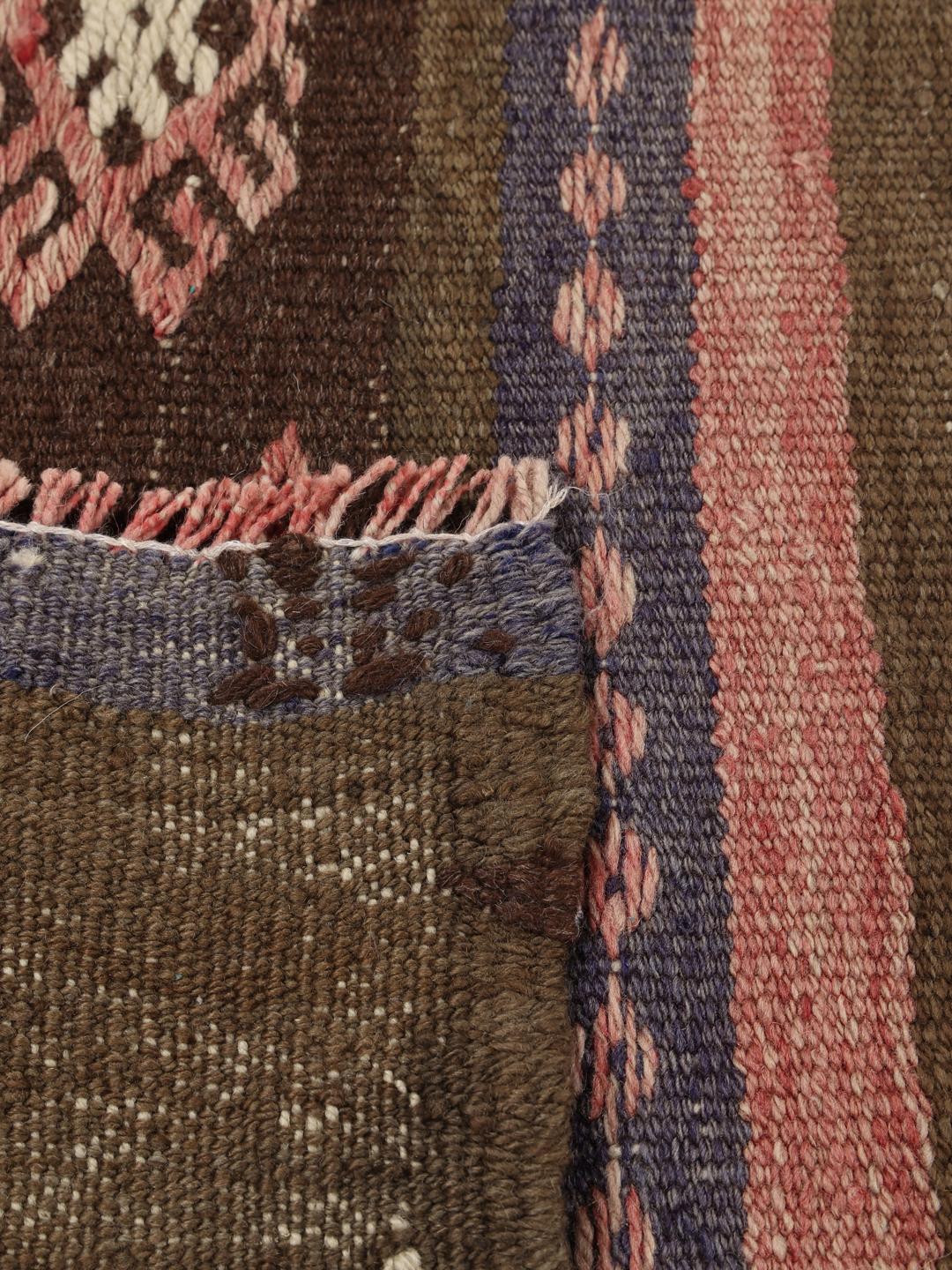
The term Kilim refers to the specific slit-weave technique where the weft threads are pulled tightly to hide the warp, resulting in a smooth, pileless surface. This method allows for the creation of sharp, clean geometric lines and intricate patterns that are woven directly into the structure of the rug rather than knotted onto a foundation.
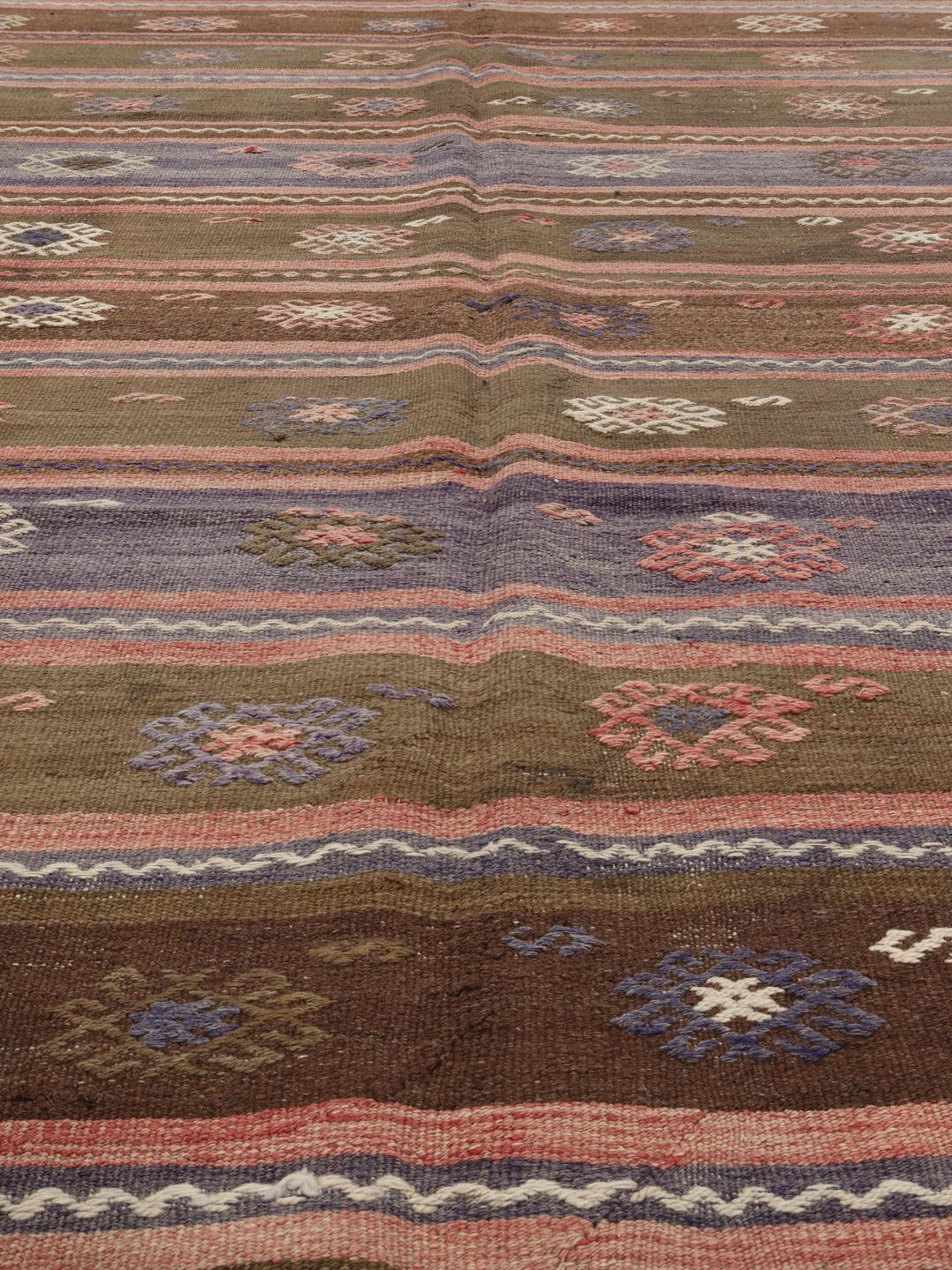
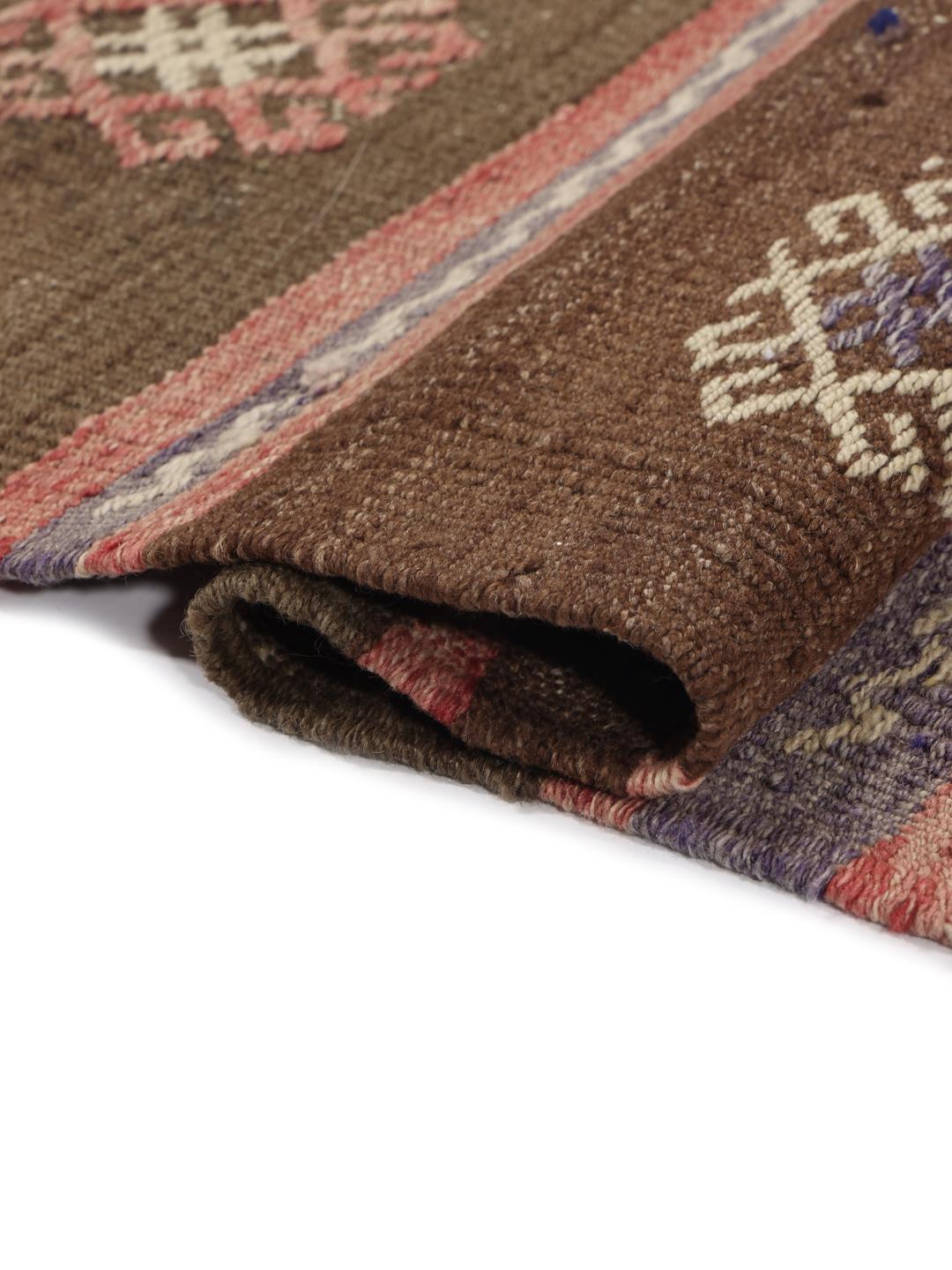
The design of this piece features a traditional striped field punctuated by small, symbolic geometric motifs. These patterns are often inherited through generations, with each shape carrying meaning related to protection, fertility, or the natural environment. The use of earthy brown tones combined with subtle blue accents reflects the local tradition of using natural dyes derived from plants, minerals, and insects found in the Turkish landscape.
Owning a vintage Kilim is an opportunity to preserve a piece of cultural history. These rugs are highly valued by collectors for their authenticity and the human story behind their creation. By choosing a piece like this, you are not just adding a decorative item to your home, but participating in a long-standing tradition of craft that values skill, heritage, and the enduring beauty of natural materials.