The tradition of weaving Kilims in Turkey is an ancient practice, deeply embedded in the cultural fabric of Anatolia. For centuries, these flat-woven textiles were crafted by nomadic and semi-nomadic tribes, serving as essential functional items such as floor coverings, tent dividers, and storage bags. The knowledge of these techniques was passed down through generations, with each region developing its own distinct visual language.
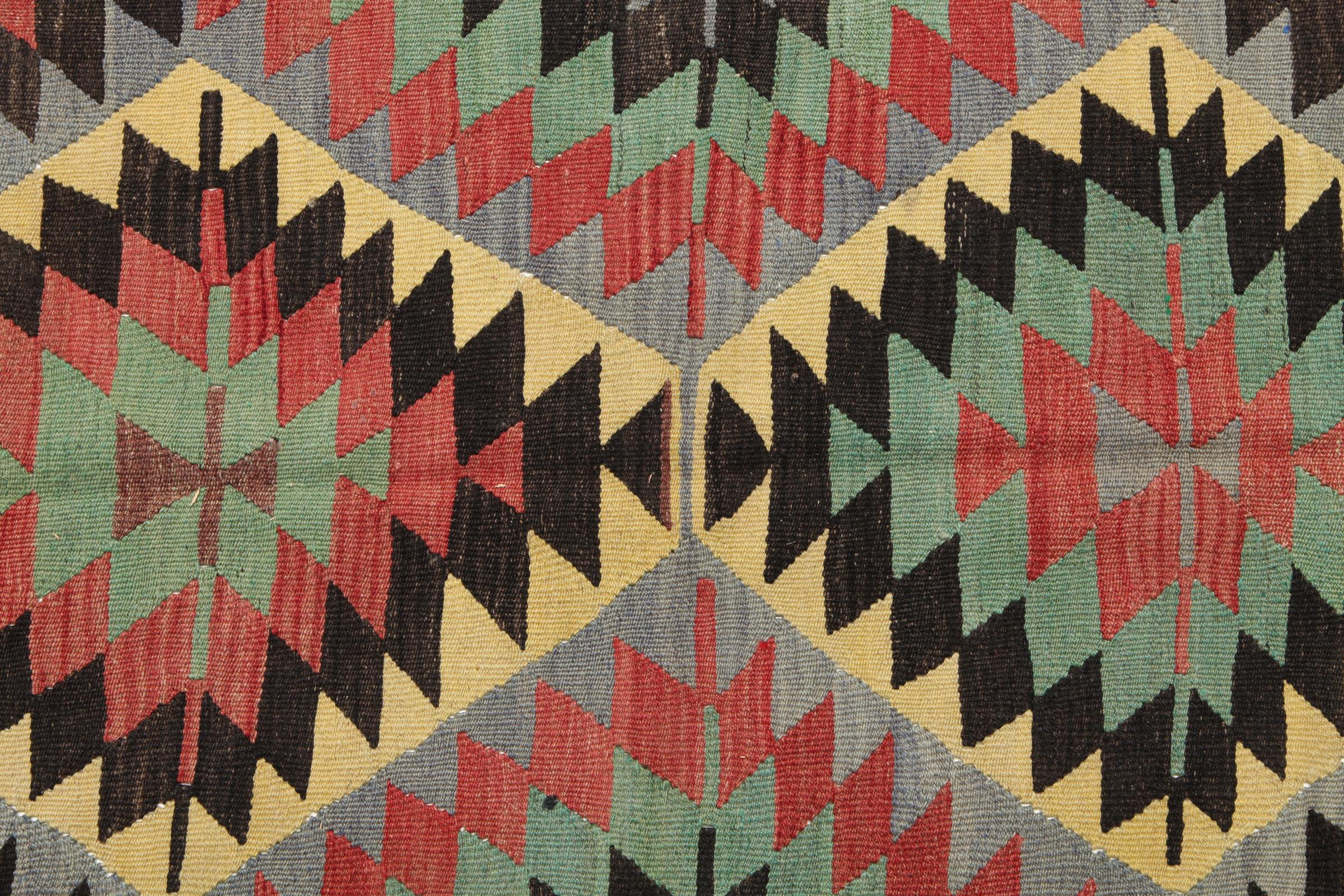
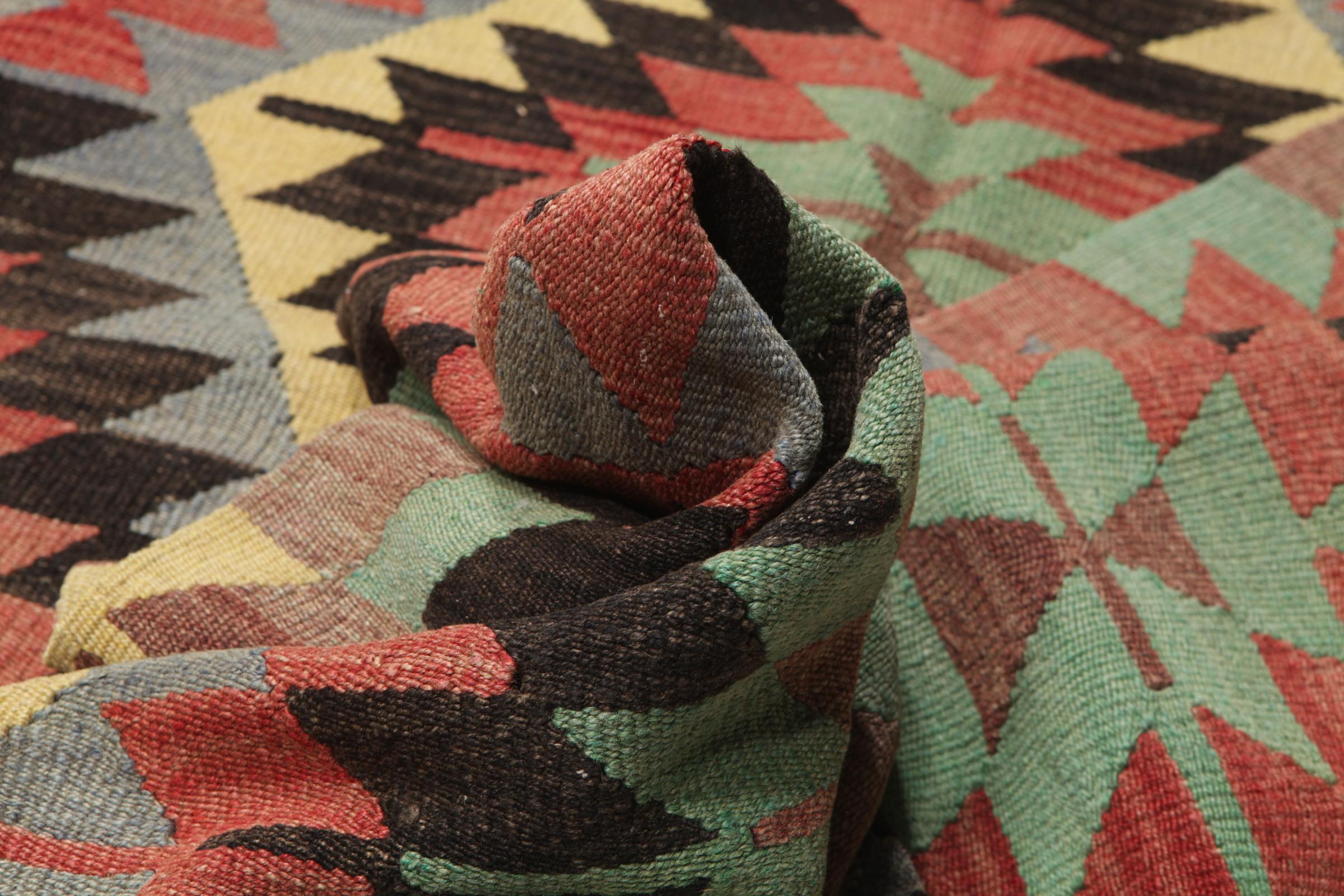
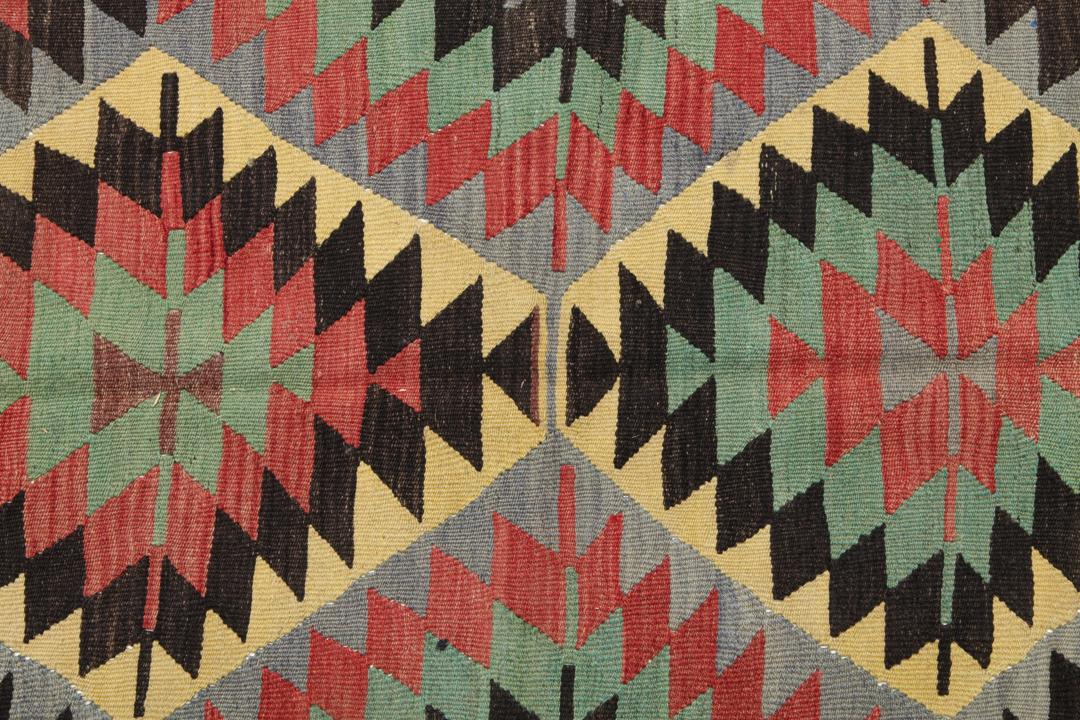
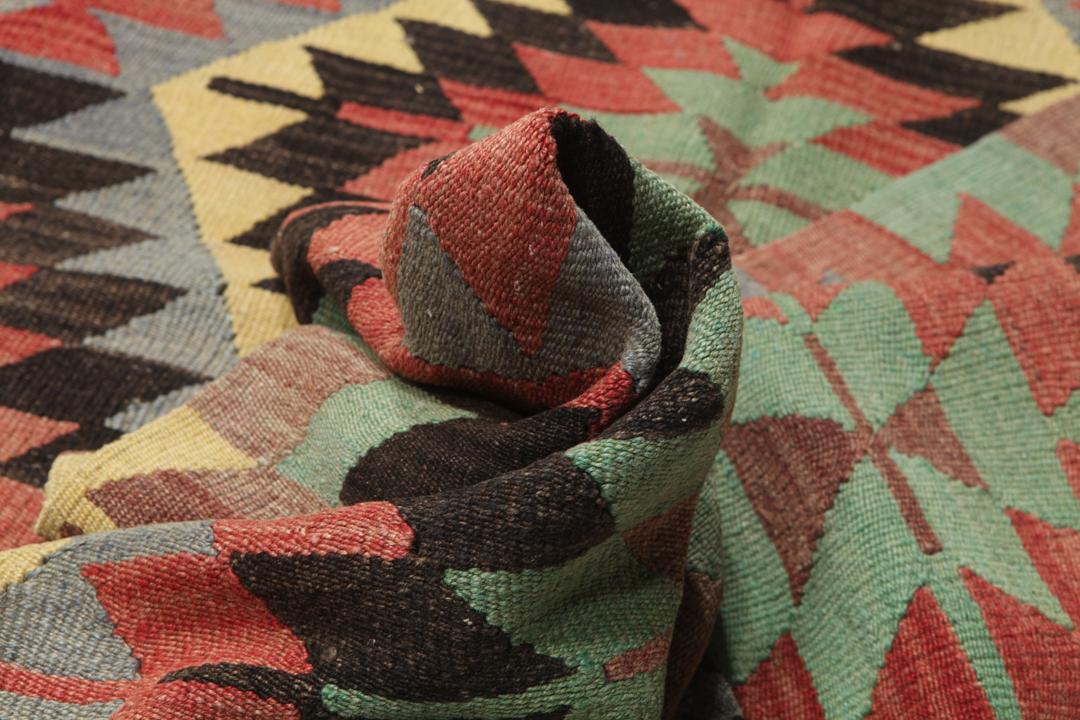
The term Kilim refers specifically to the slit-weave technique, where the weaver creates vertical gaps or 'slits' between different colour blocks. This technical detail is what gives the geometric patterns their characteristically sharp, clean edges. Because there is no pile to hide the structure, the quality of the weave is immediately visible, requiring the weaver to maintain perfect tension throughout the entire process to ensure the rug remains flat and stable.
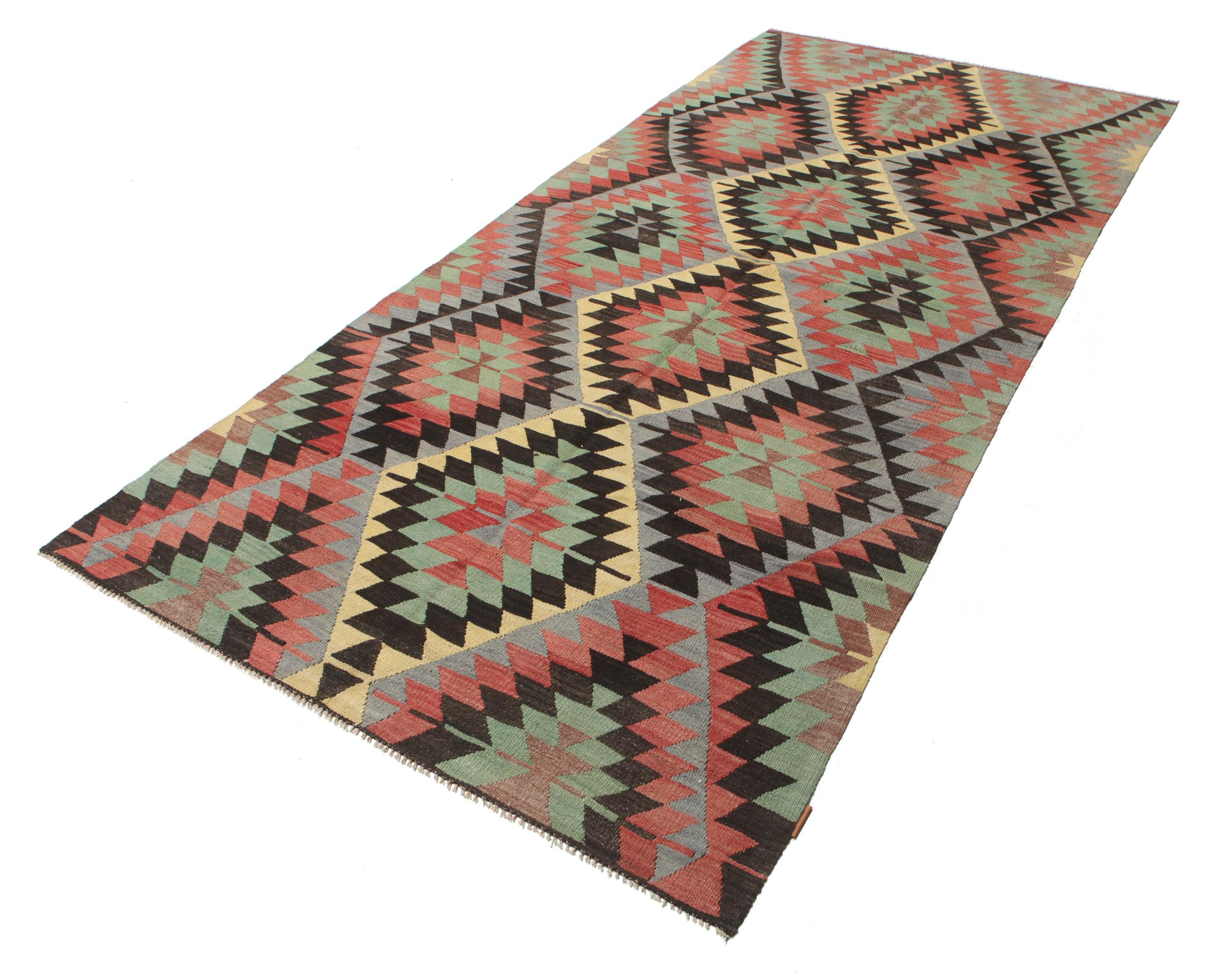
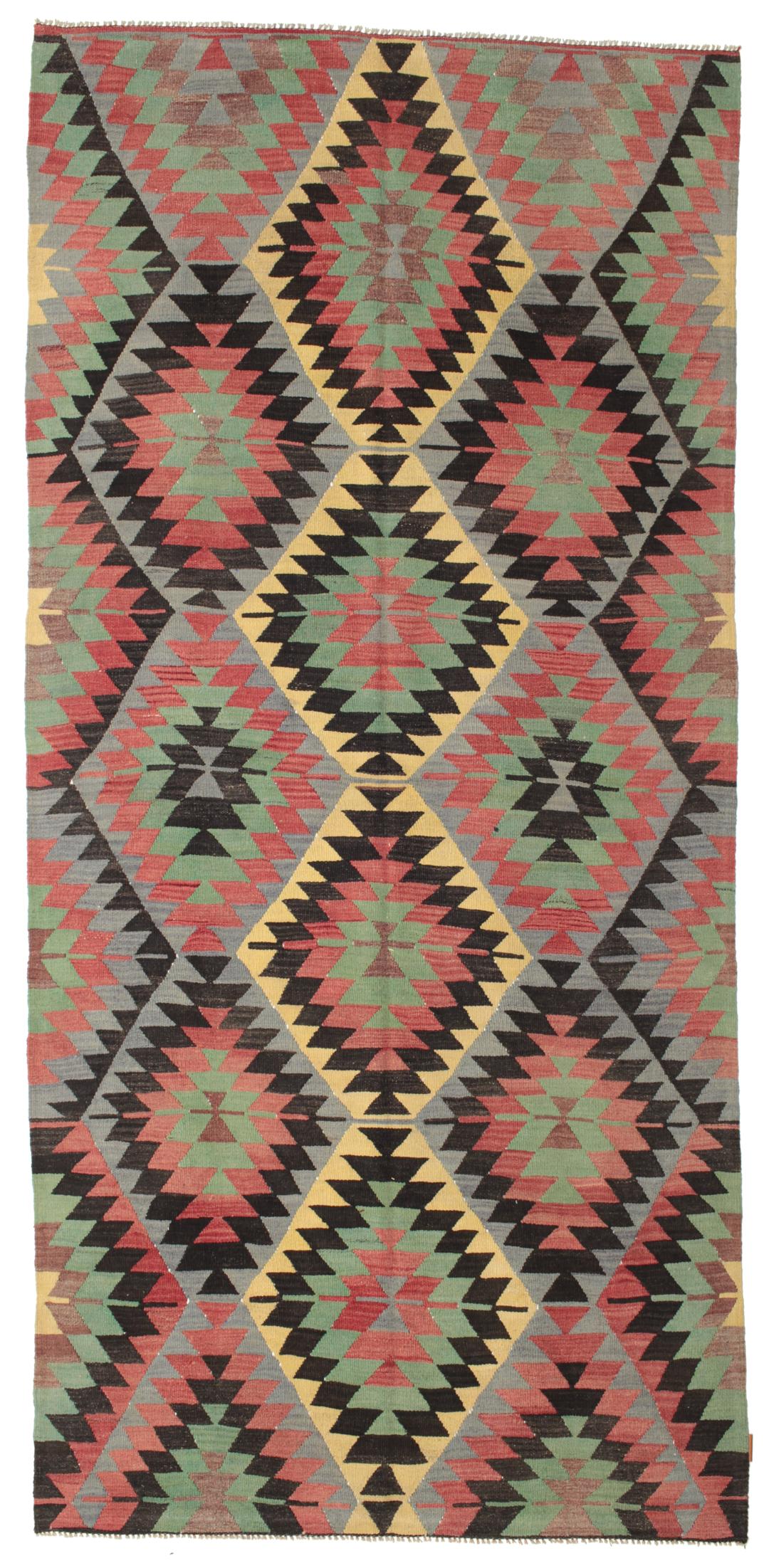
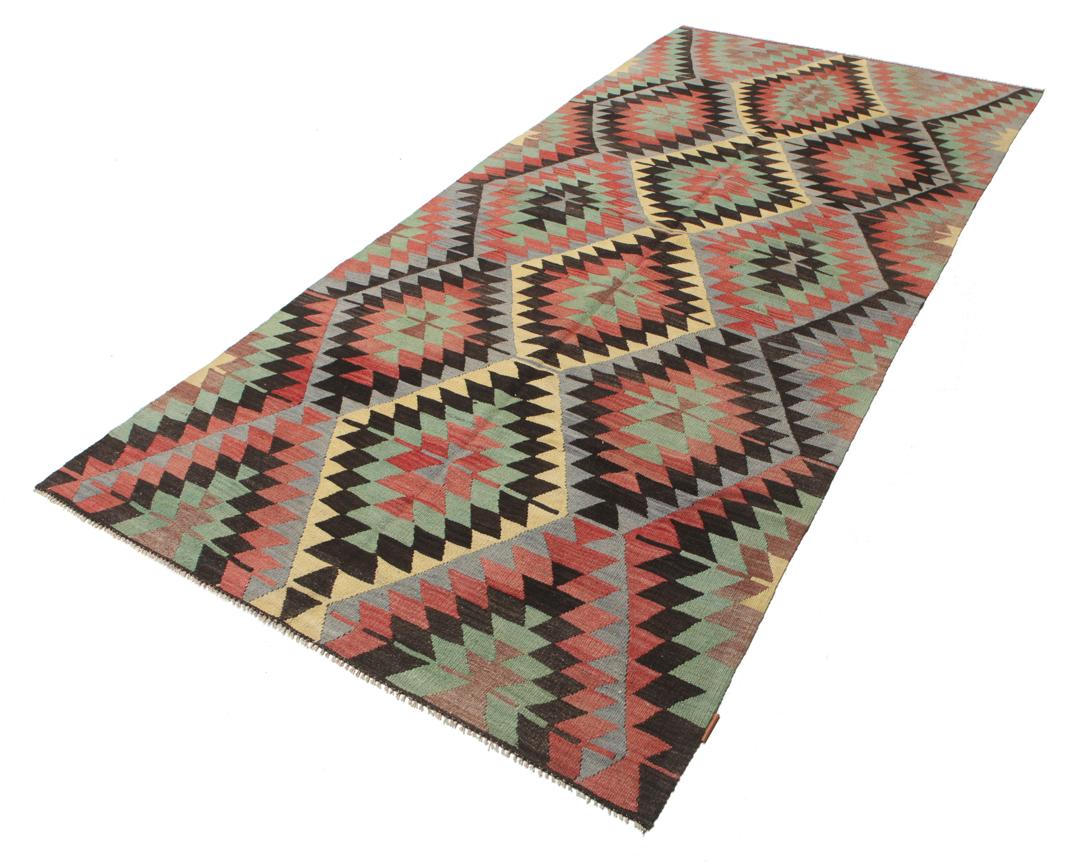
The design of this piece features bold, repetitive diamond motifs, which are classic symbols in the Turkish tradition. These shapes are often used to represent protection, fertility, or the natural world, translated into a rhythmic, abstract language. The use of vibrant colours is a hallmark of this style, often derived from natural dyes that have been used by artisans for centuries to tell stories and reflect the beauty of their surroundings.
Collecting a vintage Kilim is an act of preserving a piece of cultural heritage. These items are valued not only for their aesthetic beauty but for the skill and patience required to produce them. Owning a piece like this means participating in a long lineage of craft, where every geometric motif acts as a thread connecting the modern home to the rich history of the Middle East.