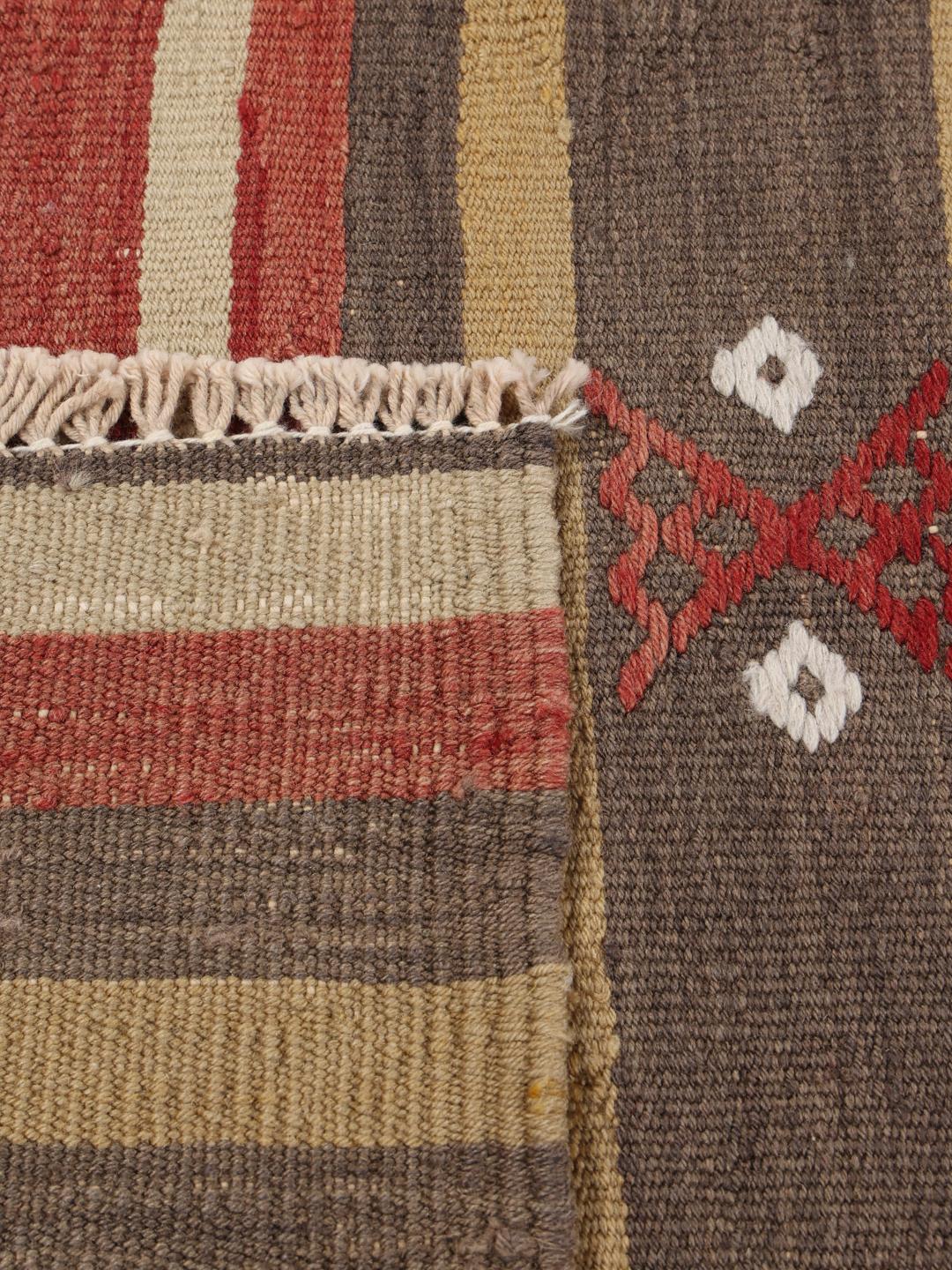
Kilim rugs represent a storied tradition of flat-weaving that has been central to Turkish culture for centuries. Historically, these rugs were created by nomadic and village communities as functional items for daily life, serving as floor coverings, blankets, or even saddlebags, reflecting a deep connection to the land and local resources.
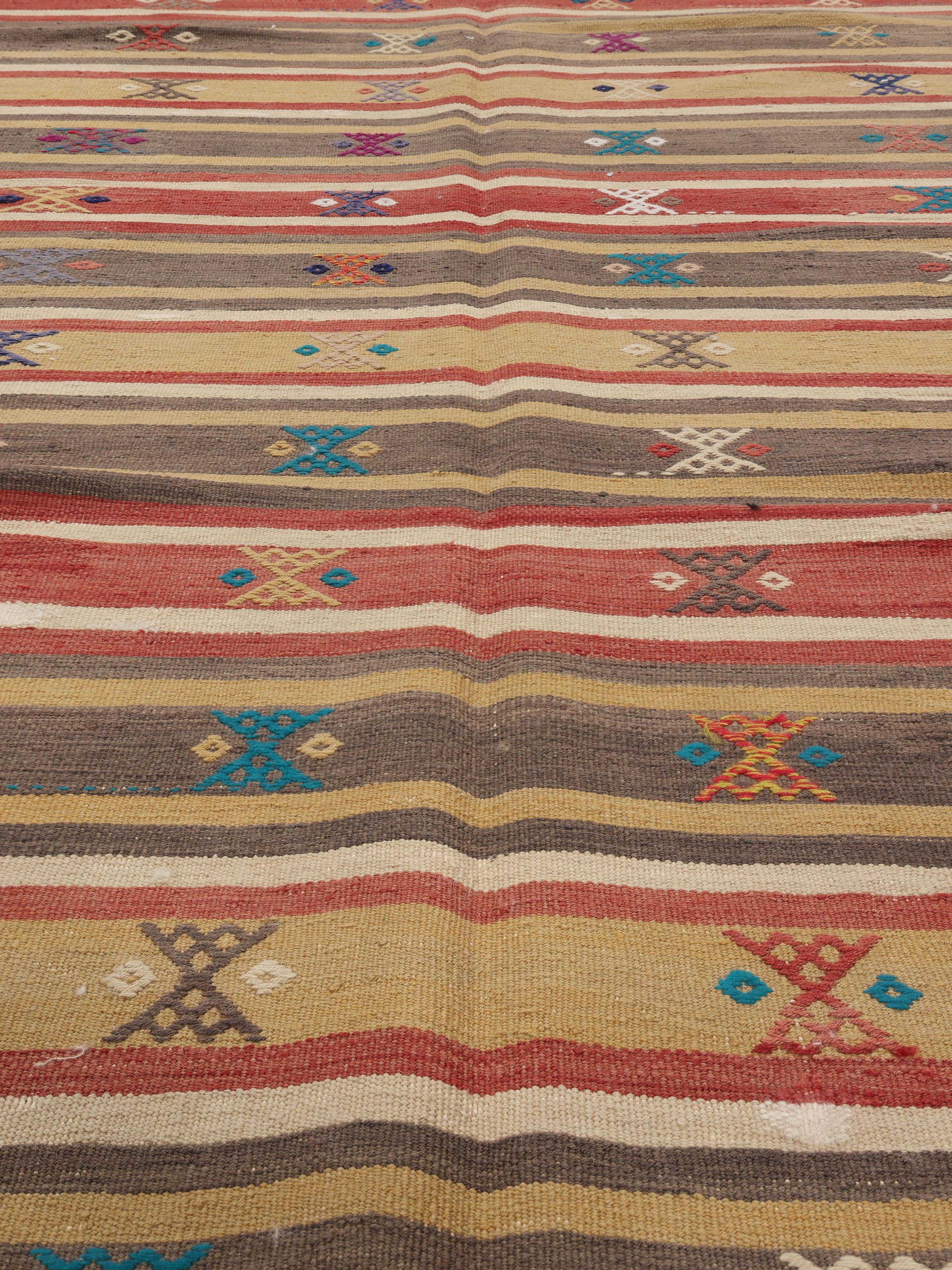
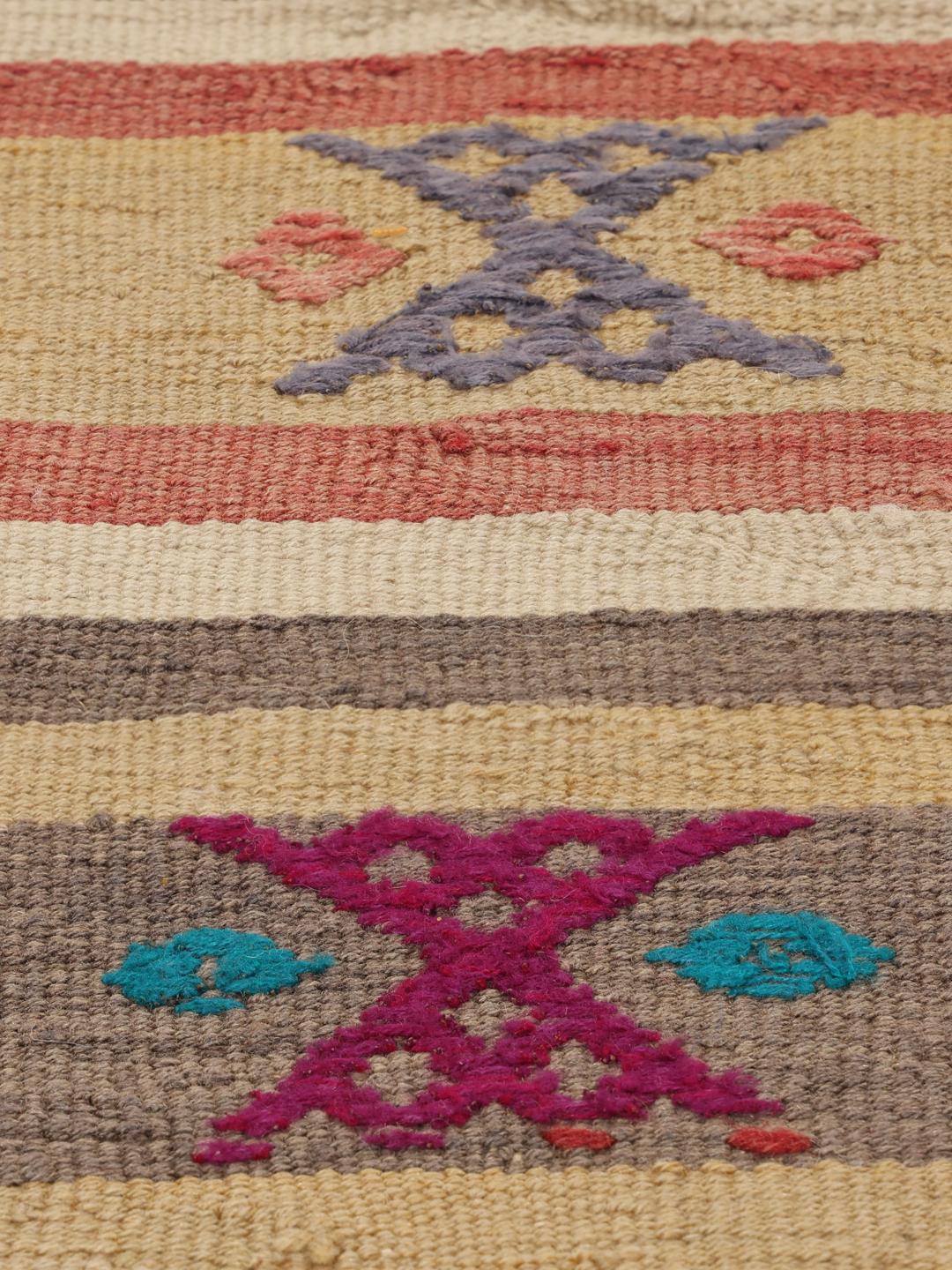
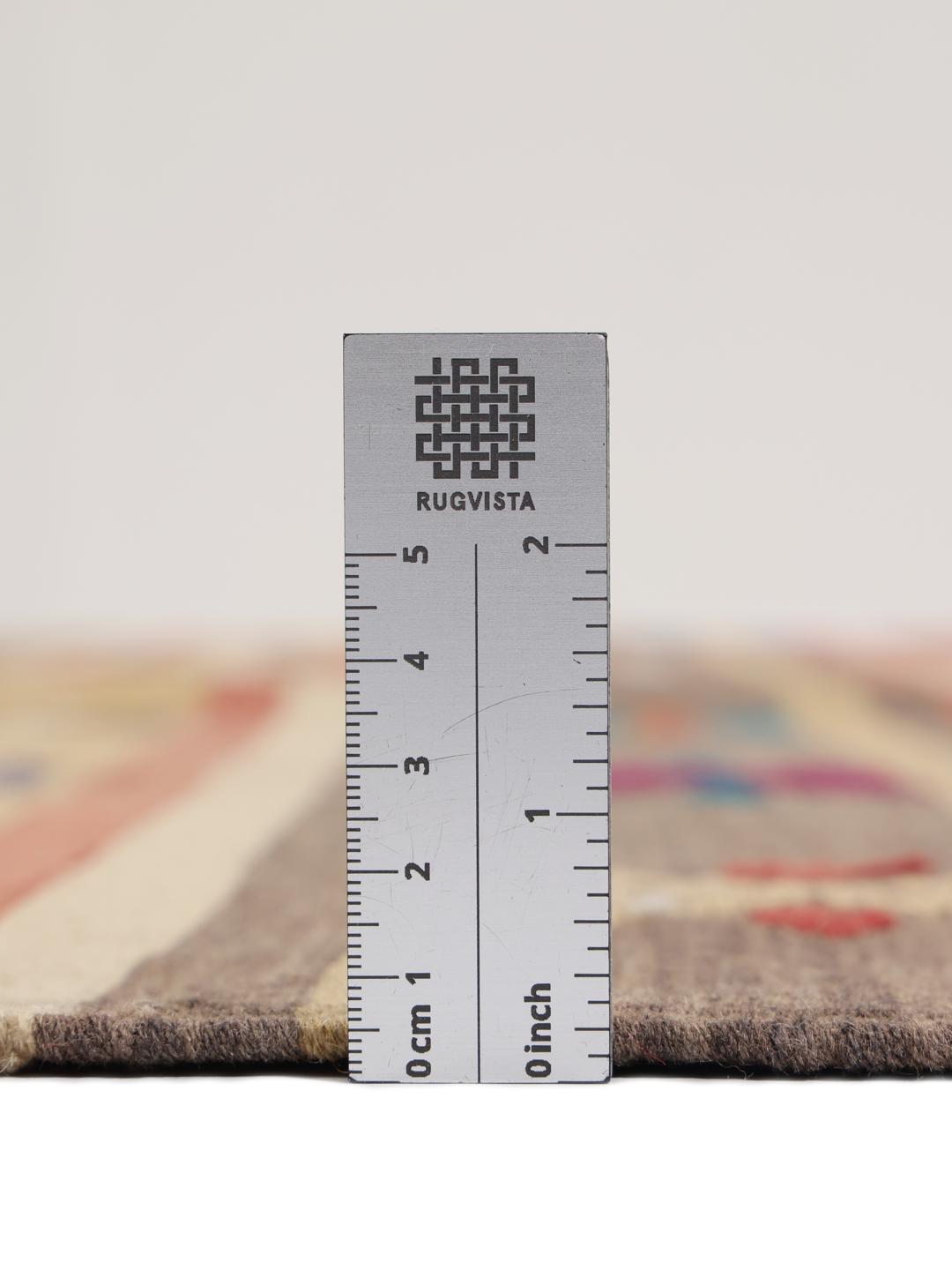
The term Kilim refers to a specific technique where the weft threads are tightly packed to cover the warp, creating a smooth, pattern-focused surface without a pile. This construction method allows for intricate geometric designs and clean lines, which have become a signature of the tradition and are highly valued for their clarity and visual impact.
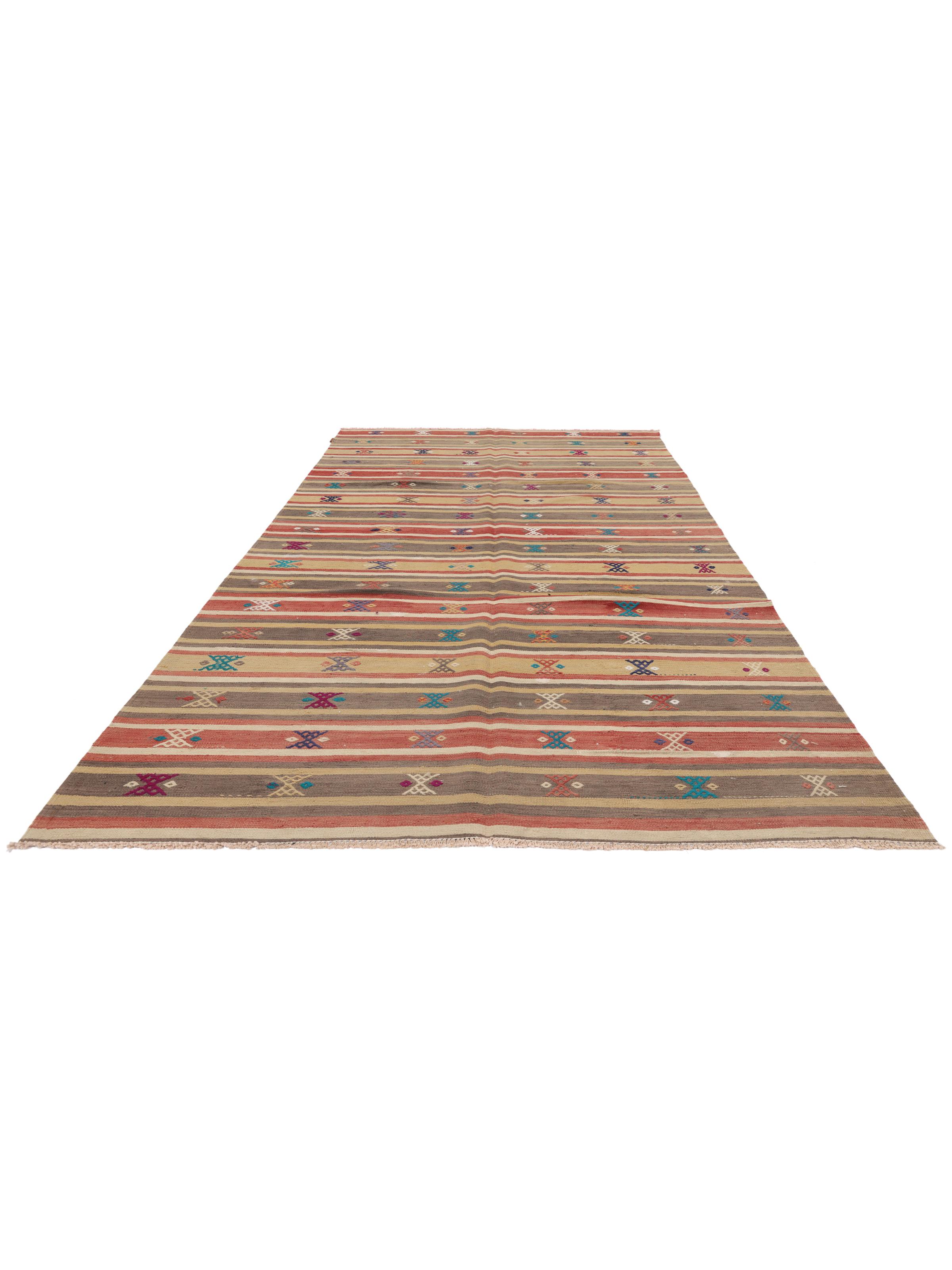
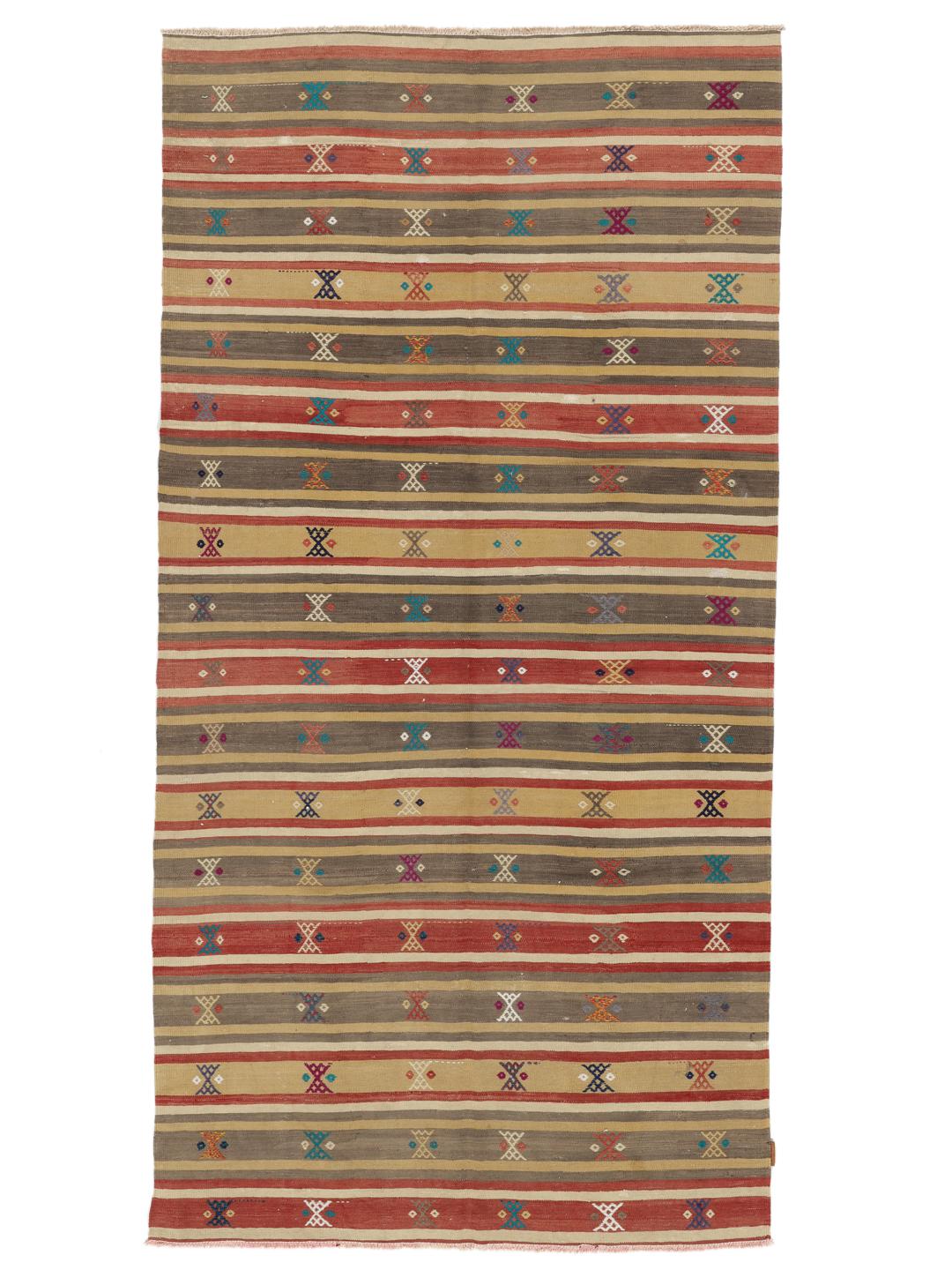
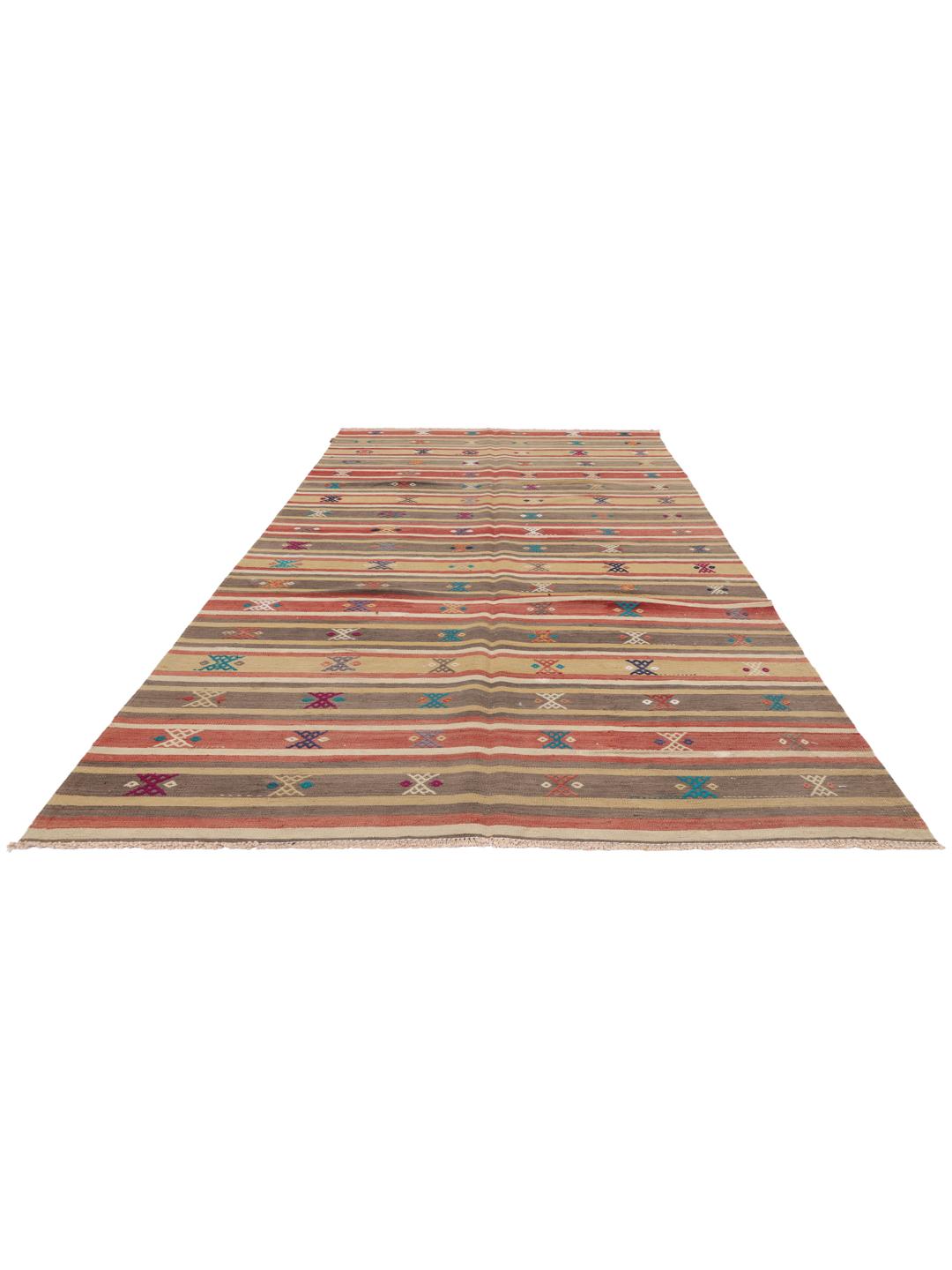
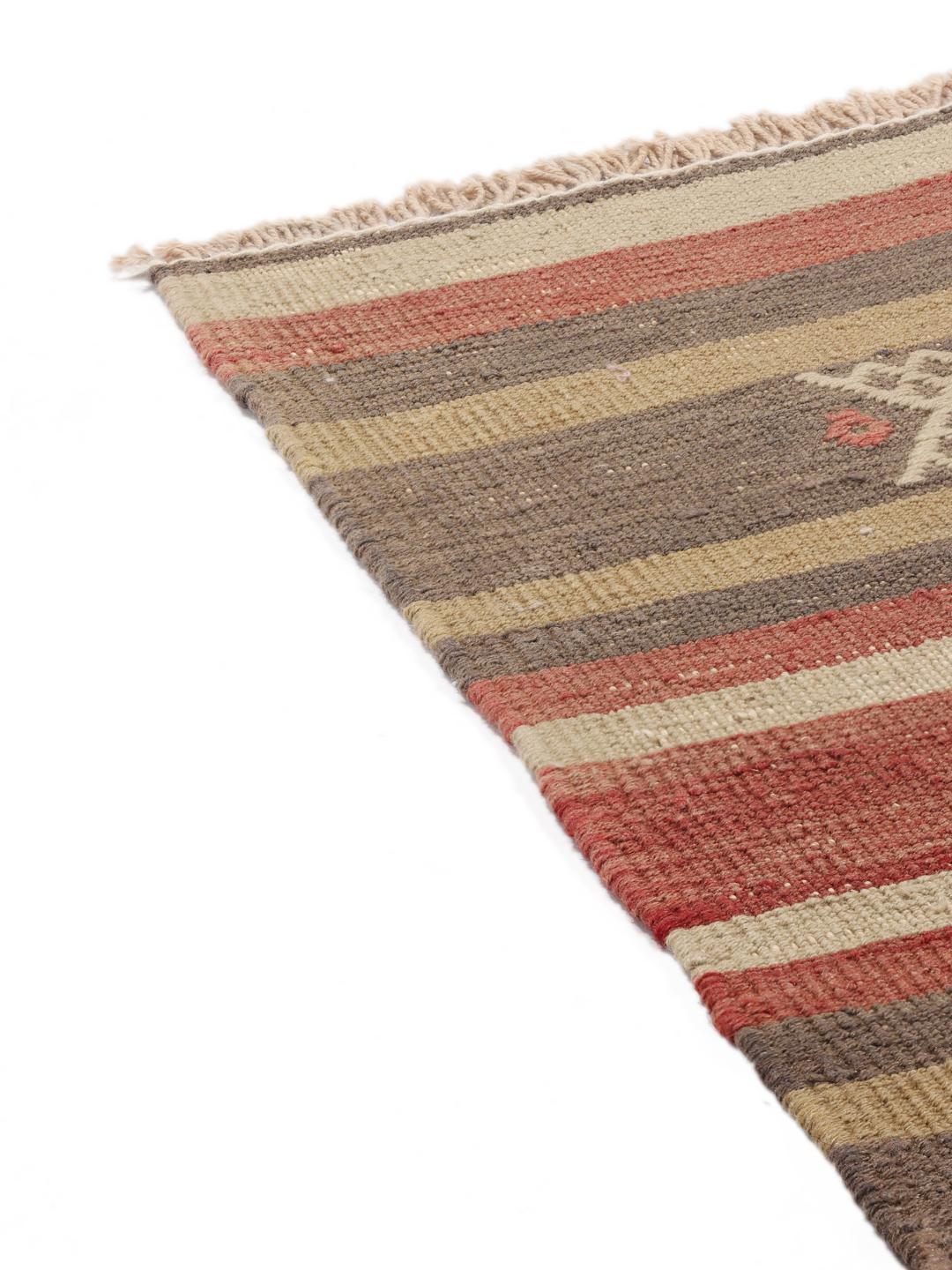
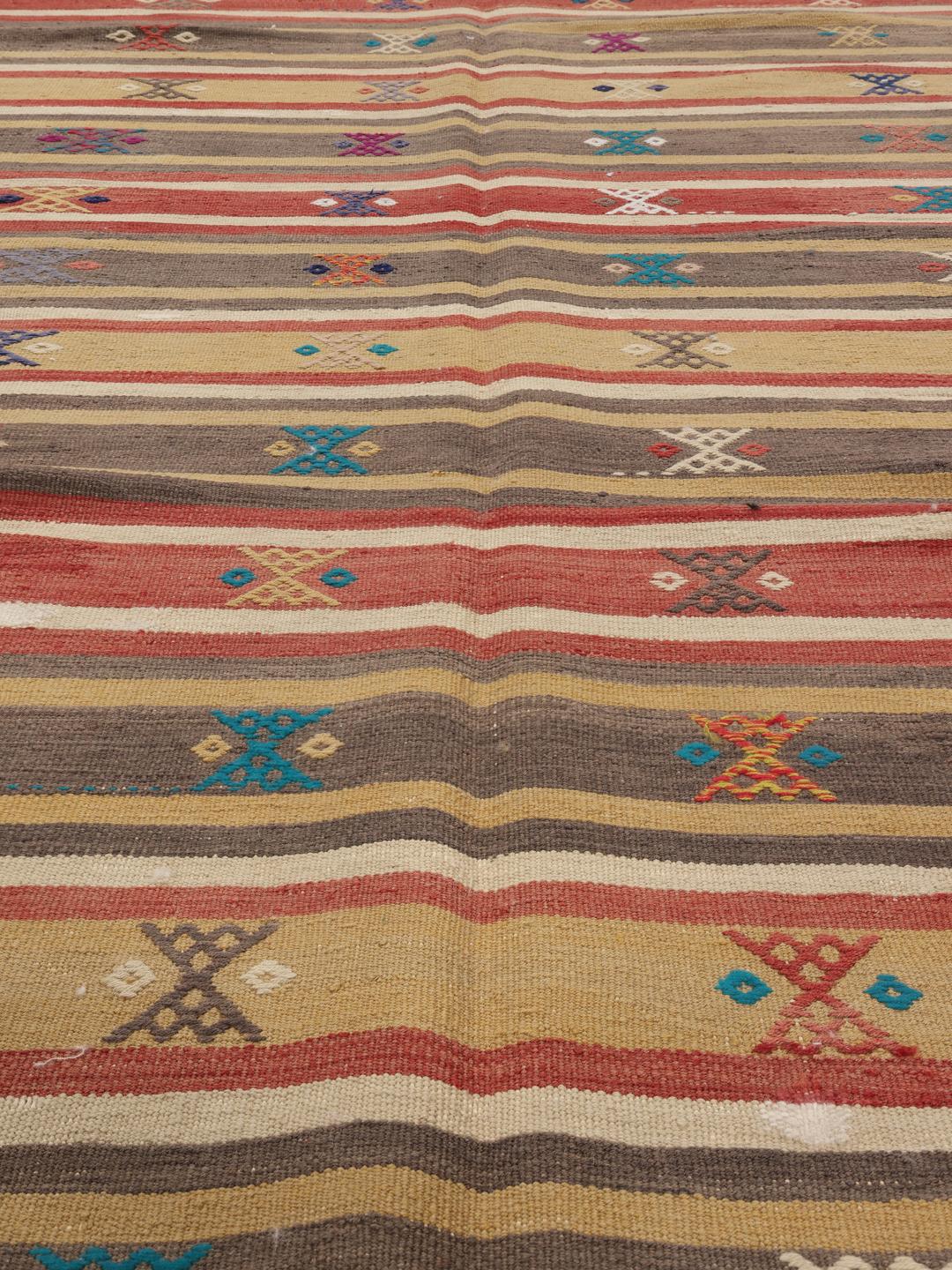
Signature design elements in these rugs often include bold stripes, zig-zags, and stylized geometric medallions. This particular piece features a classic striped foundation accented by small, deliberate motifs, a common decorative language in Turkish weaving that balances order with artistic expression through the use of varied, earthy tones.
Beyond their aesthetic appeal, these vintage pieces are cherished by collectors for their cultural significance and the skill required to produce them. Owning a vintage Kilim is a way to preserve a piece of history, as each rug embodies the specific aesthetic preferences and technical mastery of the region and time period in which it was created.