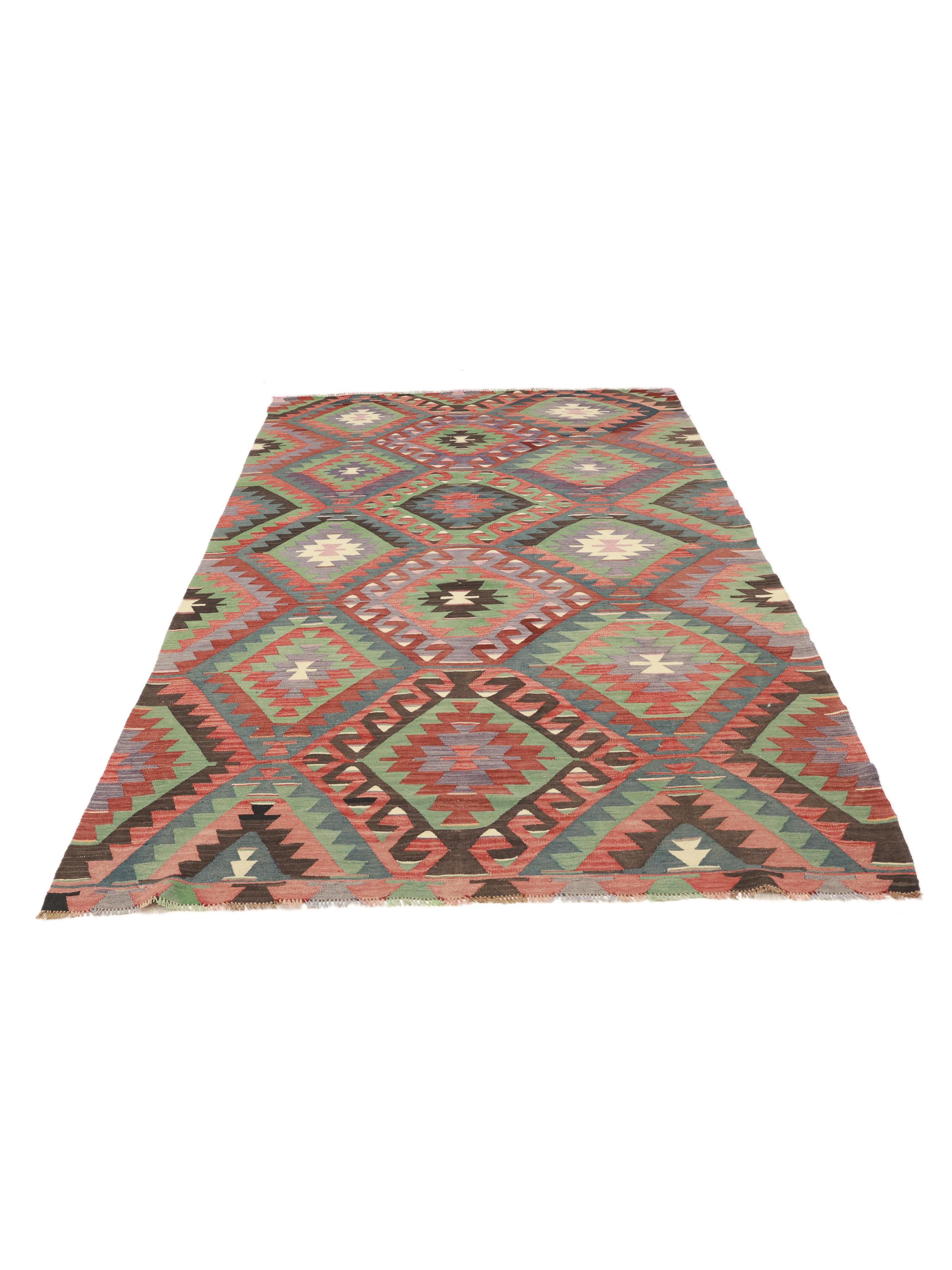
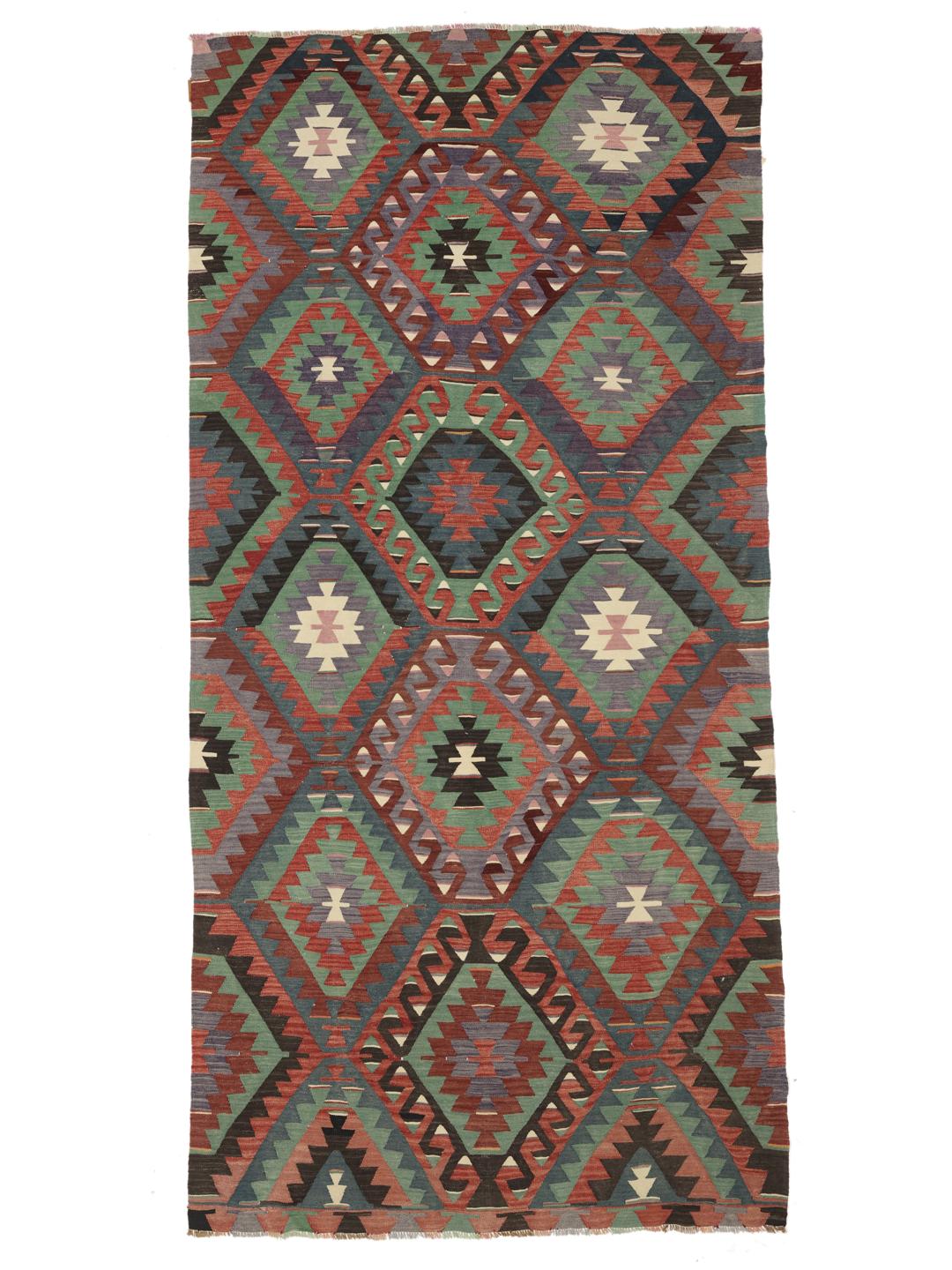
The Kelim rug tradition is deeply rooted in the cultural history of Turkey and the broader Middle Eastern region. Historically, these flat-woven textiles were crafted by nomadic and village communities as essential household items, serving as floor coverings, blankets, and storage bags, each embedded with motifs that told the story of the weaver’s life and community.
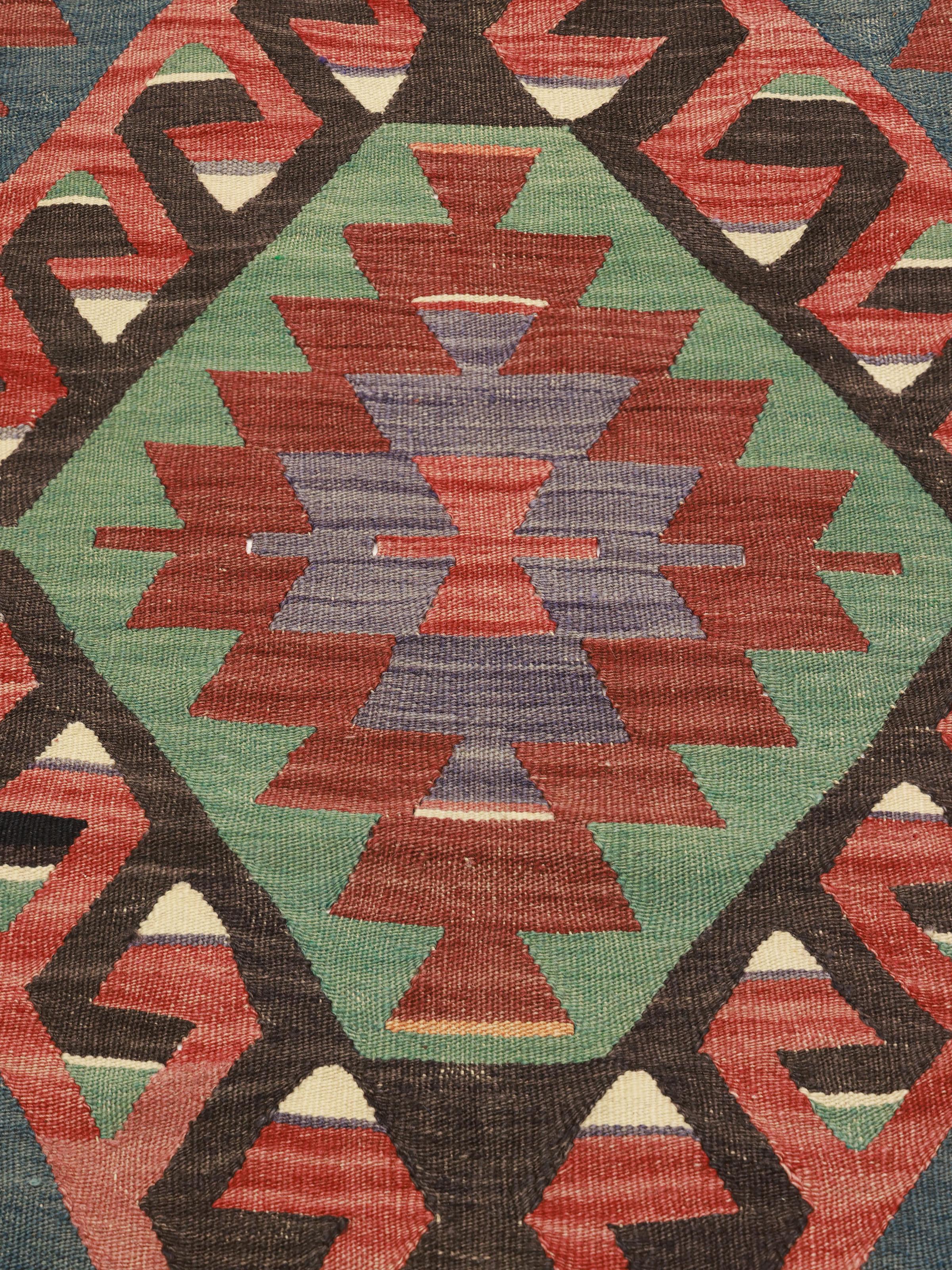
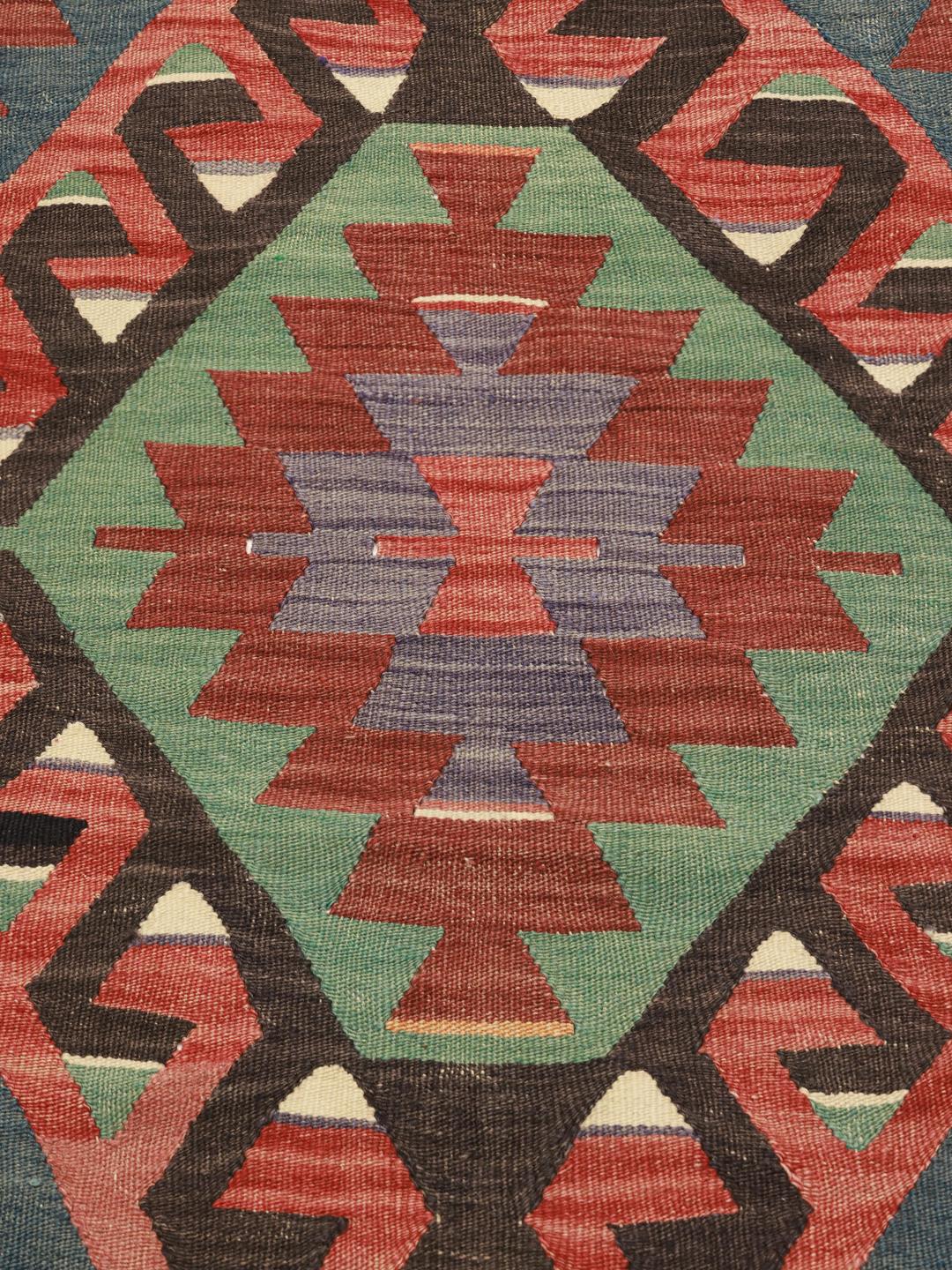
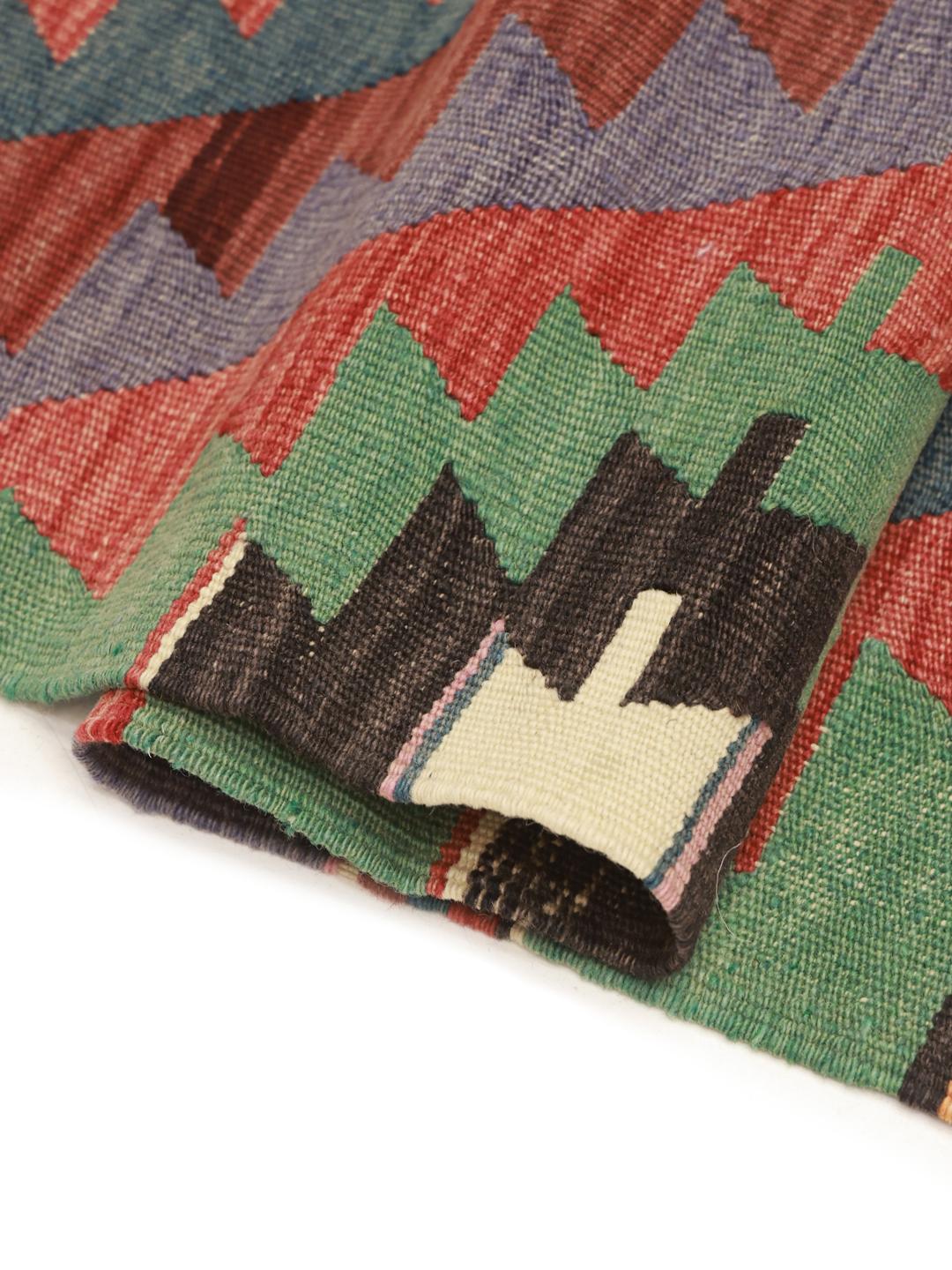
The term 'Kilim' refers specifically to the flat-weaving technique where the warp and weft threads are interlaced tightly to create a smooth, pileless surface. This method is distinct from knotted rugs, as it relies on the interweaving of coloured threads to form the pattern, resulting in a lighter, more versatile fabric that is prized for its clean lines and graphic potential.
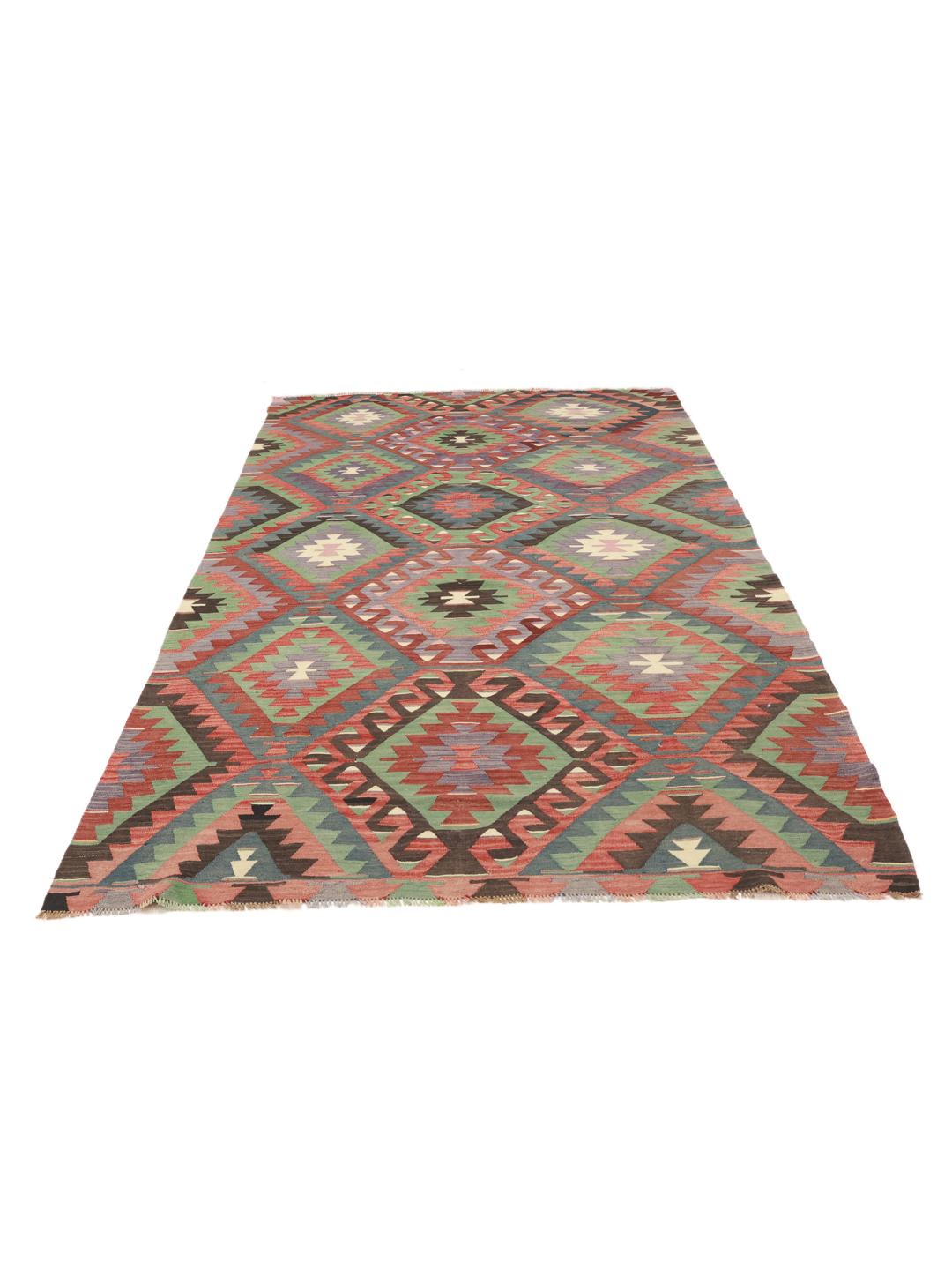
Signature design elements in these rugs often include bold geometric shapes, such as the repeating diamond motifs seen here, which are frequently used to symbolise protection or prosperity within local traditions. The use of natural dyes and earthy tones is a hallmark of the style, grounding the vibrant patterns in a palette that feels both organic and intentional.
Today, these vintage pieces are highly sought after by collectors who value the intersection of utility and cultural heritage. Owning a Kilim is more than just a decor choice; it is an act of preservation, celebrating the skill of the artisans who created these functional masterpieces and ensuring that their traditions continue to thrive in modern homes.