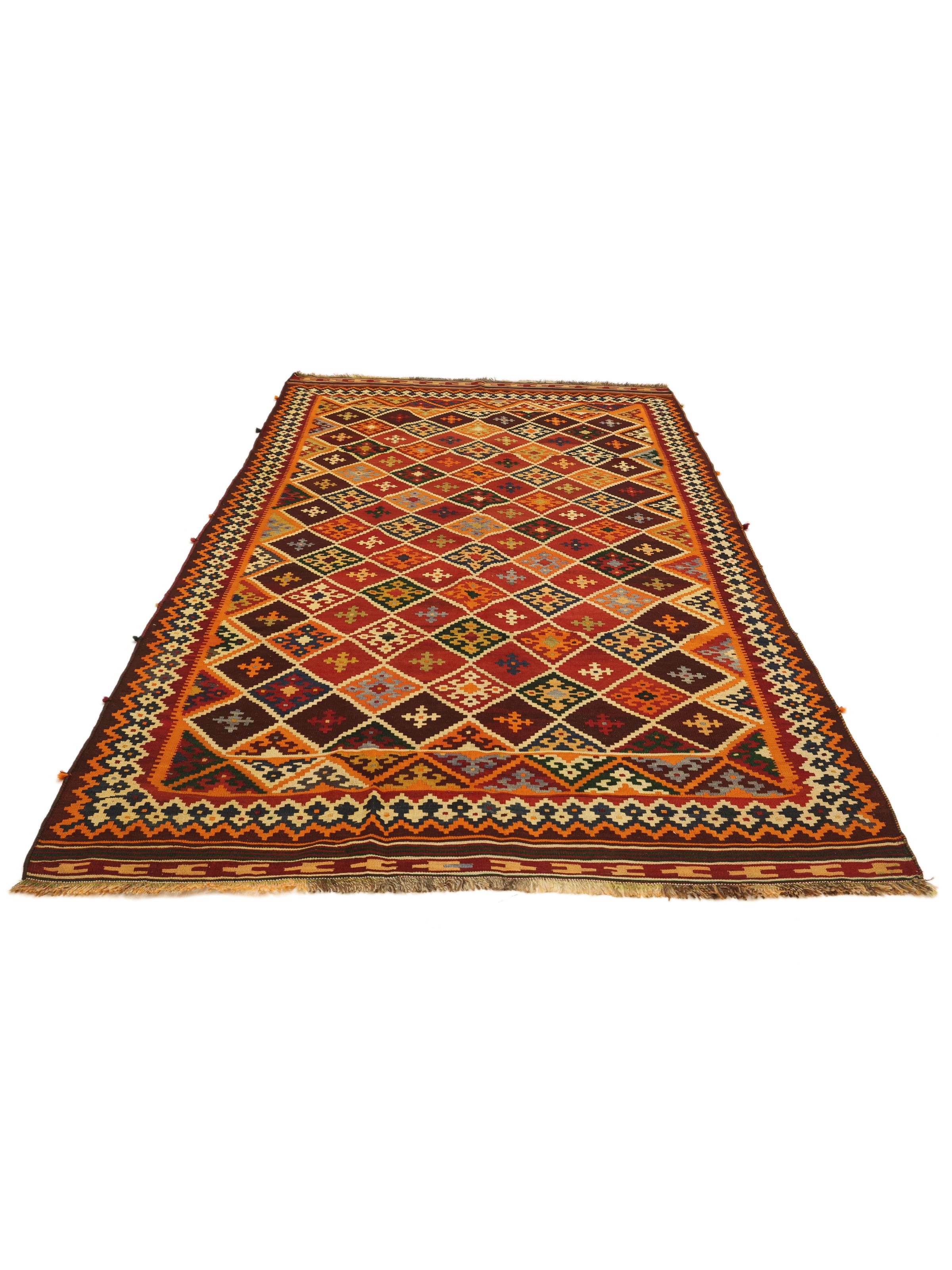
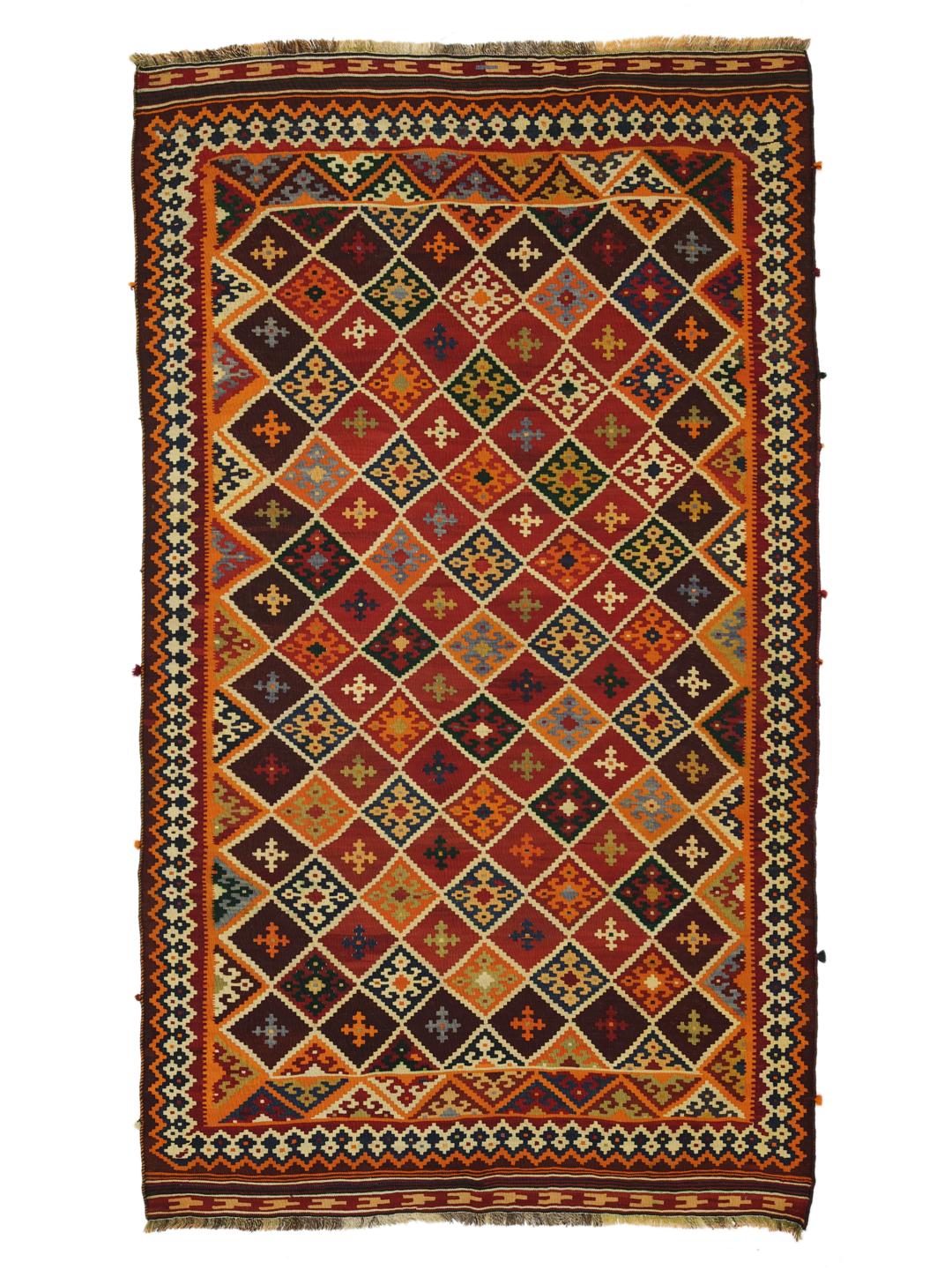
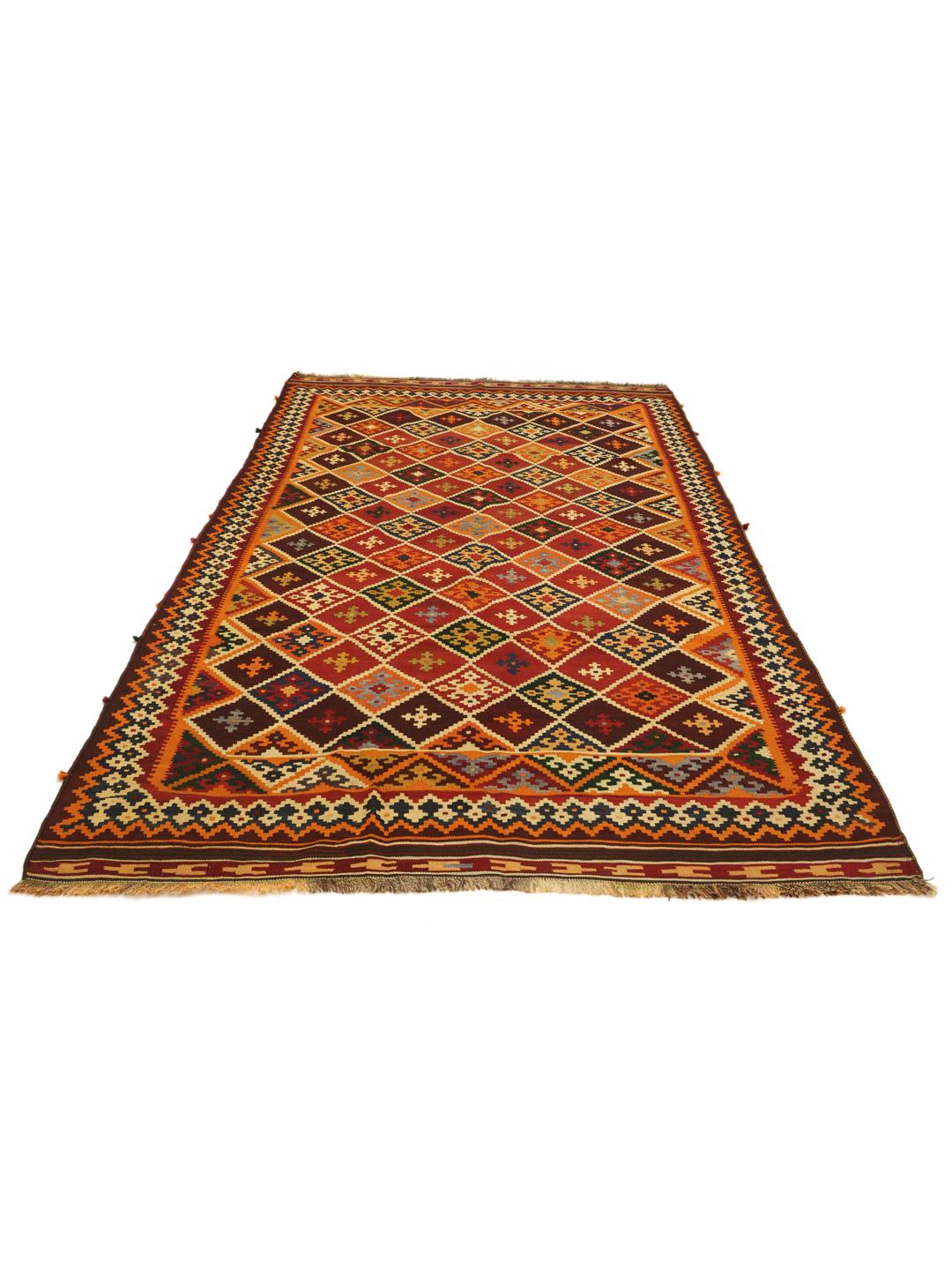
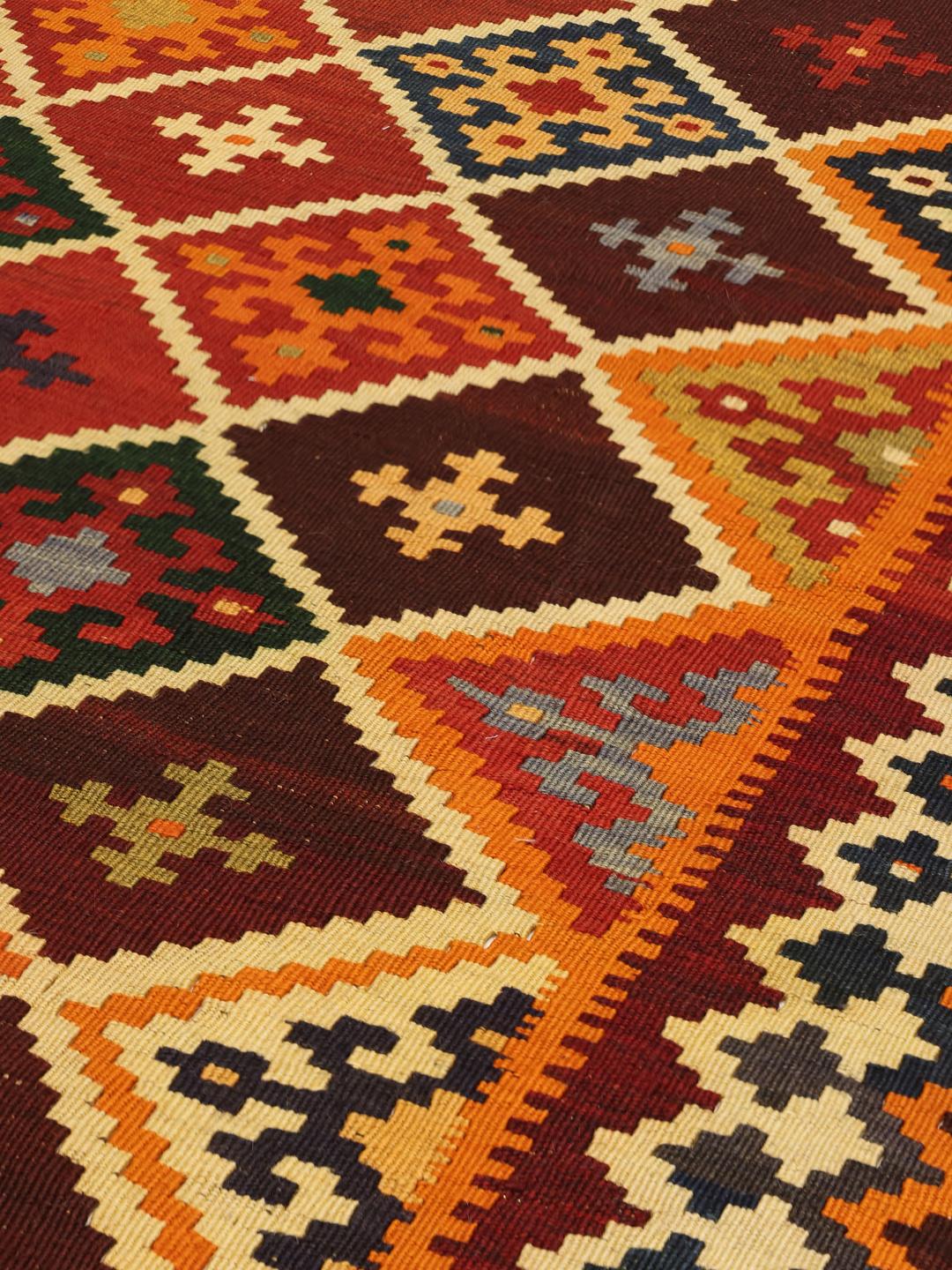
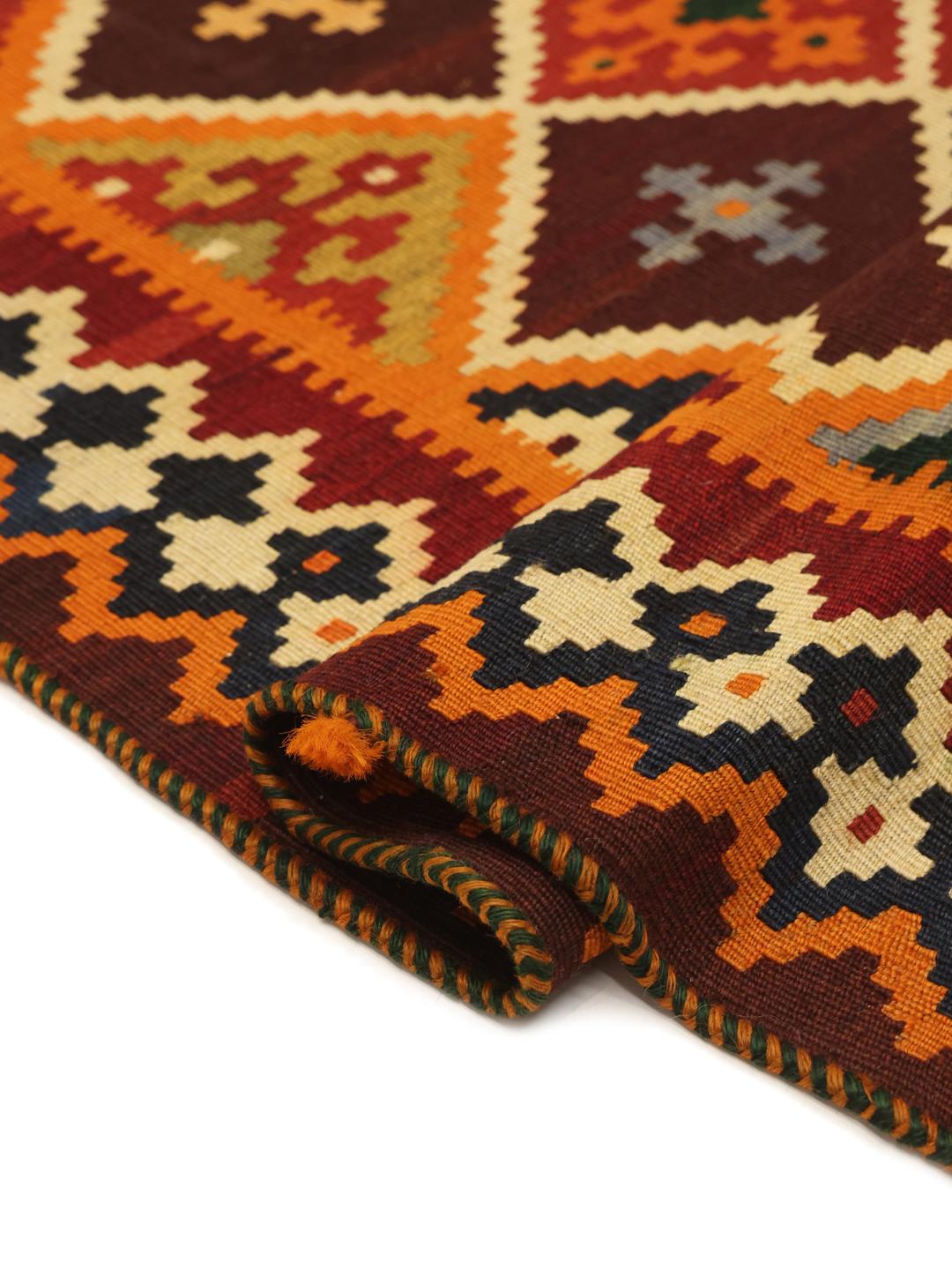
Kilim weaving is one of the oldest textile traditions in the world, rooted deeply in the rural regions of Anatolia and across Turkey. Originally crafted by nomadic and village weavers for daily domestic life, these flatwoven textiles served as floor coverings, wall hangings, and storage bags, designed to be durable yet light enough to transport.
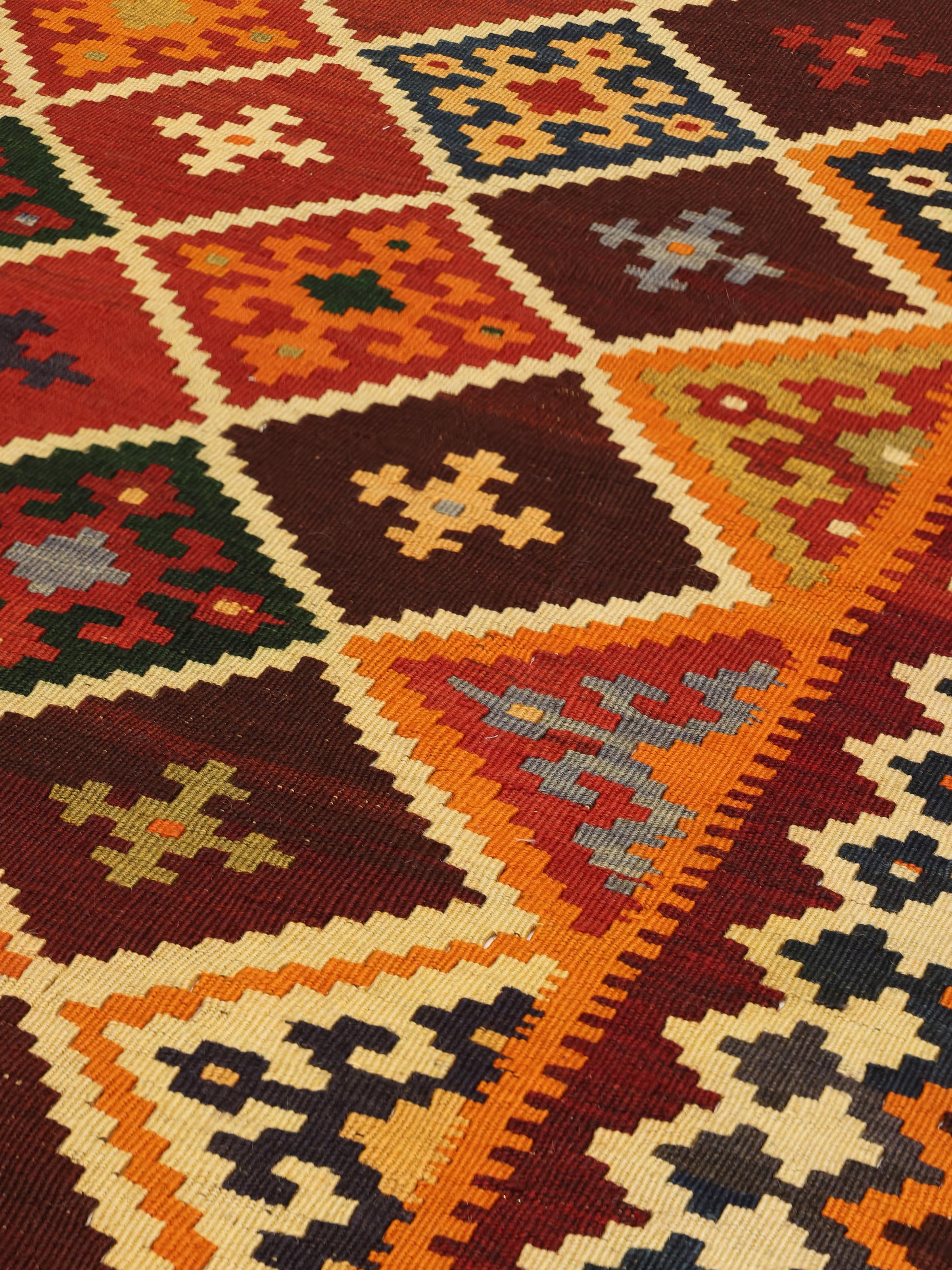
Unlike pile rugs created with tufted knots, a traditional kilim is hand woven by interlocking the warp and weft threads to create a flat, structure-free surface. This technique requires exceptional control of tension, as the weaver builds both the pattern and the structural fabric simultaneously row by row.
The visual language of Turkish kilims relies on geometric symbolism and expressive color palettes. Repeating diamonds, stepped borders, and protective motifs were historically woven to convey family stories, local identity, and natural landscapes, turning each piece into a personal canvas for the weaver.
Vintage Turkish kilims from the mid-to-late twentieth century are highly prized by collectors for their mellowed tones and mature character. Acquiring an authentic vintage piece connects your home to a living craft tradition that continues to inspire interior design across the globe.