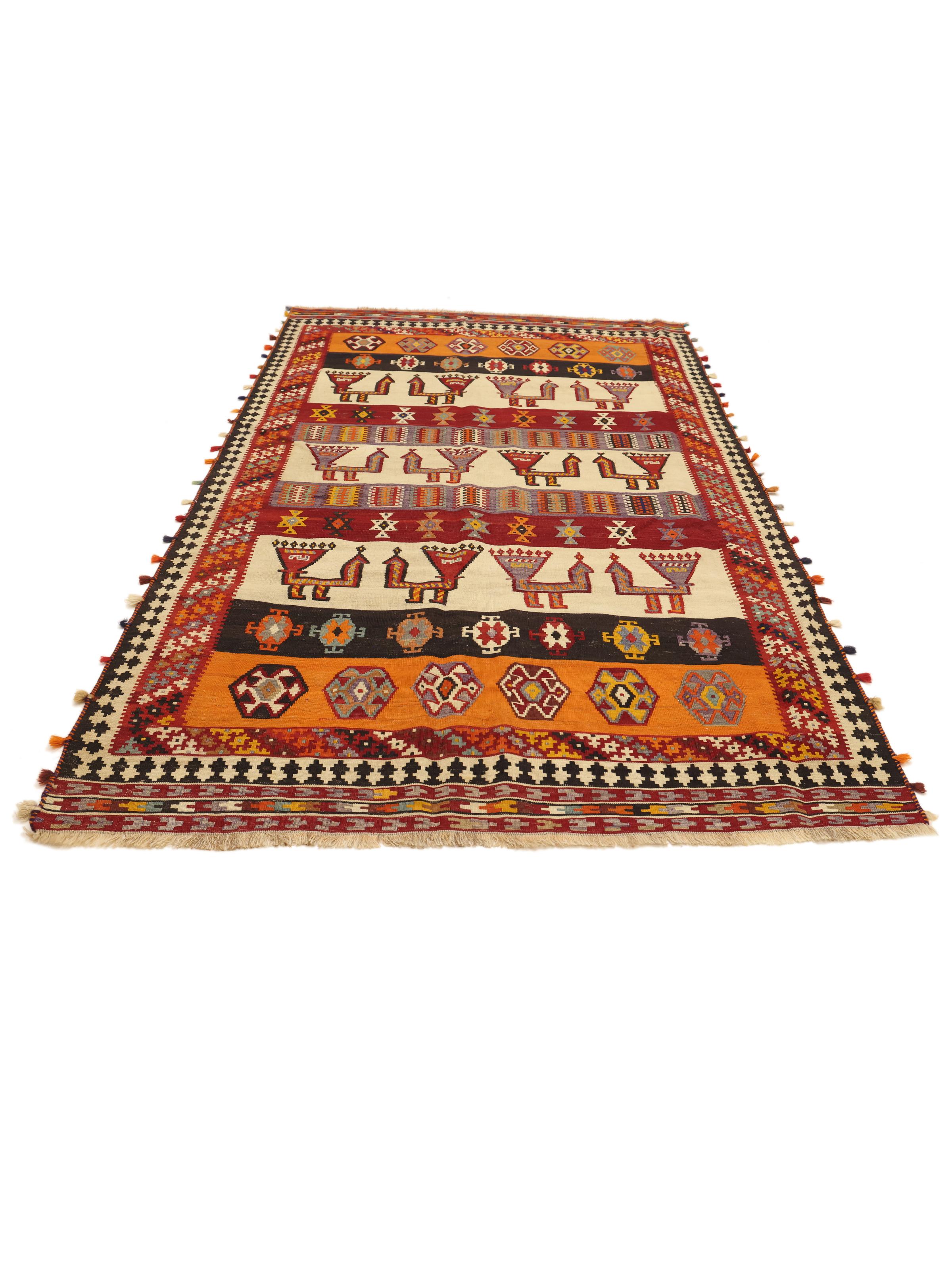
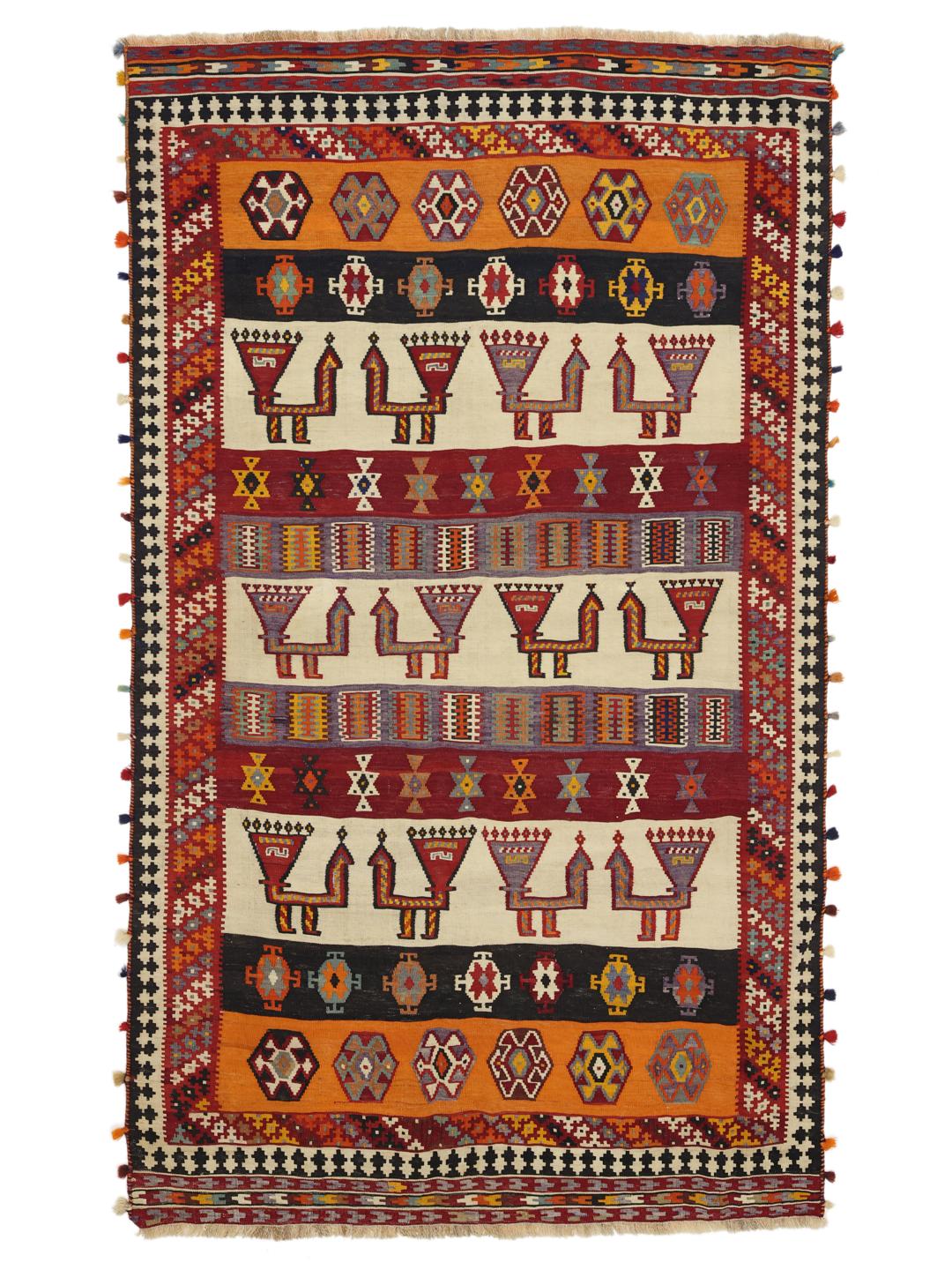
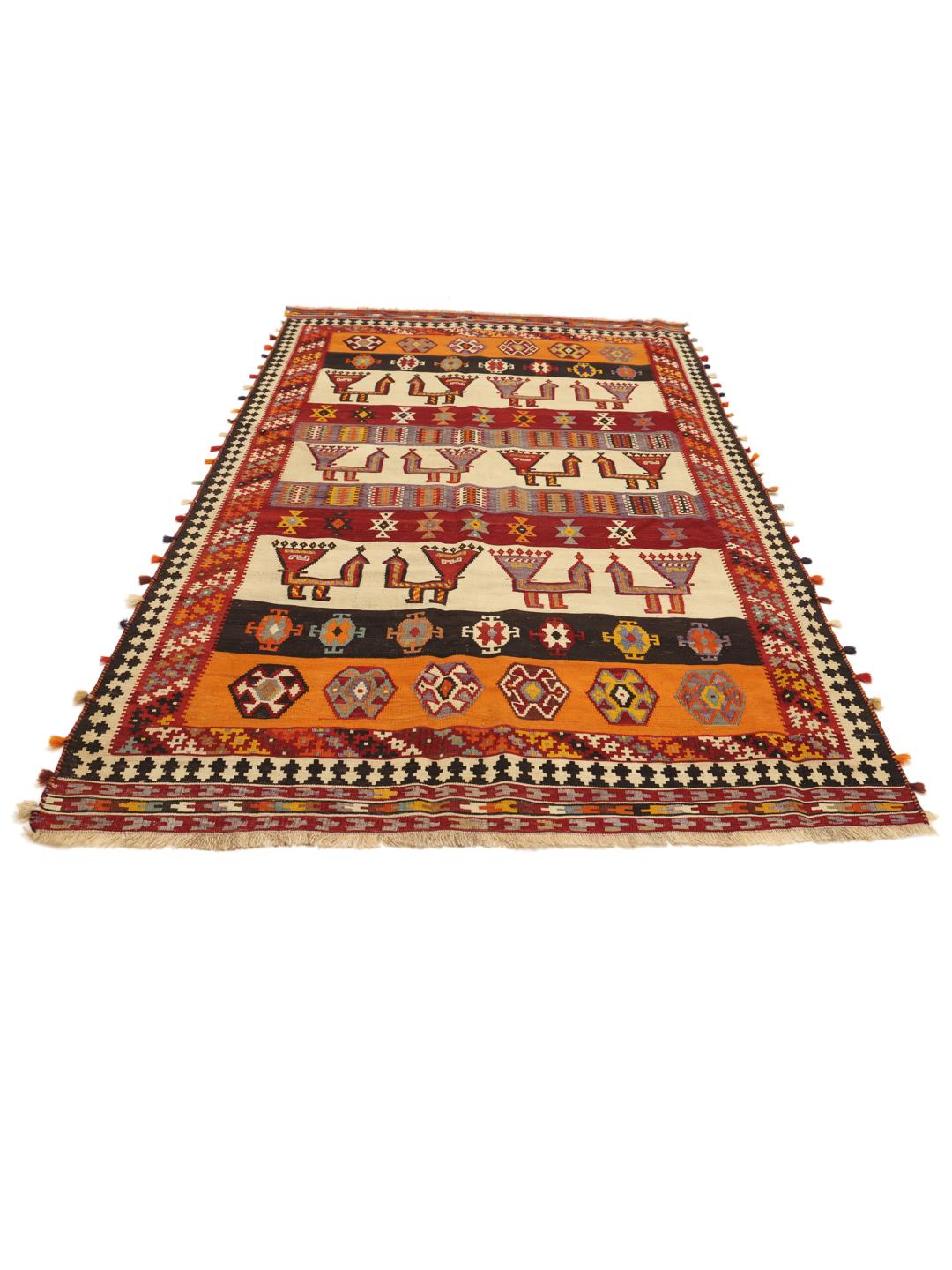
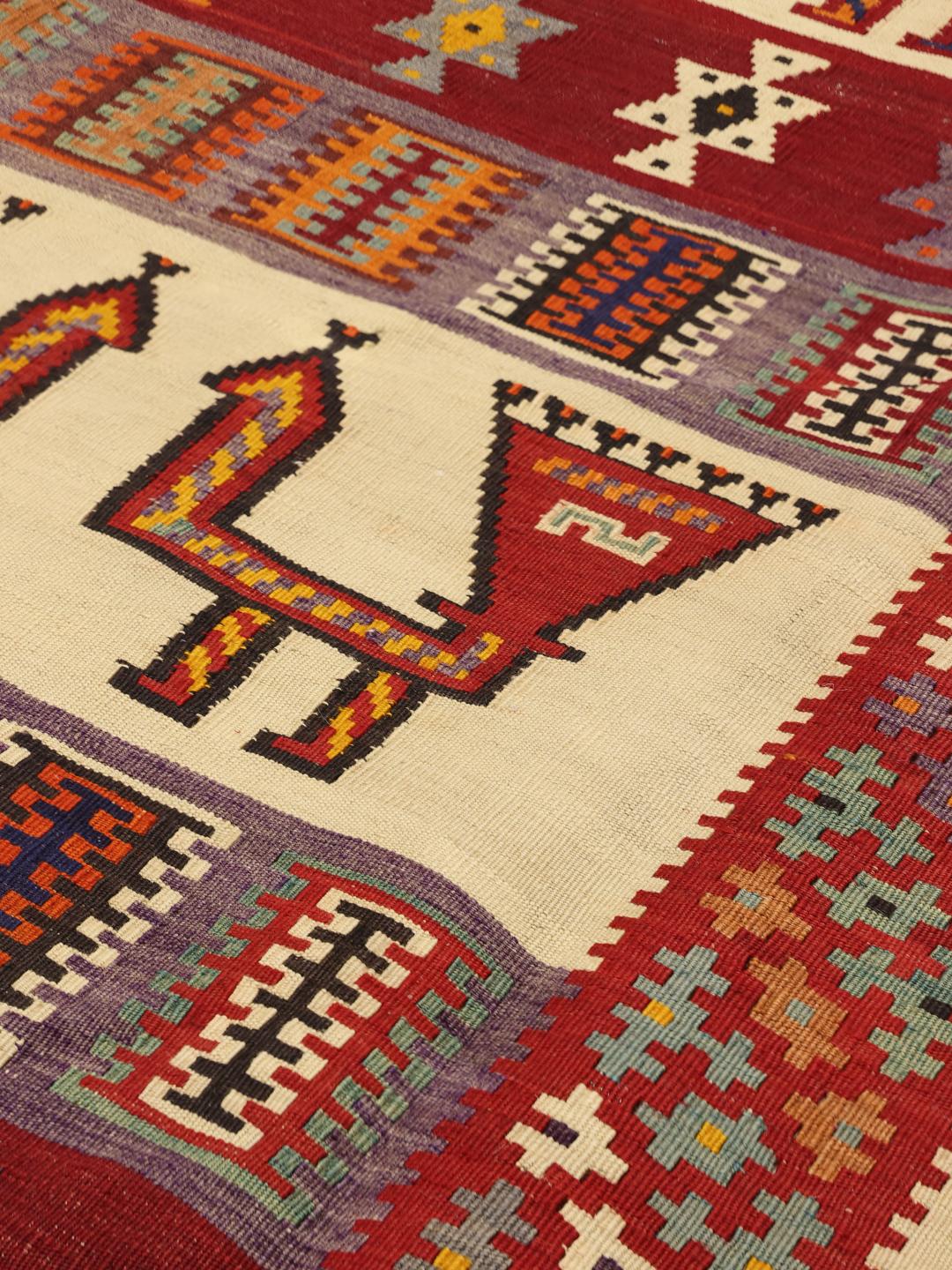
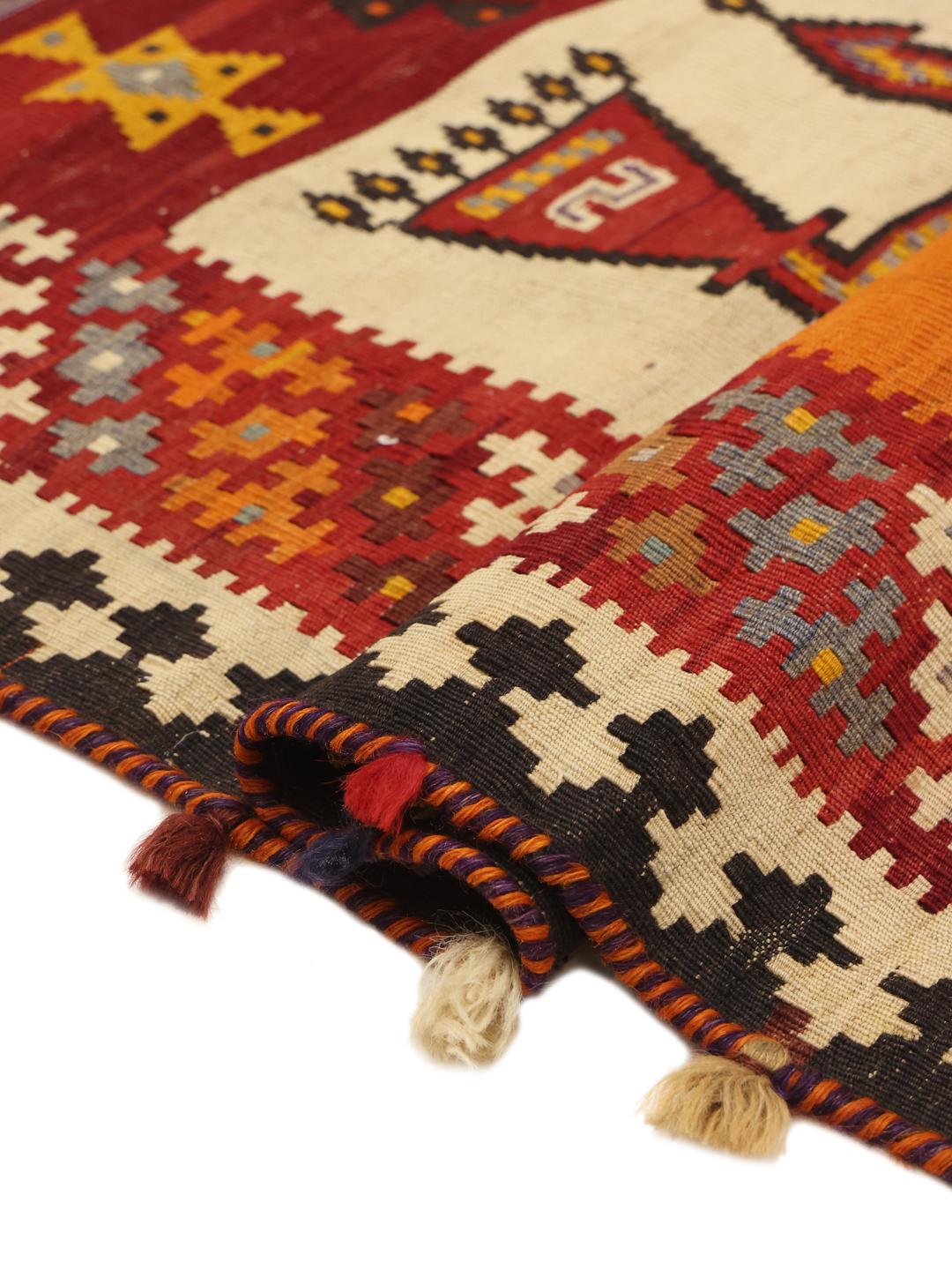
Kilim weaving is one of the oldest textile traditions in Anatolia, Turkey. Unlike pile rugs, kilims are created using a flatweave technique where the weft threads are tightly woven through the warp to create both the structure and the design simultaneously. Historically, these textiles were made by tribal weavers for personal use within the home, serving as floor coverings, wall hangings, and protective blankets.
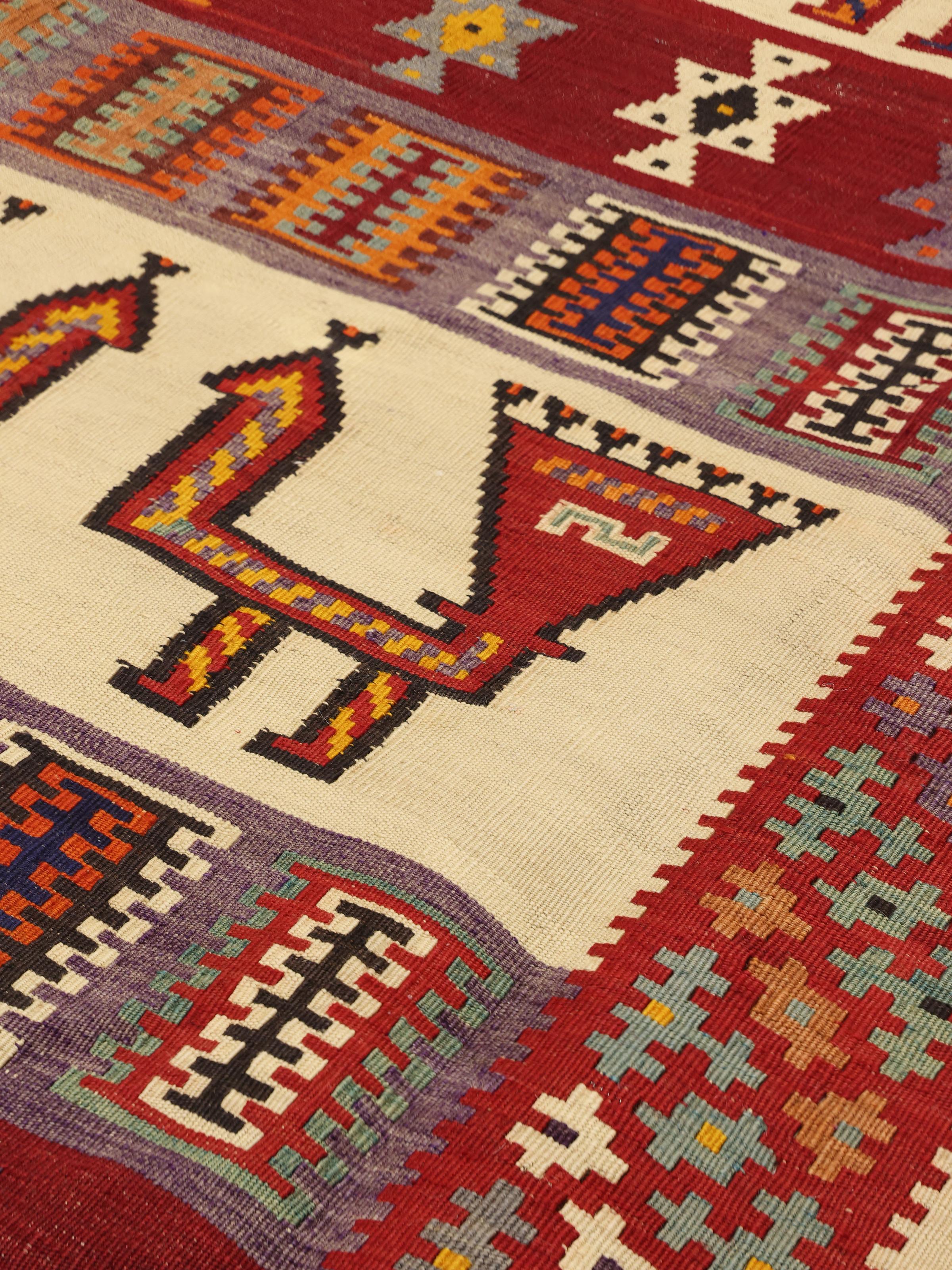
The term flatweave refers directly to this tapestry-like construction. Because there is no vertical pile, flatwoven kilims are lighter, reversible, and structural. The technique requires immense precision, as the weaver creates the pattern by changing thread colors at specific intervals, building geometric forms step by step across the loom width.
The design language of vintage Turkish kilims is rich with symbolic meaning. Repeating geometric shapes, diamond motifs, and stylized figures often represent protection, family harmony, or regional heritage. The broad horizontal bands and vibrant color breaks seen in this piece are typical of Anatolian village weaving, where weavers used locally dyed wool to express personal and tribal identity.
Vintage Anatolian kilims are highly valued by collectors and interior designers alike for their authenticity and historic character. Aged between 20 and 50 years, rugs like this one offer a bridge between traditional regional craft and modern interior styling, making them sought-after pieces of living history.