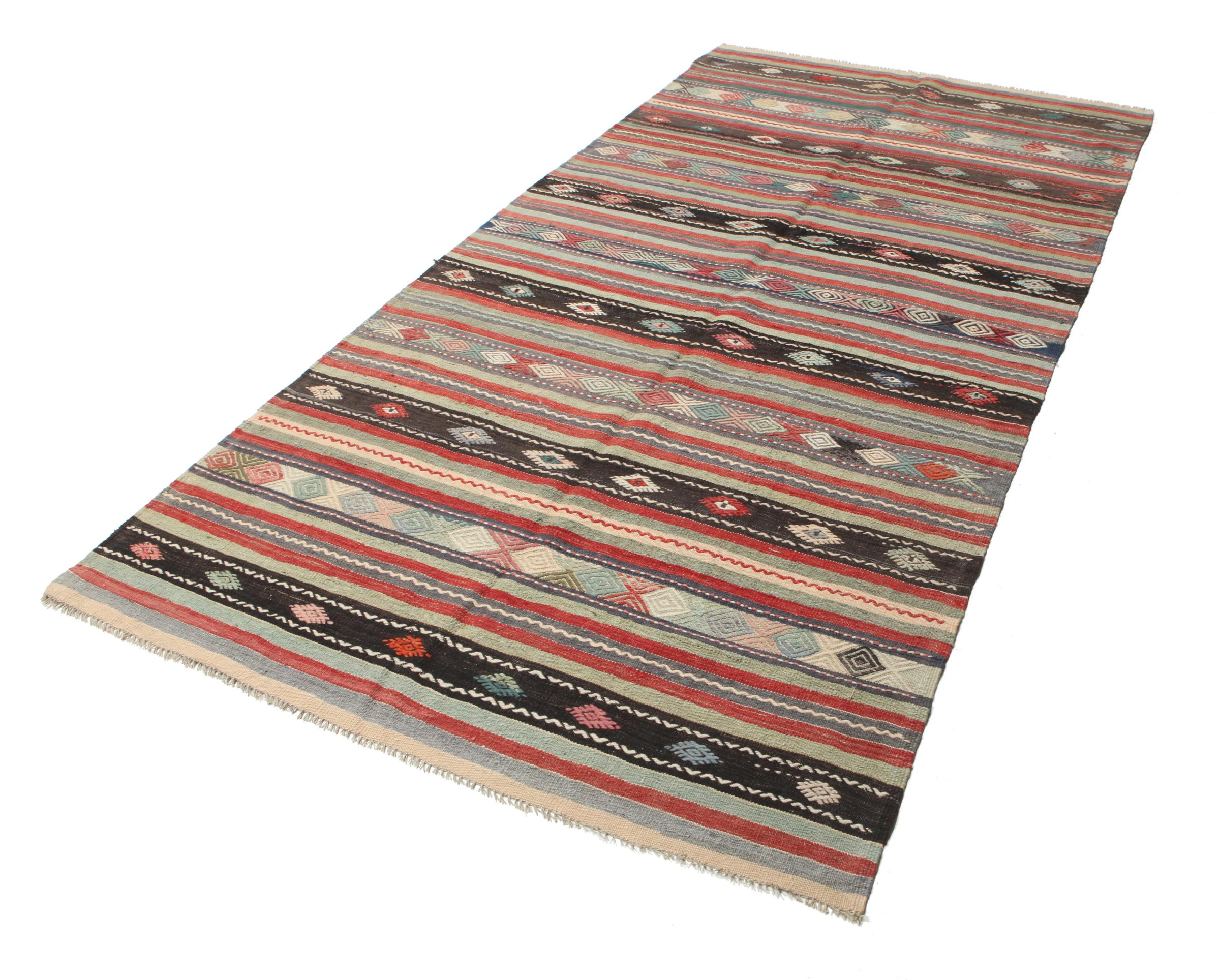
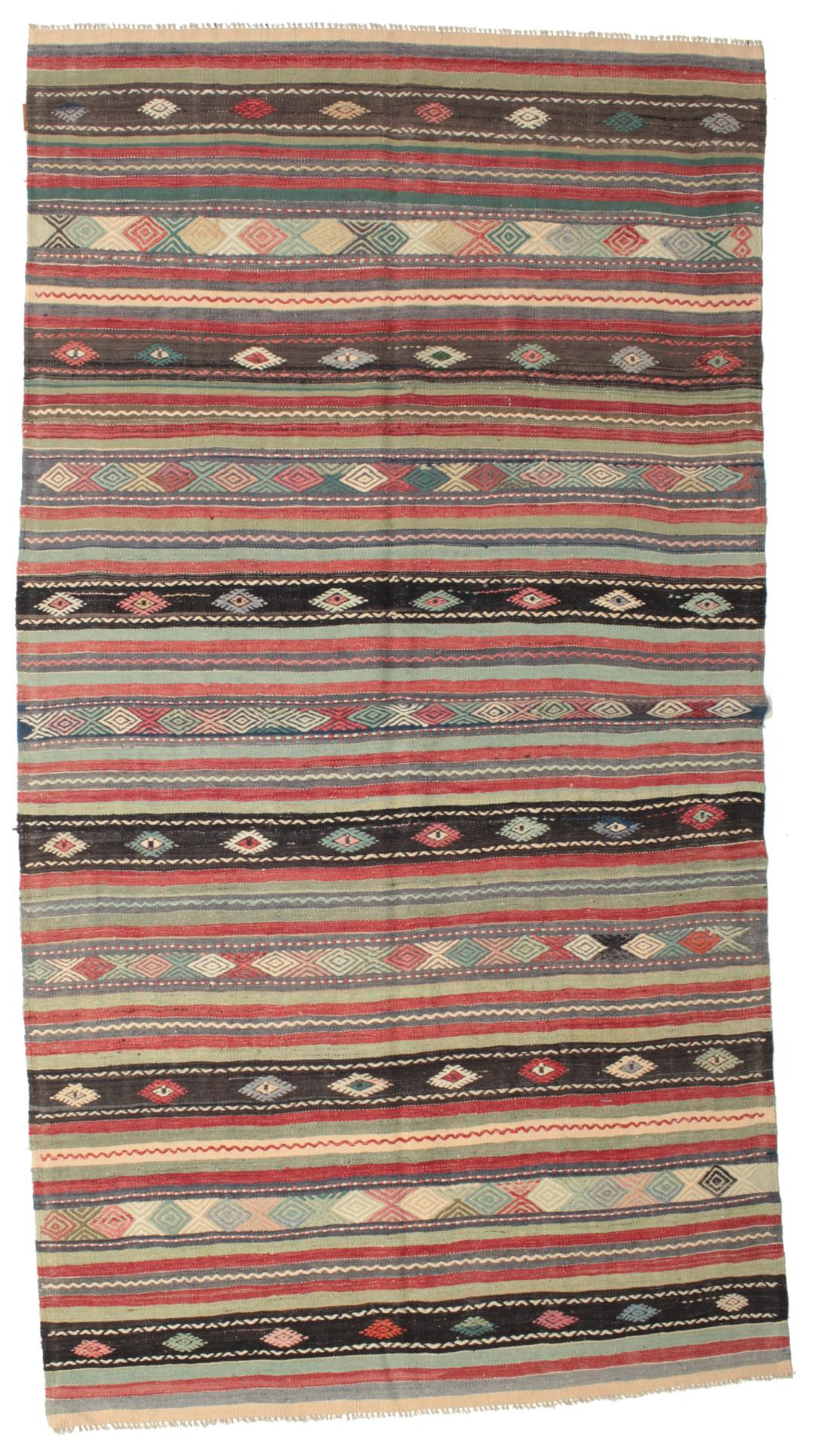
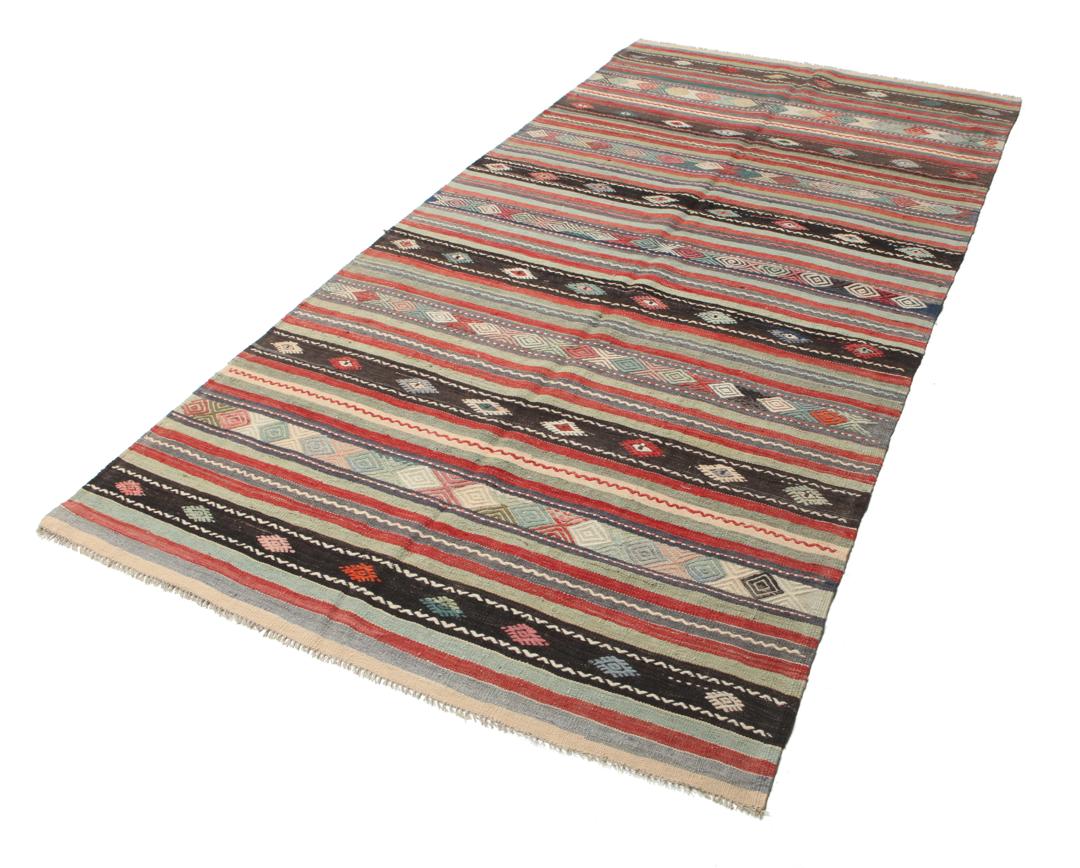
Kilim rugs are a hallmark of Turkish textile heritage, representing a tradition of flat-weaving that dates back centuries. These rugs were historically created by nomadic and village tribes for functional use, serving as floor coverings, wall hangings, and even as protective storage bags for daily essentials.
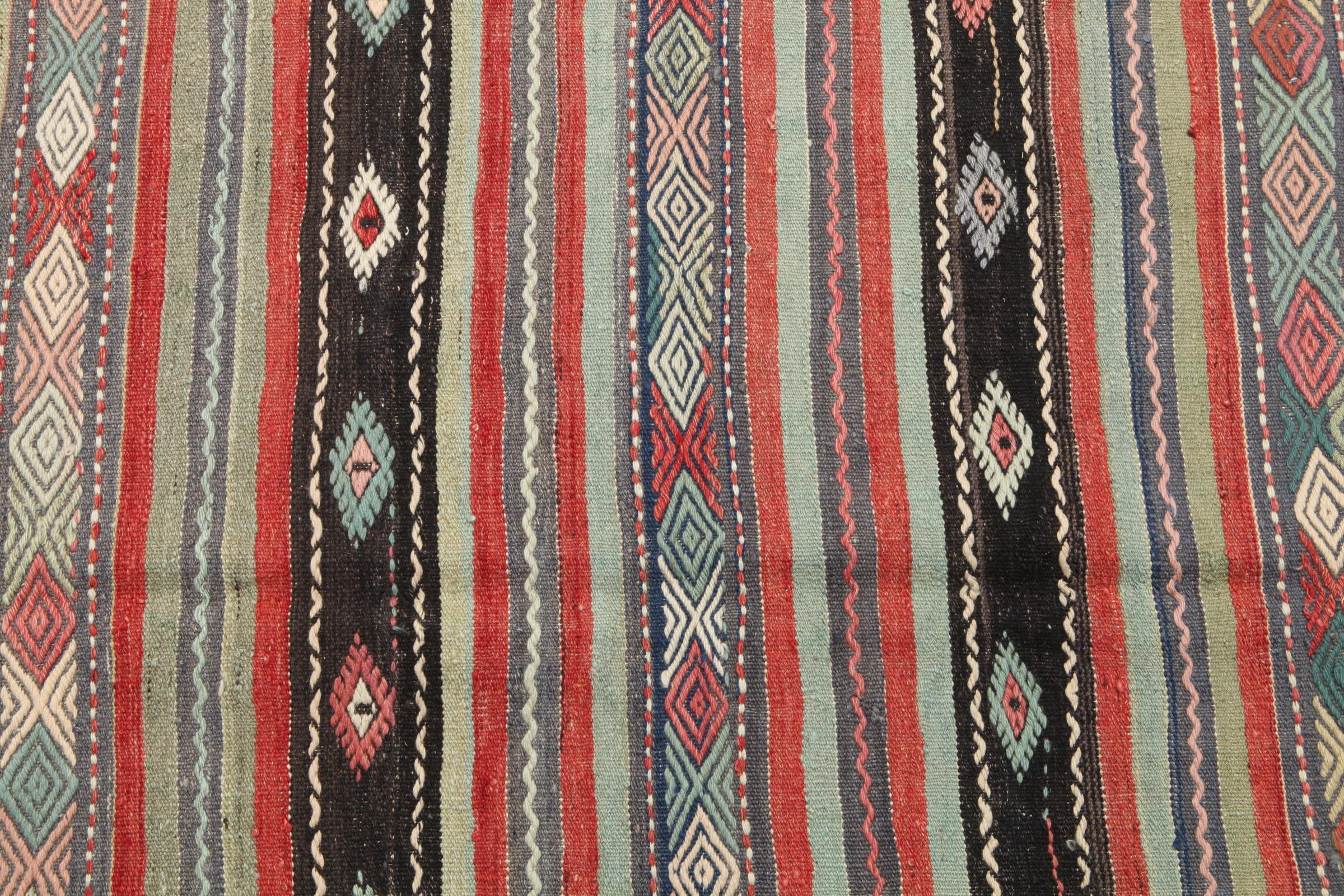
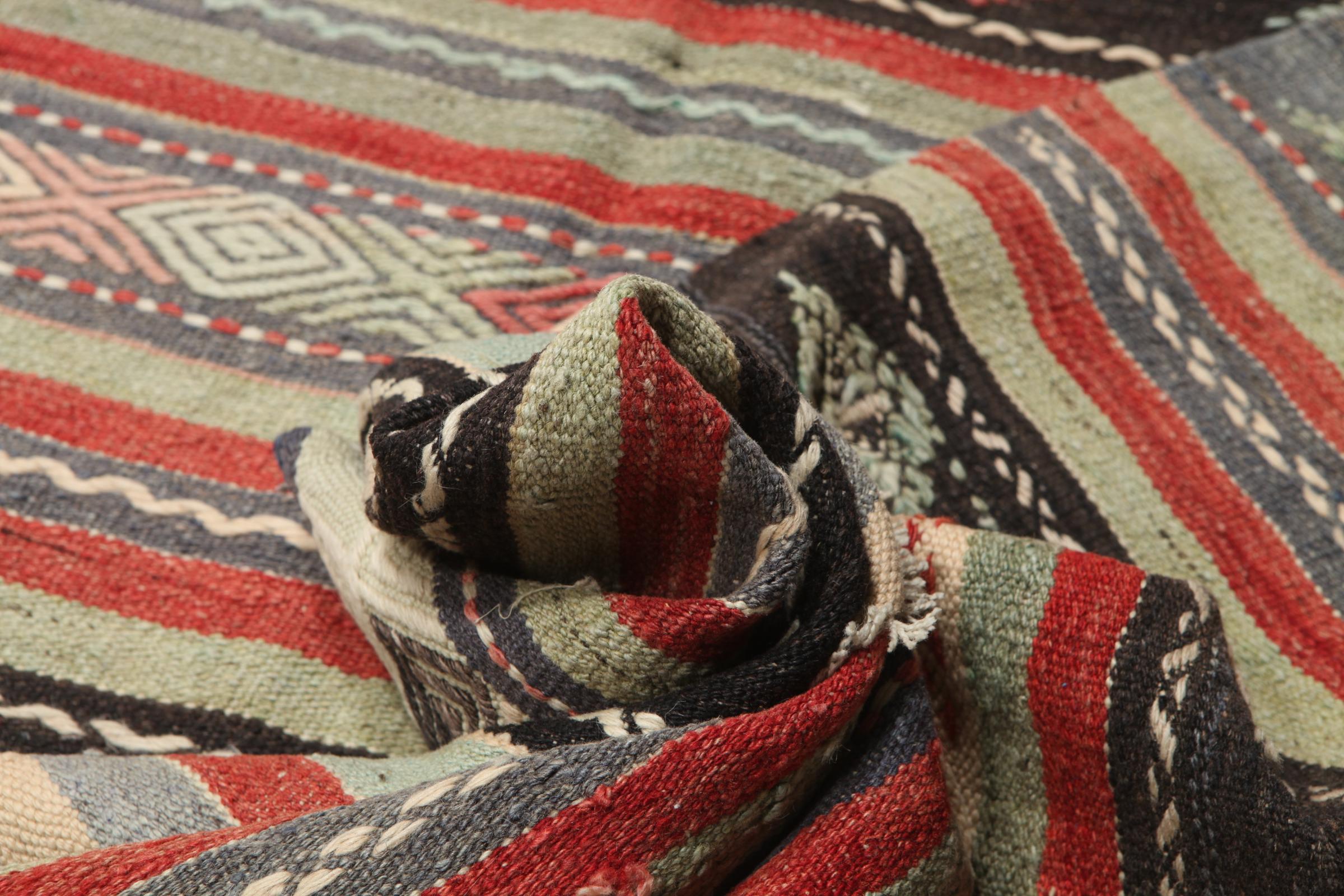
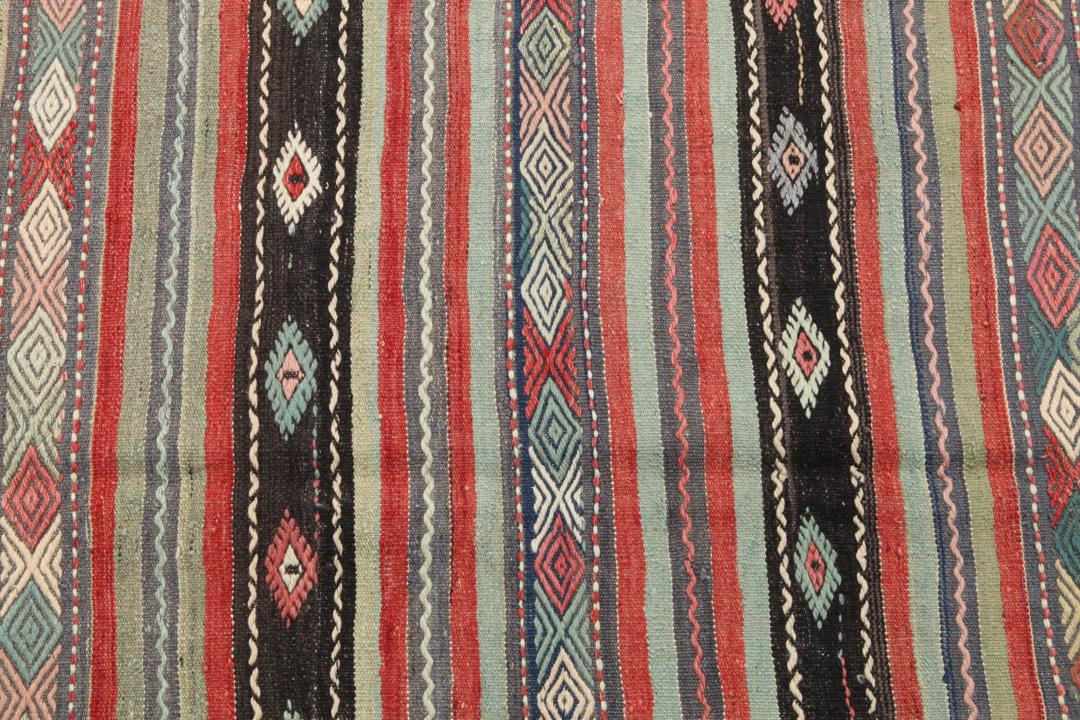
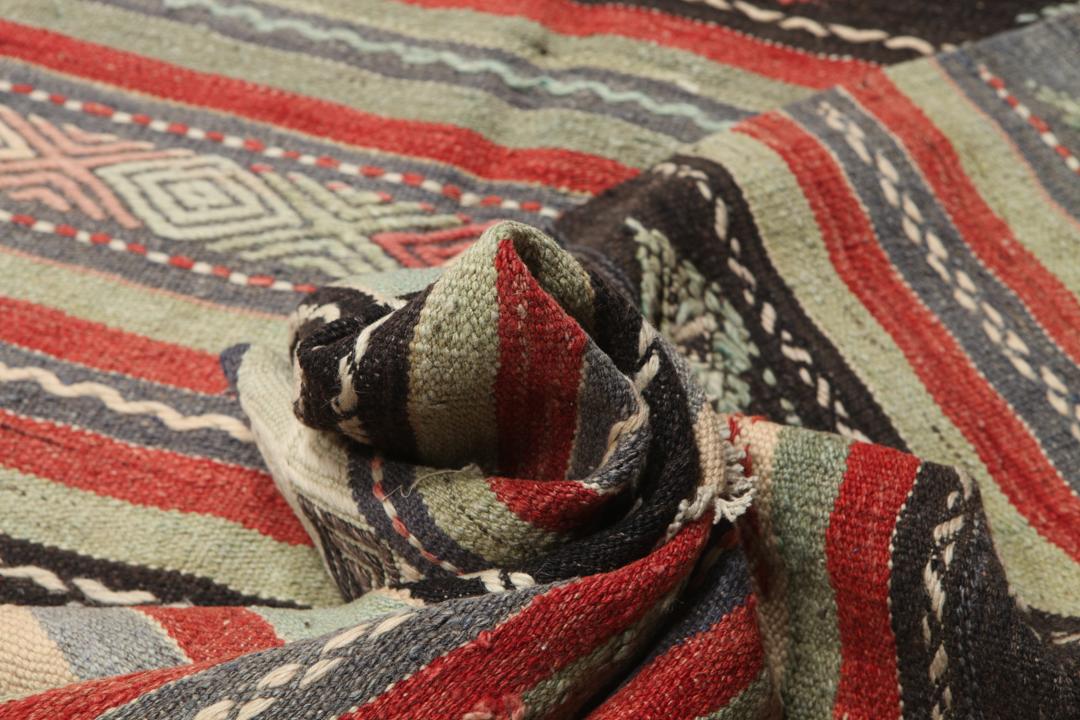
The term kilim refers specifically to the tapestry-weave technique, where the weft strands are pulled tightly over the warp to create a smooth, pattern-focused surface. This method is distinct from pile rugs, as it allows for sharp, crisp geometric designs that are visible on both sides of the textile.
Signature elements of these rugs include bold, repeating geometric motifs such as diamonds and zig-zags, often framed by complex, decorative borders. These designs are not merely decorative but often carry symbolic meaning, reflecting the weaver's environment, beliefs, and regional identity.
Owning a vintage kilim is an opportunity to preserve a piece of cultural history. These rugs are highly valued by collectors for their authenticity, the natural variation in their hand-dyed Wool, and the personal stories woven into every line and shape.