Kilim rugs are a cornerstone of Turkish textile culture, with a history that spans centuries across the Anatolian plateau. Historically, these flat-woven rugs were essential tools for nomadic and semi-nomadic tribes, serving as floor coverings, blankets, and storage bags due to their versatility and portability. The tradition of weaving is deeply embedded in the social and cultural fabric of the region, often passed down through generations.
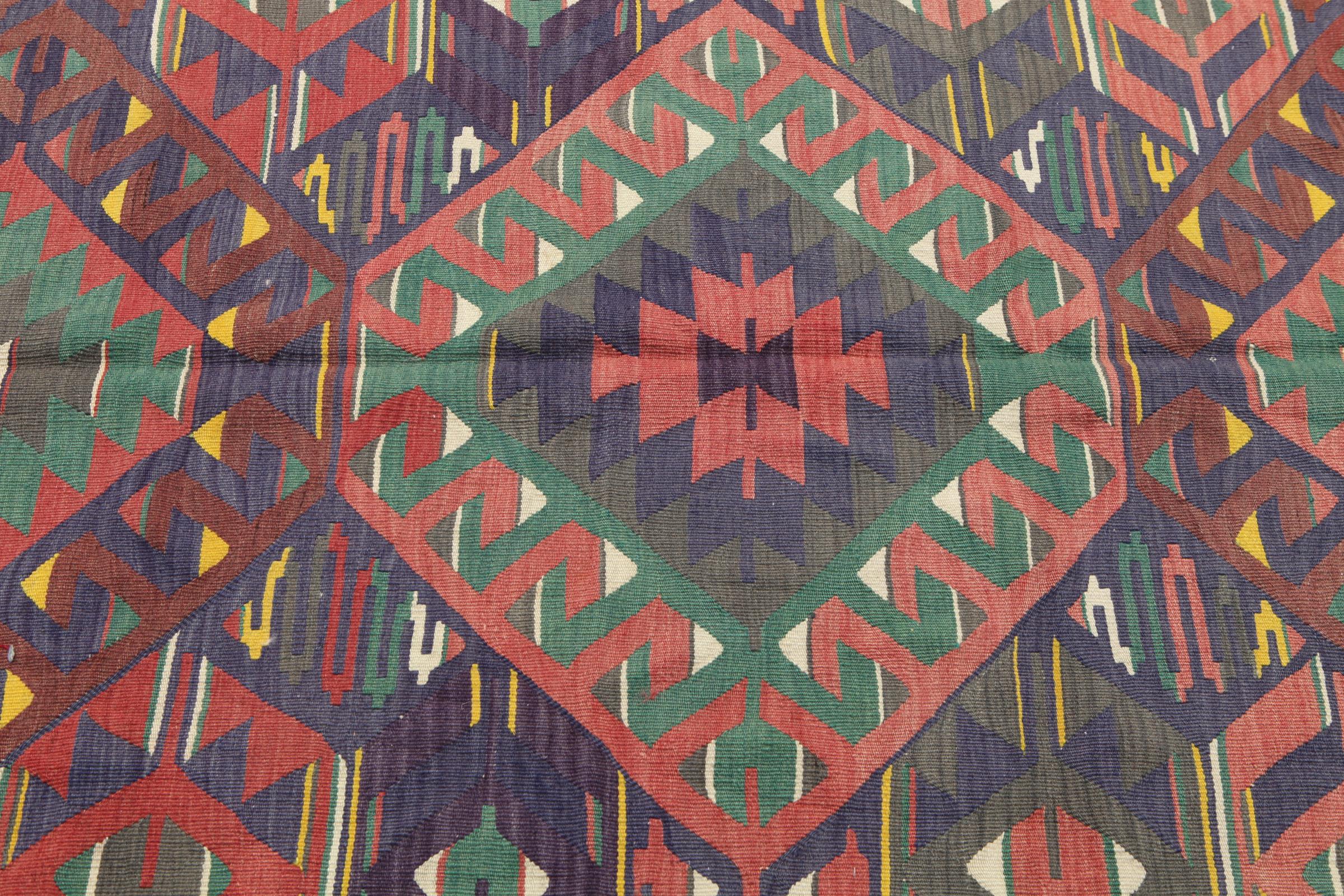
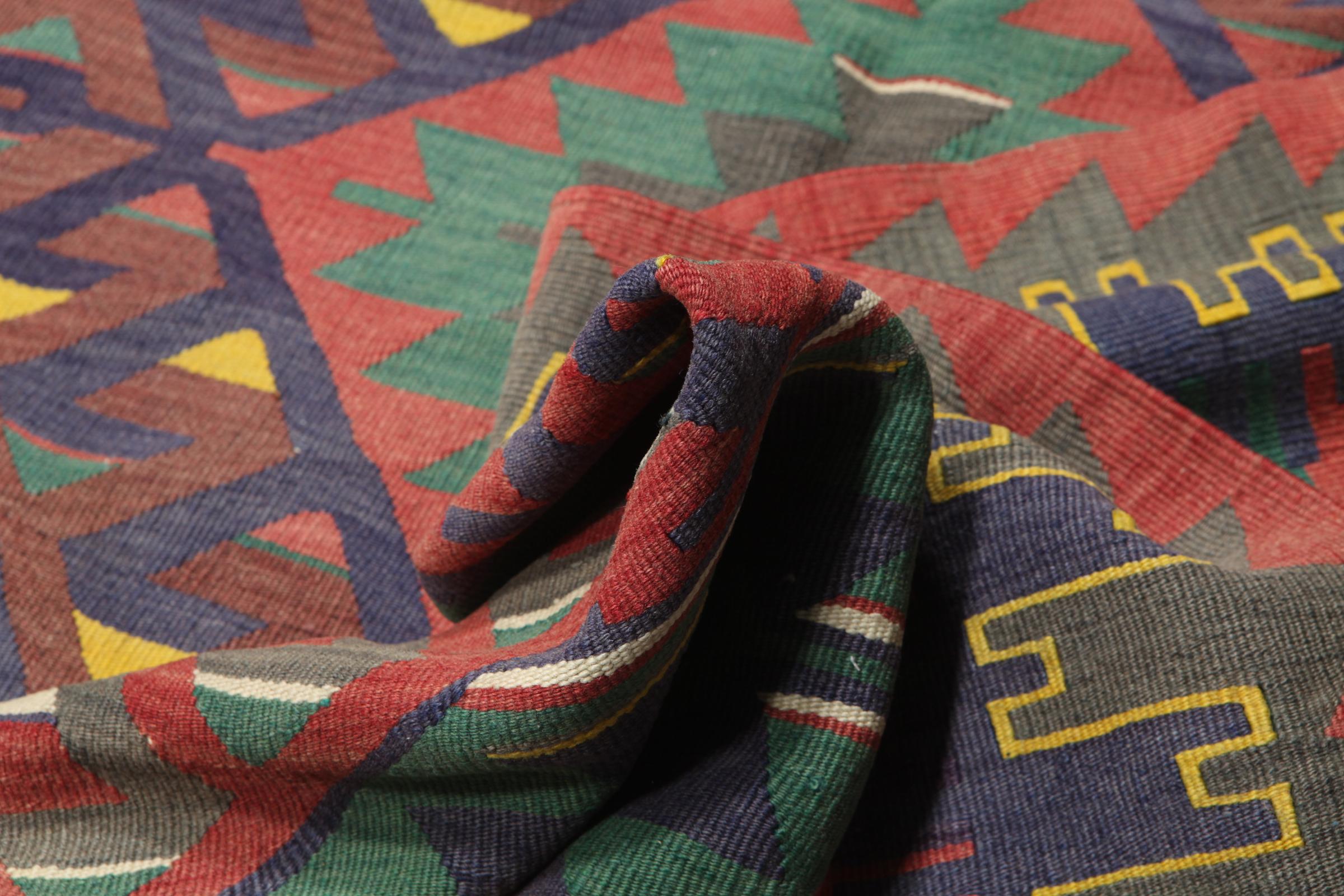
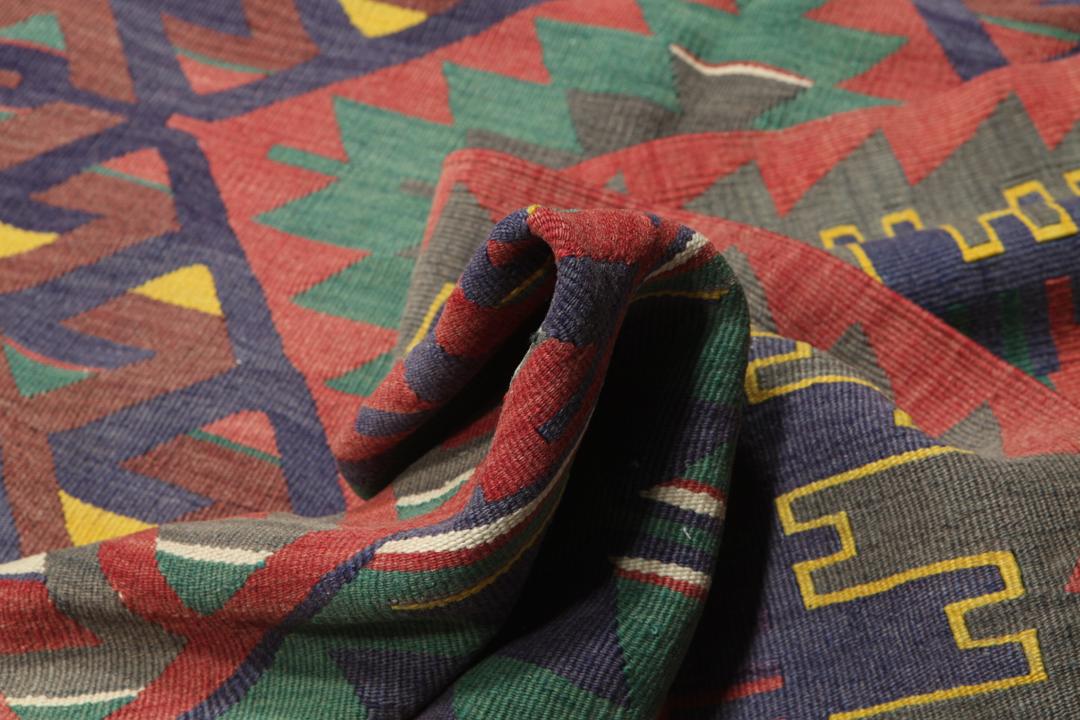
The term 'kilim' specifically refers to the tapestry-weave technique where the weft threads are pulled tightly over the warp to create a smooth, pattern-forward surface. This method does not involve knots, which is why kilims have a distinct, low-profile texture compared to traditional pile rugs. This construction method allows for very sharp, intricate geometric designs that are iconic to the region.
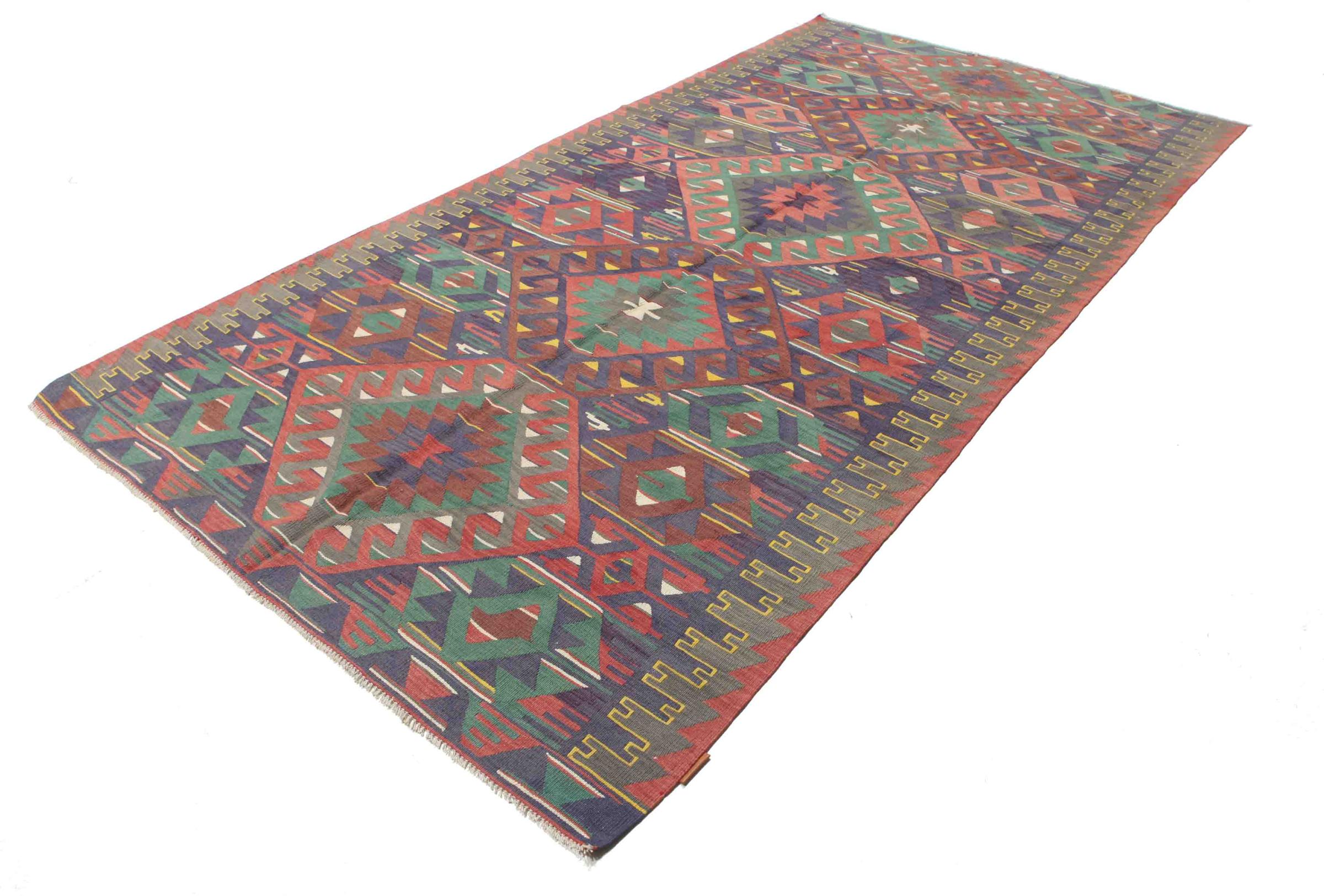
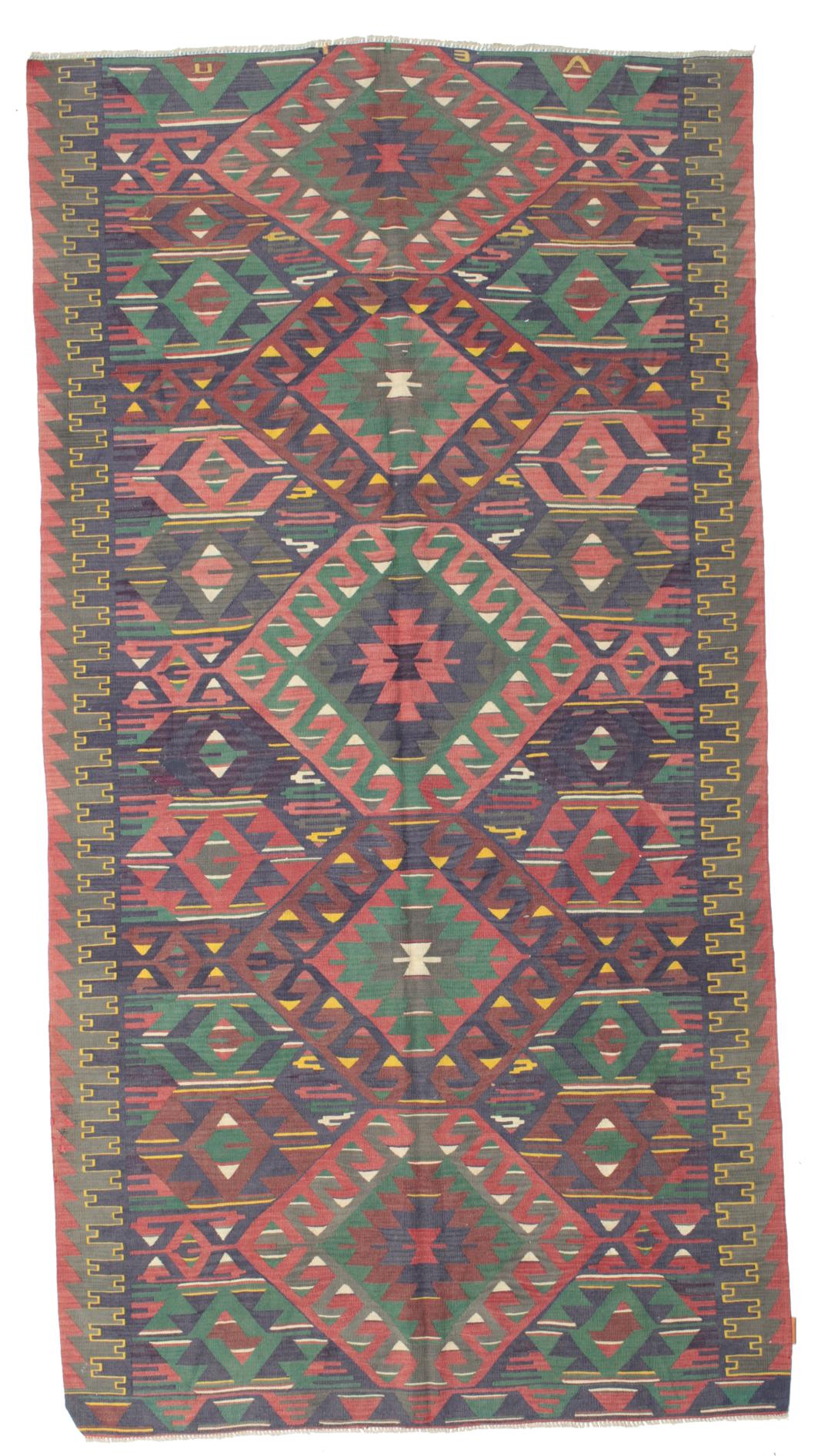
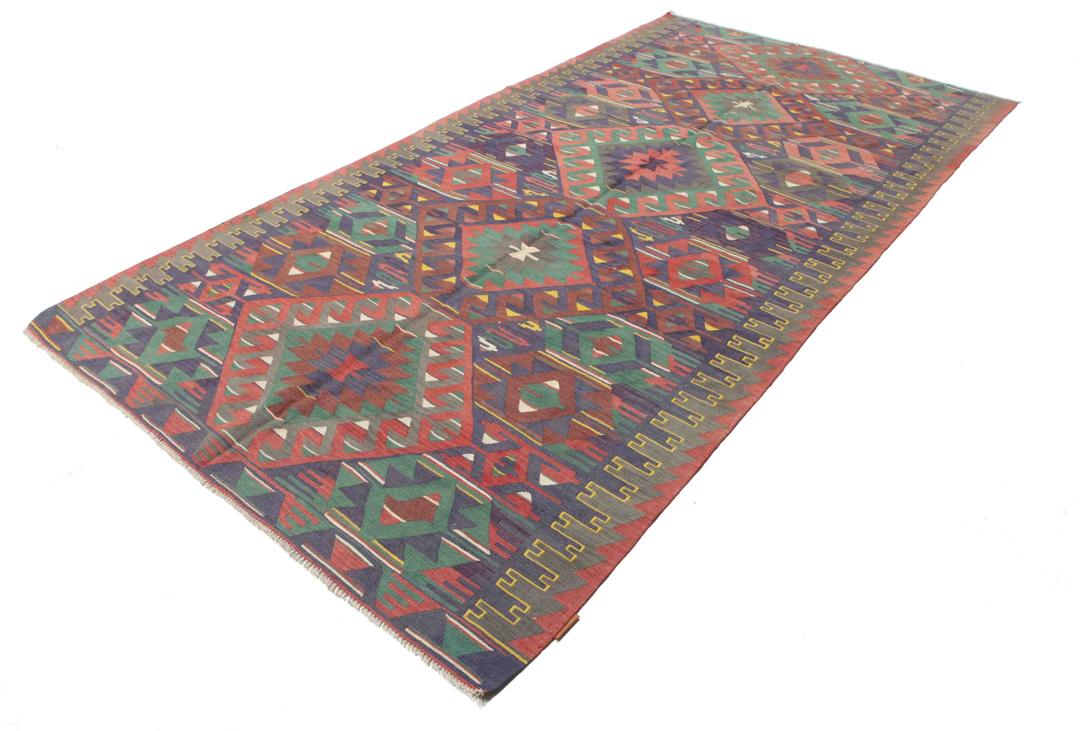
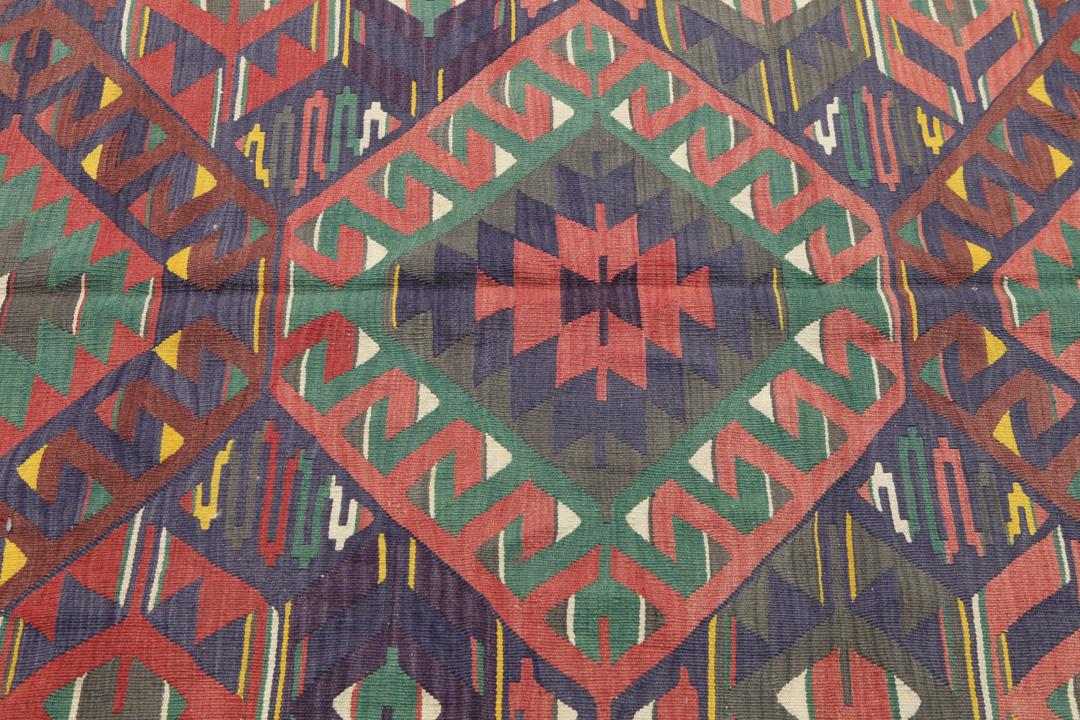
Signature elements of these rugs often include symbolic motifs that reflect the weaver's environment and personal story. Common patterns include the 'elibelinde' (hands-on-hips) motif, triangles, and diamonds, which often represent protection, fertility, or the natural world. This particular rug features a bold diamond-based design that adheres to the classic geometry found in antique Anatolian weaving.
Today, vintage kilims are highly sought after by collectors and interior designers for their raw, authentic beauty and historical weight. Owning one is an investment in a craft tradition that prioritises manual skill and natural materials. Each rug acts as a visual record of its time, capturing the aesthetic preferences and cultural narratives of a region that has shaped the history of textile art.