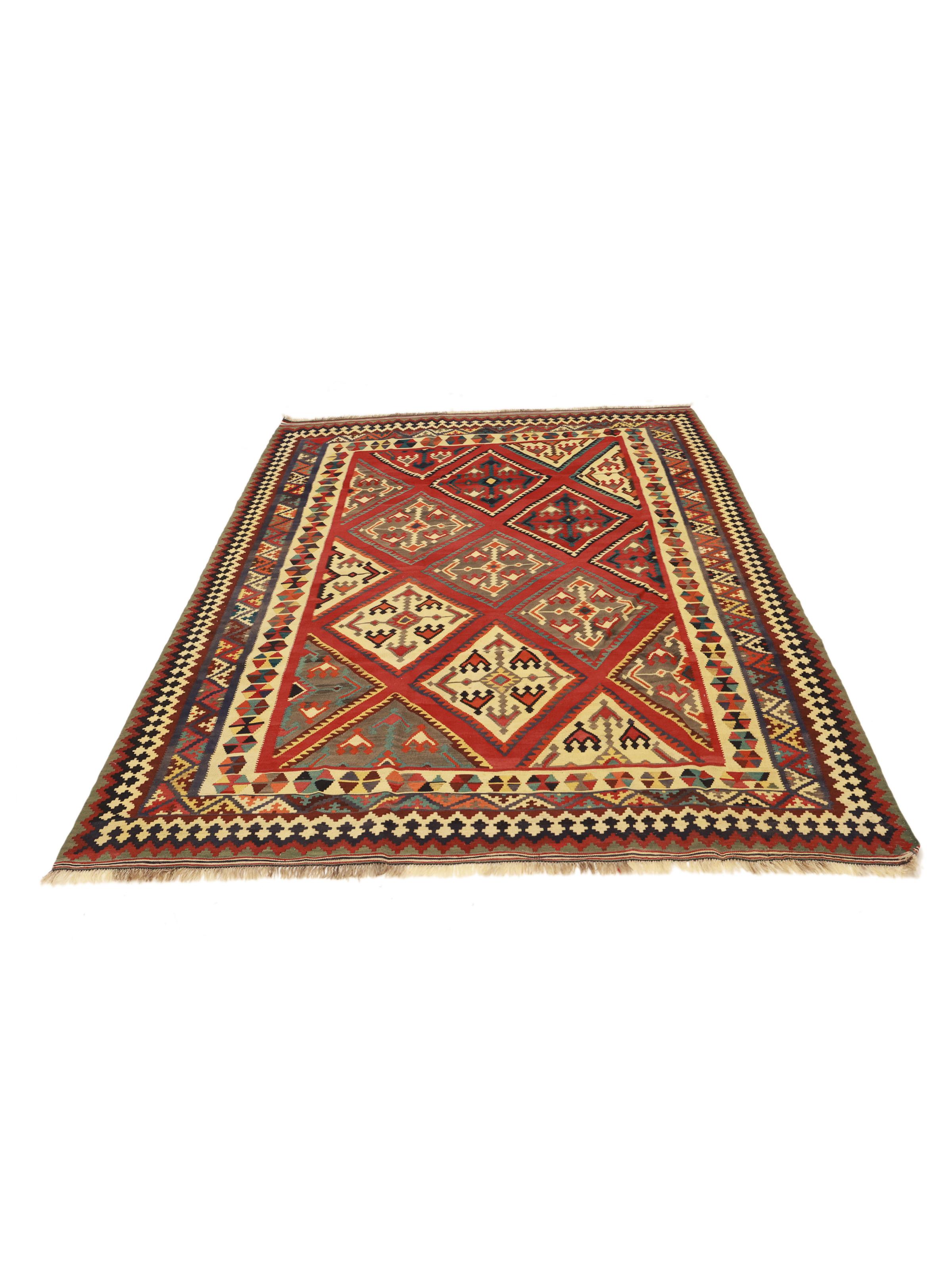
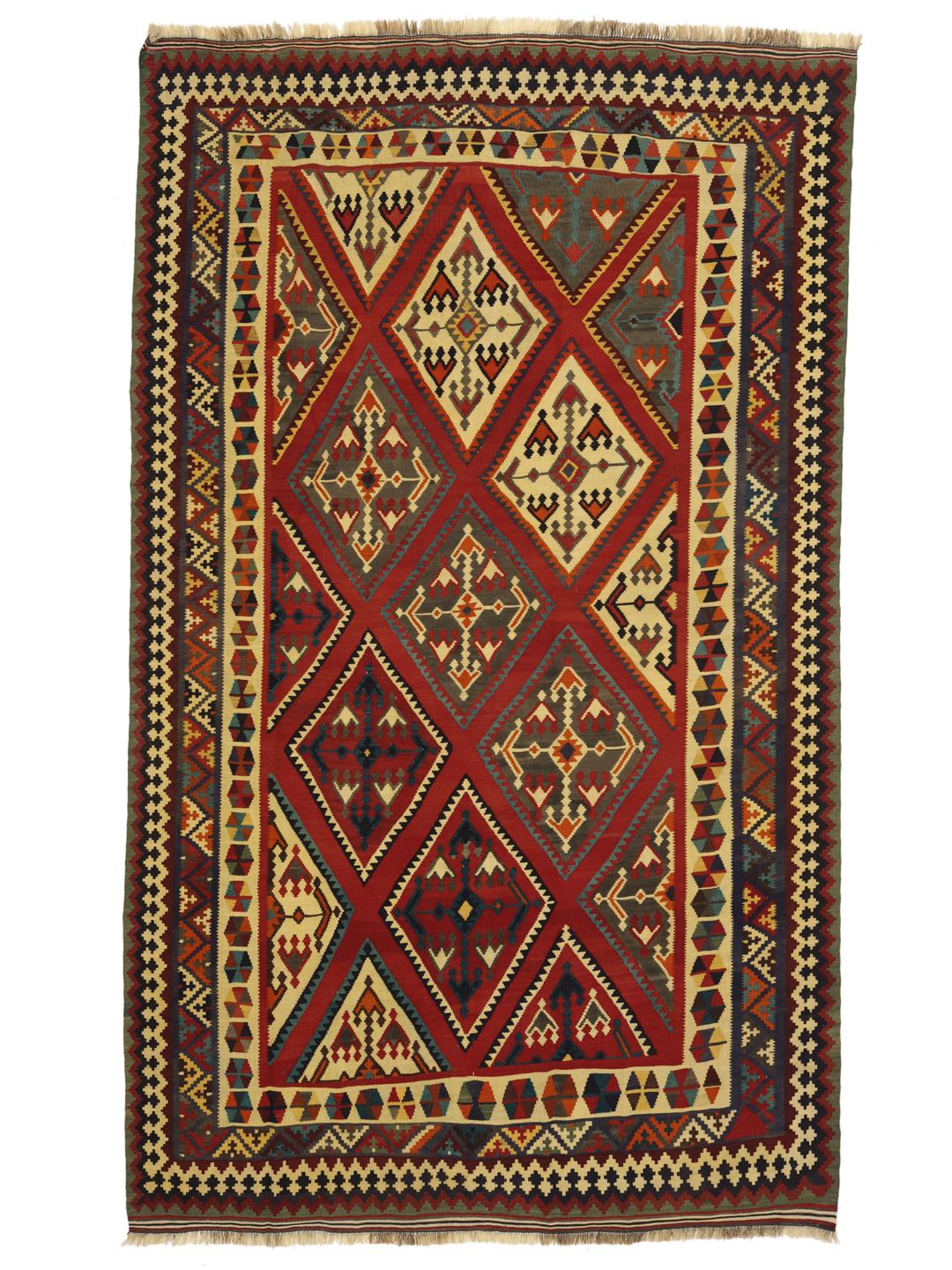
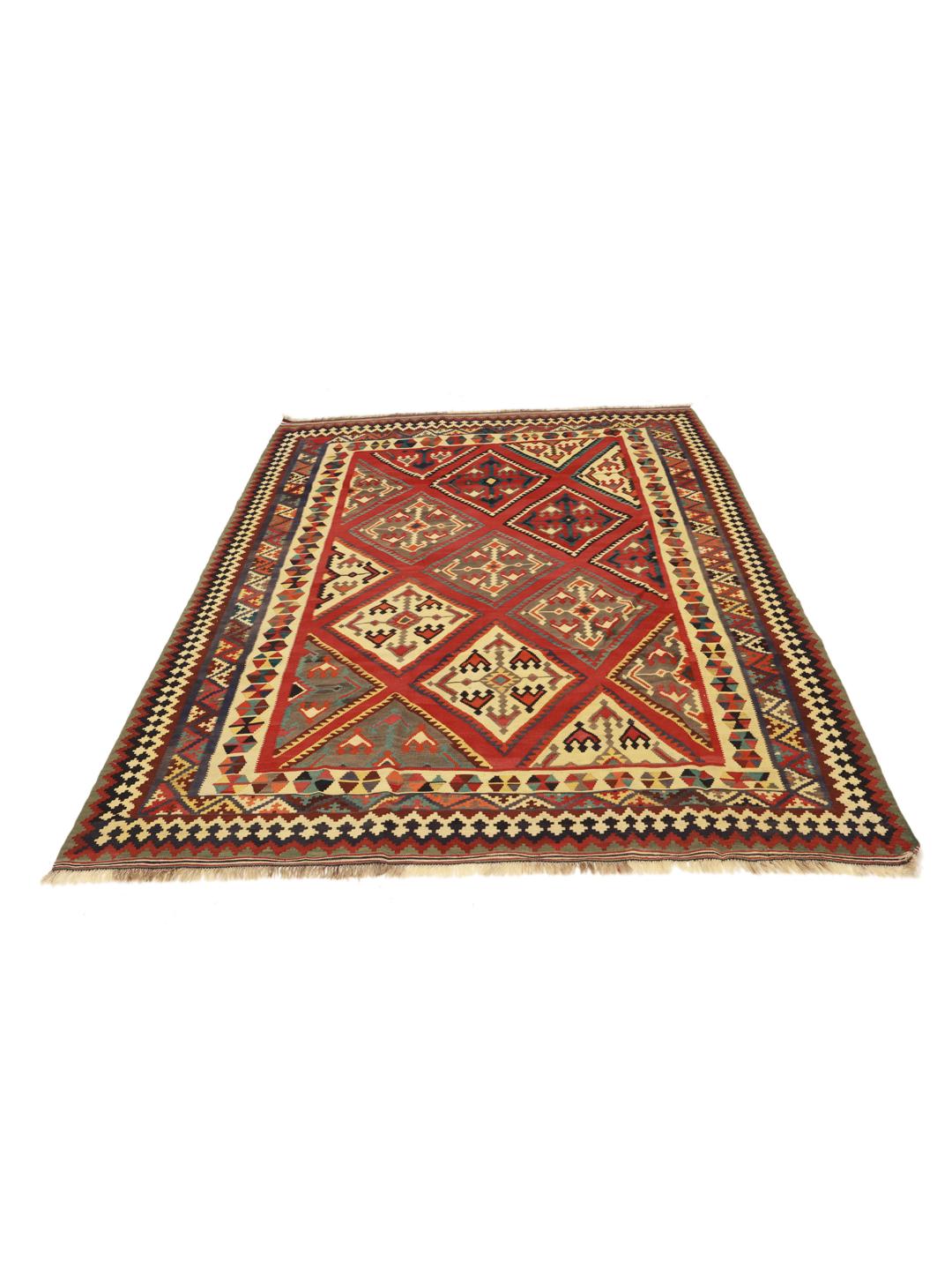
Kilim weaving is one of the oldest textile crafts in Anatolia, Turkey. Originally created by nomadic and village weavers for practical home use, these flatwoven textiles served as floor coverings, wall hangings, and storage bags, shaped entirely by regional culture and daily life.
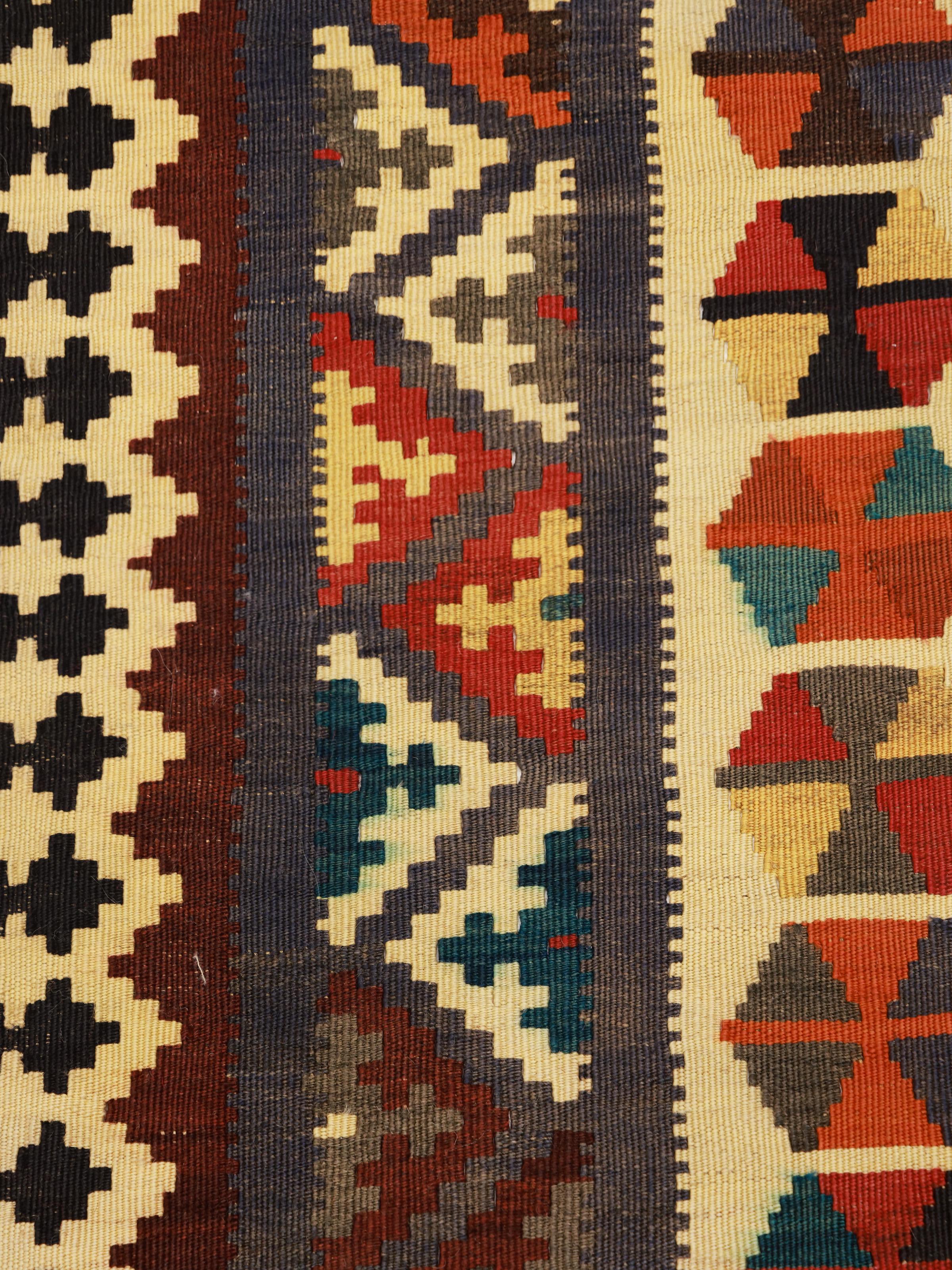
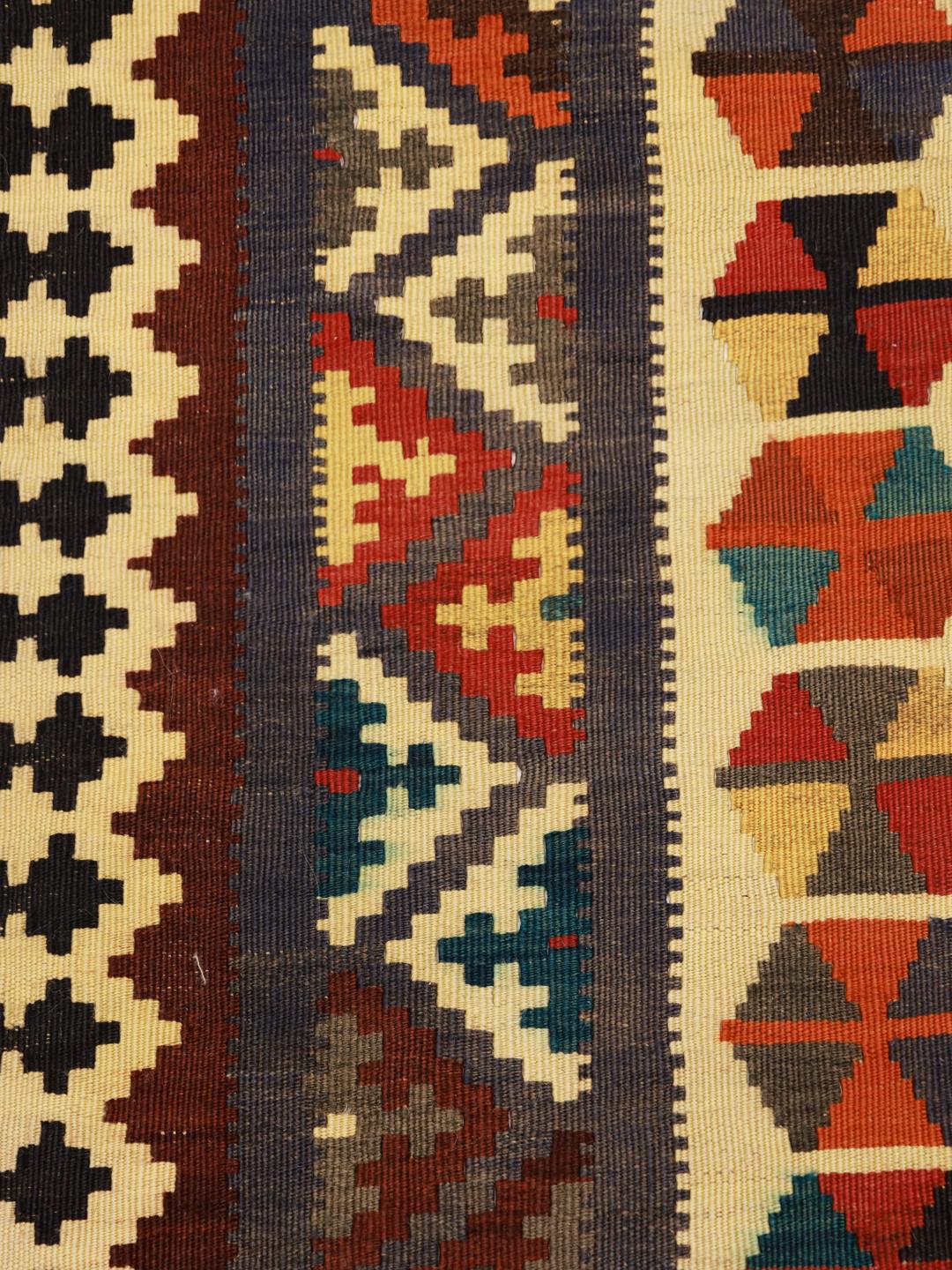
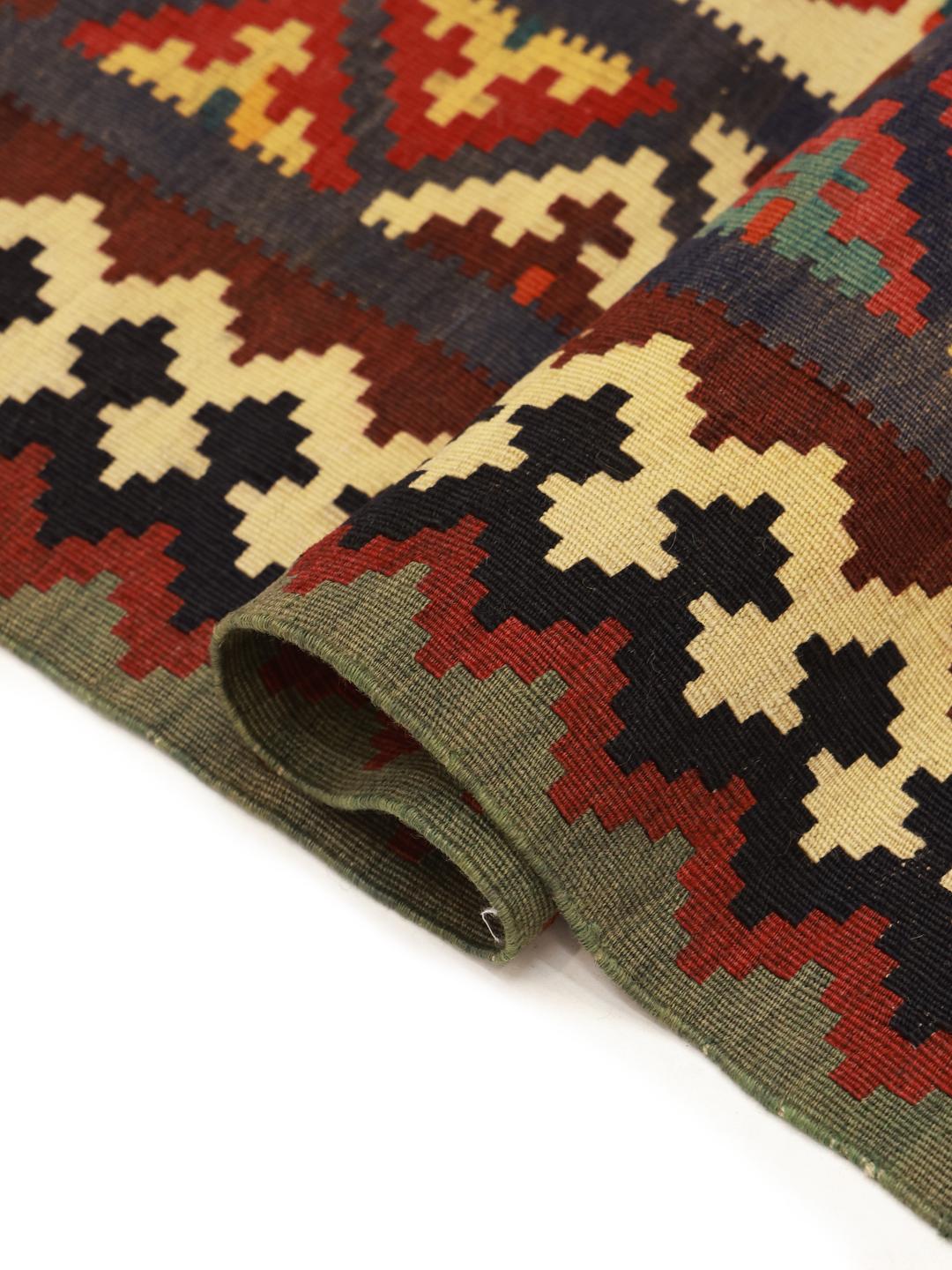
Unlike pile rugs, Kilims are made using a flatweave technique where the warp and weft threads are tightly woven together to create a flat, pile-free surface. This construction method allows for sharp, precise geometric shapes and results in a lighter, highly durable fabric that is easy to move and maintain.
The design of this piece is defined by repeating diamond medallions and intricate border motifs deeply rooted in tribal Anatolian iconography. Traditionally, these geometric symbols conveyed personal stories, protective symbols, and expressions of local identity passed down through generations of weavers.
Vintage Turkish Kilims from the mid-to-late 20th century are highly sought after by collectors and interior enthusiasts alike. Their enduring popularity lies in their ability to bridge traditional folk art with modern spaces, bringing authenticity and historical depth to any contemporary home.