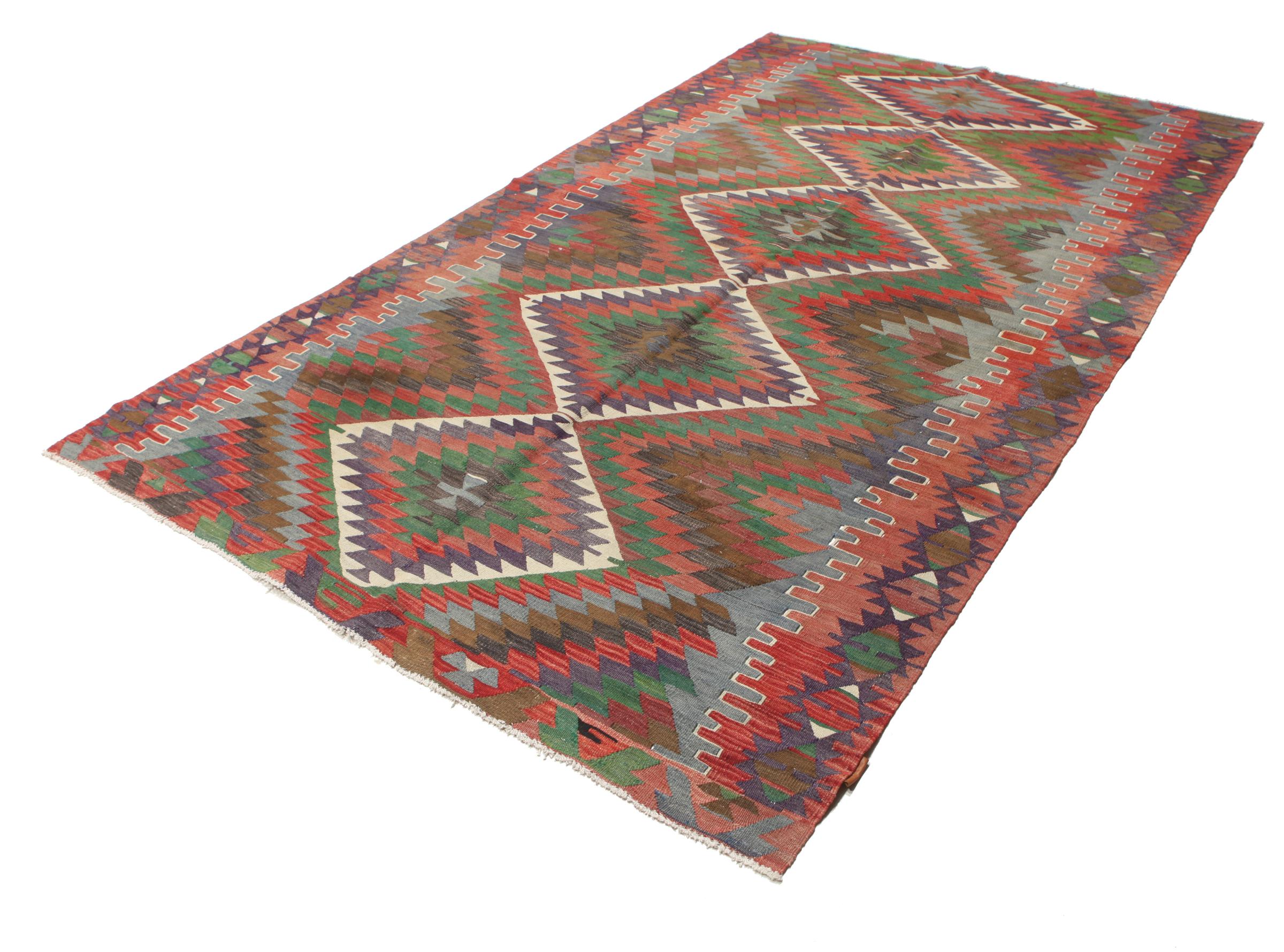
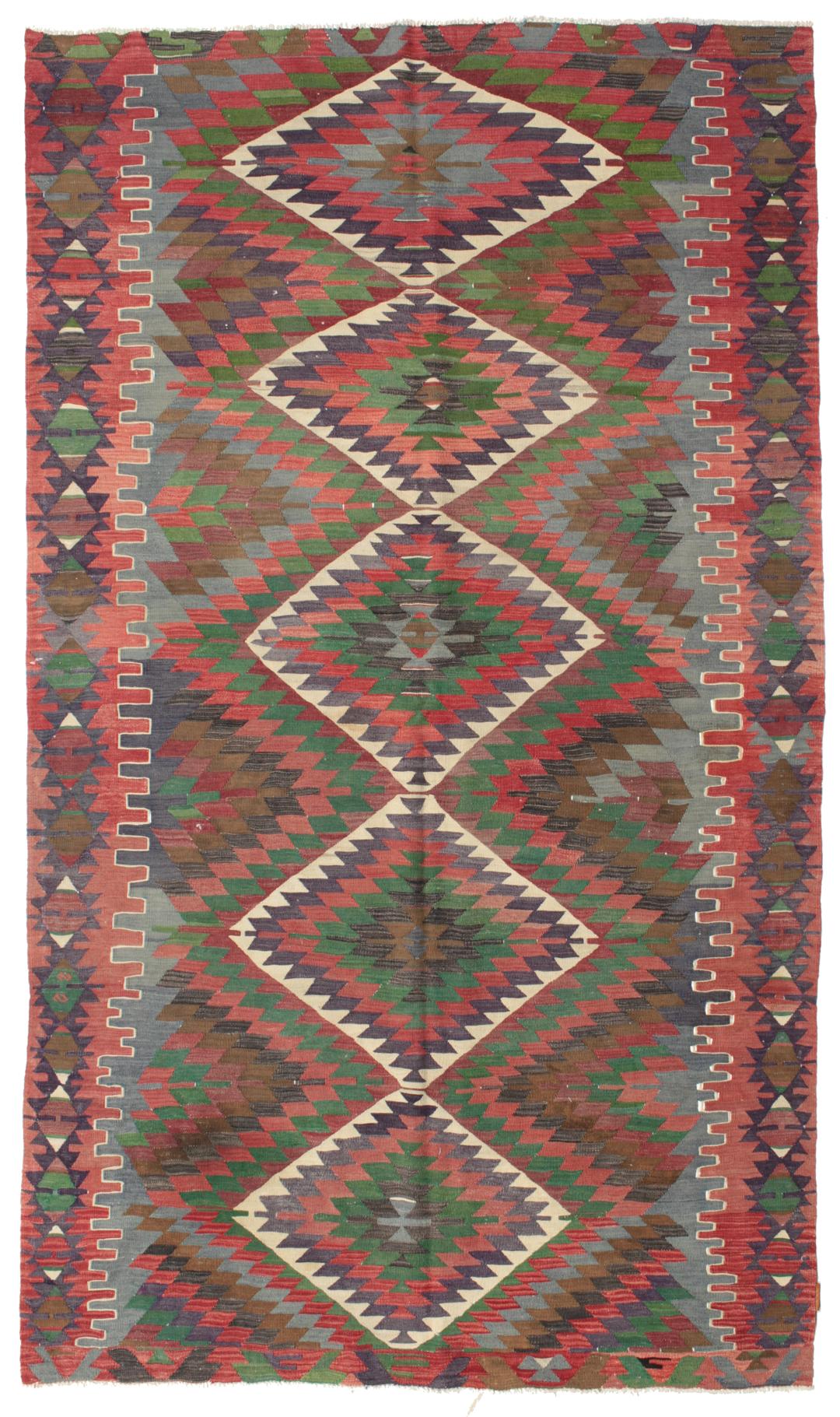
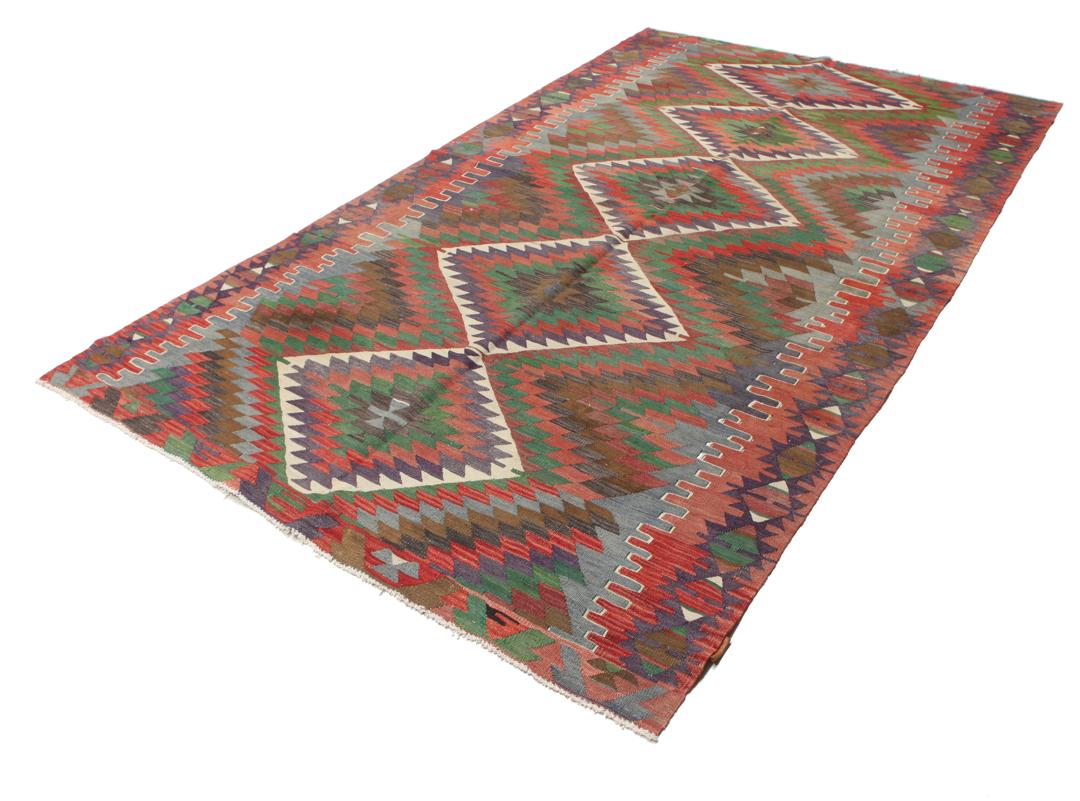
Kilim rugs are a cornerstone of Turkish textile heritage, representing a tradition that spans centuries across the Middle East and Central Asia. These flat-woven rugs were historically created by nomadic and semi-nomadic tribes, serving a multitude of functions from floor coverings and wall hangings to saddlebags and tent dividers. The designs often served as a visual language, with motifs passed down through generations to tell stories of the weaver’s life and environment.
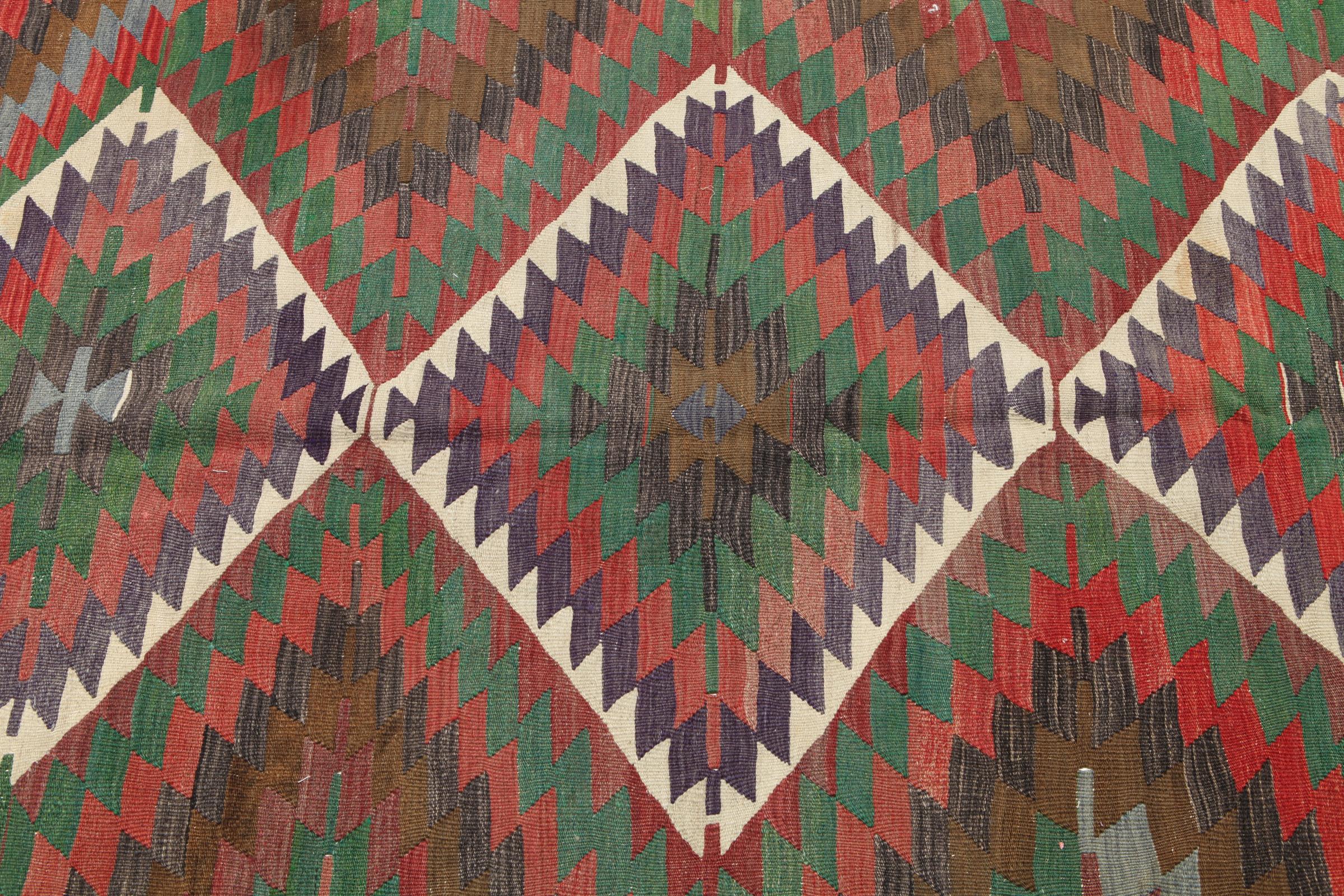
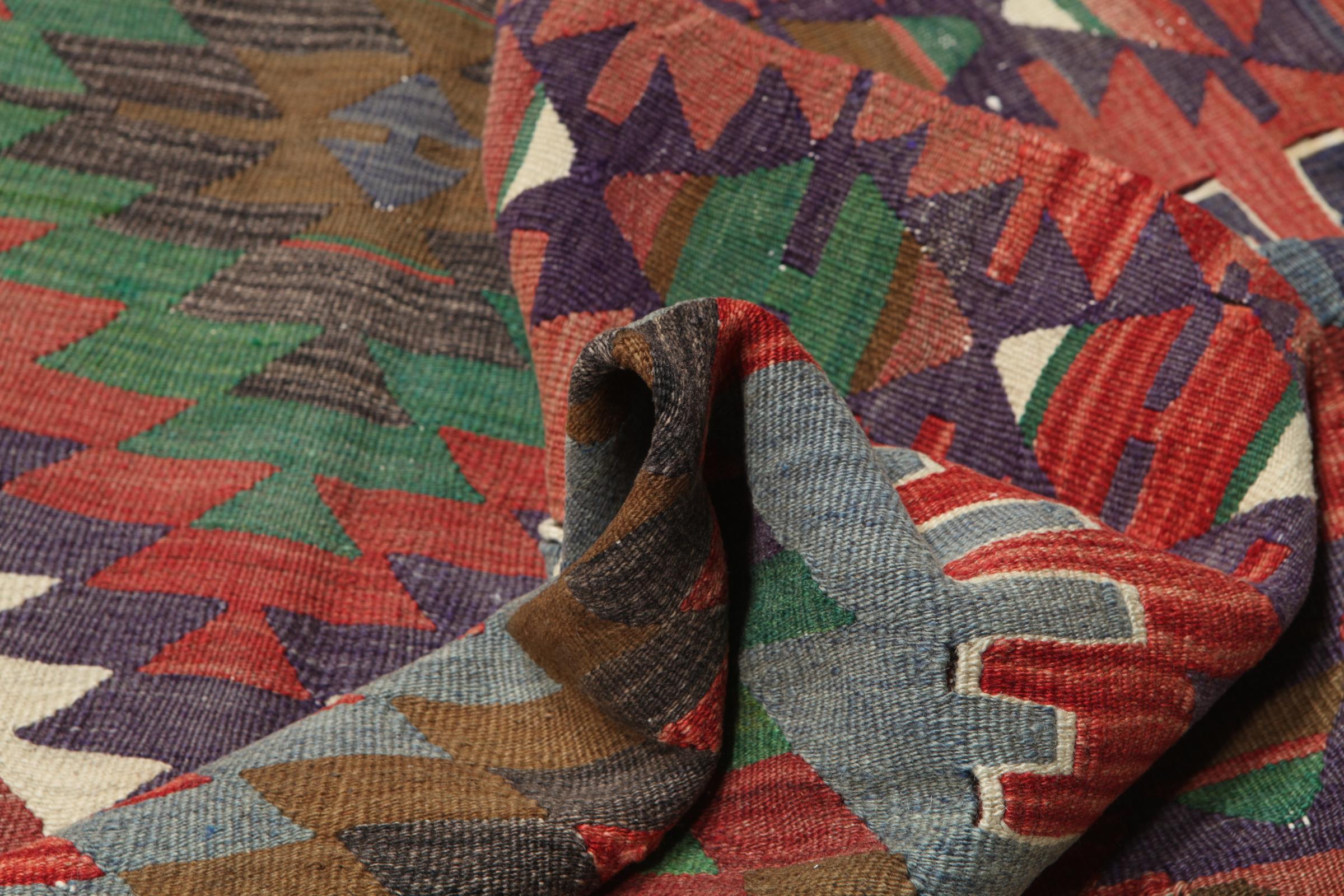
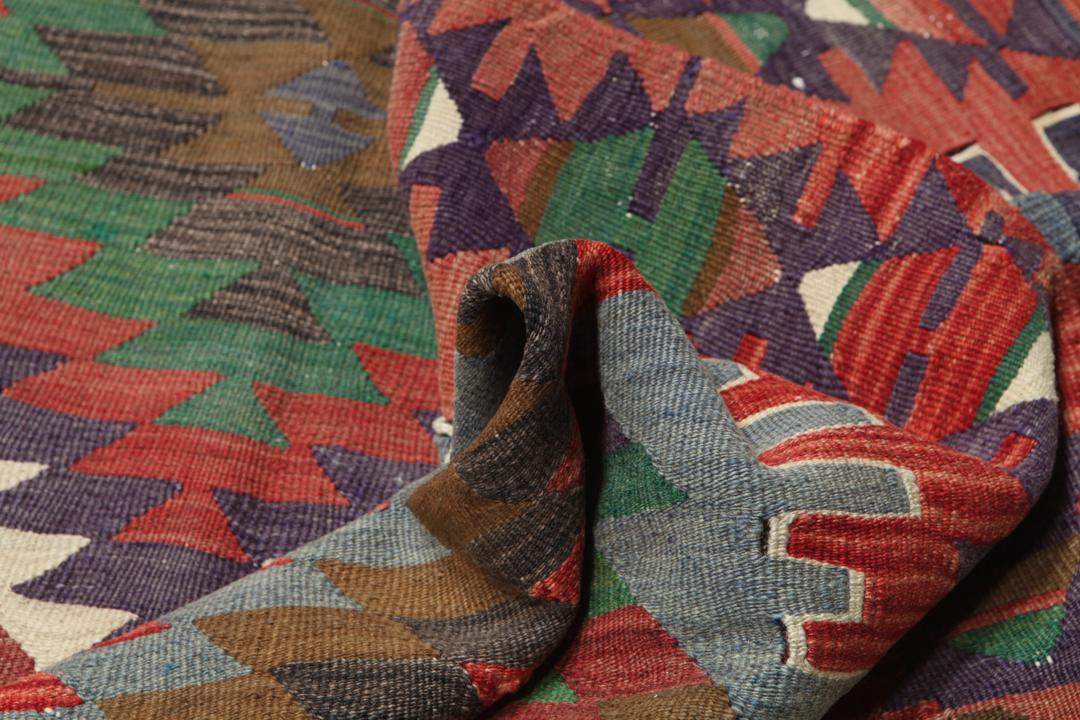
The term 'kilim' specifically refers to the tapestry-weave technique, where the pattern is created by tightly interlacing the coloured weft threads over the warp. This method results in a rug with no pile, making it distinctively lightweight and reversible. This technique is highly valued for its ability to produce sharp, clean-edged geometric patterns that appear identical on both sides, a hallmark of master craftsmanship in this region.
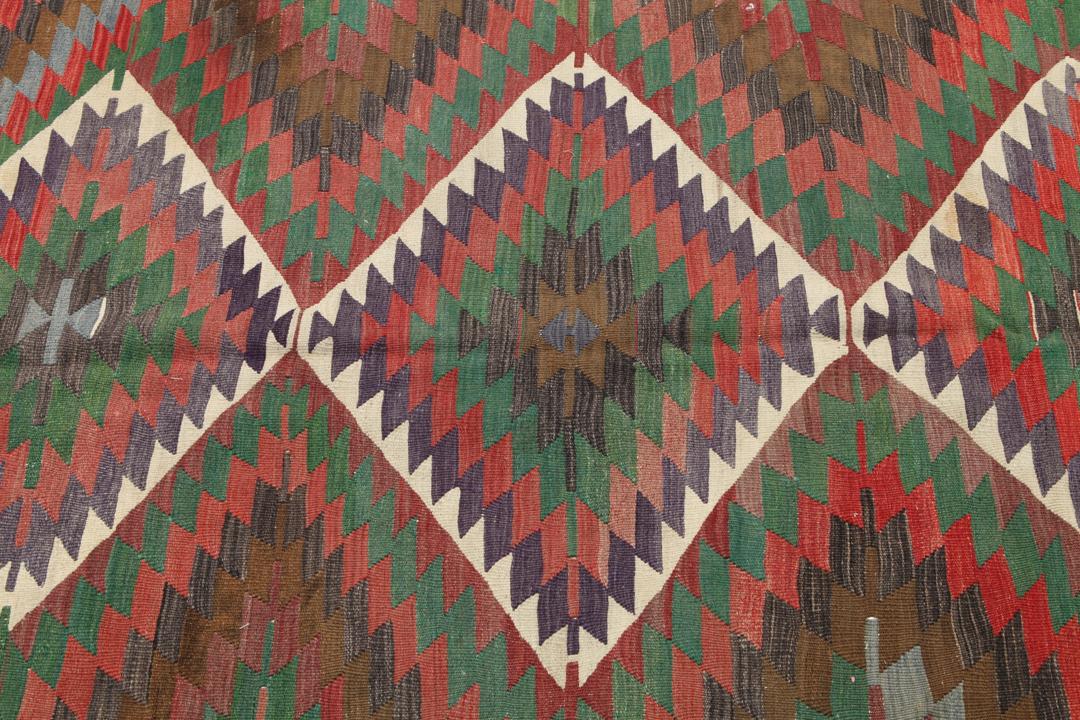
The visual language of this rug is defined by bold, repeating diamond medallions and complex borders. In Turkish tradition, these motifs are not merely decorative but are deeply symbolic, often representing protection, fertility, or the natural world. The use of vibrant, contrasting colours is characteristic of vintage examples, where natural dyes were traditionally employed to achieve deep, lasting tones that age gracefully over time.
Today, vintage kilims are highly sought after by collectors and interior designers for their ability to bring a sense of history and warmth into modern homes. Owning a piece like this is an investment in cultural preservation, celebrating the skill of the artisans who crafted it and the enduring legacy of Turkish weaving traditions. It serves as a bridge between the past and the present, offering a depth of character that mass-produced items cannot replicate.