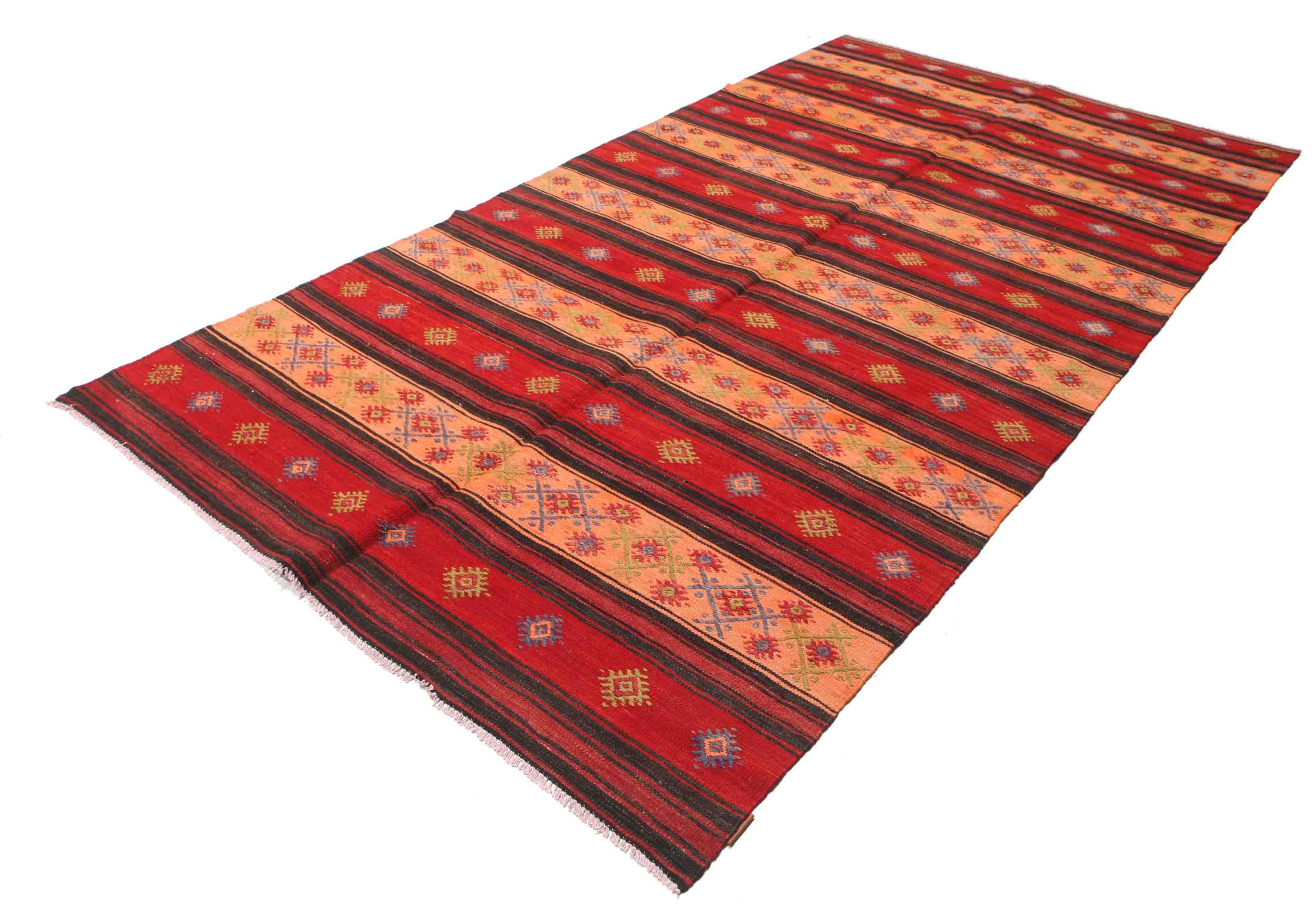
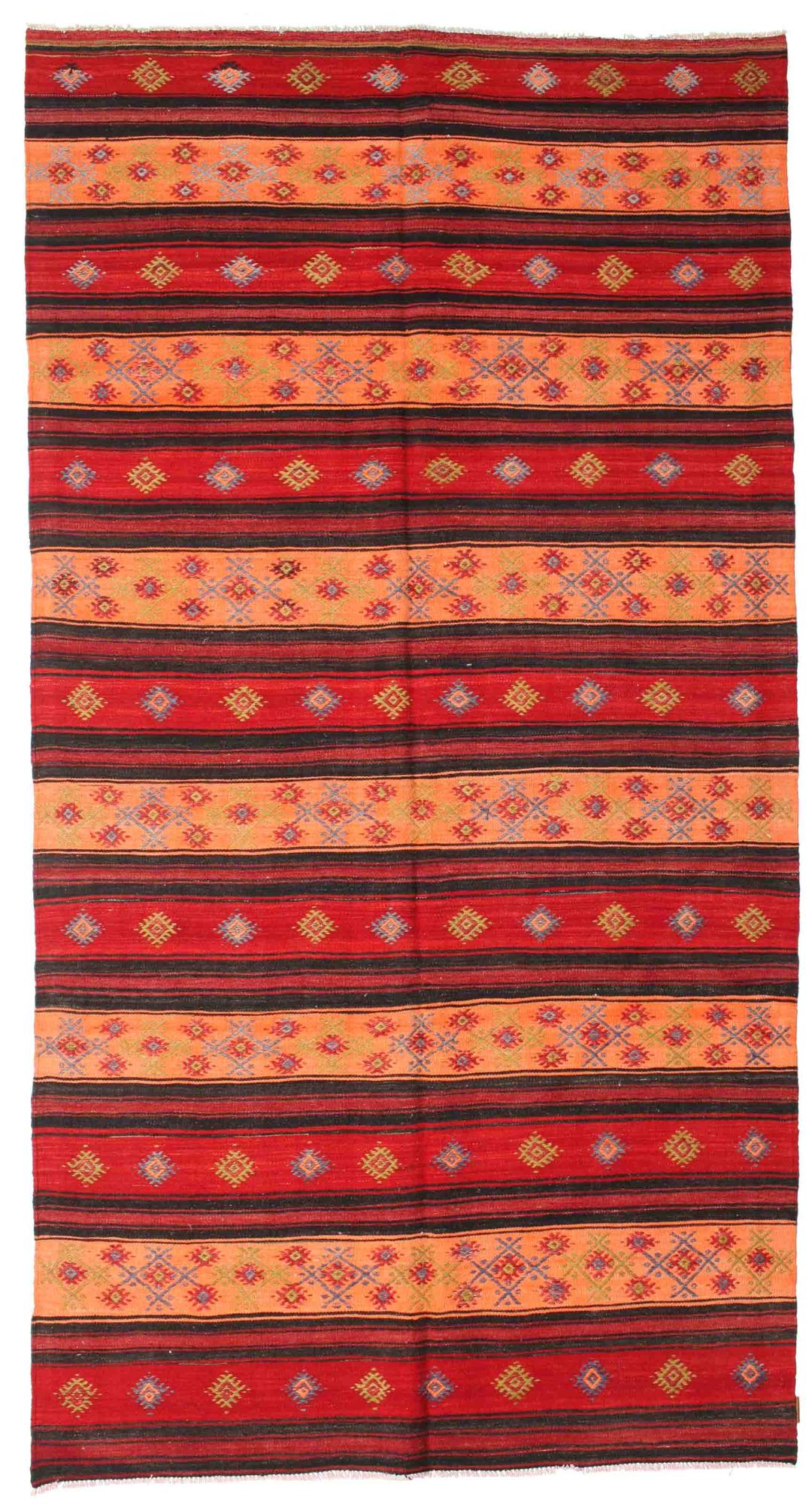
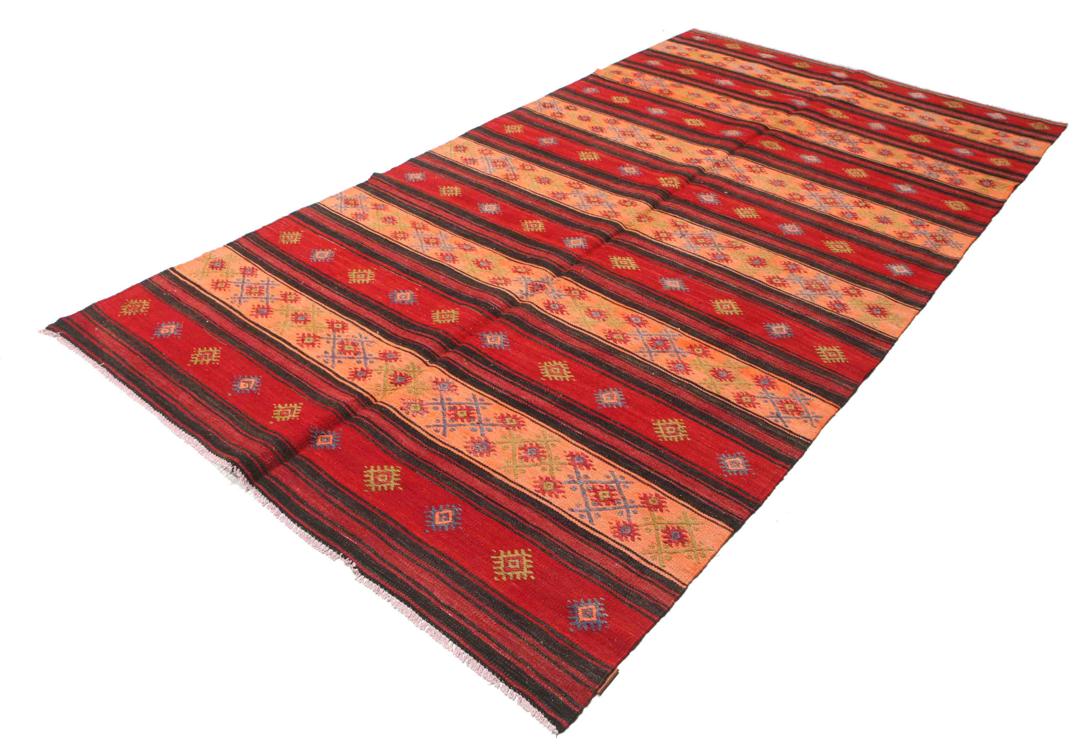
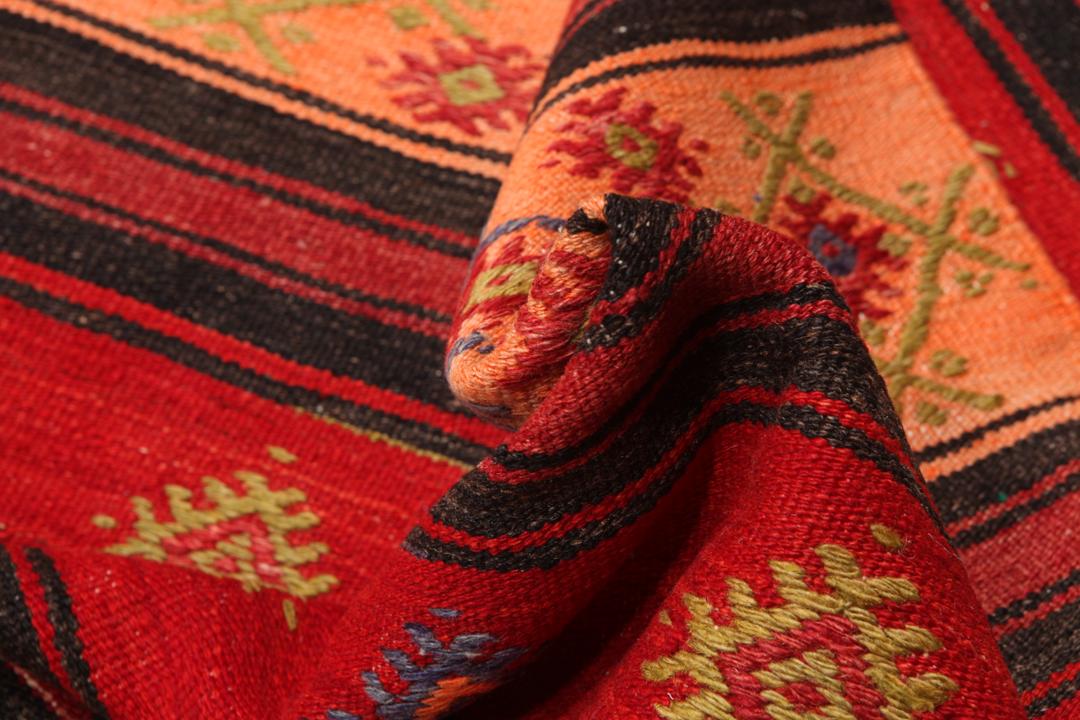
Kilim rugs are a storied tradition in the Middle East, with roots that stretch back centuries across the Anatolian plateau. Historically, these flat-woven textiles were crafted by nomadic tribes for practical use as floor coverings, tent dividers, and storage bags. The knowledge of these weaves was passed down through generations, with each region developing its own distinct visual language.
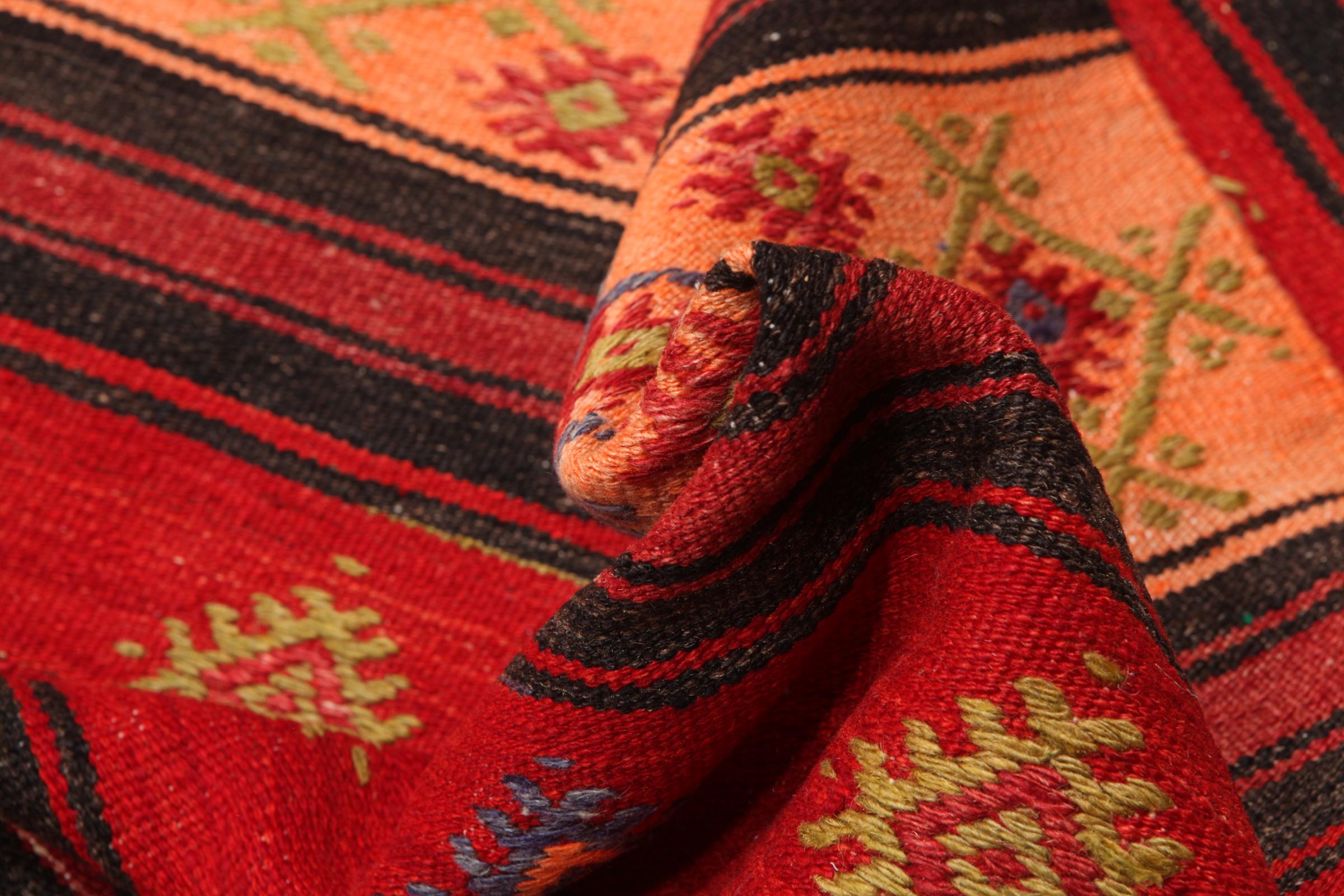
The term 'kilim' specifically refers to the tapestry-weave technique, which lacks the raised pile of knotted rugs. This method allows for bold, graphic designs and creates a remarkably strong, lightweight fabric that is easy to transport. The lack of pile also means the design is usually identical on both sides, a hallmark of traditional, high-quality craftsmanship.
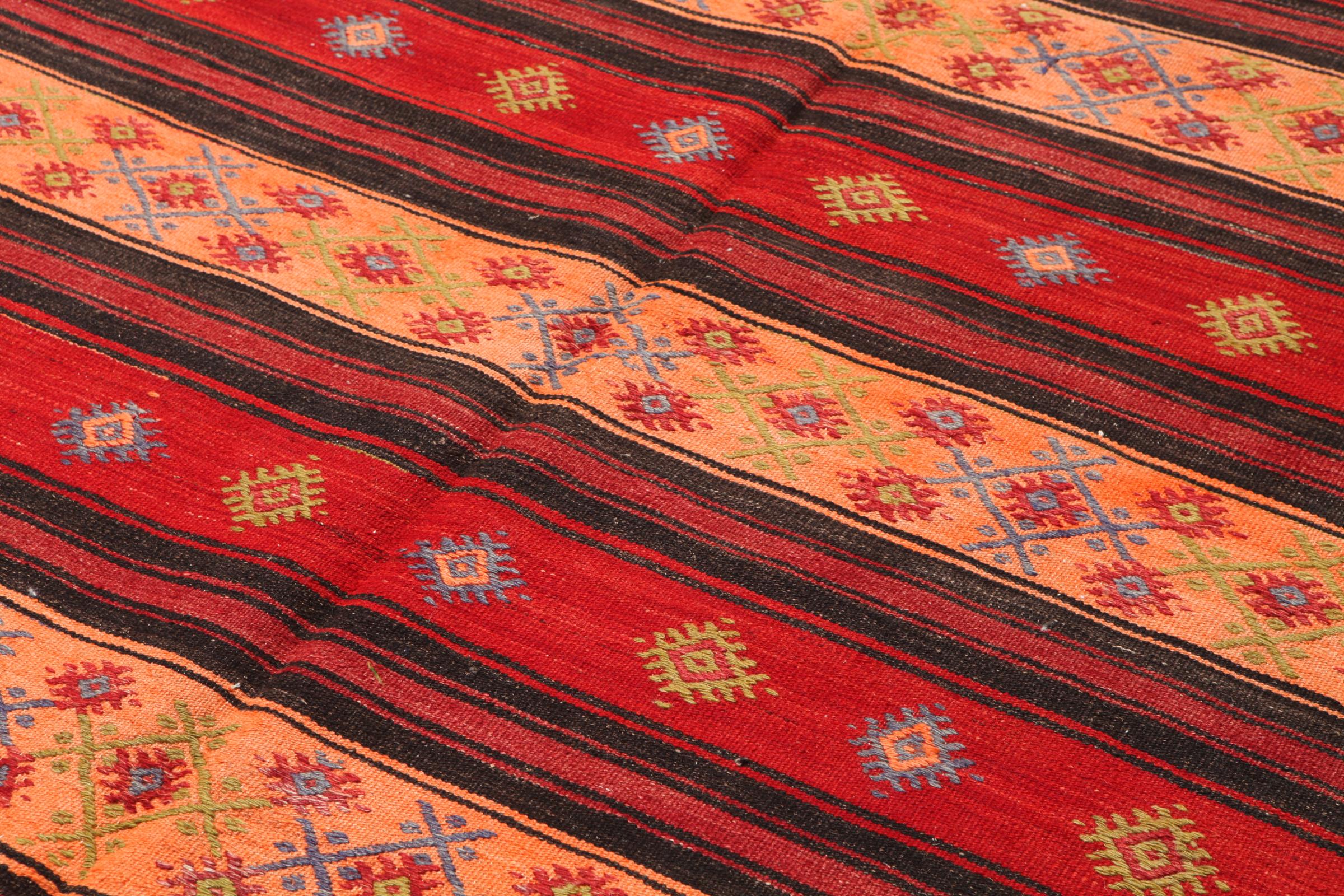
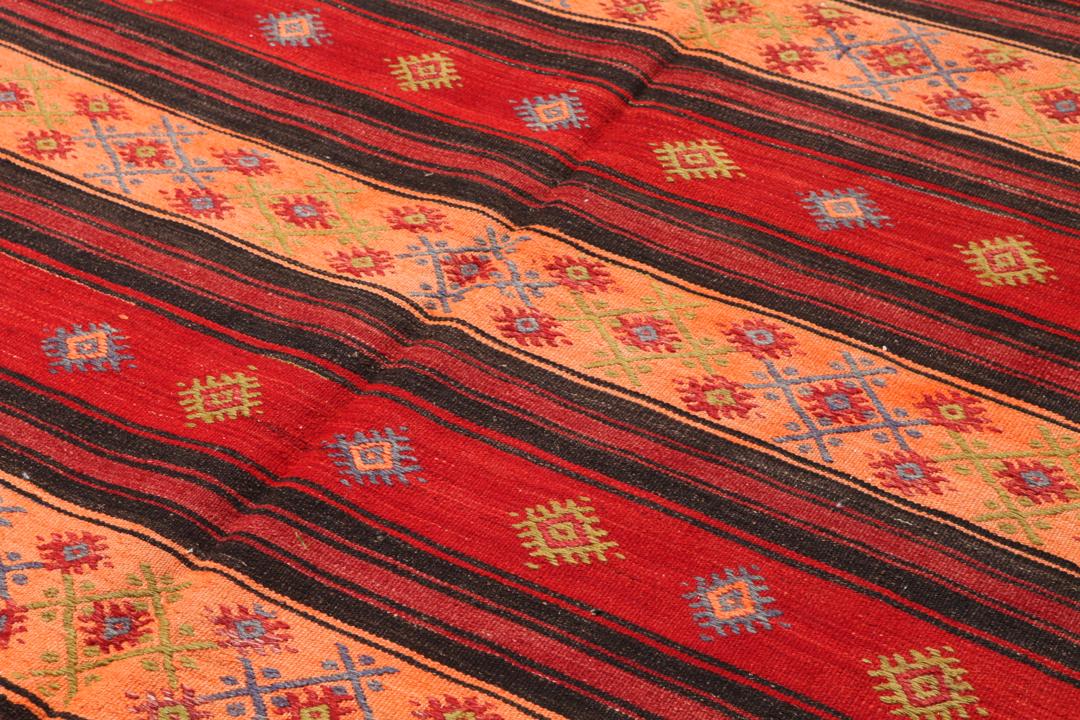
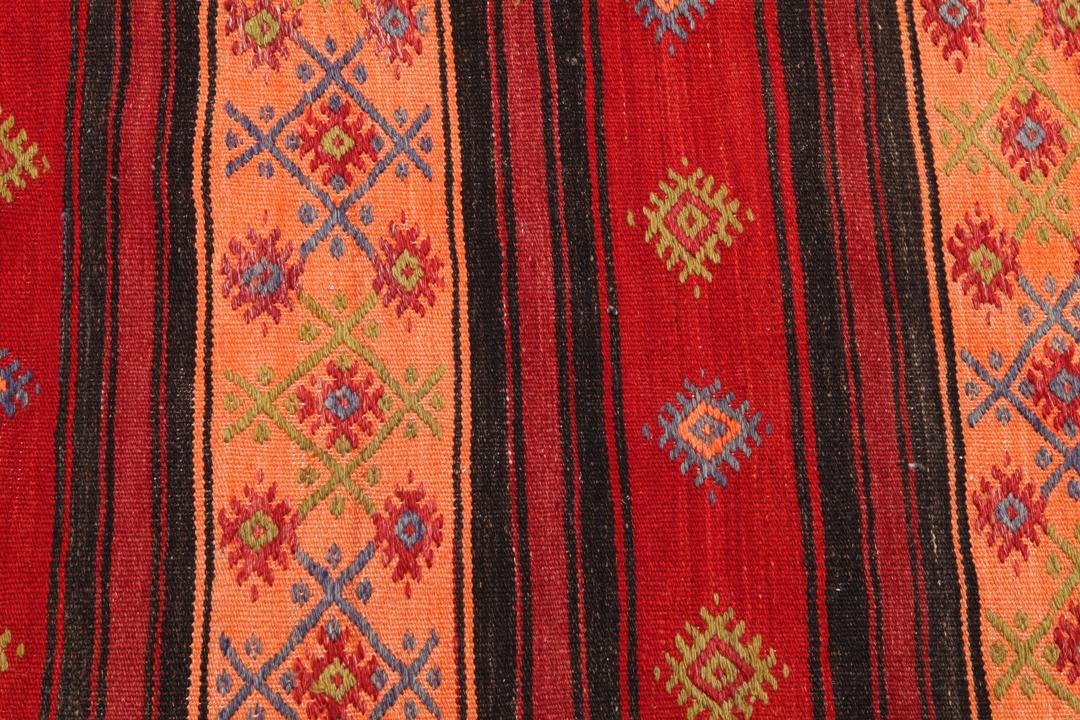
The motifs found on this rug are deeply symbolic, often representing tribal identity, protection, or the natural world. Geometric patterns and serrated lines are characteristic of this tradition, designed to be easily replicated by memory during the weaving process. The vibrant, warm palette is achieved using traditional dyes that have matured beautifully over time, giving the piece its authentic, aged appearance.
Collecting vintage kilims is a way to preserve a rich cultural heritage that continues to influence modern design. These rugs are highly valued not only for their durability but for the human story embedded in every thread. Owning one is an invitation to connect with a timeless craft, bringing an authentic sense of place and history into your modern home.