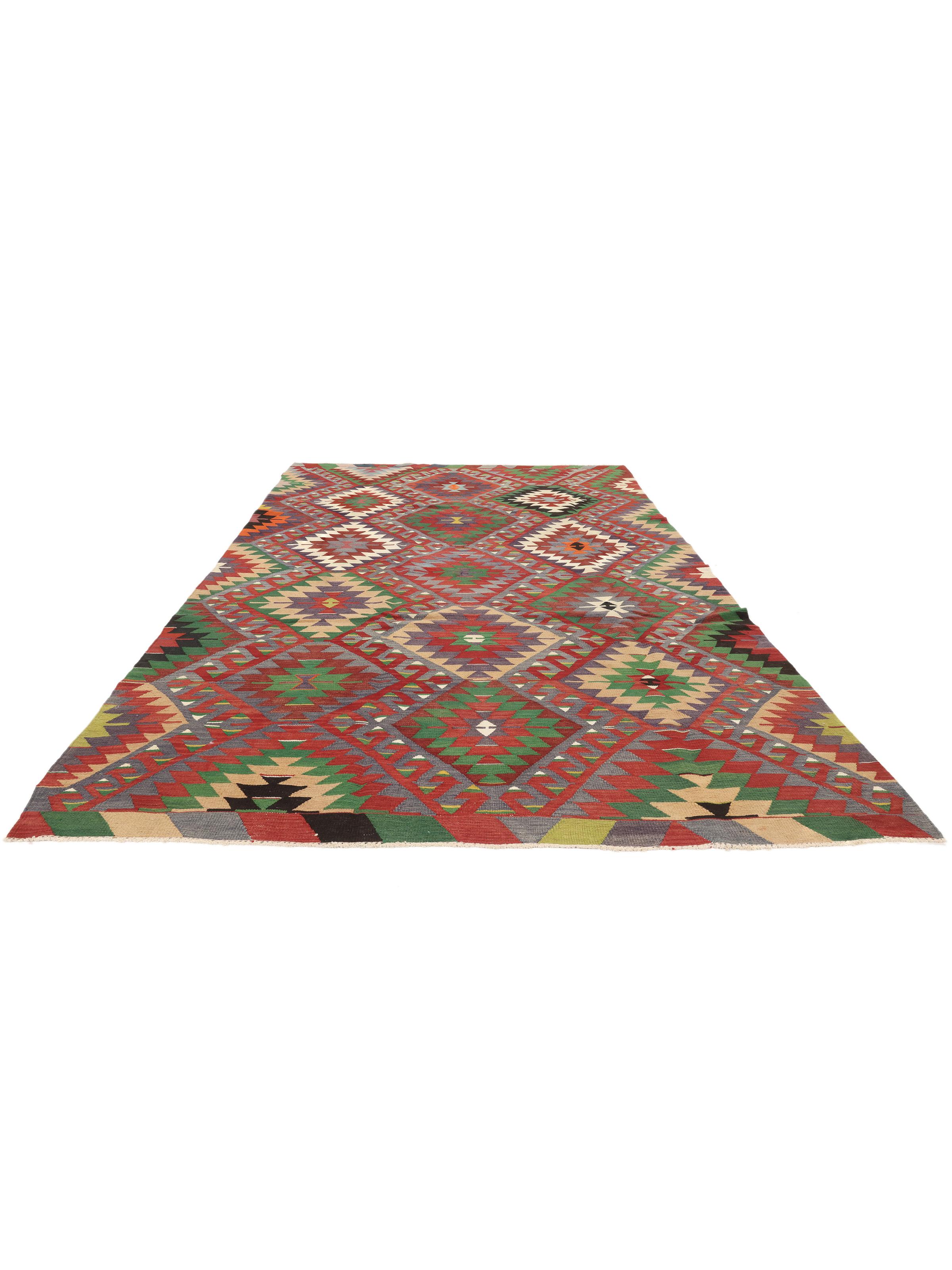
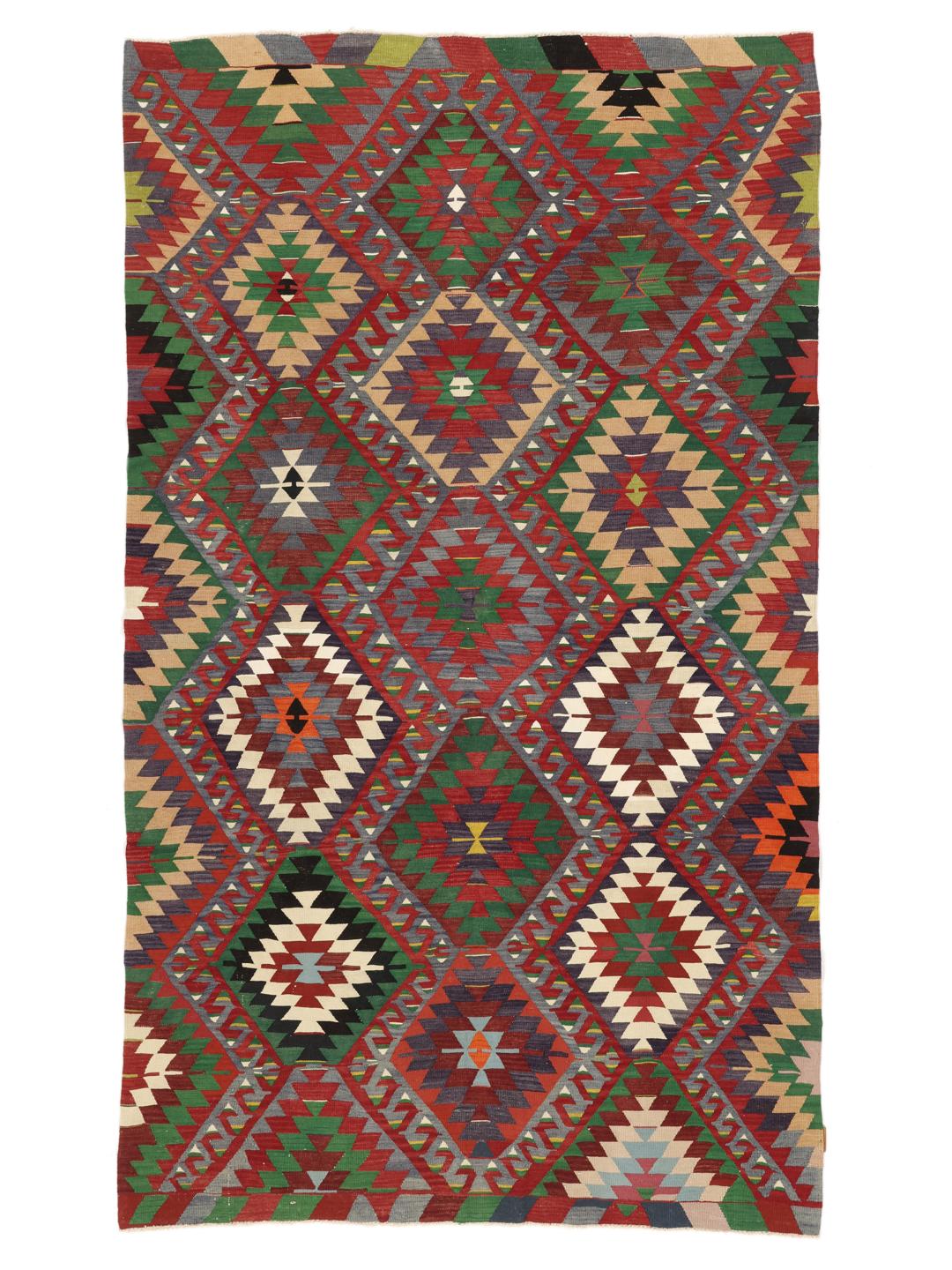
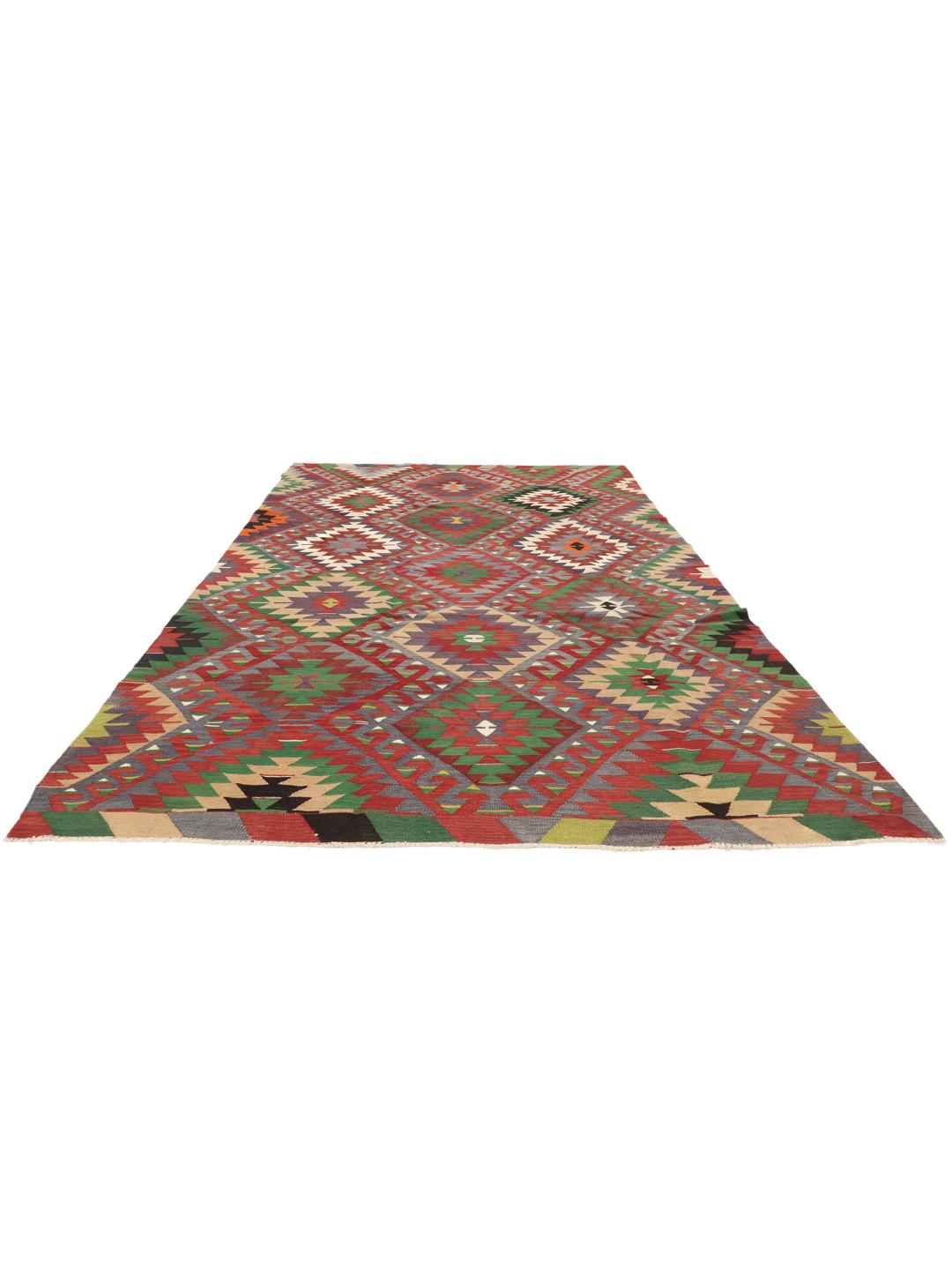
Kilim rugs originate from the nomadic and semi-nomadic cultures of the Middle East and Central Asia, with Turkey serving as a historical epicentre for this craft. These flat-woven textiles were traditionally created as functional items for daily life, used as floor coverings, wall hangings, or storage bags by families on the move.
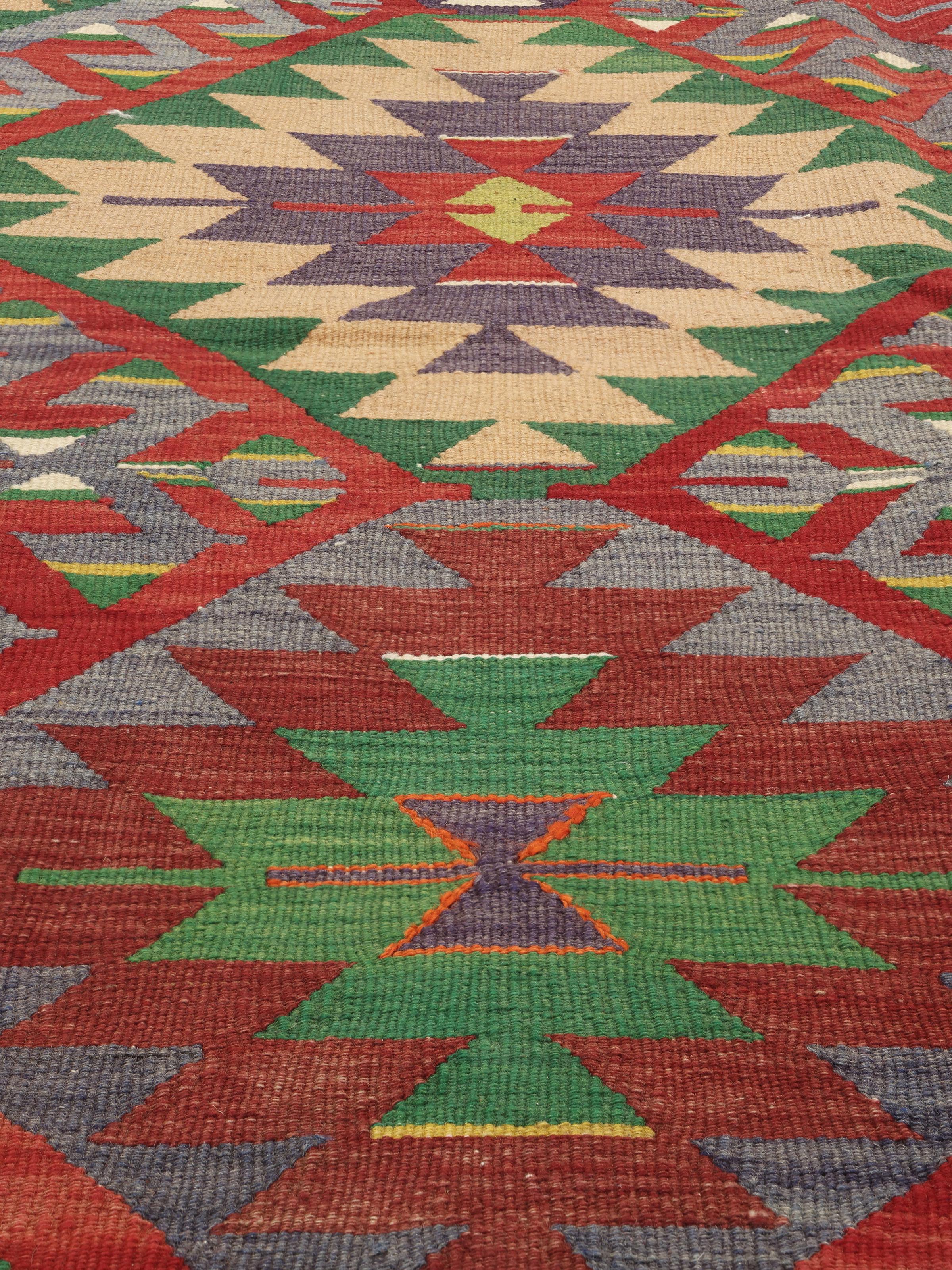
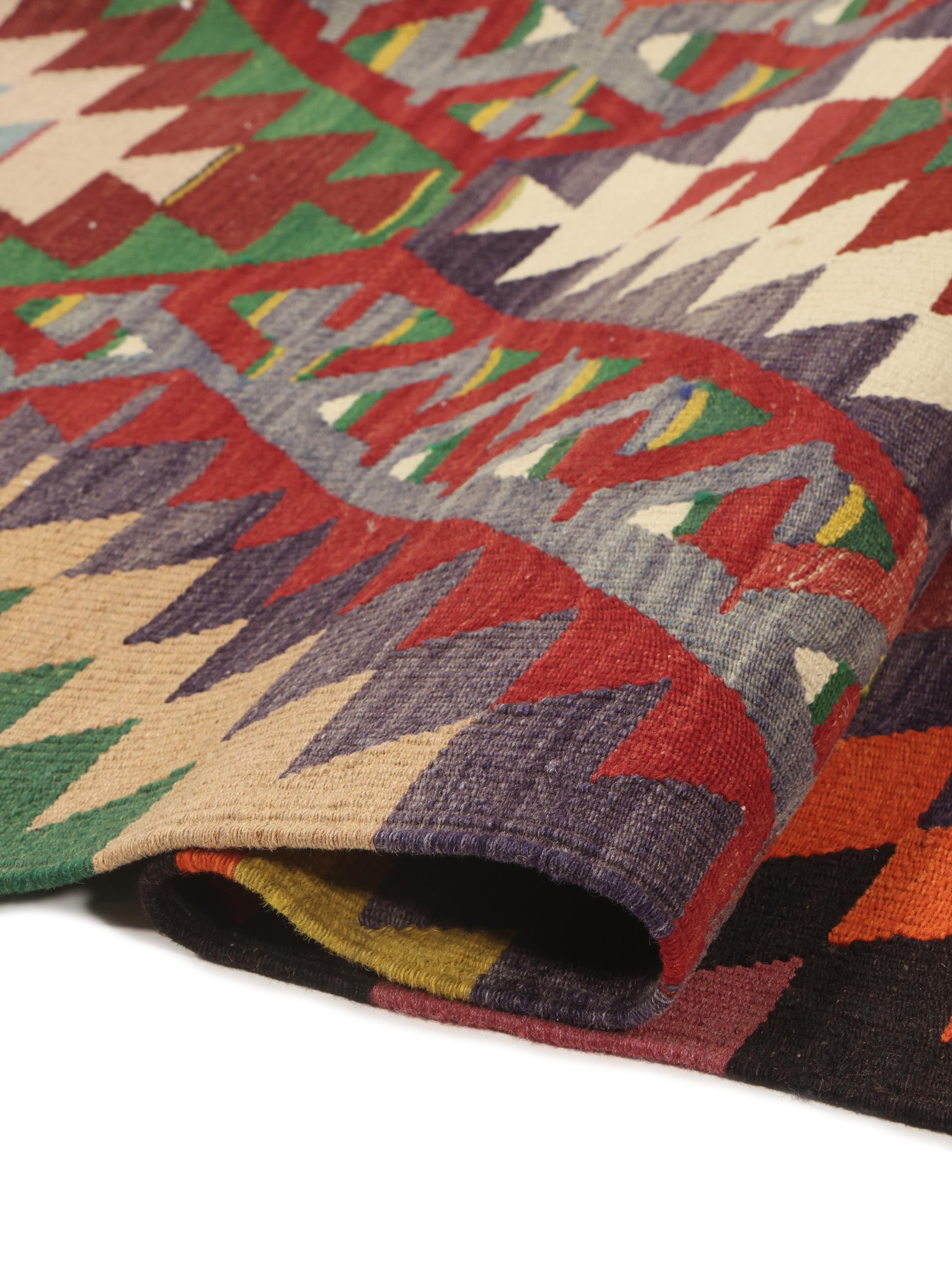
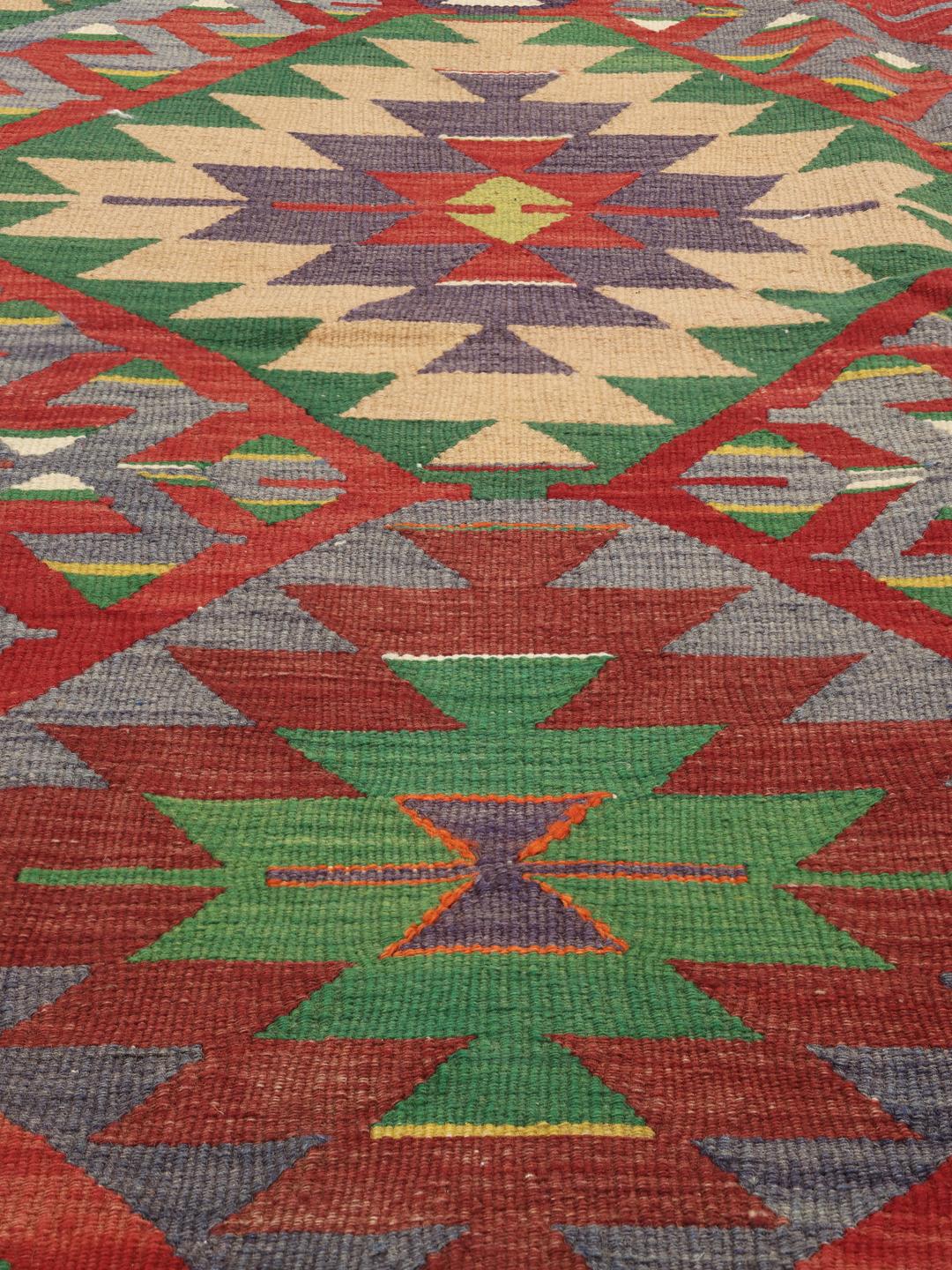
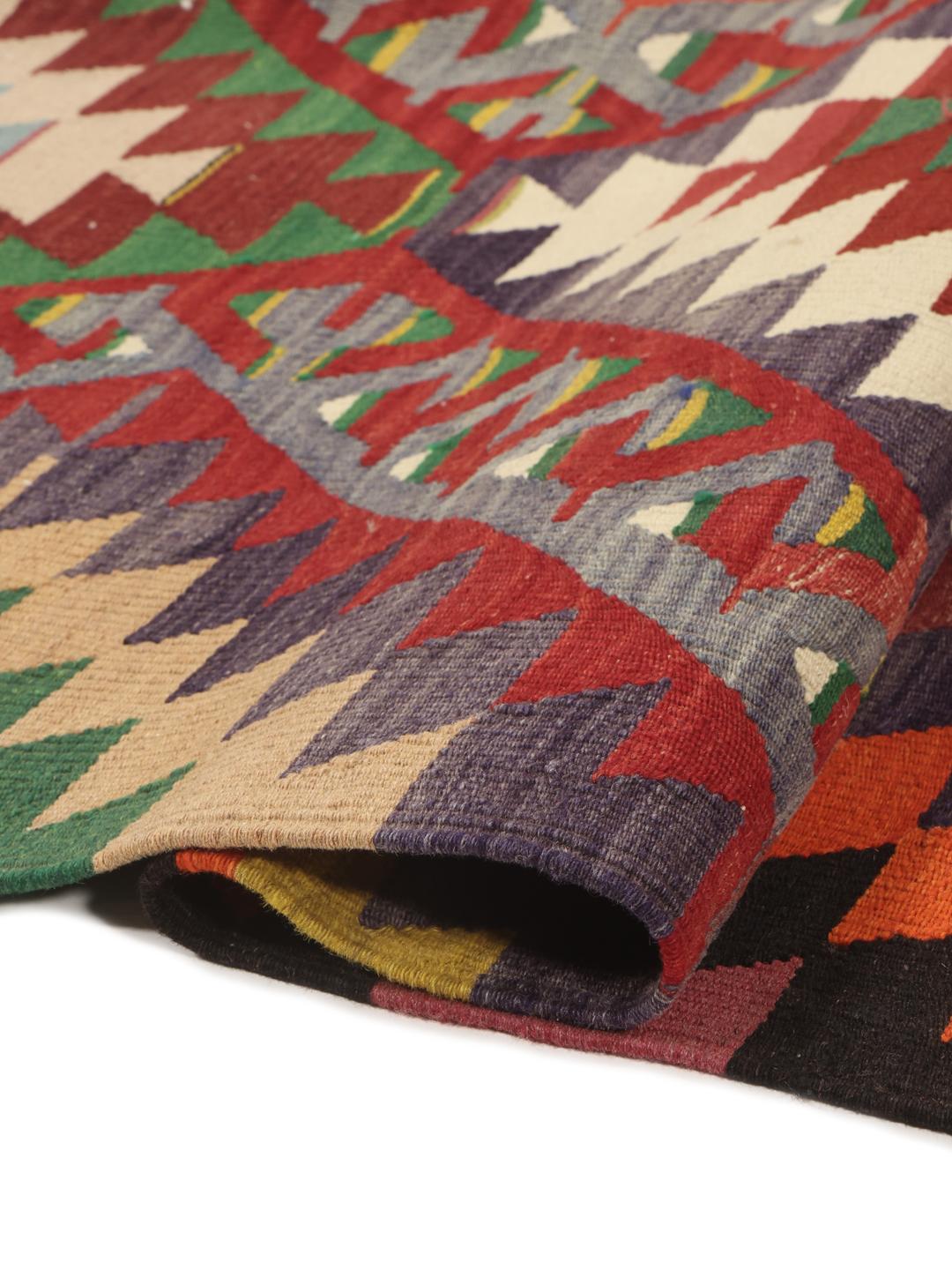
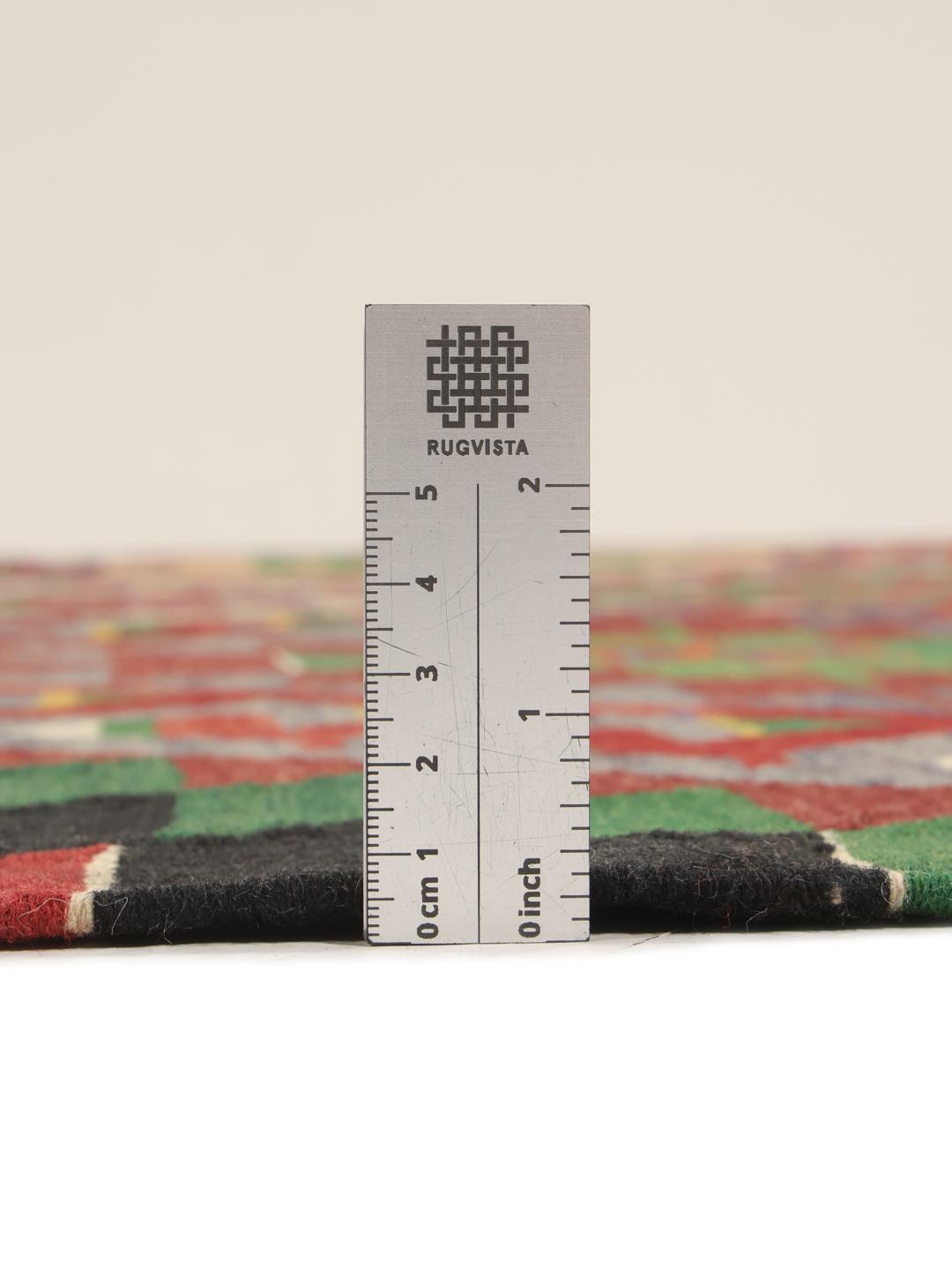
The term Kilim refers to the specific slit-weave technique used in their production. By interweaving the coloured weft strands through the warp, weavers create crisp, geometric designs without the need for a pile. This technical approach is why Kilims are celebrated for their thin, lightweight profile and sharp, bold aesthetics.
Signature design elements of Turkish Kilims include repeating geometric motifs, such as diamonds, triangles, and stylised floral forms. These patterns often hold symbolic meanings related to protection, fertility, or family identity. The colour palette typically features rich, organic dyes derived from local plants and minerals, which have mellowed over time to create the sophisticated, lived-in look seen in this vintage piece.
Today, vintage Kilims are highly sought after by collectors for their cultural weight and connection to a disappearing way of life. Owning one is an investment in human skill and regional heritage, serving as a reminder of the artistic expression that has defined homes in the Middle East for centuries.