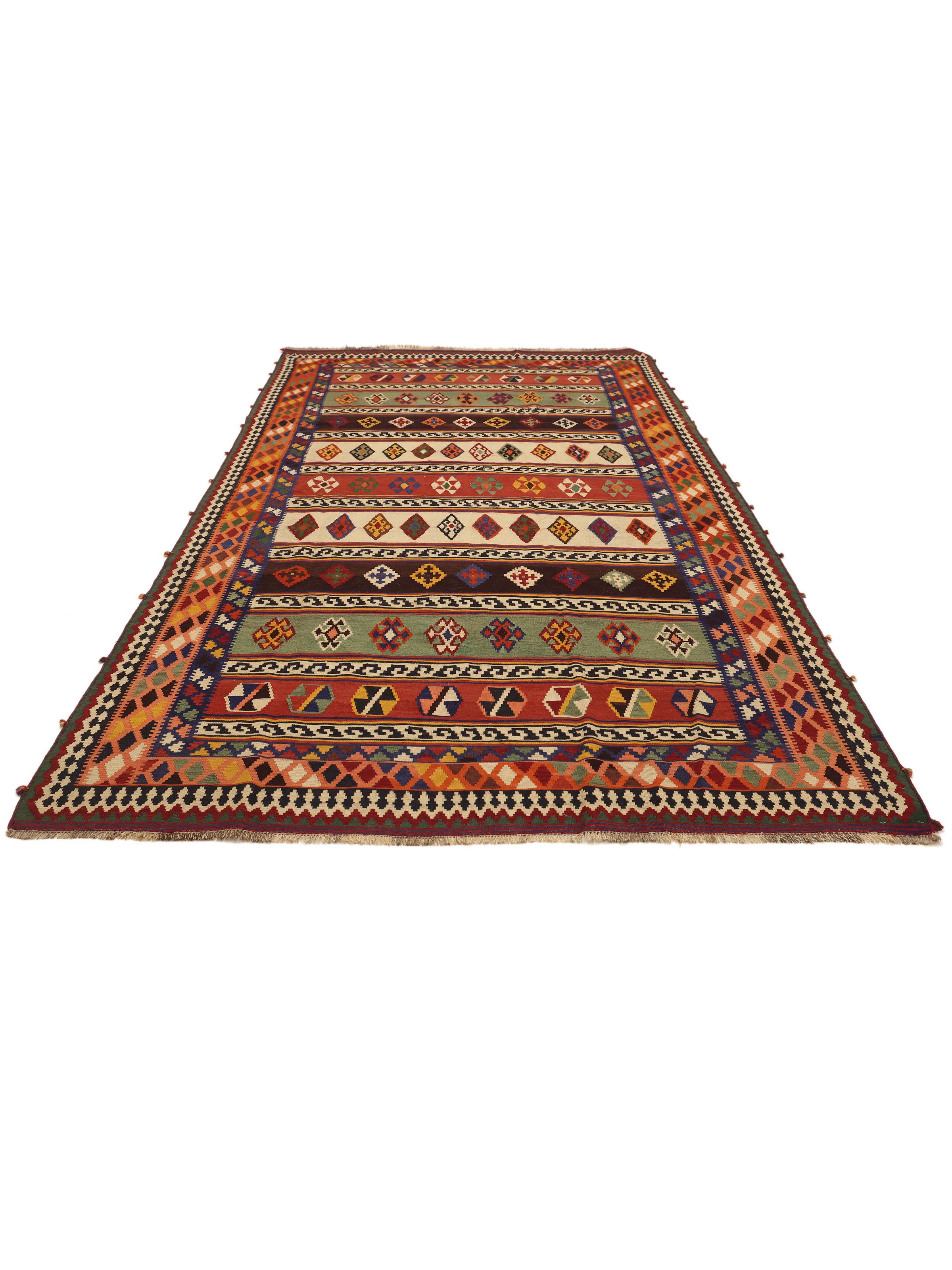
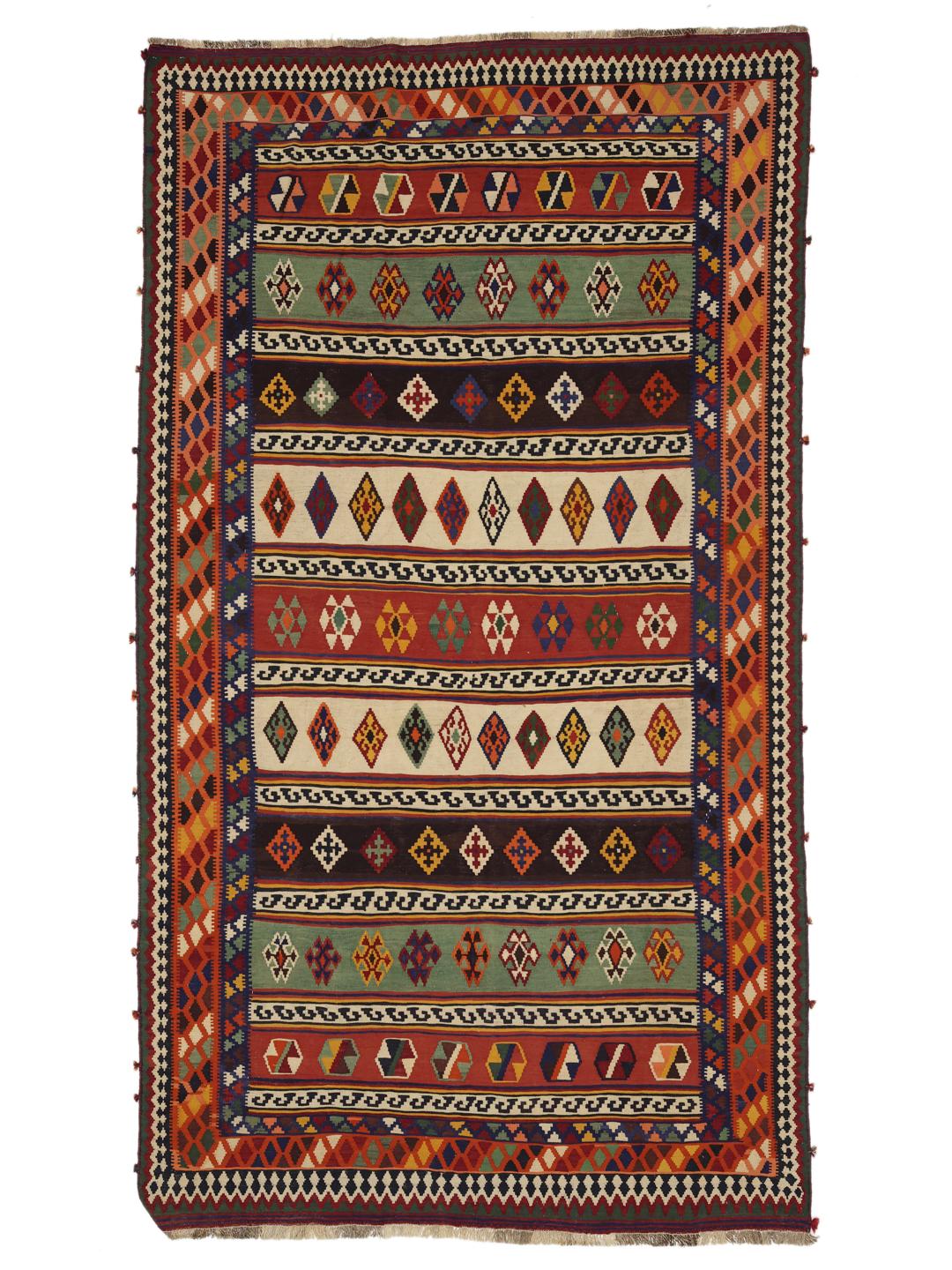
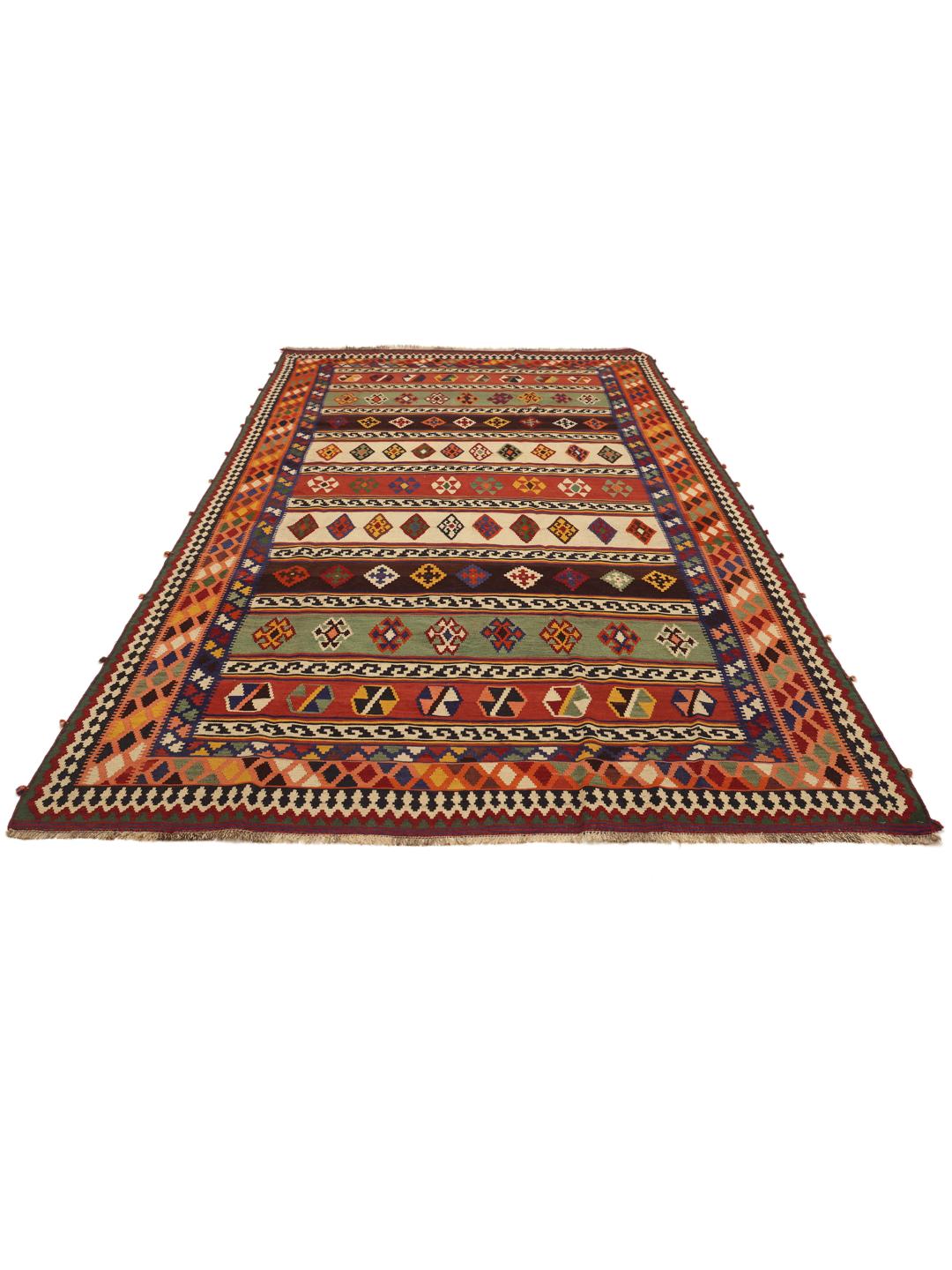
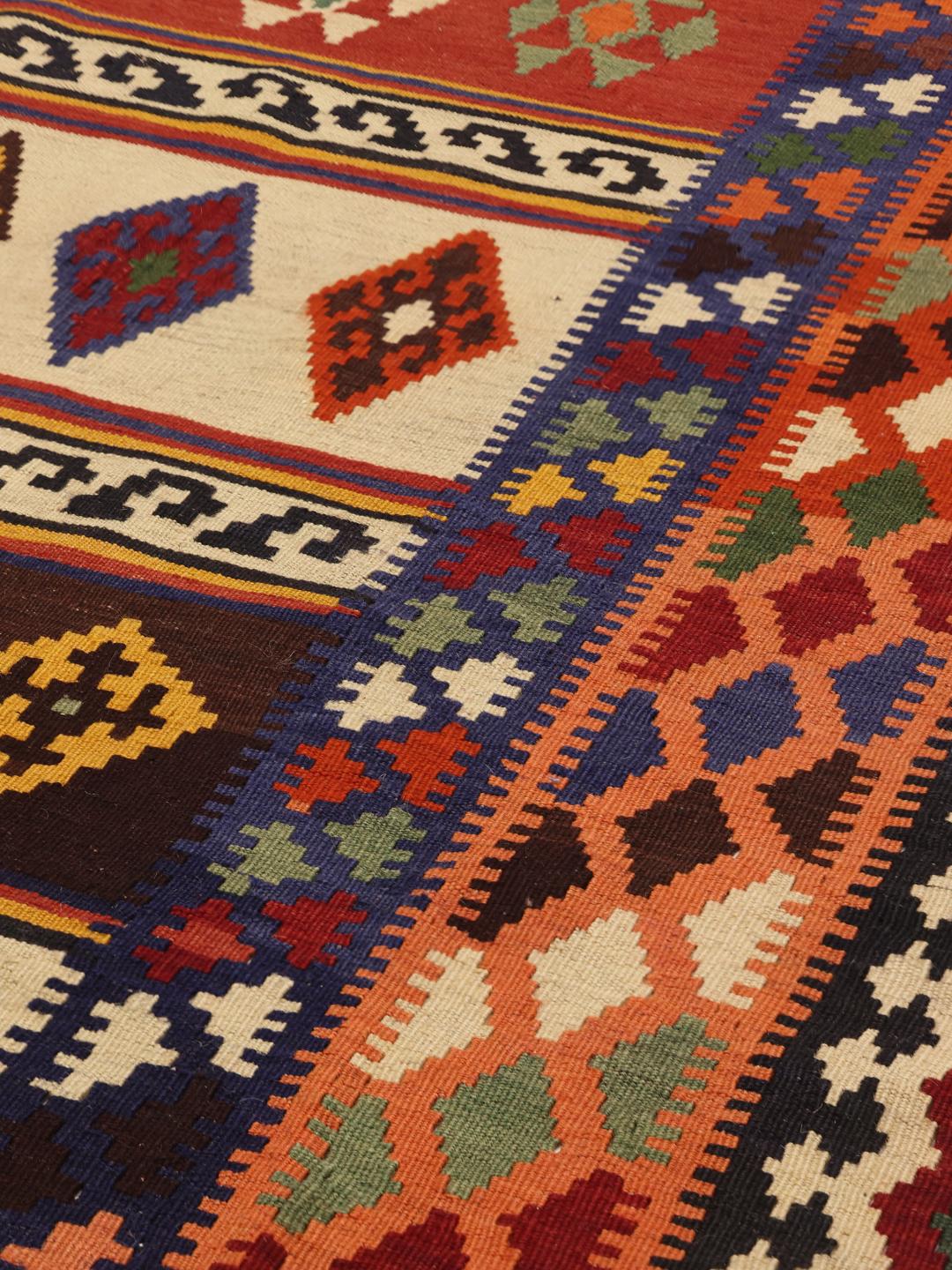
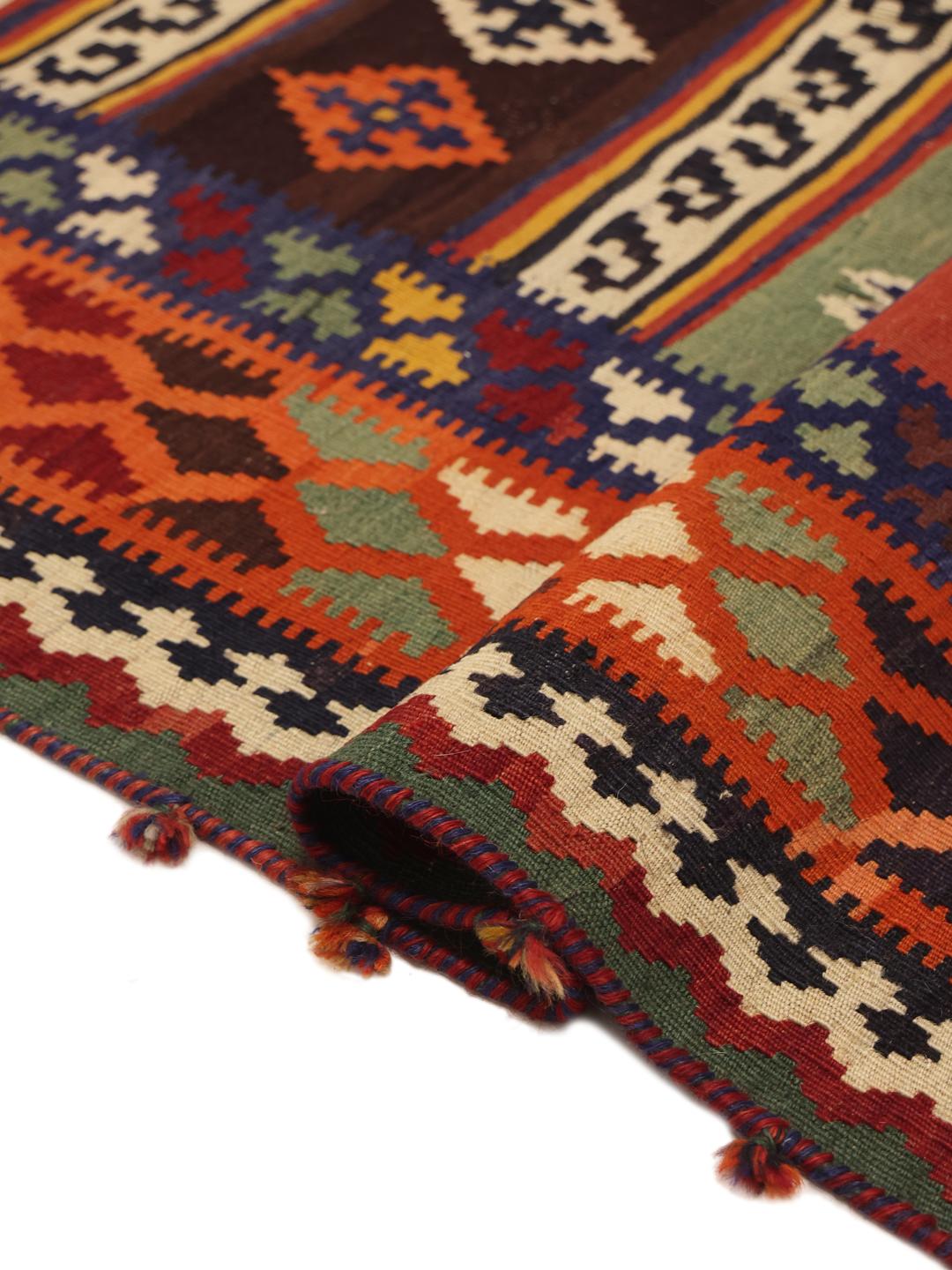
Kilim rugs have a long and celebrated history across Turkey and Anatolia, where nomadic and village weavers have produced flatwoven textiles for centuries. Originally crafted for daily use as floor coverings, wall hangings, and travel bags, these rugs are deeply rooted in the rural heritage of the region.
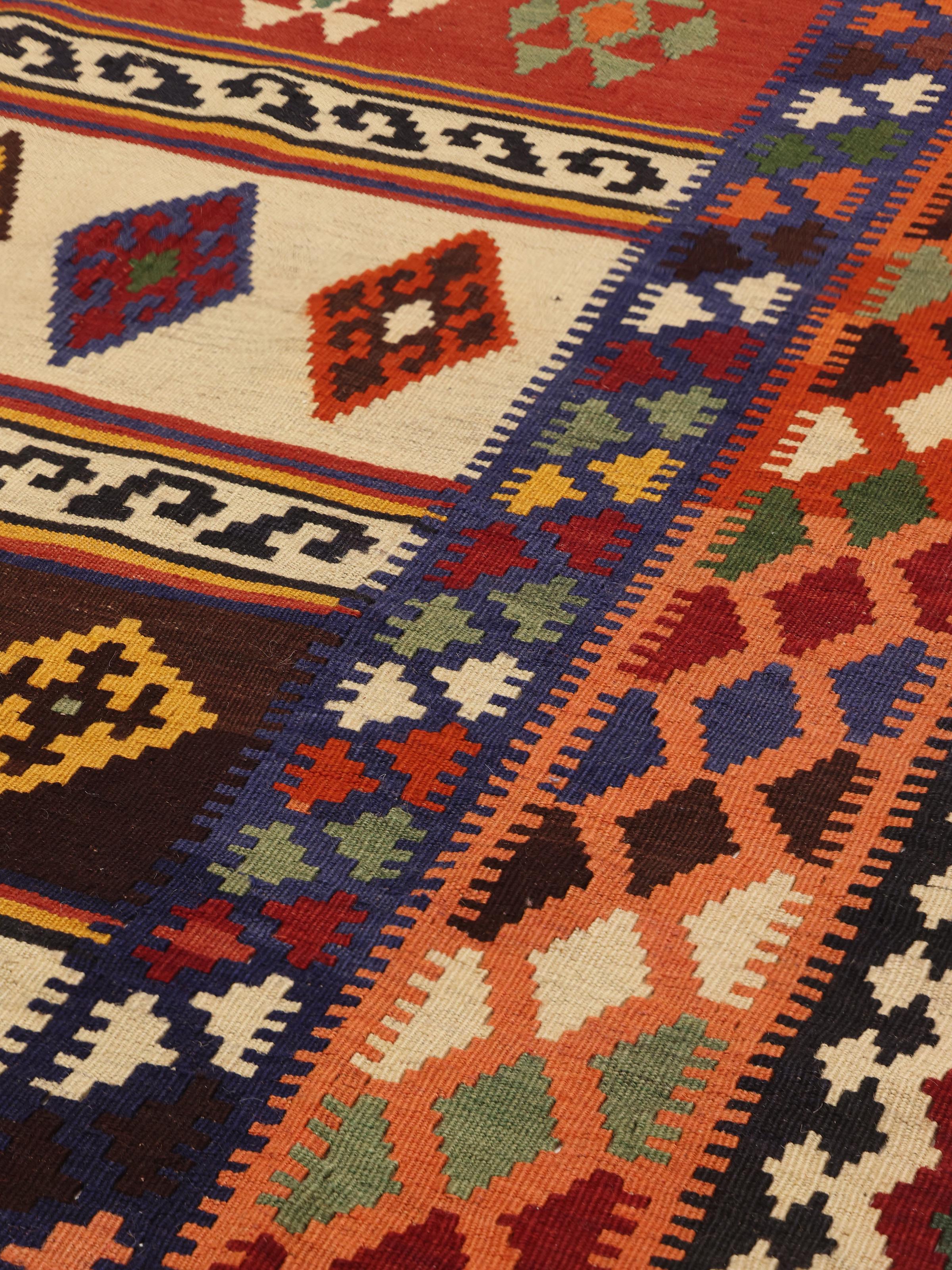
Unlike pile rugs, flatwoven Kilims are produced by tightly interweaving the warp and weft strands, creating a smooth, pile-free surface. This construction makes the rug lightweight, reversible, and exceptionally durable. Using pure wool for both the structure and the design ensures a long-lasting textile that ages gracefully.
The visual language of Turkish Kilims relies heavily on geometric motifs and symbolic shapes. Repeating diamond patterns, stepped medallions, and vibrant horizontal bands are signature elements of this tradition. Colors were historically derived from local natural dyes, resulting in rich reds, earthy greens, and soft neutral backgrounds.
Vintage Kilims aged between 20 and 50 years are especially prized by collectors and design enthusiasts. They represent an era of traditional craft before modern mass production, capturing authentic regional history and individual weaver artistic choices that cannot be reproduced.