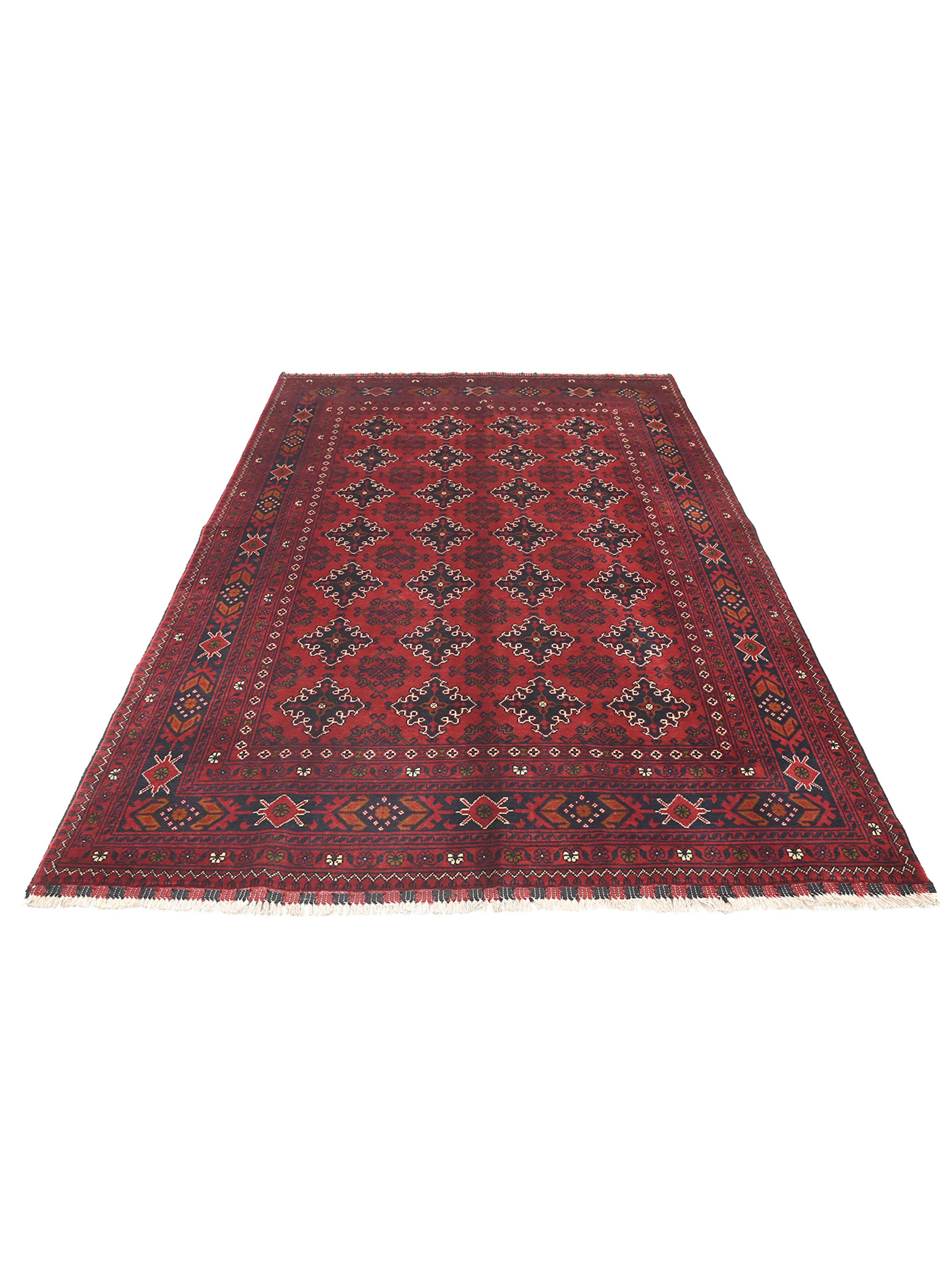
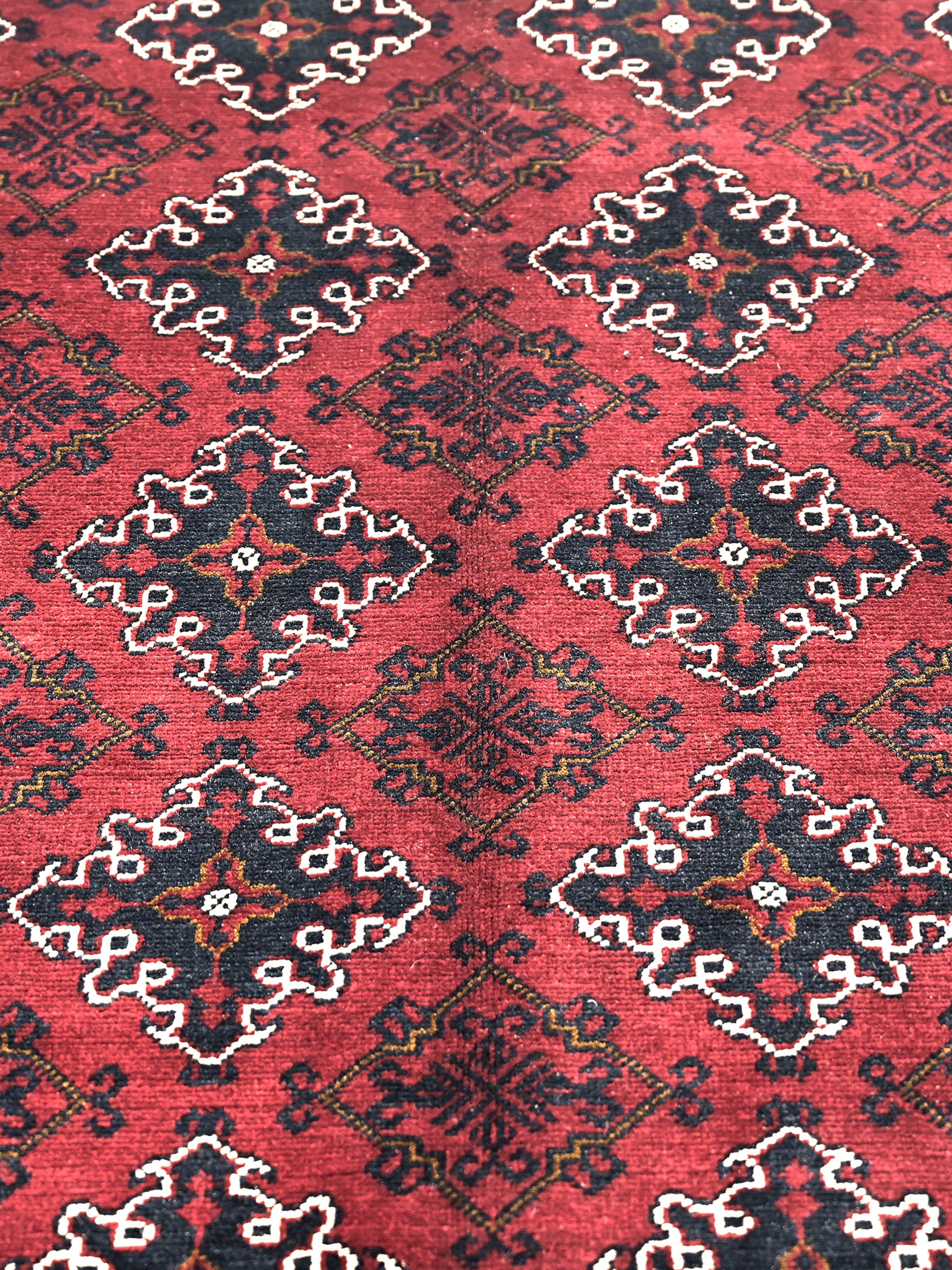
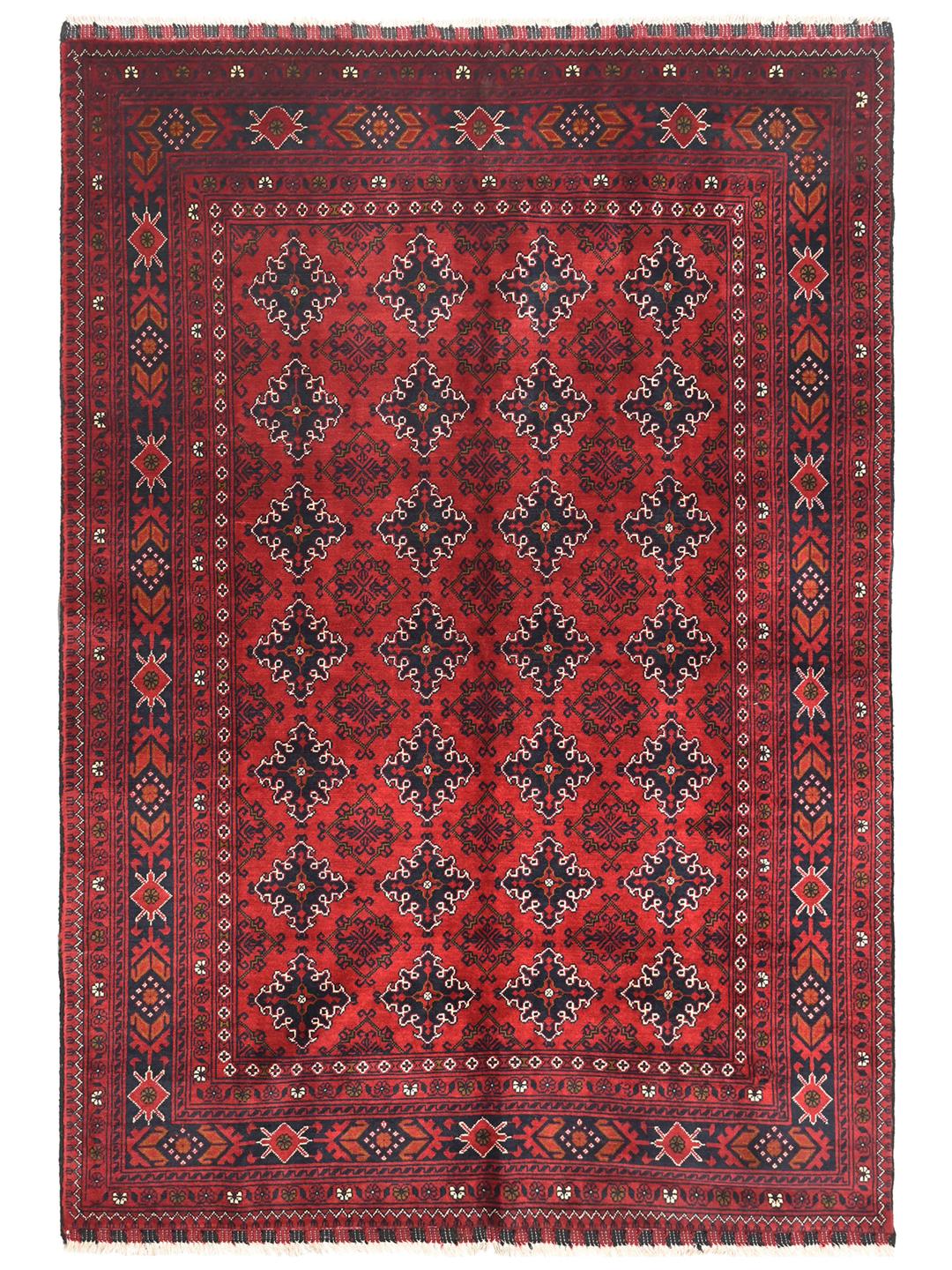
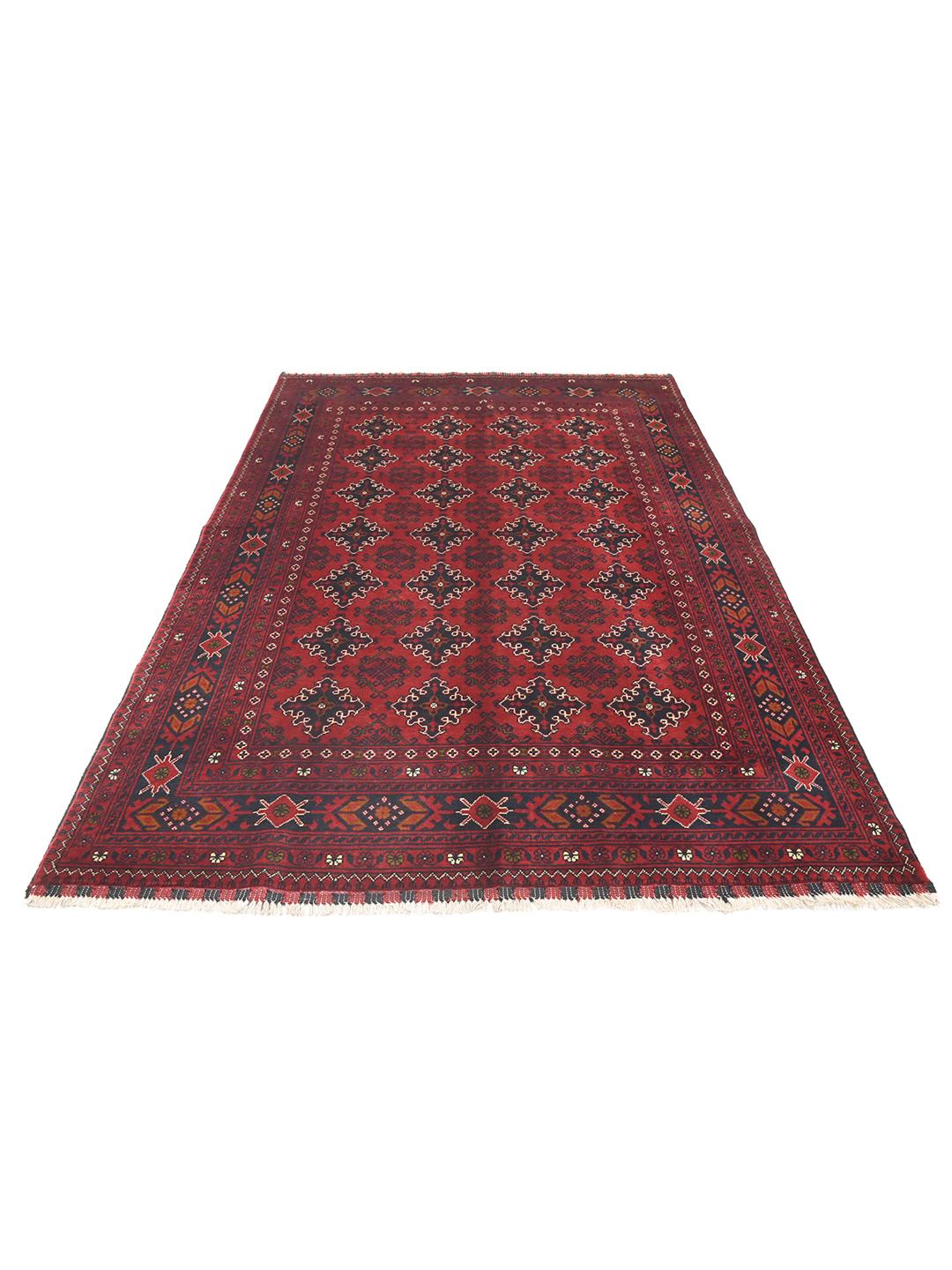
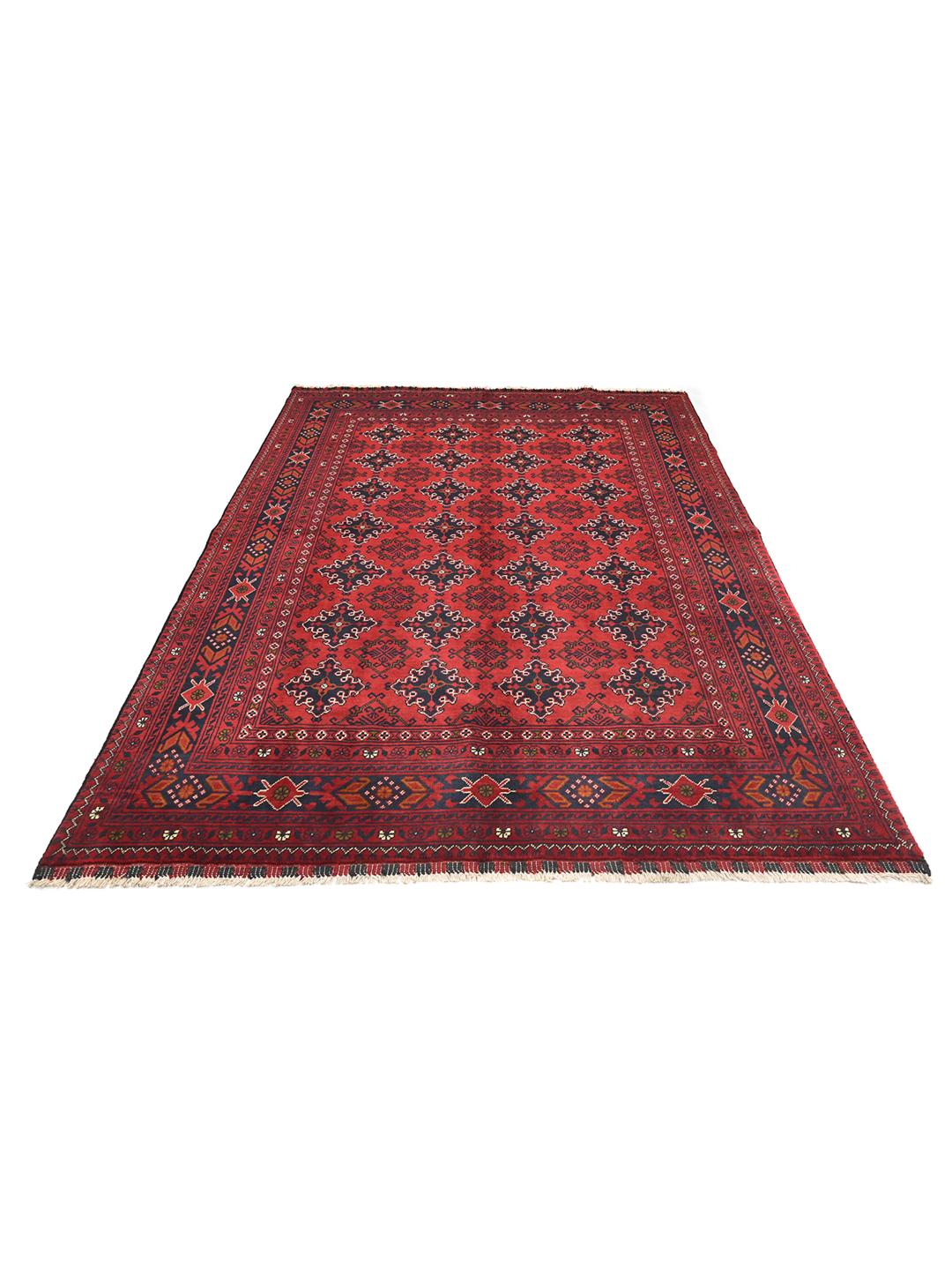
Kunduz rugs originate from the northern regions of Afghanistan, a territory steeped in the history of the ancient Silk Road. These rugs are deeply influenced by the nomadic traditions of the local tribes, who have utilised weaving as a means of storytelling and cultural expression for centuries. The migration of these weaving techniques across the rugged landscapes of Central Asia has resulted in a style that is both resilient and highly expressive, reflecting the harsh yet beautiful environment of its origin.
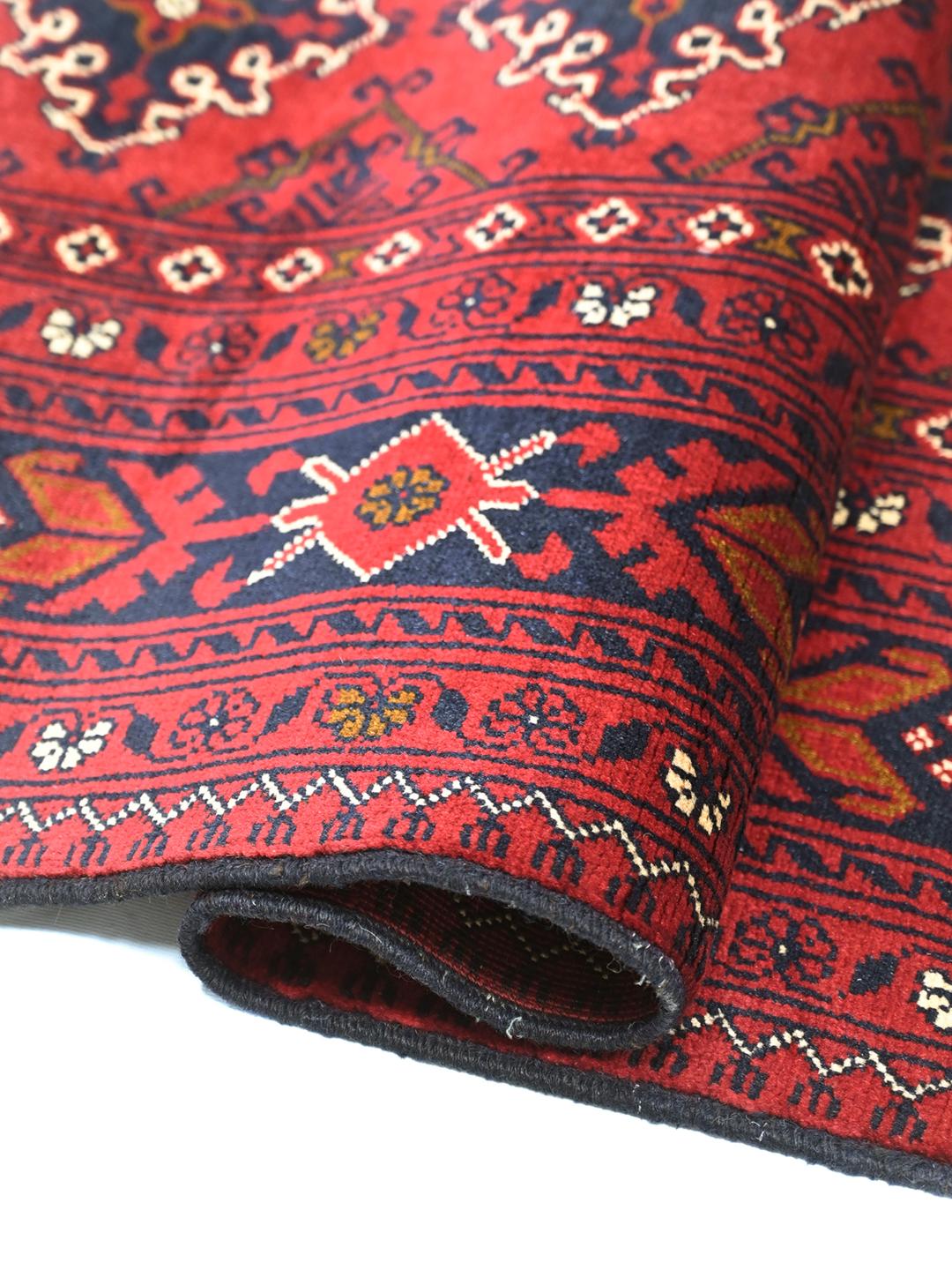
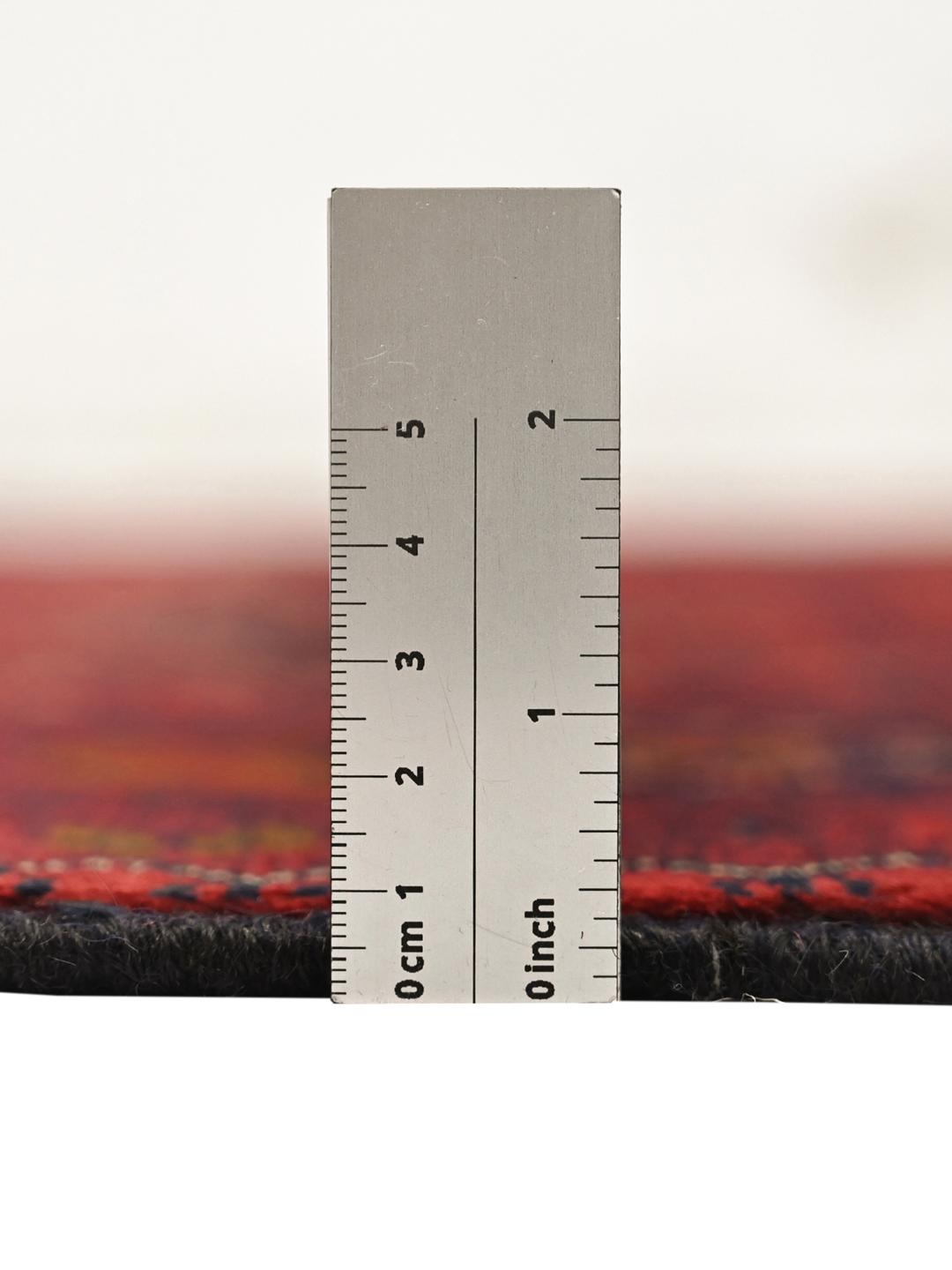
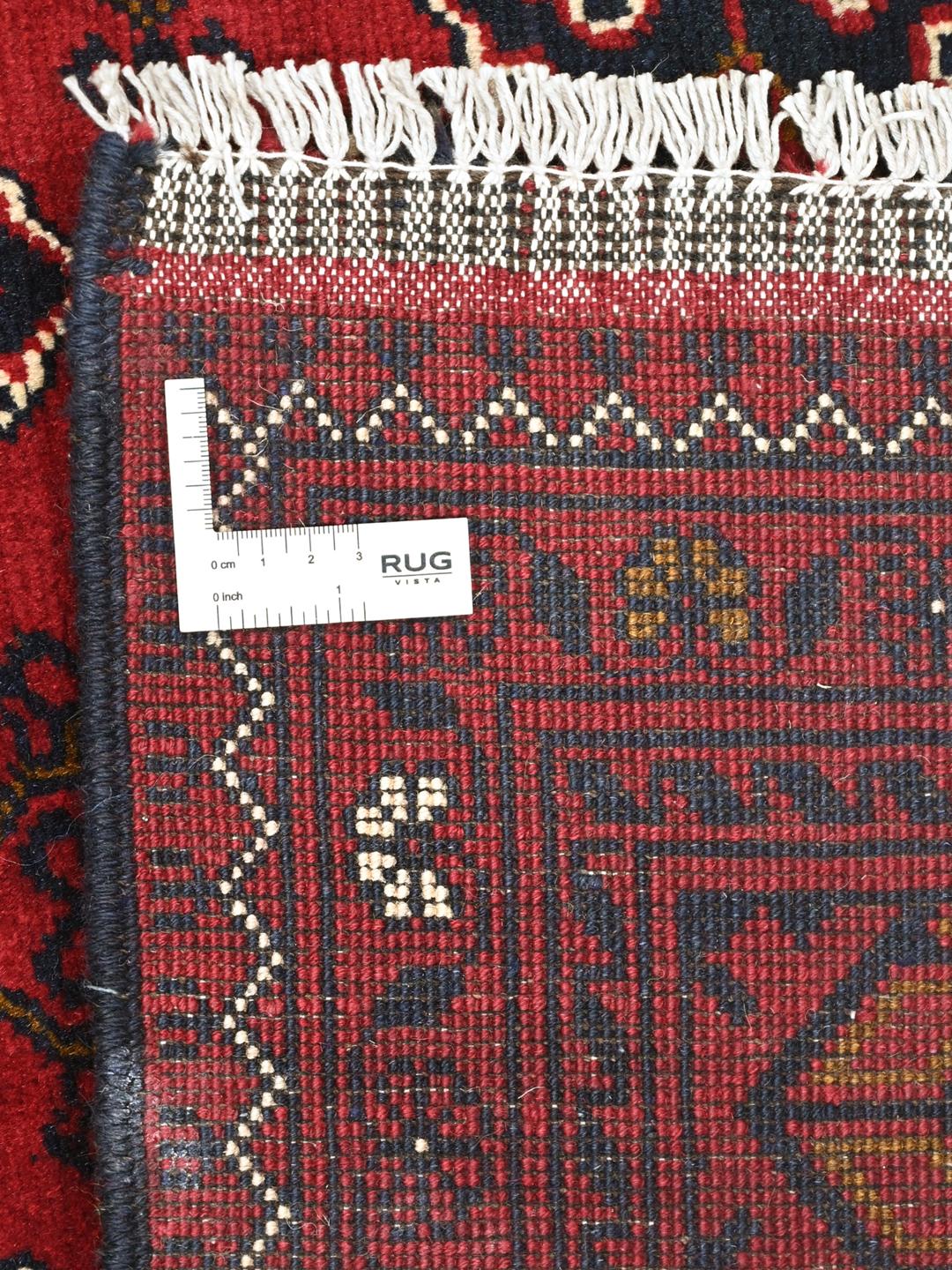
The term Kunduz refers to both the city and the specific style of rug-making found in this province. These rugs are known for their sturdy construction, which is achieved through a traditional hand-knotting process. This method involves using high-quality wool for the pile, which is then knotted onto a durable foundation. The result is a substantial, long-lasting textile that is prized for its ability to withstand heavy use while maintaining its rich, vibrant appearance.
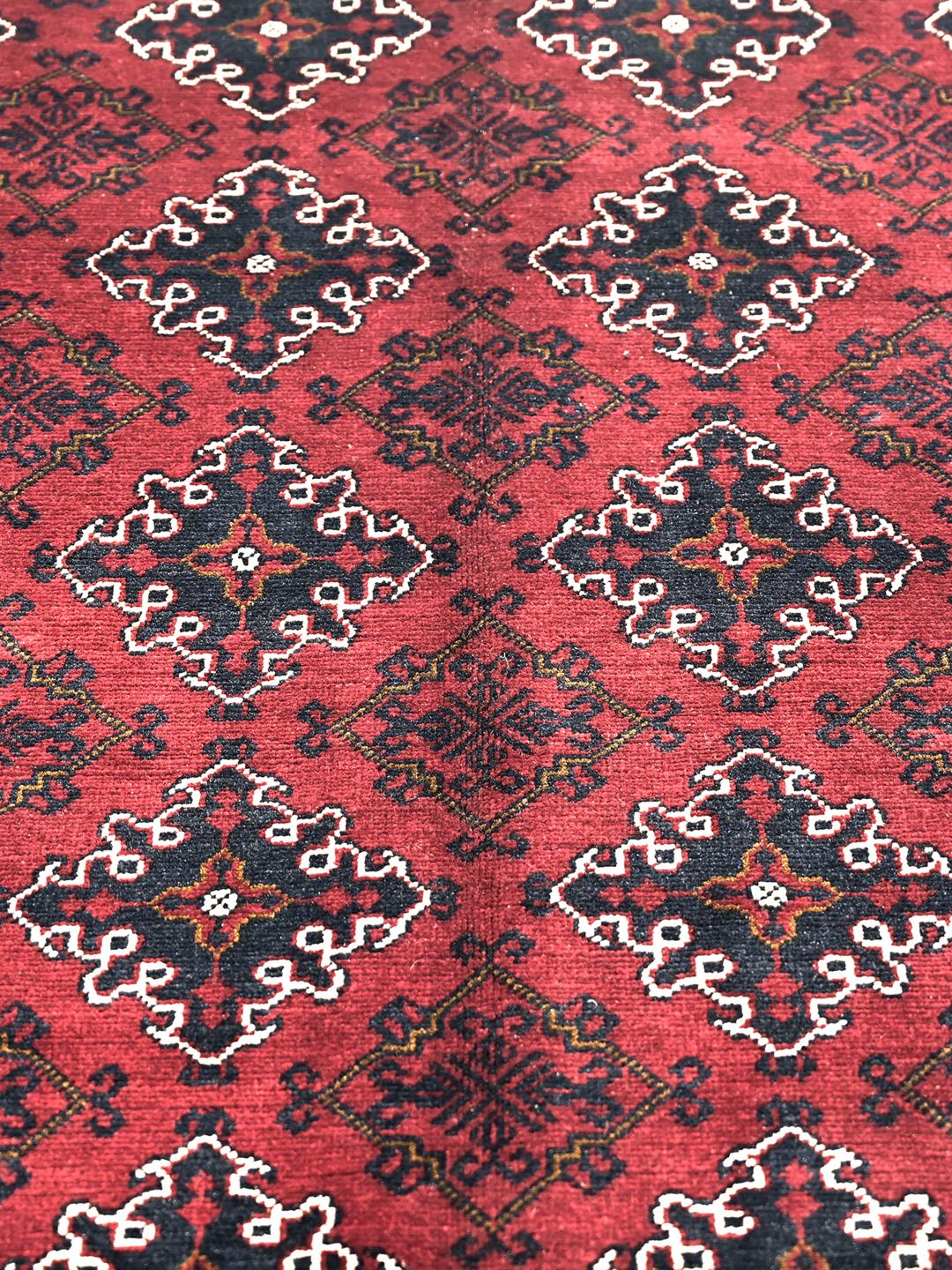
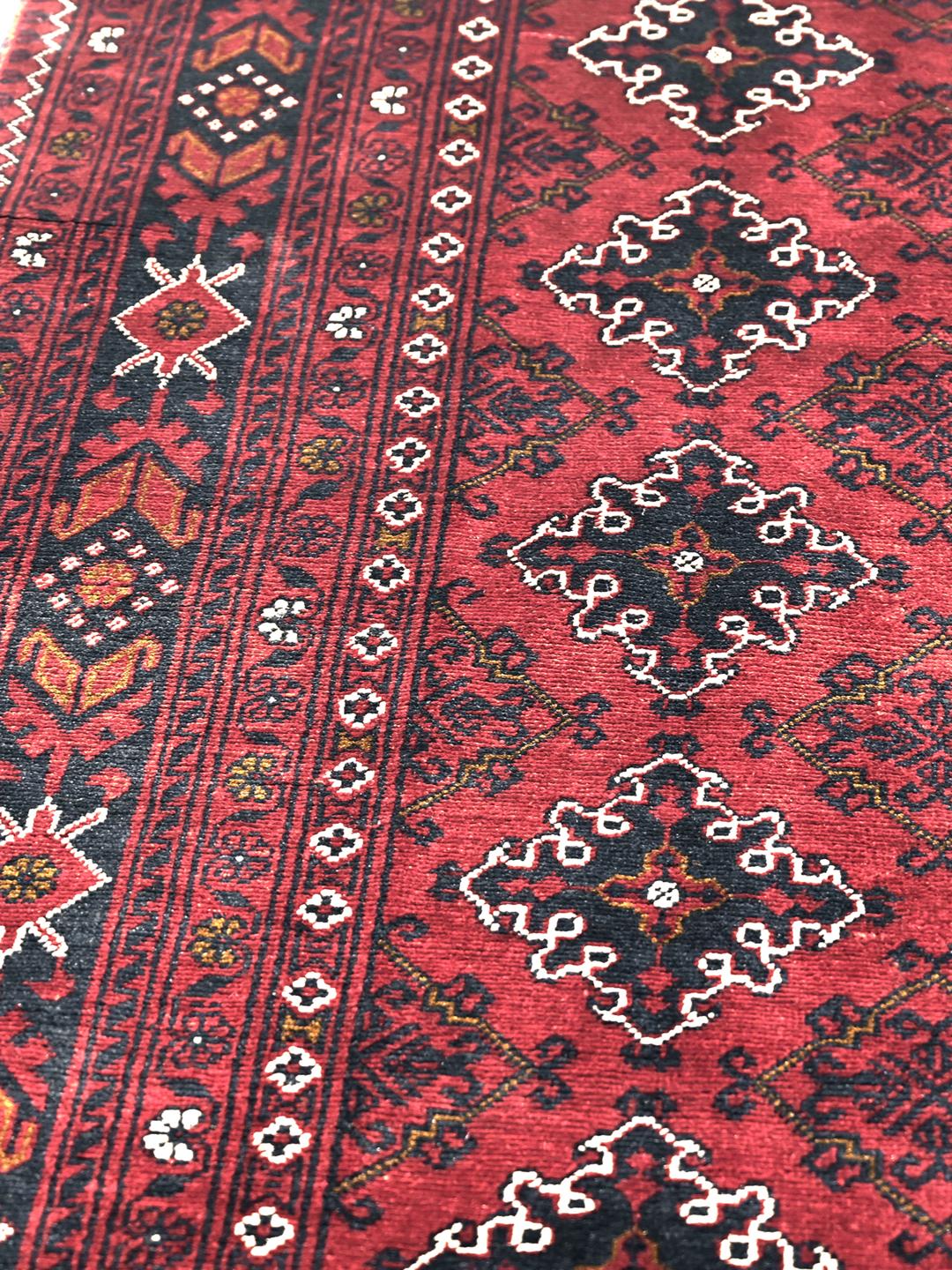
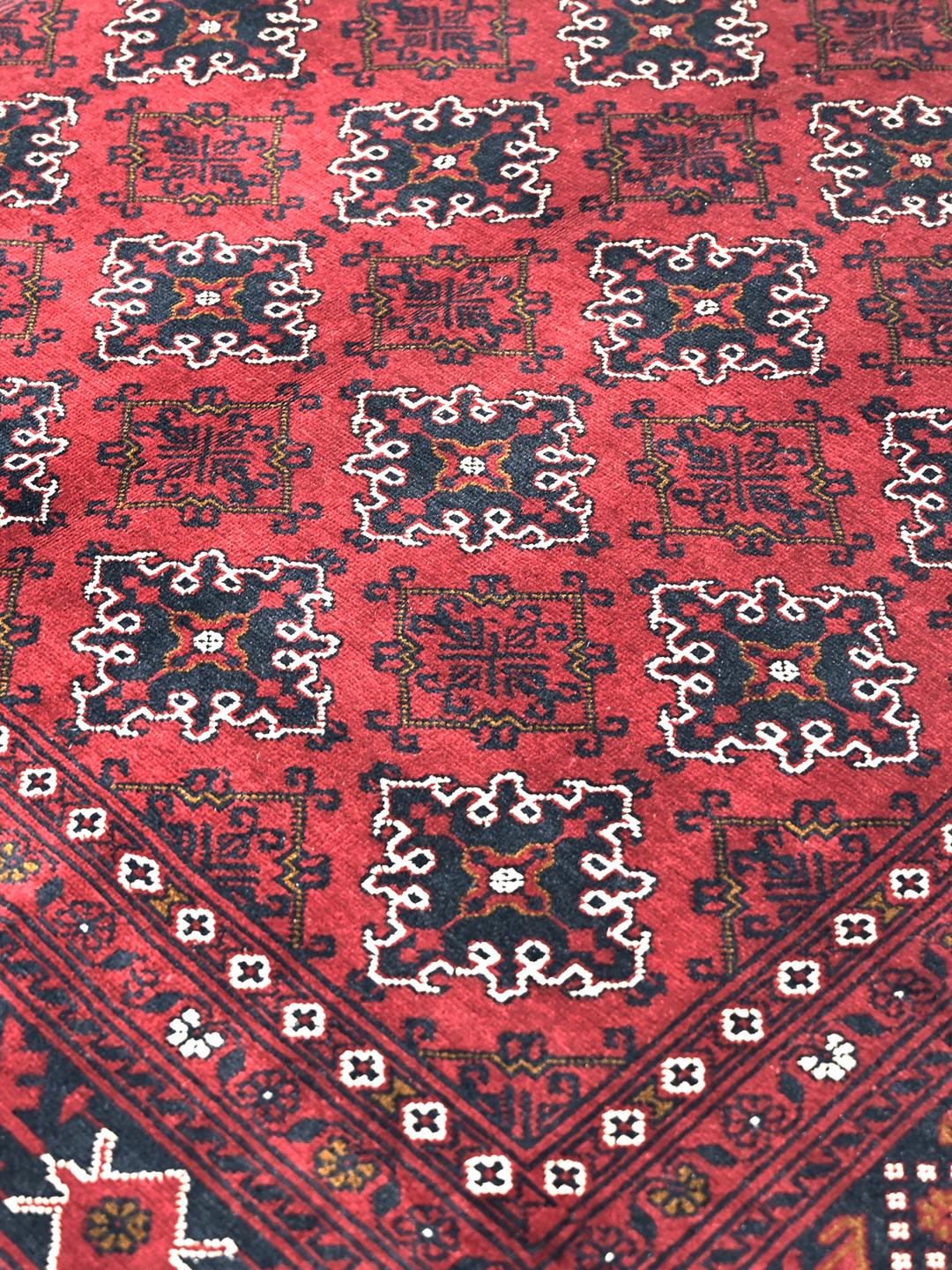
Visually, these rugs are defined by their deep, saturated colour palettes, with red serving as the primary field colour. The designs typically feature bold geometric guls, which are repeating medallions often inspired by tribal symbols and local flora. The borders are usually intricate, framing the central field with repeating motifs that provide a sense of balance and structure. Each rug is a testament to the artisan's individual interpretation of these traditional patterns, making every piece a unique artefact.
Collecting a Kunduz rug is an investment in cultural heritage and artisanal skill. These pieces are highly valued not only for their striking visual appeal but also for the human effort and historical continuity they represent. Owning one allows you to connect with a centuries-old craft tradition, bringing a piece of Afghan history into your home that is both a practical floor covering and a significant work of art.